





















A busy week doesn’t have to mean takeout fatigue or skipped meals. Efficient meal prepping and planning is the simple system of deciding, shopping, batching, and storing food so you cook fewer times and eat better all week. In practice, it means choosing a small set of mix-and-match components, cooking them in parallel, and portioning them safely so meals are ready in minutes. Done right, you’ll cut weeknight decisions, reduce food waste, and keep nutrition consistent. In short: plan once, cook in batches, and reheat safely. Here’s a six-step quick view to anchor the process: (1) pick 3–4 meals you’ll repeat, (2) map a 7-day plan, (3) shop once with a master list, (4) batch-cook proteins, grains, and a “hero” vegetable, (5) prep sauces/dressings, (6) portion and label by day.
Brief note: This guide is educational and not individualized medical advice. If you have specific health conditions, consult a registered dietitian or clinician.
1. Lock Your Weekly Food Game Plan (Goals, Constraints, and Schedule)
Start by deciding exactly what you want food to do for you this week—save time, stabilize energy, hit certain nutrients, or all three. The fastest preppers reduce decision-making up front: they repeat favorite breakfasts and lunches, and vary dinners within a formula (e.g., grain bowl Mondays, stir-fry Tuesdays). Define constraints such as budget, dietary pattern (e.g., vegetarian), appliance access, and how many meals you’ll actually reheat. A good week plan respects your real calendar: heavy workdays get the simplest assemblies, lighter days can handle a quick sauté or fresh salad. Finally, translate goals to a plate pattern—such as the MyPlate approach of half produce, plus portions of grains and protein—which keeps nutrition simple while you optimize logistics. As of August 2025, public-health guidance still emphasizes making half your plate fruits and vegetables and keeping cold foods cold and hot foods hot for safety.
1.1 How to do it
- Pick target meals: e.g., 5 workday lunches + 4 quick dinners; leave 1–2 “free” slots.
- Choose a plate model (e.g., MyPlate) to guide portions without macro math.
- Match meals to your week: toughest days get heat-and-eat assemblies.
- Block 2–3 hours for batch day; reserve 10–15 minutes nightly for quick assembly.
- Note any special events to avoid over-prepping.
1.2 Mini-checklist
- Time block set?
- Number of meals locked?
- Diet pattern and allergies noted?
- Appliances/tools available (oven, slow cooker, pressure cooker, microwave)?
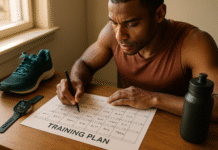
Close the loop by writing these decisions on a one-page plan you can see on batch day; clarity upfront prevents midweek stall-outs.
2. Use a 3-2-1 Menu Formula (Proteins–Grains–“Hero” Veg + 2 Sauces)
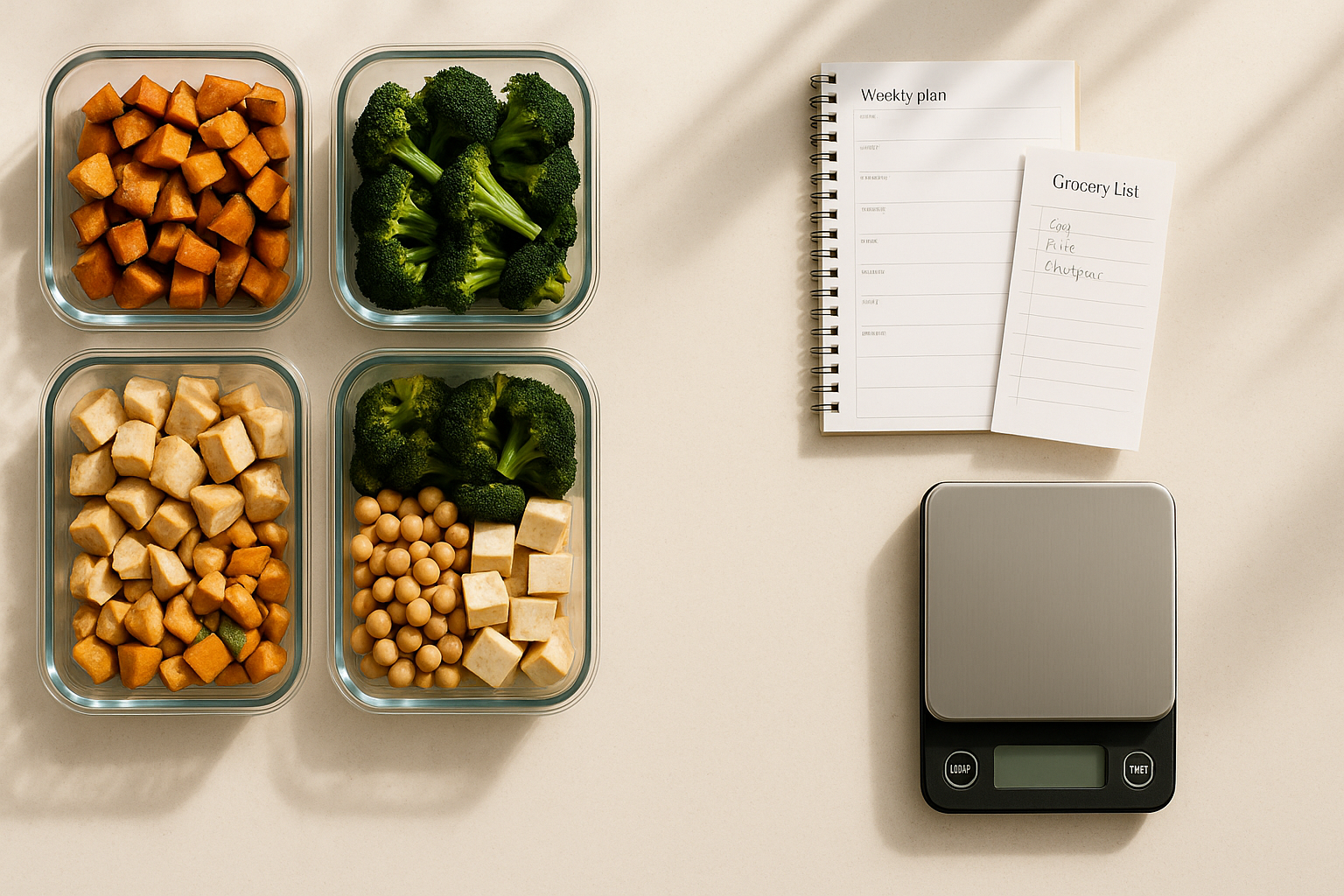
The simplest way to prevent boredom and waste is a repeatable menu formula. Choose 3 proteins, 2 grains or starches, and 1 hero vegetable for roasting or sautéing in volume. Add 2 sauces/dressings to flip cuisines. This small matrix produces dozens of combinations without extra cooking. For example, chicken thighs, chickpeas, and eggs; brown rice and sweet potatoes; broccoli; plus a chimichurri and a tahini-lemon dressing. Rotate textures and colors to keep meals satisfying. The goal is versatility: each component should work in a bowl, wrap, salad, or stir-fry, so you assemble in minutes while staying close to a produce-heavy plate model.
2.1 Numbers & guardrails
- Proteins: aim for a mix (animal + plant) to vary nutrients.
- Grains/starches: 2 options, at least one whole-grain.
- Vegetables: 1 hero veg in bulk + 1–2 raw/crunchy add-ins (greens, slaw).
- Sauces: 2 per week; keep one herb-acid and one creamy/nutty.
2.2 Mini case: 24 meals from one batch
- Batch yields: 12 protein portions, 8–10 cups cooked grains, 10 cups veg.
- Combinations: protein (3) × base (2) × sauce (2) × form (bowl/wrap/salad) ≈ 24 unique spins.
This formula is flexible across cuisines, so you get variety without extra prep time.
3. Shop Once, Prep Twice (Inventory → List → Efficient Route)
Efficient meal prep starts in your pantry and fridge. Take a 10-minute inventory and use a master list organized by store sections (produce, bulk, dairy/alternatives, proteins, center aisles). Check “use-by” timelines and assign any short-dated items to early-week meals to reduce waste. Plan to shop once, then do a mini “prep-once” when you return: wash hardy produce, decant pantry staples, and pre-chop slow-oxidizing vegetables. Use insulated bags for cold chain integrity, and load perishables into the refrigerator promptly at ≤4 °C/40 °F. The CDC and foodsafety.gov reiterate: keep your refrigerator at 40 °F (4 °C) or below and never leave perishables out over two hours (one hour if >32 °C/90 °F), which matters in hot climates or during errands.
3.1 How to do it
- Inventory: note what you have, what needs to be used, and quantities.
- List build: tie every item to a planned meal; avoid “just in case.”
- Route: shop perimeter first (produce/proteins), then center aisles; cold items last.
3.2 Common mistakes
- Overbuying greens without a plan to use them in 48–72 hours.
- Ignoring fridge temperature—get a $10 thermometer if your fridge lacks one.
- Letting groceries sit in a warm car after checkout.
A tight list plus immediate put-away prevents spoilage and keeps batch day smooth.
4. Prep Produce for Speed and Shelf Life (Without Losing Safety)
Produce is the time sink and the flavor win—prep it to maximize both. Wash sturdy vegetables (broccoli, carrots, peppers) and spin greens dry; store cut veg in breathable or lightly vented containers with a paper towel to manage moisture. Keep ethylene-sensitive items (e.g., leafy greens, berries) away from ethylene producers (bananas, avocados) to slow ripening. Portion salad kits (greens + crunchy add-ins + dressing) for grab-and-go lunches. Above all, keep raw produce separate from raw meats and wash hands, boards, and knives between tasks—“Clean” and “Separate” are two of the four universal food-safety steps. In warm rooms, get prepped produce back into the fridge quickly to stay below 40 °F.
4.1 Mini-checklist
- Separate cutting boards for produce vs. raw proteins.
- Greens spun dry, stored with a paper towel; berries washed just before use.
- Crisper drawers set to high humidity for leafy items; low for fruits.
4.2 Tools/Examples
- Salad spinner; 2–3 color-coded boards; vented produce containers.
- Pre-cut veg packs for stir-fry and sheet pans (peppers, onions, snap peas).
Good produce prep is the biggest swing factor for “fast and fresh” on weekday plates.
5. Batch-Cook Proteins Efficiently (With Safe Finish Temperatures)
Proteins drive satisfaction, so cook them in bulk with parallel methods: oven sheet-pans, pressure cooker, and stovetop sear. Use even sizes for consistent doneness and season neutrally at first, letting sauces add identity later. For ground meats or crumbles, brown and drain in large batches; for plant proteins, roast chickpeas or bake tofu slabs for structure. Always finish to safe internal temperatures and measure with a food thermometer: 165 °F (74 °C) for poultry, 160 °F (71 °C) for ground meats, and 145 °F (63 °C) + 3-minute rest for whole-muscle beef/pork/lamb. Leftover cooked foods should later be reheated to 165 °F. These temperatures are consistent with USDA/foodsafety.gov guidance as of August 2025. FoodSafety.gov
5.1 Numbers & guardrails
- Oven sheet-pan capacity: ~2–3 lb (0.9–1.4 kg) per standard pan for even browning.
- Pressure cooker: 1–1.5 cups liquid per batch; quick-release for chicken to prevent overcooking.
- Resting: 3 minutes for steaks/roasts after 145 °F (63 °C).
5.2 Common mistakes
- Relying on color/texture for doneness; use a thermometer.
- Seasoning specialized (e.g., curry) too early, limiting remix options.
- Crowding the pan, causing steaming instead of browning.
Dial in your method once, then repeat it weekly to remove guesswork.
6. Cook Grains and Starches in Bulk (and Cool Them Fast)
Grains and starchy sides are your speed base. Cook double batches of brown rice, farro, quinoa, or roasted potatoes and sweet potatoes while proteins roast. Spread cooked grains on sheet pans to steam off quickly, then portion. Cool cooked items rapidly—within 2 hours total time out of temperature control—to stay out of the 40–140 °F “Danger Zone.” Shallow containers (no more than ~3 in/7.5 cm deep) speed cooling in the fridge; this step is emphasized by federal food-safety guidance.
6.1 How to do it
- Salt your cooking water for flavor insurance.
- Toss hot grains with a splash of vinegar or citrus before cooling to brighten later bowls.
- Roast starches on high heat (220 °C/425 °F) for texture; re-crisp in the oven midweek.
6.2 Mini case: 90-minute base run
- 2 cups dry brown rice → ~6 cups cooked
- 1.5 kg mixed potatoes → 8–10 side portions
- Cooling/portioning finished within 30 minutes via sheet-pan spread + shallow containers
A steady supply of bases turns any leftover into a fast, complete meal.
7. Make Two Flavor “Engines” (House Dressing + Heat-Friendly Sauce)
Sauces are how you eat the same components three ways without boredom. Build one pourable dressing (vinaigrette, yogurt-tahini) and one heat-friendly sauce (chimichurri, tomato-pepper purée, peanut-ginger). Keep sodium under control by seasoning sauces assertively with acids, herbs, and aromatics. Store dressings in jars for salads and wraps; keep heat-stable sauces in squeeze bottles for bowls and stir-fries. A pair of sauces can swing cuisines (Mediterranean, Latin, Southeast Asian) while your proteins stay neutral. This gives you variety without more cooking or cost.
7.1 Tools/Examples
- Blender or immersion blender; 8–12 oz jars; labeling tape.
- Base recipes: lemon-tahini (for raw veg bowls), salsa verde/chimichurri (for hot proteins).
7.2 Mini-checklist
- One cold sauce, one hot sauce made.
- Taste on a spoon and on the actual meal components (proteins/grains) before portioning.
- Batch yields: ~1.5–2 cups each; enough for 10–14 meals.
With two sauces prepped, assembly stays quick and genuinely tasty all week.
8. Portion, Label, and Store Like a Pro (Dates, Days, and FIFO)
Portioning turns “food in tubs” into meals you can trust. Label each container with the food, date, and intended day; store newer batches behind older ones (FIFO: first-in, first-out). The USDA/FSIS guidance is to eat cooked leftovers within 3–4 days in the refrigerator and freeze for longer quality (often 3–4 months), always keeping the fridge at or below 40 °F (4 °C) and freezer at 0 °F (–18 °C). Use shallow containers to cool quickly and refrigerate within 2 hours of cooking (1 hour if ambient temps exceed 90 °F/32 °C).
8.1 Mini-checklist
- Label tape + marker lives in the kitchen.
- Portion sizes match your real appetite (test a week and adjust).
- Fridge thermometer confirms ≤40 °F (4 °C).
8.2 Common mistakes
- Stacking hot containers tightly (slows cooling).
- Storing highly perishable items in the warm fridge door.
- Forgetting to label, leading to guesswork and waste.
Clear labeling + FIFO = confidence at mealtime and less food waste.
9. Assemble in Minutes With a Mix-and-Match Matrix
With components ready, your weeknight “cooking” becomes assembly. Build a matrix: protein × base × veg × sauce × garnish. For example, brown rice + roasted broccoli + chicken + chimichurri + pumpkin seeds; or chickpeas + greens + sweet potato + lemon-tahini + pickled onions. Keep a few “rebooters” (fresh herbs, crunchy nuts/seeds, citrus) to add last-minute brightness. Use cold assemblies for hot days and microwave-friendly bowls when you need warmth. For microwaves, the CDC notes to heat to 165 °F (74 °C) and stir/rotate for even heating.
9.1 Quick formats that work
- Grain bowls, salad jars, stuffed pitas/wraps, sheet-pan re-crisp dinners.
- “Egg-on-top” upgrades: a 6–7-minute jammy egg adds protein fast.
- 10-minute skillet stir-fry with pre-cut veg and a house sauce.
9.2 Mini case: 3 dinners in 10 minutes each
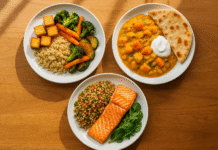
- Mon: Farro + salmon (pre-roasted) + chimichurri + arugula.
- Wed: Quinoa + tofu + sesame-ginger sauce + slaw mix.
- Fri: Sweet potato + black beans + yogurt-tahini + lime + cilantro.
Choose a few formats you love and repeat—variety comes from the matrix, not extra effort.
10. Reheat Safely and Deliciously (Microwave, Oven, Stovetop)
Reheat strategy protects both safety and texture. The rule of thumb: reheat leftovers to an internal 165 °F (74 °C) and cool food promptly after cooking. Microwaves heat unevenly, so cover, vent, and stir mid-way; check a few spots with a thermometer if possible. For breads and crispy foods, re-crisp in the oven or air fryer. Liquids (soups, sauces) should be brought to a brief boil. Federal resources specify the 165 °F target for leftovers and note that slow cookers are not ideal for reheating because they warm too slowly.
10.1 How to do it
- Microwave: cover loosely; heat 1–3 minutes; stir; heat to 165 °F.
- Oven/air fryer: 160–175 °C (320–350 °F) until hot; re-crisp starches.
- Stovetop: splash of water/stock; simmer and stir; check temp.
10.2 Mini-checklist
- Reheat only what you’ll eat; return the rest to the fridge promptly.
- Avoid reheating leafy salads—dress fresh instead.
- Use a thermometer for thick items or dense casseroles.
Good reheating turns leftovers into first-run meals without safety compromises.
11. Keep Nutrition Simple With a Plate Model (and Home-Cooking Wins)
You don’t need to count macros to eat well midweek. Use a plate model: fill ½ the plate with vegetables/fruits, and split the other half between proteins and grains; add healthy fats via dressings, nuts, or oils. This pattern aligns with MyPlate and Harvard’s Healthy Eating Plate principles and is easy to implement with prepared components. Research also associates frequent home cooking and meal planning with healthier diets and better weight outcomes at the population level (association, not causation). Building a weekly plan and batching supports that home-cooking advantage.
11.1 Numbers & guardrails
- Vegetables/fruits: aim for 2–3 cups vegetables + 1.5–2 cups fruit per day (adjust by energy needs).
- Grains: tilt toward whole grains most days.
- Protein: vary sources—fish/seafood, poultry, legumes, tofu/tempeh, eggs.
11.2 Tools/Examples
- Visual guides (MyPlate graphics), 9–10″ plates to encourage balanced portions.
- Pre-portioned snack veg/fruit cups for auto-pilot produce intake.
A visual model plus batch components makes “healthy” the default without extra thinking.
12. Freeze and Thaw Smart to Extend Your Prep (Quality and Safety)
Your freezer is the time-bank for busy weeks. Freeze extra portions flat in zip-top bags or in single-serve containers to stack neatly. Label with name and date; most cooked items keep quality for 3–4 months when frozen at 0 °F (–18 °C). Freeze sauces in ice-cube trays for quick flavor hits. Thaw safely: in the refrigerator, in cold water, or in the microwave—never on the counter. Remember that freezing does not destroy harmful germs; it simply stops growth until you cook. Reheat thawed leftovers to 165 °F.
12.1 How to do it
- Portion “future me” meals: protein + grain + veg in one container.
- Squeeze out excess air to reduce freezer burn; use freezer-safe containers.
- Keep an inventory list taped to the freezer door; cross off as you use.
12.2 Mini-checklist
- Freezer at 0 °F (–18 °C) confirmed.
- Date labels visible on the spine/edge of containers.
- FIFO applies in the freezer too—oldest out first.
Freezing the overflow turns one batch session into two weeks of easy, safe meals.
FAQs
1) What is “efficient meal prepping and planning” in one sentence?
It’s a weekly system of deciding, shopping, batch-cooking, and safely storing a small set of mix-and-match components so you assemble balanced meals in minutes instead of cooking from scratch each day. This reduces decision fatigue, cuts waste, and keeps nutrition more consistent.
2) How many hours should I budget for a full prep?
Most people need 2–3 hours for a solid week: 15 minutes to finalize the plan, 45–60 minutes of active cooking, and the rest for passive roasting, cooling, and portioning. Your second and third weeks are faster as you standardize recipes and quantities. If that sounds like a lot, start with one meal (e.g., weekday lunches) and expand.
3) What if I hate eating the same thing every day?
Use the 3-2-1 formula and two sauces. By keeping proteins neutral and changing sauces and formats (bowl, wrap, salad), you can eat variations of the same components without repetition fatigue. For instance, roasted tofu with peanut-ginger sauce on Monday becomes a tahini-lemon salad by Wednesday—no extra cooking required.
4) How long do cooked leftovers keep?
The USDA/FSIS recommends 3–4 days in the refrigerator and typically 3–4 months in the freezer for best quality, holding fridge temps at or below 40 °F (4 °C). Always refrigerate within 2 hours of cooking (1 hour if above 90 °F/32 °C) and reheat leftovers to 165 °F (74 °C) before eating.
5) Is it safe to put hot food directly into the fridge?
Yes—cool promptly to minimize time in the 40–140 °F “Danger Zone.” Divide large volumes into shallow containers (about 3 inches deep or less) so the center cools quickly; refrigerate within 2 hours. Modern refrigerators can handle the heat load of typical home batches; safety guidance prioritizes fast chilling over leaving food out. Food Safety and Inspection Service
6) Which containers work best for meal prep?
Use shallow, airtight, freezer-safe containers with visible lids (glass or BPA-free plastic). Sizes that hold one meal help you reheat only what you’ll eat. Label with painter’s tape and a marker, and store older items in front (FIFO). Shallow depth speeds cooling and supports food-safety best practices.
7) How should I reheat for best texture?
Microwave with a loose cover and stir mid-way for even heating to 165 °F; re-crisp potatoes or breaded items in an oven or air fryer. Soups and sauces should simmer or briefly boil. Avoid reheating leafy salads; toss with fresh dressing instead. Slow cookers aren’t ideal for reheating because they warm too slowly to safe temperatures. Mayo ClinicFoodSafety.gov
8) Do I need to count macros for meal prep to “work”?
Not unless you want to. The plate model is a simpler, sustainable approach: fill ½ plate with vegetables/fruits, with the remaining half split between proteins and grains, plus healthy fats from dressings or nuts. This approach aligns with public guidance and keeps variety high without tracking every gram. The Nutrition Source
9) What’s the fastest way to start if I have only 60–90 minutes?
Prep one protein, one grain, one hero vegetable, and one sauce. You’ll get four to six balanced meals from that minimal batch. As you build confidence, add a second protein and a second sauce to expand variety with little extra time.
10) How can I avoid overspending when meal prepping?
Inventory first, build a single list, and design meals to use whole packages (e.g., 1 can beans, full bunch of cilantro with stems for chimichurri). Choose one premium item per week (e.g., salmon) and balance with budget-friendly staples (eggs, legumes, seasonal produce). Freezing extra portions prevents waste and protects value.
11) What about food safety in hot climates or long commutes?
The 2-hour rule shrinks to 1 hour if temperatures exceed 90 °F (32 °C)—for example, in a hot car. Use insulated bags with ice packs for transport, and get perishables into the fridge fast. Keep a small appliance thermometer in your fridge to verify ≤40 °F (4 °C).
12) Is meal planning actually linked to healthier eating?
Large observational studies associate meal planning and frequent home cooking with better diet quality and lower odds of obesity, though they don’t prove causation. Still, the pattern is consistent: planning ahead supports healthier defaults.
Conclusion
Efficient meal prepping and planning is less about rigid rules and more about building a repeatable system that fits your life. Decide your weekly goals, lock a small set of meals, and shop once with intent. On batch day, cook proteins and grains in parallel, give vegetables the prep they deserve, and power everything with two versatile sauces. Portion shallow, label clearly, and respect cold-chain basics so food stays safe and delicious. During the week, assemble rather than cook, reheating smartly to restore texture and hit safe temperatures. The result is fewer decisions, less waste, and a steady rhythm of balanced meals—exactly what busy weeks need. Start with one small batch this weekend, track what worked, and iterate. Plan once, cook smart, and eat well all week—your future self will thank you.
CTA: Block two hours this Sunday, pick 3 proteins + 2 bases + 1 veg, and prep your first week of ready-to-eat meals.
References
- About Four Steps to Food Safety, Centers for Disease Control and Prevention (Apr 29, 2024). CDC
- Leftovers and Food Safety, USDA Food Safety and Inspection Service (Jul 31, 2020). Food Safety and Inspection Service
- “Danger Zone” (40°F–140°F), USDA Food Safety and Inspection Service (Jun 28, 2017). Food Safety and Inspection Service
- Safe Minimum Internal Temperature Chart, USDA Food Safety and Inspection Service (accessed Aug 2025). Food Safety and Inspection Service
- 4 Steps to Food Safety, FoodSafety.gov (Sep 18, 2023). FoodSafety.gov
- Cold Food Storage Chart, FoodSafety.gov (Sep 19, 2023). FoodSafety.gov
- Preventing Clostridium perfringens Food Poisoning, Centers for Disease Control and Prevention (Apr 3, 2024). CDC
- Dietary Guidelines for Americans, 2020–2025 (9th ed.), U.S. Departments of Agriculture and Health & Human Services (Dec 2020). Dietary Guidelines
- What Is MyPlate?, MyPlate.gov (accessed Aug 2025). MyPlate
- Meal planning is associated with food variety, diet quality and body weight status in a large sample of French adults, International Journal of Behavioral Nutrition and Physical Activity (2017). BioMed Central
- Is cooking at home associated with better diet quality or weight-loss intention?, Public Health Nutrition (2015). PubMed
- Refrigeration & Food Safety, USDA Food Safety and Inspection Service (Mar 23, 2015; accessed Aug 2025). Food Safety and Inspection Service