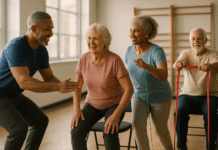
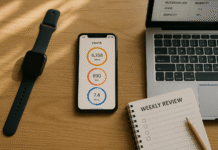
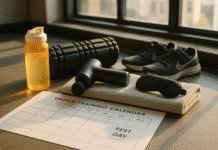

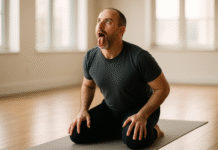




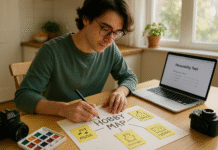

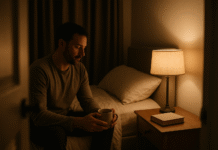
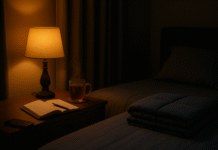

A great day of training or focused work is finished by a great evening. An effective evening routine is the bridge between effort and adaptation: it downshifts your nervous system, repairs muscles, and primes your brain for deep, restorative sleep. Below, you’ll learn nine evening routine habits for better recovery—practical steps that fit real lives. In short: dim the lights, reduce stimulation, move gently, breathe slower, and nudge body temperature and fueling in sleep-friendly directions. An evening routine is not a rigid script; it’s a predictable wind-down that tells your body, “we’re safe, it’s time to recover.”
Quick definition: An evening routine is a repeatable 60–120-minute wind-down that reduces cognitive and physiological arousal so your body can enter deeper sleep stages that drive recovery. Done consistently, it improves sleep quality, mood, and training readiness.
At-a-glance starter steps: power down devices 60–90 minutes before bed; dim lights; do 10–15 minutes of mobility; spend 5 minutes on slow breathing; consider a warm shower 60–90 minutes pre-bed; avoid caffeine late and alcohol near bedtime; read a paper book; offload tomorrow’s to-dos; keep the bedroom cool, dark, and quiet.
Important: This guide is educational and not medical advice. If you have insomnia, sleep apnea, or a medical condition, consult a qualified clinician.
1. Set a Device Curfew and Manage Evening Light
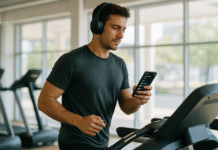
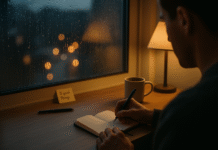
Your most leverage at night comes from light. Reducing bright, blue-enriched light in the last 60–90 minutes before bed helps melatonin rise on time and prevents a circadian phase delay. That means you fall asleep faster and wake more refreshed. The fastest way to do this is a device curfew: put phones/tablets away, switch the TV to low brightness and warmer color temperature, and use lamps instead of overhead lighting. If you must use screens, enable night modes and consider blue-blocking glasses—but remember: brightness and content still stimulate. Aim for dim, amber light that lets you move safely without flooding your eyes. Pair light changes with a ritual (putting the phone to bed in another room) so the cue becomes automatic.
1.1 Why it matters
- Evening exposure to blue-enriched light (e.g., tablets/e-readers) can delay circadian timing, suppress melatonin, lengthen time to fall asleep, and impair next-morning alertness. PubMed
- Even typical room lighting can significantly suppress melatonin, not just glaring screens.
- Real homes often have enough evening light to suppress melatonin ~50%—so dimming matters.
1.2 How to do it
- T-90 minutes: switch to lamplight; set “Night Shift/Blue Light Filter + minimum brightness.”
- T-60 minutes: devices off and out of reach; cue your wind-down playlist or white noise via smart speaker.
- T-30 minutes: only paper reading, stretching, or conversation; bathroom lights on “low.”
1.3 Numbers & guardrails
- Target <50 lux at eye level in the hour before bed; warm color temperature (~2200–2700K).
- If you read, choose paper or e-ink with front-light set very low. The classic e-reader study shows backlit LE displays are the problem. PNAS
Bottom line: Treat light like caffeine for your eyes—dose less at night and your sleep starts easier.
2. Do a 10–15 Minute Mobility & Stretch Flow
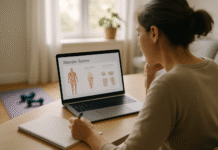
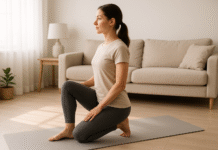
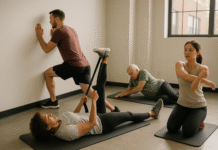
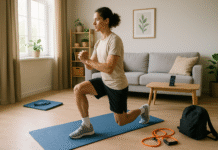
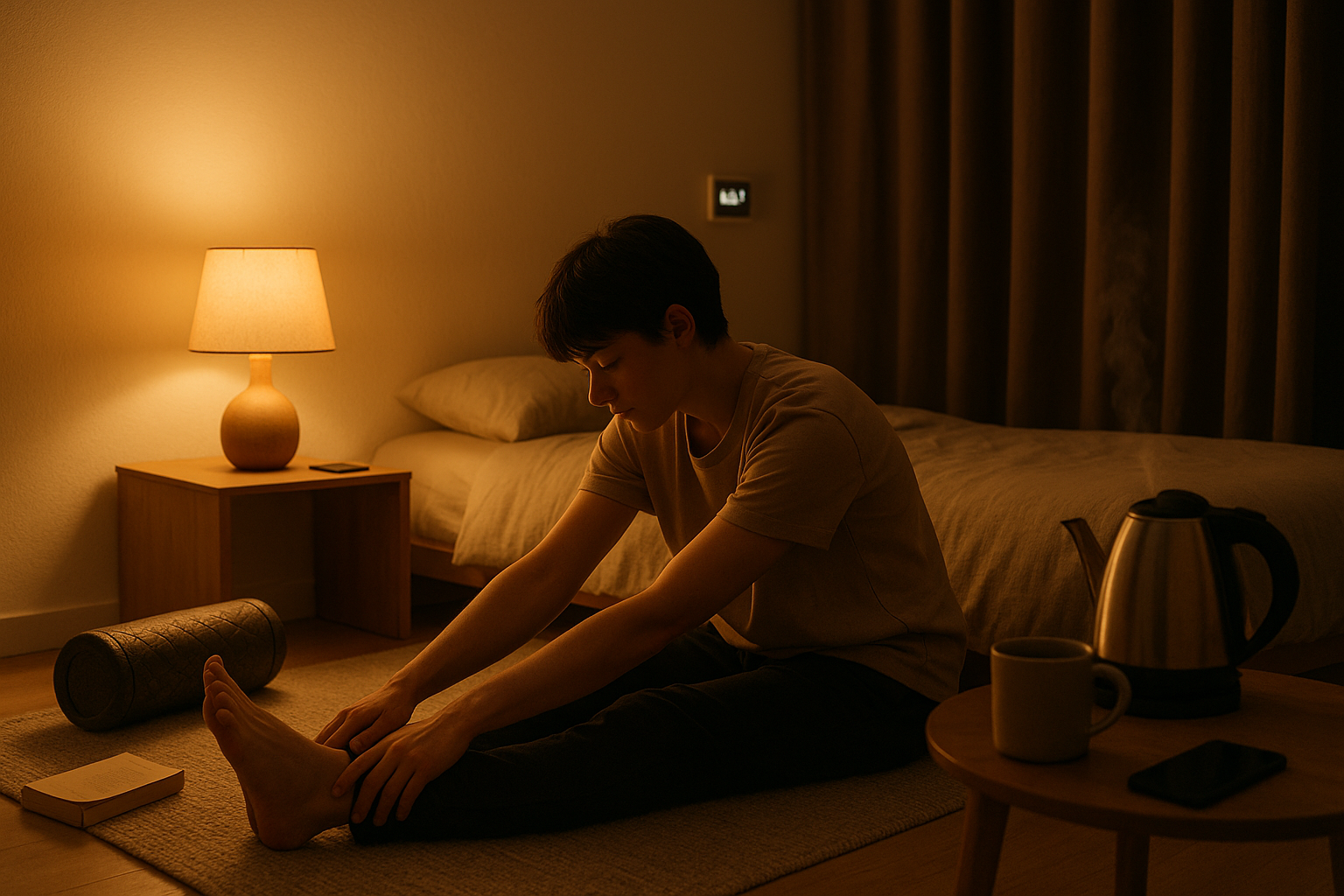
Gentle movement signals “tension off.” A short mobility sequence reduces stiffness from the day, improves range of motion, and lowers perceived muscle soreness—without raising core temperature too close to bed. Focus on hips, thoracic spine, and the posterior chain; pair slow nasal breathing with each stretch. You’re not trying to set PRs in flexibility; you’re coaxing tissues and the nervous system to relax. This is also prime time for brief self-massage with a foam roller or ball. Evidence suggests foam rolling produces small but meaningful improvements in range of motion and soreness reduction—helpful inputs for recovery when used consistently.
2.1 How to do it
- Flow idea (10–15 min):
- 90/90 hip switches → 1 minute
- Cat-cow + thoracic rotations → 2 minutes
- Half-kneeling hip flexor + glute squeeze → 2 minutes
- Hamstring flossing on floor → 2 minutes
- Calf wall stretch + ankle circles → 2 minutes
- Child’s pose breathing (4–6 seconds inhale, 6–8 seconds exhale) → 2–4 minutes
- Optional self-massage (5–8 min): quads, glutes, calves; 60–120 seconds per area.
2.2 Tools/Examples
- Foam roller (smooth if you’re new); lacrosse or massage ball for glutes/feet; yoga strap.
- Timer app to keep you honest for each station.
2.3 Numbers & guardrails
- Foam rolling shows short-term ROM gains and can reduce DOMS sensations; effects are generally modest but useful. Sessions of ≥90–120 seconds per muscle are common in studies.
Bottom line: Low-intensity mobility plus brief self-massage relaxes tissues and mind—an easy, evidence-compatible win for nightly recovery.
3. Downshift Your Nervous System with Slow Breathing
If evenings feel wired, your sympathetic (fight-or-flight) system is still in charge. Slow, paced breathing is a fast, portable way to nudge your physiology toward parasympathetic dominance. The goal isn’t fancy breathwork—it’s quiet nasal breathing that lengthens exhalation and synchronizes heart and lungs, improving heart-rate variability (HRV) and subjective calm. Five minutes is enough to feel the shift. Combine it with a comfortable seated posture or legs-up-the-wall and let the breath do the work.
3.1 How to do it
- Resonant breathing (5–6 breaths/min): inhale 5 seconds → exhale 5 seconds, continuous, for 5–10 minutes.
- 4-6 pattern: inhale 4 seconds → exhale 6 seconds (extend to 4-8 as it gets easier).
- Box breathing (light version): 4-4-4-4 (inhale, hold, exhale, hold) if you like structure.
- Keep it silent, nasal, and effortless. Stop if you feel air hunger—comfort first.
3.2 Numbers & guardrails
- Slow breathing and HRV biofeedback increase vagal activity and vmHRV markers, supporting better autonomic regulation and stress resilience. Effects are shown across multiple trials and meta-analyses. PubMed
3.3 Mini-checklist
- Posture tall, shoulders soft
- Tongue on roof of mouth (nasal breathing)
- Eyes half-closed or downcast
- Timer set for 5–10 minutes
Bottom line: A few minutes of slow breathing is like a dimmer switch for your nervous system—less adrenaline, more recovery.
4. Time a Warm Shower or Bath to Nudge Core Temperature
A warm bath or shower 60–90 minutes before bed can help you fall asleep faster. It works paradoxically: warming the skin drives heat outward, so your core temperature drops afterward—one of the body’s principal sleep signals. The sweet spot is comfortably warm, not scalding, and the timing matters more than the duration. Even 10 minutes helps if your evening is packed. Follow the bath with a cool bedroom and light pajamas to keep the drop going.
4.1 How to do it
- Temperature: ~40–42.5 °C (104–108.5 °F).
- Timing: start 1–2 hours before bed; aim for 10–30 minutes in bath or 5–10 minutes in shower.
- After: air-dry briefly, switch to breathable sleepwear, dim lights.
4.2 Numbers & guardrails
- Meta-analysis: passive body heating at 40–42.5 °C, 1–2 hours pre-bed, is linked to improved sleep quality and shorter sleep-onset latency—sometimes by meaningful minutes.
4.3 Region-specific note
- In hot, humid climates or during heat waves, favor brief lukewarm showers and aggressive bedroom cooling/airflow; you still get the evaporative benefit without overheating.
Bottom line: A strategically timed warm rinse is a simple lever to help your body initiate sleep.
5. Cutoffs for Caffeine, Alcohol, Heavy Meals, and Late Fluids
What you don’t consume late can matter as much as what you do. Caffeine’s average half-life is about 5 hours (longer in pregnancy; shorter in smokers), so late coffee or tea can still be active at bedtime. Alcohol may knock you out but fragments sleep, suppresses REM, and increases awakenings. Heavy, spicy, or high-fat dinners can trigger reflux and restlessness, while excessive late fluids invite bathroom trips. The goal isn’t perfection; it’s smart timing and portioning so digestion and neurochemistry support recovery, not fight it.
5.1 Numbers & guardrails (as of August 2025)
- Caffeine: Most adults should cap total intake at ≤400 mg/day and avoid it 8–10 hours before bed if sensitive; half-life averages ~5 h but varies.
- Alcohol: Even moderate evening drinking can reduce sleep quality and REM; skip it within 3–4 hours of bed on training days. PMC
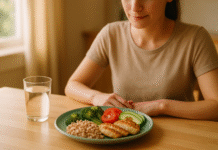
- Meals: Finish large meals ≥3 hours pre-bed; keep later snacks small, protein-forward, and bland.
- Fluids: Taper in the last 2–3 hours; a small herbal tea is fine if it doesn’t prompt nocturia.
5.2 Mini menu
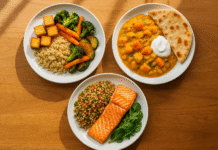
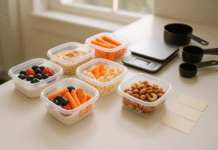
- Light, sleep-friendly snack (optional): Greek yogurt with berries; banana + peanut butter; warm milk alternative; cottage cheese with cinnamon.
Bottom line: Time stimulants, sedatives, and digestion so sleep can do its job and your muscles can rebuild.
6. Read Something Calming—On Paper
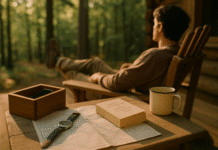
Reading is a low-arousal way to shift attention off work and toward rest. The trick is paper (or very dim, warm e-ink) plus calm content—fiction, nature writing, gentle essays. Avoid cliff-hanger thrillers and scrolling feeds; their cliff-hangers keep you up. Reading pairs perfectly with dim light and a blanket; it occupies the mind just enough to prevent rumination without spiking adrenaline. If your eyes are tired, swap in an audiobook played softly through a speaker (not earbuds you’ll fall asleep wearing).
6.1 How to do it
- Set a hard stop (e.g., “two chapters or 20 minutes”).
- Use a warm lamp at shoulder level, pointed away from your eyes.
- Keep a bookmark and a sticky note; if a “must-do” pops up, jot it and keep reading.
6.2 Why paper beats bright screens at night
- Backlit, blue-enriched displays at night suppress melatonin and delay sleep timing; paper books do not. The classic controlled lab study with e-readers shows longer time to fall asleep and worse morning alertness versus reading print.
Bottom line: Old-school paper reading is engineered for calm focus—perfect for easing into sleep.
7. Offload Tomorrow: To-Do List, Shutdown, and Prep
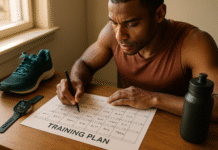
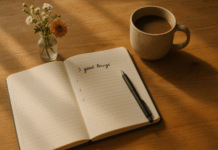
Mental clutter is physical tension in disguise. Spend 5–10 minutes writing a short, specific to-do list for tomorrow, and you’ll often fall asleep faster. This “cognitive offloading” clears working memory and reduces bedtime worry. Then do a shutdown routine: put your bag by the door, lay out training clothes, and set the coffee maker. If you like reflection, add a one-line gratitude note—no deep journaling required. The aim is not productivity theater; it’s easing rumination so your brain lets go.
7.1 Numbers & guardrails
- In a controlled sleep-lab study, participants who wrote specific to-do lists before bed fell asleep significantly faster than those who journaled about completed tasks; more detailed lists correlated with faster sleep onset.
7.2 Mini-checklist
- List 3–7 tasks for tomorrow (specific verbs)
- Order them (1–3 high-impact first)
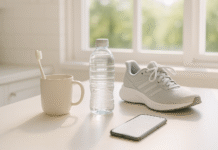
- Stage items (clothes, keys, water bottle)
- Close loops: dishwasher on, alarms set, doors locked
Bottom line: Write it down, stage your space, and let your brain stand down for the night.
8. Engineer a Cool, Dark, Quiet Bedroom
Your bedroom is recovery equipment. Aim for cool (16–20 °C / 60–68 °F), dark, and quiet. Cooler rooms help your body’s natural nighttime temperature drop; darkness preserves melatonin; quiet (or constant neutral noise) prevents micro-arousals. If AC isn’t available, use fans, cross-ventilation, breathable bedding, and a chilled water bottle near feet. Blackout shades matter more than fancy gadgets; if you rent, use temporary light-blocking film or travel curtains.
8.1 How to do it
- Temperature: set thermostat 16–20 °C (60–68 °F); test for your comfort.
- Darkness: blackout curtains; plug LEDs; eye mask.
- Noise: foam earplugs or continuous white/brown noise.
- Air: keep it fresh; crack a window if outdoor air is safe.
8.2 Numbers & guardrails
- Sleep organizations commonly recommend bedrooms around 65–68 °F for most adults; keeping it cool, dark, quiet remains a core habit. (As of July 2025, National Sleep Foundation guidance targets ~65–68 °F with individual variation.)
8.3 Region-specific note
- Hot/humid nights: combine ceiling fan + floor fan for cross-breeze; freeze a gel pack in a pillowcase at foot of bed; choose percale cotton or linen, not heavy knits.
Bottom line: A small temperature drop and true darkness create the physical conditions your biology expects for deep sleep.
9. Keep a Consistent Sleep Window (with Flexible Bedtime)
Consistency is the master habit. Fix your wake time within a 30-minute window all week (yes, weekends), and let bedtime “float” based on sleepiness cues. This stabilizes your circadian rhythm and builds healthy pressure for sleep at night. If you can’t sleep after ~20 minutes, get up and do something calm in dim light; return when drowsy—this is a core part of stimulus control used in insomnia therapy. Protect the window with gentle boundaries: fewer late-night social scrolls, earlier dinners, and a “lights-out” routine that’s the same every night.
9.1 How to do it
- Choose a realistic wake time you can keep daily.
- Count back 7–9 hours to set your target sleep window.
- If you miss the window, still wake on time; nap briefly (≤20–30 minutes) before 3 p.m. if needed.
- On travel days, adjust wake time by 30–60 minutes increments across a few days.
9.2 Why it matters
- Sleep organizations emphasize consistent schedules, light control, and avoiding heavy meals/caffeine late as core sleep hygiene. These habits help align circadian rhythms, improving sleep quality and daytime function.
Bottom line: Anchor wake time, keep the rhythm, and let the rest of your routine fall into place.
FAQs
1) How long should an evening routine be?
Most people do well with 60–120 minutes, but even 20–30 minutes can help if you focus on the highest-leverage steps: dimming lights, device curfew, a brief mobility/breathing block, and offloading tomorrow’s tasks. The key is consistency—your brain learns the pattern and starts winding down earlier, making sleep feel more automatic over time.
2) What’s the best last snack if I’m hungry at night?
Aim for light, protein-forward options that won’t cause reflux: yogurt, cottage cheese, a banana with nut butter, or warm milk alternatives. Avoid heavy, spicy, or very fatty meals within 3 hours of bed. If late training drives hunger, a small snack is better than going to bed wired by low blood sugar.
3) Do blue-blocking glasses replace turning off screens?
They can help reduce melanopic stimulation, but brightness and engaging content still activate your brain. Use them as a backup, not a license to scroll. Your best bet remains dim, warm lamps and a device curfew in the last 60–90 minutes.
4) Is alcohol really that bad for sleep?
Even modest evening drinking can fragment sleep and reduce REM, leaving you less recovered. If you choose to drink, keep it earlier in the evening and keep recovery nights alcohol-free, especially before training or big work days. Evidence consistently shows quality suffers with bedtime alcohol.
5) What time should I stop caffeine?
Because the average half-life is ~5 hours (longer in pregnancy), many people feel better cutting caffeine 8–10 hours before bed. If you’re sensitive, try a noon cutoff. Switch to decaf, herbal teas, or just water after lunch and track how you sleep for two weeks.
6) Will a hot bath make me too warm to sleep?
Counterintuitively, a warm bath or shower earlier in the evening (about 1–2 hours pre-bed) helps core temperature drop afterward, which supports sleep onset. Keep it comfortably warm (~40–42.5 °C / 104–108.5 °F) and brief if your environment is hot.
7) What if I wake up at 3 a.m. and can’t fall back asleep?
Stay calm; avoid clock-watching. If you’re not drowsy after ~20 minutes, get out of bed and read a paper book in dim light. When sleepiness returns, go back to bed. The next day, protect your wake time and avoid long naps; your body will rebuild sleep pressure for the following night.
8) Can foam rolling at night make me sore?
Keep pressure moderate, limit each muscle to 60–120 seconds, and avoid bony areas. Studies suggest small but practical benefits in range of motion and DOMS without performance downsides. If you’re very tender, use a softer roller or a ball against a wall and keep the session short.
9) Does reading help more than TV?
Generally, yes—especially paper reading in dim, warm light. Backlit screens and stimulating shows can delay sleep. If you prefer background TV, choose low-engagement, familiar content at low brightness and set a timer so it shuts off automatically.
10) Is it okay to exercise in the evening?
Yes—light to moderate activity (walking, mobility, yoga) can be relaxing. Very intense workouts close to bedtime can keep you wired; finish them ≥3 hours before bed and follow with a cool-down, light snack, hydration, and your warm shower.
11) What temperature should my bedroom be?
Most adults sleep best around 16–20 °C (60–68 °F), though personal comfort varies. Keep bedding breathable and consider a fan or white noise machine. If you wake hot, try a cooler setting, lighter duvet, or a breathable mattress topper.
12) How soon can I expect results?
Some benefits (e.g., falling asleep faster after to-do offloading or dimming lights) show up night one. Deeper, more stable sleep typically builds over 1–2 weeks of consistent habits. Log bedtime, wake time, and how you feel at 10 a.m. to see trends.
Conclusion
Evening routines are not about perfection—they’re about predictability. When your nights look and feel similar, your body learns to downshift reliably. Start with the levers that move biology most: light, breath, temperature, and timing. Keep the routine short enough to repeat and flexible enough to survive real life. If your evening is chaotic, pick three anchors (dim lights, device curfew, five-minute breathing) and add a habit every week or two. Track how you feel on waking and how quickly you fall asleep; use that feedback to personalize your wind-down. Over time, these nine evening routine habits for better recovery will feel less like a checklist and more like a nightly exhale—a rhythm that turns effort into adaptation, strain into strength, and busy days into better tomorrows.
CTA: Tonight, choose your wake time, set a 60-minute device curfew, and try a five-minute slow-breathing timer—start your recovery routine now.
References
- Evening use of light-emitting eReaders negatively affects sleep, circadian timing, and next-morning alertness. Proceedings of the National Academy of Sciences (PNAS). 2015. https://www.pnas.org/doi/10.1073/pnas.1418490112
- Exposure to Room Light before Bedtime Suppresses Melatonin Onset and Shortens Melatonin Duration in Humans. Journal of Clinical Endocrinology & Metabolism (via PubMed Central). 2011. https://pmc.ncbi.nlm.nih.gov/articles/PMC3047226/
- Evening home lighting adversely impacts the circadian system. Scientific Reports (Nature). 2020. https://www.nature.com/articles/s41598-020-75622-4
- Before-bedtime passive body heating by warm shower or bath to improve sleep. Sleep Medicine Reviews (via PubMed). 2019. https://pubmed.ncbi.nlm.nih.gov/31102877/
- Spilling the Beans: How Much Caffeine is Too Much? U.S. Food & Drug Administration (FDA). Aug 28, 2024. https://www.fda.gov/consumers/consumer-updates/spilling-beans-how-much-caffeine-too-much
- Caffeine. StatPearls (NCBI Bookshelf). 2024. https://www.ncbi.nlm.nih.gov/books/NBK519490/
- Alcohol and Sleep. Sleep Foundation. 2019 (page updated periodically). https://www.sleepfoundation.org/nutrition/alcohol-and-sleep
- Healthy Sleep Habits. Sleep Education, American Academy of Sleep Medicine. Apr 2, 2021. https://sleepeducation.org/healthy-sleep/healthy-sleep-habits/
- The Best Temperature for Sleep. National Sleep Foundation. Jul 11, 2025. https://www.sleepfoundation.org/bedroom-environment/best-temperature-for-sleep
- The Effects of Bedtime Writing on Difficulty Falling Asleep: A Polysomnographic Study. Journal of Experimental Psychology: General (via PubMed Central). 2017/2018. https://pmc.ncbi.nlm.nih.gov/articles/PMC5758411/
- How Breath-Control Can Change Your Life: A Systematic Review of Psycho-Physiological Correlates of Slow Breathing. Frontiers in Human Neuroscience. 2018. https://www.frontiersin.org/journals/human-neuroscience/articles/10.3389/fnhum.2018.00353/full
- Effects of Voluntary Slow Breathing on Heart Rate Variability: Systematic Review & Meta-analysis. Neuroscience & Biobehavioral Reviews (abstract via ScienceDirect). 2022. https://www.sciencedirect.com/science/article/abs/pii/S0149763422002007
- Self-Myofascial Release using Foam Rollers: A Systematic Review. International Journal of Sports Physical Therapy (via PubMed Central). 2015. https://pmc.ncbi.nlm.nih.gov/articles/PMC4637917/
- A Meta-Analysis of the Effects of Foam Rolling on Performance and Recovery. Frontiers in Physiology (via PubMed Central). 2019. https://pmc.ncbi.nlm.nih.gov/articles/PMC6465761/