


















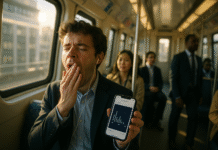
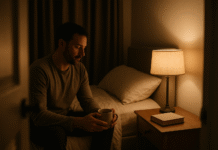
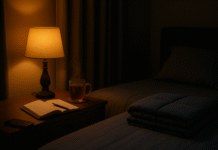
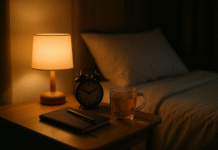

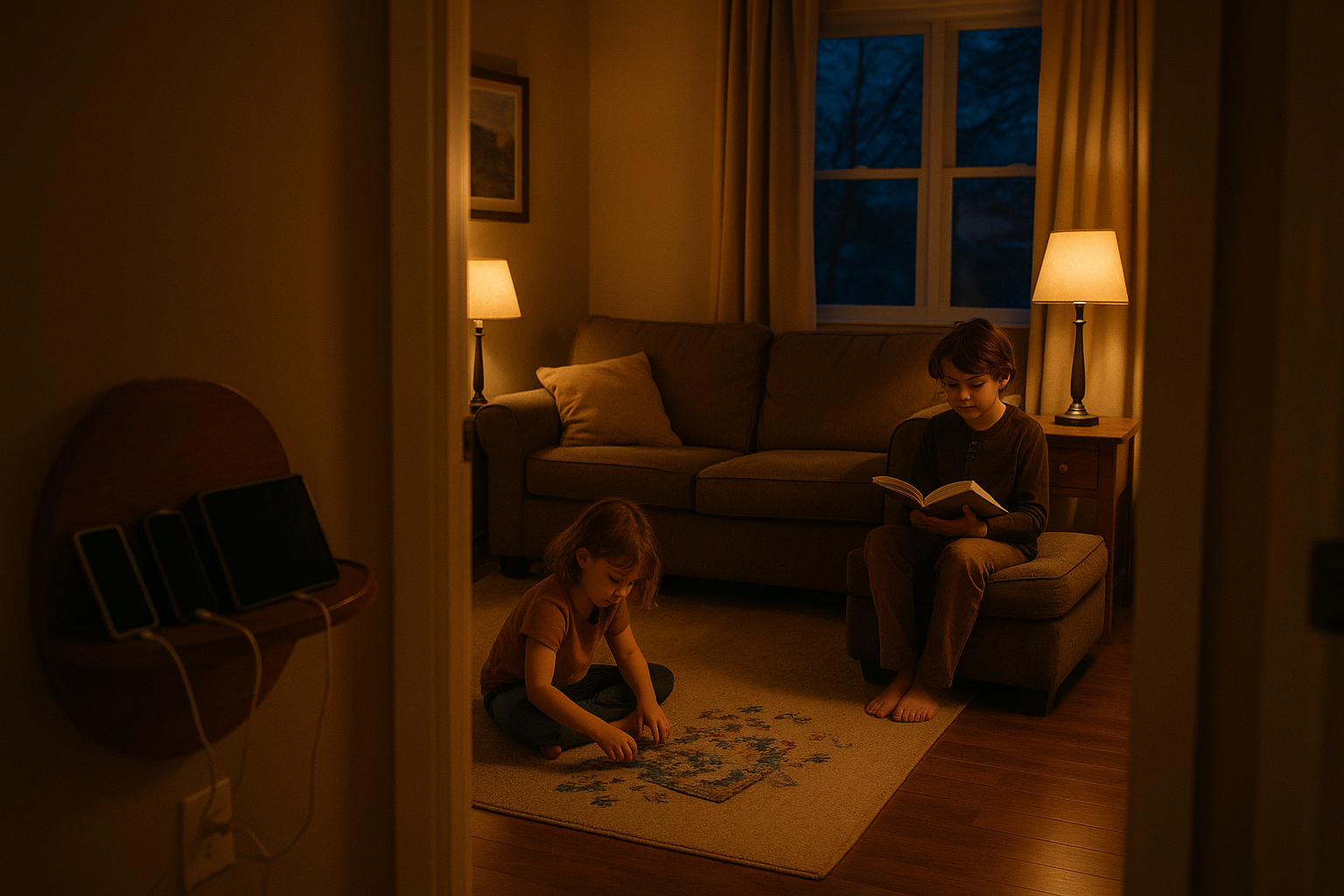
Calm, predictable evenings are built, not wished into existence. This guide distills the most practical, evidence-aligned evening screen time guidelines for children into 11 clear actions you can start tonight. You’ll learn how to set a realistic “digital sunset,” choose calmer content, use built-in parental controls, and tune routines by age—without power struggles. Brief note: this article offers general educational guidance and is not a substitute for professional medical advice; if you have concerns about your child’s sleep or behavior, consult your pediatrician.
Quick answer: Healthy evening screen habits prioritize timing (stop at least ~60 minutes before bed), content (calm, age-appropriate), and context (no devices in bedrooms) over a one-size-fits-all daily hour cap. Pair these rules with the sleep durations appropriate for your child’s age.
Fast-start checklist (5 steps): Set a daily device downtime 60–90 minutes before lights-out; move all chargers outside bedrooms; dim screens and room lights after sunset; switch to calming, non-interactive activities; use Apple Screen Time or Google Family Link to automate it.
1. Set a Daily “Digital Sunset” 60–90 Minutes Before Bed
Make the first rule the simplest: screens off at least 60 minutes before bedtime (90 minutes if your child is highly stimulated by games or social feeds). This single change minimizes two major sleep disruptors—light exposure and arousal from interactive media—right when the brain is primed to wind down. There isn’t a universal daily hour limit that fits every child; the leading pediatric bodies emphasize timing, content, and family context over rigid totals. As of August 2025, evidence keeps pointing in the same direction: evening screens are the riskiest for sleep, and removing them before bed improves sleep, even in toddlers. Start with a consistent cutoff tied to your child’s target sleep window, not the clock alone.
1.1 Why it matters
- Evening light (especially short-wavelength) can delay melatonin and push bedtimes later; interactive content also raises alertness.
- In a 2024 study with toddlers, removing screens in the pre-bed hour improved sleep—a rare, practical experiment in real homes.
1.2 How to do it
- Pick a consistent cutoff (e.g., 7:30 p.m.) that’s ~60–90 minutes before lights-out.
- Use Downtime (iOS) or Bedtime/Time limits (Family Link) to automate.
- Build a wind-down sequence (bath, PJs, paper book) that starts the minute screens go off.
1.3 Numbers & guardrails
- If your child still shows “second wind” behavior, extend the cutoff by 15–30 minutes for a week.
- Teens may negotiate exceptions for schoolwork—keep any screen-based study non-interactive and finish 60 minutes before lights-out.
Bottom line: Lock the cutoff to the sleep schedule, not to daily battles, and let automation enforce it quietly.
2. Keep Devices Out of Bedrooms—All Night, Every Night
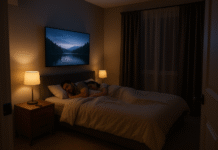
Bedrooms should be sleep sanctuaries. Keeping TVs, tablets, and phones out of children’s bedrooms prevents bedtime delays, reduces night wakings, and helps mornings run on time. Research links bedroom media access with delayed bedtimes and shorter sleep in children and adolescents; experts advise charging devices outside bedrooms and setting notifications to silent overnight. Make “no bedroom devices” a family rule, with adult role-modeling and a neutral charging station in the hallway or kitchen.
2.1 Mini-checklist
- Create a central charging dock far from bedrooms.
- Use Do Not Disturb or Sleep focus modes by default at night.
- Replace “phone alarm” with a $10 analog alarm clock to avoid the “but I need it to wake up” trap.
2.2 Common mistakes
- Letting e-readers slide: backlit e-readers still emit light; prefer paper at night.
- “Emergency” exceptions becoming nightly: define what truly counts as urgent.
Bottom line: Location is policy. When devices sleep elsewhere, kids sleep better—and enforcing rules gets easier.
3. Dim the Lights, Not Just the Screens
Even with screens off, bright evening light can delay melatonin. After sunset, treat your home like a campfire: dim overheads, use lamps at eye level, and switch devices to night/dark modes if they must be used earlier in the evening. Evidence shows that short-wavelength (blue) light can suppress melatonin and shift circadian timing; children may be more sensitive to light than adults. While results vary across studies, the practical implication is clear: reduce brightness and blue-weighted light at night, and boost daylight exposure in the morning. ScienceDirect
3.1 How to do it
- Set Night Shift/Night Mode on screens in the evening by default.
- Drop room lighting to the lowest comfortable level 2–3 hours before bed.
- Encourage morning sunlight (school walk, balcony breakfast) to anchor circadian rhythms.
3.2 Numbers & guardrails
- Reserve blue-blocking glasses for older kids/teens who request them; evidence is mixed and behavior change (timing/brightness) is more reliable.
Bottom line: Light is a powerful signal. Taming household and screen light after sunset pays off even if you’ve already limited screen time.
4. Choose Calming, Age-Appropriate Content (and Co-View When You Can)
When screens are used in the early evening, content quality and interactivity matter more than total minutes. Slow-paced, familiar, age-rated shows or audiobooks are less arousing than competitive games, live chats, or algorithmic short-video feeds. Pediatric groups stress quality and context over rigid counts; they also recommend co-viewing with caregivers when possible to help kids process content and transitions. In practice: aim for non-interactive content within 2 hours of bedtime and avoid feeds/games in the final hours.
4.1 Mini-checklist
- Prefer paper books, audiobooks, nature documentaries, or read-alouds before bed.
- Save gaming and social feeds for earlier in the day.
- Watch together and discuss one “takeaway” to close the loop.
Bottom line: Calmer content produces calmer bodies. If evening screens are necessary, keep them passive, predictable, and brief.
5. Plan Backwards From Age-Based Sleep Targets
Make evening rules serve a bigger goal: your child’s sleep duration. Use public-health targets to plan bedtime and then work backward to set screen cutoffs, bath time, and reading. As of May 2024, public guidance recommends 9–12 hours for school-age children and 8–10 hours for teens; younger kids need even more (e.g., 10–13 hours for preschoolers). Post the targets on the fridge and design evenings to hit them most nights, not occasionally.
5.1 Why it matters
- Chronic sleep shortfalls affect mood, learning, immunity, and injury risk.
- Evening screens often steal time from sleep; timing guardrails restore it.
5.2 How to do it
- Pick lights-out times by age (e.g., 8:30 p.m. for a 9-year-old needing ~10 hours with a 6:30 a.m. wake).
- Set the digital sunset 60–90 minutes before that.
- Recalibrate seasonally (sports, exams) while protecting minimum sleep.
Bottom line: Target sleep first; let screen rules follow. The math is simple—and powerful.
6. Create (and Revisit) a Family Media Plan
Families who write down their media rules and revisit them have an easier time enforcing boundaries. The American Academy of Pediatrics offers a free Family Media Plan tool that helps you set device curfews, bedroom rules, and content guidelines by age. Research suggests that structured media planning can increase adherence to household rules in older children and adolescents. Treat your plan like a living document—update at the start of each school term or after birthdays. PMC
6.1 What to include
- Evening curfews and bedroom device rules.
- Exceptions (e.g., late-game nights) and how to handle them.
- Consequences for repeated violations—agreed in advance, calm in tone.
6.2 Region-specific note
- If your child’s schedule shifts during religious events, heat waves, or exam seasons, add temporary tweaks (earlier digital sunsets on hot nights when sleep is fragile; exam-week homework flow with an earlier start).
Bottom line: A plan makes rules predictable, fair, and collaborative—and it keeps you from renegotiating at 8:45 p.m. American Academy of Pediatrics
7. Use Built-In Parental Controls to Automate Good Habits
Technology can enforce what willpower struggles to. Apple’s Screen Time (iPhone/iPad) and Google’s Family Link (Android/Chromebook) let you schedule Downtime/Bedtime, set daily limits, restrict specific apps, and lock devices remotely. Set these once to create friction-free evenings. For younger kids, keep “Always Allowed” limited (e.g., calls, messages, audiobooks). For older kids, use app-level limits to curb late-night social or gaming without blocking school tools earlier in the day.
7.1 Mini-setup
- iOS: Settings → Screen Time → Downtime (schedule), App Limits, Always Allowed. Apple Support
- Android/Chromebook: Family Link → Screen time → Time limits/Bedtime; add App limits as needed. Google Help
7.2 Tips
- Use shared calendars to align downtime with sports, tutoring.
- Keep parent overrides rare; consistency beats negotiation.
Bottom line: Automate the routine so you can focus on connection, not correction. Safety Center
8. Make Homework Screens Work For Sleep, Not Against It
Evening assignments sometimes require screens. The key is structure: batch screen-heavy tasks earlier, and switch to non-interactive work (reading printed pages, handwriting) in the final hour. Encourage downloading materials after school, using distraction-free modes, and limiting tabs. If an assignment runs late, enforce a hard stop at the digital sunset; finish in the morning when cognition is sharper and circadian pressure helps. Public bodies emphasize balancing screen use with sleep and activity needs—especially on school nights.
8.1 Homework flow (example)
- 5:00–6:00: Online research/doc editing.
- 6:00–7:00: Dinner & break (no screens).
- 7:00–7:30: Print or save materials.
- 7:30: Digital sunset → paper reading, flashcards, or outline on paper.
8.2 Tools
- Use Focus/Do Not Disturb and app limiters to prevent “just one more video.”
- Keep a printer & scratch paper handy for quick off-ramping.
Bottom line: Evening schoolwork is OK—interactive and stimulating media close to bedtime isn’t.
9. Swap Screens for Wind-Down Routines Kids Actually Like
Children comply with routines they enjoy. Replace pre-bed scrolling with options that meet the same needs—comfort, novelty, connection—without over-arousal. Paper books, coloring, simple puzzles, yoga/breathing, and audiobooks let kids relax while keeping hands or imagination engaged. Sleep medicine groups caution that social media and fast-paced gaming disrupt sleep in students; steering toward calmer alternatives in the evening protects both duration and quality. AASM
9.1 Try these swaps
- Swap short-video feeds → 20 minutes of an audiobook while tidying toys.
- Swap competitive games → cozy board games or jigsaw for connection.
- Swap texting at 9 p.m. → write tomorrow’s gratitude list.
9.2 Mini-case
- A 10-year-old who traded 30 minutes of evening gaming for an audiobook + puzzle fell asleep faster within a week—because arousal dropped while routine consistency rose.
Bottom line: A soothing routine beats rules alone. Give kids pleasant defaults they’ll choose again tomorrow.
10. Model the Habits You Want to See (and Reward Consistency)
Kids sniff out double standards fast. Commit to family-wide evening rules: adults also dock phones, avoid doomscrolling after dinner, and protect sleep. Involve children in setting the plan; youth safety agencies note that kids follow rules they help create. Praise consistency and reward systems, not single nights—e.g., a weekend morning activity after five school nights of on-time docking.
10.1 Mini-checklist
- One charging station for everyone.
- A short evening huddle (“What’s our plan tonight?”).
- Visual tracker for streaks; celebrate weekly, not nightly.
Bottom line: When everyone plays by the same rules, pushback drops and routines stick.
11. Tune by Age and Temperament—Watch for Red Flags
Under age 5, health organizations recommend very limited sedentary screen time and abundant active play; toddlers and preschoolers are especially sensitive to light and routine disruption. For school-age kids and teens, prioritize sleep duration, timing, and content quality over a strict daily cap—and be alert to red flags like daytime sleepiness, increasing conflicts over screens, or bedtime anxiety. If screens before bed are unavoidable, keep them non-interactive, brief, and finished 60+ minutes before lights-out.
11.1 Age notes (as of Aug 2025)
- Under 5: Keep sedentary screen time minimal (ideally none for under-1; ≤1 hour for ages 2–4 when used), prioritize sleep and active play.
- 6–12: Target 9–12 hours of sleep; hold a firm digital sunset tied to bedtime.
- Teens: Protect 8–10 hours; watch late-night social media/gaming and in-bed phone use.
11.2 Red flags
- Regular morning grogginess or falling grades.
- Repeated sneaking devices into bedrooms.
- Rising family conflict over screens.
Bottom line: Personalize within evidence guardrails; escalate to your pediatrician if red flags persist.
FAQs
1) How long before bed should kids stop using screens?
A practical rule is at least 60 minutes; many families find 90 minutes works better for highly stimulated kids. This allows melatonin to rise and gives time for wind-down activities. Automate with iOS Screen Time or Google Family Link so you aren’t battling the clock nightly. If you must allow study screens late, keep them non-interactive and end 60 minutes before lights-out.
2) Do blue-light filters or glasses really help?
They can help some older kids and teens, but the evidence is mixed. Behavior changes (earlier cutoff, dim lighting) are more reliable than gadgets. If you try filters or glasses, use them in addition to, not instead of, a digital sunset and darker rooms at night. Oxford Academic
3) What are healthy sleep targets by age?
As of 2024 guidance, school-age kids need 9–12 hours and teens 8–10 hours nightly; preschoolers need 10–13 hours including naps, and toddlers 11–14. Use these numbers to set bedtimes first—then work backward to screen cutoffs.
4) My child says they need the phone as an alarm. What now?
Buy a separate alarm clock and charge devices outside bedrooms. This simple swap removes the biggest loophole for in-bed use and late-night scrolling or chatting. Pair it with Downtime/Bedtime schedules so the device can’t be used even if retrieved.
5) If homework requires screens at night, is that OK?
Yes—structure matters. Batch interactive work earlier and switch to printable or read-only tasks in the final hour. Keep the last 60 minutes device-free whenever possible, and protect the total sleep window. Where feasible, ask teachers for offline alternatives for late-evening tasks.
6) Are TVs or tablets worse than phones at night?
Any bright, interactive screen near bedtime can disrupt sleep. Phones are easiest to sneak into bed and generate more social alerts; TVs can be brighter and longer-lasting. Focus less on the device and more on timing, brightness, and interactivity.
7) What about toddlers—do evening screens matter as much?
Yes—toddlers are particularly sensitive to routine disruptions and light. Limiting or removing screens in the hour before bed has shown sleep improvements in real-world families. Keep bedtime calm and consistent, and prioritize active play earlier in the day.
8) Do I need a strict daily screen-time number?
Not necessarily. Leading pediatric bodies emphasize context, timing, and content quality over a universal hour cap. A family media plan with a firm evening curfew and bedroom device rules is more effective than chasing totals.
9) Which parental control should I start with?
Use what your devices already provide: Apple Screen Time on iPhone/iPad and Google Family Link on Android/Chromebook. Start with Downtime/Bedtime, then add app-level limits for late-night offenders (e.g., social, games). Keep parent overrides rare.
10) Is blue light the only problem?
No. Light timing matters, but so does arousal from stimulating content and social interaction. That’s why non-interactive, calming activities and earlier cutoffs help—even if brightness is reduced. Manage light and content together for best results.
Conclusion
Evenings shape everything that follows—sleep, mood, learning, family harmony. The way to win them back isn’t with a stopwatch; it’s with predictable rhythms: a daily digital sunset 60–90 minutes before bed, bedroom device-free zones, dimmer lights, calmer content, and automation that frees you from nightly negotiations. Anchor these rules to age-based sleep targets so they serve a purpose your child can understand. Put your plan in writing, involve your child so the rules feel fair, and use the tools already on your devices to do the enforcing quietly in the background. Start small if needed—pick one guideline tonight, two next week—and celebrate consistency over perfection. Your payoff will show up in earlier bedtimes, easier mornings, and kids who feel calmer and more in control.
Ready to begin? Choose your cutoff time, set Downtime/Bedtime now, and charge every device outside the bedrooms tonight.
References
- Screen Time Guidelines — American Academy of Pediatrics (AAP), May 22, 2025. https://www.aap.org/en/patient-care/media-and-children/center-of-excellence-on-social-media-and-youth-mental-health/qa-portal/qa-portal-library/qa-portal-library-questions/screen-time-guidelines/
- About Sleep: How Much Sleep Do I Need? — Centers for Disease Control and Prevention (CDC), May 15, 2024. https://www.cdc.gov/sleep/about/index.html
- Guidelines on Physical Activity, Sedentary Behaviour and Sleep for Children Under 5 Years of Age — World Health Organization, April 2, 2019. https://www.who.int/publications/i/item/9789241550536
- Digital Media and Sleep in Childhood and Adolescence — Pediatrics (AAP), Nov 2017. https://publications.aap.org/pediatrics/article/140/Supplement_2/S92/34177/Digital-Media-and-Sleep-in-Childhood-and
- Toddler Screen Use Before Bed and Its Effect on Sleep — JAMA Pediatrics, 2024. https://jamanetwork.com/journals/jamapediatrics/fullarticle/2825196
- Recommended Amount of Sleep for Pediatric Populations: A Consensus Statement — American Academy of Sleep Medicine (AASM), 2016. https://aasm.org/resources/pdf/pediatricsleepdurationconsensus.pdf
- The Influence of Blue Light on Sleep, Performance and Wellbeing — Frontiers in Physiology (Review), 2022. https://pmc.ncbi.nlm.nih.gov/articles/PMC9424753/
- Melatonin: What You Need to Know — National Center for Complementary and Integrative Health (NCCIH), n.d. https://www.nccih.nih.gov/health/melatonin-what-you-need-to-know
- Screen Time — eSafety Commissioner (Australian Government), Oct 9, 2024. https://www.esafety.gov.au/parents/issues-and-advice/screen-time
- AAP Family Media Plan — HealthyChildren.org (AAP), n.d. https://www.healthychildren.org/English/fmp/Pages/MediaPlan.aspx
- Use Screen Time on Your iPhone or iPad — Apple Support, May 13, 2025. https://support.apple.com/en-us/108806
- Manage Your Child’s Screen Time — Google Family Link Help, 2025. https://support.google.com/families/answer/7103340