



























Family Gratitude Activities are simple rituals, games, and routines that help households notice, express, and record appreciation together. In practice, they turn “thank you” from a throwaway phrase into a shared habit that improves mood, strengthens bonds, and teaches kids concrete social-emotional skills. This guide is for busy families who want actionable ideas that work with real schedules and mixed ages. Below you’ll find 12 research-informed, kid-tested activities with steps, examples, and ways to adapt them for toddlers through teens. Use what fits, remix the rest, and expect a little experimentation. Quick note: this article is educational and not a substitute for mental-health care—reach out to a professional if you need support.
Fast start (5 steps): Pick one activity; set a realistic cadence (e.g., dinners Mon/Wed); model specific, sincere thanks; rotate roles so kids lead; record highlights so the habit sticks.
1. The Gratitude Jar (Daily Notes You Can Hold)
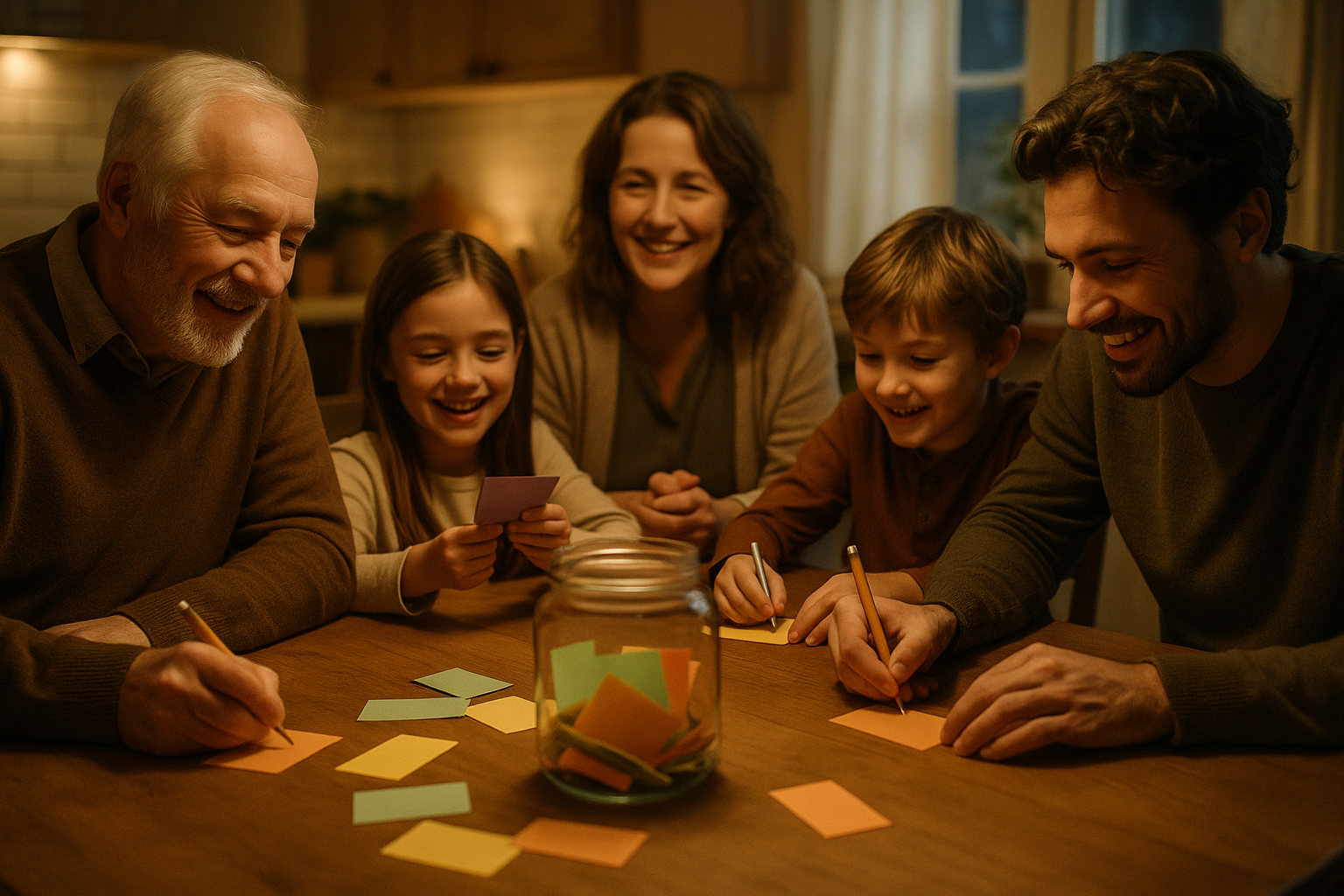
A Gratitude Jar turns fleeting good moments into tangible reminders you can revisit when energy dips. Place a jar, box, or tin in a visible spot with slips of paper and pens; each person writes one short note per day (or a few times a week) about something they appreciated, then drops it in. This works because writing slows attention, and accumulation creates a visible “bank” of positives families can draw on during tough weeks. Younger children can draw or dictate to an adult; teens can include “micro-moments” (a sibling sharing earbuds, a teacher’s extra hint). Open the jar on a set schedule—end of the month, a birthday, or a holiday—and read aloud. The ritual is lightweight, but the impact compounds, reinforcing noticing, savoring, and shared language for appreciation.
1.1 How to do it
- Put the jar by a natural “pause point” (keys bowl, dinner table).
- Stock colorful slips and pens; add stickers for little kids.
- Prompt specifics: “I appreciated ___ because ___.”
- Set a cadence you can keep (daily, or M/W/F).
- Choose a “reader” rotation for opening nights.
- Save or scrapbook favorite notes to see progress over a year.
1.2 Mini case
In one month, a family of four contributing 3 times per week can collect ~48 notes (4 people × 3 notes × 4 weeks). Reading through them creates a built-in family highlight reel without screens.
Synthesis: Small, frequent notes make gratitude visible and durable—and the jar becomes a low-effort anchor for your wider family culture.
2. Rose–Bud–Thorn at the Table (Highs, Hopes, and Hard Things)
Rose–Bud–Thorn is a quick dinner-table check-in that balances gratitude with realism. Each person shares a Rose (something good), a Thorn (a challenge), and a Bud (a hope or something they’re looking forward to). Opening with a direct prompt—“Let’s do Rose–Bud–Thorn while we pass the rice”—creates a predictable space to celebrate wins, normalize setbacks, and prime hopeful problem-solving. This structure helps children learn that gratitude coexists with tough feelings; it’s not about denying thorns but noticing roses anyway. Families who eat together even a few times a week get bonus connection time, and layering gratitude onto that mealtime makes the habit stick.
2.1 Tips for smoother sharing
- Keep turns to 60–90 seconds; use a timer if needed.
- Model specifics: “Rose—my teammate covered my shift; Thorn—traffic made me late; Bud—movie night Friday.”
- Let kids pass once without pressure; circle back after others share.
- Use “what helped?” follow-ups to build coping skills.
- Jot the best roses on a whiteboard or in your journal.
2.2 Why it matters
Regular shared meals are linked with healthier communication and well-being; adding a gratitude frame nudges conversations beyond logistics toward meaning. As of August 2025, pediatric groups continue to emphasize the social and mental-health upsides of simply sitting down together.
Synthesis: Pair dinner with Rose–Bud–Thorn and you’ll reliably surface good moments, practice naming feelings, and plan for small joys ahead.
3. A Shared Family Gratitude Journal (Weekly Pages You Build Together)
A dedicated family gratitude journal creates a narrative of your year: what you noticed, who helped, and how you grew. Once a week, gather for 10–20 minutes and complete a single two-page spread. Keep the structure consistent so kids know what to expect and can help set it up. The act of co-authoring primes collaboration and reflection, and flipping back through old entries reinforces self-efficacy (“look how far we’ve come”). For little ones, visuals and stickers work as well as words; for teens, invite short reflections on effort—what they did that made a good thing possible—to reinforce agency.
3.1 A simple spread template
- 3 moments we’re grateful for (bullets or doodles)
- 1 person to thank (and how we’ll thank them)
- 1 photo or ticket stub (print or tape)
- 1 challenge we handled (what helped)
- Next week’s tiny experiment (one gratitude action)
3.2 Tools/variants
- Paper notebook, a binder with page protectors, or a shared cloud doc.
- Let kids design section headers; add QR codes linking to a short video thank-you.
- Quarterly “review night”: everyone picks a favorite page and explains why.
Synthesis: A weekly journal makes gratitude cumulative and visible—your family builds a keepsake while practicing noticing, effort, and follow-through.
4. Thank-You Note Sunday (Real-World Appreciation with Follow-Through)
Writing and delivering thank-you notes teaches kids to close the loop on kindness. Pick one day a month for “Thank-You Note Sunday,” keep cards and stamps ready, and brainstorm who made life easier lately—teachers, coaches, neighbors, siblings. Explain that a strong note is specific, sincere, and short. For non-writers, draw a picture or add a photo; for teens, include one concrete thing they learned. Drop the notes in the post or hand them over in person to model pro-social courage. The practice shows children that gratitude isn’t only a feeling—it’s communication that strengthens relationships and matters to recipients.
4.1 The 3-S formula (Specific, Sincere, Short)
- Open: “Thank you, Ms. Khan, for staying after practice last week.”
- Detail: “Your footwork tip helped me finally nail the crossover.”
- Close: “I appreciate your time—see you Monday!”
4.2 Common pitfalls
- Vague thanks (“for everything”)—prompt for one detail.
- Parental over-editing—let the child’s voice shine.
- Perfectionism—set a 10-minute cap; done beats perfect.
Synthesis: Regular notes convert warm feelings into concrete relationship deposits—and kids learn a social skill that pays dividends for life.
5. The Photo-Wall of Thanks (Visual Savoring You See Every Day)
A gratitude photo-wall lets your family “see” thankfulness in the flow of home life. Print snapshots of people, places, and micro-moments you appreciate—grandma’s laugh, a repaired bicycle, a sunset after monsoon rain—and arrange them on a corridor wall or fridge. Add sticky captions (“helped me fix the chain,” “shared her favorite book”) to foreground the why. Curating the wall is its own ritual: once a month, rotate in new pictures and invite kids to choose what stays. The result is a living collage that supports daily savoring, especially on hectic mornings when words are scarce.
5.1 Build-and-refresh checklist
- Choose a high-traffic spot at kid eye level.
- Print 12–20 pictures to start; use washi tape or a grid of magnets.
- Write short captions naming people’s efforts, not only outcomes.
- Schedule a “swap day” (first Saturday) to refresh 3–5 photos.
- Snap a quarterly photo of the wall—your gratitude timeline.
5.2 Region-friendly tips
If printing is hard to access, create a shared album on your phone or TV, or keep a rotating digital picture frame in the kitchen—same captions, same ritual.
Synthesis: A photo-wall externalizes your family’s best moments so everyone can savor them repeatedly with almost no extra effort.
6. Gratitude Walks (Move, Notice, Name)
Gratitude walks combine light movement with mindful noticing, which is especially good for wiggly kids and screen-tired teens. Set a 10–20 minute route—around the block, through a park, or even indoors on rainy days—and ask each person to silently find three things they appreciate using different senses: something you see, hear, and feel. At the halfway point, share one item each; at the end, share the rest plus one person to thank. This rhythm blends regulation (walking) with attention training (noticing), making it easier for kids to tap into appreciation without forced cheer.
6.1 Prompts to prime noticing
- “Find one tiny thing most people overlook.”
- “Notice what changed since last week.”
- “Spot an act of kindness in the wild.”
- “Choose one thing you can appreciate that you didn’t choose last time.”
6.2 Indoor/heat adaptations
- Walk the stairs and hallways; do a “sensory scavenger hunt.”
- Use balconies or rooftops for sky time when streets are noisy.
- End with cold water, fruit, or stretching to mark the ritual.
Synthesis: Short, structured walks make gratitude concrete and embodied—ideal for families who connect best while moving.
7. Bedtime “Three Good Things” (Close the Day on Purpose)
“Three Good Things” is a classic exercise with strong staying power for families. At bedtime, each person names three things that went well and why. The “why” matters: it trains kids to link good outcomes to actions, help from others, or luck—reducing the tendency to gloss over positives. Keep it calm and brief (2–3 minutes per child); if attention wanders, write a word or draw a tiny symbol for each item on an index card and place it by the bed. Over time, you’ll build a low-effort archive of what your family values, and kids learn a repeatable tool to settle their minds at night.
7.1 Guardrails for parents
- Avoid cross-examining; accept short answers.
- If a day was rough, allow “one thing that didn’t go well” and “what might help tomorrow.”
- Rotate who shares first so younger kids hear older siblings model specifics.
- If siblings share a room, whisper or use a “quiet thumbs-up” to respect different sleep needs.
7.2 Mini example
“1) I found my library book—because I checked the lost-and-found. 2) Mom waited while I retied my laces. 3) I laughed at lunch when Sam’s orange peeled in one piece.”
Synthesis: Ending with three specifics builds a daily habit of noticing and can make bedtime transitions smoother for everyone.
8. Acts-of-Kindness Calendar (Service that Teaches Empathy)
A monthly kindness calendar channels gratitude into action by planning small, doable services. Together, list 10–15 ideas that match your family’s bandwidth—leaving water for delivery drivers in hot months, donating two gently used toys, texting a thank-you selfie to grandparents, picking litter on your block for 10 minutes. Then map them onto a printable calendar or shared phone calendar. Kids get to see that appreciation motivates contribution; teens learn to scope tasks and follow through. Keep the actions short and local so momentum beats ambition.
8.1 Starter ideas (choose 5–7)
- Leave a sticky note of thanks for a school staff member.
- Bake or buy a snack for a neighbor who just had a baby.
- Write one positive review for a local small business you use.
- Pick up 20 pieces of litter as a family; log the count.
- Donate one item each from your closet that no longer fits.
- Thank your bus driver or rideshare with a verbal appreciation.
8.2 “Make it stick” tips
- Cap most actions at 15–30 minutes.
- Pair a service with a debrief: “How did it feel? Who else helped make it possible?”
- Track completions with stickers; celebrate at 10 check marks.
Synthesis: A kindness calendar turns fuzzy good intentions into scheduled, right-sized actions that build empathy and community ties.
9. Gratitude Games (Play Toward Positive Attention)
Play lowers the resistance many kids have to “serious” talks about feelings. Introduce fast, repeatable games that keep the gratitude rep fun. Try ABC Gratitude (go around naming things you appreciate from A to Z), Gratitude Bingo (squares like “someone shared with me,” “I helped a friend”), or Appreciation Hot Potato (toss a soft ball and quickly shout a thank-you to the catcher). These games fit in car rides, waiting rooms, or five spare minutes before school; they’re also handy to reset the mood when chores or homework stall out.
9.1 DIY Gratitude Bingo steps
- Make a 5×5 grid; fill with everyday kindnesses and efforts.
- Aim for variety: “finished a chore,” “asked a good question,” “took a deep breath.”
- Mark squares with stamps or stickers; reward a row with an at-home prize (pick dinner playlist).
- Refresh boards monthly to keep it novel.
9.2 Age-friendly tweaks
- Preschool: picture-based cards.
- Tweens/teens: add peer-focused squares and “self-appreciation” squares (effort/strategy they used).
- Adults: include “appreciated a colleague,” “sent a quick thank-you.”
Synthesis: Games provide practice reps for gratitude language—without lectures—and create quick wins on busy days.
10. Spotlight the Helpers (Weekly Appreciation of People Who Make Life Work)
Many kids interact with a web of helpers they rarely notice: drivers, custodians, cafeteria workers, parcel couriers, security guards. A weekly “Helper Spotlight” expands gratitude beyond the family bubble and builds respect for essential, often-invisible labor. Choose one role to notice this week, brainstorm how they help, and plan a tiny appreciation—verbal thanks, a note, a small snack, or simply eye contact and a smile. Discuss what would change in your day if that role vanished. This practice cultivates social awareness and dignity, not pity or performative charity.
10.1 Conversation prompts
- “What’s one thing this person does that we benefit from every day?”
- “How can we thank them in a way that’s respectful and practical at their workplace?”
- “What tools do they use that we could help care for?”
10.2 Guardrails
- Keep it brief and non-disruptive; don’t block lines or add noise.
- Respect policies (some roles cannot accept gifts).
- Model language that centers the person’s skill and effort, not your generosity.
Synthesis: Spotlighting helpers widens your family’s circle of concern and honors the everyday expertise that keeps communities running.
11. Seasonal Gratitude Rituals (Anchor to Weather, Holidays, and Culture)
Seasonal rituals make gratitude memorable because they hook into sensory cues—smells, foods, music, and weather. Create an annual cycle that fits your calendar and traditions: a post-Ramadan “appreciation picnic,” a monsoon-season “first-rain thanks,” a pre-school-year “supplies blessing,” or a December “light-and-letters night.” Seasonal anchors help families remember to pause even during busy months, and they offer children a sense of continuity they can look forward to. As kids grow, invite them to propose new rituals so the calendar evolves with your lives.
11.1 Ideas by season (mix and match)
- Rainy/Monsoon: warm tea gratitude circle; thank the people who keep streets safe and drains clear.
- Back-to-school: label gear while naming one person who helped you learn last year.
- Harvest/Fall: cook one dish with local produce; thank the farmers and vendors.
- Winter/Lights: write “gratitude postcards” to far-away relatives.
11.2 Cultural sensitivity
Tie rituals to your own faith or cultural practices without comparison—gratitude fits everywhere. Invite kids to interview older relatives about the appreciation customs they remember.
Synthesis: Seasonal rituals blend culture, memory, and thanks—turning gratitude into a family story that repeats by design.
12. Repair & Reframe (Finding Thanks During Conflict)
Gratitude is most powerful when it helps families repair after friction. “Repair & Reframe” is a short, structured process you can use after an argument: (1) Pause and regulate; (2) Name what happened without blame; (3) Appreciate one constructive thing each person did; (4) Agree on a tiny improvement for next time. This does not erase hurt, nor does it excuse behavior; it simply ensures that appreciation for effort and growth is part of your conflict toolkit. Kids learn that saying “thank you for trying to calm down with me” can coexist with “I need more space next time.”
12.1 How to do it (script)
- Pause: “Let’s take 3 slow breaths before we talk.”
- Describe: “We both raised voices about screen time.”
- Appreciate: “I appreciate you paused the video when I asked.”
- Plan: “Next time we’ll set a 10-minute timer and switch off without arguing.”
12.2 Common mistakes
- Skipping regulation—talking while escalated backfires.
- Offering only one-sided appreciation—ensure everyone names something the other did well.
- Turning appreciation into sarcasm—model warm tone and eye contact.
Synthesis: When families attach gratitude to repair, kids see appreciation as a living skill—not a slogan—especially in the moments that test it.
FAQs
1) What exactly counts as a “family gratitude activity”?
Any repeatable routine that helps your household notice, express, or record appreciation together qualifies—mealtime check-ins, quick games, notes, walks, or seasonal rituals. The key is predictability and participation, not perfection. If it nudges attention toward what’s working and who helped, you’re doing it.
2) How often should we practice?
Consistency beats intensity. Many families find success with 2–4 touchpoints per week (e.g., two dinners plus one bedtime check-in). If life is hectic, pick one anchor (like the Gratitude Jar) and add others later. Track what you actually do for two weeks, then adjust the cadence to reality.
3) What if my kids roll their eyes?
Lead with modeling and choice. Offer three options and let them pick the one to try for two weeks. Keep activities fast (under 10 minutes) and specific (“thank you for sharing your markers”) instead of preachy. Celebrate participation, not eloquence. Over time, most kids warm up when they see adults genuinely using the practices too.
4) Does gratitude mean ignoring problems?
No. Healthy gratitude includes thorns and repairs. Practices like Rose–Bud–Thorn and Repair & Reframe explicitly make room for frustration while still naming what helped. This balance teaches kids emotional literacy and keeps gratitude from feeling fake.
5) What ages does this work for?
All ages. Toddlers can draw or choose stickers; school-age kids can write one sentence; teens can lead games, design the photo-wall, or run the kindness calendar. The content evolves with your children, but the underlying skill—appreciation—stays relevant.
6) How do we keep it from becoming performative or pressured?
Set short time limits, rotate leadership, and allow passes. Avoid public scoring of “who was most grateful.” Focus on effort and specifics rather than big emotional displays. If the energy is low, switch to a lighter game for a week rather than forcing deep shares.
7) Can these activities help with sibling rivalry?
Yes—especially when you add structured appreciations between siblings (“one thing I appreciate about you today”). It won’t erase conflict, but it increases positive interactions and makes repair smoother. Pair with clear boundaries and consistent routines so appreciation doesn’t replace accountability.
8) What if we miss days or fall off the wagon?
Normalize restarts. Re-launch with a fun twist—a new pen color, seasonal prompts, or a fresh Bingo board. Reviewing past jar notes or journal pages can rekindle motivation by reminding everyone that the practice felt good when it was alive.
9) How do we measure whether this is “working”?
Look for soft indicators: quicker de-escalations, more specific thank-yous, and kids spontaneously using gratitude language with peers. If you like data, track weekly counts of appreciations, completed kindness actions, or bedtime “Three Good Things” cards. Review monthly and celebrate small upticks.
10) Are there tech tools that help?
Absolutely—shared phone albums for the photo-wall, simple checklist apps for kindness calendars, or a family group chat for daily “one good thing.” Keep tech as servant, not master: if screens distract, revert to paper and tangible objects like jars or cards.
Conclusion
Family gratitude isn’t a personality trait—it’s a set of shared habits. When you install small, repeatable activities like a jar of notes, mealtime check-ins, bedtime reflections, and planned acts of kindness, you create more chances to notice good moments together. The benefits stack: kids practice emotional vocabulary and social awareness, adults get more positive data points about their parenting, and the household culture tilts toward appreciation even when schedules are full. Start with one activity, keep it short, and let leadership rotate so it belongs to everyone. Review what’s working monthly, add a seasonal ritual for memory, and use gratitude during repair moments—not just celebrations. Ready to try? Pick one activity above and run it for two weeks—then open your jar or journal and see what your family has built.
CTA: Choose one activity, set a date tonight, and take your first family “thankfulness rep.”
References
- Giving thanks can make you happier — Harvard Health Publishing, Aug 14, 2021. Harvard Health
- Gratitude enhances health, brings happiness — and may even lengthen lives — Harvard Health Publishing, Sep 11, 2024. Harvard Health
- Counting blessings versus burdens: an experimental investigation of gratitude and subjective well-being in daily life — Emmons & McCullough, Journal of Personality and Social Psychology, Feb 2003. PubMed
- An experimental study of gratitude and subjective well-being in early adolescence — Froh et al., 2008. (PDF hosted by Greater Good Science Center). Greater Good
- Gratitude and well-being: a review and theoretical integration — Wood et al., 2010. PubMed record. PubMed
- The effects of gratitude interventions: a systematic review and meta-analysis — Frontiers in Psychology, 2023. PMC
- Gratitude — APA Dictionary of Psychology, American Psychological Association, n.d. APA Dictionary
- Lesson Plan: Practicing Gratitude via a Gratitude Journal — American Psychological Association, n.d. American Psychological Association
- Greater Good Parenting — Gratitude collection — Greater Good Science Center, UC Berkeley, various dates. ggsc.berkeley.edu
- Benefits of Family Meals: Eat Together, Thrive Together — HealthyChildren.org (American Academy of Pediatrics), May 14, 2024. HealthyChildren.org
- 10 Tips for Raising Grateful Kids — Child Mind Institute, Nov 1, 2024. Child Mind Institute
- Neural correlates of gratitude — Fox et al., Frontiers in Psychology, 2015. Frontiers