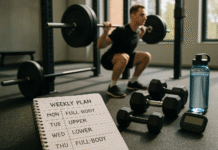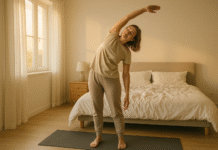
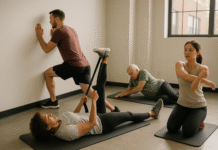
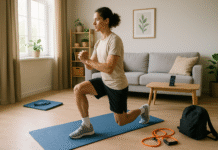
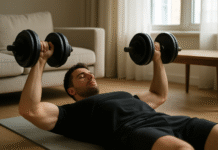
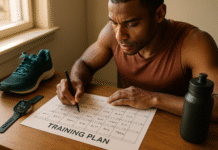






















If you compete, your flexibility should do more than help you “feel loose”—it should translate to cleaner mechanics, faster force production, and fewer missed practices from tweaks. This guide curates 11 flexibility exercises for athletes that measurably improve range of motion (ROM) and carry over to performance. In simple terms, flexibility exercises for athletes are movements and methods that expand a joint’s usable ROM and control at that range so you can hit efficient positions at speed. Use them to prep before training, open chronically tight areas, and maintain tissue quality between high-intensity days. A brief note: this article is educational and not a substitute for medical advice—if something hurts, consult a qualified clinician. For warm-ups, prioritize dynamic methods; save longer holds for post-session or separate mobility blocks. Evidence suggests short static stretches (≤60 s per muscle) have trivial effects on power when part of a full warm-up, while longer holds are better reserved away from explosive work.
Quick-start plan (read once, then jump to the drills):
- Before practice: 6–10 minutes of dynamic mobility (Items 1, 6, 7, 8), then sport-specific buildups.
- After training or on off-days: 10–20 minutes of targeted work (Items 2–5, 9–11).
- Typical hold/rep targets: 10–30 seconds per static stretch, 2–4 total sets per muscle; follow PNF with an active contraction at the new end range.
1. Dynamic Movement Prep (RAMP): Leg Swings, Inchworms, Walking Lunges
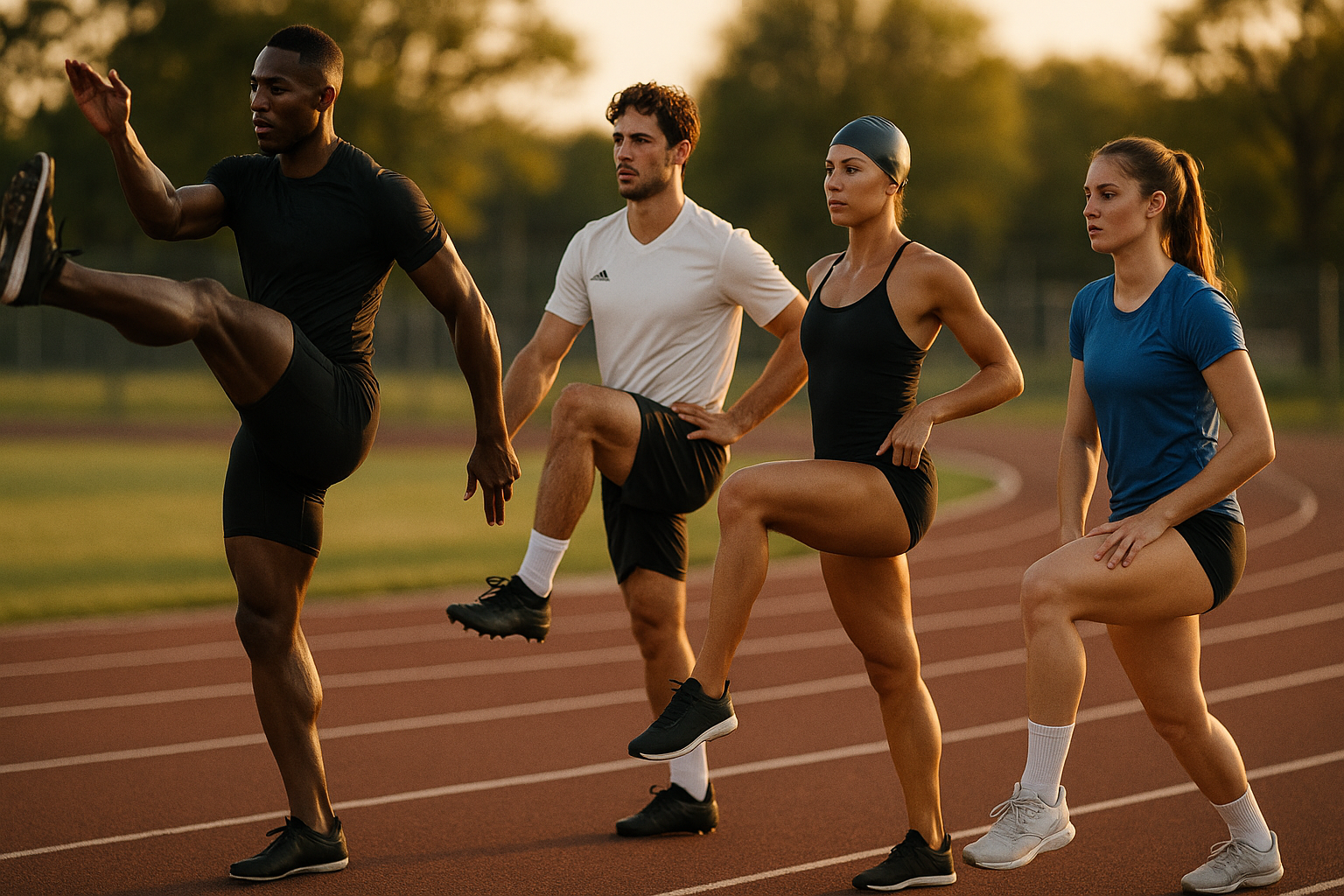
A smart warm-up raises temperature, mobilizes the specific joints you’re about to load, and finishes with fast, sport-like actions. The RAMP model (Raise, Activate & Mobilize, Potentiate) does exactly that and is the backbone of most elite warm-ups. Start with 2–3 minutes of brisk movement (jog, skipping), then cycle leg swings, inchworms, walking lunges with rotation, and hip airplanes. Finish with short accelerations, bounds, or jumps. This sequence improves ROM where you need it and “primes” the nervous system without dulling power. The key is specificity: match planes of motion and speeds you’ll use on the field, track, or court. As of August 2025, RAMP remains a widely taught framework in strength and conditioning. Science for Sport
1.1 Why it matters
Dynamic warm-ups improve short-term range and readiness with minimal performance trade-off, unlike long static holds placed immediately before explosive tasks.
1.2 How to do it (6–10 minutes)
- Raise (1–2 min): jog, jump rope, or skipping.
- Activate & Mobilize (3–5 min): 10–15 leg swings each way; 6–8 inchworms; 10 walking lunges + rotation per side; 6–8 hip airplanes per side.
- Potentiate (2–3 min): 3×10–20 m build-up sprints or 3×6 pogo jumps.
1.3 Numbers & guardrails
- Total warm-up time: 6–10 min on practice days, 10–15 min before maximal efforts.
- Keep dynamic ROM controlled—no ballistic “bouncing.”
- End with 2–3 near-maximal sport-specific reps at the intended session speed.
Close by remembering: the best warm-up rehearses the session you’re about to perform—make your prep look like your sport.
2. PNF Contract–Relax Hamstring Stretch (Supine Strap)
To quickly gain hamstring ROM with control, use a contract–relax (PNF) stretch. Lying supine with a strap around your midfoot, raise the leg to a firm stretch, gently contract the hamstrings for 3–6 seconds, relax, then increase the stretch 10–30 seconds. Repeat 2–4 rounds. PNF often produces larger short-term ROM gains than static or dynamic stretching alone, and pairing it with a brief active lift at the new angle locks in usable range. Place it post-training or in a separate session to avoid any small temporary decrements in power. Keep the pelvis neutral (don’t posteriorly tilt excessively), and avoid knee hyperextension as you chase range.
2.1 Steps
- Supine, loop strap around midfoot; other leg straight on floor.
- Pull to a firm hamstring stretch.
- Contract hamstrings (as if pressing heel down) 3–6 s at ~20–75% effort.
- Relax and pull 10–30 s deeper; breathe slowly.
- Finish with 5–8 active straight-leg raises to new end range.
2.2 Numbers & guardrails
- 2–4 rounds per side; total ~2–3 min each leg.
- Best after running/lifting days or evening mobility.
- If you feel sciatic nerve “zing,” back off angle and flex the knee slightly.
When you need meaningful ROM gain without losing strength, PNF delivers fast changes you can then reinforce with strength at length (see Items 6–7). PMC
3. Half-Kneeling Hip Flexor + Quad “Couch” Stretch (Posterior Pelvic Tilt)
Explosive athletes often carry short hip flexors and rectus femoris from seated time and sprint/strike demands. The couch stretch hits both if you tuck the pelvis (posterior tilt) and keep the ribcage stacked. Set up half-kneeling with your back shin near a wall or bench (top of foot up); gently tuck the tailbone, squeeze the glute of the down knee, and shift forward only until you feel the front-thigh/hip stretch. You can add an overhead reach and small side-bend to target psoas. Hold 10–30 seconds; repeat 2–4 times. Use it post-session or on recovery days; before sprinting, opt for dynamic leg swings and reverse-lunge reaches instead.
3.1 Checklist
- Knee cushioned; back glute on; pelvis tucked.
- Front knee tracks over mid-foot; torso tall.
- Breathe: 4–5 slow breaths per hold.
3.2 Progressions
- Add a gentle quad bias by inching knee closer to wall.
- Finish with 8–10 reverse Nordics (slow 3–4 s down) to build strength at length over weeks. PMC
Nail the tuck and glute squeeze; range without pelvic control won’t carry over to sprint mechanics.
4. Ankle Dorsiflexion Circuit: Knee-to-Wall + Eccentric Calf Raises
Limited ankle dorsiflexion (DF) can compromise squats, landings, and change-of-direction, and has been associated with altered lower-limb mechanics and injury risk patterns in athletes. Test it with the weight-bearing lunge (knee-to-wall): big toe ~5–12 cm from the wall, knee tracks over 2nd toe to touch the wall without the heel lifting. Target at least 8–10 cm as a practical benchmark for many field and court athletes. If you’re short, perform 2–3 gentle sets of 10–20 controlled knee-over-toe rocks, then eccentric calf raises (3–4 s down) for 8–12 reps. Retest the lunge. Consistency matters—3–5 short sessions per week wins. PhysiopediaJournalGRID
4.1 Why it matters
Restricted DF shifts loading up the chain (knee/hip) and can influence landing forces and cutting mechanics; improving DF helps cleaner joint positions under speed.
4.2 Mini-protocol (6–8 minutes)
- Mobilize: 2×10–20 knee-over-toe rocks.
- Isometric hold: 2×20–30 s calf wall-lean at end range.
- Eccentrics: 3×8–12 calf raises (3–4 s down).
- Retest: Knee-to-wall distance.
Over a few weeks, adding strength work at length tends to stick the gains better than stretching alone—think mobility plus muscle.
5. Thoracic Spine Extensions & Rotations: Bench T-Spine + Open Books
Your thoracic spine (mid-back) is the rotational “bridge” between hips and shoulders. If it’s stiff, the neck/low-back or shoulders pay the bill. Combine bench thoracic extensions (elbows on a bench, hips back) with open books (side-lying rotations) to free extension and rotation. Move slowly, breathe into your ribs, and avoid dumping into the low back—feel the motion between shoulder blades. Field, racket, and throwing athletes notice easier overhead and rotational positions; lifters find better front-rack and overhead squat shapes. As of August 2025, systematic syntheses highlight T-spine mobility as a neglected but meaningful piece in athletic programs.
5.1 How to do it
- Bench extension: 2–3×6–8 slow reps, exhale at end range.
- Open books: 2–3×6–10 per side, pause 2–3 s on the open.
5.2 Guardrails
- Keep ribs down and pelvis neutral; motion should be upper back, not lumbar.
- Pair with a couple of light overhead presses or med-ball throws to use the new range.
Small, high-quality daily doses add up; 5 minutes here can unlock cleaner overhead and rotational mechanics on game day. PMC
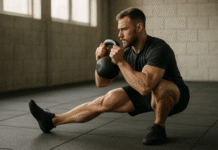
6. Cossack Squat (Loaded Lateral Mobility)
The Cossack squat blends flexibility and strength: you sit into one hip while keeping the other leg long, loading the adductors (groin), hips, knees, and ankles through a large side-to-side range. Start with a support (TRX, rack post) so you can stay tall and keep the heel of the working leg down. Descend as low as control allows, drive the knee over mid-foot, and let the straight leg’s toes point up to bias the adductors. Use slow tempos and partial ranges at first. Over weeks, add a light kettlebell as a counterweight to “grease” depth and frontal-plane control that your sport rarely trains directly. Healthline
6.1 Why it matters
Many athletes live in the sagittal plane (forward-back). Lateral mobility adds hip room for cutting, defending, and skating. Loaded mobility (strength at length) tends to create more durable ROM than passive stretching alone.
6.2 Progressions
- Assisted Cossacks → bodyweight → light goblet hold.
- Reps: 2–4 sets of 5–8 per side, 2–3×/week, slow 2–3 s down.
Finish each set by standing tall and shaking out; you should feel stretched yet stable, not pinchy or numb.
7. 90/90 Hip Rotations with End-Range Isometrics
Hip rotation (internal and external) under control is critical for sprint mechanics, pitching, ground strokes, and deep squatting. The 90/90 setup (front hip external rotation, back hip internal rotation) lets you target both. Sit tall, rotate from one side to the other slowly, then hold end ranges with gentle isometrics: press the shin down (10–15 s), then try to lift it (lightly) off the floor (10–15 s). This blend teaches your nervous system that new ranges are “safe,” transforming passive flexibility into active control—more carry-over to cutting and change-of-direction. Evidence supports that strength training, especially through long muscle lengths or isometric end-ranges, can equal or surpass static stretching for long-term ROM. PMCPubMed
7.1 Mini-session (6–10 minutes)
- 2–3 slow side-to-side transitions (5–6 reps each).
- Per side: 2 rounds of press-down (10–15 s) + lift-off (10–15 s).
- Finish with 5 controlled hip CARs (large but pain-free circles).
You’re chasing hips that rotate freely and hold shape under speed—the 90/90 with isometrics is a direct path there.
8. Overhead Shoulder Mobility: Wall Slides + Cross-Body Posterior Shoulder Stretch
Overhead and throwing athletes often lack clean upward rotation plus posterior shoulder mobility. Pair wall slides (scapular upward rotation + humeral elevation) with a cross-body posterior shoulder stretch to improve internal rotation (especially if you have a GIRD pattern). For the stretch, stabilize the scapula (anchor shoulder blade against a surface or with the opposite hand), bring the arm across the body, and hold 30 seconds—gentle, no pinching. Research indicates cross-body and sleeper variations can acutely improve internal rotation; recent trials suggest 3×30 s may be sufficient, with cross-body often better tolerated for pain. PMC
8.1 How to do it
- Wall slides: 2–3×8–12 smooth reps, elbows/forearms on wall, slide up maintaining light pressure, exhale at the top.
- Cross-body stretch: 2–4×30 s holds; keep the shoulder blade quiet.
8.2 Notes
- Throwers: test IR before/after; stop if sharp anterosuperior shoulder pain.
- Finish with a few light band external rotations to use the gained range.
Better overhead positions show up quickly in pressing and throwing when you train the scapula and capsule mobility together.
9. Hamstring “Strength-at-Length”: Slow Romanian Deadlifts & Sliders
Traditional static hamstring stretches improve straight-leg raise angles, but adding eccentrics at long muscle lengths (like slow Romanian deadlifts or hamstring sliders) makes gains stick and supports sprint resilience. Use a soft knee, hinge from the hips, and lower for 3–4 seconds until you feel a firm hamstring tension without spinal rounding; rise with control. For sliders, bridge hips up, slowly slide heels out for 3–5 seconds, then pull back in. Over weeks, eccentrics can increase flexibility, fascicle length, and tolerance to stretch—benefits that passive stretching alone doesn’t consistently provide.
9.1 Programming
- RDLs: 3×6–8 @ light-moderate load, 2–3×/week off sprint days.
- Sliders: 2–3×8–12 with slow eccentrics.
Blend a set or two after PNF hamstrings (Item 2) to “own” the new range under load.
10. Foam Rolling + Active Follow-Up (Quads, Lateral Thigh, Calves)
Foam rolling isn’t magic, but it reliably provides small-to-moderate, short-term ROM improvements when done for 30–90 seconds per region, especially if you follow with active mobility or strength work. Think quads, lateral thigh, calves, and adductors. Move slowly, pause on tender but tolerable spots for 10–20 seconds, and recheck your key movement. Longer-term programs (≥4 weeks) also show ROM gains when rolling is performed consistently. Keep it simple: roll, mobilize, then move with intent in the new range.
10.1 Micro-routine (4–6 minutes)
- 45–60 s per area (quads, lateral thigh, calves).
- Immediately perform 1–2 sets of the matching mobility (e.g., knee-over-toe rocks after calf rolling).
Foam rolling is best viewed as an entry ticket—use it to access range, then buy permanence with movement.
11. Full-Body 10-Minute Mobility Flow (Post-Session or Off-Day)
When schedule is tight, string together a 10-minute flow that hits the big rocks: ankles, hips, T-spine, shoulders, hamstrings. Flows maintain the range you’ve built and help you leave sessions feeling limber rather than tight. Try: 1 minute knee-over-toe rocks, 1 minute calf raises (slow down), 2 minutes couch stretch, 2 minutes Cossack squats (assisted if needed), 2 minutes open books + bench extensions, and 2 minutes PNF hamstrings (1 round per side). Breathe slowly, keep tension only where needed, and finish with three calm nasal breaths standing tall. This is the “glue” that holds your hard-won ranges between heavy or high-speed days.
11.1 Mini-checklist
- Sequence from ground-up (ankle → hip → spine → shoulder).
- Alternate right/left so neither side cools down.
- Keep total ~10 minutes; consistency beats marathon sessions.
Treat this like brushing your teeth—brief, daily, automatic—and your positions on the field will stay clear week after week.
FAQs
1) Should athletes avoid static stretching before sprinting or lifting?
Not entirely—context matters. Short static holds (≤60 seconds per muscle) within a comprehensive warm-up have trivial impacts on subsequent strength/power, whereas longer holds can acutely reduce peak outputs. Many teams either keep statics brief or move them to post-practice, preferring dynamic drills pre-performance and statics later for range. If you need static work before competing (e.g., gymnastics), keep durations short and follow with specific buildups.
2) How often should I train flexibility to notice real changes?
For most athletes, 2–3 focused sessions per week per area are enough to see gains over 2–4 weeks. The ACSM summarizes 10–30-second holds for most adults (30–60 seconds for older populations), performed for 2–4 total sets per muscle; PNF can use 3–6-second contractions followed by 10–30-second stretches. Pairing stretching with end-range strength tends to make gains “stick.”
3) Do dynamic warm-ups actually improve performance?
Dynamic methods like RAMP increase temperature, rehearsal quality, and neuromuscular readiness. Compared to long static holds immediately before explosive tasks, dynamic prep better preserves power and speed. Finish with sport-specific potentiation (e.g., buildups or jumps) to convert mobility into output.
4) What’s a good ankle dorsiflexion target for field and court sports?
Use the knee-to-wall test as a simple screen: most athletes do well with ~8–10+ cm of toe-to-wall distance (without the heel lifting), though sport and limb differences exist. If you’re short of that and feel stiff, add the circuit in Item 4, then retest weekly. The lunge test is reliable and practical across settings. PMC
5) Is foam rolling worth my time if the effects are “small”?
Yes—especially as a primer before active mobility. Meta-analyses show small but consistent acute ROM improvements from 30–90 seconds per region, with longer programs (≥4 weeks) also increasing ROM. Follow rolling immediately with the matching movement (e.g., adductor rolling → Cossack squats) to capture the gains.
6) Which hamstring method best supports sprint resilience—stretching or strengthening?
They’re complementary. Stretching (especially PNF) improves angles quickly, while eccentric strength at long muscle lengths appears to enhance fascicle length and tolerance to stretch—key for sprinting. Use PNF post-session, then add slow RDLs or sliders 2–3 times weekly, away from max-speed days. Nature
7) I’m an overhead athlete with GIRD. Is the sleeper stretch safe?
When performed gently and with proper scapular control, both sleeper and cross-body stretches can improve internal rotation, but many clinicians favor cross-body for comfort. Aim for 3×30 s holds and monitor symptoms; stop if you get sharp anterior shoulder pain and consult a sports PT. JOSPTPMC
8) Do I need long sessions, or can I “micro-dose” mobility?
Micro-dosing works. Sprinkle 5–10 minutes after training or on off-days and you’ll accumulate meaningful volume without draining willpower. The key is consistency and pairing range gains with strength or skill practice at those angles (e.g., Cossacks after adductor rolling, wall slides after T-spine work).
9) How hard should PNF contractions be?
Moderate is sufficient. A 3–6-second contraction at roughly 20–75% effort followed by a 10–30-second stretch is typical. Higher force is not necessarily better and can irritate tissues; think “firm but smooth” contractions and prioritize quality breathing. University of New Mexico
10) Will resistance training alone improve flexibility?
Often, yes—especially when you train through a full range with control and tempo. Recent reviews show resistance training with external loads can match stretching for ROM gains. Still, targeted flexibility is valuable when you need specific positions for your sport.
11) What if stretching makes me feel weaker in the moment?
If you perform long, high-intensity static holds right before explosive work, you might feel a temporary dip. Keep pre-session statics brief (≤60 s) and finish with potentiation (jumps, buildups). Save deeper holds for post-session or separate slots.
12) Any red flags that mean I should stop a stretch immediately?
Yes: sharp or radiating pain, tingling, or joint pinching. Stretches should feel like firm, diffuse tension, not nerve symptoms or joint jabs. Modify angles, reduce intensity, or switch exercises—and if symptoms persist, see a qualified clinician.
Conclusion
Athletic flexibility isn’t about lounging in extreme poses; it’s about creating useful range that holds up under speed, fatigue, and contact. The 11 drills above are deliberately chosen to blend immediate ROM changes (PNF, foam rolling, targeted static work) with strength at length (Cossacks, slow RDLs, 90/90 isometrics) and dynamic prep (RAMP) so your new angles become reliable movement options, not just party tricks. For most athletes, the winning formula is simple: warm up dynamically to rehearse your sport, add concise post-session or off-day mobility for your personal bottlenecks, and reinforce those gains with strength or skill at the edges of your range. Over 2–4 weeks, you should notice easier shapes, smoother mechanics, and less “tightness debt” between practices. Pick two or three items that target your constraints, micro-dose them consistently, and retest with honest movement screens. Ready to move better and play faster? Save this flow and start with one drill today.
References
- Acute Effects of Static Stretching on Muscle Strength and Power: An Attempt to Clarify Previous Caveats, Sports Medicine – Open (Behm et al.), 2019/updated discussions; PubMed
- Acute Effects of Various Stretching Techniques on Range of Motion: Systematic Review, Sports Medicine – Open, 2023; SpringerOpen
- Stretching & Flexibility Guidelines Update, American College of Sports Medicine (ACSM) Blog, Mar 18, 2021; rebrandx.acsm.org
- The ‘RAMP’ Method of Optimising Performance Preparation, Professional Strength & Conditioning (Jeffreys), 2007 (PDF via Scottish Athletics); Scottish Athletics
- Foam Rolling: Meta-Analysis on ROM Effects, Frontiers in Physiology, 2022; PMC
- A Meta-Analysis of the Effects of Foam Rolling, Frontiers in Physiology, 2019; PMC
- Reliability and Validity of a Weight-Bearing Measure of Ankle Dorsiflexion, Journal of Athletic Training, 2012; PMC
- Ankle Dorsiflexion Affects Hip and Knee Biomechanics: Systematic Review, Journal of Functional Morphology and Kinesiology, 2021; PMC
- Efficacy of PNF on Athletic Performance and ROM, Saudi Journal of Sports Medicine, 2021; Lippincott Journals
- The Modified Sleeper Stretch and Modified Cross-Body Stretch, Journal of Orthopaedic & Sports Physical Therapy, 2013; JOSPT
- Strength Training vs. Stretching for ROM: Meta-analysis, Sports Medicine, 2023; SpringerLink
- The Effects of Eccentric Training on Lower Limb Flexibility: Systematic Review, British Journal of Sports Medicine, 2012; British Journal of Sports Medicine