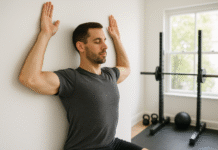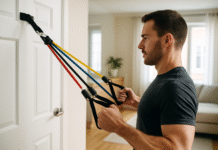



























Flexibility training is purposeful work to expand and control your pain-free range of motion (ROM) at key joints so everyday movement feels easier and training is safer and more effective. In practice, it uses methods like dynamic warm-ups, static holds, and PNF to improve how far—and how well—you move. Done consistently, flexibility training enhances movement quality, supports strength and power through fuller ranges, and can reduce injury risk when combined with neuromuscular warm-ups. A practical rule of thumb (from widely used guidelines): aim for at least 2–3 days per week, holding most static stretches 10–30 seconds and totaling about 60 seconds per muscle group.
Quick start (4 steps): warm up 3–5 minutes → pick 4–6 tight areas → perform dynamic prep before activity → finish the session or non-training days with 10–30-second static holds (2–4 reps) per muscle, totaling ~60 seconds.
Important: This article is educational and not a medical diagnosis or treatment plan. If you have pain, injury, or a condition, consult a qualified professional.
1. Flexibility Training Expands Your Pain-Free Range of Motion
Flexibility training directly increases the practical range your joints can access without discomfort, which makes daily tasks (like getting off the floor or reaching overhead) smoother and less taxing. ROM gains come from improvements in stretch tolerance and muscle-tendon unit properties, not just “loosening” tissues. Over weeks, structured stretching produces meaningful, durable increases in ROM that transfer to activities you care about. The payoff isn’t only about going farther; it’s also about moving with better control at the end range, where many injuries or technique breakdowns occur. For most people, these gains show up with consistent work across 2–8+ weeks, with larger benefits when you actually train the positions you need.
1.1 Why it matters
- More ROM lets you squat, hinge, press, and reach with cleaner mechanics.
- End-range control boosts confidence and reduces “pinchy” or “stuck” sensations.
- ROM improvements are often joint- and direction-specific—train what you need most.
- Consistency beats intensity; frequent shorter sessions typically outperform rare long ones.
- Gains compound when you also strengthen at these new ranges.
1.2 Numbers & guardrails
- Plan on ≥2–3 days/week; static holds 10–30 s repeated 2–4× (≈60 s total per muscle).
- Expect measurable ROM changes after 2–6 weeks, larger when combined with end-range strength.
- If a position reproduces pain, modify angle, reduce depth, or select a different drill.
Synthesis: Expand the space you can move in—then practice using it—so everyday life and training feel easier and safer.
2. It Unlocks Stronger, Safer Full-Range Strength Gains
You’ll build more robust strength when you can lift through a fuller, comfortable range. Research comparing full vs. partial range-of-motion (ROM) resistance training shows small but meaningful advantages for strength and hypertrophy when training uses longer ranges—especially at longer muscle lengths. Flexibility work helps you access those deeper positions (e.g., ankle dorsiflexion for squats, shoulder flexion for presses), so you can load them safely. That translates to better technique, more muscle stimulus per rep, and fewer compensations (like lumbar extension standing in for hip extension).
2.1 How to do it
- Identify your “range limiter” joints (often ankles, hips, thoracic spine, shoulders).
- Pair a targeted mobilization with the strength move it unlocks (e.g., calf mobilization → squats).
- Load new ranges gradually (slower eccentrics, pauses).
- Keep reps smooth; if technique degrades, scale ROM temporarily.
2.2 Mini example
- Before front squats: 60 s total of ankle dorsiflexion work per side → goblet squat with a 2-second pause at depth for 3 sets. Over 4–6 weeks, ROM and confidence at depth improve; then progress to front squats.
Synthesis: Flexibility opens the door; strength training walks through it to make those ranges durable and strong.
3. It Reduces Injury Risk When Built Into Smart Warm-Ups
Flexibility training by itself is not a magic injury shield, but integrated warm-ups that include dynamic ROM, balance, and neuromuscular drills reduce injury rates—especially in field and court sports. The FIFA 11+ program (a 20–25-minute neuromuscular warm-up containing mobility, balance, and plyometric elements) has repeatedly shown ~30% lower overall injury risk in soccer players. Translating that idea, your warm-up should raise temperature, move joints through ranges you’ll use, and activate key muscles—dynamic stretches included.
3.1 Practical warm-up template (6–10 minutes)
- Light cardio 2–3 minutes
- Dynamic mobility for target joints (hips, ankles, T-spine, shoulders)
- Movement prep matched to your session (e.g., leg swings → squats; arm circles → presses)
- Low-intensity ramps of the day’s main exercise (2–3 sets)
3.2 Guardrails
- Dynamic first, static later: long static holds immediately before explosive work can dull peak outputs; keep pre-session statics brief (<60 s per muscle) or reserve them for cool-downs.
Synthesis: Use flexibility inside a complete warm-up to prepare tissues and patterns you’ll actually use—one of the best real-world ways to cut risk.
4. It Improves Movement Quality and Technique
Quality reps come from joints that can hit the required angles without compensation. Flexibility training lets you stack joints where they belong—knees tracking over toes, a ribcage that can rotate without the low back taking over, shoulders that can reach overhead without flaring ribs. That means fewer “workarounds” (like arching the back to press) and cleaner lines in compound lifts and endurance technique. The result is better force transmission and fewer hotspots that get irritated from doing someone else’s ROM.
4.1 Mini-checklist for cleaner movement
- Ankles: 30–60 s total dorsiflexion work per side before squats or runs.
- Hips: 60 s total 90/90 or hip flexor work before lunges/hinges.
- T-spine: 6–10 thoracic rotations before pressing/rowing.
- Shoulders: 60 s total lats/pecs openers before overhead work.
4.2 Technique transfer
- After you mobilize, immediately groove the pattern with light technique reps or tempo eccentrics so your brain “saves” the new range.
Synthesis: Mobility creates the space; skill practice teaches your body to use it with precision.
5. It Supports Balance and Fall Prevention Across Ages
Better ROM at the ankles and hips improves how your center of mass moves over your base of support—critical for balance. In older adults, programs that combine stretching with strength and balance training reduce fall risk and improve functional tests. Stretching alone isn’t a cure-all, but it supports balance by restoring joint excursion and reducing stiffness that limits corrective steps. Consider pairing ankle/hip ROM work with single-leg balance and step-strategy drills for the biggest transfer to daily stability. PMC
5.1 Region-specific notes
- Ankles: dorsiflexion restrictions blunt ankle strategy; mobilize calves and practice heel-to-toe walking.
- Hips: external rotation and extension help with step width and obstacle clearance.
- T-spine/neck: gentle rotations aid head-turning for situational awareness when walking.
5.2 Mini program (10 minutes, 3×/week)
- 60 s total per side of ankle dorsiflexion work → 3×20 heel-to-toe walks
- 60 s total per side of hip flexor/90-90 rotations → 3×10 step-overs
- 3×20–30 s single-leg balance with light support as needed
Synthesis: Combine ROM work with strength and balance tasks to reduce stumbles and stay agile at any age.
6. It Eases “Tightness” and Aids Recovery Perception (But Won’t Erase DOMS)
Stretching can make you feel better after hard sessions by reducing perceived stiffness and restoring comfortable ranges, which is valuable psychologically and practically. However, high-quality evidence shows little to no effect on delayed-onset muscle soreness (DOMS) over the following days. Use stretching to restore easy movement and comfort, not as a magic anti-soreness pill. Post-session static holds (10–30 s, 2–4 reps) can be relaxing and help you downshift into recovery when paired with breathing drills.
6.1 What to do instead for soreness
- Prioritize sleep, nutrition, light active recovery, and load management.
- Gentle mobility the day after hard work keeps blood flowing without stress.
- If something is painful, not just sore, modify or consult a clinician.
6.2 Recovery mini-flow (6 minutes)
- 1 minute diaphragmatic breathing, then 60 s total per area: calves, quads, hip flexors, pecs.
Synthesis: Stretch to move and feel better; recover with the fundamentals.
7. It Helps Posture and Everyday Ergonomics
Posture isn’t a fixed “perfect” position—it’s the ability to change positions comfortably. Flexibility training gives you options so long sits, drives, or standing tasks don’t accumulate tension in a few overloaded areas (e.g., hip flexors, pecs). When you can access more positions, it’s easier to vary your posture during the day, which reduces localized strain and fatigue. Pair opening tight regions with light endurance work for postural muscles (e.g., mid-back, glutes) to “own” the change.
7.1 Practical desk routine (5–8 minutes, 1–2×/day)
- Thoracic rotations × 8–10/side
- Hip flexor half-kneel stretch 60 s total/side
- Pec doorway stretch 60 s total/side
- Band pull-aparts 2×15
7.2 Guardrails
- The best posture is your next posture; change position often.
- Keep stretches just below pain; tingling/numbness = stop and adjust.
Synthesis: More available positions make long days less punishing and movement after work feel natural again.
8. It Boosts Sport-Specific Skills That Demand Mobility
Many sports demand extreme or precise ROM (e.g., overhead reach in swimming, hip external rotation in kicking, thoracic rotation in golf). Flexibility training targets those angles so technique is efficient and repeatable at speed. Acute stretching produces small, short-lived increases in ROM, which can be useful in the warm-up to access a key position, while chronic work builds the baseline you carry into practice. Keep long static holds away from maximal speed/power tasks; instead, use dynamic and joint-angle-specific prep.
8.1 Sport-mapping example
- Swim: lat/pec openers → scapular control drills → easy strokes
- Kick sports: adductor + hip flexor work → Cossack squats → progressive ball strikes
- Racquet/golf: T-spine rotation → cross-body reaches → tempo practice swings
8.2 Micro-cycle tip
- Front-load mobility on non-intense days; keep pre-competition mobility dynamic and brief.
Synthesis: Train the ranges your sport requires and layer skill immediately to make those angles automatic.
9. It Keeps Joints Happier as You Age
As we age, connective tissues may stiffen and daily ROM can shrink—unless we actively maintain it. Flexibility sessions help preserve joint excursion for squatting to chairs, reaching shelves, tying shoes, and navigating stairs. For older adults, longer static holds (30–60 s) may yield better returns than very short bursts, and combining ROM work with strength and balance supports independence and fall prevention. The goal isn’t performing splits; it’s keeping the ranges that protect autonomy and confidence.
9.1 Mini-program (15 minutes, 3×/week)
- Ankles: 60 s total knee-to-wall dorsiflexion per side
- Hips: 60 s total 90/90 transitions per side
- Thoracic: 10–12 open books
- Strength tie-in: sit-to-stand 3×8, heel raises 3×12, tandem balance 3×20–30 s
9.2 Safety notes
- Support as needed; shallow angles beat skipped sessions.
- Medications or conditions? Get clearance and personal guidance.
Synthesis: Keep the ranges that daily life asks of you so you can do more, longer.
10. It Calms the Nervous System and Improves Body Awareness
Gentle static stretching paired with slow breathing can downshift sympathetic arousal, helping you relax post-training or before bed. While flexibility training isn’t a mental-health treatment, many athletes and desk workers report a palpable reduction in tension after 5–10 minutes of slow ROM work. This “body scan in motion” sharpens proprioception—useful both for coordination in sport and for noticing early signs of overuse in daily life.
10.1 Breathing-anchored finisher (4 minutes)
- 4-count inhale, 6-count exhale throughout
- 60 s total per side: hamstrings (strap), hip flexors, pecs
- Finish with 1 minute of diaphragmatic breathing lying on your back
10.2 Guardrails
- Avoid end-range pain; comfort plus gentle stretch is the target.
- If you feel lightheaded, ease the breath work and sit upright.
Synthesis: A brief mobility “cool-down” is a simple lever for relaxation and better movement awareness.
11. It’s Accessible, Adaptable, and Time-Efficient
You don’t need special gear or long blocks to benefit. Five minutes pre-session and another five after, plus a 10–15-minute “ROM snack” on one rest day, can transform how you feel and move in a month. Methods are adaptable: dynamic moves before training, static holds after, and PNF or loaded end-range work on off-days. If schedules are tight, stack mobility into micro-breaks—two minutes between meetings adds up quickly.
11.1 Tools & options
- None required; bands, a dowel, or a foam roller are nice-to-haves.
- PNF and static stretching produce similar ROM gains—pick the one you prefer and will repeat.
- App timers or music tracks help keep holds honest without overthinking.
11.2 Time math
- 10 minutes/day × 5 days = 50 minutes/week of focused ROM—enough for visible change in 4–6 weeks.
Synthesis: Flexibility training is low-cost, travel-friendly, and easy to dose—perfect for real lives.
12. It Fits Any Program: Sets, Reps, and Modalities That Work
A simple structure beats a complicated one you won’t follow. Most adults do well with 2–3 days/week of dedicated ROM work, static holds of 10–30 seconds repeated to ~60 seconds total per muscle, and brief dynamic prep before sessions. Keep long static holds away from explosive work; evidence suggests any performance dampening is trivial when total pre-event static time is <60 s per muscle, but why risk it when you can place longer holds later? Choose the methods that suit the goal: dynamic for warm-ups, static or PNF for cool-downs or rest days, and integrate loaded end-range strength to “lock in” new motion.
12.1 Programming blueprint (example week)
- Mon (Lift): 6-minute dynamic warm-up → training → 8-minute static series (hips, ankles, lats; 60 s total each)
- Wed (Run): dynamic ankle/hip/T-spine prep (4–6 minutes) → strides → post-run 6-minute holds
- Fri (Lift): dynamic prep → training → brief static holds + 2–3 loaded mobility sets (e.g., Cossacks)
- Sun (Off): 12-minute PNF/static mix for sticky areas
12.2 Modalities at a glance
- Dynamic: best pre-session to rehearse positions and increase temperature.
- Static: best post-session or on off-days for ROM and relaxation.
- PNF: efficient ROM builder when you like contract-relax work.
- Loaded mobility: end-range strength that “cements” new motion.
Synthesis: Follow a repeatable plan, place methods where they shine, and progress your ranges like you progress your lifts.
FAQs
1) What exactly is flexibility training, and how is it different from mobility?
Flexibility training focuses on the available passive range at a joint—often improved with static holds or PNF. Mobility includes flexibility plus the strength and control to use that range during movement. In practice, train both: expand range with stretching and then do strength or coordination work inside those angles to keep them.
2) How often should I stretch for meaningful results?
Most adults benefit from 2–3+ days per week. Hold static stretches 10–30 seconds, repeat 2–4 times per muscle, and target ≈60 seconds total per area. You can sprinkle 5–10-minute “ROM snacks” on non-training days for faster progress. Older adults may see better returns with 30–60-second holds.
3) Does stretching before a workout hurt performance?
Long static holds right before explosive efforts can blunt peak power, but when total time is <60 seconds per muscle, effects are trivial. A safer pattern: dynamic mobility before, static holds after, or keep any pre-event static brief and follow with progressive ramp-up sets.
4) Will stretching prevent muscle soreness (DOMS)?
Not really. High-quality reviews show little to no reduction in soreness from stretching alone. Use it to restore easy movement and pair with sleep, nutrition, and light activity for recovery.
5) Which works better: static stretching, dynamic stretching, or PNF?
They’re tools for different jobs: dynamic to warm up and rehearse motion; static to downshift and build baseline ROM; PNF for efficient ROM gains if you like contract-relax work. Evidence suggests PNF is roughly equivalent to static for improving hip-flexion ROM—choose what you’ll stick with. Human Kinetics Journals
6) How long until I notice real changes?
Acute sessions can create small, short-lived ROM increases; chronic change typically appears after 2–6 weeks with consistent frequency and volume. Expect plateaus—progress often comes in spurts, especially once you add end-range strength.
7) What if I feel pinching or nerve-type symptoms when stretching?
Back off immediately. Pinching, burning, tingling, or numbness means the position isn’t acceptable right now. Modify angle, reduce depth, switch drills, or consult a clinician—especially if symptoms persist. Stretches should feel like gentle tension, not sharp pain.
8) Is foam rolling the same as stretching?
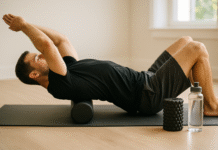
No. Rolling is a self-massage technique that can reduce the perception of stiffness and help you access range temporarily, while stretching trains range more directly. You can roll first, then stretch and strengthen to “hold” the new motion. Treat rolling as optional, not mandatory.
9) I run and lift—do I really need separate flexibility sessions?
You can embed most work into warm-ups and cool-downs. If a joint consistently limits your technique (e.g., ankle dorsiflexion affects squats or stride), add a 10–15-minute focused ROM block 2×/week until it improves. Minimalist additions pay off quickly.
10) Can flexibility training reduce injuries for non-athletes?
Indirectly, yes—by improving movement options and supporting better warm-ups. Programs blending dynamic ROM with balance/strength (like the principles behind FIFA 11+) have shown meaningful injury reductions in athletes; the general lesson is to use mobility within a broader prep routine.
Conclusion
Flexibility training matters because it expands your usable movement options—and movement options are health options. With a bit of consistent work, you can squat deeper without strain, rotate without your low back compensating, and reach without shoulder pinch. Those changes carry into stronger lifts, smoother runs, and daily life that feels less “tight” and more capable. The most reliable path is simple: dynamic mobility to start, static or PNF to finish, and end-range strength to keep what you earn. For older adults, slightly longer holds and balance work pay dividends in confidence and independence. For competitors, mapping drills to sport-specific angles unlocks faster, cleaner mechanics where it counts.
If you take nothing else: 2–3 days per week, ~60 seconds total per muscle, and immediate strength practice in the new range will move the needle in weeks. Build the habit, place the methods where they shine, and progress ROM like any other skill.
CTA: Pick three tight areas, do 10 minutes today, and retest how your main lift or movement feels—then schedule your next two sessions.
References
- Current Concepts in Muscle Stretching for Exercise and Rehabilitation, International Journal of Sports Physical Therapy (Page), 2012. PMC
- Quantity and Quality of Exercise for Developing and Maintaining Cardiorespiratory, Musculoskeletal, and Neuromotor Fitness in Apparently Healthy Adults: Guidance for Prescribing Exercise, ACSM Position Stand (Garber et al.), 2011. PubMed
- Chronic Effects of Stretching on Range of Motion with Considerations of Various Fitness Levels and Involved Joints (Konrad et al.), Sports Medicine – Open, 2023. PMC
- Acute Effects of Various Stretching Techniques on Range of Motion Across a Multiple-Joint Battery (Behm et al.), Sports Medicine – Open, 2023. SpringerOpen
- Stretching to Prevent or Reduce Muscle Soreness After Exercise (Cochrane Review update), 2022. Cochrane
- Static Stretching Produces Trivial Effects on Performance When <60 s per Muscle in Warm-Ups (Behm, IJSPT perspective PDF), 2023. ijspt.org
- The FIFA 11+ Injury Prevention Program for Soccer Players (Sadigursky et al.), Open Access Journal of Sports Medicine, 2017. PMC
- Partial vs Full Range of Motion Resistance Training: A Systematic Review and Meta-Analysis (Wolf et al.), Journal of the International Universities Strength and Conditioning Association, 2023. journal.iusca.org
- Chronic Effects of Static Stretching Exercises on Muscle Strength and Power (Arntz et al.), Sports, 2023. PMC
- Efficacy of Proprioceptive Neuromuscular Facilitation (PNF) on Range of Motion (Wanderley et al.), Journal of Bodywork and Movement Therapies, 2019. PubMed
- WHO Guidelines on Physical Activity and Sedentary Behaviour, World Health Organization, 2020. World Health Organization
- Stretching to Prevent or Reduce Muscle Soreness After Exercise (Herbert & de Noronha), Cochrane Database of Systematic Reviews, 2011 (original analysis). PubMed