
























Gluten-free meal prep is the weekly habit of planning, cooking, and storing meals that are completely free of wheat, barley, rye (and their crossbreeds), while preventing cross-contact and following fundamental food-safety steps. Done right, it saves time, money, and stress—without sacrificing flavor. This guide is written for anyone managing celiac disease, non-celiac gluten sensitivity, or cooking for someone who is gluten-free. You’ll learn how to design a safe kitchen workflow, read labels confidently, batch-cook staples, and reheat meals so they taste freshly made. Quick note: this article is educational and not a substitute for medical advice; if you have questions about diagnosis or symptoms, consult your clinician. For a fast takeaway, here’s the gist: gluten-free meal prep = verified ingredients (<20 ppm gluten as regulated in many regions, as of August 2025) + no cross-contact + time-and-temperature control for food safety. Follow the 12 rules below to make that happen every week.
1. Create a Gluten-Safe Kitchen Setup
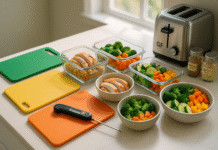
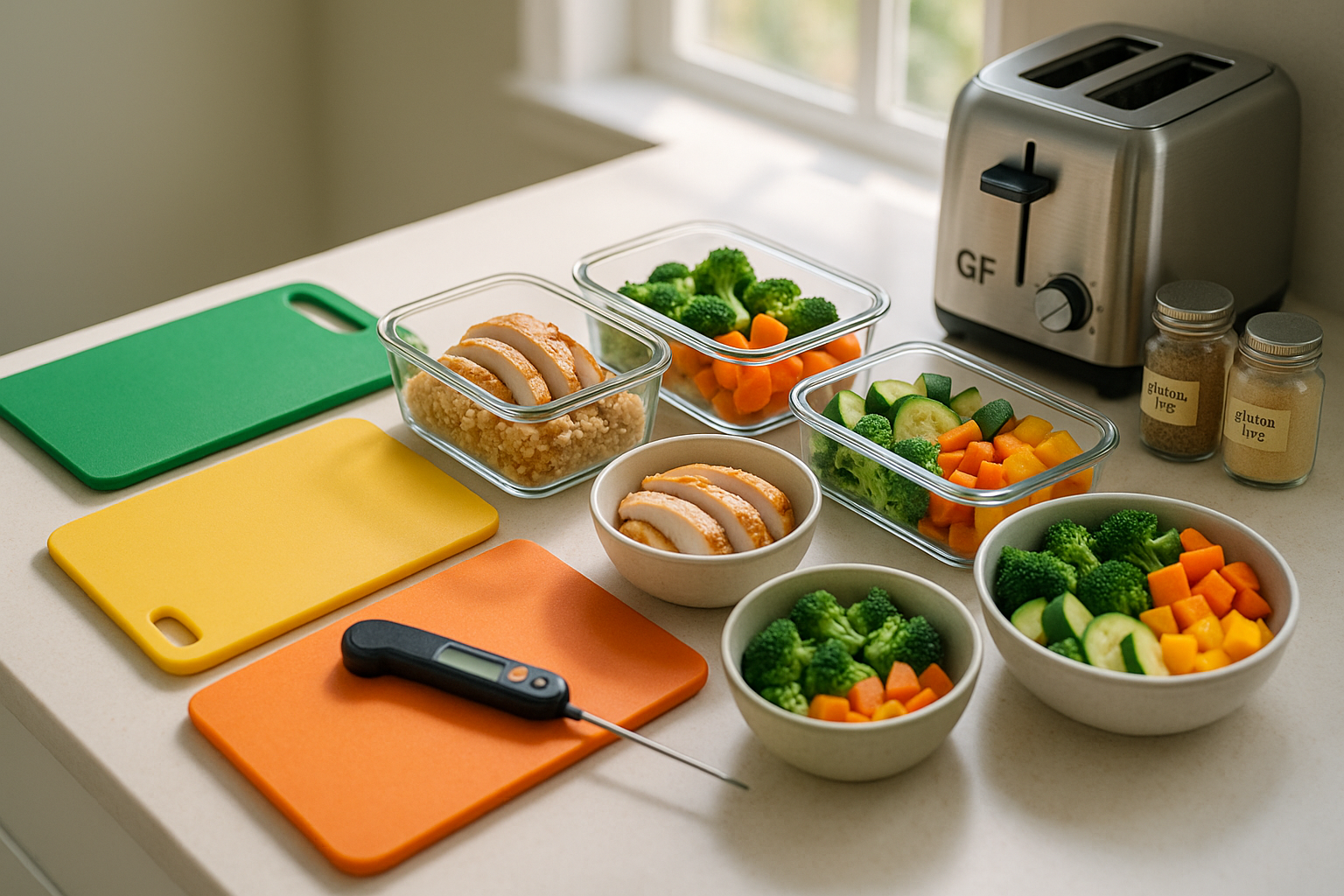
The fastest win in gluten-free meal prep is a predictable, repeatable kitchen setup that prevents gluten from ever touching your gluten-free (GF) food. That means defining GF-only zones, tools, and habits before you prep. Start with one clear rule: all GF prep happens on a dedicated surface with dedicated utensils that are cleaned first. If your home is mixed (some people eat gluten), you’ll rely more heavily on separation and labeling; if your home is fully GF, you’ll still benefit from color-coding and checklists. The goal isn’t perfectionism—it’s making the safe path the easy path. A few strategic swaps (like a GF-only toaster) and a “clean-first, cook-second” rhythm dramatically reduce risk while speeding up weekly prep.
1.1 Why it matters
- Gluten can transfer via crumbs, dusted flour, shared oil, or sticky residues on porous tools.
- A consistent workflow limits decisions during busy prep days and reduces mistakes.
- Evidence suggests basic hygiene (washing with soap and water) can often mitigate transfer, but some tools trap residues—so choose materials you can truly clean. Beth Israel Deaconess Medical Center
1.2 How to do it
- Color code: Green boards/utensils for GF only; label shelves and bins “GF.”
- Dedicate or replace high-risk items: Toaster, colander, sifter, wooden spoons/boards, and old nonstick pans that are scratched. Beyond Celiac
- Cover smartly: In shared ovens, cover GF food to block airborne crumbs. GIG® Gluten Intolerance Group®
- Set a cleaning rule: Wipe counters with hot soapy water before GF prep; wash hands and tools between tasks. Beyond Celiac
1.3 Mini-checklist
- GF zone cleared and cleaned
- GF tools pulled (board, knife, pans)
- GF toaster/liner ready; shared appliances covered if needed
- Clean towels/sponges reserved for GF tasks
Bottom line: A simple, labeled setup removes guesswork and builds muscle memory that keeps GF prep safe and smooth.
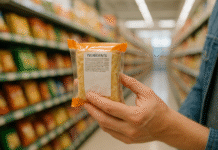
2. Shop and Label-Check Like a Pro
Safe meal prep starts at the store. “Gluten-free” is a regulated claim in many regions at <20 ppm gluten; in the U.S. it’s codified at 21 CFR 101.91, and the EU aligns under Commission Implementing Regulation (EU) No 828/2014. Codex Alimentarius (CXS 118-1979, revised 2015) underpins these thresholds globally. However, “wheat” is a major allergen that must be declared in U.S. labeling, while barley and rye are not—so you must read the full ingredient list for terms like “malt,” “barley,” and “rye.” Oats are naturally gluten-free but must be specifically produced to avoid contamination, and a small subset of people react to avenin; choose certified gluten-free oats and evaluate your tolerance. As of August 2025, fermented/hydrolyzed foods with GF claims in the U.S. are covered by an FDA rule clarifying how manufacturers substantiate claims.
2.1 Numbers & guardrails
- Gluten-free threshold: <20 mg/kg (ppm). “Very low gluten” (20–100 ppm) may appear in some markets per Codex; national rules vary.
- Allergens: U.S. Big 9 includes wheat (not barley/rye), so always scan ingredients beyond the “Contains” statement.
- Advisory statements: “May contain wheat” is voluntary and aimed at wheat allergy; a “gluten-free” claim still must meet <20 ppm even if an advisory appears.
2.2 How to read labels fast
- Look for a certified GF seal or “gluten-free” claim compliant with local regulations.
- Scan for high-risk ingredients: malt, barley, rye, brewer’s yeast.
- For oats, choose “gluten-free oats” (purity protocol or equivalent).
2.3 Mini-checklist
- Primary ingredients verified GF
- Hidden gluten terms checked
- Certification or compliant claim present
- Brand added to your “safe list”
Bottom line: Combine regulated claims with ingredient literacy; don’t rely on allergen lists alone.
3. Prevent Cross-Contact at Every Step
Cross-contact can happen during chopping, marinades, cooking, or storage. The principle is simple: keep GF food physically separate from gluten sources and shared residues. Studies suggest some activities are lower risk than once feared (e.g., toasting GF bread in a gluteny toaster showed minimal transfer in limited trials), but shared pasta water consistently exceeded 20 ppm, making it a clear no-go. Your workflow should reflect both evidence and your household’s reality: in mixed kitchens, separation is non-negotiable.
3.1 How to do it
- Sequence smartly: Prep GF foods first, then gluten foods.
- Use barriers: Foil, parchment, toaster bags (handy for travel) as backups—not as permanent substitutes for good practice. GIG® Gluten Intolerance Group®
- Fresh water only: Never cook GF pasta in reused water; rinsing can reduce risk but use new water for certainty.
- Condiment control: Maintain separate, labeled jars to prevent “crumb-backwash.” GIG® Gluten Intolerance Group®
3.2 Mini-checklist
- Separate boards/knives for GF
- New water for GF boiling
- Dedicated toaster/colander/sifter
- Labeled condiments (no double-dipping)
Bottom line: Physical separation + sequencing + clean tools = cross-contact insurance every time.
4. Choose Reliable Gluten-Free Staples
Building blocks make meal prep fast: grains/starches, proteins, sauces, and snacks you trust. For grains, stock rice, quinoa, millet, buckwheat (kasha), certified GF oats, and GF pasta from brands you’ve vetted. For thickeners and baking binds, keep cornstarch, potato starch, tapioca, arrowroot, and—if you bake—psyllium husk or xanthan gum. A small stable core of staples eliminates weekly re-learning and keeps flavor rotating.
4.1 Why it matters
- Pre-vetted staples cut shopping time and reduce labeling guesswork.
- Diverse grains boost fiber and micronutrients often missed on stricter GF diets.
- Texture success hinges on the right starch for the job (e.g., arrowroot for bright sauces; potato starch for crisping).
4.2 Tools & examples
- Grains bin: quinoa, brown rice, millet, buckwheat, certified GF oats.
- Starches: cornstarch (silky sauces), tapioca (chewy), potato starch (crisp), arrowroot (clear sauce).
- Crisp kit: potato starch + oil mist + hot oven for crispy tofu or chicken.
4.3 Mini-checklist
- Two grains, one pasta, two starches always on hand
- One crunchy coating option
- One fiber booster (chia, psyllium, flax)
Bottom line: A trusted pantry accelerates prep and ensures consistent texture and nutrition.
5. Build Flavor with Naturally GF Sauces & Spices
Great gluten-free meal prep tastes great because you layer flavors—acids, aromatics, heat, umami—using naturally GF ingredients. Many soy sauces contain wheat; choose tamari labeled gluten-free, or use alternatives like coconut aminos, fish sauce (check labels), harissa, chili crisp (verify), miso made from rice/soy without barley, and pure spice blends (single-ingredient spices are safest; blends must be verified GF). Stock GF broth (some contain barley or flavorings), tomato paste, mustard, vinegars, citrus, and fresh herbs.
5.1 How to do it
- Flavor bases: garlic/ginger + scallions; smoked paprika + cumin; lemon zest + dill.
- Umami boosters: GF tamari, fish sauce (verify), anchovy paste, nutritional yeast.
- Spice control: Buy single spices, then DIY blends to avoid anti-caking agents or shared lines.
5.2 Mini-checklist
- One all-purpose marinade (tamari + citrus + honey)
- One chili paste checked GF
- Verified GF stock and bouillon
Bottom line: Flavor-forward prep depends on verified condiments and confident spice work.
6. Plan a 7-Day Prep That Hits Nutrition Targets
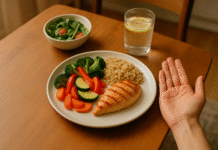
A safe plan is a balanced plan. Aim for protein 20–35 g per main meal (adjust per needs), plenty of produce, and fiber from GF sources (beans/lentils if tolerated, quinoa, buckwheat, chia, flax, vegetables). Rotate colors (greens/orange/purple) and cooking methods (roasting, stewing, grilling) to keep meals satisfying. Batch two proteins, two grains/starches, a tray of roasted vegetables, a pot of soup or chili, and assemble bowls all week.
6.1 How to do it
- Menu math: Choose 2 proteins + 2 grains + 1 legume + 1 soup + 1 sauce.
- Portion guide (per adult): 10–14 meal portions/week (lunch+dinner), 5–10 snack portions.
- Fiber focus: Target ~25–35 g/day from GF sources.
6.2 Mini-checklist
- Shopping list matches plan
- Storage mapped (fridge vs freezer)
- Snacks included (nuts, yogurt, veg sticks, GF crackers)
Bottom line: Plan structure first, then shop once and cook once—your future self will thank you.
7. Batch-Cook Proteins Safely (Temps, Cooling, Storage)
Protein is high-value and high-risk. Use a food thermometer and follow safe minimum internal temperatures (e.g., poultry 165°F / 74°C; ground meats 160°F / 71°C; whole cuts of beef/lamb 145°F / 63°C with 3-minute rest). Cool cooked foods quickly and refrigerate within 2 hours (1 hour if above 90°F/32°C). Store leftovers 3–4 days in the fridge; freeze longer storage. These guardrails protect flavor and health. Food Safety and Inspection Service
7.1 How to do it
- Cook: Roast sheet-pan chicken thighs to 165°F; brown turkey to 160°F; rest roasts to 145°F + 3 min.
- Cool: Shallow containers (<5 cm depth), lids ajar until steam dissipates, then seal and chill.
- Date & rotate: Label with cook date; use FIFO.
7.2 Mini-checklist
- Thermometer calibrated
- Shallow containers ready
- Labels + marker at the counter
Bottom line: Temperature + time discipline keeps your protein juicy, safe, and week-proof.
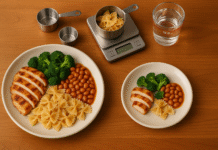
8. Cook & Cool Starches the Smart Way (Especially Rice & Pasta)
Starches are meal-prep workhorses but need care. Rice can harbor Bacillus cereus spores that survive cooking and produce heat-stable toxins if rice sits too long at room temp; refrigerate promptly. U.S. guidance: refrigerate within 2 hours; many U.K. sources advise cooling quickly and using within 24 hours for rice. GF pasta should be cooked in fresh water (not reused) to avoid gluten transfer; rinsing can reduce risk, but new water is the safest path.
8.1 How to do it
- Rice: Cook, fluff, spread in shallow container, chill promptly; portion and reheat to 165°F/74°C.
- Pasta: Boil in new water; toss with a little oil to prevent sticking; store with a splash of GF broth for reheat silkiness.
- Potatoes/quinoa: Cool fast; store moistened to prevent drying.
8.2 Region note
- U.S.: Leftovers 3–4 days; follow 2-hour rule.
- U.K.: Use rice within 24 hours; ensure steaming hot on reheat.
Bottom line: Treat starches like proteins: control time and temperature—and use fresh water for GF pasta.
9. Portion, Package & Label for the Week
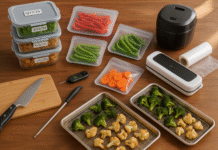
Packaging is where food safety meets convenience. Use airtight glass or BPA-free containers, portioned for one or two servings to minimize repeated temperature cycling. Label what/when on every container. Allocate the first 3–4 days to the fridge and place the rest in the freezer on day one. For salads, pack components separately; dress at the last moment. For stews and curries, freeze flat in bags or in silicone blocks for quick thawing.
9.1 How to do it
- Fridge vs freezer: Fridge for days 1–3(4); freezer beyond.
- Headspace: Leave room for expansion when freezing liquids.
- Stack smart: Keep ready-to-eat GF items on upper shelves to avoid drips from raw items.
9.2 Mini-checklist
- Date labels applied
- Upper-shelf storage for ready-to-eat
- Salad greens and dressings separated
Bottom line: Packaging is your time machine—label, chill fast, and reheat only the portion you’ll eat.
10. Reheat, Crisp & Refresh Without Gluten
Reheating is where flavor can fade—or shine. The trick is gentle heat + added moisture for braises and grains; dry, high heat for crisping. Microwave with a lid slightly ajar and a spoonful of water for rice/bowls; finish proteins in a hot pan or air fryer for texture. Always reheat leftovers to 165°F/74°C in the thickest part. If you’re mixing GF and gluten foods in a shared space, reheat GF dishes in covered containers and use clean utensils to plate.
10.1 How to do it
- Moist reheats: Add stock splash; cover loosely; rest 1 minute after microwaving.
- Crisp finish: Skillet or air fryer last 2–3 minutes for edges.
- Starch rescue: Mist pasta/rice with water; cover and reheat, then toss with a little oil.
10.2 Mini-checklist
- Thermometer confirms 165°F/74°C
- Lids and covers at hand
- Clean serving spoon for GF only
Bottom line: Smart reheating restores day-one flavor and keeps the safety bar high.
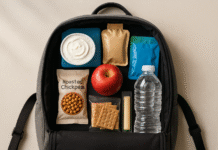
11. Pack GF Lunches & Snack Kits for Work, School, and Travel
Out of the house, risk rises—so control the controllables. Use bento-style containers with compartments, small GF condiment bottles, and toaster bags for shared toasters or cafeterias. Keep a GF emergency kit (nuts, bars, tuna pouches, shelf-stable soups) for meetings and travel delays. At shared fridges, place GF meals on upper shelves, sealed and labeled. When in doubt about office appliances, cover food and bring your own utensils. Beyond Celiac
11.1 How to do it
- Lunch formula: Protein + grain + veg + sauce + crunch.
- Portable condiments: Tamari, hot sauce, olive oil, lemon packets (verified GF).
- Plan B: Stash shelf-stable GF snacks in your bag/desk.
11.2 Mini-checklist
- Labeled lunch and utensils
- Toaster bag packed
- Backup snack kit in bag
Bottom line: Self-contained kits, labeled containers, and backup snacks keep you safe and satisfied anywhere.
12. Stretch Your Budget with Smart GF Swaps & DIY Mixes
Gluten-free products can be pricier. Save by cooking naturally GF whole foods (rice, potatoes, eggs, beans, chicken thighs, seasonal veg) and using DIY spice blends and coatings (e.g., potato starch + paprika for crispy chicken). Buy in bulk when a product becomes part of your “safe list,” and freeze portions. For baking, mix a simple all-purpose GF blend (e.g., rice flour + tapioca + potato starch) for breads and batters, then add psyllium or xanthan only when recipes need binding. Prioritize versatile staples over niche one-offs.
12.1 How to do it
- Whole-food core: Base meals on inexpensive, naturally GF items; use specialty goods to add variety.
- DIY blends: Batch a house spice rub and all-purpose GF coating.
- Bulk smart: Buy large sizes of verified products you use weekly (tamari, oats, pasta).
12.2 Mini-checklist
- Monthly price tracker for top 10 items
- One house spice blend + one coating mix
- Freezer inventory updated
Bottom line: Focus spending where it’s tasted—protein, produce, and a few high-impact condiments—and DIY the rest.
FAQs
1) What does “gluten-free” legally mean?
In the U.S. and EU, “gluten-free” generally means the product contains less than 20 parts per million (ppm) of gluten; this aligns with Codex Alimentarius, which many countries reference. In the EU, “very low gluten” labels may indicate 20–100 ppm. Check your region’s rules and labels.
2) Are oats safe on a gluten-free diet?
Oats are naturally gluten-free but frequently contaminated during farming and processing. Choose certified gluten-free oats and note that a small subset of people with celiac disease react to avenin in oats. Introduce oats under medical guidance if newly diagnosed.
3) Do I really need a separate toaster?
Many experts recommend a GF-only toaster because crumbs are hard to remove. Preliminary research showed low transfer in some scenarios, but shared pasta water clearly exceeded thresholds. If you must share, toaster bags can help—but a dedicated unit is the simplest solution.
4) How long do gluten-free leftovers last?
General guidance is 3–4 days in the refrigerator, and freeze for longer. Refrigerate within 2 hours (1 hour in hot conditions). Always reheat to 165°F/74°C.
5) What about rice safety when meal prepping?
Cool rice quickly and refrigerate promptly to avoid Bacillus cereus toxin formation. U.S. guidance follows the 2-hour rule; U.K. advice commonly suggests using rice within 24 hours. Reheat to 165°F/74°C and don’t leave rice at room temp. CDCFood Standards Agency
6) Are “may contain wheat” or “made in a facility with wheat” labels a dealbreaker?
These advisory statements are voluntary. If a product also carries a “gluten-free” claim, it still must meet the <20 ppm standard. Evaluate brand trust and your risk tolerance. U.S. Food and Drug AdministrationBeth Israel Deaconess Medical Center
7) Which cooking temperatures keep proteins safe?
Use a thermometer. Examples: poultry 165°F/74°C, ground meats 160°F/71°C, whole cuts 145°F/63°C + 3-minute rest, casseroles 165°F/74°C.
8) Do I need to replace wooden tools and colanders?
Wood and mesh colanders can trap particles and are harder to clean. Many clinical and advocacy sources advise dedicated GF versions. Stainless steel, glass, and hard plastic are easier to sanitize. AGA GI Patient CenterStanford Children's Health
9) Is “low gluten” the same as “gluten-free”?
No. Under Codex, “gluten-free” <20 ppm and “foods processed to 20–100 ppm” may be labeled differently and are not gluten-free. Countries vary on allowing “very low gluten.”
10) What’s the quickest way to check a product?
First, scan for a regulated “gluten-free” claim or trusted certification. Then skim ingredients for barley/malt/rye (not always flagged in U.S. allergen lists). Keep a running “safe brand” list to speed repeat purchases.
Conclusion
Gluten-free meal prep succeeds when three pillars line up: verified ingredients, cross-contact controls, and food-safety timing/temperatures. The 12 rules above translate those pillars into a weekly routine: a labeled GF workspace; confident label reading backed by regulations; evidence-based strategies for cooking, cooling, and reheating; and flavorful sauces, spice blends, and staples that make prepped meals a joy to eat. Add a few budget-smart tactics—DIY spice kits, versatile whole foods, freezer-friendly portions—and you’ll get the best of both worlds: safety and flavor. Start small this week: designate your GF zone, pick two proteins and two grains, and prep three dinners and two lunches using the checklists. Next week, scale to the full plan. Your copy-ready next step: Block two hours this weekend to batch-cook protein, grains, and veg; label and chill within two hours; and assemble three GF lunches and three dinners for stress-free, delicious days.
References
- 21 CFR 101.91 — Gluten-Free Labeling of Food, eCFR (current as of Aug 2025). eCFR
- Gluten-Free Labeling of Foods, U.S. FDA, Mar 7, 2022 (final rule for fermented/hydrolyzed foods announced Aug 12, 2020). U.S. Food and Drug Administration
- Commission Implementing Regulation (EU) No 828/2014 on information to consumers on the absence or reduced presence of gluten, July 30, 2014. EUR-Lex
- Codex Alimentarius CXS 118-1979 (rev. 2008; amend. 2015): Standard for Foods for Special Dietary Use for Persons Intolerant to Gluten, FAO/WHO. FAOHome
- Food Allergies (Big 9), U.S. FDA, Mar 26, 2025. U.S. Food and Drug Administration
- Four Steps to Food Safety, CDC, Apr 29, 2024. CDC
- Safe Minimum Internal Temperature Chart, FoodSafety.gov (USDA/CDC/FDA), Nov 21, 2024. FoodSafety.gov
- Leftovers and Food Safety, USDA FSIS, July 31, 2020. Food Safety and Inspection Service
- Oats and the Gluten-Free Diet, Coeliac UK, n.d. (accessed Aug 21, 2025). Coeliac UK
- Is Sharing a Toaster Safe for People with Celiac Disease?, Beyond Celiac, Oct 9, 2019. Beyond Celiac
- Preparation of Gluten-Free Foods Alongside Gluten-Containing Foods: Validating a Simple Method to Mitigate Cross-Contact, Nutrients (PMC), 2019. PMC
- Label Reading & the FDA (Barley/Rye not required in U.S. allergen list), Celiac Disease Foundation, n.d. (accessed Aug 21, 2025). Celiac Disease Foundation