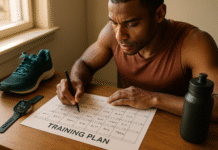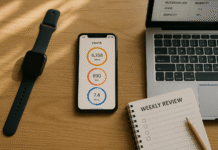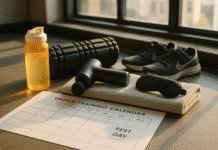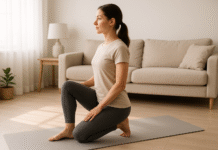





















Setting fitness goals that match your life stage is the difference between plans that stick and plans that stall. This guide offers four practical playbooks—one each for students, parents, professionals, and seniors—so you can align training, time, and tools with your real world. In plain terms: adults typically benefit from 150–300 minutes of moderate activity (or 75–150 minutes vigorous) weekly plus muscle-strengthening 2+ days; kids and teens target about 60 minutes daily; older adults add balance work several days a week (as of August 2025).
Quick start: Map your constraint (schedule/energy/injury), pick one metric that matters, choose a minimum effective plan, book it on your calendar, and review weekly. Do the simplest thing that actually gets done.
Friendly reminder: This article is educational and not medical advice. If you have a health condition, are pregnant/postpartum, or are recovering from injury, consult a qualified clinician before changing your exercise routine. For pregnancy/postpartum specifics, see the ACOG link in References.
1. Students: Fit Goals Around Classes, Exams, and Budgets
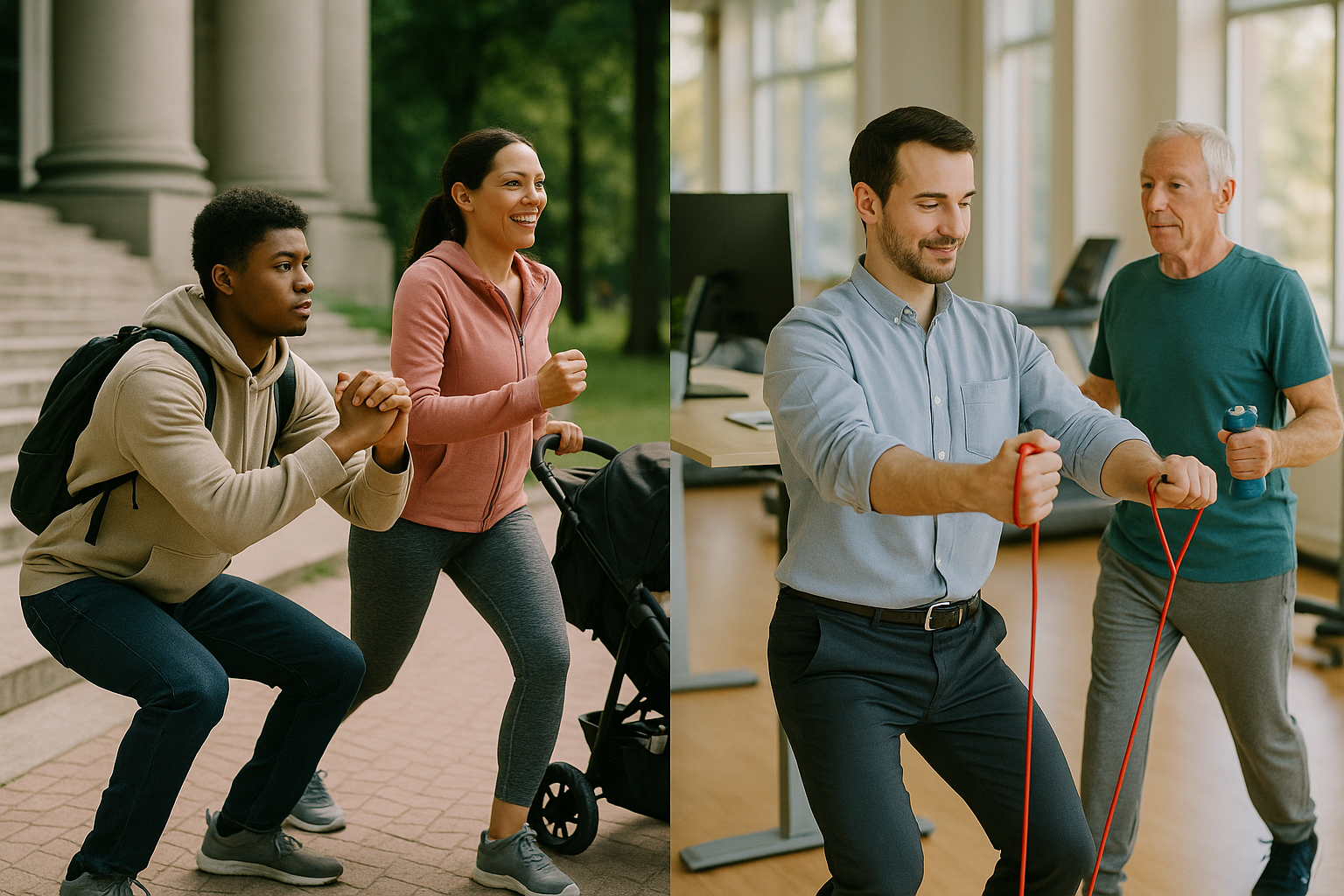
Students thrive with clear, bite-sized goals that flex around lectures, labs, clubs, and exam seasons. The simplest target is 60 minutes of daily movement for school-aged teens (6–17), mixing moderate-to-vigorous activity plus muscle and bone-strengthening work on at least 3 days; for college-age adults, follow the standard adult guidance of 150–300 minutes moderate (or 75–150 vigorous) weekly, plus strength twice a week. Start your semester by anchoring movement to immovable events—classes, commute windows, or study blocks—then scale intensity up or down when exams hit. Your budget constraints actually help: campus gyms, intramurals, and bodyweight routines cover most needs. Build skill and confidence with progressive micro-cycles (4–6 weeks) instead of “new me” marathons.
1.1 Why it matters
Goal clarity reduces decision fatigue and boosts adherence during high-variance weeks. Classic goal-setting research shows that specific, challenging goals improve performance when paired with feedback and realistic task complexity—exactly what you get by tracking simple reps, sets, or steps and reviewing weekly. University of Baltimore
1.2 How to do it (weekly cadence)
- Anchor: Tie 3–5 workouts to fixed times (e.g., Mon/Wed/Fri after your earliest class).
- Mix: 2–3 full-body strength sessions (30–45 min), 2–3 cardio blocks (20–30 min), 1 rec game or hike.
- Sprint blocks: During midterms, switch to “maintenance mode”: 15–20 minute density sets + brisk walks between study bouts.
- Feedback loop: Track two metrics (e.g., total weekly minutes + squat progress).
- Peer effect: Join a study-buddy walk or intramural team for built-in accountability.
1.3 Numbers & guardrails
- Teens (6–17): ~60 min/day moderate-vigorous activity; include vigorous 3+ days; muscle/bone-strengthening 3+ days.
- Adults (18+): 150–300 min moderate (or 75–150 vigorous) + strength 2+ days; break sessions into 10–20 min if needed.
1.4 Tools & examples
- Free strength plan: 3×/wk full-body: goblet squat, push-up, hip hinge, row, split squat, plank (2–4 sets).
- Cardio menu: 20–30 min campus loops, stationary bike, or shuttle-run intervals (e.g., 8×60s fast / 60s easy).
- Apps/wearables: Use your phone’s step count; set 7,000–10,000 steps/day targets on heavy study days.
- Study-movement stack: Walk to record short voice notes; review flashcards on an incline treadmill.
Mini case: A second-year student with 16 credits and a lab adopts “3×30 + 2×20”: three 30-min lifts (Mon/Wed/Fri) and two 20-min runs (Tue/Thu). During finals, they switch to five 15-minute circuits at dorm gym and walk to/from the library (extra 4,000 steps/day). Outcome after 12 weeks: strength maintained, stress lower, sleep steadier.
Synthesis: Prioritize anchors, not willpower. Match effort to exam cadence, and you’ll stay consistent all term.
2. Parents: Micro-Workouts and Family Routines That Actually Stick
Parents need routines that survive sleep deprivation, childcare logistics, and shifting calendars. The winning pattern is “micro-workouts + movement rituals”: short strength sessions (10–20 minutes), brisk stroller walks or playground intervals, and 1–2 longer workouts pre-booked for weekends or caregiver-swap windows. The adult guideline is still 150–300 minutes moderate (or 75–150 vigorous) weekly plus 2+ strength sessions; if you’re postpartum, most can resume gradual activity when medically cleared, starting with walking and core/pelvic floor basics (as of August 2025). Keep the bar low enough to step over on hectic days, and leverage the kids’ activities as built-in cardio.
2.1 How to do it (busy-day formula)
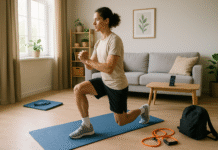
- 10×10 rule: Ten exercises × ten reps = a 10–15 minute full-body session (squat, row, hinge, overhead press, split squat, dead bug, glute bridge, push-up incline, calf raise, farmer carry).
- Stroller tempo: 25 minutes total: 5-min easy walk + 10×(1-min brisk / 1-min easy) + 5-min cool-down.
- Playground strength: Superset push-ups on a bench with step-ups while the kids climb.
- Weekend long: Book a 45–60 minute cycle, jog, or hike while partner covers nap time—swap the next day.
- Family movement: Dance party after dinner; yard circuits; “walk the practice” instead of sitting in the car.
2.2 Numbers & guardrails (including postpartum)
- Adults: 150–300 min moderate or 75–150 vigorous weekly + strength 2+ days.
- Postpartum: When cleared, begin with walking, breathing, and pelvic floor work; progress gradually; stop and consult a clinician for pain, bleeding increase, or dizziness. Physical activity is generally safe and beneficial in pregnancy/postpartum when individualized.
2.3 Common mistakes
- All-or-nothing thinking: Waiting for a perfect 60-minute block instead of stacking three 15-minute blocks.
- Skipping strength: Neglecting muscle maintenance makes daily tasks (car seats, groceries) harder.
- No calendar defense: If the workout isn’t on the family calendar, it won’t happen.
2.4 Tools & accountability
- Shared calendars: Color-code “non-negotiable” sessions.
- Timers: 12- to 20-minute EMOM/AMRAPs for efficient home strength.
- Wearables: Nudge you to stand or walk; aim to break up long sitting, which is linked with higher health risks independent of exercise.
Mini case: Two caregivers with a toddler schedule “MWF 6:45–7:10 a.m.” as alternating micro-lifts and “Sat 8:00–9:00 a.m.” long session. Over 10 weeks, they average 170 minutes weekly plus two strength days—without losing weekend family time.
Synthesis: Shrink the unit of success; make it a family event; defend it on the calendar.
3. Professionals: Beat the Desk, Build Consistency, Respect Your Calendar
Desk-bound professionals succeed by engineering frictionless habits around meetings and commutes. The cornerstone is still 150–300 minutes moderate or 75–150 vigorous weekly plus strength 2+ days, but the differentiator is anti-sedentary hygiene: insert 2–3 minute movement breaks every 30–60 minutes and aim for a standing/walking meeting when possible. Prolonged sedentary time is associated with higher all-cause mortality and cardiometabolic risk, even after controlling for exercise, so treat sitting like sun exposure—dose it and break it up. Use time-blocking, templates, and minimum-effective routines to keep busy weeks from derailing momentum. CDC
3.1 How to do it (meeting-proof plan)
- Time-block “bookends”: 25 minutes before the first meeting + 25 minutes after the last meeting = 50 minutes/day without touching your core calendar.
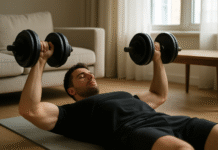
- Two-move strength template (20–25 min): 5-min warm-up + 4 rounds of (A) hinge/squat + (B) push/pull, finish with a 3-min carry.
- Commute-based cardio: Park 10–15 minutes away; bike two days/week; walk calls.
- Micro-breaks: Every hour, 2–3 minutes of brisk steps, air squats, calf raises, or band pull-aparts.
3.2 Numbers & guardrails
- Weekly target: 5×30 min moderate or 3×25 min vigorous, plus 2×30 min strength.
- Sedentary breaks: At least 2–3 minutes light movement per 30–60 minutes of sitting.
- Travel weeks: Keep a resistance band in your bag; aim for “hotel 20” (two circuits of 10 exercises).
3.3 Tools & systems
- Calendar holds: Title them “Focus” to reduce reschedules.
- Habit stacking: Push-ups after coffee brews; 10-minute walk after lunch.
- Wearable prompts: Stand alerts; step target 7,000–10,000 as a proxy for daily activity.
- Desk setup: Standing desk for portions of the day; under-desk cycle for light movement during long webinars.
3.4 Common mistakes
- Randomness: Jumping between programs without a 4–6 week progression.
- Intensity mismatch: Going all-out on Monday, limping by Wednesday.
- Ignoring recovery: Skimping on sleep and hydration undermines training quality.
Mini case: A product manager schedules 25-minute lifts Tue/Thu mornings, a 40-minute run Sat, and adds 2-minute hourly breaks. After 8 weeks, resting heart rate drops 3–5 bpm, back pain improves, and weekly activity averages ~200 minutes.
Synthesis: Guard your calendar, automate micro-breaks, and let simple templates carry busy seasons.
4. Seniors: Strength, Balance, and Joint-Friendly Cardio for Healthy Aging
For older adults, the priorities widen: preserve strength and power for independence, practice balance to reduce fall risk, and keep joints happy with low-impact cardio. As of August 2025, older adults follow the same aerobic targets as other adults (150–300 minutes moderate or 75–150 vigorous weekly), plus balance and coordination exercises on 3+ days and strength training at least twice weekly. Start conservative, progress gradually, and choose movements that feel stable and pain-free. The best program is one you enjoy and can repeat—think social classes, water aerobics, tai chi, resistance bands, and short daily walks layered together. WHO IRIS
4.1 How to do it (weekly mix)
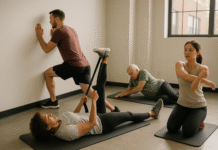
- Balance: 10–15 minutes most days—tandem stands near a counter, single-leg holds, heel-to-toe walks.
- Strength: 2–3 days—sit-to-stand, supported split squats, band rows, wall push-ups, loaded carries.
- Cardio: 3–5 days—walking, cycling, swimming, or elliptical, accumulating 150–300 minutes weekly.
- Mobility: Gentle range-of-motion for hips, shoulders, spine after warm-ups or walks.
4.2 Numbers & guardrails
- Progression: Add volume in 5–10% increments weekly; keep exertion at a “can talk, not sing” level for steady cardio.
- Balance safety: Practice near support; clear clutter; use proper footwear.
- Pain signals: Sharp or persistent joint pain? Reduce load/ROM and consult a clinician.
4.3 Tools & classes
- Community resources: Senior center strength/balance classes; “Strong Bones,” “Tai Chi for Arthritis” groups.
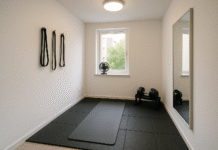
- Home kit: Light dumbbells, long loop band, mini-band, sturdy chair, and a timer.
- Tracking: Simple log of minutes, exercises, and RPE (rating of perceived exertion).
4.4 Common mistakes
- Skipping power: Only slow reps—add safe speed elements (e.g., faster sit-to-stands) once stable.
- Over-stretching painful joints: Favor gentle mobility and strength through comfortable ranges.
- Under-recovering: Space strength days; prioritize protein, hydration, and sleep.
Mini case: A 72-year-old adds 3×/wk strength (20–30 min), 4×/wk walks (25–35 min), and daily balance practice (10 min). After 12 weeks, they report easier stair climbing and improved confidence; they keep Sunday purely for family and recovery.
Synthesis: Train for independence: strength to carry, balance to prevent falls, and cardio to explore more of life.
FAQs
1) What’s the fastest way to tailor goals to my life stage?
Start by listing your biggest constraint (time, energy, joint pain, childcare) and your top outcome (e.g., reduce stress, lower BP, build muscle). Match a minimum effective dose to that constraint—like 3×25-minute sessions weekly for professionals or 10–20 minute micro-workouts for parents. Lock these into your calendar and review progress each week. This keeps goals realistic and adaptable as life changes.
2) Do short workouts “count,” or do I need 30+ minute blocks?
Short sessions absolutely count. The current guidance allows you to accumulate minutes in any bout length; two or three 10–15 minute sessions can equal or outperform a single 30–45 minute workout when your schedule is volatile. Movement “snacks” also break up sedentary time, which carries independent health risks. The key is consistency and progressive overload over weeks.
3) How should teens and college students set goals during exam periods?
Use “maintenance mode”: reduce volume, keep intensity moderate, and prioritize sleep. Convert 45-minute workouts into 15–20 minute strength circuits and short interval walks between study blocks. After exams, run a 2-week ramp-up (add 5–10% per session) back to your standard plan. This protects fitness without draining study energy, and it maintains the habit loop you’ll need after finals.
4) What if I’m postpartum and feel ready to train?
Once medically cleared, begin with walking, deep breathing, and gentle core/pelvic floor work. Progress gradually to light resistance and intervals as comfort allows. Watch for warning signs such as increased bleeding, pain, or dizziness and pause if they occur. Individualize your plan and lean on brief, frequent sessions that fit nap windows and childcare realities.
5) I sit all day. Are standing desks enough?
Helpful, but not sufficient. Prolonged sitting is linked to higher health risks even after accounting for exercise, so program hourly 2–3 minute movement breaks and mix positions (sit, stand, walk). Consider walking meetings, stairs for 2 floors or fewer, and a wearable to prompt micro-movement. Think “break the sit” rather than “never sit.” PubMed
6) What does a “good” weekly plan look like for busy professionals?
A simple template: two 25-minute strength sessions (Tue/Thu mornings), one 40-minute weekend cardio, and daily 2–3 minute movement breaks each hour. Add optional 20-minute mid-week cardio if energy allows. Protect those blocks with calendar holds and prepare gear the night before. This plan reliably hits ~150–200 minutes/week while minimizing reschedules.
7) What are the best balance exercises for older adults?
Start with safe, supported drills: tandem stance at a counter, heel-to-toe walking along a hallway, and single-leg stands while lightly holding a chair. Progress by reducing hand support, closing eyes only when safe, or adding head turns. Combine balance practice with strength (sit-to-stands, step-ups) 2–3 days/week for the biggest functional gains.
8) Are SMART goals always the best choice?
SMART remains useful for clarity and measurement, but evidence suggests the type of goal and context matter. Challenging, specific goals paired with feedback and commitment tend to outperform vague intentions; SMART is one way to structure that clarity. Use it flexibly—avoid perfectionism and revise as your life stage demands. PMC
9) How do I choose strength exercises if I’m new or older?
Favor simple, joint-friendly patterns: squat (chair), hinge (hip hinge or light deadlift), push (wall/bench push-up), pull (band row), carry (grocery carries), and core (dead bug or suitcase hold). Start with 1–2 sets of 8–12 reps, leaving 1–2 reps “in the tank,” and add sets or load slowly. Pair strength days with short walks to warm up and cool down.
10) What metrics should each life stage track?
- Students: weekly minutes + one lift progression.
- Parents: total active days/week + “micro-workout streak.”
- Professionals: sedentary breaks/hour + weekly minutes.
- Seniors: balance time (tandem stance) + strength sessions/week.
Pick two, measure weekly, and celebrate trendlines—not single days.
Conclusion
Your life stage isn’t a barrier to fitness—it’s your blueprint. Students do best anchoring short, progressive routines to class rhythms. Parents win with micro-workouts, stroller intervals, and shared calendars. Professionals thrive by defending bookend sessions and breaking up long sits. Seniors flourish with the trifecta of strength, balance, and joint-friendly cardio. Across all four groups, the principle is the same: set one realistic metric, schedule it where it fits, and review every week. If a season is chaotic, shrink the unit of success rather than pause altogether. Stack easy wins now, and greater capacity will follow.
Next step: Pick the playbook that matches your role today and book your first two sessions this week.
References
- WHO Guidelines on Physical Activity and Sedentary Behaviour. World Health Organization, 2020. WHO IRIS
- Physical Activity Basics—Adults: How Much Physical Activity Do Adults Need? Centers for Disease Control and Prevention, last reviewed Dec 6, 2023. CDC
- Physical Activity Guidelines for School-Aged Children and Adolescents. Centers for Disease Control and Prevention, updated July 3, 2024. CDC
- Recommendations for Adults—Physical Activity. American Heart Association, Jan 19, 2024. www.heart.org
- Exercise and Physical Activity: Three Types of Exercise Can Improve Your Health and Physical Function. National Institute on Aging, Jan 14, 2025. National Institute on Aging
- Exercise During Pregnancy (FAQ). American College of Obstetricians and Gynecologists, accessed Aug 2025. ACOG
- Physical Activity Guidelines for Americans, 2nd Edition. U.S. Department of Health and Human Services (ODPHP), 2018. Health.gov
- Sedentary Time and Its Association With Risk for Disease Incidence, Mortality, and Hospitalization in Adults. Annals of Internal Medicine, 2015. acpjournals.org
- Building a Practically Useful Theory of Goal Setting and Task Motivation: A 35-Year Odyssey. Locke & Latham, American Psychologist, 2002. Stanford Medicine