
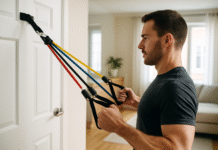












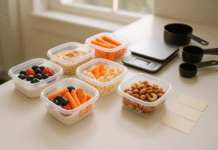















A growth mindset for fitness is the belief that your strength, endurance, mobility, and skills can improve with smart practice, feedback, and time. Instead of asking “Am I talented?”, you ask “What’s the next rep, cue, or tweak that moves me forward?” This guide turns that belief into training practices you can use today—whether you’re just getting started, returning from a break, or pushing for a new PR—so you stay consistent and keep improving. (Educational only—if you have medical conditions, injury, or pregnancy/postpartum needs, consult a qualified professional before changing your training.) A concise definition: a growth mindset for fitness means seeing your abilities as trainable, not fixed, and choosing actions that help them grow.
Quick view — the 12 strategies:
- Set process goals that anchor effort and habits.
- Use implementation intentions and WOOP to plan for obstacles.
- Make it tiny: habit stacking and micro-wins.
- Calibrate intensity with RPE and the talk test.
- Progress gradually with conservative overload.
- Practice technique with deliberate practice and feedback.
- Run a weekly review to adjust next week’s plan.
- Treat setbacks as data and practice self-compassion.
- Track leading indicators (minutes, sets, sleep) you control.
- Build social support and accountability that fits you.
- Give yourself process praise and craft identity statements.
- Protect recovery—especially sleep—so adaptation sticks. PubMed
1. Set Process Goals That You Can Do This Week
Process goals are specific actions you can perform regardless of the scale reading or today’s weather. They turn “get fit” into repeatable behaviors—minutes walked, sets completed, meals prepped—that satisfy the psychological needs of autonomy (you choose), competence (you can do it), and relatedness (often done with others), which supports motivation over time. Start by mapping your week and fitting movement where it naturally belongs, then commit to 1–3 actions you’ll undoubtedly execute. Process goals also shift your attention to learning (What did I try? What worked?), which is the engine of a growth mindset.
1.1 How to do it
- Write one outcome (e.g., “complete a 5K in 12 weeks”) and 3 process goals that feed it (e.g., “walk/jog 25–35 min, 3×/week”).
- Anchor to public guidelines: 150–300 min/week of moderate cardio or 75–150 vigorous + 2+ days of muscle-strengthening.
- Put each session on your calendar with a place, time, and fallback (rain plan, at-home variation).
1.2 Numbers & guardrails
- If time is scarce, do shorter, more frequent bouts; benefits still accrue. Use the talk test to stay mostly moderate.
Synthesis: Process goals keep attention on controllables and give you daily proof that effort moves the needle—exactly the mindset you want.
2. Use Implementation Intentions and WOOP to Beat Obstacles
Knowing what to do isn’t enough; you need an if-then plan for when real life shows up. Implementation intentions (“If [trigger], then I will [action].”) reliably increase follow-through by pre-deciding your response. Pair them with WOOP (Wish, Outcome, Obstacle, Plan): you mentally contrast your desired outcome with the most likely obstacle and then script an if-then plan. Together, they close the intention-behavior gap that derails so many training efforts.
2.1 Templates that work
- Morning lift: If I feel rushed after work, then I’ll do a 25-minute dumbbell session at home before breakfast.
- Weather plan: If it’s over 36 °C or AQI is poor, then I’ll swap my run for an indoor bike or incline walk.
2.2 Mini checklist
- Identify one biggest obstacle per goal.
- Write a single-sentence plan you can picture happening.
- Put the trigger words (“If I miss the bus…”) in your phone notes.
Synthesis: When friction is predictable, growth mindsets script a response—then move forward. Medium
3. Make It Tiny: Habit Stacking and Micro-Wins
Big goals fail when they depend on big willpower. Habit stacking—adding a tiny behavior to an existing routine—makes consistency almost automatic. Think: “After I brush my teeth, I’ll do 10 calf raises,” or “After I start the coffee, I’ll set a 5-minute mobility timer.” Small actions accrue competence and identity: I’m someone who trains. Over weeks, you increase the dose gradually. This “start tiny, grow slowly” approach is widely used in behavior design and works well for busy schedules and low-motivation days. Real Simple
3.1 Steps to build a micro-habit
- Choose a reliable anchor (daily cue you already do).
- Make the new behavior 30–60 seconds at first.
- Celebrate immediately (check mark, short “nailed it”).
3.2 Mini case
A reader stacked “10 air squats after every bathroom break.” At ~6 breaks/day, that’s 60 squats—420/week—without scheduling a single extra session.
Synthesis: Micro-wins compound into visible progress and reinforce the belief “I can improve,” which is the heart of a growth mindset.
4. Calibrate Intensity with RPE and the Talk Test
Training “hard” is not the same as training appropriately. Use RPE (Rate of Perceived Exertion) and the talk test to gauge intensity without gadgets. For most aerobic work, aim for moderate (you can talk but not sing; about RPE 5–6/10). Reserve vigorous (breathing hard; RPE ~7–8/10) for intervals and specific goals. For strength work, you can use RPE or reps in reserve (RIR) to leave 1–3 good reps in the tank on most sets—hard enough to adapt, easy enough to recover.
4.1 Why it matters
- RPE correlates with physiological effort and works across activities and meds that blunt heart-rate response (e.g., beta-blockers).
- Practical anchors exist: many cardiac/rehab and national orgs teach Borg or 0–10 scales you can use today. British Heart Foundation
4.2 Mini-checklist
- Label each session: easy / moderate / hard.
- Note RPE for the main set and session RPE after cool-down.
- Adjust the next workout up or down by one notch based on notes.
Synthesis: Calibrated effort turns every session into learn-by-doing data, not guesswork. PMC
5. Progress Gradually: Conservative Overload Beats Heroics
Improvement requires progressive overload—adding a bit more work over time—but the safest way is small, consistent increases. For many lifters and runners, bumping volume or load by ~2–10% week-to-week, then inserting an easier week (“deload”) helps adaptation while reducing overuse risk. Pair that with two weekly strength days and your aerobic minutes and you’ll cover the evidence-based bases.
5.1 How to do it
- Strength: Add 1 set or ~2.5–5% load when last week felt ≤RPE 7/10.
- Endurance: Add 5–10 minutes to a weekly long session, not all sessions.
5.2 Guardrails
- Keep most work moderate; spike intensity sparingly.
- Every 4th week, reduce volume by 20–40% to consolidate gains.
Synthesis: Gentle, steady increases are surprisingly powerful—and sustainable—because they respect how the body actually adapts. Hamburg Psychology Dept
6. Practice Technique with Deliberate Practice and Feedback
A growth mindset thrives on purposeful, feedback-rich practice. Instead of “just doing reps,” you focus on one narrow cue (e.g., “brace before descent” in squats), film a set, review, and adjust. This mirrors deliberate practice from skill learning research: targeted goals, immediate feedback, and work at the edge of comfort. It’s not about grinding longer; it’s about practicing smarter. Over time, cleaner technique reduces injury risk and unlocks more load/volume.
6.1 Tools & examples
- Film your main lifts and annotate a single form cue per week.
- Alternate blocked (repeat the cue) and variable practice (different cues/setups) to improve retention.
- Get a coach or experienced partner to spot form drift.
6.2 Mini case
Four weeks focusing on “neutral spine” in deadlifts (with video review) improved bar path consistency and reduced low-back discomfort—allowing load to rise from 60 kg to 70 kg at the same RPE.
Synthesis: When practice targets weaknesses, progress compounds—because each rep teaches you something useful. journalofexpertise.org
7. Run a Weekly Review to Turn Data into Decisions
Growth isn’t automatic—you review and revise. A 10–15 minute weekly check-in turns logs into learning: What did I attempt? What worked? What will I change? Look at leading indicators (minutes, sets, sleep) plus notes on energy and soreness. Decide one keep, one tweak, and one drop for the coming week. This quick cadence protects momentum and keeps your plan aligned with life.
7.1 Mini-checklist
- Scan: sessions done, RPEs, soreness, sleep hours.
- Spot: one bottleneck (e.g., late meetings).
- Script: one if-then plan and a small “stretch” (e.g., +1 set on rows).
7.2 Region-specific note
If you train in hot, humid climates, shift harder sessions to early morning or indoors during heat waves and poor AQI days; swap steady runs for lower-impact indoor cardio when needed.
Synthesis: Reviews convert experience into the next best action—exactly how a growth-driven athlete thinks.
8. Treat Setbacks as Data: Practice Self-Compassion
Plateaus, missed workouts, or aches aren’t verdicts on your ability; they’re information. Respond with self-compassion—acknowledge the setback, normalize it (“this happens to everyone”), and choose a supportive next step. Research links self-compassion with better adherence and healthier re-engagement after lapses, in part by lowering stress that otherwise fuels all-or-nothing thinking. Practically, that means you resume at a slightly lower dose, then ramp back up with your usual guardrails.
8.1 How to do it (the 3-step reset)
- Notice the story you’re telling (“I blew it”) and name it “just a thought.”
- Normalize (“Everyone misses sometimes; I’m human.”).
- Next step: resume with one tiny action today (e.g., 10-minute walk).
8.2 Mini case
After a week of travel and no training, you restart with 2× full-body sessions at ~70% of prior volume and restore sleep to 7+ hours—then rebuild over 1–2 weeks.
Synthesis: Kindness speeds the return to action; criticism slows it. That’s not soft—it’s strategic.
9. Track Leading Indicators You Control
Outcome metrics (scale, PRs) lag behind effort. A growth mindset foregrounds leading indicators: minutes moved, sets completed, average sleep hours, daily steps, and meal patterns. These controllables predict outcomes and keep motivation anchored to behavior, not luck. If the scale stalls, your plan still “wins” when the week hits 170 active minutes, 24 working sets, and 7–8 hours of sleep on most nights.
9.1 What to track weekly
- Minutes of moderate/vigorous activity and strength days (≥2).
- Sleep average (aim ≥7 hours).
- Steps or active time outside workouts.
9.2 Mini example
Two weeks with identical calories, but Week B added +45 min moderate cardio and +0.8 h/night sleep; fatigue dropped and training quality rose. Outcomes followed the inputs.
Synthesis: Track the actions that create results; let outcomes catch up.
10. Build Social Support (The Kind That Actually Helps)
Humans are social learners: the right network makes training stick. Group-based exercise often improves attendance through cohesion and identity, while social support from family and friends correlates with higher physical activity. That said, the “best” structure varies—some thrive with friendly competition, others with cooperative support. Test and keep what motivates you.
10.1 Options to try
- Join a class or run club for scheduled accountability.
- Recruit one peer with similar goals and timelines.
- Use a shared log (spreadsheet or app) to see each other’s check-ins.
10.2 Guardrails
- If a group’s vibe drains you, switch formats (smaller cohort, different coach, or solo + online check-ins). The goal is sustained adherence, not pleasing the group.
Synthesis: Growth mindsets choose environments that make the next rep more likely—and change them when they don’t.
11. Give Yourself Process Praise and Use Identity Statements
Praise how you trained, not who you are. “I stuck to my pacing plan” beats “I’m so athletic.” Process-focused praise nurtures a growth mindset and sustains effort after inevitable mistakes. Pair it with identity statements that describe learning (“I’m a runner-in-training,” “I’m learning to lift with great form.”). This language shift reduces ego threat and keeps you experimenting, which is the essence of skill acquisition.
11.1 After each session, note:
- One process win (“I braced before each squat”).
- One lesson (“My elbows flared—cue ‘tuck’ next time.”).
- One next experiment (“Start rows at RPE 6/10, add a set if it’s easy.”).
11.2 Mini case
Two months of process notes produced steadier technique improvements than generic “good job” comments—and the lifter added 10–15% to major lifts at the same RPE.
Synthesis: The more you praise the process, the more you’ll repeat the behaviors that deliver results. Center for the Advancement of Teaching
12. Protect Recovery—Especially Sleep—So Adaptation Sticks
Training breaks tissue down; recovery builds it back stronger. Sleep is your most powerful, legal performance enhancer: most adults need 7+ hours nightly for health and training gains. Pair adequate sleep with easy days and the occasional deload week to absorb volume. Short on time? Trade a marginal training session for an earlier bedtime—tomorrow’s quality will be better.
12.1 Practical sleep upgrades
- Keep a consistent rise time (even weekends).
- Dim lights/screens 60 minutes before bed; keep room cool, dark, quiet.
- Avoid heavy meals and intense sessions within ~2–3 hours of bedtime.
12.2 Numbers & notes
- Adults: ≥7 hours most nights; athletes often benefit from the higher end of 7–9. If you’re stuck below ~6.5, prioritize recovery until you average back above 7. PMC
Synthesis: Recovery isn’t an optional extra—it’s when a growth mindset cashes in its training investments.
FAQs
1) What exactly is a “growth mindset for fitness”?
It’s the belief that your fitness abilities—strength, endurance, mobility, skills—can improve through effective practice, feedback, and time. You focus on learnable skills and next actions rather than fixed talent, which makes you more willing to try, review, and adjust. PMC
2) How many minutes should I exercise each week to improve?
Public guidelines recommend 150–300 minutes of moderate aerobic activity or 75–150 minutes of vigorous activity per week, plus 2+ days of strength training that hits all major muscle groups. If you’re busy, short bouts still help—just move more across the week. Health.gov
3) Do I need a heart-rate monitor, or is RPE enough?
RPE and the talk test work well for many people and correlate with physiological intensity. Devices can add precision, but your perception is a valid, responsive guide—especially if medications or heat skew heart rate. Track both if you enjoy data. PMCCDC
4) How fast should I increase weights or mileage?
Small, steady increases (often ~2–10% per week) are safer than big jumps. Insert periodic easier weeks to consolidate gains and reduce overuse risk. If joints or sleep quality worsen, hold or dial back until they normalize.
5) What should I do after I miss a week?
Use self-compassion to drop the guilt, then resume at ~70% of prior volume and rebuild over 1–2 weeks. This reduces soreness spikes and re-establishes momentum quickly.
6) Does joining a group help me stick with exercise?
Often yes. Group-based programs can boost attendance via cohesion and identity, and social support from family/friends correlates with more physical activity. Still, the “best” group is the one that energizes you. PMC
7) Are “if-then” plans and WOOP really worth the effort?
Yes. Implementation intentions and WOOP help you anticipate obstacles and pre-select a response, which reliably improves follow-through across many behaviors—including exercise. Write them in one sentence and put them where you’ll see them.
8) How important is sleep for fitness progress?
Crucial. Adults generally need 7+ hours for health and recovery; chronic short sleep undermines performance, mood, and adherence. Protect sleep like a key training block. CDC
9) Should I praise myself for results or effort?
Praise the process (effort, strategy, persistence). Process praise sustains motivation and resilience better than person-focused praise (“I’m naturally gifted”), which can backfire after setbacks.
10) How do I know if workouts are too easy or too hard?
Log RPE and how you feel 24–48 hours later. If every session is RPE 8–9/10 and sleep or mood tanks, you’re likely overshooting; if everything is RPE 3–4, add a bit more volume or intensity. Use weekly reviews to adjust.
Conclusion
A growth mindset for fitness isn’t positive thinking—it’s a practical operating system. You set process goals that fit your week, plan for obstacles with if-then scripts, make tiny habits that stick, and calibrate effort with tools like RPE. You progress gradually, practice technique with feedback, and conduct weekly reviews to learn from experience. When setbacks hit, you treat them as data and respond with self-compassion instead of punishment. You track leading indicators you control, build the social context that supports you, praise your process, and guard sleep and recovery so adaptation can happen. Start with one strategy today—write a single if-then plan, stack one tiny habit, or log RPE after your next session—and you’ll feel the mindset shift within a week. Your next rep is the lesson—and the win.
CTA: Pick one strategy above, write it on a sticky note, and do it in the next 24 hours.
References
- Growth Mindset and Enhanced Learning, Stanford Teaching Commons, accessed May 2025. Teaching Commons
- Dweck, C. S., Mindset: The New Psychology of Success, Random House, 2006. PenguinRandomhouse.com
- Piercy, K. L., et al., “The Physical Activity Guidelines for Americans,” JAMA, 2018. PubMed
- World Health Organization, “2020 guidelines on physical activity and sedentary behaviour,” 2020. PubMed
- Centers for Disease Control and Prevention, “Measuring Physical Activity Intensity,” updated Dec 2023. CDC
- Cleveland Clinic, “Rated Perceived Exertion (RPE) Scale,” accessed 2025. Cleveland Clinic
- Helms, E. R., et al., “Application of the Repetitions in Reserve-Based Rating…,” Sports, 2016. PMC
- American College of Sports Medicine, “Progression Models in Resistance Training for Healthy Adults,” Med Sci Sports Exerc, 2009. https://journals.lww.com/acsm-msse/abstract/2009/03000/progression_models_in_resistance_training_for.26.aspx Self-Determination Theory
- Gollwitzer, P. M., “Implementation Intentions,” American Psychologist, 1999. https://www.unm.edu/~tkanetz/obm/s2011/implementation%20intentions.pdf tourniquets.org
- Oettingen, G., “WOOP/Mental Contrasting with Implementation Intentions,” MCII resource, accessed 2025. https://woopmylife.org/en/science PMC
- Ericsson, K. A., “Deliberate Practice… Why the Original Definition Matters,” Frontiers in Psychology, 2019. Frontiers
- Sirois, F. M., et al., “Self-Compassion and Adherence in Five Medical Samples,” Ann Behav Med, 2018. PMC
- CDC, “About Sleep,” updated May 2024. CDC
- Beauchamp, M. R., et al., “Group-Based Physical Activity for Older Adults (GOAL) trial,” Health Psychology, 2018. American Psychological Association
- Lindsay Smith, G., et al., “Association between social support and physical activity in older adults,” IJBNPA, 2017. BioMed Central
- Mueller, C. M., & Dweck, C. S., “Praise for Intelligence Can Undermine…,” JPSP, 1998. PubMed