






















Guided meditation is a simple way to learn meditation by following spoken instructions—usually via audio, video, or a live teacher—that tell you where to place your attention and how to return when the mind wanders. In one sentence: guided meditation is meditation with a coach in your ear. It’s not about stopping thoughts; it’s about noticing, allowing, and returning. Most beginners can start with just a few minutes, building consistency before length. As always, this article is educational and not medical advice—if you live with conditions like PTSD, psychosis, or severe depression, ask a clinician what’s right for you before starting.
Quick-start overview (you’ll find full details in the 10 steps below):
- Know what guided meditation is and what to expect.
- Choose your purpose and style (relaxation, focus, sleep, compassion, pain).
- Set up a supportive space and posture.
- Pick a trusted guide/app or script.
- Start short and consistent (5–10 minutes).
- Learn the basic breath practice.
- Try a body scan.
- Explore loving-kindness.
- Troubleshoot obstacles safely.
- Lock in a four-week plan and progress.
1. Know What Guided Meditation Is (and Isn’t)
Guided meditation is a structured practice where a teacher’s voice provides step-by-step directions—such as “feel the breath,” “scan the body,” or “return kindly when attention drifts.” It’s designed to shorten the learning curve by offering reminders exactly when you need them. Unlike fully silent practice, guided sessions scaffold your attention with cues, often adding gentle education about common obstacles and how to work with them. Some formats emphasize imagery (e.g., a beach visualization), others emphasize mindfulness (non-judgmental awareness of present-moment experience), and some blend both. It can be secular or spiritual, brief or long, and you can practice seated, standing, or lying down, depending on your goal (alertness vs. sleep).
1.1 Why it matters
- Clarity: A guide reduces confusion about “doing it right,” especially early on.
- Consistency: Set-length audios help you show up daily.
- Safety: Quality guides cue posture, breathing, and when to stop if distressed.
- Transferability: Skills from guided sessions (returning attention, relaxing effort) transfer to everyday moments.
1.2 Common misconceptions
- “I must empty my mind.” No—notice and return.
- “Guided is less ‘authentic.’” Evidence-supported programs use guided practice.
- “I’ll see instant results.” Benefits typically accrue with regular practice over weeks.
Mini-checklist: Know your aim, pick a reputable resource, choose a comfortable posture, mute notifications, and set a realistic session length.
2. Pick Your Purpose and Style
Start by naming why you want to meditate. Goals shape the best starting technique and the tone of guidance you’ll prefer. If you want general stress relief, breath-focused or mindfulness-based practices fit. For pain or physical tension, try body scans. For warmth toward self and others, try loving-kindness (metta). For sleep wind-down, choose lying-down guidance or soft imagery. Defining your purpose also helps you measure progress realistically—think “more present with my kids at dinner” or “less reactivity in meetings,” not “no thoughts.” Research-based programs such as Mindfulness-Based Stress Reduction (MBSR) use guided practices to reduce stress and improve well-being across many outcomes.
2.1 Menu of styles (beginner-friendly)
- Mindful breathing: Anchor attention on breath sensations.
- Body scan: Move attention through the body, noticing sensation.
- Loving-kindness: Systematically cultivate goodwill toward self/others.
- Guided imagery: Visualize calming scenes or supportive metaphors.
2.2 Purpose-to-practice matches
- Stress & mood: MBSR-style mindfulness practices.
- Sleep: Soothing breath + body scans, often lying down.
- Compassion/connection: Loving-kindness sequences.
- Pain: Mindfulness/body scans (as adjuncts), noting sensations safely.
Synthesis: Pick one style that matches today’s need; repeat it for a week before switching.
3. Set Up Your Space and Posture
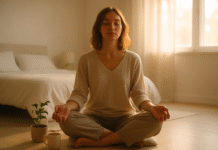
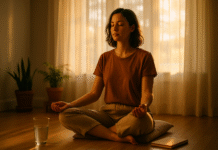
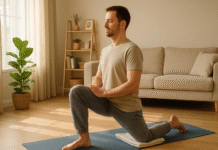
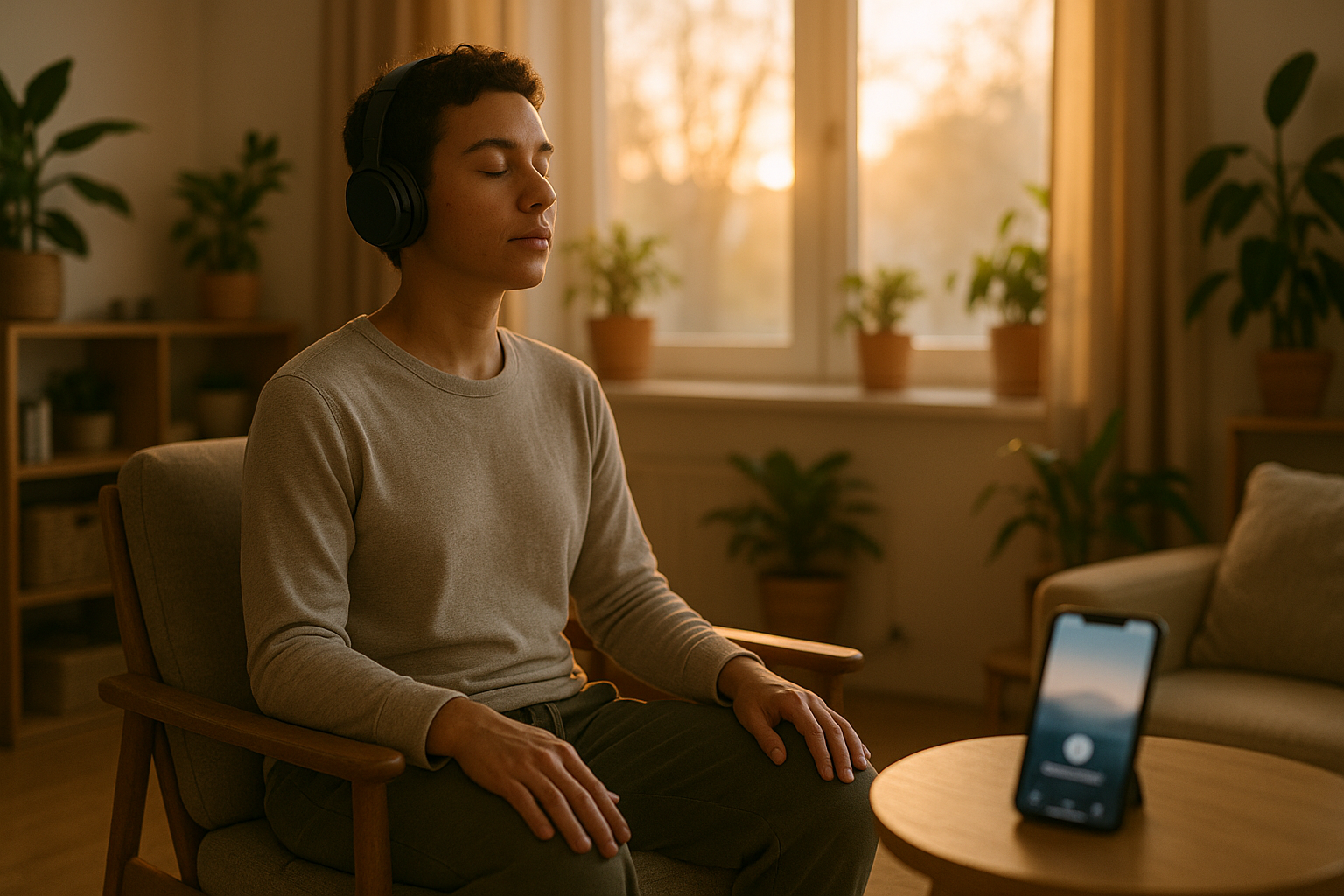
Your environment should make attention easier, not perfect. Choose a time when interruptions are least likely and silence your phone. Sit on a chair with your feet on the floor or on a cushion on the ground—whatever keeps your spine comfortably upright and your breath unforced. Hands can rest on thighs; eyes may be closed or softly focused. Headphones can help with audio clarity, but keep volume low enough to feel your breath. If you’re meditating for sleep, lie on your back with a thin pillow; if you’re meditating for alertness, sit rather than recline. Cultural norms matter too: if floor sitting is familiar to you, use a folded blanket under your hips to tilt the pelvis forward and reduce knee strain.
3.1 Mini-checklist (3 minutes to ready)
- Airplane mode: Mute notifications.
- Seat & support: Cushion or chair that allows an easy, upright spine.
- Temperature & light: Slightly warm; soften lights to reduce squinting.
- Headphones: Optional; keep volume gentle.
3.2 Common mistakes
- Over-striving: Forcing stillness creates tension—aim for “alert and at ease.”
- Poor ergonomics: If knees are higher than hips, add height under your seat.
- Too many props: Keep it simple; comfort beats elaborate setups.
Synthesis: A supportive space reduces friction so the mind can practice, not fight the setup.
4. Choose a Trusted Guide or Script
Quality matters. Look for guides connected to academic centers or health systems, or apps with clear pedagogy and beginner pathways. Free, evidence-aligned guided meditations are available from UCLA Mindful (audio tracks in multiple languages). Public health sites like the NHS also offer brief audio guides for mood, sleep, and anxious thinking. If apps suit you, explore well-known options and sample a 5–10 minute beginner series before subscribing. Check the teacher’s background, the program structure, and whether practices match your goals. Steer clear of content that promises unrealistic outcomes (“cure anxiety in 3 days”).
4.1 Where to find reliable guidance
- UCLA Mindful: Free audios and a simple starter app.
- NHS audio guides: Brief, practical tracks for common concerns.
- Local hospitals/universities: Many host mindfulness programs online.
4.2 How to evaluate a guide
- Transparency: Who’s teaching? What’s the method?
- Fit: Does the voice, pace, and length suit you?
- Progression: Is there a plan beyond one-offs?
Synthesis: Trust reputable sources; the right guide meets your goal and your temperament.
5. Start Short and Consistent (5–10 Minutes)
The most effective beginner plan isn’t heroic; it’s repeatable. Begin with 5–10 minutes per day, 4–6 days per week, for two weeks. Use the same track at the same time (habit stacking with morning tea or after evening prayers works well). After two weeks, add a few minutes or a second short session if desired. Health organizations emphasize that even a few minutes daily can help—especially when paired with realistic expectations and gentle persistence. Keep notes on how you feel before and after each session; look for trend lines, not perfection. NHS inform
5.1 Numbers & guardrails
- Starting dose: 5–10 minutes/session.
- Frequency: Aim for most days; consistency beats length.
- Progression: Add 2–5 minutes after 10–14 days if feeling stable.
5.2 Micro-wins to track
- Noticing distraction sooner.
- Returning without self-criticism.
- Carrying a bit more calm into the next activity.
Synthesis: Keep it small, steady, and attached to an existing daily cue.
6. Master the Basic Breath Practice
Breath-focused guidance is the foundation of many programs because the breath is always available and naturally rhythmic. The aim is steady attention: feel the inhale/exhale at the nostrils, chest, or belly; when attention drifts, note that gently and return. A good guide will normalize mind-wandering and help you return without frustration. Over time you’ll shift from “controlling breath” to “feeling breath,” using it as an anchor during worry spikes or before tough conversations. This practice doesn’t remove thoughts; it teaches you to relate to them differently—less caught, more aware.
6.1 How to do it (5–8 minutes)
- Sit comfortably, spine easy; soften the jaw and shoulders.
- Choose one breath spot (nostrils, chest, or belly).
- Feel 10 natural breaths; count silently 1–10 if helpful.
- When distracted, note “thinking” or “hearing,” and return to the breath.
- End by noticing any shift in mood or body.
6.2 Common mistakes
- Over-control: Forcing deep breaths can cause dizziness; let breath be natural.
- Self-criticism: The “rep” is the return—celebrate it.
Synthesis: Ten mindful breaths, repeated daily, build the muscle of attention.
7. Try a Body Scan
A body scan guides attention progressively from head to toe (or the reverse), noticing sensation without needing to change anything. It’s a central practice in MBSR and works well for tension awareness, grounding, and sleep preparation. Many beginners report that body scans make “mindfulness” tangible—there’s always some sensation to meet kindly. Teachers may cue you to notice pressure, temperature, subtle tingling, or neutrality; all are valid. Expect the mind to wander; each return is practice. Research-based mindfulness programs consistently include this technique because it builds interoceptive awareness, a skill linked to self-regulation.
7.1 How to do it (7–12 minutes)
- Lie down or sit; close eyes if comfortable.
- Bring attention to the crown of the head; note sensation.
- Slowly move through face, neck, shoulders, arms/hands, chest, belly, back, hips, legs/feet.
- Linger at tight areas; breathe “around” them without forcing release.
- End by sensing the whole body at once.
7.2 Why it helps
- Tension mapping: Learn where you hold stress.
- Downshift: Parasympathetic activation may increase with gentle awareness.
- Sleep bridge: Perfect pre-bed routine.
Synthesis: A methodical tour of your body trains attention and softens reactivity.
8. Practice Loving-Kindness (Metta)
Loving-kindness is a guided practice that cultivates goodwill toward yourself and others. You silently repeat phrases like “May I be safe; may I be healthy; may I live with ease,” starting with yourself and widening to a friend, a neutral person, a difficult person, and all beings. Many people find metta especially helpful for self-criticism and social stress. Evidence from randomized trials suggests kindness-based meditations can improve positive emotion and modestly reduce symptoms of anxiety and depression; recent reviews continue to explore scope and size of effects. Guidance helps with pacing, wording, and working with emotional blocks that can arise.
8.1 How to do it (6–10 minutes)
- Sit comfortably; soften the breath.
- Choose 2–4 phrases that feel sincere (e.g., “safe,” “healthy,” “peaceful,” “at ease”).
- Offer phrases to yourself for a minute or two.
- Extend to a loved one, then a neutral person, then a difficult person, then all beings.
- If strong emotion surfaces, pause and return to breath anchoring.
8.2 Common pitfalls
- Forcing emotion: The phrases are intentions, not demands.
- Skipping self: Start with yourself to avoid “performing” kindness.
Synthesis: Training goodwill is a practical way to soften inner harshness and widen connection.
9. Troubleshoot Obstacles & Stay Safe
Restlessness, sleepiness, and “Am I doing this right?” are normal. If you feel wired, try a slower voice, longer exhale cues, or a body scan; if you get sleepy, sit upright, open your eyes slightly, or switch to walking meditation. If you experience distressing memories, panic, or dissociation, stop, ground in your senses (cold water on hands, feel feet on the floor), and speak with a qualified professional—guided meditation is generally safe, but some people need adaptations or a different entry point. Mainstream medical organizations emphasize that meditation is an adjunct, not a replacement, for proven medical or psychological care. For heart health, for example, the American Heart Association considers meditation a possible adjunct to guideline-directed risk reduction.
9.1 Quick fixes for common hurdles
- Racing mind: Shrink the goal—two minutes of breath, several times a day.
- Physical discomfort: Adjust posture; add cushion; reset jaw/shoulders.
- Boredom: Shorten sessions or switch styles (breath ↔ body scan ↔ metta).
9.2 Safety reminders
- Medical care: Don’t stop medications or therapy based on meditation content.
- Trauma-sensitivity: Work with trauma-aware teachers if you have a trauma history.
- When to pause: If symptoms spike or you feel numb/detached, stop and seek support.
Synthesis: Expect obstacles; use simple adjustments and honor your limits.
10. Make It Stick: A 4-Week Plan & Progression
A little structure turns good intentions into a real habit. For four weeks, pair a short guided session with a daily cue and track it. Use body scan at night for sleep or breath practice in the morning for focus; add loving-kindness mid-day on tough days. By the end of the month, you’ll have 20–40 “reps,” enough to feel the skill forming. If you like, alternate a guided session with one minute of silence to practice self-guidance. Keep metrics simple: minutes practiced per week and how you handle everyday stressors. Consider an evidence-based course (like an 8-week MBSR) if you want deeper training and community.
10.1 Four-week outline (edit to taste)
- Week 1: 5–7 minutes daily, breath anchor.
- Week 2: 8–10 minutes; add one bedtime body scan.
- Week 3: 10–12 minutes; add one loving-kindness session.
- Week 4: 12–15 minutes; alternate guided + 1 minute silent.
10.2 Keep momentum
- Same cue, same place.
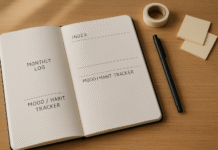
- Log it. Check a box on paper or in an app.
- Refresh. Try a new track each Sunday to avoid staleness.
- Community. Join live sessions from hospitals/universities when possible.
Synthesis: Consistency plus gentle progression beats intensity; a month of reps builds a habit you can grow.
FAQs
1) What exactly is guided meditation?
It’s meditation led by a voice that offers step-by-step instructions—where to place attention, how to relate to distraction, and how to close. It’s widely used in health systems and evidence-based programs and can be practiced seated, standing, or lying down. Many people start here before experimenting with silent practice.
2) How long should a beginner practice?
Start with 5–10 minutes most days and scale after two weeks if it feels steady. Health sites and clinical programs note that even a few minutes daily can help, and classic courses like MBSR gradually build to longer sessions over eight weeks.
3) Is guided meditation the same as guided imagery?
They overlap. Guided imagery is a type of guided meditation that uses mental pictures to evoke calm or insight. Mindfulness-oriented tracks may use less imagery and more body/breath awareness. Both can be useful depending on your goal.
4) Do I need a special cushion or posture?
No. A simple chair works well; aim for an upright, comfortable spine and relaxed shoulders. Lying down is fine for sleep-oriented tracks, but for alertness, sit up and keep the head neutral. Comfort supports attention—no special gear required.
5) Which apps or sources are reputable?
University and hospital programs are a safe bet. UCLA Mindful provides free audios and a starter app, and the NHS hosts brief audio guides for common concerns. Sample different voices and lengths to find your fit before paying.
6) When will I notice benefits?
Some people feel calmer right away; for most, changes are gradual over weeks. A major review found moderate improvements in anxiety, depression, and stress with mindfulness programs, while heart organizations view meditation as a helpful adjunct—not a cure-all—for cardiovascular risk.
7) Is it safe if I have a mental health condition?
Generally, yes—but tailor with care. If you have PTSD, psychosis, severe depression, or active suicidality, consult a clinician and consider trauma-sensitive guidance. Stop a session if you feel destabilized and ground with sensory cues. Meditation complements, not replaces, clinical care.
8) What if I can’t stop thinking?
That’s normal. The work is noticing thinking and returning—each return is a successful rep. If a breath anchor is too subtle, try a body scan or open-eyes practice with a soft gaze to increase alertness. UMass Memorial Health
9) Can guided meditation help with pain?
It can help some people relate differently to pain and reduce distress. Recent NIH-funded work suggests mindfulness reduces pain via neural mechanisms distinct from placebo, and group programs delivered via telehealth showed benefits for function in chronic pain. Use as an adjunct to your clinician’s plan.
10) How does loving-kindness fit in?
It trains goodwill and warmth, often easing self-criticism. Meta-analyses indicate kindness-based practices can improve positive emotion and modestly reduce anxiety and depressive symptoms; many people alternate metta with breath or body scans.
11) Is there a best time of day?
The best time is the time you’ll keep. Mornings offer fewer interruptions; evenings pair well with body scans for sleep. Try one time for a week, then adjust based on how your energy and schedule feel. Consistency beats timing.
12) What’s next after guided tracks?
You can continue guided practice indefinitely or slowly taper guidance—e.g., 8 minutes guided + 2 minutes silent. If you want a deeper dive, consider an 8-week MBSR course to learn multiple practices with coaching and community.
Conclusion
Guided meditation lowers the barrier to entry by giving you a friendly voice and a clear next step. When you match the style to your purpose, set up a supportive posture and environment, choose a reputable source, and keep sessions short and steady, you create the right conditions for attention and kindness to grow. Breath practice builds the capacity to return; body scans train the radar for tension and release; loving-kindness softens harshness and deepens connection. Obstacles are normal, and safety means adjusting pace and style to your nervous system—especially if you live with mental-health or medical concerns. Stick with the four-week plan, keep track of small shifts, and upgrade gradually. You don’t need perfection to benefit; you need repetition.
Ready to begin? Put your phone on airplane mode, set a 7-minute timer, press play on a trusted track, and take your first 10 mindful breaths today. UCLA Health
References
- Meditation and Mindfulness: Effectiveness and Safety, National Center for Complementary and Integrative Health (NCCIH), last updated June 3, 2022. NCCIH
- Meditation: A simple, fast way to reduce stress, Mayo Clinic, last reviewed December 14, 2023. Mayo Clinic
- Goyal M., et al. Meditation Programs for Psychological Stress and Well-being: A Systematic Review and Meta-analysis, JAMA Internal Medicine, 2014. PMC
- Levine G.N., et al. Meditation and Cardiovascular Risk Reduction: A Scientific Statement From the American Heart Association, Journal of the American Heart Association, 2017. AHA Journals
- Guided Meditations, UCLA Mindful Awareness Research Center, accessed August 2025. UCLA Health
- Mental wellbeing audio guides, NHS (Every Mind Matters), media last reviewed March 2, 2024. nhs.uk
- Program Snapshot: Mindfulness-Based Stress Reduction (8 Weeks), Brown University Mindfulness Center, accessed August 2025. Brown University Professional Studies
- Mindfulness Meditation and Placebo Modulate Different Brain Patterns To Reduce Pain, NCCIH Research Results Spotlight, August 2024. NCCIH
- Galante J., et al. Effect of Kindness-Based Meditation on Health and Well-Being: A Systematic Review and Meta-analysis, Journal of Consulting and Clinical Psychology, 2014. PubMed
- Petrovic J., et al. The effects of loving-kindness interventions on positive and negative mental health outcomes: A systematic review and meta-analysis, Clinical Psychology Review, 2024. ScienceDirect