












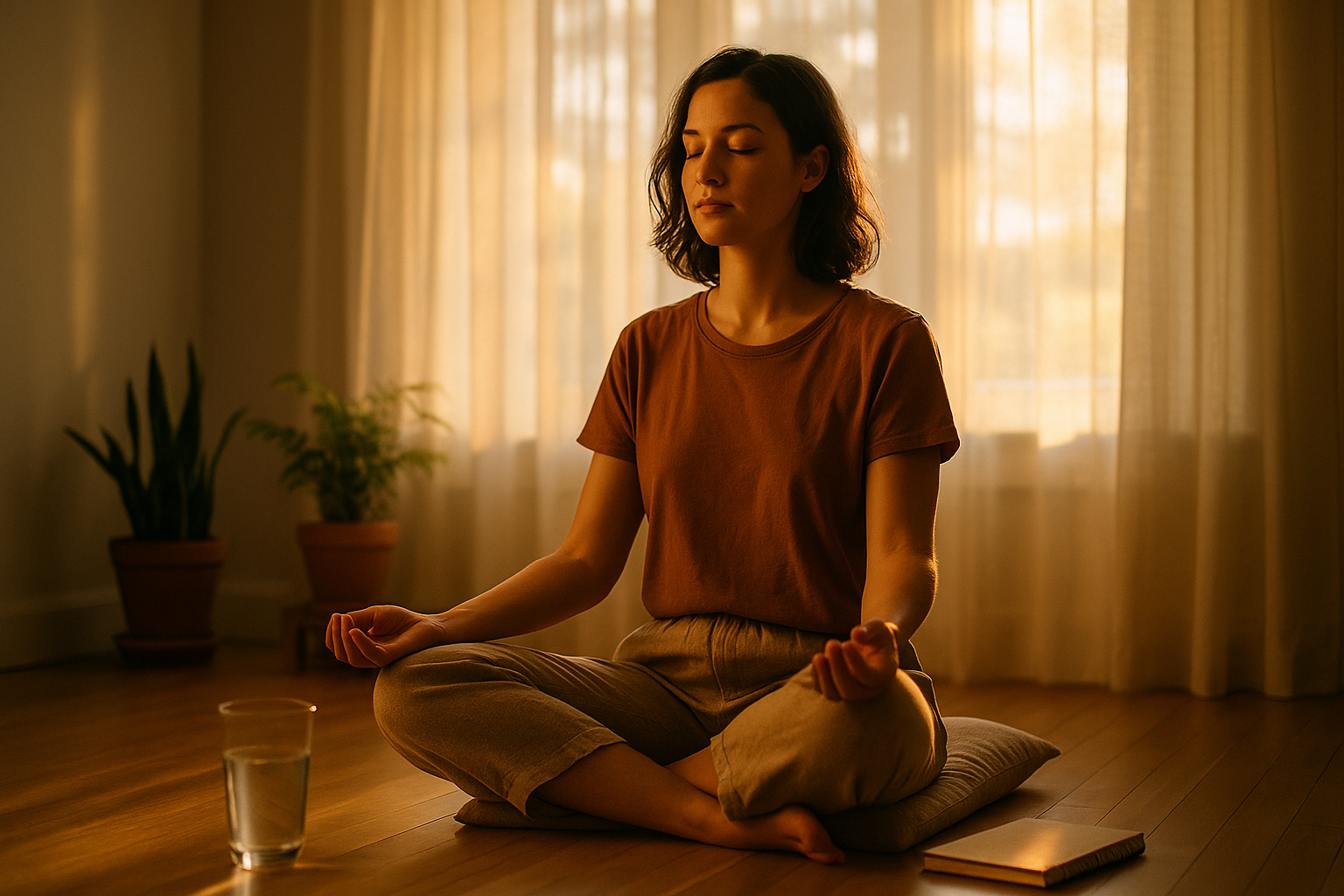
Guided visualization meditation blends narration, breath, and sensory imagination to help your nervous system shift from stress to calm while focusing the mind on a chosen scene or intention. In simple terms, it’s a structured daydream used for relaxation, clarity, or performance. Below you’ll learn a complete, step-by-step method you can apply immediately—plus scripts, timings, and troubleshooting. This guide is for beginners and seasoned practitioners who want a reliable practice that fits real life. Quick definition: Guided visualization meditation is a narrated practice that invites you to imagine a specific scene with multi-sensory detail to evoke relaxation and targeted mental states. Quick start (summary): choose a purpose → set up your space → settle your breath → build a vivid scene → layer senses/emotion → close and integrate.
Friendly disclaimer: This article is informational and not a substitute for professional medical advice. If you live with trauma, psychosis, or severe anxiety, consider working with a qualified clinician.
1. Set Your Intention and Choose a Visualization Theme
A strong intention gives your meditation a clear destination and makes the imagery meaningful. Start by deciding why you’re practicing today: to calm stress after work, to sleep more easily, to rehearse a presentation, or to reconnect with gratitude. In the first one or two sentences of your inner script, say this intention plainly—out loud or in your head. Then choose a theme that matches: a quiet beach at dusk, a safe mountain cabin, a successful meeting run-through, or a warm memory with someone you love. This pairing of “why” + scene helps your mind prioritize relevant sensory details and keeps you engaged when distractions arise. Expect your first few sessions to feel clunky; you’re learning a skill. Give yourself 10–12 minutes and a simple scene so the brain can associate practice with ease instead of effort.
1.1 How to do it
- Write a one-sentence purpose: “I’m practicing to unwind after work and sleep better.”
- Pick one scene aligned to that purpose (calm nature, safe room, or performance rehearsal).
- Jot 3–5 anchor details you’ll return to (e.g., “orange sky, cool breeze, sand under toes”).
- Decide your ending feeling: “balanced,” “confident,” or “grateful.”
- Optional: choose a single word that captures it (“ease,” “steady,” “open”).
1.2 Numbers & guardrails
- Session length: 8–15 minutes for beginners; 15–20 as you progress.
- Use a 1–10 scale before/after to rate stress or confidence; aim for a 2-point shift.
- Keep themes consistent for a week to strengthen recall and depth.
Synthesis: Clear intent + a fitting theme turns visualization from vague daydreaming into a targeted practice your brain can learn and repeat.
2. Prepare Your Space and Body for Predictable Calm
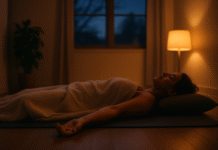
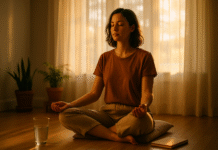
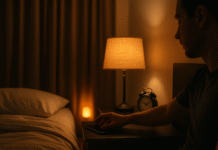
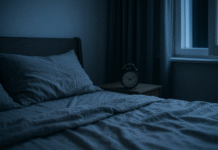
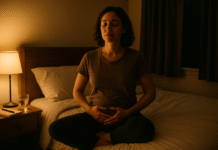
Your environment teaches your nervous system what to expect. When the same cues recur—dim light, a specific cushion, low noise—your body anticipates relaxation more quickly. Sit upright but comfortable, ideally with the pelvis slightly elevated and shoulders at ease. If sitting is uncomfortable, try lying down with knees supported or a reclined chair. Reduce cognitive load by silencing notifications, adjusting temperature (20–23°C / 68–73°F), and choosing soft, indirect light. A tidy visual field helps; clutter competes for attention. If you live with others, a simple door sign (“10 minutes of quiet”) prevents interruptions. Small rituals (a sip of water, three slow exhales, or a lavender inhale) make the transition effortless.
2.1 Mini-checklist
- Seat: stable base; hips above knees; spine tall, jaw unclenched.
- Noise: fan/white noise if you can’t achieve silence.
- Light: warm lamp or daylight; avoid overhead glare.
- Props: light blanket (warmth lowers arousal), eye mask if visual clutter distracts.
- Boundaries: timer set; phone on do-not-disturb.
2.2 Common mistakes
- Over-engineering with lots of gadgets—simplicity wins.
- Practicing in bed when sleepy (you’ll doze; that’s fine for sleep-focused sessions but not for focus training).
- Skipping comfort: minor aches become major distractions by minute five.
Synthesis: Repeatable environmental cues train your body to settle fast, making each visualization smoother and deeper.
3. Establish Your Breath Anchor and Physiological Baseline
Before you build imagery, lower sympathetic arousal so the scene “lands” on steady ground. Use a simple breath protocol for 60–120 seconds to cue the relaxation response: inhale through the nose, long relaxed exhale through the mouth or nose. A reliable pattern is in 4, out 6 or box breathing (4-4-4-4); the longer exhale supports parasympathetic tone. If you feel lightheaded, reduce counts. As your breathing slows, mentally note the first three body sensations you can feel (e.g., “weight in hips, warmth in hands, soft shoulders”). This anchors attention in the present so imagery is vivid rather than blurry.
3.1 How to do it
- Sit tall; place a hand on the lower ribs.
- Breathe in 4, out 6 for 10–12 cycles (~2 minutes).
- On each exhale, silently say your single-word cue (“ease,” “steady,” etc.).
- Scan forehead → jaw → shoulders; release 5% more tension each exhale.
3.2 Numbers & guardrails
- Aim for 6–8 breaths/minute during this phase.
- If anxious, try “physiological sigh” once (double-inhale, long exhale) to reset.
- Nose breathing is preferred; switch to mouth only if congested.
Synthesis: A short breath anchor settles the body so imagery feels immersive instead of forced.
4. Build a Sensory-Rich Visual Scene (Start with Sight)
Now, assemble the “stage.” Begin with visual layout—horizon line, foreground, and a salient object. Keep it simple: one location, one time of day. Paint three static details (color of sky, texture of ground, shape of a nearby object) before adding motion (waves, leaves, candle flicker). Move your internal camera slowly: a panoramic sweep, then a gentle zoom toward an anchor (e.g., a smooth stone in your palm). Many beginners try to “see” cinema-quality images; that’s unnecessary. Think evocation, not perfection—plenty of people sense images as vague forms or implied shapes. If you have aphantasia (little or no visual imagery), emphasize the concept and rely more on other senses; you can still benefit.
4.1 How to do it
- State the location and time: “Sunset on a quiet beach.”
- Place three visual anchors: “amber sky, powder-white sand, pale moon rising.”
- Add gentle motion: “small waves repeating; gull gliding; slow cloud drift.”
- Use a camera cue: “slow pan left to right,” then “zoom to a shell by my foot.”
4.2 Mini example
- Scene: “A mountain lake at dawn.”
- Anchors: “bluish mist on water; dark pines; pink light on peaks.”
- Action: “Ripples widen from a rising fish; my breath makes a small cloud.”
Synthesis: Start with broad, stable visuals and one focal point—your mind will fill in the rest.
5. Layer the Other Senses: Sound, Smell, Touch, Taste, and Interoception
Vividness grows when you recruit multiple senses, especially auditory and somatic cues. Add the muffled hush of wind, the lap of water, or a kettle’s faint whistle. Bring in smell (pine, salt, citrus), a powerful emotional bridge. Introduce touch—air on skin, weight in your hands, warmth on cheeks—and temperature (a cool breeze against sun-warmed skin). For taste, keep it light: the mineral hint of mountain air or a sip of tea. Finally, add interoception—inner sensations like heartbeat, breath in the ribs, or butterflies in the stomach. These inside-out cues knit the scene to your body and deepen presence.
5.1 Tools/Examples
- Sound: looped white noise or nature audio at low volume (<40 dB) to mask distractions.
- Scent: a drop of lavender or eucalyptus; pair the same scent with the same scene for faster recall.
- Touch: a smooth stone or warm mug as a physical “prop” that matches the scene.
5.2 Numbers & guardrails
- Add senses one at a time, ~20–30 seconds each.
- Keep background audio quiet enough that your breath remains audible to you.
- If scent triggers headaches or allergies, skip it—use temperature cues instead.
Synthesis: Multi-sensory layering makes your visualization sticky and embodied, not just a mental picture.
6. Invite Emotion and Meaning (Without Forcing Positivity)
Emotion is the amplifier that makes a scene matter. After your senses are online, ask one or two meaning-making questions: “What feels safe here?” “What do I appreciate right now?” “What quality do I want to carry into my day?” Let a natural feeling arise—comfort, awe, relief, gratitude—rather than pushing for bliss. If difficult emotions appear, acknowledge and name them (“tension in chest; a bit of sadness”) before returning to the anchors. You can also visualize a future self already possessing the quality you want (confident, patient, focused), then borrow their posture and micro-expressions for 60–90 seconds. This integrates visualization with subtle behavior rehearsal.
6.1 How to do it
- Choose one quality (e.g., “steadiness”) and find it in the scene (“the steady rhythm of waves”).
- Spend 60 seconds savoring that quality with slow, lengthened exhales.
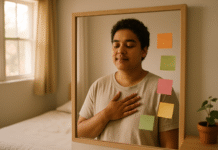
- Try a “virtue mirror”: imagine future-you standing nearby; notice their breath and posture; match it.
6.2 Common mistakes
- Toxic positivity (“I must feel good now”)—creates pressure and backfires.
- Skipping naming—affect labeling (“this is worry; this is softening”) often reduces intensity.
- Over-rehearsing outcomes instead of qualities—qualities transfer across situations.
Synthesis: Emotion follows attention; invite it gently by focusing on cues that embody the feeling you want.
7. Use a Script or Audio Guide for Structure and Cadence
A well-paced script turns scattered imagination into a smooth journey. You can write your own or use a trusted recording. Good guidance follows a simple arc: arrive → breathe → build scene → deepen senses/emotion → rest → return. Cadence matters: 100–130 words per minute feels spacious; long pauses (5–15 seconds) let images develop. If you’re self-guiding, whisper or subvocalize key lines; if you’re guiding others, prioritize inclusive, invitational language (“you might notice…”). Keep scripts modular so you can swap scenes without rewriting everything.
7.1 DIY template (5 parts, ~12 minutes)
- Arrival (1 min): posture, eyes, breath anchor.
- Scene build (3–4 min): horizon, anchors, focal object.
- Senses (3–4 min): sound → touch → smell → temperature.
- Meaning (2–3 min): gratitude or future-self quality.
- Rest & return (1–2 min): quiet soak, then re-entry.
7.2 Numbers & guardrails
- Keep your first scripts under 500–700 words.
- If reading aloud, mark PAUSE cues; count a silent 5 between sections.
- Refresh scripts every 2–3 weeks to prevent habituation.
Synthesis: Structure keeps the practice consistent while leaving room for discovery.
8. Navigate Distractions, Intrusive Thoughts, and Aphantasia
Distraction is normal; plan for it. When the mind wanders, name → note → nudge: “thinking,” “hearing,” or “planning,” then escort attention back to one anchor (breath, sound, or focal object). For intrusive or distressing thoughts, reduce imagery complexity and shorten sessions; consider neutral scenes (a quiet room, a candle). If you experience aphantasia (little/no visual imagery), rely on conceptual and sensory-nonvisual cues: sounds, pressure, temperature, and inner sensations. Many people benefit from auditory-led scripts (e.g., walking through sounds) or tactile props to create a felt scene. Remember: the aim is state change, not cinema.
8.1 Troubleshooting list
- Racing mind: add a 60-second “physiological sigh” reset; then return to scene.
- Sleepiness: practice earlier in the day; sit upright; cool the room by 1–2°C.
- Emotional spike: shorten session to 5–7 minutes; choose neutral imagery; end with grounding (feel feet, name 5 objects in the room).
- No images: emphasize sound and touch; use a physical object aligned with the theme.
8.2 Mini case
- Before: Sam rates stress 7/10, can’t “see” anything; gives up at minute 3.
- Intervention: switches to “rain cabin” with audio of soft rain, warm mug prop; keeps eyes open and unfocused.
- After (2 weeks): reports stress drop to 4/10 within 8–10 minutes; no “pictures,” but strong felt calm.
Synthesis: Distraction and non-visual styles aren’t failures—they’re part of tailoring the method to your brain.
9. Deepen with Embodiment, Micro-Movements, and Rehearsal
To make visualization “stick,” let the body express the scene subtly. Mirror the posture your scene invites (expansive chest on a mountaintop, soft shoulders at a lakeside). Add micro-movements: a slow head turn matching the panoramic view; a gentle hand wrap around a warm mug; a foot press into the ground as you “arrive” on a trail. For performance goals (speaking, sports), rehearse one key sequence at 0.5× speed with 2–3 realistic challenges (a tough question, noise, minor mistake) and visualize your calm recovery. This builds resilience, not just idealized fantasies.
9.1 How to do it
- Choose one embodied cue to maintain (soft jaw, tall spine, relaxed hands).
- Rehearse 30–60 seconds of a real-life sequence with if/then plans: “If my voice shakes, then I pause, exhale, and continue.”
- Add a grounding move you can use in the actual situation (thumb-finger press, slow exhale).
9.2 Numbers & guardrails
- Keep rehearsal segments short (≤2 minutes) inside a 12–15 minute session.
- Include 2–3 realistic obstacles; practice the recovery more than the perfect outcome.
- End with 60 seconds of simple presence so the nervous system returns to rest.
Synthesis: When the body participates, the brain encodes the state more durably and transfers it into real situations.
10. Close, Re-Enter, and Integrate with Journaling or Micro-Habits
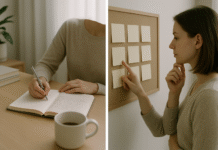
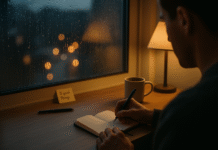
How you end matters. Abruptly jumping from deep calm to email can create whiplash. Instead, fade out the scene: let colors soften, sounds recede, and your focal object “set down.” Return to breath, feel contact points, and gently open your eyes. Sit for 15–30 seconds to notice lingering sensations. Capture one line in a journal: scene + quality + micro-action (“beach at dusk → steady → one slow exhale before meetings”). Consider a 2-minute integration ritual: drink water slowly, stretch, or step outside. When you pair practice with a micro-habit in daily life, the benefits compound.
10.1 Mini-checklist
- 3 quiet breaths with longer exhales.
- Name one word you’re taking with you.
- Note a single action you’ll apply in the next hour.
- Optional: rate stress/focus now; compare to before.
10.2 Numbers & guardrails
- Re-entry: 30–60 seconds; don’t rush.
- Journaling: 1–3 sentences max to keep it sustainable.
- Habit pairing: choose a daily anchor (morning coffee, commute, lunch break).
Synthesis: Gentle closure and a tiny next step carry the state into your day, where it actually makes a difference.
FAQs
1) What’s the difference between guided visualization meditation and guided imagery?
They’re often used interchangeably. In practice, “guided imagery” is a broader mind–body technique used in healthcare and stress management, while “guided visualization meditation” usually emphasizes a meditative posture, breath anchor, and a contemplative aim. Both involve narrated, multi-sensory scenes to evoke relaxation and focus. The best choice is the one you’ll practice consistently.
2) How long should a session last for real benefits?
Beginners often do well with 8–12 minutes; many people settle into 12–20 minutes as they grow comfortable. Use a simple before/after rating (e.g., stress 1–10) and aim for a two-point improvement. Frequency matters more than length—5 days per week beats one long weekend session.
3) I can’t “see” images. Can I still do this?
Yes. Many benefit using primarily sound, touch, temperature, and inner sensations rather than visual pictures. Keep your scene conceptual (“quiet library,” “warm cabin”), use a tactile prop, and lean on auditory guidance. Focus on state change (calm, clarity), not visual fidelity.
4) Is there science behind this practice?
Research suggests guided imagery and related relaxation techniques can reduce stress and support sleep for some people, with mixed evidence across clinical conditions. Neuroscience shows overlap in brain networks for imagery and perception, helping explain why imagined cues can influence mood and behavior. Results vary by person and goal; treat it as skill training.
5) What if visualizations bring up difficult memories or emotions?
Slow down and simplify. Choose neutral scenes (a candle, a quiet room), shorten sessions to 5–7 minutes, and end with grounding (feel feet, name five objects you see). If you live with trauma, consider working with a clinician trained in imagery-based therapies so you have support and containment.
6) Can I use background music or nature sounds?
Yes, at low volume so your breath remains audible. Pick audio that matches your theme (rain for cabin, soft waves for beach). Keep it consistent for a week to make recall faster, then rotate to avoid habituation.
7) What’s the best time of day to practice?
Two good options: a transition (after work to reset) or a primer (morning to set tone). If you get drowsy, avoid late-night sessions unless your goal is sleep. Aim for the same window daily to create a habit loop.
8) How do I write my own script?
Use a five-part arc: arrive → breathe → build scene → layer senses/emotion → return. Keep it under 700 words. Write in present tense with invitational language (“you might notice…”). Mark pauses. Read it aloud once to test cadence before recording.
9) Is this safe for everyone?
Most people can practice safely. If you have a history of psychosis, dissociation, or unprocessed trauma, work with a professional and choose neutral, here-and-now scenes. If scents or breath holds trigger discomfort, skip them. This practice is not a replacement for medical care.
10) Will this help with performance (sports, public speaking)?
It can. Use embodied rehearsal: visualize one key sequence at half speed, include 2–3 realistic obstacles, and practice your recovery response. Pair with a grounding cue (e.g., thumb-index press + long exhale) you’ll use on game day or on stage.
11) How fast should I expect results?
Many notice a shift within the first week—especially if they use the same scene daily. Deeper benefits (better sleep latency, lower baseline stress reactivity) commonly appear after 2–4 weeks of regular practice. Track weekly with simple 1–10 ratings for stress, focus, and sleep quality.
12) What if I get bored with the same scene?
Rotate themes every 2–3 weeks (beach → forest → cozy room) while keeping the structure constant. Alternately, keep the scene but shift the quality you focus on (steadiness → warmth → confidence). Novelty rekindles interest without losing skill gains.
Conclusion
Guided visualization meditation is deceptively simple: you give the mind a clear purpose, set the body into calm, and let multi-sensory scenes do the heavy lifting. Over time, repetition wires anticipation—the breath slows sooner, imagery becomes easier to evoke, and your chosen qualities (steady, confident, warm) show up off the cushion. The steps above form a practical blueprint: clarify the “why,” prepare a predictable space, anchor your physiology, build a scene with sight then other senses, invite emotion and meaning, use a clean script, plan for distractions, embody the scene, and close with a micro-action you can take into the day. Treat it as training: short, regular sessions; simple measurements; gentle adjustments. The reward is not perfect pictures—it’s a nervous system that remembers how to settle and a mind that knows where to place its attention.
Ready to try? Pick one scene, set a 12-minute timer, and follow the arc: arrive, breathe, build, feel, rest, return.
References
- Relaxation Techniques: What You Need To Know — National Center for Complementary and Integrative Health (NCCIH), updated June 8, 2021. https://www.nccih.nih.gov/health/relaxation-techniques-what-you-need-to-know
- How Guided Imagery Helps You Relax — Cleveland Clinic Health Essentials, February 28, 2022. https://health.clevelandclinic.org/guided-imagery
- guided imagery — APA Dictionary of Psychology, American Psychological Association, April 19, 2018. https://dictionary.apa.org/guided-imagery
- Koenig-Robert, R., & Pearson, J. Why do imagery and perception look and feel so different? Philosophical Transactions of the Royal Society B, 376(1817), 20190703, 2021. https://pmc.ncbi.nlm.nih.gov/articles/PMC7741076/
- Dijkstra, N., Bosch, S. E., & van Gerven, M. A. J. Shared Neural Mechanisms of Visual Perception and Imagery. Trends in Cognitive Sciences, 23(5), 2019. https://www.sanderbosch.com/files/2019_dijkstra_tics.pdf
- Xie, S., et al. Visual Imagery and Perception Share Neural Representations Measured with MEG. Current Biology, 30(21), 2020. https://refubium.fu-berlin.de/bitstream/handle/fub188/29330/1-s2.0-S096098222030590X-main.pdf
- Meditation and Mindfulness: Effectiveness and Safety — NCCIH, June 3, 2022. https://www.nccih.nih.gov/health/meditation-and-mindfulness-effectiveness-and-safety
- Six relaxation techniques to reduce stress — Harvard Health Publishing, n.d. https://www.health.harvard.edu/mind-and-mood/six-relaxation-techniques-to-reduce-stress
- Skottnik, L., & Linden, D. E. J. Mental Imagery and Brain Regulation—New Links Between Psychotherapy and Neuroscience. Frontiers in Psychiatry, 10:779, 2019. https://pmc.ncbi.nlm.nih.gov/articles/PMC6831624/