
























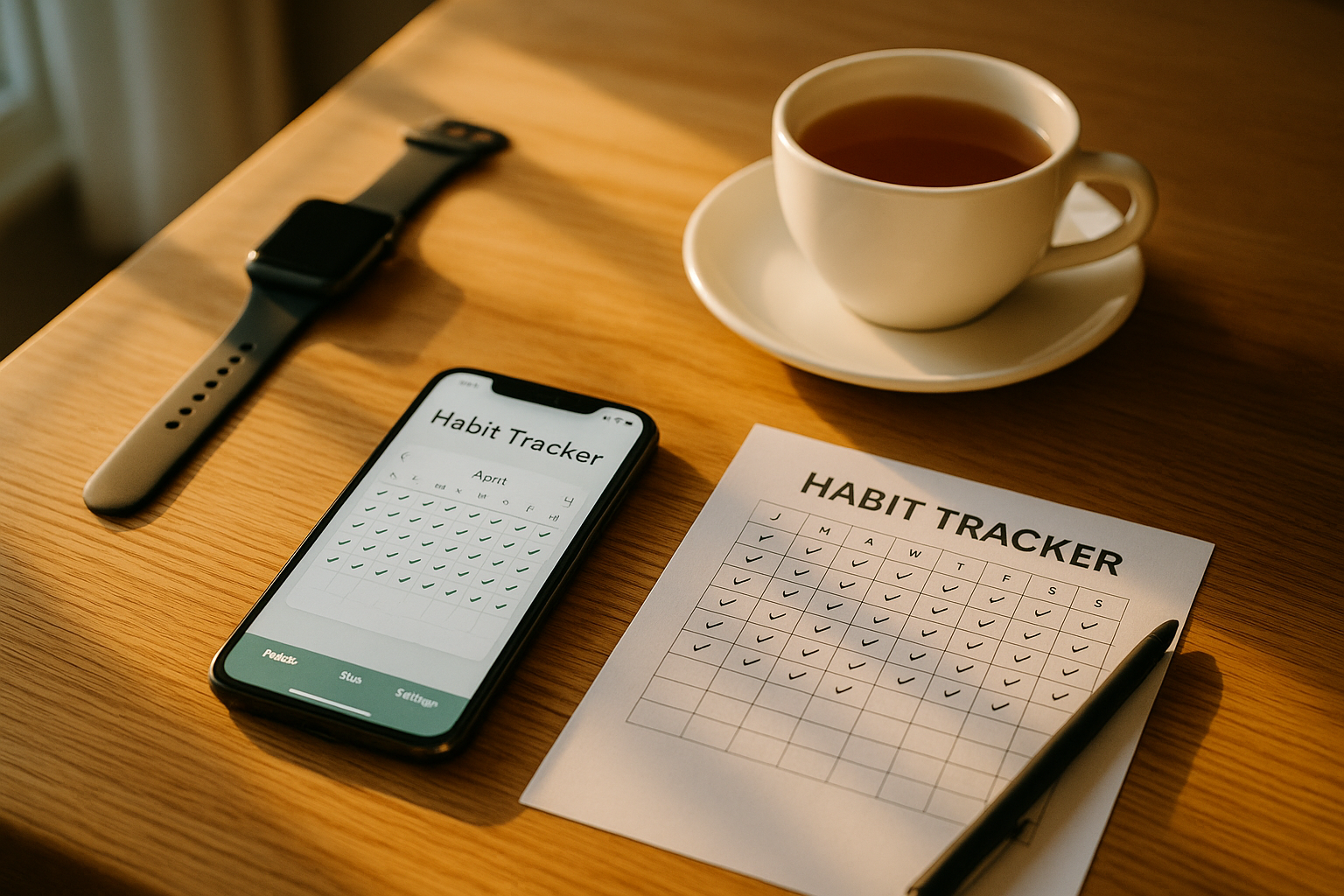
Healthy change sticks when you can see it. Habit tracking methods are simple ways to record and review daily behaviors—like steps, sleep, water, or meals—so you get feedback and build momentum. This guide breaks down 12 practical options, from apps and calendars to photo logs and wearables, and shows how to use them without overwhelm. It’s for anyone who wants sustainable routines, not all-or-nothing bursts. Quick note: this article is educational and not medical advice; check with a clinician if you have specific health conditions.
In one line: Habit tracking methods = the tools and routines you use to record whether you did a habit, so you can adjust and improve consistently.
Quick start checklist: pick 1–3 habits → choose one tracking method below → set a daily 30-second check-in → review weekly → iterate, don’t judge → celebrate small wins.
1. App-Based Trackers for Daily Check-Ins
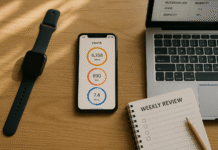
App-based trackers make habit tracking fast, visual, and portable, which is exactly what most people need to keep going. The best ones let you log with a single tap, automate reminders, and display progress as streaks, bars, or charts. Research on digital self-monitoring finds that tracking diet and activity via apps supports weight loss and increases physical activity compared with no tracking, especially when feedback is included. Apps also reduce friction: you can track in seconds, anywhere. To avoid bloat, your goal is not a “perfect” data diary; it’s a consistent 30-second daily check-in that gives you immediate feedback and a nudge toward tomorrow. Start with three habits max, and build from there once logging feels automatic.
1.1 Why it matters
Randomized trials and meta-analyses show that digital self-monitoring of diet and activity is associated with greater weight loss and more moderate-to-vigorous activity than control conditions, with tailored feedback improving results. Apps also align with proven behavior change components like prompts/cues and goal setting, which show up repeatedly in effective digital health designs. Wiley Online Library
1.2 How to do it (mini-checklist)
- Choose a lightweight app (e.g., Loop Habit Tracker, Habitify, Streaks, TickTick, Notion templates).
- Track 1–3 keystone habits first (water, steps, bedtime).
- Set reminders that align with your day (e.g., 9:30 pm “Begin wind-down”).
- Limit logging to ≤30 seconds per habit.
- Turn on weekly summaries to spot trends, not to judge yourself.
Example: You track “7,000+ steps,” “bed by 11:00,” and “2 servings veg.” After two weeks, the app’s weekly view shows Thursdays are low-step days. You pre-schedule a 15-minute walk after lunch on Thursdays and nudge your step average upward the following week. (Evidence base: digital self-monitoring improves PA and supports weight loss; feedback enhances effect sizes.)
2. Bullet Journal Habit Grids (Paper, Low-Friction)
Analog habit grids work because they’re obvious and tactile: you see the month at a glance and physically mark each completion. That tiny action—pen to paper—becomes a satisfying “reward” that reinforces the behavior. A monthly grid also highlights patterns you might miss on a phone, like weekend slumps or mid-month drop-offs. Paper is private, always on, and free of notifications, which some people prefer. The goal is still speed and consistency: a single line or dot is enough to confirm “did it.” If you’re new to habit tracking, a paper grid avoids app overwhelm and removes decision fatigue. If you already journal, tucking a grid into your daily page keeps everything in one place without extra steps.
2.1 How to set it up
- Draw a simple table with days across (1–31) and habits down (3–7 rows works well).
- Define clear pass criteria per habit (e.g., “≥7,000 steps” vs. “walk”).
- Use one mark style (✓ or ●) to keep it fast; avoid color-coding rabbit holes.
- Add a weekly notes row to capture blockers (“late meeting” or “travel”).
- Archive each month and compare “week 1 vs week 4” adherence, not perfection.
2.2 Common mistakes
- Aesthetic procrastination: spending 45 minutes decorating the grid. Keep it minimal.
- Vague habits: “drink more water” is untrackable; “8 cups/day” is trackable.
- Too many rows: cap at 7 habits; overflow dilutes attention.
Synthesis: If you crave visibility without screens, a paper grid provides a big-picture dashboard that keeps you honest and encourages small course-corrections weekly.
3. Calendar Streaks (“Don’t Break the Chain”)
Calendar-based streaks use consecutive-day marks to create a visible chain you’re motivated to maintain. It’s simple: each successful day gets an “X”; your job is to avoid gaps. Streaks leverage loss aversion and identity (“I’m on day 14”), making today’s action feel more urgent. Research in consumer behavior and gamification shows streak features can increase engagement and activity, though breaking a streak can be demotivating—so you’ll want guardrails. Use streaks for habits where daily repetition is realistic (e.g., flossing, short walks, fruit/veg), not for high-intensity workouts or long writing sessions that need rest days.
3.1 Numbers & guardrails
- Define success: e.g., any 10-minute walk counts.
- Build “grace days”: use a 5-out-of-7 target so one missed day doesn’t nuke motivation.
- Reset rules: instead of “back to zero,” track “longest streak” and “current streak.”
- Add weekly totals: if you miss Tuesday, do two short walks Wednesday.
3.2 Evidence & perspective
Work on gamification and streaks suggests these mechanics can boost motivation and sustained participation in health behaviors, but effects vary and can backfire if designed rigidly. Use streaks as a nudge, not as your identity. The Lancet
Synthesis: Streaks turn repetition into a game; protect the game with flexible rules so one off day isn’t a spiral.
4. Spreadsheet Dashboards (Weekly & Monthly)
Spreadsheets give you a zoomed-out view with flexible metrics, which is perfect if you like tinkering and trend analysis. You can add formulas to compute adherence rates, moving averages, or week-over-week deltas. A dashboard also encourages weekly reviews—key for learning what’s working and what isn’t. The trick is to keep data entry minimal (checkboxes and drop-downs) and focus on meaningful metrics. Tie your metrics to recognized guidelines where possible: steps or minutes of moderate activity (see WHO/CDC), bedtime windows, or vegetable servings. Then, use conditional formatting to surface wins and bottlenecks.
4.1 How to build it
- Create tabs: “Daily Log,” “Weekly Review,” “Dashboard.”
- Daily Log: date, habits (checkboxes), optional notes.
- Weekly Review: total completions, % adherence per habit, blockers discovered.
- Dashboard: 4-week rolling averages, longest streak, and “next focus” box.
- Add a simple KPI: Minutes of moderate activity (target 150–300/week) aligned with WHO and CDC guidance.
4.2 Mini-checklist
- Automate as much as possible (templates, drop-downs).
- Limit to 6–10 rows of habits; archive quarterly to keep filesize light.
- Spend 10 minutes on Sunday closing the loop and planning one tweak.
Synthesis: If you like seeing trends and asking “what changed?”, a dashboard transforms scattered checkmarks into decisions.
5. Wearables & Auto-Tracking (Steps, Heart Rate, Sleep)
Wearables reduce effort by logging steps, heart rate, workouts, and sometimes sleep automatically. Less effort means more consistent data and fewer missed logs. They’re best for movement and sleep-adjacent habits, where sensors shine and regular feedback encourages pacing throughout the day. Accuracy varies by metric and device, but recent reviews show acceptable validity for many consumer tracker measures (especially steps and heart rate), with ongoing improvement. Many devices sync with Apple Health or Google Fit, centralizing data and enabling features like Google Fit’s “Heart Points,” which map to intensity for a simple weekly goal.
5.1 Guardrails & privacy
- Use relative changes (your baseline → your trend).
- Focus on behaviors you control (walk breaks, bedtime routine).
- Review app permissions periodically; Apple HealthKit and Google Fit permit fine-grained control over data access and sharing.
5.2 Tools & evidence
- Google Fit Heart Points: earn points for moderate/vigorous activity; track via phone sensors/wearables.
- Validity: umbrella and systematic reviews indicate improving reliability across common metrics; specific accuracy varies by task and condition.
Synthesis: When you want tracking with near-zero manual effort, wearables plus a weekly review loop are hard to beat.
6. Photo Logs & Micro-Journals (Meals, Routines, Environments)
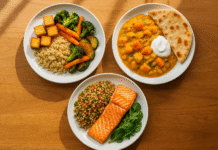
A photo log is exactly what it sounds like: you snap a quick picture to mark a habit or context, then review the roll weekly. It’s especially useful for meals, bedtime screens, or pre-work prep—things that are faster to capture visually than to type. Photo-based dietary tools show growing validity and feasibility, and some studies suggest photo features can support weight loss by increasing self-monitoring engagement. You don’t need AI labeling; a simple album works. Pair each photo with a 3-word caption (“veg + protein,” “lights off 11:00,” “packed gym bag”). The goal is pattern recognition, not perfection.
6.1 How to do it
- Make a dedicated album per habit (“Meals Q3,” “Sleep Wind-Down”).
- Use a standard angle/background to speed capture and comparison.
- Review weekly: choose 3 highlights and 1 tweak to try.
- If desired, export a contact sheet each month to staple into a paper journal.
6.2 Evidence snapshot
Studies report that photo-assisted dietary assessment is feasible and can be valid compared with traditional food diaries; app features that simplify logging may improve adherence and outcomes, though effects vary across populations.
Synthesis: When “writing it down” is the bottleneck, photos make logging nearly effortless—and still highly reviewable.
7. Weekly Scorecards (Rate What Matters)
Scorecards track quality, not just completion. Instead of a binary ✓, you rate a habit on a 0–3 or 1–5 scale (e.g., “Bedtime routine: 0=no, 1=partial, 2=on time, 3=ideal”). Why? Many health behaviors vary by intensity or completeness (sleep wind-down, meal balance, mobility). A scorecard captures nuance and keeps you honest about “kind-of did it.” It also dampens the demotivation of all-or-nothing thinking; a 2/3 is still progress. Review the average each Sunday, then pick a micro-tweak for the lowest-scoring habit the next week.
7.1 Mini-checklist
- Choose 4–6 habits that benefit from gradations (sleep routine, stretching, screen limits).
- Define the scale clearly (what earns each point).
- Track daily, review weekly; aim for +0.5 average per habit over 4 weeks.
- Combine with a dashboard to see 4-week moving averages.
7.2 Numbers & tools
- Tie ratings to clear guidelines (e.g., sleep ≥7 hours; activity 150–300 minutes/week).
Synthesis: If “checkmarks” feel too crude, scorecards add texture and highlight where a small improvement will actually move the needle.
8. Cue-Based Trackers (If-Then Cards & Implementation Intentions)
Cue-based tracking combines an implementation intention (“If it’s 9:30 pm, then I dim lights and plug in my phone in the kitchen”) with a quick log each time you perform it. The power here is the cue—time, place, or preceding action—doing the remembering for you. Implementation intentions are well-studied and reliably improve goal follow-through versus vague intentions. As a tracking method, you keep a small card (or phone note) with 3–5 if-then statements and tick them off when they fire. It’s simple, and it reduces the mental load of deciding when.
8.1 How to do it
- Write 3–5 if-then statements for keystone habits (sleep, steps, veg, meds).
- Keep the card visible (bathroom mirror, desk stand).
- Tally daily; review which cues didn’t fire and adjust wording or location.
- Use action-based anchors (“after brushing teeth”) for reliability.
8.2 Evidence snapshot
Meta-analytic work shows that forming if-then plans (implementation intentions) meaningfully improves goal attainment across domains; pairing with prompts/cues is among the most-used and effective digital behavior techniques.
Synthesis: If remembering is the problem, let the environment remember for you—and log it quickly to keep score.
9. Social & Shared Trackers (Buddy Logs, Group Sheets)
Shared trackers harness accountability and support. You and a friend (or small group) log to the same sheet or app; each person can see check-ins and leave brief comments. Social incentives and support can boost adherence for many people, although effects vary by program design and relationships. The key is to keep it friendly and specific: celebrate completions, ask about blockers, and avoid shaming. For privacy, share only the habits you’re comfortable making social (e.g., steps, water) and keep sensitive ones private.
9.1 Set it up
- Use a shared Google Sheet or app group with 3–5 visible habits.
- Agree on ground rules (cheer progress, no guilt).
- Add a weekly 10-minute check-in to review wins and obstacles.
- Consider a light team challenge (e.g., “collective 1,000,000 steps this month”).
9.2 Evidence snapshot
Studies and reviews link social support and certain gamified social incentives to improved physical activity and, in some trials, weight-related outcomes—though not universally and often dependent on program design. Use support to augment your internal goals. SpringerLinkPMCFrontiers
Synthesis: When encouragement helps you show up, a simple shared log creates just enough visibility to keep the ball rolling.
10. Time-Block & Time-Track Hybrids
Some habits fail because there’s no calendar slot for them. A time-block/track hybrid solves this: schedule a realistic block (“Walk 15 min after lunch”) and then track actuals afterward (“12 min”). Over a few weeks you’ll calibrate plan vs. reality and design days that fit your life, not your wish list. This method is a favorite for high-friction habits like meal prep, long walks, or sleep wind-down, which compete with work and family demands. The tracking piece is quick (write “actual: 12”) and the learning is immediate (“Mondays need smaller blocks”).
10.1 Mini-checklist
- Block the habit in your calendar (15–30 minutes).
- After the block, record “actual time” next to the event.
- Adjust next week’s blocks to match your average actuals.
- Pair with a weekly scorecard to grade quality (e.g., wind-down steps completed).
10.2 Numbers & guardrails
- Start 20% smaller than you think you need; grow when you hit ≥80% adherence.
- Keep blocks near strong anchors (post-meal, post-commute) to boost follow-through (ties to if-then planning).
Synthesis: When “no time” is the barrier, scheduling the habit and tracking actuals turns the day into an ally, not an obstacle.
11. Kanban-Style Boards (To-Do → Doing → Done)
Kanban boards externalize work-in-progress. For habits, they visualize daily routines as cards that move from To-Do to Done. This works great for multi-step routines (e.g., “Sleep Wind-Down”: dim lights → brush → phone docked → read 10 min) because you can see exactly where you stall. Each card represents a small action; moving it to Done is your track. Whether you use sticky notes on a wall or a digital board (Trello, Notion), the tactile “move” becomes a micro-reward.
11.1 How to implement
- Create columns: Today, Doing, Done.
- Make 3–5 small cards per routine; keep verbs specific (“fill water bottle”).
- Limit Doing to 1–2 cards to avoid overload.
- At day’s end, archive Done and jot one friction point.
11.2 Pitfalls & fixes
- Too many cards: collapse steps until the routine is ~5 minutes.
- No daily reset: start fresh each morning; yesterday’s undone doesn’t roll over.
- No review: add a Friday board audit to simplify your routine.
Synthesis: If your habits involve several micro-steps, Kanban makes progress visible and bottlenecks obvious.
12. Commitment & Consequence Trackers (Pledges, Low-Stakes Wagers)
Commitment devices add light consequences to missed logs or goals—think “pledge $5 to a cause I dislike if I miss 3 sleep wind-downs this week.” The tracking method is the pledge ledger: you record completions and consequences transparently. This can be powerful for short bursts when motivation dips, but use it sparingly and ethically. Keep stakes small, focus on behaviors (not weight), and combine with supportive methods like prompts and feedback. If you prefer positive reinforcement, flip it: put $5 into a “fun fund” when you hit your weekly target.
12.1 Guardrails
- Keep stakes small (coffee-money level).
- Cap programs to 4–8 weeks; reassess fit afterward.
- Track attempts and successes to avoid all-or-nothing spirals.
- Pair with a buddy or shared sheet for transparency.
12.2 Evidence context
Gamification elements (points, badges, streaks, incentives) can increase physical activity and engagement in many contexts, though quality varies and poorly designed penalties can backfire. Use commitment trackers to spark momentum, not as your only tool. MDPI
Synthesis: A light, time-boxed commitment or reward can jump-start consistency—keep it kind and pair it with supportive tracking.
FAQs
1) What’s the fastest habit tracking method if I hate logging?
Wearables with weekly summaries are lowest-effort for movement and sleep because data collection is automatic. Pair that with a 60-second Sunday review to set one tweak for the week ahead. If your focus is food or screen time, photo logs are the quickest manual option—one snap, three-word caption—review weekly. Evidence suggests digital self-monitoring and photo-assisted methods can support adherence and outcomes. PMC
2) How many habits should I track at once?
Start with 1–3 “keystone” habits that influence others (bedtime, steps, balanced meals). More than 5 often dilutes attention and increases dropout. Build capacity first; expand later. A weekly 10-minute review is worth more than a sprawling list you never look at.
3) Are streaks good or bad?
They’re a tool. Streaks can motivate by making momentum visible, but a broken streak can demoralize. Design streaks with “grace days” (e.g., 5-of-7) and track both current and longest streaks so one miss doesn’t erase months of identity-building. Research on gamification and streaks shows benefits with caveats. PMCScientific American
4) How do I choose the right method for me?
Match the method to your friction. If you forget, use cue-based trackers. If you dislike typing, use photo logs. If you love numbers, dashboards. If social encouragement helps, shared trackers. Aim for a daily log taking ≤30 seconds and a weekly 10-minute review.
5) What should I measure for “healthy lifestyle” habits?
For movement, a simple weekly target is 150–300 minutes of moderate activity (or 75–150 minutes vigorous), plus strength twice weekly. For sleep, aim for ≥7 hours most nights. Set clear pass criteria around these anchors and track behaviors (walks, wind-down) that drive them. PMC
6) Do apps actually help with weight loss?
They can. Meta-analyses report that digital self-monitoring of diet and activity supports weight loss compared with controls, particularly when tailored feedback is included. Effects are modest but meaningful—best when combined with goal setting, prompts, and weekly reviews.
7) Is wearable data accurate enough to trust?
For steps and heart rate during steady activity, many consumer wearables show acceptable validity, though energy expenditure is often less accurate. Use your device for trends and pacing, not medical diagnosis. Sync to Apple Health or Google Fit for centralized summaries and privacy controls.
8) How do I protect my privacy when tracking?
Review permissions regularly. Apple HealthKit and Google Fit provide fine-grained controls over what data is read or written and emphasize user consent and encryption. Share only what’s necessary and avoid posting sensitive data in shared trackers unless you’re comfortable.
9) What if I miss a week of tracking?
Restart gently. Log today, then do a short weekly review to identify what changed (travel, illness, workload). Consider switching to a simpler method (paper grid, photo log) for a week to rebuild the habit of logging before resuming complex dashboards.
10) How soon will I see results?
Behavior change is variable. Expect to feel more in control within 1–2 weeks simply by observing patterns. Health outcomes (energy, fitness) often follow in 4–12 weeks when you consistently act on what the data shows. Use weekly reviews to make one small, targeted tweak at a time.
Conclusion
Sustainable health changes aren’t about willpower; they’re about feedback loops you’ll actually use. Habit tracking methods transform intention into evidence, which lets you adjust intelligently rather than guessing. Whether you choose a one-tap app, a simple paper grid, automated wearable data, or a photo album, the winning approach is the one you’ll maintain in 30 seconds a day. Begin with 1–3 keystone habits. Define clear pass criteria tied to widely accepted anchors (≥150 minutes moderate activity weekly; ≥7 hours sleep most nights). Schedule a weekly 10-minute review to notice patterns and choose a single tweak—earlier wind-down, a post-lunch walk, veggies prepped on Sunday. Protect your motivation with flexible streaks, friendly accountability, and small celebrations. Over time, your log becomes a map: it shows where you’ve been and where to steer next. Start today with one method from this list, and let next week’s data tell you what to do tomorrow.
CTA: Pick one method above, set a 30-second daily check-in, and schedule a 10-minute review this Sunday—then watch your habits (and confidence) compound.
References
- World Health Organization 2020 guidelines on physical activity and sedentary behaviour. WHO/BMJ-Br J Sports Med summary, 2020. and full guideline PDF: World Health OrganizationWHO IRIS
- Physical Activity Guidelines for Americans—Adults. Centers for Disease Control and Prevention, updated Dec 20, 2023. CDC
- FastStats: Sleep in Adults. Centers for Disease Control and Prevention, updated May 15, 2024. CDC
- Digital self-monitoring of diet and physical activity is effective for weight loss: Systematic review and meta-analysis. Berry R. Obesity Reviews, 2021. PubMed summary: PubMed
- Self-monitoring interventions with feedback: systematic review/meta-analysis. Krukowski RA et al., International Journal of Behavioral Nutrition and Physical Activity, 2024. BioMed Central
- Digital Behavior Change Intervention Designs for Habit Formation. Zhu Y et al., Journal of Medical Internet Research, 2024. JMIR
- Keeping Pace with Wearables: Living Umbrella Review of Consumer Wearable Reliability/Validity. Doherty C. Sensors, 2024. PMC
- Real-World Accuracy of Wearable Activity Trackers. Singh B. Frontiers in Digital Health, 2024. PMC
- Earn Heart Points to stay healthy—Google Fit Help. Google, updated 2025. Google Help
- HealthKit privacy and user control. Apple Privacy White Paper (May 2023) and developer docs. and AppleApple Developer
- Implementation Intentions and Goal Achievement: Meta-Analysis. Gollwitzer PM, Advances in Experimental Social Psychology, 2006; and overview review (2021). ; ScienceDirectTaylor & Francis Online
- The Habit Tracker & Habit Stacking (practical overviews). James Clear, accessed 2025. ; https://jamesclear.com/habit-stacking ; plus Tiny Habits anchor method by BJ Fogg: James ClearTiny Habits