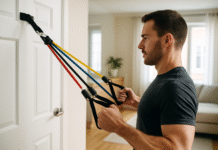




























High-Intensity Interval Training (HIIT) isn’t just for better cardio—it can be a potent ally for building strength, too. By alternating hard, focused bursts of effort with purposeful recovery, HIIT trains your nervous system to recruit more muscle, challenges fast-twitch fibers that drive strength and power, and builds the “engine” that lets you lift harder sets with better quality. In the first 100 words alone, here’s the punchline: when designed with smart exercise selection, work-to-rest ratios, and weekly placement, HIIT complements your strength work—boosting rate of force development, improving lower-body strength markers (especially in newer lifters and older adults), and enhancing work capacity so your heavy sets don’t fall apart as fatigue sets in.
Medical disclaimer: The information below is educational, not medical advice. If you have cardiovascular, metabolic, or orthopedic concerns—or you’re new to vigorous exercise—consult a qualified professional before starting.
Key takeaways
- HIIT can support strength by improving neural drive, fast-twitch fiber recruitment, and rate of force development, especially when paired with traditional resistance training.
- Time-efficient formats (e.g., 10–30-second sprints or 4×4-minute intervals) raise power and work capacity without excessive volume.
- Programming matters: place heavy strength first, keep HIIT doses modest (1–3 sessions/week), and separate lower-body HIIT from heavy leg days to reduce “interference.”
- Exercise choice drives outcomes: prioritize explosive or loaded patterns (sprints, sled pushes, kettlebell swings, jumps, loaded carries) and keep effort high, recovery purposeful.
- Progress what you can measure: track power output, heart rate zones, rep quality, jump height/sprint time, and core strength tests alongside 1RM or 3–5RM indicators.
- Safety first: warm up thoroughly, scale impact, and respect technique under fatigue; use softer surfaces and progressive volumes for any jumping.
1) Why HIIT helps strength: the physiology, in plain English
What it is & core benefits
HIIT alternates short, high-effort bouts with lower-effort recovery. For strength, the big win is neural: high-intensity efforts increase motor-unit recruitment and improve how quickly muscles “turn on,” which helps with heavy lifts and explosive starts. HIIT also raises work capacity, so your second, third, and fourth heavy sets are less compromised by fatigue. In many beginners and older adults, well-designed HIIT can nudge up maximal strength and power (especially in the lower body), while preserving muscle in fat-loss phases.
Requirements & low-cost alternatives
- A timer or interval app; a heart-rate monitor is helpful but optional.
- A modality that lets you push hard safely: air bike, rowing erg, sled, hill sprints, kettlebell swings, or low-impact jumps.
- Low-cost options: stairs, brisk uphill walks, jump-rope, body-weight power moves.
Step-by-step for a beginner
- Pick a simple pattern: 10 seconds hard, 50 seconds easy, repeated 8–10 times.
- Use a low-impact tool (air bike, incline treadmill walk sprints).
- Stop sets early if form wobbles; leave one “gear” in reserve your first two weeks.
Modifications & progressions
- Easier: Lengthen recovery (1:4–1:5 work:rest), reduce rounds, or choose a lower-impact modality.
- Harder: Shorten recovery (1:2–1:3), add one round per week, or switch to more explosive options (sled pushes, kettlebell swings, short hill sprints).
- Power focus: Keep work bouts short and crisp (6–15 seconds) with long rests; avoid form breakdown.
Frequency, duration, metrics
- 1–3 sessions/week, 8–25 minutes of intervals after warm-up.
- Work at an intensity that feels very hard (you can’t speak more than a word or two) for short bouts; on longer 3–4-minute bouts, sustain hard (deep breathing, limited speech).
- Metrics: peak power (bike watts), distance per interval, sprint time, jump height, heart rate during work (e.g., 85–95% of max on longer intervals), and how quickly HR drops in recovery.
Safety, caveats, common mistakes
- Don’t turn every day into HIIT—recovery drives adaptation.
- If you lift heavy lower body, avoid high-impact HIIT on the same day.
- Technique lives or dies under fatigue. If form slips, back off immediately.
Mini-plan example
- 8 rounds of 10-sec hard / 50-sec easy on an air bike.
- Rest 3 minutes, then 4 rounds of 10-sec sled push / 70-sec walk.
- Cool down 5 minutes, light mobility.
2) HIIT for fast-twitch recruitment and rate of force development (RFD)
What it is & core benefits
Short, near-max efforts—think 6–15 seconds—light up fast-twitch fibers and train your nervous system to produce force quickly. Boosting RFD helps you break the bar off the floor, blast out of the hole in a squat, or explode through a bench press sticking point.
Requirements & low-cost alternatives
- Best tools: sprint or air bike, sled/prowler, short hill sprints, kettlebell swings, low-amplitude pogo jumps.
- Alternatives: fast step-ups, band-assisted jumps, medicine-ball chest/overhead throws.
Step-by-step for a beginner
- Choose one explosive pattern (e.g., hard kettlebell swings).
- Perform 8–12 rounds of 10 seconds on / 50–60 seconds off.
- Focus on crisp reps, tall posture, and a firm brace; stop before form fades.
Modifications & progressions
- Easier: Keep the same rest, reduce to 6 rounds.
- Harder: Add load (heavier bell, steeper hill), or cluster two 8-round blocks with 3–4 minutes between blocks.
Frequency, duration, metrics
- 1–2 sessions/week separate from heavy lower-body strength days by 24–48 hours.
- Metrics: Peak speed, jump height, first-10-second watt spikes on a bike, or clean kettlebell swing velocity (subjective “snappiness” works if no device).
Safety, caveats, common mistakes
- Respect tendons. Start with submax jumps and soft surfaces, use a thorough warm-up, and ramp volume gradually.
- Don’t chase fatigue; chase quality. If the tenth round is slower than the fourth, cut it.
Mini-plan example
- Low-impact power HIIT: 10×10-sec hard / 60-sec easy on a bike, then 6×10 kettlebell swings (on the minute) with nasal-breathing recovery between sets.
3) HIIT to boost work capacity so your heavy sets stay strong
What it is & core benefits
Longer intervals (e.g., 4×4 minutes hard with active recovery) raise aerobic power and recovery kinetics between heavy sets. The payoff: better bar speed, less rest needed, and higher-quality volume without gassing out.
Requirements & low-cost alternatives
- Rowing erg, treadmill, bike, or even fast step circuits; any modality you can hold “hard” for minutes without form imploding.
- Alternative: brisk uphill walking for 3–4-minute repeats.
Step-by-step for a beginner
- Warm up 8–10 minutes to a light sweat.
- Do 4 rounds of 4 minutes hard (deep breathing, steady pace), separated by 2–3 minutes easy.
- Keep technique smooth; visualize a strong pull or stride.
Modifications & progressions
- Easier: Start with 3×3 minutes hard / 2 minutes easy.
- Harder: Progress to 5×4 minutes, or finish with two short alactic sprints (10 seconds each) to sharpen speed.
Frequency, duration, metrics
- 1 session/week in most strength blocks; 2/week in a conditioning phase.
- Metrics: Distance or watts per 4-minute rep; heart-rate recovery (how fast it drops in the first minute); perceived exertion.
Safety, caveats, common mistakes
- If your heavy leg day is tomorrow, don’t do quad-dominant intervals today.
- Avoid turning recovery periods into “mini-intervals.” Keep them truly easy.
Mini-plan example
- Rowing 4×4: 4 minutes at strong pace, 2 minutes easy; repeat 4 times.
- Finish with 2×10-sec hard strokes with full recovery.
4) HIIT for beginners and older adults: building strength without heavy joints stress
What it is & core benefits
Well-chosen HIIT formats can increase lower-body strength and functional performance in novices and older adults, even with minimal equipment. They also maintain muscle quality during weight loss phases.
Requirements & low-cost alternatives
- A stable surface, supportive shoes, simple tools: step, band, light kettlebell, or no equipment at all.
- Favor body-weight HIIT (stepping, sit-to-stands, low-impact marching intervals) or erg-based sessions (bike/rower).
Step-by-step for a beginner
- Start with interval walking: 1 minute brisk, 1–2 minutes easy, 10–20 rounds.
- Add one strength-biased interval circuit: 30 seconds of sit-to-stand, 30–60 seconds easy; 30 seconds band row, 30–60 seconds easy; repeat 2–3 cycles.
- Stop while you still feel in control; track how quickly your breathing returns to normal.
Modifications & progressions
- Easier: Shorter work intervals (20 seconds) with longer recovery (60–90 seconds).
- Harder: Gradually add light resistance (bands/bells) and one extra round per week.
Frequency, duration, metrics
- 2–3 sessions/week, 15–25 minutes total work.
- Metrics: sit-to-stand reps in 30 seconds, step height maintained under fatigue, “talk test” during recovery (can you speak easily within 30–45 seconds?).
Safety, caveats, common mistakes
- Mind balance and surfaces; avoid high-impact jumping early on.
- If you’re managing blood pressure, sugar, or heart disease, clear vigorous activity and monitor responses.
Mini-plan example
- 20-minute interval walk (1:1 work:recovery), then 2 rounds of 30-sec sit-to-stand / 30-sec easy and 30-sec band row / 30-sec easy.
5) Using HIIT without sabotaging your strength plan (the “interference” question)
What it is & core benefits
Cardio and strength can compete for resources if dosed poorly. The goal is concurrent training that keeps your strength climbing while HIIT builds power and conditioning.
Requirements & low-cost alternatives
- A weekly calendar and a willingness to separate lower-body HIIT from heavy leg training.
- Lower-impact intervals (bike, rower, sled) to reduce muscle damage when you’re pushing big lifts.
Step-by-step for a beginner
- Lift first, then HIIT—on days you combine them.
- Keep HIIT short and sharp post-lift: 8–12 minutes of alactic or low-impact intervals.
- On another day, do your longer 3–4-minute interval session.
Modifications & progressions
- Easier: Begin with just one 10–15-minute HIIT day.
- Harder: Add a second HIIT day, or expand one session by a single interval per week.
Frequency, duration, metrics
- 1–3 HIIT sessions/week depending on phase; maintain at least one full day between heavy squats/deads and lower-body HIIT.
- Metrics: bar speed (if you use a velocity device), reps in reserve on final strength sets, and next-day leg soreness.
Safety, caveats, common mistakes
- Too much volume, too close to heavy days, or high-impact intervals after squats can blunt strength.
- Don’t “PR your conditioning” every session—leave gas in the tank.
Mini-plan example
- Mon heavy lower + 8×10-sec air bike sprints post-lift.
- Thu upper-body strength + 4×4 minutes rowing (2–3 min easy between).
- Sat optional light incline walk with 6×30-sec brisk / 90-sec easy.
6) Proven HIIT formats that play well with strength training
What it is & core benefits
Different HIIT templates serve different goals. Use the right tool for the job: short sprints for power/RFD, 4×4s for aerobic capacity and recovery between heavy sets, and “Tabata-style” only when you can maintain truly high intensity with sound mechanics.
Requirements & low-cost alternatives
- For sprints: bike, rower, hill, or sled.
- For 4×4s: any cardio you can hold steady and hard.
- For 20:10 sets: choose robust movements you can keep crisp (e.g., swings, med-ball throws, step-ups)—not complex barbell lifts to failure.
Step-by-step starters
- Sprint Intervals (Power): 8–10×10-sec hard / 60-sec easy (bike or hill).
- 4×4s (Capacity): 4×4 min hard / 2–3 min easy (row/bike/treadmill).
- 20:10 Blocks (Density/MetCon): 6–8 rounds of 20 sec work / 10 sec rest on a single simple movement; rest 2–3 min; repeat for 2–3 blocks.
Modifications & progressions
- Add one round per week or one additional block (not both).
- Switch to a slightly steeper hill or a slightly heavier kettlebell.
- Keep technique non-negotiable—if quality drops, reset.
Frequency, duration, metrics
- Power days (10–15-sec repeats): 10–15 minutes of intervals total.
- Capacity days (4×4): 16 minutes hard work plus recovery.
- Metrics: bike watts, split times, total distance per rep, rep counts during 20-sec sets.
Safety, caveats, common mistakes
- “20:10” is only high-intensity if you actually hit high intensity—select movements that allow it and scale volume.
- Don’t pile high-impact jumps on a fatigued spine or knees; swap in sleds, ergs, or swings.
Mini-plan example
- Block A: 4×4 minutes hard row / 3 minutes easy.
- Block B: 8×10-sec bike sprints / 60-sec easy.
- Optional finisher: 6×20:10 kettlebell swings (light-moderate), then cool down.
Quick-start warm-up checklist (5–10 minutes)
- Breathing & pulse (1–2 min): nasal breathing, brisk walk or easy spin to elevate temperature.
- Dynamic joints (2–3 min): ankle rocks, leg swings, hip circles, thoracic rotations.
- Movement prep (2–3 min): 2–3 practice intervals at half speed (10–20 seconds) to groove mechanics.
- Primer (1–2 min): 1–2 crisp accelerations (5–10 seconds) with full recovery.
Troubleshooting & common pitfalls
- Intervals too long for the goal. If power/RFD is the aim, keep work bouts short (≤15 seconds) with long rests.
- Wrong modality for your joints. If knees/low back protest, switch to sleds, bike, or uphill walking.
- Too close to heavy lifts. Plan HIIT at least a day away from heavy lower-body work or keep it upper-body/low-impact if same day.
- Intensities too tame. Long intervals should feel truly hard; short intervals should feel explosive, not “kind of fast.”
- Recovery skimping. Keep rest purposeful. If work quality craters, you’re practicing bad reps.
- One-speed syndrome. Rotate between power and capacity days so you’re not stuck in the “medium-hard for everything” trap.
How to measure progress (beyond “I feel tired”)
- Strength markers: 1RM/3–5RM on key lifts; bar speed (if you have a device) or video rep-tempo.
- Power: best 10-second bike watts, standing broad jump or countermovement jump height, short sprint time.
- Capacity: total distance per 4-minute rep, HR during work (aim for hard but sustainable) and HR recovery (beats dropped in 1 minute).
- Quality under fatigue: last set RPE in a strength session, rep speed on final sets, step-ups or push-ups in 30 seconds after an interval block.
- Body composition (if relevant): belt notch, waist measurement, progress photos at consistent lighting/stance.
A simple 4-week HIIT-for-strength starter plan
Goal: Keep lifting as the main course. Use HIIT to raise power and work capacity without stealing recovery.
Weekly structure (Mon–Sun)
- Day 1: Heavy Lower + Short Power HIIT (bike/hill sprints)
- Day 2: Upper Strength (no HIIT or optional easy 10-min zone-2)
- Day 3: Rest or mobility
- Day 4: Upper Strength + Capacity HIIT (4×4 intervals on row/bike)
- Day 5: Light accessory lower or full-body pump (no HIIT)
- Day 6: Optional Low-impact HIIT or long walk with 6–8 brisk surges
- Day 7: Rest
Session details by week
Week 1
- Day 1 (Power HIIT post-lift): 8×10-sec bike sprints / 60-sec easy.
- Day 4 (Capacity HIIT): 3×3-min hard / 2-min easy.
Week 2
- Day 1: 10×10-sec sprints / 60-sec easy.
- Day 4: 4×3-min hard / 2-min easy.
Week 3
- Day 1: 10×12-sec sprints / 60–75-sec easy.
- Day 4: 4×4-min hard / 2–3-min easy.
Week 4
- Day 1: 12×10-sec sprints / 60-sec easy.
- Day 4: 4×4-min hard / 2-min easy, finish with 2×10-sec crisp accelerations.
Notes
- Keep heavy lower 24–48 hours away from any high-impact HIIT.
- If legs feel cooked, move Day 1 power HIIT to sled pushes or an air bike.
- Deload any one HIIT session by 30–40% if strength is peaking or soreness lingers.
Frequently asked questions
1) Can HIIT replace my strength training?
No. HIIT can improve strength—especially in new lifters and older adults—but heavy, progressive resistance training remains the most reliable path to maximal strength. Use HIIT to support strength with better power and conditioning.
2) How many HIIT days should I do if I lift four days a week?
Start with one short power session post-upper day and one separate 4×4 capacity session. If recovery holds and strength progresses, you can keep both. If bar speed or leg recovery suffers, drop to one.
3) What heart-rate targets should I aim for?
For longer intervals, aim for a “hard” zone where talking is difficult (often around upper-80s to mid-90s % of HRmax). For short sprints, focus on power and crisp mechanics rather than HR peaks; full recovery is the goal.
4) Is “20:10” the best HIIT for strength?
It’s effective when intensity and form stay high, but it’s not automatically superior. For strength support, short sprints (6–15 seconds) and 4×4-minute intervals typically map better to power and work-capacity goals.
5) I’m cutting weight. Will HIIT help me keep muscle?
Yes—its high effort and fiber recruitment can help maintain muscle quality while increasing energy expenditure. Keep doses modest and maintain heavy lifting to protect strength.
6) I get knee pain with sprints. What should I do?
Swap to sled pushes, air bike, upright rower, or incline walking. Reduce impact, keep cadence smooth, and progress volume slowly.
7) Can I do HIIT and heavy squats on the same day?
If you must, lift first and limit HIIT to short, low-impact sprints (bike/row) for 8–12 minutes. Better yet, separate them by a day.
8) How do I know if HIIT is hurting my gains?
Watch bar speed, next-day soreness, and reps in reserve. If your heavy sets slow or you need more rest to hit the same loads, trim HIIT volume or move it farther from leg day.
9) Is HIIT safe for people with heart or metabolic conditions?
In supervised settings and after appropriate screening, many clinical populations tolerate HIIT well and see strong fitness improvements. Get medical clearance and start conservatively.
10) What’s the best HIIT tool if I only have dumbbells?
Use squat-to-press, DB swings, farmer’s carries, or step-ups in interval formats. Keep sets short, emphasize crisp mechanics, and rotate movements to manage local fatigue.
11) Should I track watts, pace, or heart rate?
Track one performance metric per modality (watts on bike, split/pace on rower, time to cover a set distance) plus HR recovery. Consistency beats complexity.
12) How long should I rest between intervals?
For power intervals, rest 4–6× the work duration if needed to keep efforts sharp (e.g., 10 sec work, 60 sec easy). For capacity intervals, use 2–3 minutes between 3–4-minute bouts.
Conclusion
HIIT can absolutely support strength—when you train the right movements, at the right intensities, at the right times in your week. Keep your heavy lifts as the main course, then add short, explosive intervals to sharpen power and longer 3–4-minute bouts to lift your work capacity. Respect recovery, track what matters, and let quality lead the way.
CTA: Pick one power session and one capacity session from this guide, schedule them this week, and let your next heavy set prove the difference.
References
- High-intensity interval training, solutions to the programming puzzle: Part II (neuromuscular load and practical applications). Sports Medicine, 2013. https://pubmed.ncbi.nlm.nih.gov/23832851/
- Characterizing the Heart Rate Response to the 4 × 4 Interval Exercise Protocol. Sports, 2020. https://www.ncbi.nlm.nih.gov/pmc/articles/PMC7399937/
- Aerobic high-intensity intervals improve VO2max more than moderate training. Medicine & Science in Sports & Exercise, 2007. https://pubmed.ncbi.nlm.nih.gov/17414804/
- Physiological adaptations to low-volume, high-intensity interval training. The Journal of Physiology, 2012. https://www.ncbi.nlm.nih.gov/pmc/articles/PMC3381816/
- Short-term sprint interval vs. traditional endurance training: similar initial adaptations in human skeletal muscle and performance. The Journal of Physiology, 2006. https://www.ncbi.nlm.nih.gov/pmc/articles/PMC1995688/
- Divergent response of metabolite transport proteins in human skeletal muscle after sprint interval training and detraining. American Journal of Physiology, 2007. https://journals.physiology.org/doi/10.1152/ajpregu.00503.2006
- Effects of exercise intensity and duration on excess post-exercise oxygen consumption. Sports Medicine, 2006. https://pubmed.ncbi.nlm.nih.gov/17101527/
- EPOC comparison between circuit-style resistance training and high-intensity interval training. International Journal of Exercise Science, 2021. https://www.ncbi.nlm.nih.gov/pmc/articles/PMC8439678/
- High-intensity interval training for health benefits and care of cardiac diseases. Cardiology and Therapy, 2019. https://www.ncbi.nlm.nih.gov/pmc/articles/PMC6763680/
- High-intensity interval training in patients with lifestyle-induced cardiometabolic disease: systematic review and meta-analysis. British Journal of Sports Medicine, 2014. https://pubmed.ncbi.nlm.nih.gov/24144531/
- High-intensity interval training vs. moderate continuous training in cardiac rehabilitation: systematic review and meta-analysis. Open Heart, 2018. https://pubmed.ncbi.nlm.nih.gov/29416382/
- Applying the contemporary pre-participation screening algorithm. American Journal of Health Behavior, 2017. https://www.ncbi.nlm.nih.gov/pmc/articles/PMC7059860/
- Concurrent training: a meta-analysis examining interference of aerobic and resistance exercises. The Journal of Strength and Conditioning Research, 2012. https://pubmed.ncbi.nlm.nih.gov/22002517/
- Effects of high-intensity interval cycling performed after heavy-resistance exercise. The Journal of Strength and Conditioning Research, 2016. https://pubmed.ncbi.nlm.nih.gov/27659479/
- The role of high-intensity interval training in neuromuscular adaptations: implications for strength and power. Life (MDPI), 2025. https://www.ncbi.nlm.nih.gov/pmc/articles/PMC12028608/