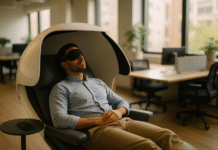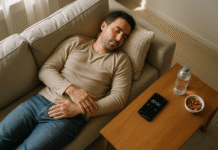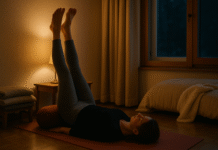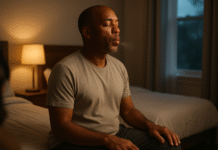















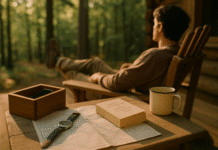

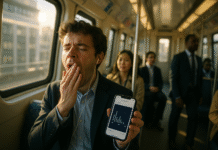
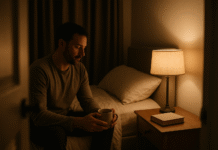
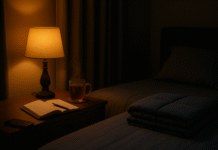
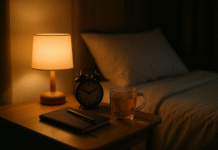

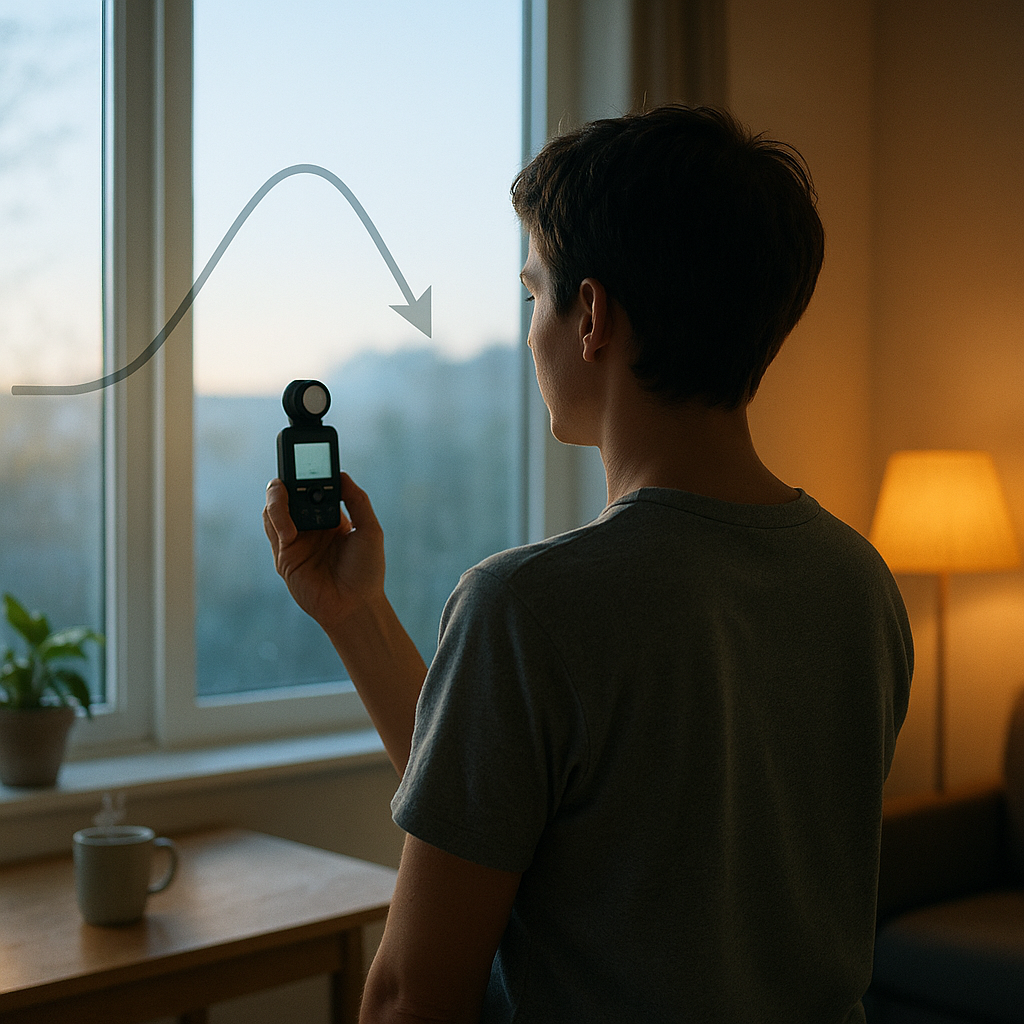
Light is the master time cue for your body’s internal 24-hour rhythm. In simple terms, light resets your circadian clock by signaling special retinal cells that talk to the brain’s clock (the suprachiasmatic nucleus), shifting your sleep-wake timing earlier with morning light and later with evening light. The size and direction of that shift depend on when, how bright, what color, and how long the light hits your eyes.
Before we dive in, a quick note: this guide is educational and not medical advice. If you have a diagnosed sleep disorder (e.g., delayed sleep–wake phase disorder), bipolar disorder, eye disease, or you use photosensitizing medications, speak with a clinician before trying light interventions. For everyone else, you’ll learn how timing, intensity, spectrum, duration, and your “light history” interact—and how to apply them safely for jet lag, shift work, or a simple schedule reset.
Quick answer (for featured snippets): Morning light (after habitual wake time) advances your clock; evening/early-night light delays it. Brighter, bluer, longer exposures cause bigger shifts—unless your daytime light was already high (which reduces nighttime sensitivity).
1. Timing Drives Direction: Morning Light Advances; Evening Light Delays
The fastest way to understand how light exposure resets your circadian clock is the human phase response curve (PRC)—a map of how timing determines shift direction. Light centered after your body temperature minimum (roughly the second half of the night toward morning) produces phase advances—you’ll feel sleepy and wake earlier the next day. Light centered before that minimum (evening and early night) causes phase delays—you’ll fall asleep and wake later. Midday light does little shifting. This is why two people can sit under the same lamp at different times and move their body clocks in opposite directions. The classic lab work—using dim- and bright-light protocols with precise melatonin measurements—shows several hours of shift are possible in one bout under controlled conditions.
1.1 Why it matters
- Jet lag: Heading east? You need phase advances—stack morning/daylight and avoid late-evening light. West? You need delays—use later-evening light and avoid early-morning light at destination.
- Social jet lag / late chronotype: Morning light beats evening screens; timing beats willpower.
- Shift work: Night shifts inevitably add delays; carefully timed post-shift daylight avoidance plus pre-shift bright light can help.
1.2 Numbers & guardrails
- Advancing window: Late night to early morning, especially the hours after the body temperature minimum.
- Delaying window: Evening to early night, starting a few hours before your usual bedtime.
- Dead zone: Midday light yields minimal shifting in most people.
Synthesis: Think of light as a steering wheel: morning = earlier, evening = later. Time it wrong and you’ll steer the opposite way.
2. Intensity and Dose Matter: Lux and Melanopic EDI Set the “Volume” of the Shift
Brightness is the second lever. Outdoor daylight routinely delivers 10,000–100,000 lux at the eye; a typical office offers only 300–500 lux—often too dim for strong circadian effects. In 2022, an expert consensus recommended melanopic EDI (a biologically relevant measure keyed to melanopsin) of >250 lux across the day, <10 lux in the 3 hours before bed, and ≤1 lux in the sleep environment. These targets reflect how the circadian system actually “sees” light, not just what looks bright. Crucially, meeting the daytime target often requires either real daylight or purpose-built lighting; standard indoor lighting can fall short.
2.1 How to hit effective levels (practical)
- Daytime: Aim for ≥250 melanopic lux (EDI) at eye level. Sit near a sunlit window in the morning or work by a window; when indoors only, consider tunable or high-melanopic fixtures designed to reach that target.
- Evening wind-down: Dim lights to keep melanopic EDI ≤10 lux for at least 3 hours pre-bed.
- Sleep: Keep ambient ≤1 melanopic lux; if you need a nightlight, choose very dim, warm sources.
2.2 Useful ranges & examples
- Outdoors (day): ~10,000–100,000 lux photopic (easily surpasses 250 melanopic EDI).
- Typical office: 300–500 lux photopic; melanopic EDI can be <200—often not enough unless optimized.
- Light boxes: 10,000 lux units deliver strong stimulus quickly (e.g., ~30 min), but use cautiously and at the right time.
Synthesis: The clock is dose-sensitive. Bright days + dim evenings create a robust day–night signal that makes shifting easier and sleep deeper.
3. Spectrum Counts: Blue-Enriched Light Hits the Clock Hardest
Not all light is equal. Specialized retinal cells—ipRGCs—contain melanopsin with peak sensitivity near ~480 nm (blue-cyan). Action spectra for melatonin suppression and phase shifting track this sensitivity, which is why blue-enriched white light has outsized circadian impact per unit illuminance. Modern standards therefore recommend measuring melanopic EDI and considering the melanopic daylight efficacy ratio (melanopic DER) rather than relying on correlated color temperature (CCT) alone. Practically, this means a warm-white, dim lamp can be far less “circadian-active” than a cool-white, bright lamp at the same lux—and that screens can be surprisingly potent if held close in a dark room.
3.1 Tools & examples
- Day boosting: If you can’t access daylight, a short-wavelength–enriched (higher melanopic DER) source helps you reach ≥250 melanopic EDI indoors.
- Evening calming: Select warm-white sources (lower melanopic DER) and dim them; many households already sit around ~30 photopic lux evenings, which can meet ≤10 melanopic lux if the spectrum is warm.
- Screens: In the absence of other light, displays can exceed 60 melanopic lux—enough to push timing later. Use distance, night modes, and brightness limits.
3.2 Mini-checklist
- Prefer melanopic-aware metrics where possible.
- Day: brighter & bluer is fine; Evening: dimmer & warmer wins.
- Remember: CCT isn’t destiny—two 2700 K bulbs can differ in melanopic impact.
Synthesis: Spectrum shapes potency. When you can’t change brightness, tweak color to push in the right direction.
4. Duration and Pattern: You Don’t Always Need Hours—Pulses Can Work
While longer exposures usually cause larger shifts, the circadian system integrates light nonlinearly—meaning brief flashes separated by darkness can shift the clock nearly as well as continuous light in some protocols. Studies show millisecond-to-seconds flashes at specific intervals can produce ~1–2 hour delays, and that most of the effect accrues in the first ~15 minutes of a flashing sequence, with diminishing returns thereafter. Even single short bright pulses (15 s) can shift timing measurably in controlled conditions. This opens the door to “asleep light therapy,” although it requires lab-calibrated gear and expert timing to avoid mistimed delays. PubMed
4.1 How to use this insight (safely)
- For most people, continuous morning daylight remains the simplest, safest tool.
- If considering devices promising “flash therapy,” verify protocols and evidence; many consumer offerings are not standardized.
- Don’t introduce night-time flashes ad hoc; poorly timed pulses can delay you.
4.2 Mini case
- In-lab protocols using flashed light during sleep produced ~45-minute average phase delays vs ~3.5 minutes in control conditions—illustrating the power of timing plus pattern. Nature
Synthesis: The clock isn’t just a light meter; it’s a pattern detector. For home use, stick with consistent bright days + dim nights unless supervised.
5. Your “Light History” Changes Sensitivity: Bright Days Buffer Your Nights
Two people can sit under the same lamp at night and respond differently because light history resets sensitivity. After bright daytime light, the clock becomes less reactive to evening light; after dim days, it’s more sensitive—your melatonin drops more easily. Controlled studies (hours-to-days of manipulated day light) show this adaptation clearly. Real-world takeaway: investing in brighter days doesn’t just energize you—it defends your nights against unavoidable evening light (kids’ homework lights, late meetings, etc.). Interindividual differences (chronotype, age, pupil size, ocular health) also modulate responses, so expect variation around averages.
5.1 Why it matters
- If you spend all day in dim offices, your evening phone will delay you more.
- If you get robust morning/daylight, the same evening device use may be less disruptive (still not ideal).
5.2 Mini-checklist
- Bank ≥30–60 minutes outdoors early or at lunch.
- Put your desk near a window; schedule calls while walking outside when feasible.
- On heavy screen days, double down on morning daylight.
Synthesis: Bright days inoculate you against night light. Treat daylight as part of your sleep hygiene.
6. Protocols That Work: Jet Lag, Shift Work, and Everyday Resets
You can harness these principles to change your schedule consciously. For jet lag, plan 2–3 days of targeted light around your travel direction: eastbound needs advances—maximize morning/midday light at destination, avoid late-evening light (wear dark glasses outside, dim hotel room), and consider a light box shortly after waking if daylight is scarce. Westbound needs delays—embrace late-afternoon/evening light and avoid early-morning light with blackout shades or glasses. Clinical guidance for circadian rhythm sleep–wake disorders similarly pairs timed bright light (often 10,000 lux boxes for ~30 min) with melatonin timing and behavioral cues. As always, timing must match your goal; the same box can help or hurt depending on when you use it.
6.1 How to do it (templates)
- Everyday advance (earlier schedule):
- Morning (day 1): Get ≥250 melanopic EDI within 1 hour of waking for 30–60 min (outdoor walk is ideal).
- Afternoon: Normal lighting.
- Evening (3 h before bed): Keep ≤10 melanopic EDI; enable night modes; lamps warm and dim.
- Repeat for 3–5 days; avoid late-evening social light.
- Everyday delay (later schedule):
- Early evening: Add bright, cool-white light (task lamp or light box) for 30–60 min starting 3–5 h before current bedtime.
- Morning: Strict dark/low light on waking; sunglasses if commuting at sunrise until the desired schedule moves.
6.2 Region-specific notes (South & West Asia, as of August 2025)
- Summer sun is intense; outdoor 10–20 min near sunrise can exceed 250 melanopic EDI easily—use shade for comfort and UV safety.
- In high-heat seasons, use indoor atriums, shaded balconies, or north-facing windows to capture biologically effective light without overheating.
Synthesis: Match light timing to your goal. The right 30–60 minutes often beats the wrong 3 hours.
7. Measuring and Managing Light: From “Looks Bright” to “Biologically Bright”
To implement these ideas, you need better feedback than eyeballing. Phone lux apps are rough; they don’t report melanopic EDI and vary by camera. Instead, use: (1) Wearables or meters that estimate melanopic metrics; (2) Lighting with published melanopic DER (so you can convert photopic lux to melanopic EDI: melanopic EDI = photopic lux × melanopic DER); (3) Behavioral proxies—outdoor time and distance from sources. Aim for consistent patterns rather than perfection, and test changes for a week at a time. For night environments, tiny amber path lights near the floor can maintain safety while staying under 1 melanopic lux.
7.1 Mini-checklist
- Day: Track an hour of bright exposure (window or outdoors) before noon.
- Evening: Switch to warm, low settings 3 hours before bed; use task lighting instead of ceiling floods.
- Screens: Night mode + brightness cap + distance (arm’s length).
- Sleep: Blackout shades; mask if needed; avoid glowing indicators.
7.2 Common mistakes
- Chasing high daytime lux indoors without checking spectrum (melanopic DER).
- Using light boxes at the wrong time (risking delays when you want advances).
- Forgetting that brighter days make your nights more resilient.
Synthesis: Measure what matters. Even simple swaps—seat by a window, warm lamps at night—move the needle.
FAQs
1) What’s the fastest way to reset my sleep schedule by 1–2 hours?
Leverage the PRC: stack morning bright light for advances (earlier sleep) and avoid evening light; or do the reverse for delays. Target ≥250 melanopic EDI in the morning for 30–60 min and keep ≤10 melanopic EDI the last 3 hours before bed. Combine with consistent wake time and caffeine cutoffs.
2) Do I need a 10,000-lux light box?
Not always. If you can get outdoor daylight soon after waking, you’ll likely exceed melanopic targets. A 10,000 lux box is helpful when daylight is scarce (winter, shift work) but must be timed to your goal. Typical protocols suggest ~30 minutes at the correct time.
3) Are blue-blocking glasses enough at night?
They can reduce melanopic input but won’t fix bright overheads or late-night scrolling. The most reliable recipe is dim + warm ambient lighting and screen distance/brightness control. Remember: daytime light history alters sensitivity—brighter days blunt but don’t erase night effects.
4) My office is 400 lux—why am I still sleepy?
Photopic lux isn’t the whole story. The light’s spectrum might be low in melanopic content, and vertical illuminance at your eyes (not desk) could be lower. Consider seating near windows or melanopic-enriched fixtures to reach ≥250 melanopic EDI.
5) Do screens really matter if they “don’t feel bright”?
Yes. In dark rooms, a phone or tablet at arm’s length can exceed ~60 melanopic lux, enough to delay circadian timing and suppress melatonin, especially after dim days. Use night modes, reduce brightness, and add ambient warm light so the screen isn’t your only source.
6) Can short light flashes during sleep help jet lag?
Lab studies show brief light pulses can shift the clock, with much of the effect occurring in the first ~15 minutes of a sequence. Consumer protocols are not standardized; mistimed flashes can make jet lag worse. For most travelers, daytime light planning is simpler and safer.
7) What’s DLMO and why do people mention it?
Dim-Light Melatonin Onset (DLMO) is when melatonin rises in the evening under dim light. It’s a stable marker of circadian phase used in research and some clinics to time light and melatonin therapy precisely. You don’t need to measure DLMO to benefit from the fundamentals above, but clinicians may use it for complex cases.
8) If I miss morning light, can extra afternoon light compensate?
To some extent, yes—total daytime melanopic dose matters—but morning exposure has the strongest advancing leverage. Prioritize morning when shifting earlier; otherwise, bank daylight whenever you can, especially if your evenings will be bright.
9) Is “warm vs cool” bulb choice enough?
Color helps, but it’s not a substitute for brightness control. Two bulbs with the same CCT can differ in melanopic output. For nights, combine warm spectrum with low illuminance; for days, maximize overall melanopic EDI by brightness + spectrum.
10) Are there risks to bright light therapy?
Possible side effects include headache, eye strain, or agitation; in bipolar spectrum conditions, mania risk exists—hence clinical oversight. Avoid direct UV exposure; reputable devices filter UV. When uncertain, consult a clinician and start modestly at the right time for your goal.
Conclusion
Light is both a steering wheel and fuel for your circadian system. You now know the rules: timing determines direction (morning advances, evening delays); intensity and spectrum set potency (aim for bright, melanopic-rich days and dim, warm nights); duration and pattern shape dose (with diminishing returns and clever pulse effects), and your prior light history changes sensitivity (bright days protect your nights). Put them together and you can shift your schedule for travel, shift work, or better everyday sleep—often with small, consistent changes: a sunny window for your first meeting, a 15-minute outdoor walk, and lamps on low and warm after dinner. Start with one lever (morning light), add a second (evening dimming), and stack wins over a week.
Your one-line action plan: Tomorrow morning, get 30–60 minutes of bright light near waking—and tonight, keep the last 3 hours before bed warm and dim.
References
- Brown TM, Wright KP Jr., et al. Recommendations for daytime, evening, and nighttime indoor light exposure to best support physiology, sleep, and wakefulness in healthy adults. PLOS Biology, 2022. PMC
- CIE. CIE TN 015:2023—Relevance of Recommended Indoor Light Exposure Thresholds for Health. International Commission on Illumination, 2023. files.cie.co.at
- Khalsa SBS, Jewett ME, Cajochen C, Czeisler CA. A phase response curve to single bright light pulses in human subjects. Journal of Physiology, 2003. PubMed
- Gooley JJ, et al. Exposure to room light before bedtime suppresses melatonin onset and shortens melatonin duration in humans. J Clin Endocrinol Metab, 2011. PMC
- Chang A-M, et al. Evening use of light-emitting eReaders negatively affects sleep, circadian timing, and next-morning alertness. PNAS, 2015. PNAS
- Brainard GC, et al.; Thapan K, et al. Action spectra for melatonin suppression: evidence for a short-wavelength sensitive system. J Neurosci 2001 / J Physiol 2001. PubMed/PMC records. ; Jefferson Digital CommonsPubMed
- Najjar RP, Zeitzer JM, et al. Temporal integration of light flashes by the human circadian system. JCI (figures) 2016; related PMC overview. ; JCIPMC
- Rahman SA, et al. Circadian phase resetting by a single short-duration light exposure. JCI Insight, 2017. insight.jci.org
- Joyce DS, Spitschan M, Zeitzer JM. Optimizing light flash sequence duration to shift human circadian phase. Biology (Basel), 2022. MDPI
- Chang A-M, Scheer FAJL, Czeisler CA. The human circadian system adapts to prior photic history. Journal of Physiology, 2011. PMC
- Hébert M, Martin SK, Lee C, Eastman CI. Effects of prior light history on the suppression of melatonin by light in humans. Journal of Pineal Research, 2002. PubMed
- Stanford CS348B (Pat Hanrahan). Typical Values of Illuminance. Lecture notes (2012). Stanford Graphics
- Auger RR, et al. AASM Clinical Practice Guideline for the Treatment of Intrinsic Circadian Rhythm Sleep–Wake Disorders. American Academy of Sleep Medicine, 2015. AASM
- Campbell PD, et al. Bright Light Therapy: Seasonal Affective Disorder and Beyond. Psychiatry (Edgmont) review, 2017 (clinical overview of dosing). PMC
- St Hilaire MA, et al. The spectral sensitivity of human circadian phase resetting and melatonin suppression. PNAS, 2022. PNAS