





















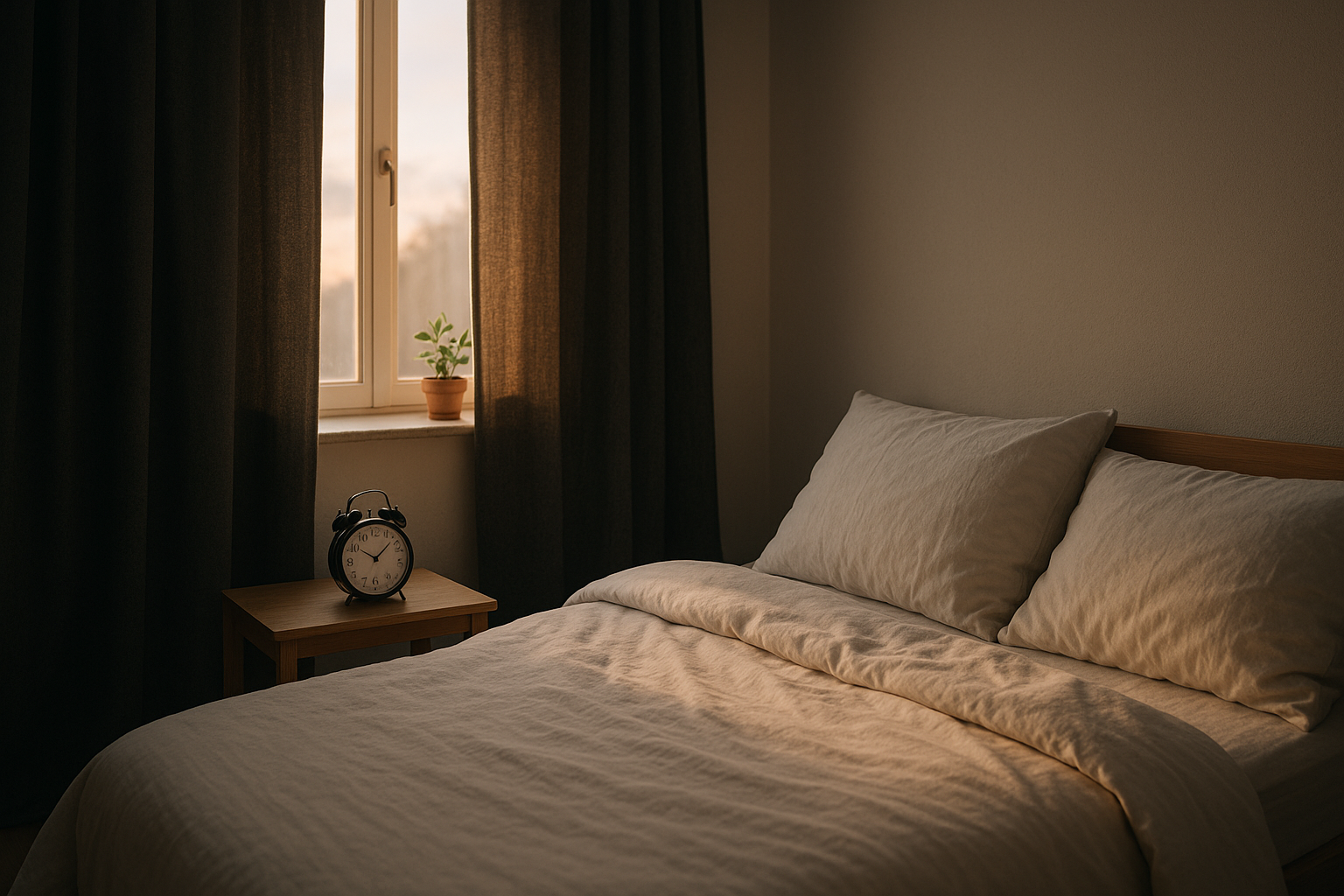
Sleep can feel chaotic when your schedule drifts, bedtime is a moving target, and you wake up tired no matter how long you stayed in bed. This guide explains how to fix irregular sleep patterns with twelve evidence-based steps that real people can follow at home. You’ll learn exactly what to anchor first, how light and caffeine timing reshape your body clock, which CBT-I tactics work, and when to ask for help. Quick answer: you fix irregular sleep by anchoring a consistent wake time, using morning light and evening dimness, and aligning behaviors (caffeine, exercise, naps, meals) to support a stable circadian rhythm, escalating to CBT-I tools if insomnia persists. For skimmers, here’s a fast checklist: set one wake time, get bright morning light, dim evenings, reserve bed for sleep, keep a 60–90-minute wind-down, time stimulants and alcohol carefully, nap short/early if at all, move daily but not too late, cool/darken your room, use melatonin only when indicated, tame social jetlag, and track progress.
Medical note: This article is educational and not a substitute for personal medical care. Seek a clinician’s advice if you have loud snoring, gasping, restless legs, excessive daytime sleepiness, depression, or if insomnia lasts more than three months.
1. Lock a Single Wake-Up Time (Yes, Even on Weekends)
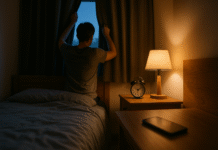
The fastest way to steady erratic sleep is to fix your wake-up time and protect it—weekdays and weekends alike. Your brain’s clock (the suprachiasmatic nucleus) keeps time using light and regularity; the wake-up time anchors that rhythm so your sleep pressure builds predictably and your melatonin pulse arrives on schedule at night. Start here before touching bedtime, apps, or supplements. Expect a few groggy mornings as your body recalibrates; hold the line for 10–14 days to let the rhythm settle. A consistent wake time aligns with heart-health guidance that explicitly includes sleep as a core behavior (AHA “Life’s Essential 8”). AHA Journals
1.1 How to do it
- Choose a realistic wake time you can honor seven days a week (e.g., 7:00 a.m.).
- Set two alarms: one to wake, one 5 minutes later as a fail-safe; get out of bed on the first.
- Expose yourself to daylight within 10–30 minutes of waking (details in Step 2).
- Delay bedtime rather than sleeping in. If you’re not sleepy at your target bedtime, stay up until you are—but do not move the wake time.
- After 1–2 weeks, your bedtime will drift earlier naturally as sleep pressure aligns.
1.2 Numbers & guardrails
- Keep weekend drift to ≤60 minutes; bigger swings create “social jetlag” that destabilizes the clock. Cell
Bottom line: A fixed wake time is the keystone habit that lets every other tactic work.
2. Use Morning Bright Light and Evening Dimness to Reset Your Clock
Light is the master cue for your circadian system. Bright light in the morning advances your clock, making it easier to fall asleep earlier; dim light at night prevents melatonin suppression and delays. Outdoors morning light is best; on dark mornings or for stubborn delays, a bright-light device can help. In the evening, reduce overall brightness and especially blue-enriched light from screens and LEDs for 2–3 hours pre-bed; even e-reader light has been shown to delay circadian timing and reduce next-morning alertness. PubMed
2.1 How to do it
- Morning: 10–30 minutes outdoors shortly after waking; face generally toward the sky. If indoors, consider ~2,000 lux or higher; specialty boxes often provide 10,000 lux at proper distance. Sleep Foundation
- Evening: Two hours before bed, dim household lights or use warmer bulbs; enable night mode on devices; if screen-use is essential, keep it brief and at arm’s length. Sleep Foundation
2.2 Numbers & guardrails
- A 30-minute morning bright-light pulse plus properly timed melatonin can phase-advance circadian rhythms; timing matters more than dose.
Bottom line: Treat light like a drug with dose, timing, and type—bright early, dim late.
3. Deploy CBT-I Essentials: Stimulus Control + Sleep Restriction
If your nights are irregular with long awake stretches, CBT-I is the gold-standard treatment. Two core tools are stimulus control (reserve the bed for sleep/sex; get up if awake >15–20 minutes) and sleep restriction (temporarily limit time in bed to match actual sleep, then expand). Together they tighten the link between bed and sleep and rebuild confidence. Major guidelines recommend CBT-I as first-line for chronic insomnia in adults; these methods beat “sleep hygiene” alone and rival medications without dependency risks.
3.1 How to do it (stimulus control)
- Go to bed only when sleepy; if you can’t sleep after ~20 minutes, get up to do something quiet in dim light and return when sleepy.
- No phones, work, or TV in bed; bed = sleep/sex only.
- Rise at your fixed wake time regardless of the night. Stanford Health Care
3.2 How to do it (sleep restriction)
- Track a week of sleep (Step 11), compute average Total Sleep Time (TST)—say 5.5 hours.
- Set Time in Bed (TIB) = TST + 30 minutes (cap minimum at ~5–6 hours under clinician guidance).
- Keep the wake time fixed; set bedtime by counting TIB backward.
- Once sleep efficiency (TST ÷ TIB) exceeds ~85% for a week, expand TIB by 15–30 minutes.
3.3 Mini-case
If you sleep 12:30–7:00 a.m. but only 5.5 hours total, start with TIB 6.0 hours: wake 7:00, bedtime 1:00. After a week at >85% efficiency, move bedtime to 12:45, and so on.
Bottom line: CBT-I’s behavioral core reconditions your brain to sleep when you’re in bed. PMC
4. Build a 60–90-Minute Wind-Down Buffer
An irregular pattern often comes from sprinting into bedtime. Create a predictable 60–90-minute buffer where you turn down lights, stop problem-solving, and cue your nervous system that sleep is next. Pair low-arousal activities with dim lighting: a warm shower, light reading (paper), gentle stretches, or breath-based relaxation. Athletic and sleep organizations emphasize this pre-sleep ritual because it eases the transition and counters late-evening arousal. ACSM
4.1 Checklist
- Dials down: brightness, noise, decisions, notifications.
- Dials up: routine, warmth, gentle movement, soothing music, gratitude journaling.
- Avoid news, work email, and arguments in this window.
4.2 Numbers & guardrails
- Keep the last hour screen-light minimal; if you must use a device, use night mode and lower brightness. Evidence on blue light’s impact varies, but practical dimming and content choices help, especially if you already struggle with sleep.
Bottom line: A consistent “landing strip” protects your rhythm and lowers cognitive arousal.
5. Re-Time Caffeine, Nicotine, Alcohol, and Meals
Stimulants and sedatives are powerful clock-nudgers. Caffeine peaks ~30 minutes after intake and has a half-life of ~5–6 hours, disrupting sleep even at 6 hours pre-bed; many adults do better with an 8-hour cut-off. Nicotine—including patches—can fragment sleep; remove bedtime patches if they cause vivid dreams. Alcohol may knock you out but suppresses REM and causes awakenings; avoid it ≥3 hours before bed. Late heavy meals, reflux triggers, and spicy foods can also wake you; aim to finish dinner 2–3 hours before lying down.
5.1 How to do it
- Set your caffeine curfew: Count back 8 hours from target bedtime (e.g., 2:00 p.m. for 10:00 p.m.).
- If using nicotine replacement, remove 1 hour before bed if sleep is disturbed.
- Keep alcohol modest and earlier in the evening; hydrate and pair with food.
- Finish meals 2–3 hours pre-bed; elevate head of bed if reflux is an issue. American College of Gastroenterology
5.2 Numbers & guardrails (as of August 2025)
- Newer analyses suggest 100 mg may be tolerable closer to bed for some people, but larger doses (≥400 mg) can impair sleep up to 12 hours later—individual sensitivity varies. Err on the conservative side while you reset your rhythm. Oxford Academic
Bottom line: Get the timing right so chemistry isn’t fighting your clock.
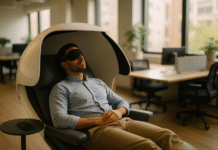
6. Nap Strategically—or Not at All (If You’re Insomniac)
Naps can steady energy while you’re stabilizing nights, but they’re a double-edged sword. For most adults, short naps (10–20 minutes) earlier in the day improve alertness without deep-sleep inertia. Napping late in the afternoon/evening or longer than 30 minutes can blunt sleep pressure and delay bedtime. If you have insomnia, avoid naps entirely during your CBT-I period—let nighttime sleep consolidate. Harvard Health
6.1 How to do it
- Keep naps before 3:00 p.m. and ~20 minutes; set an alarm.
- Dark, cool, quiet; recline but don’t bundle into full nighttime mode.
- If you feel groggy after, try a “caffeine nap” (small coffee immediately before a 15–20 minute nap). National Sleep Foundation
6.2 Mini-case
Rotating-shift week? A 90-minute pre-shift nap may make sense for alertness; otherwise, prefer short, early naps or skip them while you normalize nights.
Bottom line: Use naps surgically; if you’re retraining sleep, less is more.
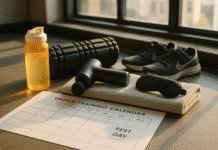
7. Move Daily—but Mind the Clock and Intensity
Exercise supports deeper, more consolidated sleep and helps reset circadian timing. Moderate-to-vigorous activity reduces sleep latency and nighttime awakenings for many people. Timing matters: finish high-intensity workouts ≥2–3 hours before bed, especially if you’re sensitive; emerging data show evening strain can delay sleep for some, while others tolerate it fine. Personalize it—prioritize consistency, daylight exposure, and a calm cooldown if you train late. Sleep Foundation
7.1 How to do it
- Aim for 150+ minutes/week of moderate activity, plus 2 strength sessions.
- Prefer morning or afternoon for circadian benefits; if evenings only, end ≥2–4 hours pre-bed, cool down, and dim lights afterward. Sleep Foundation
- On rough-sleep days, favor light movement (walks, mobility) over high-strain workouts.
7.2 Numbers & guardrails
- Some evidence shows evening exercise 2–4 hours pre-bed doesn’t impair sleep for most; still, if you notice delays, move sessions earlier during your reset.
Bottom line: Exercise is a sleep ally—time it so it works with, not against, your rhythm.
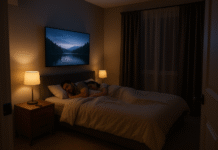
8. Make Your Bedroom Boring, Cool, Dark, and Quiet
A steady environment helps a steady schedule. Cooler rooms (about 60–67°F / 15.6–19.4°C) support the body’s core-temperature drop that initiates sleep; many sources cite ~65°F / 18.3°C as a sweet spot. Layer blackout curtains, reduce noise with white noise or earplugs, and keep screens out. In hot climates or during heatwaves, fans plus cross-ventilation or A/C make a measurable difference; breathable bedding and light sleepwear help too.
8.1 Mini-checklist
- Dark: blackout curtains, LED covers, eye mask.
- Quiet: white-noise machine/app, earplugs.
- Cool: aim near 18–19°C (64–66°F); adjust bedding before blasting A/C.
- Clean air: reduce dust; consider a basic HEPA purifier if allergies flare.
8.2 Region-specific note
- In warm, humid regions, pre-cool to ~26–27°C (78–81°F) an hour before bed, then lower to target as you begin your wind-down; this avoids over-drying the room while still hitting sleep-friendly temps overnight.
Bottom line: Make the room do half the work; your body will handle the rest.
9. Use Melatonin and Light Therapeutics Only When Indicated
Melatonin is not a universal sleep pill. Guidelines recommend CBT-I before supplements for chronic insomnia; melatonin’s best-supported role is circadian shifting (e.g., delayed sleep-wake phase, non-24 in blind adults) when timed correctly. If used, work with a clinician on low-dose, early-evening timing; incorrect timing can worsen delays. Also remember dietary supplements aren’t regulated like drugs; content can vary from the label. Bright-light therapy, conversely, has robust support for circadian adjustment when used with proper lux, angle, and timing (often morning).
9.1 How to do it (with a clinician)
- Confirm your pattern (e.g., delayed phase) with a sleep diary/actigraphy (Step 11).
- If appropriate, combine morning bright light with carefully timed low-dose melatonin in early evening for phase advance. Timing > dose. PMC
- Avoid routine melatonin for typical insomnia without circadian disorder.
9.2 Safety guardrails
- Avoid during pregnancy/breastfeeding without medical advice; older adults may have prolonged daytime sedation; product content varies.
Bottom line: Think “clock medicine,” not “sleeping pill”—and get the timing right.
10. Beat Social Jetlag: Tame Weekends and Time Changes
“Social jetlag” is the gap between your work-day and free-day sleep timing; it’s linked to worse sleep and metabolic outcomes. To fix irregular patterns, keep weekend rise times within ~1 hour of weekdays, plan earlier light exposure, and avoid late-night binges of light, food, and alcohol. Seasonal clock changes also nudge rhythms; expert groups advocate permanent standard time to reduce chronic misalignment. PubMedPMC
10.1 Mini-checklist
- One schedule: ±60 minutes max shift on days off.
- Morning outdoors on weekends to reinforce the anchor (Step 2).
- Evening brakes: earlier dimming, smaller meals, limit alcohol.
10.2 Example
If you normally wake at 7:00 a.m., aim for 7:30–8:00 a.m. on weekends. If you stay out late, don’t sleep until noon—wake within an hour, grab sunlight, and use a 20-minute early-afternoon nap.
Bottom line: Consistency beats catch-up; protect the rhythm you’re building.
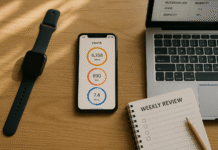
11. Track What Matters: 2-Week Sleep Diary, Simple Metrics, and Wearables
You can’t fix what you don’t measure. A two-week sleep diary is the standard first tool: record time to bed, sleep onset, awakenings, final wake, out-of-bed, naps, caffeine/alcohol timing, and medications. From this, calculate Total Sleep Time (TST) and Sleep Efficiency (SE) (TST ÷ Time in Bed). Actigraphy or validated wearables can add objective timing and light data over 3–14 days, especially useful for suspected circadian disorders.
11.1 How to do it
- Use the Consensus Sleep Diary template; fill it each morning. cbtiweb.org
- Compute weekly averages: bedtime, wake time, TST, SE.
- If SE <80%, tighten TIB via sleep restriction (Step 3).
- Consider a wearable with actigraphy-like metrics if your clinician suggests it. AASM
11.2 Mini-example
Week 1 averages: TIB 8.0 h, TST 6.0 h → SE 75% (fragmented). Week 2 after steps 1–4: TIB 6.5 h, TST 5.8 h → SE 89%; now expand TIB by 15 minutes.
Bottom line: A simple diary turns guesswork into a plan—and shows you what’s improving.
12. Know When to See a Sleep Professional
If your sleep stays irregular despite steps above, or you have red flags, it’s time to see a clinician or a board-certified sleep specialist. Warning signs include loud snoring, choking/gasping, witnessed apneas, severe daytime sleepiness, leg discomfort at rest, parasomnias, or insomnia lasting >3 months. For obstructive sleep apnea, the USPSTF finds insufficient evidence to screen everyone without symptoms; clinicians use judgment based on risk and symptoms. Don’t white-knuckle it—targeted evaluation (and treatment) can be life-changing.
12.1 What to bring
- Two weeks of your sleep diary (Step 11).
- A list of medications/supplements (timing and dose).
- Notes on caffeine, alcohol, nicotine, exercise timing, and light exposure.
- Your goals: earlier schedule? fewer awakenings? less daytime fatigue?
Bottom line: Persistent irregular sleep warrants expert help—especially with apnea concerns, shift work, or mood disorders.
FAQs
1) How long does it usually take to fix irregular sleep patterns?
Most people notice first improvements within 7–14 days once they lock a wake time, use morning light, and add a wind-down routine. Full stabilization can take 3–6 weeks, especially if you’re incorporating CBT-I methods; circadian-phase shifts often move by ~15–30 minutes per day with consistent light and behavior. Expect some rough mornings—hold your wake time steady to speed adaptation.
2) What’s the single most important change to make first?
Fix your wake time and get morning daylight. This anchors your internal clock so the rest (bedtime, melatonin rhythm, sleep pressure) lines up. It’s also the easiest to measure and sustain. Add a quiet wind-down next and you’ll often see your bedtime drift earlier naturally.
3) Do I really need to avoid screens at night?
If your sleep is irregular, reduce bright/blue light in the last 2 hours before bed and be picky about content. Studies show e-reader light suppresses melatonin and delays circadian timing, but evidence varies across devices and individuals. Practical approach: dim + distance + shorter sessions, or switch to paper reading under warm light. PMC
4) What temperature should my bedroom be?
Aim for ~65°F / 18.3°C, within a range of 60–67°F / 15.6–19.4°C, then personalize. Cooler rooms help the body’s core temperature drop at sleep onset; if you tend to feel cold, adjust bedding rather than overheating the room.
5) Is melatonin safe and does it fix irregular sleep?
Melatonin is best for circadian timing (e.g., delayed phase), not as a general insomnia cure. Use low doses at specific times under guidance; timing errors can worsen problems. Supplements can vary from the label, so choose reputable products and discuss with your clinician, especially if pregnant, breastfeeding, older, or on multiple meds.
6) How late is too late for caffeine?
Caffeine can still harm sleep 6 hours after a dose, and many do best with an 8-hour cut-off—earlier if you’re sensitive. Start conservative while you reset your schedule. Sleep Foundation
7) Should I nap while fixing my schedule?
If you have insomnia, skip naps during your reset so nighttime sleep consolidates. Otherwise, use short (10–20 minute) early-afternoon naps to protect alertness without harming bedtime. Avoid late or long naps that reduce sleep pressure at night.
8) Does exercise at night ruin sleep?
It depends. Many people tolerate evening workouts if they end 2–4 hours before bed and cool down well. If you notice later sleep or restless nights after hard evening sessions, move training earlier during your reset. NatureFrontiers
9) My schedule shifts for work—what’s the best approach?
Use light strategically: bright light early in your active period and dim light before your intended sleep, even if that “night” occurs during the day. Limit bright light toward the end of your shift, wear dark sunglasses on the commute home, and keep your sleep cave dark and cool. CDC
10) How do I know if I need a sleep study?
Consider an evaluation if you have loud snoring, gasping, witnessed apneas, severe daytime sleepiness, or if irregular sleep persists >3 months despite behavioral steps. Screening the general population for apnea isn’t universally recommended, so clinicians use judgment based on symptoms and risks.
Conclusion
Irregular sleep patterns aren’t a character flaw—they’re a physics and timing problem. Your body clock craves consistent cues: a fixed wake time, bright morning light, dim evenings, and behaviors timed so they add sleep pressure instead of fighting it. Start with the anchor habits (Steps 1–2), then layer in CBT-I fundamentals (Step 3), a reliable wind-down (Step 4), and smart timing of caffeine, alcohol, exercise, meals, and naps (Steps 5–7). Shape your environment to make the right choice the easy one (Step 8), and reserve specialized tools like melatonin and bright-light boxes for the situations they’re designed to solve (Step 9). Defend your weekends from social jetlag (Step 10), measure what’s changing (Step 11), and call in a pro if red flags appear (Step 12). Follow this plan for the next 3–6 weeks, and you’ll transform chaotic nights into a stable rhythm that supports your brain, mood, and long-term health.
Ready to start? Set tomorrow’s wake time, plan 10 minutes of morning light, and clear a 60-minute wind-down tonight.
References
- Behavioral and psychological treatments for chronic insomnia disorder in adults — Journal of Clinical Sleep Medicine (AASM), 2021. Journal of Clinical Sleep Medicine
- Management of Chronic Insomnia Disorder in Adults — American College of Physicians, Annals of Internal Medicine, 2016. PubMed
- Clinical practice guideline for treatment of intrinsic circadian rhythm sleep-wake disorders — American Academy of Sleep Medicine, 2015. AASM
- NIOSH Work Hours & Sleep — Light and Caffeine Modules — CDC, accessed 2025. ; https://www.cdc.gov/niosh/work-hour-training-for-nurses/longhours/mod6/04.html CDC
- Evening use of light-emitting eReaders negatively affects sleep, circadian timing, and next-morning alertness — PNAS, 2015. PNAS
- Blue light has a dark side — Harvard Health Publishing, updated July 24, 2024. Harvard Health
- Sleep Diary — Consensus Sleep Diary (CSD) — SLEEP (Carney et al.), 2012. PMC
- Use of Actigraphy for the Evaluation of Sleep Disorders and Circadian Rhythm Sleep-Wake Disorders — Journal of Clinical Sleep Medicine (AASM Guideline), 2018. Journal of Clinical Sleep Medicine
- Alcohol and Sleep — Sleep Foundation, updated July 16, 2025. Sleep Foundation
- Caffeine Effects on Sleep Taken 0, 3, or 6 Hours Before Bedtime — Journal of Clinical Sleep Medicine, 2013. PMC
- Bedroom Environment — Temperature & Sleep — Sleep Foundation, 2024–2025. ; https://www.sleepfoundation.org/bedroom-environment/how-to-design-the-ideal-bedroom-for-sleep Sleep Foundation
- Napping: Benefits and Tips — Sleep Foundation, updated March 11, 2024. Sleep Foundation
- Melatonin: What You Need to Know — NCCIH (NIH), accessed 2025. NCCIH
- Quantity of Melatonin and CBD in Melatonin Gummies Sold in the US — JAMA, 2023. JAMA Network
- ACG Clinical Guideline for GERD — American Journal of Gastroenterology, 2022. PMC
- Life’s Essential 8 — American Heart Association, 2022–2025. www.heart.org
- AASM position: Support permanent standard time — AASM, Oct 31, 2023. AASM
- USPSTF: Obstructive Sleep Apnea in Adults — Screening — 2022. USPSTF