


























If you’re choosing more plant-based foods, the package label is your cheat sheet. Below you’ll learn exactly how to read labels so you can quickly spot plant-based ingredients, steer around hidden animal-derived ones, and understand what the certifications and claims really mean. In short: scan the ingredient list first, confirm allergens, decode flavors and colors, then sanity-check nutrition. Quick answer: ingredients are listed by weight, allergens must be declared, and “natural flavors” can be plant or animal sourced—third-party vegan/plant-based logos help when in doubt.
Note: This guide is informational and not a substitute for personalized medical or allergy advice.
1. Start With the Ingredient List (It’s in Descending Weight Order)
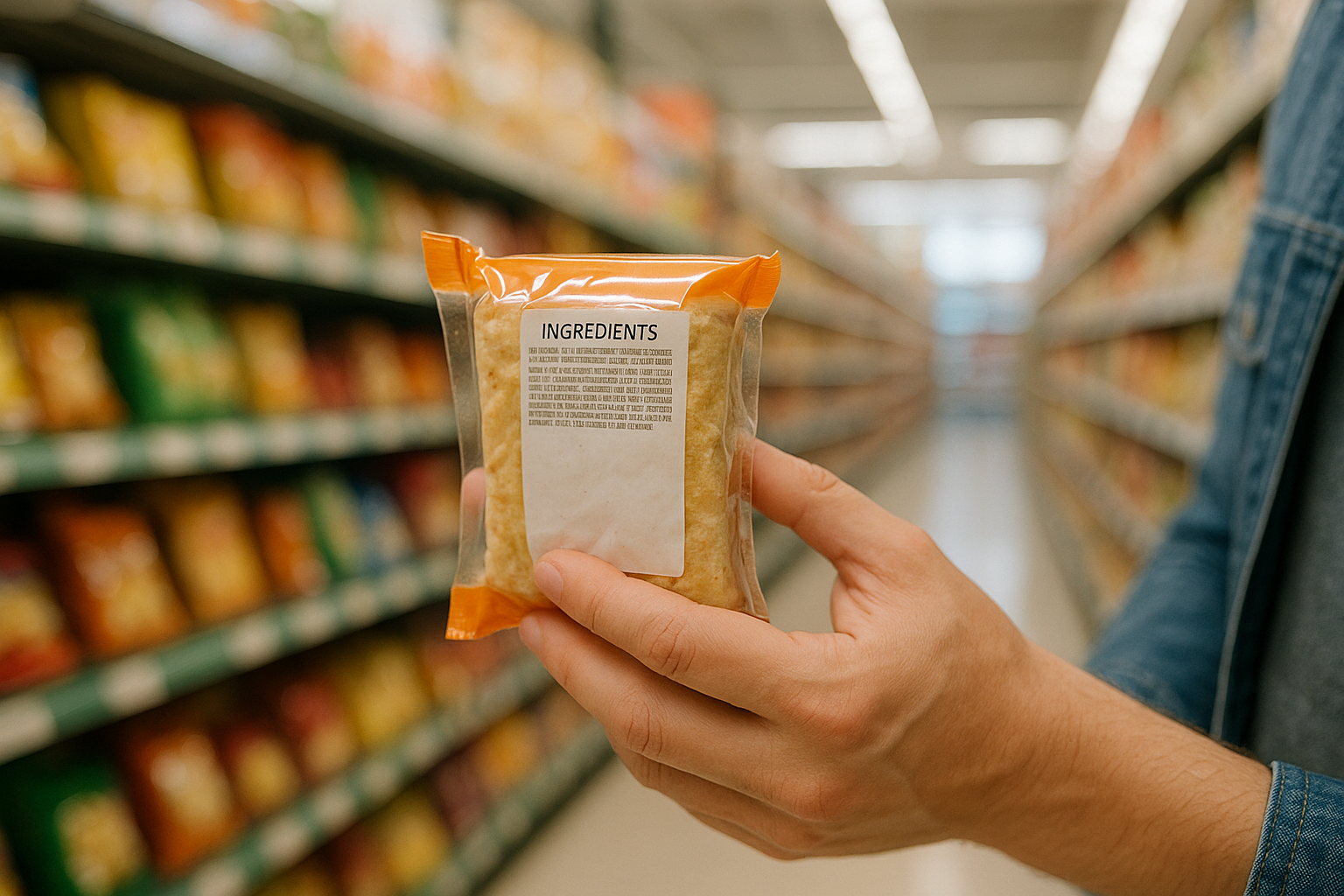
The fastest way to judge how plant-forward a product is: read the ingredient list top to bottom. By law in many regions (e.g., the U.S.), ingredients appear in descending order of predominance by weight. That means the first three ingredients dominate the product’s makeup. If those are whole plant foods (e.g., chickpeas, oats, tomatoes, canola or sunflower oil), you’re likely looking at a more plant-based choice than if the list leads with sugar, refined starches, or dairy/egg derivatives. This order also helps you weigh trade-offs: a cracker “made with olive oil” might still be mostly refined flour and salt if olive oil appears far down the list. When you see grouped statements like “spices” or “natural flavor,” remember they’re umbrella terms; focus on the major ingredients you can identify first.
1.1 Why it matters
Because order reflects proportion, you can quickly answer: “Is this mostly plants or mostly additives?” A veggie burger leading with “water, soy protein concentrate, canola oil” tells a different story from one starting “water, wheat gluten, coconut oil.”
1.2 How to do it (mini checklist)
- Read the first 3–5 ingredients—do they match what you expect?
- Prefer whole plant staples (beans, grains, nuts, seeds, vegetables) near the top.
- Treat sugar/syrups and refined starches high on the list as red flags if you want nutrient-dense options.
- Be wary of long lists with many minor additives—sometimes fine, but not a “whole food.”
- If an unfamiliar item repeats in several products, look it up (additive databases are your friend).
Bottom line: The top of the list tells you most of what you need to know about how plant-based a product really is.
2. Decode “Vegan,” “Plant-Based,” and Certification Seals
Marketing words can be fuzzy, but seals have standards. “Vegan” generally means no animal-derived ingredients; “plant-based” often signals the product is made from plants but may not be 100% vegan (e.g., honey or certain vitamin carriers could appear). Because these terms aren’t universally standardized across countries, third-party certification helps. The Vegan Society’s Vegan Trademark and Certified Vegan (Vegan Action) verify no animal-derived ingredients and set expectations around minimizing cross-contamination where feasible. The Certified Plant Based seal (Plant Based Foods Association) focuses on products designed as alternatives to animal-derived foods. These marks don’t evaluate overall nutrition, but they simplify the ingredient-source question fast.
2.1 Tools/Examples
- Vegan Trademark (sunflower logo): no animal ingredients/by-products; cross-contamination minimized where reasonably practicable.
- Certified Vegan (Vegan Action): excludes animal ingredients and processing aids like gelatin or carmine.
- Certified Plant Based (PBFA): verifies plant sourcing for animal-alternative products.
2.2 Mini-checklist
- Look for a recognized seal if ingredients include vague terms (e.g., “natural flavor,” “mono- and diglycerides”).
- If there’s no seal, confirm suspect ingredients by checking brand FAQs or customer service.
- Remember certifications verify source, not healthfulness.
Bottom line: A reputable seal is the quickest shortcut to ingredient origin confidence.
3. Learn the Common Animal-Derived “Aliases”
Many animal-derived ingredients don’t say “milk,” “egg,” or “fish” on the front. Knowing the usual suspects helps you spot them instantly. Dairy derivatives show up as casein, whey, lactose, ghee, and some vitamin D3 carriers (often lanolin-derived). Egg derivatives include albumin/albumen. Red coloring carmine/cochineal (E120) comes from insects. Gelatin (E441) is animal collagen; isinglass is fish-derived (more common in beverages). Shellac (E904) and beeswax (E901) are insect-derived glazing agents. Flavor enhancers and emulsifiers like mono- and diglycerides (E471) or lecithin (E322) may be plant- or animal-derived—context, certifications, or manufacturer confirmation matter.
3.1 Quick spotter list (not exhaustive)
- Dairy: casein, whey, lactose, butterfat, ghee.
- Egg: albumin/albumen, lysozyme (E1105).
- Insect-derived: carmine/cochineal (E120), shellac (E904), beeswax (E901).
- Fish/animal processing aids: isinglass (fining), gelatin (E441).
- Ambiguous source: mono- and diglycerides (E471), glycerin/glycerol (E422), lecithin (E322), stearates.
3.2 Mini case
A breakfast cereal lists “vitamin D.” Many mass-market cereals use vitamin D3 from lanolin; truly vegan options may use vitamin D2 or D3 from lichen/algae and often advertise it.
Bottom line: Memorize 10–12 aliases you see most—this one habit catches most non-plant surprises.
4. Understand “Natural Flavors,” Colors, and Spices
“Natural flavors” can come from plant or animal sources; companies can label the collective term without naming the specific source. The good news: if a major allergen (e.g., milk, egg, fish, crustacean shellfish, tree nuts, peanuts, wheat, soy, sesame in the U.S.) is present in flavors or colors, it must still be disclosed—either in the ingredient list (e.g., “natural flavor [milk]”) or in a Contains statement. Color additives are declared by class or specific name; carmine (cochineal) must be listed by name. Spices can be declared generically as “spices,” unless the product is a spice blend; then individual components appear.
4.1 How to handle ambiguities
- Sensitive or strict vegan? Prefer products with certifications or brands that specify “plant-derived natural flavors.”
- Allergy risk? Verify the Contains line and contact the manufacturer if needed.
- Colors: scan for named animal-derived colors (e.g., carmine).
4.2 Mini-checklist
- Scan for “natural flavor” → look for a nearby allergen disclosure.
- Check for named colors; avoid carmine/cochineal if you want fully plant-based.
- When unsure, reach out—many brands keep source statements on file.
Bottom line: “Natural” describes origin category, not whether it’s plant-only—use allergen lines and certifications to close the info gap.
5. Read the Allergen Line: “Contains” vs. “May Contain”
Allergens must be declared clearly. In the U.S., the Contains statement or parenthetical in the ingredient list must name the food source (e.g., “Contains: milk, soy, wheat,” or “albumin (egg)”). As of January 1, 2023, sesame is the ninth major allergen in the U.S., and it must be declared. “May contain” or “processed in a facility with…” are advisory cross-contact statements; they’re not mandatory or standardized, but they flag potential traces. In the UK/EU, 14 allergens are emphasized (often bolded) within the ingredient list itself.
5.1 Practical guardrails
- Treat Contains as definitive: avoid if the listed allergen conflicts with your needs.
- Treat May contain as a risk tolerance call; highly sensitive individuals may avoid.
- For strict vegan choices, advisory statements don’t necessarily mean animal-derived ingredients, but they may signal shared equipment.
5.2 Mini case
A dark chocolate bar says Contains: milk even though milk isn’t in the main list. That often indicates shared lines where milk is intentionally added to related products—the brand opted to declare for clarity.
Bottom line: The Contains line is your “stoplight.” The May contain line is your “proceed with caution.”
6. Sanity-Check the Nutrition Facts: Sodium, Sat Fat, Added Sugars
Plant-based doesn’t automatically mean “nutritionally ideal.” Use the % Daily Value (%DV) as a quick gauge: 5% DV or less is low; 20% DV or more is high. For sodium, “Low sodium” historically meant ≤140 mg per serving (about 6% DV using a 2,300 mg DV), and front-of-pack proposals increasingly use ≤5% DV as a “low” boundary. Watch saturated fat in plant alternatives that use coconut oil, and check added sugars in sauces, yogurts, and cereals.
6.1 Mini checklist
- Sodium: aim for ≤5% DV (about ≤115–140 mg/serving) when possible.
- Sat fat: prefer ≤5% DV per serving in everyday items; allow higher only for occasional treats.
- Added sugars: keep most items under 10% DV (≤10–13 g) per serving; compare brands.
- Fiber/protein: look for ≥10% DV fiber and ≥8–15 g protein in plant-based mains.
6.2 Numeric example
Two plant-based soups (per 1 cup):
- A: 560 mg sodium (24% DV) → high.
- B: 150 mg sodium (7% DV) → moderate; likely the better routine choice.
Bottom line: Use %DV to balance “plant-based” with “better-for-you.”
7. E-Numbers & Additives (UK/EU Focus): What’s Often Plant-Based—and What’s Not
In the UK/EU, additives appear as names or E-numbers. Most are synthetic or plant-derived and vegetarian/vegan-friendly, but a handful are animal-derived or sometimes animal-sourced. Examples to know: E120 (carmine/cochineal)—insect; E441 (gelatin)—animal collagen; E901 (beeswax) and E904 (shellac)—insect; E1105 (lysozyme)—egg. Others can be source-ambiguous (plant or animal), like E471 (mono- and diglycerides) or E422 (glycerol/glycerin). National food safety agencies publish additive databases you can search by number.
7.1 How to do it
- Learn the short “avoid/verify” list above.
- Use the EU additives database (or your country’s food authority site) to check functions and status.
- Prefer products with a vegan certification when ambiguous additives appear.
7.2 Mini checklist
- Flag E120, E441, E901, E904, E1105.
- Verify E471, E422, E322 (lecithin—often soy/sunflower, but egg exists).
- When in doubt: certification or brand confirmation.
Bottom line: Most E-numbers are fine on a plant-based diet—but a small list deserves extra attention.
8. Fortification Sources: Vitamin D, B12, Omega-3s, and More
Fortification is common—and sources matter. Vitamin D2 is always plant-based; Vitamin D3 is traditionally from lanolin (sheep’s wool), though algae/lichen-derived D3 exists and is sometimes labeled accordingly. B12 in foods is produced by microbial fermentation and is vegan; carriers or coatings can vary by brand. Omega-3 fortification may use fish oil or algal oil; labels typically specify “algal.” For calcium, tricalcium phosphate or calcium carbonate are mineral; calcium lactate can be produced synthetically or via fermentation—brands may clarify source.
8.1 Mini checklist
- Vitamin D: prefer D2 or labeled vegan D3 (lichen/algae).
- Omega-3: look for algal oil in plant-based products.
- Check brand FAQs for carrier/processing aids in vitamins.
8.2 Region notes
- In the U.S., fortification carriers don’t always require detailed source disclosure unless they trigger allergen labeling.
- Certifications can shortcut source ambiguity.
Bottom line: Fortified nutrients can be plant-compatible—the source and carriers make the difference.
9. Processing Aids & Incidental Additives: The Hidden Gray Area
Sometimes ingredients used during manufacturing don’t appear on the label if they’re present at insignificant levels and have no functional effect in the final food (often called processing aids or incidental additives). Allergen rules are stricter: if a major allergen is used as a processing aid, the allergen still has to be declared. For strict vegan choices, this creates rare gray areas (e.g., fining agents, release agents) that aren’t always visible on labels.
9.1 How to mitigate
- Choose certified vegan/plant-based products for categories with frequent processing aids (e.g., beverages historically fined with isinglass).
- Check brand technical FAQs—many publish statements about processing aids.
- If you’re highly vigilant, contact customer service with a specific question (“Are mono- and diglycerides plant-derived?”).
9.2 Mini checklist
- Remember: allergens must be declared even if used as processing aids.
- For non-allergen animal-derived aids, certification is your best assurance.
- Keep reasonable expectations—perfect certainty sometimes requires brand confirmation.
Bottom line: You can’t always see processing aids on labels; use certifications and brand policies to fill the gap.
10. EU/UK QUID: Use Percentages to Gauge Key Plant Ingredients
In the EU/UK, QUID (Quantitative Ingredient Declaration) requires a percentage next to highlighted or characterizing ingredients—like “hummus (60% chickpeas)” or “strawberry yogurt (8% strawberries).” This helps you compare how much of the named plant ingredient you’re actually getting. No QUID? It may simply mean the ingredient isn’t emphasized by name or image, or it isn’t considered characterizing.
10.1 How to use QUID
- Compare products by the % of characterizing plant ingredients (e.g., % chickpeas in hummus, % cocoa in chocolate).
- Higher % can mean stronger flavor or better value—but still check sugar/sodium.
- Watch for compound ingredients (e.g., “veggie filling (30%): beans 60%, corn 20%…”).
10.2 Mini checklist
- Look for (%) near the ingredient name or in the ingredient list.
- Confirm that the % refers to the ingredient you care about, not the overall plant content.
- Pair QUID with order by weight to get the full picture.
Bottom line: QUID percentages make “how much plant?” comparisons far clearer across brands.
11. Use Smart Tools (and When to Contact Brands)
Digital tools can accelerate label reading. Open, nonprofit databases let you scan barcodes to surface ingredients, additives, allergens, and sometimes user-submitted notes. Government databases can help you check nutrient profiles independent of marketing claims. When a product still leaves questions—especially about ambiguous emulsifiers or flavor sources—contact the manufacturer; customer care teams often have ingredient source sheets.
11.1 Helpful tools
- Open Food Facts (app/web): crowdsourced product ingredients, additives, and allergens; barcode scanning.
- USDA FoodData Central: official nutrient profiles for many foods (best for nutrition, not vegan status).
- EU/UK additive databases: searchable by E-number for functions and approvals.
11.2 Mini checklist
- Scan first; verify sources for critical decisions.
- Keep a short personal “avoid” list (e.g., E120, E441) in your phone.
- Save brand replies in a notes app for future shopping.
Bottom line: Combine quick scans with targeted brand questions for the clearest answers.
FAQs
1) Is “plant-based” the same as “vegan”?
Not always. “Plant-based” often means the food is made mostly or entirely from plants but doesn’t guarantee the absence of animal-derived ingredients like honey or lanolin-based vitamin D3. “Vegan” excludes animal-derived ingredients. Third-party seals help clarify.
2) Are “natural flavors” vegetarian/vegan?
They can be either plant- or animal-derived. Allergen rules still apply, but source isn’t always disclosed. If strict vegan status matters, look for certifications or contact the brand for confirmation about the flavor’s origin.
3) How can I tell if vitamin D is vegan?
Vitamin D2 is vegan; D3 is often from lanolin (sheep’s wool), though some brands use lichen/algae-derived D3 and advertise it. Check labels, certifications, or brand FAQs.
4) Do E-numbers mean a product is “chemical” or non-vegan?
No. E-numbers are just codes for approved additives. Most are vegan-friendly. A few (e.g., E120, E441, E901/904, E1105) are animal-derived or sometimes animal-sourced—learn these and verify ambiguous ones.
5) What’s the difference between “Contains” and “May contain”?
Contains identifies allergens present by recipe (or via processing aids) and must be accurate. May contain is an advisory about possible cross-contact. If you’re highly sensitive, treat “may contain” as a caution.
6) Are mono- and diglycerides (E471) vegan?
They can be plant- or animal-derived. Many manufacturers use plant oils, but labeling doesn’t always specify. Certifications or manufacturer confirmation provide the clearest answer.
7) If sugar is the first ingredient, is the food not plant-based?
Sugar is plant-derived, but a sugar-led product isn’t nutritionally balanced. Being plant-based doesn’t equal “healthy.” Combine ingredient order with the Nutrition Facts (added sugars, fiber) to decide.
8) How do I compare similar products quickly in the aisle?
Check the first 3–5 ingredients, the Contains line, then %DV for sodium/sat fat/added sugars. If in the EU/UK, compare QUID percentages for the characterizing plant ingredient.
9) Are organic or non-GMO labels relevant to vegan status?
They address production methods and genetic engineering, not whether animal-derived ingredients are present. A product can be organic and still include animal-derived ingredients (e.g., organic milk powder).
10) What about palm oil—is it plant-based?
Yes—palm oil is plant-derived and technically vegan. Some shoppers avoid it for sustainability reasons. Look for brands citing certified sustainable sourcing if that matters to you.
11) Do I need to avoid “may contain milk/egg/fish” for vegan reasons?
Those statements refer to potential cross-contact, not deliberate ingredients. Many vegans accept products with such advisories; others choose to avoid them. It’s personal preference unless you have allergies.
12) Where should I go when I’m still unsure?
Check for a recognized vegan/plant-based seal, consult the brand’s FAQ or customer service about the specific ingredient, or pick a simpler product with fully transparent labeling.
Conclusion
Reading labels for plant-based eating is a learnable skill. Start with the ingredient list order to gauge how plant-forward a food really is. Use the Contains line to navigate allergens; treat May contain as a risk signal rather than a definitive ingredient. Decode flavors and colors, watching for animal-derived items like carmine and gelatin, and lean on trusted certification seals when you need certainty about ingredient sourcing or processing aids. Sanity-check nutrition with %DV (5% low, 20% high) to keep sodium, saturated fat, and added sugars in a sensible range, and use QUID in the EU/UK to compare how much of a named plant ingredient you’re actually getting. Finally, pair open databases and brand confirmations with your personal “avoid” list to make faster, more confident choices.
CTA: Save this guide and the short “avoid/verify” list to your phone before your next shop.
References
- A Food Labeling Guide (Guidance for Industry), U.S. Food & Drug Administration (current compendium; section 6 covers ingredient lists and flavors/colors). https://www.fda.gov/files/food/published/Food-Labeling-Guide-%28PDF%29.pdf
- Food Allergies (includes sesame as 9th major allergen; U.S.), U.S. FDA, March 26, 2025. https://www.fda.gov/food/nutrition-food-labeling-and-critical-foods/food-allergies
- Allergic to Sesame? Food Labels Now Must List Sesame as an Allergen, U.S. FDA Consumer Update, Jan 10, 2023. https://www.fda.gov/consumers/consumer-updates/allergic-sesame-food-labels-now-must-list-sesame-allergen
- 21 CFR Part 101 – Food Labeling (eCFR; ingredient listing, nutrient content claims, exemptions), U.S. Government Publishing Office / eCFR (current as of Aug 2025). https://www.ecfr.gov/current/title-21/part-101
- Food; exemptions from labeling (processing aids/incidental additives), 21 CFR §101.100 (current as of Aug 2025). https://www.ecfr.gov/current/title-21/chapter-I/subchapter-B/part-101/subpart-G/section-101.100
- Questions and Answers Regarding Food Allergens, Including the Food Allergen Labeling Requirements of the FD&C Act, U.S. FDA (PDF), July 2025. https://www.fda.gov/media/117410/download
- Use of the Term “Natural” on Food Labeling, U.S. FDA, Oct 22, 2018 (policy statement). https://www.fda.gov/food/nutrition-food-labeling-and-critical-foods/use-term-natural-food-labeling
- Sodium in Your Diet (claims thresholds and %DV guidance), U.S. FDA, Mar 5, 2024. https://www.fda.gov/food/nutrition-education-resources-materials/sodium-your-diet
- Food Labeling: Front-of-Package Nutrition Information (Proposed Rule), Federal Register, Jan 16, 2025. https://www.federalregister.gov/documents/2025/01/16/2025-00778/food-labeling-front-of-package-nutrition-information
- Allergen guidance for food businesses (14 allergens; UK), Food Standards Agency, Apr 2, 2020. https://www.food.gov.uk/business-guidance/allergen-guidance-for-food-businesses
- Regulation (EU) No 1169/2011 on the provision of food information to consumers (QUID rules), Official Journal of the European Union, Oct 25, 2011; and Commission Notice on QUID, Nov 21, 2017. https://eur-lex.europa.eu/legal-content/EN/TXT/PDF/
- Food Additives Database (EU approved additives; searchable by E-number), European Commission – DG SANTE (ongoing). https://food.ec.europa.eu/food-safety/food-improvement-agents/additives/database_en
- The Vegan Trademark Standards, The Vegan Society (accessed Aug 2025). https://www.vegansociety.com/vegan-trademark/vegan-trademark-standards
- Certified Vegan – Certification, Vegan Action (accessed Aug 2025). https://vegan.org/certification/
- Certified Plant Based (program overview), Plant Based Foods Association (accessed Aug 2025). https://plantbasedfoods.org/certified
- Open Food Facts – World Database, Open Food Facts (accessed Aug 2025). https://world.openfoodfacts.org/
- USDA FoodData Central, U.S. Department of Agriculture (accessed Aug 2025). https://fdc.nal.usda.gov/