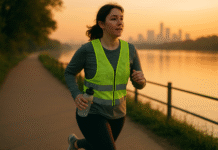
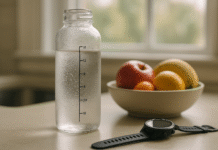







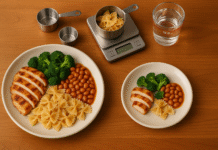












Staying well hydrated isn’t a magic fat burner—but it is one of the simplest, highest-leverage habits for steady, sustainable weight control. Hydration supports weight management by helping you eat fewer calories (especially when water replaces sugary drinks), improving fullness before meals, protecting exercise performance (so you burn more and stick with training), and even providing a small, time-limited bump in energy expenditure. Within a comprehensive plan—balanced diet, movement, sleep, and stress management—smart fluid choices amplify your results.
Medical disclaimer: This article is information only and not medical advice. If you have kidney, heart, or endocrine conditions—or take medications that affect fluid balance—ask your clinician for personalized guidance.
Quick answer (for skimmers): Proper hydration aids weight control by reducing energy intake (pre-meal water and water-rich foods), replacing high-calorie beverages, sustaining workouts by avoiding >2% body-weight dehydration, and offering a minor thermogenic effect after drinking cool water. Authoritative guidelines suggest typical daily fluid needs around 3.7 L for men and 2.7 L for women from all beverages and foods, adjusted for climate, body size, and activity.
1. Pre-meal water helps you eat less and lose more—especially during intentional weight loss
Drinking water before meals directly supports calorie control. Trials in adults—particularly middle-aged and older—show that consuming ~500 mL (about 2 cups) of water 30 minutes before each main meal reduces meal energy intake and improves 12-week weight loss when paired with a calorie-reduced diet. This isn’t “water melting fat”; it’s simple physiology: pre-meal water increases gastric volume and short-term fullness so you begin eating with a mild “head start” on satiety. It’s also a low-effort behavioral cue: by ritualizing “water then eat,” you slow down, portion more accurately, and are less swayed by momentary cravings. The effect size is modest but meaningful—exactly the kind that compounds over months.
1.1 Why it matters
Randomized work from Davy and colleagues found that adults assigned to drink 500 mL of water before each meal lost significantly more weight over 12 weeks than those dieting without the water preload; acute laboratory meals also showed lower energy intake with pre-meal water. A subsequent RCT in adults with obesity supported water pre-loading as a practical adjunct to behavioral weight loss. PubMed
1.2 How to do it
- Dose & timing: 500 mL (≈2 cups) of plain water, 30 minutes before breakfast, lunch, and dinner.
- If that’s too much: start with 300 mL and build up; the direction matters more than perfection.
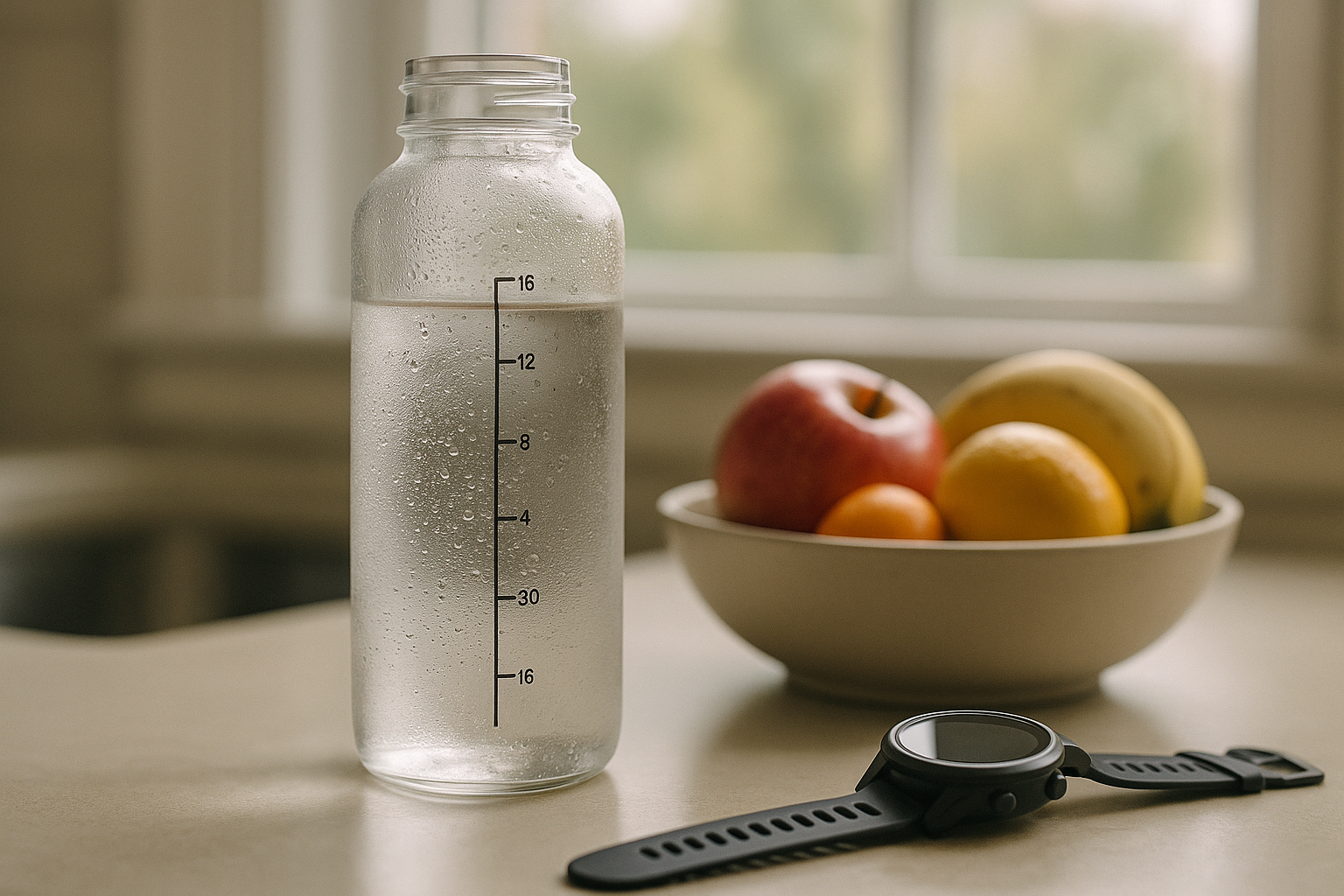
- Consistency cue: keep a marked bottle at your desk; set repeating reminders for 30 minutes before usual mealtimes.
- Diuretic concerns? Normal caffeine intake doesn’t negate hydration in habitual consumers; coffee and tea contribute fluid. PMC
1.3 Numbers & guardrails
In trials, the pre-meal water group commonly lost ~2 kg more over 12 weeks than controls (context: simultaneous calorie reduction and behavior coaching). If you experience reflux, bloating, or have fluid restrictions, personalize the volume and timing with your clinician. JAN Online
Bottom line: A pre-meal water habit is a low-cost, evidence-based nudge that reliably trims calories without willpower theatrics.
2. Swapping sugary drinks for water lowers daily calories and long-term weight gain risk
Replacing sugar-sweetened beverages (SSBs)—soda, sweet tea, energy drinks, many juices—with water is among the cleanest calorie cuts you can make. SSBs deliver rapidly absorbed sugars with minimal satiety; most people don’t compensate by eating less later, so total daily energy intake climbs. Over months to years, this pattern is linked with weight gain and higher risk of metabolic disease. Switching to water (or other non-caloric options) removes those extra calories and reduces weight gain risk—no macros to count.
2.1 What the evidence shows
- Prospective studies and RCTs: Reducing SSB intake is associated with decreases in BMI and body weight in children and adults.
- Meta-analysis (2024): Across six trials (n=1,729), replacing SSBs with non-caloric drinks produced a long-term BMI reduction versus continuing SSBs.
- Public-health guidance: WHO explicitly advises reducing SSB consumption to help prevent unhealthy weight gain.
2.2 Practical swap list
- Everyday: water (still or sparkling), unsweetened tea, black coffee, or water with citrus/cucumber.
- Workout window (>60–90 min sweaty sessions): consider a light electrolyte beverage rather than sugar-heavy sports drinks unless duration/intensity demands carbohydrate.
- Restaurant default: order water first; add a zero-calorie beverage only if you still want one after the entrée arrives.
2.3 Mini case
If you currently drink one 355 mL soda daily (~140 kcal), swapping it for water saves ~980 kcal/week—roughly the energy in 125 g of body fat—before considering any knock-on appetite effects.
Bottom line: “Water instead” is a small daily decision that compounds into measurable changes in weight trajectory. CDC
3. Hydration protects workout performance—so you burn more and stick with your plan
Even ~2% body-mass water loss (e.g., 1.4 L for a 70 kg person) can impair endurance performance, raise perceived effort, and sap motivation—especially in heat. When your sessions feel harder, you do less work, recover poorly, and adherence drops. Adequate fluid intake preserves cardiac output, thermoregulation, and mental sharpness, enabling higher training volume and better calorie burn over time.
3.1 What the literature says
- Consensus: Dehydration of ≥2% body mass commonly impairs endurance performance; preventing it preserves output.
- Guidance: The American College of Sports Medicine recommends customized fluid plans to avoid >2% loss, using pre/post-exercise body-mass checks to estimate sweat rate.
- Mechanism: Rehydration after modest dehydration improves continuous exercise performance under heat stress. PMC
3.2 How to do it (field-tested)
- Weigh-in method: Weigh before and after a typical session. Each 1 kg lost ≈ 1 L fluid deficit; aim to limit losses to <2% next time. Replace 125–150% of the deficit over the next few hours with fluids and sodium from meals.
- Hot climates (e.g., South Asia summers): for moderate outdoor work, drink ~1 cup (240 mL) every 15–20 min; if sweating lasts several hours, include electrolytes. Do not exceed ~48 oz (1.4 L) per hour.
- Signals that matter: rising heart rate at a given pace, “cotton mouth,” and dark urine suggest you’re behind on fluids.
3.3 Mini checklist
- Pre-hydrate: clear urine or pale straw color.
- Carry fluid: bottle or vest for any session >45–60 minutes, earlier in heat.
- Log sweat rate: seasonally; adjust plan as weather changes.
Bottom line: Hydration doesn’t directly burn fat—but it unlocks the training that does by keeping you performing and recovering well. Gatorade Sports Science Institute
4. Water-rich, low-energy-density foods make you full on fewer calories
“Energy density” (kcal per gram) is a quiet force in appetite control. Because water is 0 kcal/g, adding water-rich ingredients (vegetables, fruit, broth) lowers a meal’s energy density so you feel satisfied on fewer calories. Classic preload studies show that a simple vegetable soup before a meal reduces subsequent intake more than drinking water with the same meal—because incorporating water into food slows gastric emptying and boosts satiety signals.
4.1 Evidence highlights
- Soup preload effect: Eating a low-energy-density soup before a meal reduced lunch calories versus water served alongside the same foods. Penn State
- Volumetrics principle: Reviews from Rolls and others show that lowering energy density via water-rich foods consistently reduces ad libitum intake while maintaining fullness.
4.2 How to build low-ED meals
- Start with broth-based soup or a vegetable salad with light dressing.
- Bulk out entrées with watery vegetables (tomato, zucchini, cucumber, leafy greens).
- Use fruit (berries, melon, citrus) for snacks or dessert instead of pastries.
4.3 Numbers & guardrails
Swapping a 350 kcal creamy starter for a 120 kcal broth-veggie soup can save ~230 kcal while increasing volume and fullness. If you struggle with reflux, choose non-acidic vegetables and avoid overfilling late at night.
Bottom line: You don’t have to drink all your water—eat it. Water-rich foods quietly bend appetite physics in your favor.
5. Drinking water can slightly raise energy expenditure—useful, but don’t oversell it
A small body of research suggests that drinking ~500 mL of water can cause a transient rise in resting energy expenditure over the next 30–60 minutes, partly from warming cool water and possibly from sympathetic activation. However, later studies report smaller and variable effects, influenced by water temperature and osmolality. Translation: the thermogenic bump exists but is modest; it shouldn’t be the centerpiece of your strategy.
5.1 What studies find
- Early study: 500 mL of water increased metabolic rate by ≈30% for ~60 minutes (estimate ~70–100 kJ).
- Nuance: Follow-ups indicate smaller increases (e.g., ~15 kJ over 90 min with very cold water) and significant inter-individual variability; some analyses question the magnitude in real-world conditions. PMC
5.2 Practical takeaway
- Enjoy cool water if you like it; any extra burn is a bonus, not a plan.
- Prioritize the bigger wins: pre-meal water, SSB swaps, water-rich foods, and hydrated training.
5.3 Numeric example
Even a generous estimate of 24 kcal extra burned after 500 mL water, three times per day, would total ~72 kcal/day—useful over months, but easily overshadowed by one sugary drink.
Bottom line: Water’s thermogenic effect is real but small—treat it as icing on the cake, not the cake itself. PubMed
6. Daily targets that work in real life: personalize, then track by urine color and context
There’s no single “8 cups for everyone.” Authoritative values suggest ~3.7 L/day for men and ~2.7 L/day for women from all beverages and foods, but your needs vary by size, climate, activity, pregnancy/lactation, and diet composition. Instead of chasing a rigid number, combine a personal baseline with simple monitoring—urine color, body-mass changes across long hot days or hard sessions, and thirst.
6.1 What to aim for
- Baseline (temperate climate, sedentary-moderate activity): roughly 3.7 L (men), 2.7 L (women) from beverages + food moisture.
- Hot/humid days or long workouts: increase intake and check urine color (pale straw) or monitor body-mass drift. Validated urine-color charts and urine specific gravity track hydration trends.
6.2 Guardrails & safety
- Hourly ceiling: Generally keep intake ≤ 48 oz (~1.4 L) per hour to avoid water intoxication; prolonged heavy sweating may warrant electrolytes.
- Thirst vs. plan: Day-to-day, thirst is a decent guide, but in sustained heat/work, planned drinking helps you stay ahead.
6.3 Mini-checklist
- Morning check: pale yellow urine = on track.
- Carry a marked 1 L bottle; aim to refill X times to meet your day’s context.
- Log pre/post-exercise body mass in heat waves.
Bottom line: Personalize your target, then use simple, validated signals to keep it honest. Frontiers
7. Electrolytes and sodium: when plain water is enough—and when it isn’t
For everyday living and most workouts under ~90 minutes, plain water is typically sufficient. During hours of heavy sweating—especially in heat—adding electrolytes (sodium foremost) helps maintain plasma volume, reduces cramping risk for salty sweaters, and makes it easier to rehydrate. Beyond performance, remember that dietary sodium itself drives water retention; consistently high sodium can obscure weight trends and contribute to bloating.
7.1 Evidence-based guidance
- Work/heat exposure: Health agencies recommend 1 cup (240 mL) every 15–20 minutes in the heat and electrolytes if sweating lasts several hours. Don’t exceed ~48 oz/hour.
- Sodium targets: WHO recommends <2,000 mg sodium/day for adults (≈5 g salt). Many people exceed this, which can influence blood pressure and water retention.
7.2 Practical playbook
- Everyday: water first.
- Long/hot training or outdoor labor: include electrolyte solutions or salty foods in recovery.
- Label literacy: prefer drinks with balanced electrolytes over sugar-heavy formulas unless you need carbohydrates for endurance.
7.3 Caution
Over-drinking plain water without sodium during prolonged exertion can cause exercise-associated hyponatremia (rare but serious). Learn early symptoms (headache, nausea, confusion) and back off intake; seek medical care if severe. CDCPMC
Bottom line: Match your fluid’s composition to your sweat story and keep daily sodium reasonable to avoid “mystery” scale jumps.
8. Hydration makes fiber work—boosting satiety and regularity that support weight control
Dietary fiber is a proven ally for appetite control and long-term weight management. But fiber’s best tricks—viscosity, gastric distension, and gel formation—depend on adequate water. Without it, fiber can stall in the gut and cause discomfort. With it, meals feel more substantial for fewer calories, and regularity improves—both helpful when you’re aiming for consistency.
8.1 The physiology in brief
Soluble fibers bind water, thicken stomach contents, and slow gastric emptying, enhancing fullness. Across systematic reviews and trials, higher fiber intake is linked to lower energy intake and better weight outcomes. Public-health guidance for constipation explicitly advises plenty of water to help fiber do its job. PMCPubMed
8.2 How to operationalize it
- Pair the two: when you increase fiber, also increase water; aim for at least one full glass with each high-fiber meal/snack.
- Targets: many adults benefit from 22–34 g/day (context: calorie intake), scaling fluid to match. NCBI
- Food first: beans, oats, chia, berries, veggies; use supplements (psyllium, glucomannan) sparingly and with ample water.
8.3 Mini-checklist
- Add one fiber-rich food per meal.
- Drink 300–500 mL water alongside high-fiber dishes.
- Track comfort: adjust fiber/water balance if bloating or constipation appears.
Bottom line: Hydration turns fiber from “good idea” into “felt satiety”—a quiet win for your calorie budget. PMC
9. Habits, tools, and timing that make hydration automatic (and sustainable)
Weight management is about systems, not spurts. The simplest system: make the right fluid the easy fluid. Align your environment, timing, and tracking so hydration supports appetite, training, and day-to-day energy—without constant decision-making.
9.1 A simple daily rhythm
- Wake: 300–500 mL water to shake off overnight deficit.
- Pre-meal: 500 mL, 30 minutes before main meals (Section 1).
- Training: plan to keep losses <2% body mass; replace 125–150% of the deficit over several hours. Weigh in/out to dial this in. ACSM
- Evening: sip to pale straw urine; avoid massive boluses right before bed if nocturia disrupts sleep.
9.2 Tools that help (no app required)
- Marked bottle (1 L) = instant scoreboard.
- Urine color chart posted in the bathroom (Armstrong’s validated scale) to keep you honest.
- Context cards: Heat wave? Outdoor day? Increase carry volume; pack electrolytes for multi-hour sweat.
9.3 Region-specific notes (hot climates)
In hot/humid environments, you may need far more than a temperate-day baseline. Workers and athletes in heat should plan intake (~240 mL every 15–20 minutes) and include electrolytes when sweating for hours—while staying below the ~1.4 L/hour safety ceiling.
Bottom line: Systematize hydration so it happens by default—and frees your willpower for bigger lifestyle changes.
FAQs
1) How much water should I drink per day to manage my weight?
There’s no single magic number. Authoritative values suggest ~3.7 L/day for men and ~2.7 L/day for women from all beverages and foods, but your needs vary with size, climate, and activity. Use urine color (pale straw), thirst, and body-mass drift across hot days/workouts as practical guides. If you’re on fluid-restricting meds or have kidney/heart disease, ask your clinician for a personalized target.
2) Does coffee “dehydrate” me?
Not in moderation for habitual drinkers. Controlled trials show no meaningful difference in hydration markers between moderate coffee intake and water in regular coffee users, so coffee can count toward fluids. That said, water should remain your primary beverage—especially around workouts and in heat.
3) Is sparkling water as hydrating as still water?
Yes. Carbonation doesn’t meaningfully change hydration. Choose unsweetened versions to avoid extra calories. If carbonation triggers reflux or bloating, favor still water around meals and training.
4) Does “cold water burns more calories”?
Only a little. Drinking ~500 mL of cool water can cause a small, short-lived rise in energy expenditure—helpful but modest compared with swapping out a sugary drink or nailing pre-meal water. Treat any thermogenic bump as a bonus, not a strategy.
5) Should I drink water only when I’m thirsty?
For routine, temperate days, thirst is fine. But during sustained heat or long exercise, planned drinking helps avoid >2% dehydration that can impair performance. Use sweat-rate checks and context (heat, workload) rather than thirst alone in those scenarios.
6) How do electrolytes fit into weight loss?
Electrolytes don’t burn fat, but they keep you hydrated during heavy sweating so you can train effectively. For multi-hour hot sessions, add sodium (via food or electrolyte drinks). Day to day, keep dietary sodium <2,000 mg to reduce bloating and support blood pressure.
7) Can I drink “diet” soda instead of water?
Non-caloric beverages can reduce calorie intake relative to SSBs, but water is still the safest default. Some guidelines (e.g., WHO) caution that long-term benefits of non-sugar sweeteners on body fat are uncertain. Use them sparingly as you transition away from sugary drinks, and prioritize plain water and unsweetened tea.
8) What color should my urine be if I’m hydrated?
Aim for pale straw. Validated urine-color charts and urine specific gravity are simple, inexpensive ways to self-monitor hydration status across the day. Very dark, apple-juice urine suggests you’re behind; crystal-clear all day may mean overdoing it.
9) Is there such a thing as drinking too much water?
Yes—rare but dangerous. Over-consuming plain water (especially during prolonged sweating) can dilute blood sodium (hyponatremia). General workplace/heat guidance limits intake to about 48 oz (1.4 L) per hour and recommends electrolytes when sweating for hours. Symptoms like headache, confusion, nausea, or vomiting warrant medical attention.
10) Will drinking water before meals ruin my digestion?
No. Pre-meal water has been shown to reduce meal energy intake and improve weight loss in trials, especially in middle-aged and older adults. If you experience reflux or fullness, start with a smaller volume (e.g., 250–300 mL) and experiment with timing (20–40 minutes prior).
11) What’s better: drinking water with meals or “eating” water (soups, fruit, veg)?
Both help. Water inside food often enhances satiety more than water alongside the same meal, because the matrix slows gastric emptying. Use both: a pre-meal glass plus water-rich starters (broth soup, salad) for a one-two punch.
12) How does hydration affect the scale day to day?
Sodium intake, carbohydrate repletion, menstrual cycle, and heat can shift water balance by 1–3 kg short-term. Focus on weekly averages and trendlines, not single-day fluctuations; keep sodium moderate and stay hydrated to reduce noise. (See WHO sodium guidance.)
Conclusion
Hydration is not a headline-grabbing hack—it’s a quiet force multiplier for everything else that moves the needle. Pre-meal water trims meal calories without fuss. Swapping sugary drinks for water removes a daily source of stealth calories that drive weight gain. Water-rich foods let you eat satisfying portions with fewer calories. Consistent hydration protects training quality so you can accumulate the work that drives fat loss. And while the thermogenic bump from cold water is modest, it’s a free bonus. The key is systems over sips: set a pre-meal water ritual, carry a marked bottle, check urine color, and match fluids and electrolytes to heat and effort. Do that, and hydration becomes an automatic ally—not another habit to track.
Your next steps, starting today:
- Fill a 1 L bottle and finish it before lunch; refill for the afternoon. 2) Drink 500 mL 30 minutes before each main meal. 3) Swap one sugary drink for water. 4) In heat or long workouts, plan fluids to keep losses under 2% and include electrolytes as needed.
CTA: Make hydration your easiest win—set your bottle on your desk now and take five big sips.
References
- Dietary Reference Intakes for Water, Potassium, Sodium, Chloride, and Sulfate. National Academies Press (2005). National Academies Press
- Dennis EA, et al. Water Consumption Increases Weight Loss During a Hypocaloric Diet Intervention in Middle-aged and Older Adults. Obesity (2010). PMC
- Davy BM, et al. Water Consumption Reduces Energy Intake at a Breakfast Meal in Obese Older Adults. J Am Diet Assoc (2008). ScienceDirect
- Parretti HM, et al. Efficacy of Water Preloading Before Main Meals as a Weight Loss Strategy. Obesity (2015). Wiley Online Library
- Nguyen M, et al. Sugar-sweetened beverage consumption and weight gain in children and adults: systematic review and meta-analysis. Am J Clin Nutr (2023). American Journal of Clinical Nutrition
- Tobiassen PAS, et al. Replacing Sugar-Sweetened Beverages With Non-caloric Beverages: Systematic Review and Meta-analysis. Public Health Nutr (2024). PubMed
- Reducing consumption of sugar-sweetened beverages to reduce the risk of unhealthy weight gain in adults. World Health Organization ELENA (2023). World Health Organization
- Sawka MN, et al. ACSM Position Stand: Exercise and Fluid Replacement. Med Sci Sports Exerc (2007). PubMed
- Kenefick RW. Planned Drinking Versus Drinking to Thirst. Sports Med (2018). PMC
- Flood JE, Rolls BJ. Soup preloads in a variety of forms reduce meal energy intake. Appetite (2007). PMC
- Rolls BJ. Dietary energy density: Applying behavioral science to weight management. Nutrition Bulletin (2017). and overview at Wiley Online LibraryPMC
- Boschmann M, et al. Water-Induced Thermogenesis. J Clin Endocrinol Metab (2003). Oxford Academic
- Brown CM, et al. Effects of Osmolality and Water Temperature on Energy Expenditure after Drinking. J Clin Endocrinol Metab (2006). Oxford Academic
- Armstrong LE, et al. Urinary indices of hydration status. Int J Sport Nutr (1994). PubMed
- Workplace Heat: Hydration Recommendations. CDC/NIOSH (updated 2024). and OSHA Hydration (2023): and OSHA Hydration PDF (2023): https://www.osha.gov/sites/default/files/publications/OSHA4372.pdf CDCOSHA
- Sodium reduction – Fact sheet. World Health Organization (Feb 2025). World Health Organization
- Killer SC, et al. No Evidence of Dehydration With Moderate Daily Coffee Intake. PLOS ONE (2014). PLOS
- Eating, Diet & Nutrition for Constipation. NIDDK (2025). NIDDK
- Riebl SK, et al. Update on Water Balance and Cognitive Performance. Nutr Rev (2013). PMC
- Hydration – Korey Stringer Institute (UConn). Accessed 2024–2025. koreystringer.institute.uconn.edu