

























When your body clock doesn’t match the clock on the wall, performance, mood, and health suffer. Whether you’re crossing time zones or clocking into the night shift, the goal is the same: realign your circadian rhythm so sleep, alertness, and digestion occur at the right local times. In simple terms, jet lag is a temporary circadian mismatch after rapid travel across time zones, while shift work causes a recurring mismatch because your work hours regularly oppose your body’s preferred schedule. A practical way to align your rhythm is to combine timed light, sleep scheduling, and (sometimes) melatonin, with smart use of naps and caffeine.
Medical note: This guide is educational and not a substitute for personalized medical advice. If you have a sleep disorder, are pregnant, or take medications (especially blood thinners, antiseizure, or antidepressants), consult a clinician before using supplements or bright-light devices.
1. Map Your Direction and Time-Zone Gap to Pick the Right Phase Shift
The fastest way to reduce symptoms is to shift your internal clock in the correct direction for your trip or shift pattern. Eastbound travel (or swinging to an earlier sleep window) requires a phase advance; westbound travel (or moving later) requires a phase delay. Most people adapt faster to delays than advances, which is why flying west usually feels easier. Expect rough guidance of ~1 time zone per day of recovery, though this varies by individual and strategy. Start by calculating the time-zone difference or the number of hours your shift misaligns your usual sleep. Then choose advance vs delay and plan your light and sleep around that.
1.1 Why it matters
Eastward trips demand your body fall asleep and wake earlier than it naturally wants, a tougher biological feat than staying up later. Similarly, flipping from days to nights compresses available dark hours and exposes you to morning light (a potent signal) at the wrong time. Knowing your directional challenge lets you avoid common mistakes like seeking bright morning light after an eastbound flight (which makes advancing harder).
1.2 Mini-checklist
- Count time zones (travel) or hours offset (shift) to estimate recovery days.
- Pick advance (earlier) for eastbound or day→early shifts; delay (later) for westbound or day→evening shifts.
- Align all later tactics (light, melatonin, meals) to that chosen direction.
- Reassess on day 2–3; adjust if sleepiness/alertness windows are moving too fast or too slow.
Synthesis: A clear “advance vs delay” decision is the foundation; all other tactics become easier once you commit to the right direction for your situation.
2. Use Timed Light Exposure—and Avoidance—as Your Primary Lever
Light is the single most powerful “zeitgeber” (time-giver) for your circadian clock. Use bright light at target times to push your rhythm in the desired direction, and avoid light when it would pull you the wrong way. For phase advances (eastbound/earlier), emphasize morning light and avoid evening light; for phase delays (westbound/later), emphasize evening/night light and avoid early-morning light. In workplaces, brighten the first half of a night shift for alertness and dim the second half to ease daytime sleep after clock-out. Pair this with sunglasses or blue-blocking eyewear during the morning commute home.
2.1 How to do it (travel)
- Advance (eastbound): Seek outdoor light after local sunrise, avoid bright light 3–4 hours before local bedtime for the first 2–3 days.
- Delay (westbound): Get bright light late afternoon/evening, avoid early-morning light (e.g., wear sunglasses if you must be outside).
- Rule of thumb: Outdoor light (10,000–100,000 lux) beats indoor (100–1,000 lux). Aim for 30–60 minutes of targeted exposure.
2.2 How to do it (shift work)
- Increase light to office-like or brighter levels in the first half of a night shift.
- Reduce light during the second half; avoid bright light on the commute home with dark or blue-blocking glasses.
- Keep your bedroom cave-dark to sustain daytime sleep.
Synthesis: Light correctly timed speeds adaptation; mistimed light slows it. Treat light like a medication—dose and timing make the difference.
3. Consider Melatonin Thoughtfully (Direction, Dose, and Local Rules Matter)
Melatonin can help phase-shift your clock and reduce jet lag symptoms when timed correctly, but recommendations vary by country and guideline. Evidence (including a Cochrane review) supports short-term use to reduce jet-lag severity, particularly after eastbound travel; typical supplemental doses range from 0.5–3 mg near target bedtime for several nights. However, UK NHS resources do not recommend melatonin on the NHS for jet lag, citing limited evidence; in some countries it’s prescription-only. Treat melatonin as an adjunct to light and sleep scheduling—not a magic bullet. Always consider interactions and medical conditions.
3.1 Numbers & guardrails (as of August 2025)
- Dose: 0.5–3 mg, 30–60 min before target bedtime for 3–4 nights; some individuals use up to 5 mg short-term.
- Direction: Best evidence for eastward (advance) trips; limited/no benefit if mistimed.
- Safety: Avoid with certain medications (e.g., warfarin, anticonvulsants) without medical advice. Harvard Health
3.2 Common mistakes
- Taking melatonin at the wrong local clock time (e.g., afternoon), pushing the clock the wrong way.
- Skipping light management—melatonin works best with proper light exposure/avoidance.
- Assuming universal availability—check local regulation (e.g., UK NHS stance).
Synthesis: Use melatonin to nudge, not replace, light and behavior. Correct timing and expectations maximize benefit and minimize risks.
4. Shift Your Sleep Schedule in Small Steps Before—and After—Big Changes
A gradual pre-adjustment reduces the “shock” of a new time zone or shift. For eastbound trips, begin advancing your bedtime/wake time by 15–30 minutes per day for 3–4 days before departure; for westbound trips, delay by the same increment. For night-shift transitions, consider a compromise/anchor schedule that keeps a consistent block of sleep across workdays and days off (e.g., maintaining late-morning anchor sleep). After arrival or shift change, use short, strategic naps to get through low-alertness windows without derailing nighttime sleep.
4.1 How to do it
- Preflight: 3–4 days of 15–30 min shifts in the right direction; align meals and light accordingly.
- On rotation: Hold an anchor window (e.g., 08:00–12:00) every day; fill in additional sleep as needed.
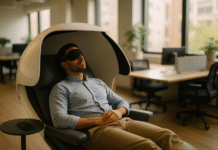
- Naps: Keep to 10–30 minutes before the shift or during breaks; avoid late long naps that impair main sleep.
4.2 Mini case
Flying Karachi→London (east, –4 hours): 4 days preflight, move bedtime/wake time earlier by 30 min/day. On arrival, prioritize morning light, avoid late-evening light, and use 0.5–3 mg melatonin near local bedtime for 2–3 nights if appropriate. Expect adaptation in ~3–4 days.
Synthesis: Small, deliberate shifts beat one big jolt. Pair schedule tweaks with light timing for smoother adaptation.
5. Run a Night-Shift Playbook: Light at Work, Darkness on the Way Home, and an Anchor Sleep
Night shifts demand structured tactics to stay alert at work and protect sleep in daylight. Boost light and social interaction in the first half of the shift for alertness, then reduce light in the second half to prepare for daytime sleep. Wear dark/blue-blocking glasses on the commute home to avoid morning sunlight, and aim to sleep as soon as practical after clock-out. Across the week, keep a stable anchor sleep window so at least part of your sleep occurs at the same clock time every day, smoothing transitions between workdays and days off.
5.1 Tools & tips
- Brighten the workstation early; dim lights late in the shift.
- Caffeine window: Use modest doses early; stop 6–8 hours before planned sleep.
- Commute: Wear dark/blue-blocking glasses; avoid errands under bright sun.
- Bedroom: Blackout curtains, 17–19°C (63–66°F), earplugs/white noise.
5.2 Region-specific note
Where traffic or sun exposure is unavoidable post-shift, prioritize glasses and a cap/hood; if safety allows, rideshare or shaded routes can reduce morning light. Many employers also allow quiet rooms for short pre-commute naps to reduce drowsy-driving risk. CDC
Synthesis: Treat the night shift as a timed protocol: early light and caffeine, late darkness and wind-down, fast home, then sleep. Consistency compounds benefits.
6. Build a Daytime-Sleep Fortress: Darkness, Noise Control, and Temperature
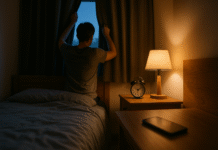
Your bedroom must counteract daylight’s cues. Aim for hotel-level blackout and steady, low noise. Keep the room cool, use blackout curtains or removable window films, layer white noise with earplugs, and disable phone notifications. Daytime sleepers benefit from strict household rules (e.g., delivery “do not disturb” signs). If your street is bright, consider eye masks and blue-blocking lenses indoors until you’re ready to sleep to prevent melatonin suppression. These environment upgrades are low-cost, high-impact, especially when combined with the commute-home darkness strategies above.
6.1 Mini-checklist
- Blackout curtains (≥90% light block) + eye mask.
- Earplugs + white-noise machine or fan.
- Thermostat 17–19°C (63–66°F); breathable bedding.
- Phone on do-not-disturb; doorbell silenced.
- Blue-blocking eyewear indoors if you must be up pre-sleep.
6.2 Common pitfalls
- Letting “just a bit” of morning light in—small leaks can reset your clock.
- Long warm showers right before bed—heat spikes can delay sleep unless you cool off after.
- Napping too late in the day, pushing main sleep into brighter hours.
Synthesis: Environmental control is leverage; fix the light, sound, and heat and you’ll add hours of usable, restorative sleep.
7. Align Meals, Movement, and Hydration With Your Target Time
Mealtimes and exercise also influence circadian signals. Shift your meals toward destination or shift time as early as practical; avoid heavy late-night meals that fragment sleep. Use light physical activity (e.g., a 20–30 minute walk) during target daytime for alertness; avoid vigorous workouts within 3–4 hours of intended sleep. Stay hydrated before, during, and after flights; cabin air is dry and dehydration worsens fatigue. Some experts propose a 12–16 hour fast before and during a long flight, then breaking the fast at local breakfast to cue the clock—evidence is preliminary but the strategy is low-risk for healthy adults. Harvard Health
7.1 Practical timing (travel)
- Eastbound: Eat earlier daily preflight; first local breakfast on arrival, then keep meals on local time.
- Westbound: Push meals later preflight; avoid early-morning heavy meals after landing.
- Hydration: Aim for ~250–300 ml water per hour of flight; limit alcohol.
7.2 Practical timing (shift work)
- Front-load calories before the shift; keep lighter meals overnight to reduce reflux and sleep disruption.
- Short walk or gentle mobility work during breaks; avoid late-shift high-intensity sessions that could delay sleep.
Synthesis: Food and movement won’t realign the clock alone, but they reinforce your light and sleep plan—and they’re fully within your control.
8. Use Pharmacologic Aids Carefully: Hypnotics for Sleep, Stimulants for Alertness (When Clinically Indicated)
Medications can play a supporting role for specific problems: short-term hypnotics to help sleep during transitions, or modafinil/similar to improve alertness in diagnosed shift-work disorder. The 2007 American Academy of Sleep Medicine (AASM) parameters suggested hypnotics for jet-lag insomnia and night-shift daytime sleep, and modafinil to improve night-shift alertness—balanced against risks and under medical supervision. As of August 2025, AASM is updating guidance specific to Shift Work Disorder, with a draft open for public comment, reflecting newer evidence. For most people, start with non-drug measures; if problems persist, discuss timing, dosing, and contraindications with a sleep clinician.
8.1 Guardrails
- Use the lowest effective dose for the shortest time; avoid combining sedatives and alcohol.
- Reserve wake-promoting agents for diagnosed conditions; monitor blood pressure and sleep debt.
- Reevaluate need after the transition—don’t let short-term aids become default habits.
8.2 Example pathway
Frequent night-shift nurse with residual sleepiness despite light/dark protocol and optimized bedroom: trial behavioral measures + timed caffeine first; if persistent impairment, clinician may consider modafinil on shift days and short-acting hypnotic for daytime sleep—with regular follow-up for side effects and dependence risks.
Synthesis: Medications can close gaps your schedule and environment can’t—but they’re not first-line and always need individualized oversight.
9. Plan With Tools: Schedulers, Apps, and Organizational FRMS
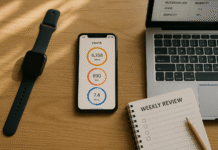
Personal schedulers and organizational fatigue risk management systems (FRMS) turn these principles into day-by-day actions. For individuals, vetted apps and calculators can generate light/avoidance and sleep plans from your itinerary or roster; for teams and airlines, FRMS uses data to set safer duty times, breaks, and mitigations. The aviation sector provides mature FRMS frameworks, and consumer tools can help travelers and shift workers implement precise light timing without a specialist. Select tools that explain why and when to seek or avoid light, allow you to log sleep, and export simple checklists you can follow on the go.
9.1 What good tools include
- Direction-aware light schedules (advance vs delay) with seek/avoid blocks.
- Melatonin timing suggestions with local-time stamps (if appropriate).
- Sleep and nap windows that respect your work/flight reality.
- Exportable reminders; integrations with wearables.
9.2 Organizational layer
If your employer uses or is open to FRMS, ask about roster design principles, protected nap opportunities, bright-light availability at work, and commute-home risk mitigations. These systems improve safety and performance by addressing fatigue before it compromises operations.
Synthesis: A plan you can see and follow beats vague intentions. Use tools personally and advocate for FRMS-style thinking at work.
FAQs
1) What’s the key difference between jet lag and shift-work problems?
Jet lag follows a one-off (or occasional) time-zone jump; shift work creates a recurring misalignment because your work hours oppose your body’s natural timing most days of the week. The symptoms—insomnia, daytime sleepiness, brain fog, GI upset—overlap, but the solutions differ in cadence: travelers aim to adapt over days, while shift workers aim to manage alignment every week using anchors, light, and workplace routines.
2) How many days does recovery take after a long flight?
A common heuristic is about one day per time zone, with westward (delays) often easier than eastward (advances). Pre-adjusting sleep and light reduces this, as does disciplined post-arrival light seeking/avoidance. If you cross eight zones eastward, plan ~5–8 days of gradually improving sleep and alertness if you don’t pre-shift.
3) Is jet lag really worse going east? Why?
Often yes. Advancing the clock (earlier bedtime/wake time) generally occurs more slowly than delaying it, so eastbound trips feel tougher. Morning light helps advance; evening light delays. If you mistakenly take bright morning light after a late arrival from the west, you could delay instead of advance and prolong symptoms.
4) Does melatonin actually work—and is it safe?
Several trials and a Cochrane review support melatonin for jet lag, particularly eastbound, when timed correctly. Typical short-term doses are 0.5–3 mg near local bedtime. Regulations differ; for example, UK NHS does not provide melatonin for jet lag, citing insufficient evidence for routine prescribing. Discuss use with a clinician if you take interacting medications or have health conditions.
5) What about blue-light-blocking glasses?
They’re most useful as light-avoidance tools at the wrong times—e.g., the morning commute after a night shift. Blocking short-wavelength light helps prevent melatonin suppression and keeps you in a “night” state until you’re in your dark bedroom. They’re adjuncts to, not replacements for, room darkening and overall light strategy.
6) Are there health risks from long-term night-shift work?
Night-shift work with circadian disruption has been classified by the International Agency for Research on Cancer (IARC) as “probably carcinogenic” (Group 2A) based on limited human and stronger animal/mechanistic evidence. That doesn’t mean everyone on nights gets cancer; it highlights the need to reduce circadian disruption and manage sleep and light carefully.
7) Should I use sleeping pills or modafinil?
Medications can help in select cases but are not first-line. The AASM’s practice parameters support short-term hypnotics for jet-lag insomnia or day sleep on nights, and modafinil for night-shift alertness in diagnosed shift work disorder, weighing risks. As of August 2025, updated SWD guidance is in development. Use only with medical supervision.
8) Do meal timing and exercise really matter?
They’re secondary cues that can reinforce your light and sleep plan. Eating on local schedule and adding daylight-time movement improve alertness and GI comfort. Avoid heavy late meals and vigorous late exercise that push sleep later. On flights, hydration and moderate movement reduce fatigue and discomfort.
9) What’s the best nap strategy?
For travelers, short 20–30 minute naps can take the edge off but avoid long late-day naps that sabotage nighttime sleep. For shift workers, 10–30 minute pre-shift or on-break naps improve alertness without deep-sleep inertia—set alarms and a wind-down routine so they don’t drift long.
10) Are jet-lag apps or calculators worth it?
They can be—especially if they give seek/avoid light blocks, melatonin timing, and sleep windows tailored to your itinerary or roster. Choose tools that cite circadian research and allow easy rescheduling when flights or shifts change. In aviation and other 24/7 operations, FRMS provides the organizational counterpart to these personal plans.
Conclusion
Whether you’re hopping time zones or working nights, circadian alignment is a process, not a single trick. The fastest path to feeling normal again is to make a clear advance vs delay decision and then consistently execute the basics: timed light, timed darkness, gradual sleep scheduling, and measured use of melatonin, caffeine, and naps. For shift workers, add commute-home darkness, an anchor sleep, and an optimized bedroom to protect daytime sleep. Travelers can smooth landings by pre-shifting and using light correctly immediately after arrival. Layer in meal timing, hydration, and gentle movement, and use tools to plan and track your actions. If non-drug strategies aren’t enough, speak with a clinician about short-term pharmacologic aids and rule out underlying sleep disorders like sleep apnea. Start with one or two strategies today and build from there—the gains are cumulative, and better days (and nights) follow. Make your plan, set your light, and move your clock.
References
- Practice Parameters for the Clinical Evaluation and Treatment of Circadian Rhythm Sleep Disorders. American Academy of Sleep Medicine (AASM). 2007. AASM
- AASM Invites Public Comment on the Draft Guideline: Management of Shift Work Disorder. American Academy of Sleep Medicine (AASM). Aug 5, 2025. AASM
- Practice Guidelines. American Academy of Sleep Medicine (AASM). Jul 3, 2025. AASM
- Coping with the Night and Evening Shifts (Light & Sleep sections). CDC/NIOSH Work Hours & Shift Work Training for Nurses. 2020. and https://www.cdc.gov/niosh/work-hour-training-for-nurses/longhours/mod9/06.html CDC
- Improve Sleep by Avoiding Light. CDC/NIOSH. 2020. CDC
- Night Shift Work—IARC Monographs Volume 124. International Agency for Research on Cancer (IARC/WHO). Jun 2, 2020. and IARCIARC Publications
- Jet Lag Prevention. MedlinePlus Medical Encyclopedia. Jul 8, 2023. MedlinePlus
- Circadian Rhythm Disorders (Types; Symptoms; Treatment). National Heart, Lung, and Blood Institute (NHLBI/NIH). Mar 24, 2022. ; https://www.nhlbi.nih.gov/health/circadian-rhythm-disorders/symptoms ; https://www.nhlbi.nih.gov/health/circadian-rhythm-disorders/treatment NHLBI, NIH
- Jet Lag Disorder—Diagnosis & Treatment. Mayo Clinic. Nov 19, 2022. Mayo Clinic
- Herxheimer A, Petrie KJ. Melatonin for the Prevention and Treatment of Jet Lag. Cochrane Database of Systematic Reviews. 2002. and PMC summary CochranePMC
- Eastman CI, Burgess HJ. Advancing Circadian Rhythms Before Eastward Flight. Sleep Medicine. 2005. PMC
- Burgess HJ, et al. Preflight Adjustment to Eastward Travel. Sleep. 2003. PMC
- Fatigue Risk Management. International Air Transport Association (IATA). 2025 (accessed Aug 2025). and Fatigue Management Guide for Airline Operators. 2016. https://www.iata.org/contentassets/39bb2b7d6d5b40c6abf88c11111fcd12/fatigue-management-guide_airline20operators.pdf IATA
- Jet Lag—NHS Advice and Common Questions About Melatonin. NHS UK. 2020–2024 (accessed Aug 2025). ; https://www.nhs.uk/medicines/melatonin/common-questions-about-melatonin/ nhs.uk
- Treatments for Shift Work Disorder and Tips for Shift Workers. Sleep Foundation. Jul 25, 2025. ; https://www.sleepfoundation.org/shift-work-disorder/tips Sleep Foundation
- Timeshifter App—Resets for Jet Lag. WIRED. 2019. https://www.wired.com/story/timeshifter-jet-lag-app/ WIRED