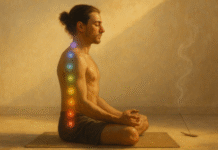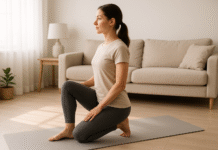





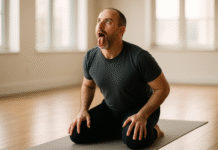


















Lion’s Breath (Simha Mudra) is a bold yogic breathing technique where you inhale through the nose and exhale forcefully through the mouth with your tongue extended and eyes focused, releasing jaw, throat, and facial tension while lifting energy and focus. In just a few rounds, it can feel like a reset button for your nervous system and attention—especially when you’re sluggish, overthinking, or clenched in the jaw.
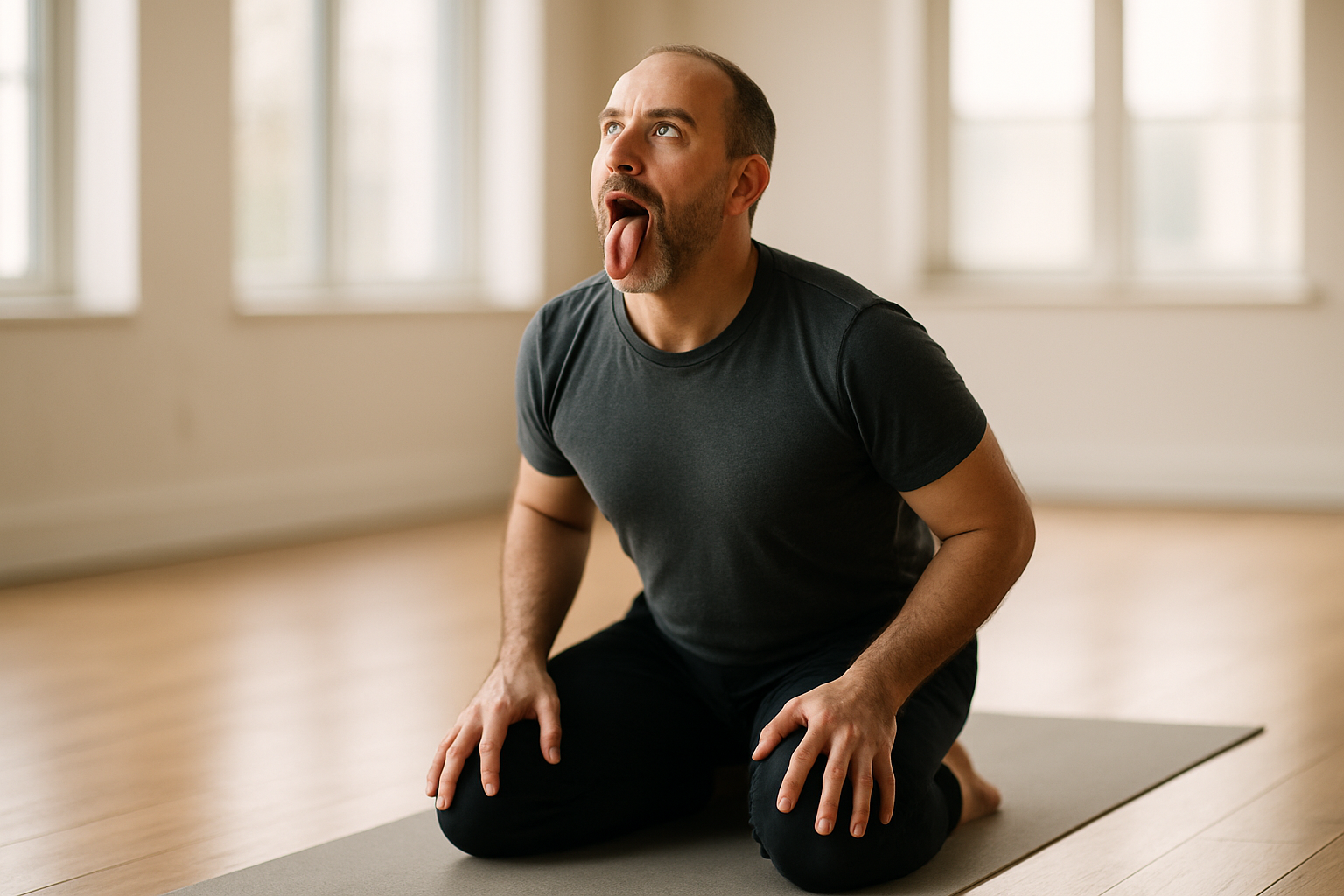
Quick how-to (overview): Sit tall, place your hands on your knees, inhale through the nose, open the mouth wide, stick the tongue out, gaze to the “third eye” or tip of the nose, and exhale with an audible “haaa.” Repeat for 3–5 rounds, then return to normal breathing.
Friendly reminder: This guide is educational, not medical advice. If you have a respiratory, cardiovascular, or pelvic floor condition, recent surgery, dizziness, or jaw/TMJ issues, talk to a qualified professional first. General pranayama research shows effects on the nervous system and mood, but evidence is technique-specific and varies by individual.
1. Know What Lion’s Breath Is—and When to Use It
Lion’s Breath is a traditional pranayama often taught at the start or end of a yoga session to release facial, throat, and chest holding while waking up your attention. The essence is simple: a nasal inhale followed by a strong, mouth-open exhale with the tongue extended and a focused gaze. You’ll typically feel a “switch on” sensation—more alert, more present—and a physical softening across the jaw and throat. Use it when you’re groggy, before speaking or singing, after long screen time, or anytime you catch yourself clenching your teeth. While some benefits are tradition-based (e.g., stimulating throat muscles like the platysma), broader breathing science supports the idea that deliberate breathwork can modulate stress and attention.
1.1 Why it matters
- Releases jaw/face tension—helpful if you grind teeth or squint at screens.
- Energizes without caffeine—the forceful exhale cues alertness.
- Warms the throat/voice—a playful primer before public speaking or singing.
- Cuts self-consciousness—the “roar” invites expression, then calm.
1.2 Numbers & guardrails
- Start with 1–3 sets of 3–5 rounds.
- Rest 3–5 natural breaths between rounds.
- Stop if you feel dizzy; return to normal breathing.
These ranges balance stimulation with safety while you learn your response.
Takeaway: Think of Lion’s Breath as a quick, structured way to drop facial tension and rekindle focus; small sets used situationally work best.
2. Set Intentions and Screen for Contraindications
Before you begin, decide what you want from today’s practice: to wake up before a meeting, reset after doom-scrolling, or release jaw tightness. Then screen for issues. If you have unmanaged hypertension, cardiovascular or respiratory conditions, recent oral/throat surgery, active TMJ pain, pelvic floor concerns, or are pregnant, consult a clinician or an experienced teacher first. Although Lion’s Breath isn’t a high-pressure breath hold, it is stimulating and uses a forceful exhale, which can be uncomfortable or counterproductive in certain cases. In general, research on pranayama supports effects on autonomic tone and mood, but individual responses vary—so practice conservatively and listen closely.
2.1 Mini-checklist
- I’m free of active dizziness, chest pain, or acute jaw pain today.
- I’ve eaten lightly (or not at all) in the last 1–2 hours.
- I’ll stop if I feel lightheaded, anxious, or strained.
- I have water and a quiet spot for 3–5 minutes.
2.2 Common mistakes
- Pushing too hard on the exhale and getting dizzy.
- Compensating with shoulders/neck, creating more tension.
- Skipping rest breaths between rounds.
- Practicing right after a heavy meal, causing throat discomfort.
Takeaway: A clear goal and quick safety check keep the practice focused, effective, and well-tolerated.
3. Choose a Stable Seat (Kneeling or Cross-Legged)
A steady base turns the technique from “funny face” into real practice. Traditional options include Vajrasana/Thunderbolt, Virasana/Hero, or a simple cross-legged seat on a cushion or chair; tabletop on hands-and-knees is another valid option. If your knees are sensitive, sit on a block or folded blanket, or use a chair with both feet grounded. The aim is spinal neutrality with the pelvis slightly tipped so the lower belly can expand on the inhale without strain. A stable seat lets you use the hands to press into the knees or thighs, which enhances the energetic feel and supports the throat opening on the exhale.
3.1 How to set up
- Sit with hips slightly above knees (use props).
- Place hands firmly on knees or thighs, fingers spread.
- Lengthen your spine; relax the jaw and tongue.
- Soften the belly; broaden collarbones.
3.2 Why kneeling is popular
Kneeling (Vajrasana/Virasana) stacks pelvis and ribcage, frees the diaphragm, and provides a grounded platform for the “roaring” exhale. Cross-legged and chair variations work, too—comfort and length matter more than aesthetics.
Takeaway: Pick the stable seat you can hold without fidgeting; comfort and spinal length beat strict form.
4. Align Spine, Shoulders, and Chest
Lion’s Breath lands best with a tall, neutral spine, gentle core support, and shoulders relaxed away from the ears. Imagine the crown lifting and the tailbone rooting, creating space for the ribcage to widen on the inhale. Keep the front of the throat soft to avoid turning the technique into a neck-tightening drill. On the exhale, press your hands into your knees to create a light rebound in the chest without hunching forward. This alignment encourages a fuller inhale and a confident, expressive exhale—without strain in the trapezius or SCM muscles that commonly overwork in stressed breathing.
4.1 Mini-checklist
- Ears over shoulders; chin parallel to the floor.
- Collarbones broad; sternum buoyant, not lifted aggressively.
- Lower ribs move like a 360° umbrella on inhale.
- Pelvic floor relaxed; jaw unclenched.
4.2 Common mistakes
- Throwing the head back instead of lifting through the crown.
- Pinching shoulder blades together, compressing the neck.
- Holding the belly rigid, which limits the inhale.
Takeaway: Good alignment frees the breath and keeps the expression in your face—not your neck.
5. Place the Hands and Set the Gaze (Drishti)
Classically, you spread the fingers wide and root the palms on the knees or thighs, generating a subtle “lift” of the chest with a grounded base. For gaze, choose one: tip of the nose, third-eye point (between the brows), or upward with eyes wide; all are used and taught. This focused gaze, or drishti, stabilizes attention and contributes to the playful, cathartic feel of the technique. If upward gazing strains your neck or eyes, keep a soft, forward-down gaze. The goal is a firm base with an expressive, confident front body as you prepare for the forceful exhale.
5.1 Options & adaptations
- Sensitive wrists? Place fists on thighs or keep hands neutral.
- Eye fatigue? Blink between rounds or use a gentle nasal drishti.
- Need more grounding? Press palms harder on the exhale, then soften.
5.2 Mini-checklist
- Fingers spread; elbows slightly bent.
- Choose a gaze point and keep it consistent for the round.
- Face relaxed until the exhale.
Takeaway: Intentional hand pressure and drishti turn a simple breath into a directed, embodied practice.
6. Prepare the Inhale (Quiet, Through the Nose)
Each round starts with a steady nasal inhale that expands the lower ribs and back body first, then the upper chest. Aim for a quiet, unforced breath rather than a dramatic sniff; you’re storing energy for the exhale, not hyperventilating. Keep the jaw unclenched and tongue resting on the floor of the mouth until you’re ready to exhale. If you tend to “shoulder breathe,” place one hand on the side ribs for a moment and feel them widen, then return the hand to the knee. A balanced inhale makes the exhale expressive without feeling like a pushy performance.
6.1 Numbers & guardrails
- Inhale for ~3–4 seconds at a pace that feels easy.
- Pause 0–1 second (natural, not a held brace).
- Avoid stacking fast inhales; rest between rounds if breath gets choppy.
6.2 Common mistakes
- Shrugging to fill the lungs; widen the ribs instead.
- Holding a big pre-exhale brace, which can spike tension.
- Mouth inhaling, which dries the throat and shortens the breath.
Takeaway: A quiet, roomy nasal inhale is the spring; the exhale is the release.
7. Shape the Mouth and Extend the Tongue (Simha Mudra)
Now comes the signature: open the mouth wide, extend the tongue fully toward the chin, and widen the eyes. This combination—Simha Mudra—stretches the muscles of the face and throat (including the platysma) and sets up the sonic, cathartic exhale. Keep the jaw hinge comfortable; you want full expression without pain. If your TMJ is sensitive, explore a smaller mouth opening and a gentler tongue extension; the visual is less dramatic, but the effect can still be releasing. Think “purposeful expression,” not straining.
7.1 How to do it (micro-steps)
- Drop the jaw; lips stretch rather than clamp.
- Tongue out and down toward the chin.
- Eyes wide; choose your drishti (brow point, tip of nose, or up).
7.2 Mini-checklist
- No jaw pain; tongue feels stretched, not cramped.
- Throat stays open; neck long.
- Shoulders stay relaxed.
Takeaway: The facial “roar” is both the physical stretch and the mental permission to let go.
8. Exhale with the “Haa” Sound (Forceful, But Smooth)
On the exhale, let sound carry the release: a strong “haaa” that emerges from the throat, not a cough or shout. Keep the chest buoyant as the belly gently recoils. Many teachers cue pressing the palms into the knees during the exhale to amplify the sense of lift and expression. The sound doesn’t need to be loud; clear and steady beats noisy and strained. Finish the exhale completely (without collapsing), then relax the face and close the mouth before your next inhale. This purposeful exhale is what flips the switch from clenched to clear.
8.1 Numbers & pacing
- Exhale for ~3–6 seconds—longer than the inhale but not to the point of gasping.
- Do 3–5 rounds, rest, then evaluate how you feel.
- Two to three short sets are usually enough to feel the shift.
8.2 Common mistakes
- Forcing volume and irritating the throat.
- Collapsing the chest or rounding forward at the end.
- Holding breath empty after exhale; just return to nasal breathing.
Takeaway: The exhale should feel like relief—steady, expressive, and complete—rather than like forcing or shouting.
9. Choose Your Repetitions, Sets, and Timing
A little goes a long way. For most people, 3–5 rounds per set, 1–3 sets, with 30–60 seconds of rest between sets is plenty. Morning, early afternoon, and pre-performance (speaking, singing, presentations) are prime times; avoid right before bed if you’re sensitive to stimulation. Pair it with a calming breath afterward (e.g., 2–3 slow nasal breaths) to integrate the effects. General breathwork literature suggests structured breathing can influence arousal and attention, so titrating your dose helps you find the sweet spot without over-amping.
9.1 Sample schedules
- Quick reset: 1 set × 3–4 rounds mid-day.
- Warm-up: 2 sets × 4–5 rounds before a meeting or performance.
- Yoga practice: 1–2 sets at the start, then as needed after flows.
9.2 Mini-checklist
- I feel brighter, not edgy after a set.
- If wired, I shorten the exhale and reduce rounds.
- I follow with 2–3 quiet breaths to seal the practice.
Takeaway: Dose matters. Use short, intentional bouts to energize without tipping into agitation.
10. Explore Variations and Progressions (Safely)
Once the basic form feels natural, explore subtle variations. You can try a quieter exhale (still mouth open, minimal sound) if you’re sharing space, or a bigger sound in a private room for catharsis. Some traditions pair Lion’s Breath with specific gazes or bandha awareness (gentle pelvic floor/lower belly tone), but avoid hard locks or long holds. You can practice in tabletop for a different feel, or seated in a chair if kneeling is uncomfortable. If you notice agitation, downshift to soft nasal breathing or a calming technique like lengthened exhale breathing. Progress patiently; the goal is expressive release and clarity, not theatricality.
10.1 Variations menu
- Silent lion: all form cues, minimal sound.
- Gaze swap: nose tip ↔ third eye to change focus.
- Chair lion: same setup, feet grounded hip-width.
- Tabletop lion: hands/knees, exhale with tongue extended.
10.2 Common pitfalls
- Chasing intensity for its own sake.
- Adding long breath holds (unnecessary for this technique).
- Cranking bandhas instead of staying buoyant and expressive.
Takeaway: Keep the spirit playful and expressive; vary form to fit your context and energy.
11. Cool Down and Integrate the Effects
After your final round, close the mouth, return to quiet nasal breathing, and let the face, tongue, and jaw soften. Take 3–6 slow breaths, noticing changes in alertness, mood, and throat/face sensation. Follow with a neutral counter like gentle neck releases, shoulder rolls, or a minute of diaphragmatic breathing. If you’re heading into focused work, sip water, note one priority, and begin—riding the wave of clarity Lion’s Breath created. Broad pranayama research supports using breath to influence autonomic balance and perceived stress, and a calm integration period helps consolidate that shift.
11.1 Mini-checklist
- 3–6 quiet nasal breaths; jaw and tongue relaxed.
- Optional: shoulder/neck release for 30–60 seconds.
- Hydrate; note how your attention feels.
11.2 Numbers & guardrails
- If you feel wired, do 60–120 seconds of slow nasal exhale-focused breathing.
- If you feel sleepy, stand and take a short walk while nose-breathing.
Takeaway: A brief cooldown cements the benefits and keeps your nervous system balanced for what’s next.
FAQs
1) What exactly is Lion’s Breath?
It’s a yogic breathing technique—also called Simha Mudra or simha pranayama—that pairs a nasal inhale with a forceful, mouth-open exhale, tongue extended, and focused gaze. It’s traditionally used to release facial/throat tension and spark alertness. You’ll typically practice for short sets of a few rounds, resting between sets.
2) How many rounds should I do?
Start small: 3–5 rounds per set, 1–3 sets, and rest with two or three normal breaths between sets. This dosage delivers a noticeable effect without over-stimulating most people. Adjust based on your response and context (e.g., one quick set before a meeting).
3) Is Lion’s Breath safe if I have TMJ or jaw tension?
It can be, but go gently. Keep the mouth opening comfortable and the tongue extension moderate, and stop if you feel pain. For active TMJ issues, get guidance from a clinician or qualified teacher. The aim is to release, not provoke, tension.
4) Does it help with anxiety or stress?
Many people find it helps “cut through” mental noise and soften jaw/face tension. While specific trials on Lion’s Breath are limited, broader pranayama research shows breathing practices can influence stress physiology and perceived anxiety, especially when practiced regularly. Use it as a complement to—not a replacement for—clinical care.
5) When should I avoid Lion’s Breath?
Avoid if you have active throat/oral irritation, recent head/neck surgery, unmanaged hypertension, dizziness, or if forceful exhaling provokes symptoms. Pregnant practitioners or those with pelvic floor concerns should modify intensity and skip any bracing. When in doubt, use gentler breathing and consult a professional.
6) Is Lion’s Breath the same as Ujjayi or Kapalabhati?
No. Ujjayi uses a constricted, whispery nasal breath with the mouth closed. Kapalabhati uses snappy abdominal pumps with passive inhales. Lion’s Breath uses a mouth-open exhale with tongue out and an audible “ha.” They serve different purposes and sensations.
7) Can I do it at my desk—or do I need a yoga mat?
You can practice seated in a chair with feet grounded and spine tall. The key is stability and a bit of privacy (since the facial expression and sound can feel theatrical). A mat isn’t required. Keep the exhale smooth and clear rather than loud.
8) Will it help my voice or public speaking?
It can be a playful voice warm-up because it moves breath through the throat, encourages projection, and reduces jaw/face rigidity. Follow it with gentle humming or lip trills. Many performers use breathwork to center before going on stage.
9) Could Lion’s Breath raise or lower blood pressure?
Short, moderate doses are unlikely to meaningfully change blood pressure acutely, but responses vary. Research on breathwork and pranayama broadly suggests autonomic effects that can reduce perceived stress and support regulation over time. If you have hypertension, consult a clinician and avoid straining.
10) Is it okay for kids?
Often yes, especially the playful, expressive aspect. Keep it gentle and brief, and avoid encouraging loud shouting. If a child has respiratory concerns, get medical guidance first. The goal is to release tension and have fun, not to force effort.
11) How does breathwork affect the nervous system overall?
Breathwork influences the autonomic nervous system through mechanics (diaphragm movement), chemoreflexes (CO₂/O₂), and attention/gaze. Reviews show pranayama practices can reduce stress and support mood and attention, though effects are technique-specific and depend on regular practice.
Conclusion
Lion’s Breath is a small but mighty reset: a few deliberate rounds can unclench the jaw, brighten attention, and invite expressive, playful energy back into your day. The secret is in the details—stable seat, tall spine, intentional gaze, clear “haaa” exhale—and in respectful dosing so you finish feeling awake, not wired. Treat the technique as a targeted tool: use it before a call or presentation to loosen up, midday to break screen-induced clench, or within yoga to clear mental cobwebs. Pair it with a quiet cooldown so the nervous system integrates the shift. Above all, notice what changes—facial softness, steadier focus, more confident voice—and let those tangible cues guide how often you practice.
Ready to try? Take a comfortable seat, choose your gaze, and roar gently through 3–5 rounds—then follow with 3 slow nasal breaths and get on with your day.
References
- King of the Jungle: How To Practice Lion’s Breath (and Why It’s Good for You), Cleveland Clinic, Apr 19, 2023. Cleveland Clinic
- Lion Pose (Simhasana), Yoga Journal, Jan 20, 2025. Yoga Journal
- Lion’s Breath Benefits and How to Roar, Healthline, n.d. Healthline
- Pranayamas and Their Neurophysiological Effects, Frontiers in Human Neuroscience (PMC), 2020. PMC
- Exploring the Therapeutic Benefits of Pranayama (Yogic Breathing), Journal of Traditional and Complementary Medicine (PMC), 2020. PMC
- Pranayama overview, Yoga Journal (Pranayama hub), n.d. Yoga Journal
- Breathing Exercises to Lower Blood Pressure, Verywell Health, Dec 2024. Verywell Health
- Lion’s Breath (Simha Mudra) guide, Yogateket, Jul 19, 2018. Yogateket