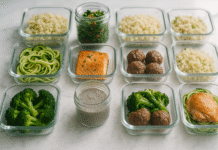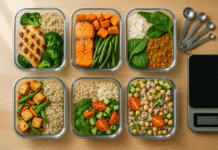





















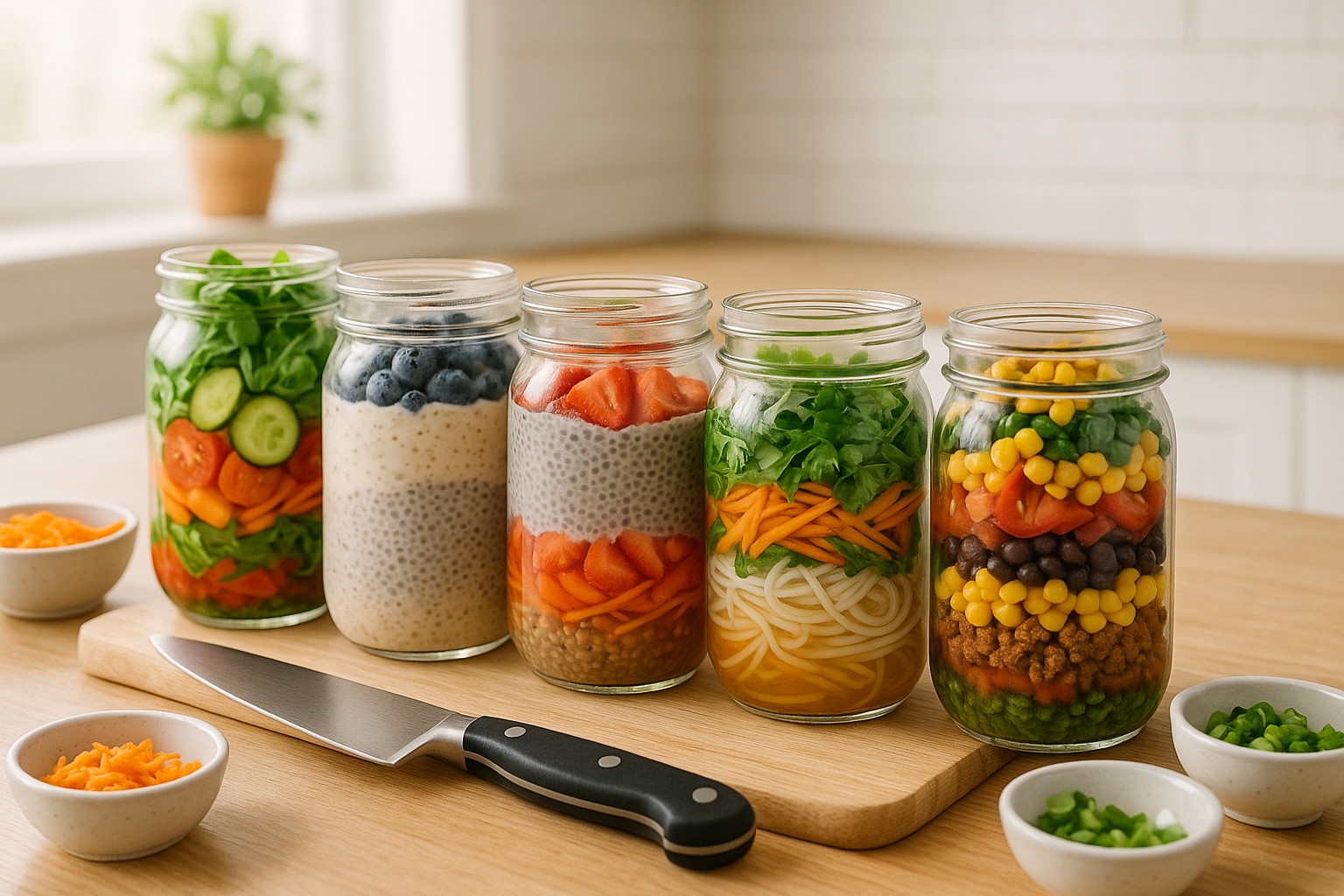
Mason jar meal prepping is a simple, visual way to portion breakfasts, lunches, and snacks that stay fresh longer and travel well. The idea is straightforward: pack food into sturdy glass jars in a smart order so textures hold and flavors meld without turning soggy. In one line: Mason jar meal prepping means assembling complete, grab-and-go meals in jars using moisture-first layering and fridge-safe timing so you can eat well all week. To get started fast, follow this quick sequence: choose wide-mouth jars (pint/500 ml for snacks; 24–32 oz/700–950 ml for meals), stack wet-to-dry (dressing at the bottom, greens last), seal, chill at ≤4°C/40°F, and rotate within 3–4 days for cooked items. Below are 12 battle-tested ideas—with exact layering, guardrails, and pro tips—to cover your breakfasts, lunches, and snacks without fuss.
1. Layered Salad Jars (Crisp for Days)
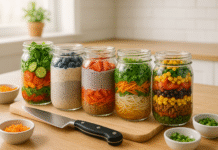
Layered salad jars keep greens crisp for up to 4–5 days because dressing sits at the bottom, away from leaves until you shake to serve. Start by pouring dressing in first, add hearty vegetables that won’t wilt (think carrots and cucumbers), then proteins and grains, with tender greens on top. This order prevents sogginess and preserves crunch, which is the biggest reason salads fail in meal prep. A 24–32 oz (700–950 ml) wide-mouth jar works best for lunch-sized portions; it’s easy to pack and to shake out into a bowl. Keep cooked proteins and grains within the standard 3–4 day window in the fridge, and top with nuts or croutons right before eating to preserve texture. When it’s time to eat, either shake vigorously and eat from the jar or tip into a large bowl to dress evenly.
1.1 How to layer (bottom → top)
- 2–3 tbsp dressing or vinaigrette
- Firm veg: 1 cup (carrots, cucumbers, bell peppers, cherry tomatoes)
- Protein: 3–4 oz cooked chicken, chickpeas, tuna, tofu, or eggs
- Grains: 1/2–3/4 cup quinoa, farro, brown rice, or couscous
- Tender add-ins: herbs, scallions, cheese
- Greens: 2–3 cups (romaine, spinach, arugula, spring mix)
1.2 Numbers & guardrails
- Dressing quantity: ~2 tbsp per 2 cups greens (scale to taste).
- Storage: up to 4–5 days for veg-forward jars; 3–4 days if using cooked animal proteins.
- Jar size: 32 oz for meal salads; 24 oz for lighter portions.
Pro tip list
- Use dry greens (spin them) to prevent dilution.
- Salt/season proteins and grains before layering; don’t rely solely on dressing.
- Keep crunchy toppings (nuts, seeds, croutons) in a separate mini container.
- Add juicy items (cut tomatoes, fruit) just above dressing, not near greens.
A well-stacked salad jar is the backbone of mason jar meal prepping—balanced, portable, and reliably crisp at day four.
2. Overnight Oats Jars (Breakfast That Waits for You)
Overnight oats are the no-cook breakfast that thickens while you sleep; the jar keeps portions tidy and customizable. Combine rolled oats with milk (dairy or plant-based) and optional yogurt for extra protein and creaminess, then flavor with fruit, nut butter, or spices. Because everything hydrates in the fridge, you get a spoonable, ready-to-eat meal without morning dishes. Use pint jars (16 oz/475 ml) for single servings so you have headroom for stirring and toppings. They typically keep 3–4 days chilled, making Sunday-night prep realistic for mid-week breakfasts. For best texture, avoid instant oats (they can go pasty) and steel-cut oats (they stay chewy unless pre-soaked longer).
2.1 Base formula (per jar)
- 1/2 cup rolled oats
- 1/2 cup milk (or 2/3 cup if skipping yogurt)
- 1/4 cup plain Greek yogurt (optional, boosts protein)
- 1–2 tsp chia or ground flax (thicker, more fiber)
- 1–2 tsp maple or honey; pinch of salt; spices (cinnamon, cardamom)
- Top with 1/2 cup fruit and 1–2 tbsp nuts/nut butter before serving
2.2 Variations & timing
- PB&J: 1 tbsp peanut butter + 1 tbsp fruit jam + sliced strawberries.
- Mocha: 1 tsp cocoa + 1–2 tbsp cold coffee concentrate + cacao nibs.
- Tropical: coconut milk + pineapple + toasted coconut.
- Store 3–4 days at ≤4°C/40°F; stir before eating.
Mini-checklist
- Use wide-mouth jars for easy spooning.
- Add crunchy toppings day-of to keep them crisp.
- If it’s too thick, splash in 1–2 tbsp milk and stir.
Overnight oats turn mason jar meal prepping into a 60-second nightly habit with a big morning payoff.
3. Chia Pudding Jars (Fiber-Rich, Dessert-Like)
Chia pudding jars deliver a creamy, dessert-like breakfast or snack with serious fiber and omega-3s. The trick is whisking thoroughly so seeds don’t clump, then letting the mixture sit 10 minutes before a final stir. Chia absorbs roughly 10–12 times its weight in liquid, forming a gel that keeps you satisfied. Use any milk you like; adding yogurt or protein powder can tilt it toward a meal. Build fruit compote or purée on the bottom to create a swirl effect and add natural sweetness. Pint jars are ideal; they last 4–5 days refrigerated when made with milk and fruit compote (observe dairy timing if using yogurt).
3.1 Core ratio (per jar)
- 3 tbsp chia seeds
- 1 cup milk (dairy or plant-based)
- 1–2 tsp sweetener (maple, honey, date syrup)
- Pinch salt + vanilla; optional 1 tbsp cocoa or 1 scoop protein powder
3.2 How to assemble
- Optional: 2–3 tbsp fruit compote at the bottom.
- Whisk chia + milk + flavorings; wait 10 minutes; whisk again; pour into jar.
- Chill at least 2 hours (overnight best). Top with fruit/nuts when serving.
Common mistakes
- Skipping the second stir → clumps.
- Using too little liquid → cement-like texture.
- Adding crunchy granola too early → soggy by day two.
Chia pudding jars add a dessert vibe to mason jar meal prepping without veering off your nutrition goals.
4. Noodle Soup Jars (Just Add Boiling Water)
Noodle soup jars bring instant-ramen convenience to real ingredients: layer an umami base, quick-cooking noodles, sliced veg, and precooked protein, then add boiling water at lunch. The heat extracts flavor from miso, bouillon, or concentrated broth and rewarms the toppings in minutes. This approach shines for office days because you only need a kettle; no stove required. Use heat-tolerant, wide-mouth jars (remove lid/band before adding hot water and avoid sudden temperature shocks). Keep perishable add-ins refrigerated until serving, and consume right away after adding hot water.
4.1 Assembly blueprint (bottom → top)
- Flavor base: 1–2 tsp bouillon paste, 1 tbsp miso, or 1 tsp soup concentrate
- Aromatics: 1 tsp grated ginger/garlic, a drizzle of soy or chili oil
- Veg: 1 cup thinly sliced mushrooms, carrots, snap peas, spinach
- Noodles: 1 nest instant ramen, soba, or thin rice noodles
- Protein: 3–4 oz cooked chicken, tofu cubes, or edamame
- Fresh finish: scallions, lime wedge, herbs in a small topper
4.2 Numbers & use
- Add 1.25–1.5 cups boiling water; cover loosely with a small plate (not the metal lid); wait 3–4 minutes; stir and eat.
- Prep base the night before; store ≤3–4 days if using cooked proteins.
- For heartier soup, pre-cook sturdier noodles (udon) until just shy of done.
Mini-checklist
- Avoid uncooked meats; use fully cooked proteins only.
- Pack leafy greens near the top for gentle wilting.
- Eat shortly after hydrating; do not store hydrated leftovers.
Done right, noodle soup jars are the warm, savory side of mason jar meal prepping that beats a cafeteria line.
5. Burrito Bowl Jars (Hearty, Reheat-Friendly)
Burrito bowl jars pack rice, beans, vegetables, and protein into a reheatable, saucy lunch. Because sauces sit low in the jar, grains stay separate and fluffy; a quick microwave turns everything steamy and cohesive. This format uses leftovers brilliantly—yesterday’s grilled chicken, roasted veg, or pulled pork become new meals with salsa and lime. Use 24–32 oz jars for full portions. Keep the salsa, crema, or guacamole in a small topper cup to avoid separation, and add right before eating for peak flavor.
5.1 Layering (bottom → top)
- Salsa or enchilada sauce (2–3 tbsp)
- Black or pinto beans (1/2–3/4 cup)
- Rice or cilantro-lime brown rice (1/2–3/4 cup)
- Protein (3–4 oz): chicken, steak strips, tofu, or carnitas
- Veg: fajita peppers/onions, corn, roasted sweet potato
- Toppers: cheese, cilantro, lime wedge; crema/guac in separate cup
5.2 Reheat & guardrails
- Microwave without metal components: 1–2 minutes, stirring halfway; add toppers afterward.
- Storage: 3–4 days chilled for cooked components.
- Rice safety: cool quickly after cooking; refrigerate promptly in shallow containers.
Quick tips
- Season beans separately (cumin, lime, salt) for depth.
- Put juicy veg closer to sauce, not next to rice.
- Pack lime wedges high so they stay bright.
Burrito bowl jars scratch the “hot lunch” itch and extend your mason jar meal prepping repertoire beyond salads.
6. Mediterranean Mezze Jars (Fresh, Zesty, Satisfying)
Mezze jars combine hummus, grains, crunchy veg, and briny accents into a protein-rich, veggie-forward lunch. The hummus at the bottom doubles as dressing once shaken, coating grains and veg in a lemon-garlic gloss. This style is fantastic for vegetarians and omnivores alike and holds up across four days thanks to sturdy textures. Keep juicy or pickled items near the hummus to isolate moisture; greens and herbs go high. A 24 oz jar is usually enough, though 32 oz fits extra greens or grain.
6.1 Layering map (bottom → top)
- 3–4 tbsp hummus + 1 tsp olive oil + squeeze of lemon
- Grain: 1/2–3/4 cup bulgur, farro, or quinoa
- Veg: cucumber, cherry tomatoes, bell pepper, red onion
- Add-ins: olives, artichokes, roasted red peppers
- Protein: chickpeas, grilled chicken, or feta (2–3 oz)
- Finish: parsley/mint, romaine/arugula, optional tzatziki in a topper
6.2 Flavor dials
- Spice it: za’atar, sumac, or Aleppo pepper.
- Creamy note: a spoon of yogurt or tahini near the bottom.
- Storage: 3–4 days; keep feta/greens high for best texture.
Mini-checklist
- Rinse onions to tame sharpness.
- Salt cucumbers lightly and pat dry.
- Pack pita chips separately to stay crisp.
Mediterranean jars bring variety to mason jar meal prepping with bright flavors that remain fresh through mid-week.
7. Yogurt Parfait Jars (Protein-Packed Snack or Light Breakfast)
Parfait jars offer a customizable, high-protein snack when built with strained yogurt and layered fruit. The key is to keep granola separate until serving, while fruit sits either as a quick compote on the bottom or fresh berries midway. This keeps textures distinct: creamy, juicy, crunchy. Pint jars are the right size for 200–300 g yogurt; they store well for 3–4 days. Stir in a little milk if the yogurt is ultra-thick and you prefer spoonable layers rather than stiff swirls.
7.1 Build order
- Bottom option A: 2–3 tbsp fruit compote; option B: fresh berries mid-jar
- 3/4–1 cup Greek yogurt (plain or vanilla)
- 1–2 tsp honey or maple (optional)
- 1–2 tbsp nuts or seeds for healthy fats
- Granola in a separate container; add when serving
7.2 Upgrades & numbers
- Protein: 15–20 g per jar with strained yogurt; add 1 scoop whey/plant protein if desired.
- Fiber: aim for 8–10 g using berries + chia/flax + high-fiber granola.
- Storage: 3–4 days; add delicate fruit (kiwi, mango) day-of for peak texture.
Common pitfalls
- Adding granola too early → soggy.
- Using watery yogurt → layers collapse.
- Sugary store-bought fruit layers → oversweet; try quick stovetop compote instead.
Parfait jars are the “dessert-adjacent” side of mason jar meal prepping that still works hard nutritionally.
8. Smoothie Prep Jars (Blend Faster, Waste Less)
Smoothie prep jars prevent morning ingredient scramble and reduce produce waste. Load jars with pre-portioned fruit, greens, seeds, and flavor boosters; keep liquid out until blending. You can refrigerate overnight or freeze for longer storage (use straight-sided, freezer-safe jars and leave headspace). In the morning, dump into a blender, add 1–1.5 cups liquid, and blend; or add liquid directly to the jar if your blender accepts jar attachments. This method also controls portions, so a smoothie doesn’t accidentally become two.
8.1 What to pack (per jar)
- 1 banana or 1 cup mango/pineapple
- 1 cup berries or cherries
- 1 cup spinach or 1/2 cup kale (stems removed)
- 1 tbsp chia or flax; optional 1 scoop protein
- Flavor dial: ginger coin, cocoa, or cinnamon
8.2 Storage & blending
- Refrigerate 1–2 days; freeze up to 2–3 months in freezer-safe jars (leave 2–3 cm headspace).
- Add 1–1.5 cups liquid (milk, water, kefir) at blend time.
- If blending from frozen, thaw 10–15 minutes at room temp first for easier processing.
Mini-checklist
- Label jars with flavor and date.
- Group into “green,” “berry,” “tropical” packs to keep rotation fun.
- Keep sweeteners minimal; ripe fruit usually suffices.
Smoothie prep jars make mason jar meal prepping frictionless on high-rush mornings.
9. Egg Bite or Mini-Frittata Jars (Bake, Chill, Reheat)
Egg bite or mini-frittata jars give you a savory breakfast that reheats cleanly. Mix eggs with dairy (milk or cottage cheese), fold in sautéed vegetables and cheese, and bake the mixture in jars placed on a tray (no lids in the oven). Once cooked, cool, lid, and refrigerate for 3–4 days. Reheat gently without metal lids. Straight-sided, wide-mouth half-pint or pint jars work best; avoid sudden temperature changes to the glass. This option is great for using up odds and ends (a lonely pepper, a handful of spinach, last night’s sausage).
9.1 Base formula (fills two 8 oz/240 ml jars)
- 3 large eggs
- 2 tbsp milk or 1/3 cup cottage cheese (extra protein)
- 1/2 cup sautéed veg (spinach, mushrooms, onions, peppers)
- 1/4 cup shredded cheese; salt, pepper, herbs
9.2 Bake & store
- Bake at 350°F/175°C for ~18–22 minutes until just set (center 71°C/160°F).
- Cool 10 minutes, then lid and refrigerate up to 3–4 days.
- Reheat 45–60 seconds in the microwave (remove lids/bands).
Common mistakes
- Overbaking → rubbery; pull when just set.
- Raw watery veg → weep into eggs; pre-sauté and drain.
- Using jar lids in the oven → not oven-safe; bake uncovered.
Egg jars bring a protein-rich anchor to mason jar meal prepping without a pan on weekday mornings.
10. Pasta Salad Jars (Sturdy, Picnic-Proof)
Pasta salad jars are built to last, thanks to naturally sturdy shapes like rotini or farfalle and oil-based dressings. Cook pasta just to al dente, rinse quickly to stop cooking, and coat with a spoon of dressing so it doesn’t glue together. Layering mirrors salad jars: dressing first, then heavier veg and proteins, pasta mid-jar, and tender greens or herbs on top. These are prime for potlucks, flights, or desk lunches because they’re resilient and satisfying at room-cool temperatures (keep chilled until serving).
10.1 Layering (bottom → top)
- 3 tbsp vinaigrette (balsamic, pesto-lemon, or Italian)
- Veg: roasted zucchini, tomatoes, olives, artichokes
- Protein: 3–4 oz grilled chicken, salami, chickpeas, or mozzarella pearls
- Pasta: 1–1.25 cups cooked short-shape pasta
- Finish: basil/parsley, arugula, shaved parmesan
10.2 Numbers & notes
- Dressing: ~1/4 cup per 2 cups pasta/veg mix, adjust to taste.
- Storage: 3–4 days refrigerated.
- Add juicy tomatoes either near the dressing or as cherry halves for sturdiness.
Mini-checklist
- Salt pasta water well (like the sea).
- Toss pasta with a spoon of dressing while still warm.
- Pack greens high to keep them lively.
Pasta salad jars deliver the most “meal-like” experience in mason jar meal prepping, with chew, color, and staying power.
11. Savory Oat or Grain Bowls in Jars (Warm, Comforting)
Savory oat or grain bowls are a cozy way to rotate breakfasts or lunches without leaning on sweet flavors. Combine cooked steel-cut oats, barley, or quinoa with sautéed mushrooms, wilted greens, and a seasoned topping like chili crisp or pesto. The jar format helps portions and reheating: grains low, juicier components mid-jar, delicate items (herbs, soft-boiled egg) up top. They reheat in a minute or two and take well to leftovers—think roasted vegetables or last night’s grilled salmon flaked over the top.
11.1 Build order (bottom → top)
- 3–4 tbsp sauce: pesto, chili-garlic oil, or miso-butter
- 3/4–1 cup cooked grains (steel-cut oats, barley, quinoa)
- Sautéed veg: mushrooms, spinach, onion
- Protein: 3–4 oz tofu, chicken, salmon, or a soft-boiled egg (add day-of)
- Fresh finish: scallions, herbs, sesame seeds, lemon
11.2 Guardrails
- Grains hold 3–4 days; soft-boiled eggs hold up to 7 days in shell—peel day-of.
- Reheat 60–90 seconds; stir once for even warmth.
- Keep sauces with oil/fat near the bottom to prevent sticking.
Quick tips
- Add a splash of broth when reheating to keep grains plush.
- Pack a lemon wedge for brightness.
- Use smoked paprika or cumin to create a “savory breakfast” vibe.
Savory grain jars broaden mason jar meal prepping beyond cold meals, ideal for cooler months or office microwaves.
12. Dry Pantry Mix Soup Jars (Shelf-Stable “Meal Kits”)
Dry mix soup jars are shelf-stable kits you assemble once and cook when needed, turning pantry staples into hearty pots of soup. In a quart jar, layer dried lentils or split peas with aromatics like dried onion and garlic, plus spices and a small bouillon cube. Label the jar with “just add” instructions and cook time. These make outstanding gifts or emergency weeknight options. Because everything is dry, they store for months in a cool, dark cupboard. When you cook, just dump into a pot with water and simmer until tender.
12.1 Lentil soup kit (32 oz jar)
- 1.5 cups brown or green lentils
- 2 tbsp dried onion + 1 tsp garlic granules
- 1 tsp cumin + 1 tsp smoked paprika + 1/2 tsp chili flakes
- 1–2 bouillon cubes or 2 tsp stock powder
- 1/2 cup small pasta or rice (in a separate bag to add later)
- Optional: 1/2 cup sun-dried tomatoes or dehydrated veg
12.2 Cooking & storage
- Add jar contents to 6–7 cups water; simmer 30–40 minutes until tender.
- Add pasta/rice for last 10 minutes. Finish with lemon and herbs.
- Storage (uncooked kit): several months in a cool, dark place; cooked soup: 3–4 days refrigerated.
Mini-checklist
- Include a label with ingredient list, water amount, and timing.
- Keep salt modest if using bouillon; adjust at the end.
- Add 1–2 tbsp olive oil while cooking for body.
Dry soup kits round out mason jar meal prepping with a no-fridge option that converts into a full pot whenever you need it.
FAQs
How long do mason jar meals last in the fridge?
Most cooked leftovers—like grains, beans, and cooked meats—are best within 3–4 days when kept at or below 4°C/40°F in a sealed container. Vegetable-forward salads without meat often hold 4–5 days if layered properly (dressing at the bottom, greens on top). Always check smell and appearance, and when in doubt, discard rather than risk illness.
Are mason jars safe to microwave?
Never microwave with metal lids or bands, and avoid rapid temperature swings that stress glass. Many people warm food in glass, but manufacturer guidance stresses gradual heating and careful handling. For soup-style jars, add boiling water to room-cold jars (not straight from the freezer) and consume immediately. If a jar is very cold, let it rest 10–15 minutes before adding heat to reduce thermal shock.
What sizes of jars should I buy for meal prep?
For snacks and yogurt/overnight oats, choose 8–16 oz (240–475 ml) jars. For salads and meal bowls, 24–32 oz (700–950 ml) wide-mouth jars are easiest to pack and eat from. Wide-mouth styles also simplify cleaning and layering larger ingredients like pasta or chicken.
Can I freeze in mason jars?
Yes—use straight-sided, freezer-safe jars, leave 2–3 cm (about 1 inch) of headspace for expansion, and cool food fully before freezing. Avoid shouldered jars for liquids (they’re more prone to cracking), and thaw in the refrigerator to limit temperature shock. Label with contents and date for good rotation.
How do I keep salad greens from getting soggy?
Layering is the fix: dressing on the bottom, sturdy veg above that, then proteins and grains, and greens last. Dry your greens thoroughly (spin or pat with towels) so they don’t dilute the dressing. Add crispy elements like croutons or nuts only right before serving for crunch.
Is rice safe to meal prep in jars?
Yes, provided it’s cooled quickly after cooking, stored promptly in the fridge, and eaten within 3–4 days. Keep rice mid-jar away from juicy veg, and reheat thoroughly until steaming. If rice sits at room temperature too long after cooking, it’s safer to discard and cook a fresh batch.
What’s the best way to add crunch without losing it?
Use small topper containers for nuts, seeds, croutons, pita chips, and crispy onions. Add them right before eating. For salads and pasta jars, you can also place firm veg (carrots, cucumbers) near the dressing and keep greens high and dry to preserve contrast.
How do I convert leftovers into jar meals?
Think in components: sauce at the bottom, then hearty veg, then starches and proteins, delicate items on top. Chop leftover roasted vegetables, cube cooked chicken or tofu, add a spoon of sauce, and build into a 24–32 oz jar. Label with the new “use by” date—typically 3–4 days from assembly if components were just cooked and cooled.
Are mason jar meals good for travel or work?
Absolutely. Jars seal tightly, fit into lunch bags, and can be poured into bowls in break rooms. Keep them chilled with an ice pack during commute, and never store them unrefrigerated for hours. For soups, carry a kettle or use office hot water and assemble just before eating.
How much should I budget per jar?
Costs vary by region, but most jars land between the equivalent of $1.50–$5.00 USD depending on protein choice and produce seasonality. Beans, eggs, and seasonal veg lower costs; premium meats, berries out of season, and specialty toppings raise them. Buying grains and beans in bulk reduces per-jar costs significantly.
What are common mistakes with mason jar meal prepping?
Overfilling (no shaking space), soggy greens (dressing too high), early granola (loses crunch), and skipping labels/dates. Another is mixing items with wildly different shelf lives—e.g., packing greens for five days with fish meant for three. Keep similar shelf-life items together and plan a mid-week refresh if needed.
Do I need special lids?
Standard 2-piece canning lids seal well, but reusable plastic lids are convenient for fridge use and washing. If you pack hot liquids or highly acidic sauces, stick with quality, food-safe lids and check for staining or odors over time. Always replace lids that warp, rust, or smell off.
Conclusion
Mason jar meal prepping works because it respects how food behaves: wet sinks, dry floats, and delicate greens hate early contact with dressing. By stacking smartly—sauce low, sturdy veg mid, tender elements high—you get meals that taste freshly assembled days later. Start with two jar types (pints for breakfast, 24–32 oz wide-mouth for meals), and pick three categories you’ll actually rotate, such as layered salads, burrito bowls, and overnight oats. Scale with a 90-minute weekly block: roast a tray of vegetables, cook two grains, prep two proteins, and make one sauce. Then pack jars assembly-line style, label with dates, and keep a “crunch box” of toppings to add at the desk or table. With these 12 ideas and guardrails, you’ll build a rhythm that cuts weekday friction without sacrificing texture or flavor—proof that a few glass jars can transform how you eat. Make your first two jars tonight, and your future self will thank you tomorrow.
References
- Leftovers and Food Safety, USDA Food Safety and Inspection Service (FSIS), accessed August 2025 — https://www.fsis.usda.gov/food-safety/safe-food-handling-and-preparation/food-safety-basics/leftovers-and-food-safety
- FoodKeeper App (Cold Storage Times), USDA/USDA-ARS/FSIS, accessed August 2025 — https://www.foodsafety.gov/keep-food-safe/foodkeeper-app
- Food Safety: Clean, Separate, Cook, Chill, Centers for Disease Control and Prevention (CDC), updated 2024, accessed August 2025 — https://www.cdc.gov/foodsafety/index.html
- Safe Minimum Cooking Temperatures, FoodSafety.gov (U.S. HHS partnership), updated 2024, accessed August 2025 — https://www.foodsafety.gov/food-safety-charts/safe-minimum-cooking-temperature
- Freezing and Food Safety, USDA FSIS, updated 2023, accessed August 2025 — https://www.fsis.usda.gov/food-safety/safe-food-handling-and-preparation/food-safety-basics/freezing-and-food-safety
- How to Freeze in Glass Jars (Freezer Safety Tips), Fresh Preserving (Ball/Kerr), accessed August 2025 — https://www.freshpreserving.com/recipes-tips/freezing-in-jars
- Meal Prep 101: A Beginner’s Guide, Academy of Nutrition and Dietetics, updated 2022, accessed August 2025 — https://www.eatright.org/health/wellness/healthy-eating/meal-prep-101
- Whole Grains, Harvard T.H. Chan School of Public Health — The Nutrition Source, accessed August 2025 — https://www.hsph.harvard.edu/nutritionsource/what-should-you-eat/whole-grains/
- Beans and Legumes, Harvard T.H. Chan School of Public Health — The Nutrition Source, accessed August 2025 — https://www.hsph.harvard.edu/nutritionsource/food-features/beans-and-legumes/
- Refrigerator and Freezer Storage Chart, FoodSafety.gov, updated 2024, accessed August 2025 — https://www.foodsafety.gov/food-safety-charts/cold-food-storage-charts