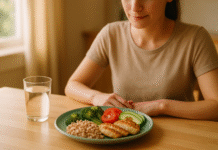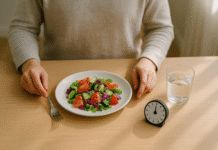



















Cooking for one doesn’t have to mean endless leftovers or boring repeats. With a few simple systems, you can prep small batches, portion precisely, and keep meals tasting fresh all week. This guide is for solo cooks who want to save time, eat balanced food, and waste less—without turning the kitchen into a second job. “Meal prep for one” means planning and cooking small batches that yield single servings you can store, reheat safely, and remix into satisfying, varied meals. In practice, that looks like choosing 2–3 base recipes, portioning into labeled containers, and using sauces and sides to switch up flavors.
Quick-start snapshot (the 12 steps you’ll master): plan your week; pick 2–3 base recipes; set up portions and containers; shop small and smart; cook once, eat three ways; scale down equipment and yields; follow safety windows; make the freezer your ally; layer flavor with sauces and toppers; reheat by texture; budget to waste less; and use a sample 7-day plan to plug-and-play.
Friendly disclaimer: This article offers general nutrition and food-safety guidance, not medical advice. If you have health conditions or dietary needs, consult a qualified professional.
1. Plan Your Solo Week Like a Chef—Decide What, When, and How Much
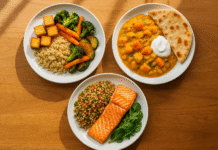
Start by getting specific: decide how many breakfasts, lunches, and dinners you’ll prep, and which days you’ll cook versus reheat. Planning prevents both overbuying and the all-too-common “four identical meals you don’t want by Thursday.” A good solo plan covers 3–4 days of refrigerated meals and 1–2 freezer backups, so you’re never stuck. Pair your routine (workdays, workouts, social plans) with meals that fit: quick microwave lunches, crisp-back dinners (air fryer/oven), and cold options for busy days. Aim for balanced plates using widely accepted frameworks such as MyPlate or the Eatwell Guide: half produce, a quarter protein, a quarter grains or starchy veg, plus dairy/fortified alternatives as desired. You don’t have to hit perfection at every meal—balance over the week is the goal. Decide now what you’ll repeat, what you’ll freeze, and what you’ll cook fresh so every serving has a home.
1.1 How to do it
- Choose 2–3 anchors (e.g., roasted chicken thighs, a grain like rice or quinoa, and a tray of mixed vegetables).
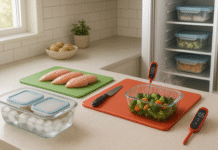
- Map 3–4 fridge days, then assign any extra portions to the freezer.
- Align reheat method to texture: wet dishes (soups, stews) microwave well; crispy foods prefer oven/air fryer.
- Slot one “assembly” meal (salad, wrap, jar noodles) for variety on a busy day.
- Add one universal sauce (chimichurri, tahini-lemon, salsa verde) for flavor lift.
1.2 Mini-checklist
Plan counts, not vibes: X breakfasts + Y lunches + Z dinners; freezer backups ready; reheating methods matched to dishes. Close your plan with one sentence you can follow on Sunday.
Synthesis: When your counts and textures are planned up front, every portion you cook has a purpose—and none become mystery leftovers.
2. Pick 2–3 Base Recipes That Scale Cleanly and Remix Easily
The best solo meal prep uses a small rotation of reliable bases you enjoy. Choose recipes that scale down without odd fractions and hold quality for 3–4 days: sheet-pan proteins, roasted vegetables, grain pilafs, bean stews, egg bites, and freezer-friendly curries. Favor “neutral-ish” bases (e.g., lemon-herb chicken; cumin-roasted veg) that welcome different sauces and garnishes so the same base feels new each day. Think across textures: one spoonable (soup/stew), one chew/crisp (roast/air fry), one quick-assembly (salad/wrap). If you eat breakfast, prep a protein-forward option you actually crave (overnight oats with Greek yogurt; egg-and-veg muffins; tofu scramble).
2.1 Tools/Examples
- Protein base: Chicken thighs or firm tofu, roasted with garlic, pepper, and olive oil.
- Grain base: Brown rice or quinoa; cook 1 dry cup to yield ~3 cups cooked.
- Vegetable base: Sheet pan of peppers, onions, zucchini, and broccoli.
2.2 Common mistakes
- Highly sauced bases that clash with later sauces.
- Fragile greens dressed too early (go soggy).
- One-note flavors without contrast (acid, heat, crunch).
Synthesis: Choose sturdy, flexible bases and you’ll unlock maximal variety from minimal cooking.
3. Portion Like a Pro: Containers, Labels, and Right-Size Tools
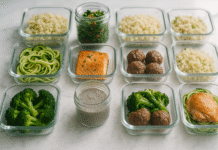
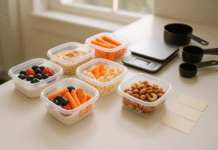
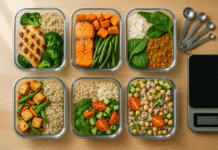
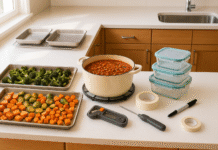
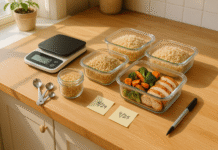
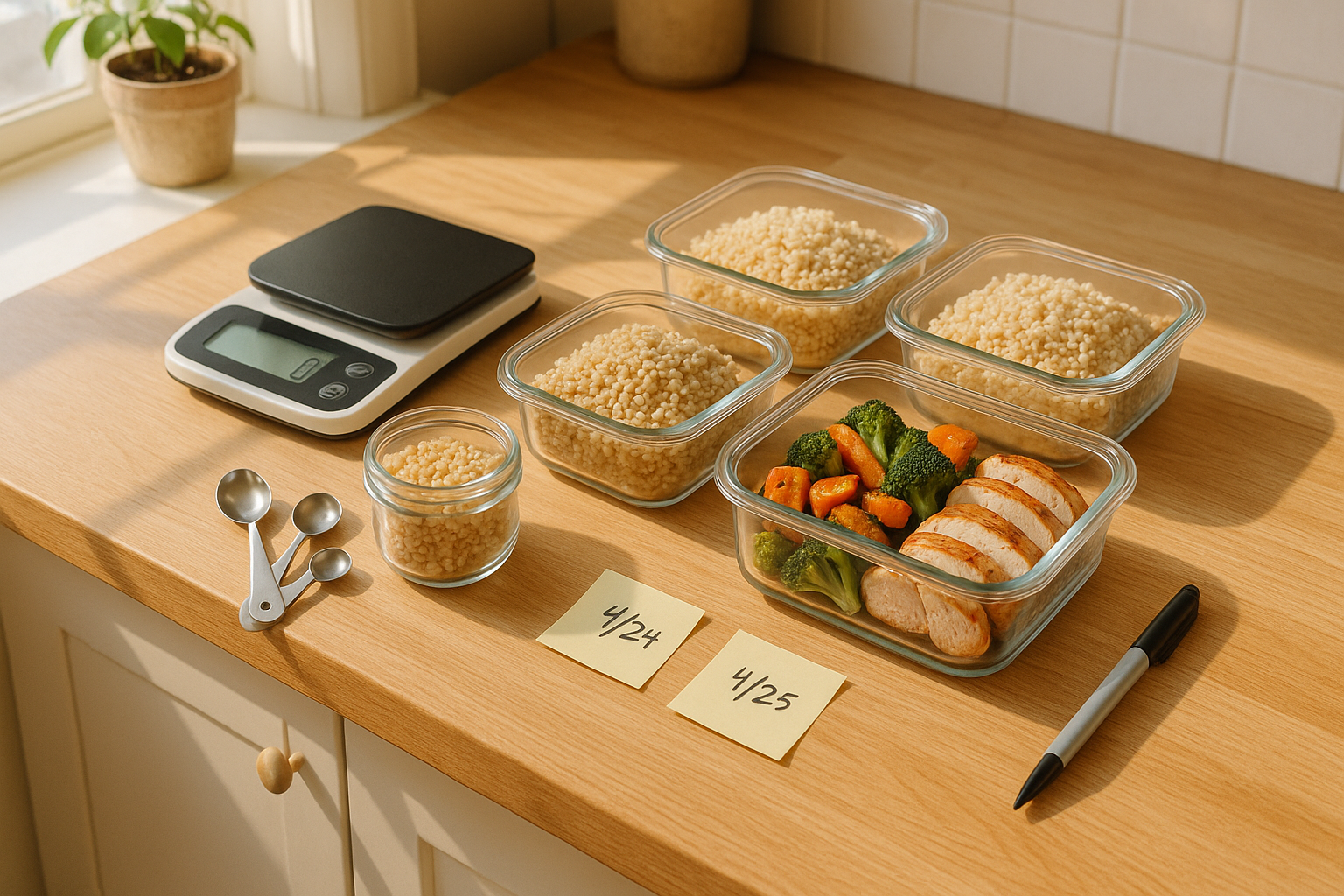
Portioning is where solo prep becomes easy. Use single-serve containers (22–32 oz/650–950 mL) for mains and half-size cups (8–12 oz/240–350 mL) for sides and snacks. A digital scale plus a couple of 1-cup and ½-cup scoops speed up consistent servings. Label each container with name • date • reheat method using painter’s tape or dissolvable labels, and stack by reheat method (microwave vs. oven/air fryer). Glass with tight lids is ideal for oven reheats; BPA-free plastic is lighter for commuting. Keep sauces and crunchy toppings separate in 2–4 oz souffle cups.
3.1 Numbers & guardrails
- Mains: 350–500 g (12–18 oz) total food per meal is common; adjust to your appetite.
- Grains: 125–175 g cooked (¾–1 cup).
- Protein: 85–125 g cooked (3–4½ oz).
- Veg: fill at least half the container by volume (MyPlate/Eatwell pattern).
3.2 Mini-checklist
Digital scale; 4–8 single-serve containers; 4–6 small sauce cups; painter’s tape + marker; reheating notes on each label.
Synthesis: Right-size containers and a labeling habit make your fridge look like a tidy menu and keep portions consistent.
4. Shop Small and Smart: Buy by Weight, Not Just by Package
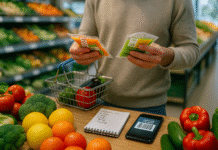
Shopping for one means avoiding overbuying perishables while keeping a pantry that supports quick meals. Buy produce loose when possible; choose smaller cuts of meat or ask the counter to portion; favor frozen vegetables and fruit for flexibility; and check unit prices so you’re not paying more per gram for “convenience” packs. Stock shelf-stable anchors (beans, tomatoes, tuna, grains) and a “flavor bar” (olive oil, vinegars, soy sauce, chili crisp, mustard, sesame oil, spices). Plan cross-use: if cilantro is in taco bowls, it should also brighten a soup or chimichurri.
4.1 Steps
- Write a list by recipe and add “universal” items (eggs, yogurt, fruit).
- Buy only what your plan uses in 3–4 days; everything else should be freezable.
- Choose frozen for delicate veg/fruit you won’t finish in time.
- Check dates but remember: quality dates aren’t safety dates; use sensory checks + safety rules (see Step 7).
- Cross-link ingredients across meals to finish bunches, jars, and loaves.
Synthesis: Small-batch shopping plus a smart pantry prevents waste and keeps your solo kitchen ready for fast, good food.
5. Cook Once, Eat Three Ways: Remix with Sauces, Sides, and Formats
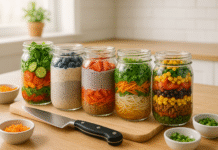
The remix mindset turns one base into multiple distinct meals. Roast chicken thighs and use them over brown rice with chimichurri, into a high-protein salad with tahini-lemon dressing, and inside a warm wrap with pickled onions. The base protein and veg stay the same; the format and sauce change the experience. Keep texture in mind: crisp elements (toasted nuts, air-fried potatoes) add excitement to day-two meals.
5.1 Remix ideas
- Protein + Grain + Sauce: Chicken + rice + salsa verde; tofu + quinoa + peanut-lime.
- Protein + Greens + Crunch: Salmon + mixed leaves + pumpkin seeds + yogurt-dill.
- Wrap/Bowl Toggle: Turn bowls into wraps/pitas when you’re tired of a spoon.
5.2 Mini case
Cook 600 g roasted tofu + 3 cups quinoa + 1 sheet pan veg. Portion 4 bowls (~450–500 g each). Day 1: tahini-lemon + olives. Day 2: gochujang-mayo + scallions. Day 3: pesto + cherry tomatoes. Day 4: peanut-lime + cucumber.
Synthesis: Variation comes from sauces and formats; keep bases steady and swap the “outfit.”
6. Scale Down Without Fussy Math: Equipment and Yield Tactics
Most recipes serve 4–6, but you’re cooking for one. Scale to 2–4 servings, which fits fridge windows and leaves one or two freezer meals. Use smaller gear—a quarter sheet pan (9×13 in / 23×33 cm), a 1–2 qt (1–2 L) saucepan, an 8-inch skillet—so food browns, not steams. Convert weights cleanly (halve 800 g to 400 g), and round seasonings to taste. Liquids often scale slightly less than linear; start with 40–50% when halving and adjust. For baking or egg bites, keep ratios (e.g., 1 egg ≈ 50–60 g; 1 cup = 240 mL) and mind pan size.
6.1 Numbers & guardrails
- Halve yields unless it breaks the recipe (e.g., 1 egg sauces).
- Batch in pairs: cook two small proteins at once (tofu + chicken) to diversify.
- Time: smaller pans may cook faster; check 5–10 minutes early.
6.2 Common mistakes
- Overcrowding small pans—leads to pale, soggy food.
- Tiny batches in giant pots—wastes energy and dulls browning.
- Scaling spices 1:1—start modest and build.
Synthesis: Choose equipment that matches solo volumes and scale by feel, not fractions, for better texture and speed.
7. Know Your Safety Windows: Fridge Days, Freezer Months, and Reheat Temps
Food safety is non-negotiable. As a rule of thumb, refrigerated leftovers are good for about 3–4 days, and the freezer preserves quality for a couple of months (longer is safe but may dry out). Always reheat leftovers to 165°F/74°C in the center; use a thermometer for thick foods. Keep your fridge at 40°F/4°C or below and your freezer at 0°F/-18°C. If food sits at room temperature for more than 2 hours, don’t save it. Label dates as you portion so you can rotate intelligently. These simple guardrails keep solo prep safe and stress-free.
7.1 Safety checklist
- Chill fast: cool and refrigerate within 2 hours; shallow containers help.
- Label clearly: name + date + “microwave/oven/air fryer.”
- Reheat hot: target 165°F/74°C; stir or rest to even out heat.
- Smell/looks off? When in doubt, throw it out.
7.2 Trusted temps (for context)
- Poultry & ground poultry: 165°F/74°C.
- Ground meats: 160°F/71°C.
- Whole cuts (beef, pork, lamb): 145°F/63°C + 3-min rest.
- Casseroles: 165°F/74°C.
Synthesis: A thermometer, labels, and simple time/temperature rules eliminate guesswork and keep you safe.
8. Make the Freezer Your Ally: Portion, Flash-Freeze, and Thaw the Right Way
Your freezer turns “too much food” into “future you will be thrilled.” Portion cooked food before freezing so you can thaw exactly one serving. For saucy items, freeze flat in zipper bags (air pressed out) or use silicone trays for cubes of sauces, rice, or beans. Flash-freeze delicate items (burgers, meatballs) on a lined sheet until firm, then pack. To thaw safely, choose: refrigerator (overnight), cold water (change every 30 minutes; cook right after), or microwave (cook immediately). You can also cook many foods from frozen—just allow more time.
8.1 Anti–freezer-burn tips
- Remove air (vacuum seal or press bags flat).
- Use tight-lidded containers; leave headspace for liquids.
- Freeze fast: spread portions out so they chill quickly.
- Label month/day and rotate.
8.2 Mini-checklist
Portion first, freeze fast, label clearly, and thaw in the fridge or cook from frozen when safe.
Synthesis: Treat the freezer like a pause button—portion smartly and thaw safely to keep texture and flavor intact.
9. Build Flavor Systems: Sauces, Crunch, Freshness, and Heat
Great solo meals lean on finishers—small, high-impact components that change a dish. Keep a weekly sauce (e.g., salsa verde, chimichurri, tahini-lemon, peanut-lime) and a couple of crunchy toppers (toasted seeds, crushed pita chips, chili crisp). Add freshness with chopped herbs and a squeeze of citrus; throw in pickled elements for snap. These layers make repetition feel intentional, not boring, and they scale perfectly for one.
9.1 Quick sauce ideas
- Herby: Parsley-cilantro chimichurri with lemon.
- Creamy: Yogurt + tahini + garlic + water + salt.
- Nutty: Peanut butter + soy + lime + ginger + honey.
9.2 Why it works
- Acid brightens rich bases.
- Texture (crunch) makes each bite interesting.
- Heat (chili, pepper) adds dimension.
Synthesis: A tiny sauce kit plus crunch and acid multiplies the meals you can make from the same base.
10. Reheat by Texture, Not Habit: Microwaves, Ovens, Air Fryers, and Stovetops
Match the method to the meal. Soups, stews, beans, and saucy curries are microwave naturals—cover and stir midway. For crisp foods (roasted potatoes, breaded cutlets, pizza), use an oven or air fryer to bring back crunch. On the stovetop, re-steam grains with a tablespoon of water, and pan-warm proteins gently to avoid drying. Always heat leftovers so that the center reaches 165°F/74°C. For rice specifically, cool quickly, refrigerate promptly, and reheat hot; mishandling rice can allow Bacillus cereus to multiply and produce toxins.
10.1 Practical tips
- Microwave: cover; add 1–2 tsp water to grains; stir halfway.
- Oven/Air Fryer: 175–200°C (350–400°F), 5–12 minutes for most items.
- Stovetop: low heat + splash of liquid; lid traps moisture.
10.2 Common mistakes
- Nuking everything; ignoring crisp-back methods.
- Reheating giant portions (uneven heating); split thick items.
- Forgetting to rest 1–2 minutes so heat equalizes.
Synthesis: Think “what texture do I want?” and choose the method that restores it—then confirm the center is hot and safe.
11. Budget and Waste Less: Cross-Use Ingredients and Track Portions
Cooking for one gets expensive if you toss food. Plan cross-use (e.g., a bunch of herbs across two recipes), buy smaller amounts, and freeze extras. Keep “rescue recipes” for scraps: frittatas, fried rice (handled safely), soup, and grain bowls. Remember that globally, households account for a significant share of food waste; using a plan and your freezer meaningfully reduces your footprint. Labeling containers, cooking portions you’ll actually eat in 3–4 days, and freezing the rest is both practical and sustainable.
11.1 Numbers & guardrails
- Portion only what you’ll eat in 3–4 fridge days.
- Freeze the rest immediately after cooling.
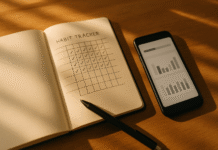
- Audit weekly: list what you trashed and why (portion too big? wrong texture?).
11.2 Mini-checklist
Cross-use plan, small-batch shopping, freezer first for overflow, weekly audit to fine-tune quantities.
Synthesis: When you align buying, cooking, and storage to your real appetite, you save money and waste less—week after week.
12. A Sample 7-Day Solo Plan You Can Copy (and Swap)
Use this as a template—plug in your preferred proteins and sauces. It follows balanced-plate patterns from major public guides (half produce; a quarter protein; a quarter grains/starchy veg) over the week, not every single meal. Adjust portions to your hunger and activity.
12.1 Batch-cook on Day 0 (about 90 minutes)
- Protein base: 600 g chicken thighs (or firm tofu), lemon-garlic.
- Grain base: 1 cup (180–200 g) dry brown rice → ~3 cups cooked.
- Veg base: Large sheet pan mixed veg.
- Sauces: Tahini-lemon and chimichurri.
12.2 The week
- Mon Lunch: Chicken + rice + tahini-lemon, cucumber, herbs.
- Mon Dinner: Veg-heavy bowl, chimichurri, toasted seeds.
- Tue Lunch: Tofu (or chicken) wrap with pickled onions, greens.
- Tue Dinner: “Lazy soup” (boxed broth + leftover veg + beans), toast.
- Wed Lunch: Rice bowl with fried egg, chili crisp, scallions.
- Wed Dinner: Freezer curry (single-serve), microwave rice, yogurt.
- Thu Lunch: Big salad with protein, lemon-olive oil, crouton crunch.
- Thu Dinner: Air-fried potatoes + roasted veg + yogurt-dill.
- Fri Flex: Eat out or finish remaining portions.
- Snacks: yogurt + fruit; hummus + carrots; nuts. Breakfasts: overnight oats or egg muffins.
12.3 Region & kitchen notes
- No oven? Use a stovetop skillet and microwave rice cooker.
- Hot climate? Chill portions fast; keep fridge ≤4°C; freeze extra on Day 0.
Synthesis: A light plan plus a sauce or two keeps meals interesting while your base prep does the heavy lifting.
FAQs
1) How many days can I keep prepped meals in the fridge?
Most cooked leftovers are best within 3–4 days in a 4°C/40°F refrigerator. If you won’t eat a portion by day 3 or 4, freeze it as soon as it cools. Labeling and rotating “first in, first out” prevents waste and guesswork. When reheating, bring the center to 165°F/74°C for safety.
2) Can I reheat leftovers more than once?
There’s no hard limit, but quality degrades each time. Safer practice: reheat only what you’ll eat and keep the rest chilled. If you reheat a large batch, split and chill extras quickly. Always reheat to 165°F/74°C, and if the food has been at room temperature for more than 2 hours, discard it.
3) What’s the safest way to thaw a single portion?
Use the refrigerator (overnight) for the most even results. If you need speed, submerge a sealed bag in cold water, refreshing every 30 minutes; cook immediately after. Microwave thawing is fastest but can partially cook the edges—stir or finish cooking right away. Many foods can be cooked from frozen with extra time.
4) How do I handle rice safely for meal prep?
Cool rice quickly, refrigerate promptly, and reheat to 165°F/74°C. Rice mishandled at room temperature can let Bacillus cereus multiply and produce toxins. Keep rice portions small and chilled; when in doubt, discard.
5) Glass or plastic containers—which are better?
Glass excels for oven reheats and resists staining; plastic is lighter for commutes and fine for microwave-safe reheats. Prioritize tight lids, single-serve sizes, and labeling space. Regardless of material, match container to reheat method (e.g., don’t oven-bake plastic).
6) I don’t have a kitchen scale—how can I portion accurately?
Use volume cues and the plate method: ¾–1 cup cooked grains (a heaped fist), 3–4½ oz cooked protein (about a palm), and half the container with veg. Balance across your week using recognized public guides (MyPlate/Eatwell). nhs.uk
7) What if I get bored eating the same thing daily?
Plan remix points: one base, multiple sauces and formats. For example, roast tofu once and use it in a grain bowl, a salad, and a wrap. Keep a weekly sauce and a crunchy topper; the contrast in texture and flavor makes repeats feel new.
8) How do I stop wasting herbs, bread, and dairy?
Cross-plan ingredients so they appear in two meals, freeze chopped herbs in oil, slice and freeze bread, and portion yogurt into small jars. Remember: households generate a major share of food waste worldwide; labeling and freezing are your cheapest tools to fight it.
9) Is a “balanced plate” realistic when I’m rushing?
Yes—balance over the day or week. If lunch is carb-heavy, make dinner veg- and protein-forward. Public guides emphasize patterns—not perfection at every plate—so use your week as the unit of balance.
10) Are there minimum internal temperatures I should know?
Yes. Poultry (whole or ground) 165°F/74°C; ground meats 160°F/71°C; whole cuts of beef/pork/lamb 145°F/63°C + 3-minute rest; casseroles 165°F/74°C. Use a thermometer to verify.
Conclusion
Solo cooking becomes joyful and sustainable when you replace improvisation with a few dependable systems. You planned the week, picked flexible bases, portioned with purpose, shopped small, and learned to remix flavors so each meal feels fresh. You matched reheating to texture, used safety windows to protect yourself, and turned your freezer into a strategic ally instead of a graveyard. The result isn’t just convenience—it’s confidence: you know exactly what’s in your fridge, how long it’s good, and how to bring it back to delicious. Start with two bases and one sauce this week. Label your portions, freeze a couple for future you, and track what you loved. In two or three cycles, you’ll have a personal playbook that fits your appetite, schedule, and budget. Ready to begin? Pick your two base recipes and set a timer for 90 minutes—your weeknight self will thank you.
References
- Leftovers and Food Safety. USDA Food Safety and Inspection Service (FSIS), July 31, 2020. Food Safety and Inspection Service
- Safe Minimum Internal Temperature Chart. USDA FSIS, n.d. Food Safety and Inspection Service
- The Big Thaw — Safe Defrosting Methods. USDA FSIS, June 15, 2013. Food Safety and Inspection Service
- Cold Food Storage Chart. FoodSafety.gov (USDA/HHS), September 19, 2023. FoodSafety.gov
- How many times can I reheat foods? AskUSDA, n.d. Ask USDA
- Refrigeration & Food Safety. USDA FSIS, March 23, 2015. Food Safety and Inspection Service
- What Is MyPlate? USDA MyPlate, n.d. MyPlate
- Eatwell Guide: How to eat a healthy balanced diet. NHS Inform (Food Standards Scotland), February 21, 2025. NHS inform
- Home food fact checker (rice and Bacillus cereus). Food Standards Agency (UK), June 2, 2020. Food Standards Agency
- Rice (Leftover rice safety). Food Standards Scotland, n.d. Food Standards Scotland
- World squanders over 1 billion meals a day — UN report. UN Environment Programme press release, March 27, 2024. UNEP – UN Environment Programme
- Cook to a Safe Minimum Internal Temperature. FoodSafety.gov, November 21, 2024. FoodSafety.gov