



















If you prep on Sundays but end up bored by Wednesday—or worse, queasy after Thursday’s leftovers—you’re not alone. Most meal prep fails happen in predictable places: planning, temperatures, cooling, labeling, and reheating. Here’s the short version: meal prep mistakes are errors in planning, cooking, cooling, storing, and reheating that waste time and money or compromise safety; you overcome them with a simple plan, strict temperature control (fridge ≤40°F / 4°C), fast cooling in shallow containers, accurate labels, and thorough reheating to 165°F (74°C). As of August 2025, those fundamentals still match USDA/FDA guidance.
Quick fixes at a glance: plan your menu first, refrigerate within 2 hours (1 hour in heat), cool in shallow containers, label with date + dish, reheat to 165°F, and keep your fridge at or below 40°F (4°C).
Fast disclaimer: The guidance below is general kitchen and nutrition advice. Always follow your local health authority’s rules and your clinician’s advice for medical conditions, allergies, pregnancy, or immunocompromised needs.
1. Winging It Without a Real Plan
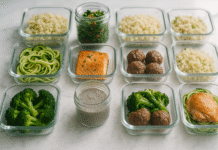
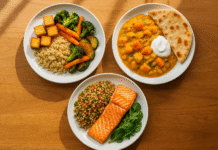
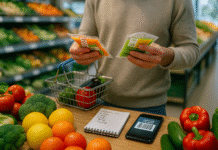
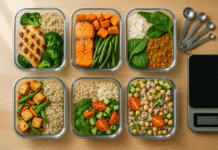
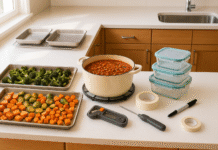
Going in without a menu, shopping list, or inventory creates waste, bland repeats, and nutrition gaps. The fix starts before you cook: decide 3–5 anchor meals that share ingredients (e.g., roast chicken → tacos, salads, fried rice), then map your perishables to the first half of the week and freezer-friendly dishes to the second. Build each plate around a protein, colorful produce, whole grains/legumes, and healthy fats—a pattern aligned with major dietary guidelines. If you’re feeding varied tastes (or picky kids), “component prep” (cook bases separately, assemble later) preserves flexibility. Use a running pantry list (phone note works) to avoid duplicate buys and to tighten your budget. Finally, schedule your prep in 60–90 minute blocks so you actually finish—and still want to eat the food on Wednesday. (See Items 13 and 15 for burnout-proofing.)
How to do it
- Choose 3–5 dishes that share ingredients and reheat well (curries, chilis, sheet-pan meals, roasted veg + grains).
- Add 2 “assembly” meals (wraps/salads/bowls) using prepped components.
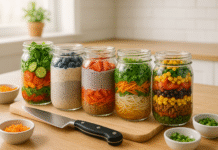
- Shop once; wash/chop high-use veg right away; cook proteins in batch; cool and portion.
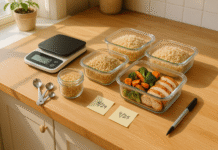
- Label every container (dish + date + “EOW” if it’s for the end of week).
- Keep one “freezer insurance” meal (soup/stew/chili) for schedule slip-ups.
Mini-checklist
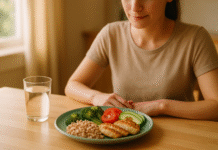
Menu locked? Ingredients overlap? One freezer meal? Labels ready? Yes to all four and your plan is resilient. For nutrition balance by life stage, use the Dietary Guidelines as guardrails.
2. Letting Food Linger in the “Danger Zone”
Leaving cooked or cold foods between 40°F and 140°F (4–60°C) invites rapid bacterial growth. Rule of thumb: refrigerate within 2 hours; if ambient temperature is above 90°F (32°C), refrigerate within 1 hour—critical in hot kitchens or outdoor events. In Karachi’s summer heat, for example, that 1-hour window often applies. Keep hot foods ≥140°F and cold foods ≤40°F until you portion and chill them. Practically, that means clearing counter space before you cook so containers are ready, portioning quickly, and getting food into the fridge without procrastination. Don’t rely on “it’s still warm” as a safety proxy; time + temp control is what matters. U.S. Food and Drug Administration
How to do it
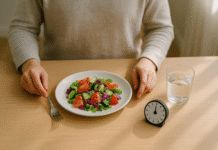
- Set a 2-hour/1-hour timer the moment cooking stops.
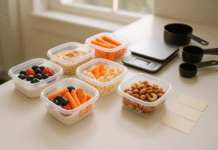
- Stage labeled, shallow containers (≤5 cm / 2 in deep) to speed cooling.
- For cold salads at a desk/picnic, use an ice pack and insulated bag.
- Keep a fridge thermometer and verify ≤40°F (4°C).
Synthesis: Treat time and temperature like ingredients. Nail both and most safety headaches disappear.
3. Cooling Big Batches the Wrong Way
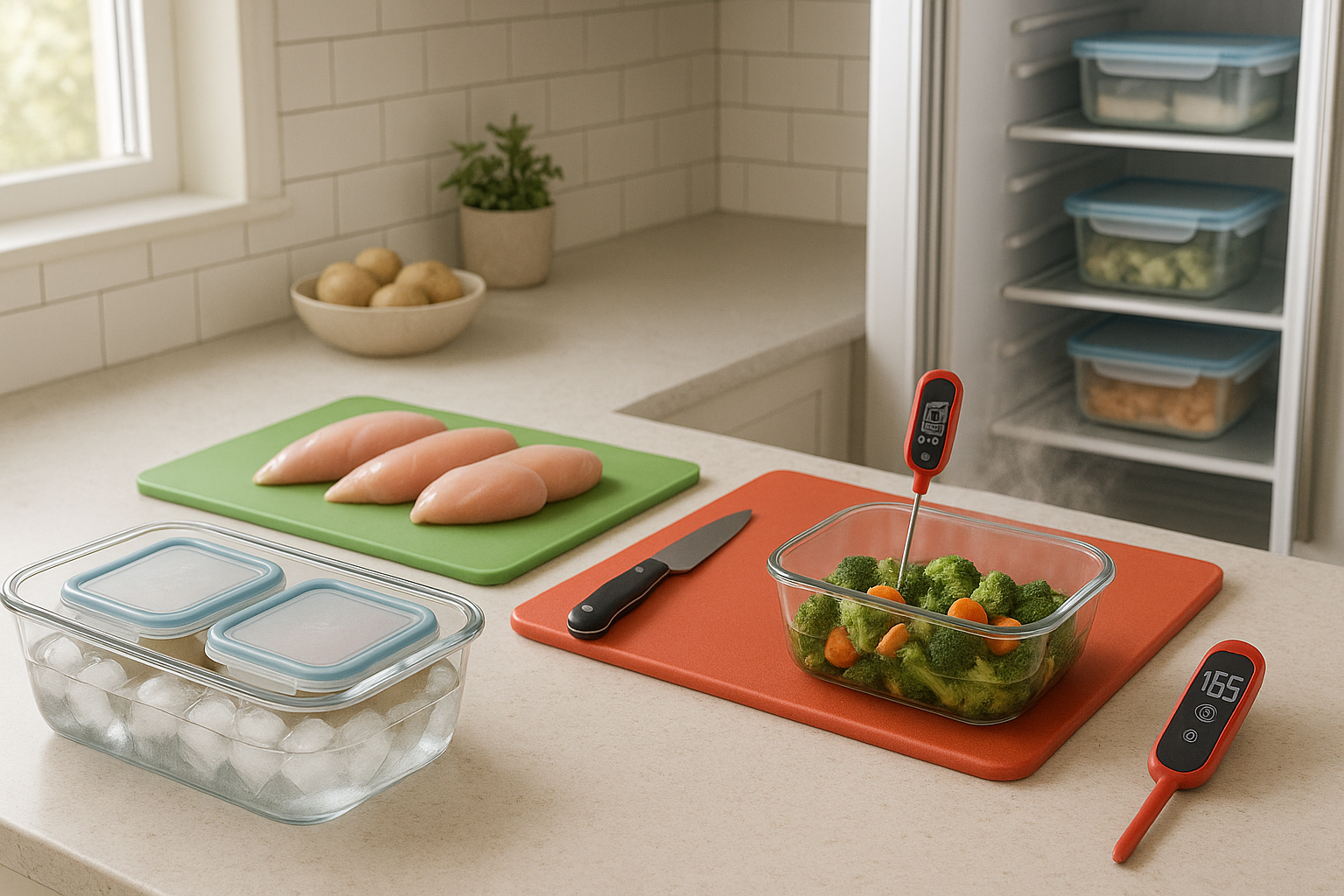
Parking a steaming pot of chili in the fridge—or worse, on the counter—keeps it in the danger zone for hours. The safer move is rapid cooling: divide into shallow containers (no more than ~2 inches deep), leave lids slightly ajar, and place on a rack with airflow or in an ice bath for 15–30 minutes before sealing. Your goal is not to “let it sit out,” but to speed the journey below 40°F. Modern refrigerators can handle warm food in small containers; the bigger risk is slow cooling in deep pots. Always refrigerate leftovers within 2 hours of cooking.
3.1 Why it matters
- Shallow depth = faster heat loss = less time in the danger zone.
- Large vessels cool unevenly; the core can stay >40°F for hours.
- Quick cooling protects quality (texture) as well as safety.
Mini-checklist
Shallow pans? Ice bath for soups/stocks? Lids vented until cool? Fridge space cleared? If yes, you’re cooling correctly.
Synthesis: Quick cooling isn’t complicated; it’s a habit. Prep your containers before you cook and the safety part runs on autopilot.
4. Cross-Contamination from Boards, Knives, and Marinades
Using the same cutting board for raw chicken and cucumbers—or reusing a raw-meat marinade as a sauce—can contaminate ready-to-eat food. Prevent this with separate boards (raw proteins vs. produce/bread), hot, soapy wash for knives and surfaces after raw meat, and clean plates/utensils for cooked foods. If you love the flavor of your marinade, boil any marinade that touched raw meat/poultry before using it as a sauce. Always marinate in the refrigerator, not on the counter.
Tools/Examples
- Keep two cutting boards with different colors/textures.
- Reserve a portion of marinade before it touches raw meat for serving.
- If reusing marinade: bring to a rolling boil for safety.
Synthesis: Treat raw and ready-to-eat like two separate kitchens, and your odds of cross-contamination plummet.
5. Reheating Too Gently—or Unevenly
“Warm” isn’t safe. Reheat leftovers to 165°F (74°C); bring soups, sauces, and gravies to a rolling boil. Microwaves heat unevenly and leave “cold spots,” so stir/rotate and let food stand for a minute or two, then check with a food thermometer. Avoid reheating in slow cookers (they warm too slowly); use stovetop, oven (≥325°F / 163°C), air fryer, or microwave with care. If you can’t verify temperature, reheat a bit longer and recheck.
How to do it
- Add a splash of water/stock to rice or pasta dishes, cover loosely, and vent.
- Stir halfway, check 165°F, then rest 1–2 minutes and re-check.
- For thick stews, reheat on stovetop, stirring often, until steamy and ≥165°F.
Synthesis: Safe reheating is a temperature target, not a time guess. A $10 thermometer turns “maybe” into “yes.”
6. Fridge Too Warm—or Overpacked
If your refrigerator runs warmer than 40°F (4°C), or it’s stuffed to the gills, cold air can’t circulate and food warms above safe temps. The simple fix: place an appliance thermometer on a middle shelf and adjust settings until it reads ≤40°F; keep the freezer at 0°F (–18°C). Avoid the door for the most perishable items (it’s the warmest zone). Leave space between containers for airflow and cool cooked foods promptly.
Mini-checklist
- Fridge ≤40°F? Freezer 0°F?
- Door reserved for condiments, not milk or eggs?
- Space between containers for airflow?
Synthesis: Your fridge is safety gear. Calibrate it like one. U.S. Food and Drug Administration
7. Skipping Labels and Misjudging Safe Windows
“Fridge archaeology” is how food gets wasted—or eaten past its safe window. Use most cooked leftovers within 3–4 days; freeze for longer (quality declines over time, but food remains safe indefinitely at 0°F). Label every container with dish + date, and use the FoodKeeper app to check storage times. When in doubt, throw it out—especially if it smells odd, looks slimy, or the container bulges.
Numbers & guardrails
- Fridge: most cooked leftovers 3–4 days.
- Freezer: quality best within a few months; safety remains if held at 0°F. FoodSafety.gov
Synthesis: A marker pen is the cheapest food safety tool you’ll ever buy.
8. Thawing on the Counter (or Marinating There)
The only safe thawing methods are: in the refrigerator, in cold water (change water every 30 minutes), or in the microwave followed by immediate cooking. Never thaw on the countertop; the exterior warms into the danger zone while the center is still frozen. Marinate in the refrigerator, not on the counter. Build thawing time into your plan (many items need 24 hours in the fridge).
How to do it
- Fridge: place on a tray to catch drips (bottom shelf).
- Cold water: submerge sealed package; change water every 30 min.
- Microwave: cook immediately after thawing (don’t re-chill).
Synthesis: Plan the thaw, and you won’t need a “panic defrost” that compromises safety.
9. Mishandling Starchy Staples (Rice, Pasta, Potatoes)
Cooked rice is a common food poisoning culprit when left out too long; Bacillus cereus spores can survive cooking and produce heat-stable toxins if rice cools slowly at room temperature. Refrigerate rice within 2 hours (faster is better), store shallow, and reheat until steaming hot; some authorities advise not reheating rice more than once. These principles also help with cooked pasta and potatoes. The safest move: cool quickly, refrigerate promptly, and portion small.
Mini-checklist
- Cool and refrigerate rice/pasta/potatoes promptly in shallow containers.
- Reheat to piping hot; don’t leave at room temp.
- When unsure, discard—toxins aren’t destroyed by typical reheating. Torbay Council
Synthesis: Starches aren’t special, but their risks are sneaky. Speed and temperature are everything.
10. Microwaving in the Wrong Containers—and Not Venting/ Stirring
Not every container is microwave-safe. Use glass/ceramic or plastics labeled “microwave-safe,” and avoid metal or unmarked takeout tubs. Loosely cover and vent so steam escapes; stir/rotate for even heating; and use a food thermometer because microwaves can leave cold spots where bacteria survive. If using plastic wrap, keep it from touching food.
How to do it
- Check for a microwave-safe label; when in doubt, pick glass.
- Cover, vent, stir halfway, and let stand 1–2 minutes before checking temp.
- Never microwave with tight-sealed lids; pressure can build.
Synthesis: Microwaves are safe and fast when the container and technique are right.
11. Macro Imbalance: Too Little Protein and Fiber
Meal prep that leans heavily on refined starch or “snack plates” can leave you hungry by afternoon. Two reliable anchors are protein (spread across meals) and fiber (from fruit, veg, legumes, whole grains, nuts/seeds). A practical daily fiber target is ~14 g per 1,000 kcal (~25–28 g for most women, ~28–34 g for most men). Build meals that include a protein (eggs, poultry, fish, tofu, beans, Greek yogurt), colorful produce, and a whole-grain or legume base. If you’re highly active or aiming for muscle gain, talk with a dietitian about your protein needs by body weight and training. Dietary Guidelines
How to do it
- Add 1 palm (80–120 g) of protein and 1–2 fists of veg to each box.
- Use legumes/whole grains for fiber: lentils, chickpeas, oats, quinoa.
- Keep fruit and nuts on hand to round out prep days.
Synthesis: Hit protein + fiber consistently and portion control gets much easier.
12. Sodium Bomb Sauces (and Soggy Storage)
Pre-made sauces and salty condiments can blow past sodium goals and make meals soggy over days. The American Heart Association recommends ≤2,300 mg/day and suggests 1,500 mg/day as an ideal limit for most adults; most sodium comes from packaged/restaurant foods, not the salt shaker. Keep sauces on the side and add right before eating. Dilute bottled sauces with unsalted stock/citrus, and favor fresh herbs, spices, and acids for flavor.
Mini-checklist
- Sauce on the side; dress salads just before eating.
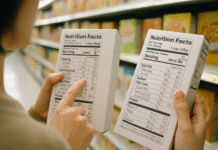
- Scan labels (<300 mg per serving is a reasonable “everyday” target).
- Stock citrus, vinegars, garlic, ginger, fresh herbs for punchy low-sodium flavor.
Synthesis: Flavor big, salt smart. Your food tastes better on day three—and your blood pressure may thank you.
13. Cooking the Wrong Dishes for Long Hold
Some foods don’t hold well: crispy fried items, delicate greens drenched in dressing, and seared proteins left in sauce get limp or dry. Batch components (grains, proteins, roasted veg) and assemble later, or finish with a fresh, high-impact element (quick-pickled onions, toasted seeds, a yogurt sauce). Choose “day-3 friendly” dishes (braises, curries, stews, bean-based bowls) for later in the week, and eat delicate textures early.
How to do it
- Day 1–2: fresh salads, grilled fish/chicken; dress just before eating.
- Day 3–4: stews, chilis, curries; reheat gently to 165°F and finish with herbs.
- Store crunchy toppings separately (nuts, croutons, slaws).
Synthesis: Match the dish to the day. Texture lasts when you batch smart and finish fresh.
14. Ignoring Variety—and Letting Waste Build
Eating the same thing seven days straight leads to “flavor fatigue,” snack raids, and waste. Bake variety into your plan with 2 base proteins, 2 grains/legumes, and 3 vegetables you can recombine. Rotate spice profiles (Mediterranean, Mexican, South Asian) with the same base ingredients. Use FIFO (first-in, first-out) in the fridge, and lean on the FoodKeeper app to decide what should be eaten or frozen today. Turn scraps into stock and wilt-bound veg into soups or frittatas. FoodSafety.gov
Mini-checklist
- Two proteins + two bases + three veg each week.
- One frozen back-up meal for schedule shock.
- FIFO labels (“Mon,” “Wed,” “Fri”) to cue order.
Synthesis: Variety fights boredom; FIFO fights waste. Together, they keep you on track.
15. Unrealistic Prep Marathons (and No Recovery Plan)
Four-hour Sunday marathons are a fast track to burnout. Sustainable prep fits your life: two 60–90 minute sprints (e.g., Sun + Wed), plus 10-minute touch-ups (wash greens, cook a quick grain). Keep effort in proportion to payoff—if it doesn’t reheat well or replace takeout, skip it. Build a “Plan B shelf” (eggs, canned tuna/beans, frozen veg, tortillas, microwave-safe rice) so a rough day doesn’t trigger a delivery spiral. Finally, treat dishes like a rotation, not a fixed script, so you can adapt to cravings and calendar chaos.
How to do it
- Batch hard once, then component-prep midweek.
- Keep a 10-minute meal list on the fridge.
- Stock Plan B shelf for emergencies.
Synthesis: Consistency beats intensity. Small, repeatable routines are how meal prep sticks.
FAQs
1) Is it okay to put hot food straight into the fridge?
Yes—especially if it’s in shallow containers. The safety priority is getting food below 40°F quickly to minimize time in the danger zone. Large pots cool slowly, so divide into shallow containers, vent lids until steam subsides, and refrigerate within 2 hours (1 hour if it’s hotter than 90°F/32°C). Food Safety and Inspection Service
2) How long do cooked leftovers last in the fridge and freezer?
For most dishes, 3–4 days in the fridge is the safe window; freeze for longer storage. Quality declines over time in the freezer, but food held at 0°F (–18°C) remains safe. Label everything with the date and use a first-in, first-out approach.
3) What temperature should my fridge and freezer be?
Keep the refrigerator at or below 40°F (4°C) and the freezer at 0°F (–18°C). Use an inexpensive appliance thermometer because many dials don’t show actual temperatures. Check weekly, especially in hot weather or if your fridge is very full.
4) What’s the safest way to thaw meat or fish?
In the refrigerator is best. If you’re short on time, use the cold-water method (sealed bag, change water every 30 minutes) or the microwave followed by immediate cooking. Never thaw on the counter—exteriors warm into the danger zone while the center stays frozen. Ask USDA
5) How hot should leftovers be when I reheat them?
Heat to 165°F (74°C) throughout; bring soups, sauces, and gravies to a rolling boil. In the microwave, cover loosely, vent, stir halfway, and let stand so heat equalizes; then check with a food thermometer.
6) Is reheating rice safe?
Yes, if the rice was cooled and refrigerated promptly. Rice can harbor Bacillus cereus spores that survive cooking and can produce toxins if rice sits warm too long. Chill quickly in shallow containers and reheat until steaming hot; don’t leave rice out.
7) Which containers are safest for reheating?
Use glass or ceramic, or plastics labeled “microwave-safe.” Avoid metal and unmarked takeout tubs. Loosely cover and vent so steam can escape, stir/rotate for even heating, and verify temperature with a thermometer. U.S. Food and Drug Administration
8) How much sodium is “too much” for meal prep?
Aim for ≤2,300 mg/day, with 1,500 mg/day as an ideal limit for most adults, per AHA/FDA guidance. Keep sauces on the side, choose low-sodium stocks, and lean on herbs, spices, citrus, and vinegar for flavor.
9) How can I make prepped meals more filling?
Include protein and fiber at each meal. A practical fiber target is ~14 g per 1,000 kcal (about 25–28 g for most women, 28–34 g for most men). Build meals from beans/lentils, whole grains, vegetables, fruits, nuts/seeds, and quality proteins.
10) Do I have to boil marinades before using them as sauce?
If the marinade touched raw meat, poultry, or seafood, yes—boil it first (or set aside a clean portion before marinating). Boiling kills pathogens picked up from raw foods. Marinate in the refrigerator, not on the counter.
Conclusion
Meal prep should make your week easier, safer, and tastier—not riskier or more repetitive. The big levers are simple: plan a menu you’ll actually eat, control temperatures (≤40°F cold, ≥165°F when reheating), cool fast in shallow containers, and label everything. Build balanced boxes with ample protein and fiber so you’re satisfied, keep sauces on the side to manage sodium and texture, and choose dishes that hold up across days. When life happens, lean on a two-sprint schedule and a Plan B shelf so you stick with it. Start with two changes from this list—say, a fridge thermometer and a strict 2-hour rule—and add more as they stick. Your midweek self will be very grateful.
Copy-ready CTA: Pick one recipe and one container set, label your boxes, and set a 2-hour timer today.
References
- “Danger Zone (40°F–140°F),” USDA Food Safety & Inspection Service (FSIS), June 28, 2017. https://www.fsis.usda.gov/food-safety/safe-food-handling-and-preparation/food-safety-basics/danger-zone-40f-140f
- “Refrigerator Thermometers: Cold Facts about Food Safety,” U.S. FDA, March 5, 2024. https://www.fda.gov/food/buy-store-serve-safe-food/refrigerator-thermometers-cold-facts-about-food-safety
- “The Big Thaw — Safe Defrosting Methods,” USDA FSIS, June 15, 2013. https://www.fsis.usda.gov/food-safety/safe-food-handling-and-preparation/food-safety-basics/big-thaw-safe-defrosting-methods
- “Home Food Fact Checker – Can you reheat rice?” Food Standards Agency (UK), June 2, 2020. https://www.food.gov.uk/safety-hygiene/home-food-fact-checker
- “Leftovers and Food Safety,” USDA FSIS, July 31, 2020. https://www.fsis.usda.gov/food-safety/safe-food-handling-and-preparation/food-safety-basics/leftovers-and-food-safety
- “4 Steps to Food Safety,” FoodSafety.gov (HHS/USDA/FDA), September 18, 2023. https://www.foodsafety.gov/keep-food-safe/4-steps-to-food-safety
- “Cooking with Microwave Ovens,” USDA FSIS, n.d. https://www.fsis.usda.gov/food-safety/safe-food-handling-and-preparation/food-safety-basics/cooking-microwave-ovens
- “How Much Sodium Should I Eat Per Day?” American Heart Association, July 15, 2025. https://www.heart.org/en/healthy-living/healthy-eating/eat-smart/sodium/how-much-sodium-should-i-eat-per-day
- “Sodium in Your Diet,” U.S. FDA, March 5, 2024. https://www.fda.gov/food/nutrition-education-resources-materials/sodium-your-diet
- “Easy Ways to Boost Fiber in Your Daily Diet,” Academy of Nutrition and Dietetics (eatright.org), March 1, 2021. https://www.eatright.org/health/essential-nutrients/carbohydrates/easy-ways-to-boost-fiber-in-your-daily-diet
- “Dietary Guidelines for Americans, 2020–2025,” U.S. Departments of Agriculture and Health & Human Services, December 2020. https://www.dietaryguidelines.gov/resources/2020-2025-dietary-guidelines-online-materials
- “How To Prevent ‘Fried Rice Syndrome’,” Cleveland Clinic Health Essentials, January 24, 2024. https://health.clevelandclinic.org/fried-rice-syndrome
- “Cutting Boards,” USDA FSIS, n.d. https://www.fsis.usda.gov/food-safety/safe-food-handling-and-preparation/food-safety-basics/cutting-boards
- “Check Your Steps! Separate Raw Meats from Other Foods,” USDA Blog, July 19, 2011. https://www.usda.gov/about-usda/news/blog/check-your-steps-separate-raw-meats-other-foods-keep-your-family-safer-food-poisoning
- “Cooking for Groups: A Volunteer’s Guide to Food Safety,” USDA FSIS, April 2021 (PDF). https://www.fsis.usda.gov/sites/default/files/media_file/2021-04/Cooking_for_Groups.pdf