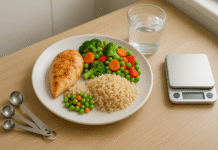
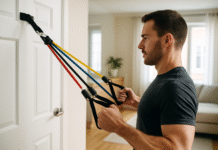
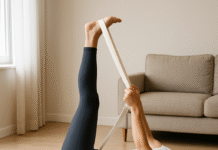





















If you want results you can see and sustain, you need metrics you can trust. This guide breaks down measuring fitness success into 14 practical KPIs—what to track, how to measure each one accurately, and how to act on the numbers. You’ll learn how to mix performance, health, and recovery signals so you can progress consistently without burning out. This article is educational and not a substitute for medical advice; speak with a qualified professional about personal health decisions.
Quick definition: Measuring fitness success means tracking a balanced set of inputs (training, sleep, nutrition) and outputs (performance, body composition, health markers) over time, using consistent methods and thresholds to decide what to change next.
Fast-start checklist (skim & begin):
- Pick 7–9 KPIs below that fit your goals and equipment.
- Establish baselines this week; repeat key measures every 2–4 weeks.
- Log methods (time of day, device, protocol) to keep measurements consistent.
- Look at trends, not single readings (use weekly or 4-week averages).
- Make one change at a time; re-test in 14–28 days.
- Guardrails: if blood pressure is elevated or symptoms appear, consult a clinician.
1. Body Composition (DXA/BIA/Skinfolds): Track What’s Changing—Not Just Weight
Body composition is the most direct way to see if training and nutrition are driving the right tissue changes. In the first 1–2 sentences: DXA (dual-energy X-ray absorptiometry) is the clinical reference for whole-body composition and is excellent for tracking fat and lean mass changes over months. Consumer tools (smart scales/BIA) and skinfolds can be useful if you’re consistent with time of day, hydration, and technician technique; their absolute values can differ from DXA, so anchor on trend, not single numbers. For most people, quarterly DXA plus weekly home measures is a realistic balance of accuracy and cost. If you can’t access DXA, combine skinfolds with waist measurements to detect meaningful change.
1.1 Why it matters
- DXA is widely regarded as a gold-standard reference for regional and whole-body fat and lean mass; it’s reliable over time when protocols are standardized.
- BIA and skinfolds can under- or overestimate fat percentage; hydration and formulas used make a difference, so compare like with like. PMC
1.2 How to do it
- DXA: same scanner, morning, fasted, similar hydration; retest every 12–16 weeks. Quantitative Imaging
- BIA/smart scale: same time daily (e.g., after waking, after bathroom), bare feet, no training beforehand.
- Skinfolds: same technician/device, 7–8 site sum; use the sum of millimeters rather than converting to % for cleaner trend lines. Frontiers
Mini example: If DXA shows −1.8 kg fat and +0.3 kg lean in 12 weeks while the scale barely moved, your program is working—don’t be fooled by stable body weight.
Synthesis: Use the most accurate tool you can access (ideally DXA), but judge success by direction and consistency across methods.
2. Waist-to-Height Ratio & Girths: A Fast Check on Central Fat
You can’t always get a scan, but you can wrap a tape measure. Waist-to-height ratio (WHtR) is a simple, validated screen for central adiposity and cardiometabolic risk. Aim for a waist under half your height (WHtR < 0.5), a public-health recommendation adopted in the UK. This metric moves faster than total body weight when you recomposition, and it’s cheap, repeatable, and actionable. Use consistent landmarking (midway between the lowest rib and iliac crest), take two readings, and average them.
2.1 Numbers & guardrails
- NICE recommends keeping waist < half your height as a plain-language threshold; NHS provides a public calculator.
- Measure at the same point each time; don’t suck in; record to the nearest 0.5 cm. (WHO guidance aligns on anatomical landmarks.) Wikipedia
2.2 Mini-checklist
- Log waist, hips, thigh, chest, arm every 2–4 weeks.
- Pair with progress photos (same light, stance, distance).
- Track WHtR alongside your training block notes to link changes.
Mini example: Height 170 cm, waist 86 cm → WHtR 0.51; after 8 weeks of training and protein adherence, waist 81 cm → WHtR 0.48 (risk trending down). British Heart Foundation
Synthesis: Girths and WHtR are fast, sensitive signals of fat distribution—perfect between scan days.
3. Scale Weight Trend: Smooth the Noise to See the Truth
Daily weight bounces with salt, glycogen, and hormones. The fix is simple: weigh daily and use a 7-day rolling average (or EWMA) to see trend. In your first 1–2 sentences: Treat weight as a lagging indicator—use it to confirm your nutrition and training recovery plan is directionally right. Tie it to refeed days, cycle phases, travel, and sleep to learn how your body responds. Over weeks, the smoothed line tells the story; single spikes don’t.
3.1 How to do it
- Weigh first thing, after bathroom, before fluids, with minimal clothing; same scale placement.
- Chart daily and review the 7-day average each week; set realistic ranges (e.g., ±0.25–0.5%/week for loss, +0.25–0.5%/month for lean gain).
3.2 Mini checklist
- Pair with waist: dropping waist with flat weight often means recomp, not “plateau.”
- Note sodium and late meals; both add transient water.
Synthesis: Don’t judge a day—judge the trend.
4. Strength PRs & 1RM Estimates: Proof of Progressive Overload
Strength improves when you consistently add load, reps, sets, or density. For a quick answer at the top: Track rep PRs at fixed RPE and estimate 1RM with validated formulas; this shows whether your program’s overload is working without maxing out weekly. Use the same exercise variants, technique standards, and rest periods to make progress comparable. Log both external load (kg) and internal effort (RPE or reps-in-reserve) to see quality, not just quantity.
4.1 Tools/Examples
- 1RM estimates: Epley (1RM ≈ weight × (1 + reps/30)) or Brzycki are common in practice; NSCA/ACSM testing procedures standardize safety. Paulo Gentil
- Progression models: ACSM’s position stand underscores progressive resistance (more load/volume over time) as non-negotiable.
4.2 Mini checklist
- Track Top Set + Backoff Volume for key lifts (e.g., 1×6 @ RPE8, then 3×6 @ −8%).
- Standardize tempo and rest; don’t turn sets into different exercises week to week.
- Re-test every 4–8 weeks; avoid frequent true 1RM tests unless competitive.
Synthesis: Rising rep PRs at a similar RPE confirm training is effective, not just hard.
5. Muscular Endurance: Repeat Quality Under Fatigue
Strength is peak output; muscular endurance is sustained output. Track both, because many goals (hypertrophy, sport, health) need the ability to hold form across sets. In plain terms at the top: Use AMRAPs at a fixed load, fixed-rep sets across fixed rest, or density blocks to quantify how long you can keep quality reps. When endurance improves, you tolerate volume better and recover faster between sets, which compounds strength and hypertrophy gains.
5.1 Numbers & guardrails
- Use the same load (%1RM), rep target, rest, and range of motion each re-test.
- Score quality reps only (bar path, full range, no bouncing).
- Expect ~1–3 more good reps or quicker recovery across 4–8 weeks if volume and sleep are adequate. PMC
5.2 Mini-checklist
- Choose two endurance tests (e.g., push-ups in 2 min; goblet squats AMRAP @ 24 kg).
- Re-test after each block; stop a set when form breaks.
- Track RPE drift; if effort climbs week to week at same output, recovery’s lagging.
Synthesis: Endurance KPIs are your volume readiness meter—crucial for lifters and team-sport athletes alike.
6. Aerobic Capacity (VO₂max & Time Trials): Your Engine Size
Cardiorespiratory fitness predicts performance and long-term health. For a direct answer: Use field tests (time trial pace/power), submaximal protocols, or wearable estimates to trend aerobic capacity; you don’t need a lab to learn if your engine is growing. Pick one protocol (e.g., 1.5-mile run, 5-minute best effort on a bike/rower, or a step/ramp test) and standardize conditions.
6.1 How to do it
- Warm up 10–15 minutes; test at similar temperature, surface, and time of day.
- Record time/pace/power and average HR; note RPE.
6.2 Numbers & guardrails
- Expect meaningful changes in 6–12 weeks of structured aerobic work; use the same test to compare apples to apples.
- If relying on wearables for VO₂max, use them as trend tools and corroborate with time-trial performance.
Synthesis: Performance-based aerobic tests cut through algorithm noise—get faster at a set distance/time and you’re fitter.
7. Resting Heart Rate (RHR): A Simple Read on Conditioning & Stress
RHR is easy to measure and tells a lot. First, the direct answer: For most adults, a resting heart rate of ~60–100 bpm is considered normal; trained individuals often sit lower. Track RHR at the same time each morning (lying down, before caffeine); pair with sleep and HRV to interpret stress and recovery. A sustained rise (e.g., +5–10 bpm for several days) often flags illness, under-recovery, or heat.
7.1 How to do it
- Take a 7-day average; ignore single-day spikes.
- Note meds (e.g., beta-blockers), alcohol, and late training.
7.2 Numbers & guardrails
- Trend down over months with aerobic training and weight loss; trend up with fatigue or illness.
- If RHR is persistently >100 bpm at rest or symptomatic, speak with a clinician. www.heart.org
Synthesis: RHR is your daily smoke alarm—cheap, fast, and useful when trended.
8. Heart Rate Variability (HRV) & Recovery: Readiness Beyond “How You Feel”
HRV reflects beat-to-beat variability modulated by your autonomic nervous system. The quick answer: Track morning, short-term RMSSD-based HRV (or a platform’s equivalent) under consistent conditions to gauge recovery trends; combine with subjective readiness and training load for decisions. Chest-strap recordings analyzed with validated software are closest to ECG; some wrist wearables can be directionally useful but vary in accuracy.
8.1 Why it matters
- Canonical standards describe HRV metrics and measurement conditions; consistency is critical.
- Polar H10 chest strap data show strong agreement with ECG for RR intervals/short-term HRV analysis. PubMed
8.2 Mini-checklist
- Measure upon waking, same position, 60–120 seconds.
- Interpret trends with context (sleep debt, illness, travel).
- Use HRV + session RPE (see KPI 9) to adjust intensity.
Synthesis: HRV isn’t magic—it’s a trend tool that works best paired with sleep, RHR, and how you actually perform.
9. Training Load & Volume: Quantify the Work You Actually Did
If you can’t measure training load, you can’t manage it. Short answer: Combine external load (sets × reps × weight; distance; power; time in zone) with internal load like session RPE × minutes to capture how hard a session was for you. This helps prevent sudden spikes that drive fatigue or injury risk. Build load progressively by 5–10% per week on average and deload regularly. PMC
9.1 How to do it
- Log tonnage for lifts and time in HR zones or power for endurance.
- Add sRPE × session minutes to index internal strain across modalities.
9.2 Numbers & guardrails
- Use block reviews (4–6 weeks) to see if more work actually produced better performance.
- Keep an eye on sharp, unplanned spikes; they often precede niggles and dips.
Synthesis: Training load metrics turn “work hard” into work smart.
10. Mobility & Movement Quality: Make Strength Usable
Mobility is range you can control under load. The top-line answer: Track a short battery—ankle dorsiflexion (knee-to-wall), hip flexion/extension, shoulder flexion, and a few pattern screens (e.g., squat, lunge, hinge). Use the same landmarks and depth markers, and score with a simple pass/fail or 0–3 scale. Formal systems like the Functional Movement Screen (FMS) show good inter- and intrarater reliability, though predictive validity varies; use them to direct accessory work, not as destiny.
10.1 How to do it
- Test quarterly; video from the same angle.
- Track pain-free ROM progress and symmetry; load only ranges you can own.
10.2 Numbers & guardrails
- ACSM suggests flexibility work 2–3×/week, 15–30 s per stretch, 2–4 reps, after a warm-up; static or PNF are fine.
Synthesis: Mobility KPIs keep you lifting strong, moving well, and staying available to train.
11. Daily Activity & NEAT (Step Count, Active Minutes): The Calorie Floor
Outside the gym often matters more than inside it. Short answer: Track steps and active minutes to maintain a baseline of movement that supports recovery, weight management, and metabolic health. For many adults, ~6,000–8,000+ steps/day is associated with lower mortality risk, with benefits accruing as steps rise; use a 7-day average and beware of weekday–weekend cliffs. European Society of Cardiology
11.1 How to do it
- Set a minimum step floor (e.g., 7,000/day), plus one non-exercise activity you enjoy.
- Track sedentary breaks: stand/walk 2–3 min every 30–60 min.
11.2 Mini example
- Baseline: 4,500 steps/day; after 4 weeks of walk commutes and evening strolls, 7,200/day on average—similar workouts, better recovery markers.
Synthesis: NEAT is your metabolic multiplier—guard it in busy weeks.
12. Sleep Quantity & Quality: Recovery You Can’t Out-Train
Sleep is the foundation of adaptation. First the direct answer: Adults should aim for 7 or more hours per night on a regular basis; less is linked with a long list of health risks, and performance tanks fast. Track time in bed, actual sleep, and at least one quality marker (wake after sleep onset or efficiency). Use your wearable as a trend tool, not a lab report.
12.1 Numbers & guardrails
- AASM and SRS consensus: ≥7 h for healthy adults; prioritize regularity.
- Improving sleep often lowers RHR and stabilizes HRV—both good readiness signs. AASM
12.2 Mini-checklist
- Fixed sleep/wake window ±30 min; dark, cool room; cut late caffeine and heavy meals.
- If you snore loudly or feel unrefreshed despite time in bed, seek evaluation.
Synthesis: Sleep KPIs are the highest-leverage recovery metrics you can improve this week.
13. Nutrition Adherence & Energy Balance: Inputs Drive Outputs
Performance and body composition follow consistent protein, calories, and fiber more than any single “superfood.” The quick answer: Track adherence to a few critical targets (e.g., protein per day, fruit/veg servings, hydration) and consistency across the week. For active people aiming to recomp or perform, ~1.4–2.0 g/kg/day of protein is a well-supported range; hit this, then fit carbs/fats to your training and preferences.
13.1 How to do it
- Choose 3–5 daily targets (e.g., protein, produce, water, total calories).
- Use the law of averages: 80–90% of targets hit across the week beats perfection.
- Pair food logs with scale trend and waist to confirm energy balance.
13.2 Numbers & guardrails
- Protein: ~1.4–2.0 g/kg/day; minimum 0.8 g/kg is the RDA but often insufficient for athletes. Health.gov
- Re-assess targets when training load changes.
Synthesis: Track inputs that matter; when adherence is high, results follow.
14. Blood Pressure & Metabolic Labs: Health Markers Keep the Door Open
Fitness isn’t complete without health. The direct answer: Track blood pressure at home (validated cuff, seated, back supported, feet flat, average 2–3 readings) and periodically review metabolic labs (lipids, glucose/HbA1c) with your clinician. For adults, major guidelines recommend routine BP screening and confirmation with out-of-office readings; treatment targets and categories come from cardiology societies and may be updated—what matters for you is trend + clinician guidance.
14.1 How to do it
- Measure BP at the same time daily for a week when establishing baseline; average the readings and share with your clinician.
- Re-check after meaningful training, sleep, or nutrition changes.
14.2 Numbers & guardrails
- 2017 ACC/AHA guidelines set treatment targets of <130/80 mmHg for many adults; USPSTF emphasizes screening with confirmation outside the clinic. Newer updates are emerging—defer to your clinician for targets. PMCUSPSTF
Synthesis: Strong performance rests on quiet risk markers—keep them in range so you can keep training hard.
FAQs
1) What’s the single best KPI to track if I’m overwhelmed?
No single metric tells the whole story, but if you pick one, use waist-to-height ratio (WHtR) paired with step count. WHtR moves with meaningful fat loss and reflects cardiometabolic risk; steps ensure you’re active daily. Add strength PRs when you can.
2) How often should I re-test these KPIs?
Daily: RHR, steps, sleep, sRPE. Weekly: weight trend, nutrition adherence. Every 2–4 weeks: girths, performance tests. Every 12–16 weeks: DXA/body comp. Blood pressure: daily for a week when baseline changes, then weekly checks.
3) My wearable’s VO₂max and HRV don’t match how I feel—is it broken?
Probably not, but context matters. Use wearables as trend tools and trust performance tests and subjective readiness. Chest-strap HRV (e.g., Polar H10) aligns better with ECG than many wrist devices. MDPI
4) Are daily weight swings normal?
Yes. Sodium, carbs, late meals, hormones, and bowel movements shift water by 1–2%+ of body weight. That’s why we use a 7-day average and pair weight with waist and photos to see real change.
5) What protein target should I use during fat loss vs. muscle gain?
For both, ~1.4–2.0 g/kg/day supports muscle retention/gain; during aggressive cuts you might bias toward the higher end. Adjust carbs/fats around training and preferences. PMC
6) Is 10,000 steps a day necessary?
Not strictly. Research shows benefits start lower, with ~6,000–8,000+ steps associated with lower mortality; more can help, up to an individual ceiling. Pick a sustainable floor, then build. AASM
7) How accurate is BIA (smart scales) for body fat?
Useful for trends, less so for absolute % fat. Hydration and timing skew results; compare the same device, same time, same conditions. DXA remains the reference in clinical settings.
8) Do I really need to measure blood pressure if I’m fit?
Yes. Hypertension is common and often silent. Screening is recommended for all adults, with confirmation outside the clinic if elevated. Training helps, but measurement confirms you’re in range.
9) What’s a “good” resting heart rate?
It varies, but ~60–100 bpm is normal for most adults; trained people can be lower. Track your own baseline and interpret changes alongside sleep, stress, and training load.
10) Which movement screen should I use?
You can DIY with specific ROM tests and pattern videos or use a system like FMS. It shows good rater reliability; predictive validity for injury is mixed. Use screens to prioritize mobility and technique, not as a crystal ball. PubMedSpringerOpen
11) How do I quantify training load without fancy tech?
Use session RPE × minutes (0–10 effort scale times session duration). It’s validated across sports and maps well to internal load. Keep notes on what drove a high score (heat, poor sleep). Lippincott Journals
12) What’s the minimum sleep I can “get away with”?
The consensus recommendation for adults is 7+ hours. Some tolerate short bursts of less sleep, but performance, mood, and health risks worsen as sleep debt accumulates. Track your weekly average and protect your schedule.
Conclusion
Progress you can feel is progress you can measure. The 14 KPIs above cover composition (what changed), performance (what you can do), recovery (what you can absorb), and health (what keeps you training). Start small: pick 7–9 metrics, set baselines, and build simple rituals around measurement (same time, same method). Look at trends, not blips; connect inputs (training, sleep, nutrition) to outputs (strength, endurance, girths). When something stalls, change one variable, then re-test in 2–4 weeks. Over time, the scoreboard writes itself: stronger lifts at steady RPEs, faster time trials at lower RHR, shrinking waist at stable weight, steadier HRV with better sleep, and health markers that stay in range. That’s measuring fitness success—clear signals, smart adjustments, steady wins.
CTA: Pick your seven KPIs, take today’s baselines, and schedule your first re-test—progress starts with proof.
References
- Body Composition by DXA — National Institutes of Health (NIH/PMC). 2017. https://pmc.ncbi.nlm.nih.gov/articles/PMC5659281/
- Use of DXA for Body Composition — Cardiovascular Prevention and Pharmacotherapy. 2024. https://www.e-jcpp.org/journal/view.php
- Validity of BIA/Skinfolds vs DXA — Frontiers in Nutrition. 2024. https://www.frontiersin.org/journals/nutrition/articles/10.3389/fnut.2024.1421950/full
- Keep Waist < Half Height (WHtR) — NICE News Release. 2022. https://www.nice.org.uk/news/articles/keep-the-size-of-your-waist-to-less-than-half-of-your-height-nice–recommends
- NHS WHtR Calculator — NHS. 2025. https://www.nhs.uk/health-assessment-tools/calculate-your-waist-to-height-ratio
- Recommended Sleep ≥7 h for Adults — AASM/SRS Consensus. 2015. https://pmc.ncbi.nlm.nih.gov/articles/PMC4442216/
- American Heart Association: Target Heart Rates & RHR — AHA. 2024. https://www.heart.org/en/healthy-living/fitness/fitness-basics/target-heart-rates
- Session RPE—A New Approach to Monitoring Exercise Training — Foster et al., J Strength Cond Res. 2001. https://paulogentil.com/pdf/A%20New%20Approach%20to%20Monitoring%20Exercise%20Training.pdf
- Application of Reps-in-Reserve Based RPE — Helms et al., NSCA Strength & Conditioning Journal. 2016. https://journals.lww.com/nsca-scj/fulltext/2016/08000/application_of_the_repetitions_in_reserve_based.10.aspx
- ACSM Position Stand: Progression Models in Resistance Training — Med Sci Sports Exerc. 2009. https://pubmed.ncbi.nlm.nih.gov/19204579/
- Polar H10 HRV Validity vs ECG — Schaffarczyk et al., 2022. https://pmc.ncbi.nlm.nih.gov/articles/PMC9459793/
- Wearables & HRV—Review — Li et al., 2023. https://pmc.ncbi.nlm.nih.gov/articles/PMC10742885/
- Steps & Mortality (Meta-analysis) — Paluch et al., Lancet Public Health. 2022. https://www.thelancet.com/journals/lanpub/article/PIIS2468-2667(21)00302-9/fulltext
- USPSTF: Hypertension Screening Recommendation — 2021. https://www.uspreventiveservicestaskforce.org/uspstf/recommendation/hypertension-in-adults-screening
- 2017 ACC/AHA Hypertension Guideline (PDF) — Whelton et al., 2017. https://www.eshonline.org/esh-content/uploads/2019/08/2.-2017-ACCAHAAAPAABCACPMAGSAPhAASHASPCNMAPCNA-Guideline-for-the-Prevention-Detection-Evaluation-and-Management-of-High-Blood-Pressure-in-Adults.pdf
- ACSM Flexibility Guidance (Review of Guidelines) — Page, Int J Sports Phys Ther. 2012. https://pmc.ncbi.nlm.nih.gov/articles/PMC3273886/
- FMS Reliability & Predictive Value (Systematic Review) — Bonazza et al., Am J Sports Med. 2017. https://journals.sagepub.com/doi/abs/10.1177/0363546516641937
- ISSN Position Stand: Protein & Exercise — JISSN. 2017. https://jissn.biomedcentral.com/articles/10.1186/s12970-017-0177-8