















Mental imagery—sometimes called visualization or mental rehearsal—isn’t a soft extra in elite sport; it’s a daily skill for competitors who want to squeeze out every percentage point of performance. Visualizing success primes the brain and body to execute, helps athletes manage pressure, and speeds up learning and recovery. In the next few minutes, you’ll learn what mental imagery is, why it works, how top athletes use it, and exactly how to build a practical, measurable program you can start today—even if you’re new to the concept.
Disclaimer: The guidance below is educational and general in nature. For personalized coaching or injury rehabilitation, consult a qualified professional such as a licensed sport psychologist, physiotherapist, or physician.
Key takeaways
- Mental imagery is trainable: you can build vivid, controllable, and consistent images that improve execution and confidence.
- There’s real science behind it: overlapping brain networks activate during imagery and actual movement, supporting learning and performance.
- Context matters: the most effective imagery mirrors the real task (environment, timing, emotions, and equipment).
- Use it across the season: pre-performance routines, clutch moments, skill learning, recovery, and return-to-play all benefit from targeted scripts.
- Make it objective: track vividness, frequency, and transfer-to-performance metrics; iterate in weekly cycles.
- Start small: 10 minutes a day following the step-by-step plans below is enough to build momentum.
What Mental Imagery Is—and Why It Works
What it is & benefits
Mental imagery is the deliberate creation of rich, multi-sensory experiences of a skill, sequence, or scenario without physically performing it. Done well, it strengthens motor plans, improves attentional control, reduces pre-competition anxiety, and enhances confidence. The brain areas involved in planning and executing movement also activate during imagery, supporting learning and timing. Athletes use it to rehearse plays, refine technique, pre-load decisions, and prepare for unpredictable conditions.
Requirements & low-cost alternatives
- Quiet space, timer, and a notebook or notes app.
- Optional: noise-canceling headphones, heart-rate variability (HRV) app, screen for video review.
- Free alternatives: a phone timer and printed cue cards.
Step-by-step (beginner)
- Pick one narrow target (e.g., “first serve wide on deuce court”).
- Close eyes and set scene: location, lighting, crowd, equipment, weather.
- Run the clip in real time—feel the setup, rhythm, and execution.
- Layer senses: what you see (internal or external view), hear, feel (kinesthetic), even smell or temperature.
- Finish with reset: a breath and a cue word (e.g., “sharp”). Log a 1–10 vividness score.
Beginner modifications & progressions
- Start with 30–45 seconds per clip; progress to 60–90 seconds.
- Begin in a quiet room; progress to mild distractions (music, gym noise).
- Start with a perfect execution; progress to pressure variations (wind, fatigue, score against you).
Frequency/duration/metrics
- Frequency: 5–7 days/week.
- Duration: 8–12 minutes per session, 2–3 clips.
- Metrics: vividness (1–10), controllability (how often your image derails), pre/post confidence (1–10), and transfer markers (practice consistency, error rate, execution under pressure).
Safety, caveats & common mistakes
- Don’t rehearse vague, cinematic montages; be specific and realistic.
- Avoid only imagining “perfect” conditions—include adversity.
- If imagery triggers anxiety, scale intensity, shorten clips, and add breath work first.
Mini-plan (example)
- Today: 2 × 60-sec internal-view reps of your best technical cue, 1 × 60-sec adversity rep.
- After practice: log vividness and one technical takeaway to test tomorrow.
The Science in Plain English
What it is & benefits
From a neuroscience perspective, mental imagery recruits parts of the same networks used in planning and executing movement (e.g., supplementary motor area, parietal regions). This “functional equivalence” explains why well-designed imagery enhances timing, sequencing, and decision speed. Meta-analyses of mental practice and imagery interventions across skills and sports show positive effects on performance and learning. In rehab contexts, imagery can support strength and confidence and may reduce reinjury anxiety when combined with standard care.
Requirements & low-cost alternatives
- None beyond your practice time. A basic understanding of how your skill breaks down into phases is helpful.
Step-by-step (beginner)
- Break the skill into 3–5 phases (setup, initiation, contact, follow-through, reset).
- Map cues to each phase (“hips loaded,” “elbow high,” “eyes quiet”).
- Build a 30–60 sec clip with these cues, matching real timing.
Beginner modifications & progressions
- Add emotional context (nerves at 10/10; calm breath to 6/10).
- Add decision branches (if defender shades left → execute option B).
Frequency/duration/metrics
- 10 minutes/day is enough to strengthen mental models.
- Metrics: timing accuracy (does your internal clock match video?), error imagery (how often do you imagine mistakes?), branch coverage (how many decision options rehearsed?).
Safety, caveats & mistakes
- Overloading the clip with too many cues; keep 1–2 primary cues.
- Practicing only outcome images (“winning”) without process images (technique).
Mini-plan (example)
- 3-phase serve clip: toss rhythm, leg drive, racket head acceleration.
- Run at true speed, then 10% slower to refine feel.
The PETTLEP Framework: Make Your Imagery “Game-Real”
What it is & benefits
PETTLEP is an applied checklist that makes imagery resemble real performance: Physical (body position), Environment, Task, Timing, Learning (stage), Emotion, Perspective. Imagery that mirrors the real task tends to transfer better.
Requirements & low-cost alternatives
- Sport equipment or clothing, photos/video of the venue, and matchday playlist.
- Low-cost: printed venue photo, old kit, ambient crowd audio from your phone.
Step-by-step (beginner)
- Physical: adopt your actual stance or posture.
- Environment: picture the surface, lines, lighting, crowd noise.
- Task: rehearse the exact technical demands.
- Timing: run clips in real time.
- Learning: tailor cues to your current stage (coarse → fine).
- Emotion: add the feelings you expect.
- Perspective: choose internal (through your eyes) for feel; external for form.
Beginner modifications & progressions
- Start with two PETTLEP elements (Physical + Task).
- Progress to all seven, plus decision branches and adversity.
Frequency/duration/metrics
- 3–5 PETTLEP clips per week embedded in your pre-practice routine.
- Metrics: PETTLEP score (0–7 elements present), execution quality in first 5 minutes of practice post-imagery.
Safety, caveats & mistakes
- Don’t force emotions to the point of overwhelm; titrate intensity with breath.
- Avoid “movie-speed” clips; match true task timing.
Mini-plan (example)
- Before training: 2 × 45-sec PETTLEP clips of your day’s key drill; after: 1 × 45-sec reflection clip correcting one error.
Pre-Performance Routines: Lock In the First Minute
What it is & benefits
A pre-performance imagery routine settles the nervous system, cues focus, and primes your first execution. Top athletes treat it like a checklist: breath, posture, one cue, one clip, go.
Requirements & low-cost alternatives
- Index card or phone note with your routine steps.
- Optional: set a one-minute timer.
Step-by-step (beginner)
- Set posture (athletic stance).
- One breath pattern (e.g., inhale 4, exhale 6).
- One cue (e.g., “smooth”).
- One 10–15 sec clip of the immediate action.
- Execute within 5 seconds—no overthinking.
Beginner modifications & progressions
- Start with closed eyes; progress to eyes open with gaze anchor.
- Add a quick “if-then” plan for a common disruption (noise, delay).
Frequency/duration/metrics
- Do it every rep of your first drill.
- Metrics: time to first quality rep, error rate in first set, self-rated readiness.
Safety, caveats & mistakes
- Don’t cram multiple technical cues.
- Avoid perfectionism—“good enough” imagery beats long rituals.
Mini-plan (example)
- Game day: 3 breaths → cue word → 12-sec internal-view clip → step in. Repeat before key moments.
Clutch & Pressure Rehearsal: Train the Moment Before It Happens
What it is & benefits
Pressure rehearsal uses imagery to inoculate against stress by repeatedly encountering and solving your sport’s “worst-case” moments in your head. Athletes report calmer emotions, better decision speed, and resilient confidence when the real moment arrives.
Requirements & low-cost alternatives
- A list of 3–5 pressure scenarios you actually face (penalty, tie-break, last attempt).
Step-by-step (beginner)
- Select one scenario with score, time, opponent tendencies.
- Run two clips: one adversity (distraction, noise), one solution (routine, cue, execution).
- Seal it with a recovery breath and a confident posture.
Beginner modifications & progressions
- Start at 6/10 intensity; progress to 8–9/10 by adding crowd, stakes, fatigue.
- Add branching: if plan A fails, step to plan B without panic.
Frequency/duration/metrics
- 2–3 sessions/week, 2 clips each; 8–12 minutes.
- Metrics: heart rate recovery during clips, self-rated clutch confidence, execution quality of rehearsed moments in practice or scrimmage.
Safety, caveats & mistakes
- Avoid catastrophizing loops; always finish with a successful execution and reset.
- If anxiety spikes, shorten clips and layer more breath work before imagery.
Mini-plan (example)
- Penalty under noise: 45-sec adversity clip (booing, delay), then 45-sec solution clip (breath, cue, strike). Log confidence shift.
Skill Learning: Use Imagery to Speed Up Technique Changes
What it is & benefits
When you’re changing a grip, release angle, or timing, imagery helps you encode the new pattern faster and with fewer physical reps. It’s especially useful when fatigue would otherwise degrade mechanics.
Requirements & low-cost alternatives
- Short video of your current and target technique; one coaching cue per phase.
Step-by-step (beginner)
- Watch your target clip once.
- Build a slow-motion internal-view clip emphasizing the new feel.
- Alternate: 1 physical rep ↔ 1 imagery rep (3–5 rounds).
- Finish with one normal-speed imagery clip.
Beginner modifications & progressions
- Start with partial movements (just the load phase).
- Progress to full sequence and decision branches.
Frequency/duration/metrics
- During technique blocks: 5–10 imagery reps per session.
- Metrics: number of quality physical reps before breakdown, coach rating of form, self-rated “new feel” clarity.
Safety, caveats & mistakes
- Don’t stack multiple changes; tackle one cue at a time.
- Avoid long sessions when tired—quality > quantity.
Mini-plan (example)
- This week: 3 × 6-min sessions pairing slow-mo imagery with 3–5 physical reps; record form ratings.
Recovery & Return to Play: Imagery as a Rehab Companion
What it is & benefits
Imagery can support rehabilitation by maintaining confidence, reinforcing correct movement patterns, and potentially aiding strength and pain management when paired with standard care. It also helps athletes rehearse their first day back scenarios to reduce fear of reinjury.
Requirements & low-cost alternatives
- Rehab plan from your clinician, simple scripts aligned with your phase (e.g., early mobility, strength, change of direction).
- Calm audio and a timer.
Step-by-step (beginner)
- Coordinate with your clinician to target safe movements.
- Build 2–3 clips per week: one for movement quality, one for confidence under light load, one for first practice back.
- Pair each clip with relaxed breathing.
Beginner modifications & progressions
- Early phase: very gentle, slow imagery; no high-intensity scenes.
- Later phase: add environment and light pressure (coach watching, teammates).
Frequency/duration/metrics
- 5–7 minutes daily during rehab; add or subtract per clinical advice.
- Metrics: fear of reinjury rating, confidence rating, readiness to progress exercises, clinician feedback.
Safety, caveats & mistakes
- Never use imagery to justify ignoring pain or skipping rehab milestones.
- Avoid rehearsing risky movements before clinical clearance.
Mini-plan (example)
- Week 1 post-clearance: 3 × 60-sec clips—pain-free movement quality, light agility under control, first scrimmage entry with calm breath and cue word.
Team Tactics & Decision Speed: Rehearse the Chessboard
What it is & benefits
Team-sport athletes can mentally run through formations, set plays, triggers, and opponent tendencies. This builds a richer “if-then” library and reduces time to action during games.
Requirements & low-cost alternatives
- Playbook, whiteboard photos, or clips; headset for ambient crowd noise.
Step-by-step (beginner)
- Pick one set play and one common defensive coverage.
- Run a 30–45 sec clip from your perspective, including communication cues.
- Branch: if coverage shifts, visualize your counter.
Beginner modifications & progressions
- Start with static play; progress to chaotic, broken plays and transition.
Frequency/duration/metrics
- 2–3 sessions/week; 3–5 clips.
- Metrics: decision time in practice drills, missed assignment count, coach’s grading.
Safety, caveats & mistakes
- Don’t overcomplicate—rehearse your role and one adjacent role.
- Avoid memorizing without context; always include cues and timing.
Mini-plan (example)
- Before film: 3 clips—base coverage, blitz look, and last-two-minute scenario with clock and foul count.
Quick-Start Checklist (10 Minutes Today)
- Pick one high-impact skill or scenario.
- Write one process cue and one cue word.
- Build two 45–60 sec clips (ideal execution + adversity).
- Do 4–6 calming breaths; run the clips in real time.
- Log vividness (1–10) and one practical test for your next practice.
Troubleshooting & Common Pitfalls
- “My mind wanders.” Shorten clips to 20–30 seconds, then rebuild length. Use a simple mantra (“see—feel—go”) to return to the image.
- “I can’t feel the movement.” Add kinesthetic prompts: foot pressure, joint angles, breath timing. Watch a quick video before you image.
- “I only imagine perfection.” Add structured adversity: noise, delay, minor error → recover → execute.
- “I get anxious.” Start with neutral scenes, layer breath work first, and end all clips with successful execution.
- “No time.” Replace one social scroll with a 6-minute micro-session. Stack imagery with commute or cooldown.
- “Not sure it’s working.” Track transfer metrics (first-rep quality, error rate, decision time). Improvement here is your proof.
How to Measure Progress (Make It Objective)
Core metrics
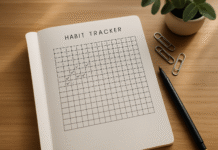
- Vividness & controllability: 1–10 ratings after each clip.
- Pre/post confidence: 1–10 shift after imagery.
- Transfer: first-rep quality, error rate under fatigue, coach ratings, decision time in drills, clutch execution hit rate.
- Consistency: number of imagery sessions completed/week.
Optional questionnaires
If you like formal tools, consider athlete-focused imagery questionnaires that assess ability or vividness. Use the same form every 4–6 weeks to gauge improvement and adjust scripts.
Review cadence
- Weekly: adjust scripts (add/remove cues), note what transferred.
- Monthly: refresh scenarios, add new adversity, retire mastered clips.
A Simple 4-Week Starter Plan
Week 1 — Build the Habit (10 min/day)
- Focus: One core skill.
- Routine: 2 × 45-sec process clips; 1 × 30-sec adversity clip.
- Goal: baseline vividness ≥6/10; note one on-field transfer marker.
Week 2 — Add PETTLEP Layers (10–12 min/day)
- Add environment and timing details, wear your practice shoes or kit.
- Include one pre-performance mini-clip (15 sec) before your first drill daily.
- Goal: PETTLEP score ≥5/7 elements in most sessions.
Week 3 — Pressure & Decision Branches (12–15 min/day)
- Two clutch scenarios with score/time; one branch per scenario.
- Add imagery to the last 5 minutes of cooldown, pairing with breath.
- Goal: report calmer first reps and faster decisions in one practice.
Week 4 — Integrate & Test (12–15 min/day)
- Alternate skill-learning imagery with pressure clips.
- If in rehab or returning, include one first day back clip.
- Goal: tangible improvement in transfer metrics (e.g., error rate down, coach rating up), plus a one-page imagery script you can reuse.
Practical Script Templates (Copy, Then Personalize)
Pre-Performance (15 seconds)
- “Exhale long. Shoulders low. Eyes soft. Smooth. See the setup through my eyes—feel the ground pressure—rhythm—go.”
Clutch Moment (45 seconds)
- “Score tied. Crowd loud. Breath 4 in/6 out. Sharp. See the coverage shift left; I scan—commit—execute option B—follow-through—reset.”
Technique Change (60 seconds)
- “Hands set → hinge calm → cue: hips lead → contact timing matches breath → finish tall. Slow at first, then true speed.”
Rehab Confidence (45 seconds)
- “Warm light. Controlled pace. Knee feels stable; foot strikes quiet. I complete the drill, breathe out tension, and reset tall.”
Frequently Asked Questions
1) Do I have to “see” vivid images to benefit?
No. Many athletes benefit most from kinesthetic imagery—the feel of movement, timing, and pressure. Use whatever senses you can access reliably and layer others over time.
2) How long should sessions be?
Eight to twelve minutes works well for most, split into short clips. Quality trumps duration.
3) Should I imagine only perfect outcomes?
No. Include adversity and recovery: noise, delays, mistakes, weather, and fatigue. Always finish with successful execution to anchor confidence.
4) Internal or external perspective—which is better?
Use both. Internal (through your eyes) sharpens feel and timing; external (seeing yourself) sharpens body positions. Choose based on your goal and alternate.
5) Can imagery replace physical practice?
It’s a supplement, not a substitute. Use it to enhance learning, reduce errors, and prepare for pressure, especially when physical reps are limited.
6) Is imagery helpful during injury rehab?
It can support confidence, movement quality, and strength alongside standard care. Coordinate scripts with your clinician and keep scenes safe and realistic.
7) What if imagery makes me anxious?
Dial down intensity, shorten clips, emphasize breath, and start with neutral scenes. Build adversity gradually and end with success.
8) How do I know it’s working?
Track transfer metrics: first-rep quality, error rate, decision speed, and coach ratings. Improvements here are your evidence.
9) When is the best time to visualize?
Stack imagery before practice (priming), after practice (consolidation), and night before competition (pressure rehearsal). Short pre-performance clips are powerful.
10) Can teams use imagery together?
Yes. Run shared scenarios (set plays, press breaks) and individual role clips. Keep it short and specific.
11) What should I do if my imagery keeps derailing?
Simplify: one cue, one phase, 20-second clips. Add a mantra to return to the scene. With practice, controllability improves.
12) Are apps or gadgets necessary?
No. They can help with structure or biofeedback, but a timer, notebook, and consistency are enough to get strong results.
Conclusion
Mental imagery turns your practice time into a force multiplier. When you make it realistic (PETTLEP), keep it short and specific, include adversity, and review results weekly, you build a reliable edge that shows up when it counts—on the first rep, in the final minute, and on the day you return from setback. The routine is simple, the gains compound, and the skill stays with you across seasons.
CTA: Take 10 minutes today to script two clips—one perfect, one under pressure—and run them before tomorrow’s first drill.
References
- Does Mental Practice Enhance Performance?, Journal of Applied Psychology, August 1994. https://doi.org/10.1037/0021-9010.79.4.481
- The PETTLEP Approach to Motor Imagery: A Functional Equivalence Model for Sport Psychologists, Journal of Applied Sport Psychology, 2001. https://www.tandfonline.com/doi/pdf/10.1080/10413200109339004
- The Neural Network of Motor Imagery: An ALE Meta-Analysis, Neuroscience & Biobehavioral Reviews, 2013. https://pubmed.ncbi.nlm.nih.gov/23583615/
- The Effects of Imagery Interventions in Sports: A Meta-Analysis, Open Science Framework (preprint), June 23, 2020. https://osf.io/g5tp2/download
- Does Mental Practice Still Enhance Performance? A 24-Year Follow-Up Meta-Analysis, Learning and Instruction, 2020. https://www.sciencedirect.com/science/article/abs/pii/S1469029219301530
- Twenty Years of PETTLEP Imagery: An Update and New Directions, Journal of Sport and Health Science, 2022. https://www.sciencedirect.com/science/article/pii/S2667239122000260
- Guided Imagery to Improve Functional Outcomes Post–Anterior Cruciate Ligament Repair: Randomized-Controlled Pilot Trial, Scandinavian Journal of Medicine & Science in Sports, 2012. https://citeseerx.ist.psu.edu/document
- The Effectiveness and Recommendation of Motor Imagery Interventions After Anterior Cruciate Ligament Reconstruction: A Systematic Review, Journal of Clinical Medicine, 2021. https://pmc.ncbi.nlm.nih.gov/articles/PMC7866187/
- Sport Psychology and Performance: A Systematic Review of Meta-Analyses, Frontiers in Psychology, 2022. https://pmc.ncbi.nlm.nih.gov/articles/PMC8849618/