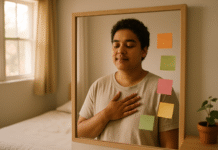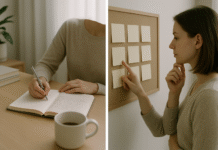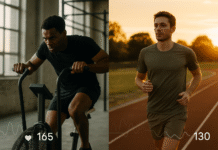





















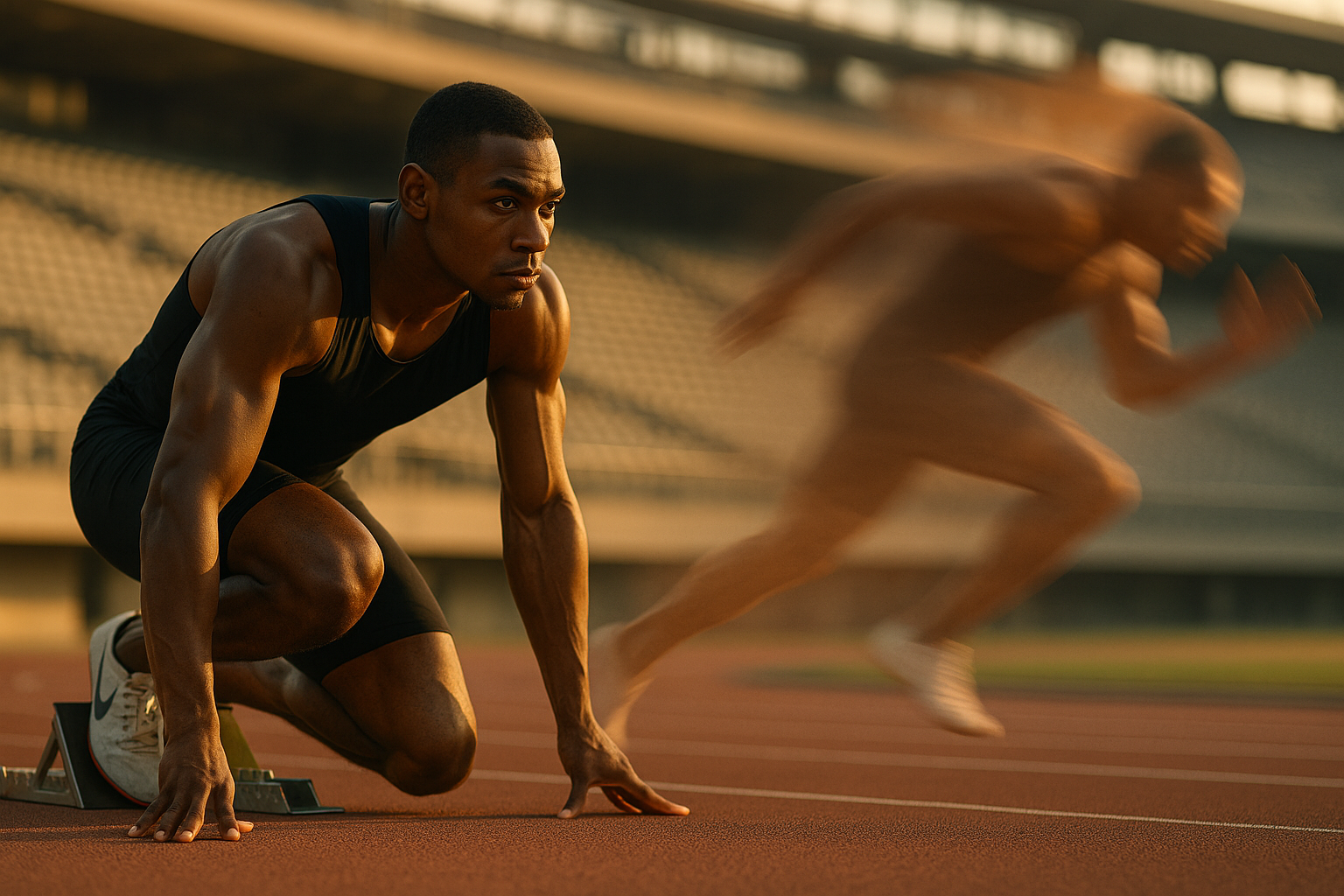
You don’t have to swing, shoot, or sprint to get better at your sport. Mental rehearsal—cognitively and kinesthetically simulating your performance—conditions the same goal-directed networks you use on game day and helps you compete with more consistency and control. In practice, it means you script the moment that matters, run it in your mind with lifelike detail, and measure what changes. Quick start: (1) pick a single high-leverage moment, (2) script it with PETTLEP realism, (3) rehearse 10–20 quality reps, (4) add an “if–then” plan for pressure, (5) test and track. In the sections below, you’ll learn exactly how to do this, what to avoid, and how to integrate mental rehearsal into training, rehab, and pre-performance routines. This is coaching, not medical advice; if you’re in rehab, coordinate with your clinician.
Definition (for skimmers): Mental rehearsal (sports visualization) is the deliberate, vivid simulation of a skill or competition scenario—especially from a first-person, kinesthetic perspective—to prime neural pathways and performance behaviors.
1. Make Your Imagery Look and Feel Like the Real Thing (Use PETTLEP)
The fastest way to make mental rehearsal work is to mirror real performance. PETTLEP—Physical, Environment, Task, Timing, Learning, Emotion, Perspective—is a practical checklist that ensures your imagery matches the conditions you’ll face. Start by describing the physical stance and gear (e.g., shoes laced, chalked hands), set the environment (court lines, crowd hum), specify the task (top-spin serve down the T), match the timing (actual tempo), align with your learning stage (novice vs. fine-tuning), evoke the performance emotion (focused, slightly amped), and choose the perspective (usually first-person with strong body sensations). The closer your simulation is to “game-like,” the more transfer you’ll get to the field.
1.1 Why it matters
Functional-equivalence research shows that imagery and execution recruit overlapping neural substrates, especially when you emphasize bodily sensations and timing. PETTLEP operationalizes that overlap into a repeatable routine, helping your brain recognize imagery as a near-match to live action.
1.2 How to do it (5–7 minute block)
- Physical: Adopt your exact stance; lightly tense the muscles you’ll use.
- Environment: Picture your venue’s unique cues (lighting, markings, boards).
- Task: State the skill and outcome in a single sentence.
- Timing: Rehearse at 1× speed; use a metronome or breath count to sync tempo.
- Learning: Update the script weekly as your cues/technique evolve.
- Emotion: Set a 1–10 arousal target (e.g., “6—calm intensity”).
- Perspective: Default to first-person, add third-person only for technique checks.
Mini case: A right-handed tennis player visualizes a first serve: stance on the deuce side, toss height, knee drive, upward racket path, ball kissing the T, opponent’s late reach, small fist-clench and exhale. 10–15 quality reps, then 5 live serves. The feel of the toss and leg drive “shows up” sooner in the live reps. Synthesis: PETTLEP turns vague daydreaming into targeted practice that transfers.
2. Train Vividness and Control First (VVIQ & MIQ-3) to Multiply Your Gains
Mental rehearsal works best when your images are vivid and controllable; ability varies and can be trained. Before you ramp volume, get a baseline using the VVIQ (Vividness of Visual Imagery Questionnaire) and MIQ-3 (Movement Imagery Questionnaire). VVIQ gauges how clearly you can picture scenes; MIQ-3 focuses on movement imagery across visual and kinesthetic channels. Scores don’t gatekeep success, but they inform where to practice: if your kinesthetic ratings lag, build “feel” drills; if visual is fuzzy, sharpen detail and contrast. Commit 10 minutes a day for two weeks to raise clarity and control before layering complex scenarios.
2.1 Tools/Examples
- Assess: Take VVIQ and MIQ-3 to identify your strong/weak channels.
- Sharpen visual detail: “Object scan” (30 seconds to map lines, logos, shadows), then run a 5-second clip.
- Build kinesthetic feel: “Ghost rep” (micro-tension the prime movers at 20–30% effort while imaging the action).
- Control drills: Play/pause/rewind a single rep; zoom in/out on one joint.
- Noise inoculation: Add a controlled distraction layer (whistle, chatter), then refocus.
2.2 Numbers & guardrails
- Dose: 10–20 quality reps per block; 1–3 blocks/day on training days.
- Progression: Clarity → control → speed/tempo → complexity.
- Check-ins: Re-take MIQ-3 monthly; note where vividness is highest/lowest and adjust scripts. Evidence shows imagery ability correlates with usage and benefits in sport contexts; treating vividness as a trainable skill pays off.
Synthesis: A brief “ability first” phase keeps you from stacking volume on blurry images and accelerates later transfer.
3. Use First-Person, Kinesthetic-Dominant Imagery to Recruit Motor Circuits
If you want imagery to “behave like” movement, make it feel like movement. The most effective default is first-person perspective with kinesthetic dominance—pressure on the forefoot, bar contact on the thigh, fingertip roll off the ball—timed to real tempo. This combination better engages premotor and sensorimotor networks and yields stronger carryover to execution than third-person, purely visual scenes. Add sound and breath cues to sync rhythm and reduce drift; think “hear the swish,” “feel the pop,” not just “see the arc.”
3.1 Why it matters
Neuroimaging and behavioral studies indicate overlapping activity between motor imagery and execution, particularly when the imagery is internally generated, timed correctly, and rich in somatosensory content. Practically, that means fewer surprises on game day and faster re-entry to a skilled state after breaks.
3.2 Mini-checklist
- Perspective: 90% first-person; 10% third-person for technique snapshots.
- Timing: Match live tempo; avoid slow-motion for skills that rely on rhythm.
- Sensation: Layer joint angles, ground contact, implement feel.
- Cueing: Pair each rep with a single cue word (“snap,” “drive,” “smooth”).
- Recovery: Insert 2–3 calm breaths between reps to reset.
Synthesis: When your body “believes” the rep, the brain primes the right patterns; the payoff is smoother execution under pressure.
4. Script If–Then Plans to Execute Under Pressure (Implementation Intentions)
Under stress, good intentions leak; simple if–then plans seal them. Attach an actionable cue to a performance response: “If the starter holds us, then I exhale once and reset my shin pressure.” Write 2–4 specific plans into your imagery scripts and rehearse them until they’re automatic. This removes last-second decision-making and helps you resist common traps like rushing or tensing when it matters most.
4.1 How to do it
- Identify the 2–3 most common derailers (late whistle, crowd surge, fatigue wave).
- Write if–then statements in present tense and behavior-focused.
- Embed each into a PETTLEP rep at the correct moment.
- Pressure-test in practice (simulate the trigger, run the response).
- Track which plans you actually used on field; prune or refine monthly.
4.2 Numbers & evidence
Implementation-intention research shows medium-to-large effects on goal attainment across varied domains; in sport, that translates to more consistent execution when cues appear. Treat them like technique: fewer, crisper, rehearsed. Prospective Psychology
Synthesis: If–then plans turn “hope I remember” into “I already know what I do when this happens.”
5. Periodize Mental Rehearsal With Your Physical Training
Mental rehearsal isn’t extra—it’s training you can schedule. Build it into macro/meso/micro cycles the way you plan strength or conditioning. Early mesocycles emphasize technique and vividness; mid-cycle focuses on rhythm and consistency; taper phases highlight pressure scenarios and pre-performance routines. Match volume and intensity to the week: heavier physical loads pair with shorter, high-quality imagery sets; lighter weeks allow longer scenario blocks.
5.1 Weekly template (example)
- Mon/Tue (Build): 2 × 10 PETTLEP reps on core skill; 1 × 6 adversity reps.
- Wed (Integration): 1 × 12 PPR-based imagery; video overlay review.
- Thu (Pressure): 2 × 8 clutch scenarios + if–then cues.
- Fri (Taper): 1 × 8 calm-focus reps; emphasis on emotion/arousal control.
- Sat/Sun (Comp): 3–5 short reps embedded in warm-up + post-match review.
5.2 Guardrails
- Dose timing: Keep heavy imagery blocks >3 hours away from maximal lifts/sprints.
- Quality over quantity: Stop a set when clarity drops below 7/10.
- Refresh rate: Rewrite scripts every 2–3 weeks as skills evolve.
- Check transfer: Pair imagery blocks with matched live reps within the same session when possible.
Synthesis: Periodization ensures you’re practicing the right mental skill at the right time—and arriving at competition mentally tapered, not mentally fried.
6. Rehearse Adversity: Errors, Distractions, and Weather
Mental rehearsal isn’t only highlight reels. Add error simulations and distraction layers so you can adapt without spiraling. Script a miss, a bad bounce, a gust of wind, a slip, or a loud heckle—and practice your reset: one breath, one cue, one next action. Doing this builds “stress inoculation,” turning surprises into pre-solved problems.
6.1 How to do it
- List derailers: Weather, officiating, equipment, crowd, fatigue, pain spikes (if medically cleared).
- Pick one per set: 6–10 reps where the adverse cue appears at a realistic moment.
- Reset protocol: (1) name it (“wind”), (2) breath count 1–2, (3) cue word, (4) continue.
- Debrief: Note which resets felt natural; rehearse those more.
- Rotate: Change the adversity each week to broaden adaptability.
6.2 Mini case
A long jumper rehearses a slight toe-board overstep; the reset is a slow exhale and the cue “start smooth.” In meet conditions, an actual close call occurs; the athlete avoids arguing with the official and nails the next attempt within 1% of PB. Synthesis: Practicing adversity in your head makes resilience your default.
7. Fuse Imagery Into a Tight Pre-Performance Routine (20–40 Seconds)
Your pre-performance routine (PPR) is the delivery vehicle for mental rehearsal on competition day. The goal is one compact imagery rep timed to your setup that primes rhythm and cue words without overthinking. Keep it short (20–40 seconds), precise, and identical every time. Pair it with a consistent breath pattern and a single attentional focus: e.g., “smooth through contact.”
7.1 PPR builder (golf putt example)
- Stance set: Feet, grip, gaze (3 seconds).
- One vivid rep: See/feel the ball start on line and fall in (8–12 seconds).
- Cue word: “Roll” on the micro-exhale (1 second).
- Go signal: Eye back to the ball, breathe, execute (2 seconds).
7.2 Common mistakes
- Too long: Over-elaboration bloats arousal.
- New cue words on meet day: Keep language stable.
- Outcome obsession: Emphasize process sensations, not trophies.
- Inconsistency: If it changes every start, it’s a superstition, not a routine.
Synthesis: A crisp, imagery-anchored PPR makes your best rep the most familiar rep.
8. Use Mental Rehearsal to Build Skill and Strength When Load Is Limited
When you can’t load physically—travel, taper, or rehab—mental rehearsal preserves and can even improve performance. For technical skills, run PETTLEP reps emphasizing feel at full competition timing. For strength elements, combine kinesthetic imagery of the effortful phase (e.g., push from blocks, pull off the floor) with micro-tension at ~20–30% to engage motor units safely. Evidence suggests imagery can contribute to strength gains and reduce strength loss during immobilization, making it a valuable adjunct in constrained periods.
8.1 Rehab notes (coordinate with clinicians)
- Early stage: Imagery of safe ranges, swelling reduction sensations, pain-free movement.
- Mid stage: Progressive task difficulty; include confidence cues.
- Late stage: Return-to-play scenarios with adversity; rehearse change-of-direction or contact prep.
8.2 Skill block (example: gymnastics kip)
- 2 × 8 reps focusing on bar feel and hip drive timing.
- Video review → update language (“snap to hollow”).
- Live low-load drills (hollow rocks) to pair sensation and script.
Synthesis: With smart constraints, imagery keeps skills “online” and supports safer, faster return to form.
9. Measure What Matters: KPIs, Logs, and A/B Testing
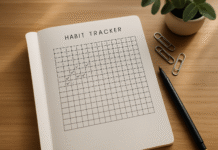
You can’t improve what you don’t track. Choose three KPIs that link directly to your imagery target: e.g., free-throw % in the last 2 minutes, first-serve in, average sprint reaction time, or judges’ execution deductions. Add two mental KPIs (confidence 1–10, pre-rep clarity 1–10). Keep an imagery log: date, goal, volume, clarity, emotion score, insights, and whether an if–then plan fired in practice or games. Run A/B micro-cycles: two weeks with imagery vs. two weeks without (all else equal) and compare.
9.1 Checklist
- Select 3 KPIs: One performance, one process, one mental.
- Baseline: Two weeks of normal training.
- Intervention: Four weeks of imagery; keep training load constant.
- Debrief: Stat check + subjective notes; adjust scripts accordingly.
- Iterate: Retest after each mesocycle.
9.2 Numbers & guardrails
- Rep quality threshold: ≥7/10 clarity, ≥6/10 kinesthetic feel.
- Ceiling effect: If metrics plateau, change one variable (cue word, tempo, perspective).
- Noise control: Log sleep, soreness, and travel to interpret changes.
Synthesis: Data turns mental rehearsal from a belief into a measurable part of your performance plan.
10. Scale It: Coach-Led Scripts, Video Overlays, and Shared Language
Mental rehearsal sticks when the whole environment supports it. Coaches can create script libraries for key plays and scenarios, record audio prompts athletes can use in warm-ups, and build video overlays that pair slow-mo technical snapshots with first-person clips. Teams should agree on shared cue words (“long through contact,” “hips tall”) so imagery and feedback align. Assign a 10-minute weekly block to review, refine, and share what worked under pressure.
10.1 Tools & workflow
- Video + audio: 30-second clips with a calm voiceover (“see… feel… cue…”).
- Script bank: PETTLEP-tagged files (skill, timing, emotion, cues).
- Delivery: QR codes in the weight room, playlists for travel, laminated pocket cards.
- Team ritual: “One imagery minute” before team drills.
- Coach debrief: What if–thens fired last match? What adversity to rehearse next?
10.2 Mini case
A collegiate volleyball program standardizes serve-receive scripts, adds venue-specific overlays for away arenas, and logs two imagery KPIs. Over six weeks, late-set reception errors drop 18% while self-reported clarity rises 2 points. Synthesis: Shared language and assets make mental rehearsal a system, not an optional extra.
FAQs
1) What is the difference between visualization and mental rehearsal?
They’re often used interchangeably, but mental rehearsal emphasizes action simulation—the kinesthetic feel and timing of movement—while visualization can be more purely visual. In practice, athletes get the best results by combining both: first-person vision plus rich body sensations matched to real tempo, embedded in scenarios they’ll actually face.
2) How many imagery reps should I do per day?
Aim for 10–20 high-quality reps per block, 1–3 blocks on training days, and a short (3–5 rep) block on competition days. Quality beats volume—stop a set when clarity or feel drops below about 7/10. Periodize volume with your physical load to avoid mental fatigue.
3) Does imagery really activate the same brain areas as movement?
Research suggests meaningful overlap between motor imagery and execution, especially when imagery is timed and kinesthetic. That overlap likely underpins transfer to real performance; it’s why realism and tempo matter so much in your scripts.
4) I have trouble “seeing” images. Can I still benefit?
Yes. Many athletes improve primarily through kinesthetic and auditory channels—feeling joint angles, ground contact, or hearing a swish or footfall. Use MIQ-3-style drills to train control, focus on sensation words (“press,” “stretch,” “snap”), and keep reps short. Progress usually comes within a couple of weeks.
5) How do I use imagery when I’m injured or tapering?
Use it to keep patterns primed: rehearse safe ranges and technique cues, then progress to full-tempo scenario reps, coordinating with your clinician. Imagery is associated with better maintenance of strength and skill when physical loading is limited, making it a useful adjunct during rehab and travel.
6) Should I picture success only, or also mistakes?
Do both. Success reps groove rhythm and confidence; adversity reps build resilience and fast resets when things go sideways. Rehearse the error and the recovery—breath, cue, next action—so you’re not improvising under stress.
7) What perspective is best: first-person or third-person?
Default to first-person for transfer to execution, adding occasional third-person snapshots for technique awareness. First-person plus kinesthetic detail more reliably recruits the networks you need to perform. Frontiers
8) How do I measure if mental rehearsal is working?
Pick three KPIs (performance, process, mental), establish a baseline, and run a four-week imagery block while holding training constant. Compare outcomes and log subjective changes. Small A/B trials help you refine scripts systematically rather than guessing.
9) What’s a good pre-performance imagery routine length?
Keep the PPR imagery bite 20–40 seconds: one vivid rep, one cue word, and go. Longer sequences tend to inflate arousal and invite overthinking. Practice the routine in training so it’s automatic on game day.
10) What is PETTLEP and why use it?
PETTLEP stands for Physical, Environment, Task, Timing, Learning, Emotion, Perspective—a checklist to make imagery realistic. Following it increases the likelihood that what you practice in your head shows up in your body when it counts.
11) Can imagery make me stronger?
Imagery alone won’t replace lifting, but there’s evidence it can contribute to strength maintenance or modest gains, especially when paired with slight muscle tension and precise kinesthetic focus—useful in tapers or immobilization periods.
12) Is there a risk of overdoing mental rehearsal?
Yes. Excessive volume can blur imagery and spike arousal. Prioritize clarity over quantity, schedule deloads, and stop sets when imagery quality drops. If you notice sleep disruption or persistent tension, cut volume by 30–50% for a week.
Conclusion
Mental rehearsal isn’t magic—it’s a disciplined way to practice when you’re not moving, and to prime execution when you are. When your scripts are PETTLEP-real, your imagery ability is trained, and your reps are short, vivid, and kinesthetic, the brain treats them like the real thing. Tie those reps to if–then plans so you can respond under pressure without thinking; periodize imagery with your physical training so you’re peaking mentally when you need it most; and measure outcomes so you keep what works and discard what doesn’t. Whether you’re chasing a PB, building back from injury, or just trying to be steadier in big moments, mental rehearsal gives you a competitive edge you can bank on—day after day, rep after rep. Start today: script one high-leverage moment, run 12 vivid reps, and log what changes.
References
- Driskell, J. E., Copper, C., & Moran, A. (1994). Does Mental Practice Enhance Performance? Journal of Applied Psychology, 79(4), 481–492. https://www.researchgate.net/profile/Aidan_Moran/publication/228118007_Does_Mental_Practice_Enhance_Performance/links/00b49527e74ea53a69000000.pdf
- Holmes, P. S., & Collins, D. J. (2001). The PETTLEP Approach to Motor Imagery: A Functional Equivalence Model for Sport Psychologists. Journal of Applied Sport Psychology. https://www.tandfonline.com/doi/abs/10.1080/10413200109339004
- Sharma, N., & Baron, J.-C. (2013). Does motor imagery share neural networks with executed movement? Frontiers in Human Neuroscience. https://pmc.ncbi.nlm.nih.gov/articles/PMC3771114/
- Mustile, M., et al. (2024). Neural correlates of motor imagery and execution in real-world tasks. Human Brain Mapping (open-access preprint). https://pmc.ncbi.nlm.nih.gov/articles/PMC11224467/
- Slimani, M., et al. (2016). Effects of Mental Imagery on Muscular Strength in Healthy and Patient Populations. Neural Plasticity. https://pmc.ncbi.nlm.nih.gov/articles/PMC4974856/
- Wieland, B., et al. (2022). Effects of motor imagery training on skeletal muscle contractile properties in sports science students. European Journal of Sport Science (open-access preprint). https://pmc.ncbi.nlm.nih.gov/articles/PMC9701499/
- Marks, D. (1973). VVIQ: Vividness of Visual Imagery Questionnaire (overview page). Aphantasia Network. https://aphantasia.com/study/vviq/
- Williams, S. E., et al. (2012). Further validation and development of the Movement Imagery Questionnaire (MIQ-3). Journal of Sport & Exercise Psychology (PubMed abstract). https://pubmed.ncbi.nlm.nih.gov/23027231/
- Cumming, J. (n.d.). MIQ-3 Questionnaire (overview and download). Dr. Jenn Cumming. https://jennifercumming.com/questionnaires/groupwork-skills-questionnaire-miq3/
- Gollwitzer, P. M. (1999). Implementation Intentions: Strong Effects of Simple Plans. American Psychologist (overview PDF). https://cancercontrol.cancer.gov/sites/default/files/2020-06/goal_intent_attain.pdf