






















Mindfulness journal prompts are focused, plain-language cues that direct your attention to what’s happening right now—your breath, senses, thoughts, and surroundings—so you can write from the present rather than from autopilot. Used consistently, they help calm stress, sharpen clarity, and make everyday life feel more grounded. This guide offers twelve research-informed prompts designed for quick daily use or deeper reflection sessions. It’s for anyone who wants a practical, compassionate way to be here, now. Brief note: this article is educational and not a substitute for medical or mental-health care; if strong emotions arise, pause and seek qualified support as needed. Evidence suggests mindfulness practices can reduce stress and improve well-being when practiced regularly.
Quick start (60 seconds): sit comfortably, exhale, name one body sensation, name one thing you can see or hear, and set a tiny intention (e.g., “Write two honest lines”). Then pick any prompt below.
1. The 5-Senses Snapshot
Begin by directly describing what your five senses register in this moment to anchor attention. This prompt works because sensory data is immediate, specific, and hard to fake; your mind can’t be in yesterday while you’re naming the smell of tea or the hum of a fan. In one or two sentences, answer: What do I see, hear, feel, smell, and taste—right now? Doing this moves you from ruminating to observing, which is the core of mindfulness. It’s simple enough to do at a bus stop and deep enough to reset a spiraling day. Use short, concrete nouns and verbs; avoid evaluation like “nice” or “ugly” and report exactly what’s there.
How to do it
- Set a 2–3 minute timer; write five short lines labeled sight/hearing/touch/smell/taste.
- Stay literal: “bluish light on the wall,” “chair fabric rough under palm,” “cinnamon steam.”
- Add one closing line: “Right now I am safe enough to notice this.”
Mini example
- Sight: thin cloud moving past the sun
- Hearing: fridge motor low and steady
- Touch: sock seam on left toe
- Smell: black tea, faint bergamot
- Taste: warm, slightly bitter
Checklist: Keep it concrete; keep it brief; avoid judgments; end with one sentence of appreciation (“I got to notice that”). Close by rereading your lines slowly. That reread is the moment presence lands.
2. One-Minute Breath Count (and What It Shows You)
Start by counting breaths for exactly one minute, then journal what you noticed. The point isn’t a perfect number—it’s noticing mind wander and returning with kindness. Breathing practices can support relaxation responses and present-moment focus; pairing them with writing helps you articulate internal cues (like chest tightness easing). If you prefer structure, try a gentle “equal breathing” pattern such as 4-count inhale, 4-count hold, 4-count exhale, 4-count hold (often called box breathing), which many clinicians recommend for stress management.
How to do it
- Set a one-minute timer.
- Silently count “one” on the first exhale, “two” on the next, and so on.
- When the timer ends, write: What sensations changed? What thought kept appearing? How did returning to breath feel?
Numbers & guardrails
- Typical relaxed breathing rates range ~6–12 breaths per minute at rest; your number will vary.
- If you feel light-headed, skip breath holds—just breathe naturally and observe.
Close-out: Finish with one sentence starting “When my mind wandered, I came back by…” Noting that “return” trains the skill you’ll reuse all day.
3. Feet-to-Head Body Scan Log
A body scan invites slow attention through the body, naming sensations neutrally (pressure, warmth, pulsing) from feet to head. After a 3–10 minute scan, journal what you found and what changed. Body scanning is a foundational mindfulness practice used in many programs; evidence-based guides recommend it to deepen awareness and ease tension. Writing down details (“jaw unclenched after three breaths”) helps you see patterns across days.
3.1 Why it matters
Bringing awareness to neutral or subtle sensations interrupts worry loops and reorients you toward experience rather than story. Over time, noticing tight shoulders at 3 p.m. becomes a cue to pause before stress spikes.
3.2 How to do it
- Sit or lie down; set a 5-minute timer.
- Move attention from toes → calves → knees → thighs → hips → belly → chest → hands → arms → shoulders → jaw → eyes → scalp.
- At each region, silently label one sensation (e.g., “tingle,” “pressure”).
- Journal two columns: sensations before / sensations after.
Synthesis: Conclude with one gentle action you’ll take for your body today (stretch, water, posture reset). You’re training awareness plus care.
4. The S.T.O.P. Reset (Stop, Take a Breath, Observe, Proceed)
Use this prompt when you feel rushed, reactive, or unfocused. The first two sentences are your instruction: Stop what you’re doing. Take one slow breath. Then write what you Observe in body, emotions, and thoughts; finally plan how you’ll Proceed—one mindful next step. This four-step micro-practice is widely taught in mindfulness education and healthcare settings as a quick interruption of autopilot. Journaling the O and P steps turns a pause into a plan you can act on. UCLA Health
How to do it
- Stop: put the pen down; unclench jaw; drop shoulders.
- Take a breath: one slow inhale, one slow exhale.
- Observe: write three bullets—body, emotion, thought.
- Proceed: choose one small, values-aligned action (e.g., “email two lines,” “drink water,” “take a 90-second walk”).
Mini-case
At 11:42 a.m., before a tough call: body—tight chest; emotion—irritation; thought—“They’ll push back.” Proceed: “Ask one open question first.” Short, clear, doable. Repeat as needed.
Close-out: End by rating your reactivity 0–10 before/after. Seeing a drop—even from 7→5—builds confidence.
5. The 5-4-3-2-1 Grounding Page
This prompt uses your senses to de-escalate anxiety by listing 5 things you can see, 4 you can feel, 3 you can hear, 2 you can smell, and 1 you can taste, followed by two lines on how your baseline shifted. It’s discreet, portable, and pairs naturally with journaling. Health educators and therapists often teach this as a present-moment stabilizer that can be written on a note card or phone. University of Rochester Medical Center
Tips
- Don’t hunt for “special” items—use what’s here (chair edge, sock texture, faint traffic).
- If taste isn’t available, swap in a neutral cue like “1 breath count.”
- Write one sentence naming any emotion change (even “no change”).
Mini checklist
- Concrete nouns only
- No evaluations
- Finish with: “Right now I can…” + one tiny next action
Synthesis: Over time, your entries will read like snapshots of steadiness returning. That’s the skill you’re cultivating.
6. Leaves on a Stream (Seeing Thoughts as Events)
When thoughts keep looping, this prompt helps you unhook: imagine a stream with leaves floating by; as any thought appears, place it on a leaf and watch it drift past. Then journal what it was like to see thoughts as events rather than facts. This is a well-known Acceptance and Commitment Therapy (ACT) “cognitive defusion” exercise; writing about it often exposes repeated thought themes and how their grip softens when observed. Cumbria NHSTherapist Aid
How to do it
- Two minutes: eyes soft, picture moving water.
- Label thoughts briefly (“email,” “worry,” “plan”), place each on a leaf.
- Afterward write: Which thought returned most? How did my body feel while watching, not solving?
Common mistakes
- Forcing the stream to go faster (note “impatience” and place that on a leaf).
- Arguing with thoughts (label and release instead).
Close-out: Finish with: “One thought I don’t need to chase right now is…” Naming it frees attention for what matters.
7. RAIN on Emotions (Recognize, Allow, Investigate, Nurture)
Use RAIN when a strong emotion shows up. First Recognize and name it (“sadness,” “tightness in chest”), Allow it to be there for a minute without fixing, Investigate with gentle curiosity (what story am I telling? what does this part need?), and Nurture with a kind phrase or gesture (hand on heart, warm words). The RAIN framework is a widely taught mindfulness process for meeting difficult emotions with presence and compassion; journaling each step adds clarity and care. Mindful
How to do it
- Recognize: write one clear label for the feeling.
- Allow: one line granting space (“This, too, is here”).
- Investigate: 3 questions—Where is it in the body? What is it asking for? What’s the trigger?
- Nurture: 1–2 kind sentences you’d offer a friend, offered to yourself.
Example lines
“Recognize: anxiety. Allow: I can let the flutter be here. Investigate: it’s in my throat; it wants reassurance; deadline triggered. Nurture: ‘It makes sense you’re tense; I’ll take this one step at a time.’”
Synthesis: End by choosing one supportive micro-action (sip water, step outside, send the email draft).
8. Mindful Walking Field Notes
Take a 5–10 minute walk at your natural pace and jot “field notes” about footfalls, weight shifts, and sounds. The first sentences answer the prompt: Notice the sensations of walking and record them plainly. Walking mindfully can ease stress and refresh attention; medical sources suggest using walks as an opportunity to be present with sights, sounds, and bodily sensations. Your notes become a tiny travel log of the present.
How to do it
- Put the phone on airplane mode; start with three slower steps.
- Write brief, present-tense fragments between pauses: “heel touches, knee softens, birds on left.”
- If the mind wanders, mark an asterisk and return to feet.
Mini example
“Left heel first, then roll; breeze on wrist; traffic rising, fading; jaw loosens on exhale.”
Close-out: Finish by rating clarity before/after 0–10. Even a small uptick signals the practice is doing its job.
9. One-Bite Mindful Eating Journal
Choose one bite (or sip) of anything and record the entire sensory arc—appearance, aroma, texture, taste changes, and afterfeel—without distractions. The goal is attention, not perfection or restriction. Mindful eating guides emphasize engaging all senses and slowing down to notice hunger/satiety cues; journaling a single bite lowers the bar so you actually try it at breakfast or lunch. Harvard Health
How to do it
- Put the food down between observations; chew more slowly than usual.
- Note flavors in sequence (first, middle, last) and any memories that appear.
- Add one body cue (stomach, throat, jaw).
Mini checklist
- Five adjectives max; keep them sensory (crisp, sweet, warm).
- One sentence of gratitude for the hands and places that brought this food to you.
Synthesis: Close with “Next meal, I’ll notice ___ for the first 3 bites.” Small practices stack.
10. Single-Task Immersion (Wash One Cup)
Pick a two-minute task (washing a cup, folding one shirt), and write down exactly what your hands, eyes, and ears experienced while doing only that task. The first sentences give the point: Doing one thing at a time reveals the richness you usually miss when multitasking. You’re training sustained attention and savoring ordinary moments. Many mindfulness educators recommend single-task experiments as low-friction daily practice.
How to do it
- Name the task aloud: “Now I wash this cup.”
- Attend to temperature, weight, sound, motion.
- Afterward, journal two columns: sensations vs. commentary I noticed, then one line on how it felt to drop commentary.
Pitfalls & fixes
- Rushing: slow the first motions deliberately.
- Judgment: replace “boring” with “slippery, warm, light clink.”
Synthesis: End with one sentence linking practice to values (e.g., “Caring for things helps me feel at home”).
11. Self-Compassion Check-In (The Kind Voice)
Write three short paragraphs: (1) Mindfulness—what’s happening and how it feels; (2) Common humanity—how someone else could feel this too; (3) Kindness—what you would say to a friend, said to yourself. Research on self-compassion indicates benefits for emotional regulation and health behaviors; journaling is one of the standard practices to cultivate it.
Prompts to fill
- Mindfulness: “Right now I notice…” (stick to facts and feelings)
- Common humanity: “Others have felt…” (name the universality)
- Kindness: “What I need to hear is…” (warm, realistic tone)
Example
“Now: disappointed and tight-chested after feedback. Others: everyone gets edits; it’s not a verdict on worth. Kindness: ‘You care; learning takes time. Let’s fix one paragraph now, then rest.’”
Synthesis: Choose one caring micro-action you’ll do in the next 10 minutes.
12. Evening Now/Next/Let-Go
Close the day with three lines: Now (one sentence naming the most vivid present-moment detail), Next (one tiny step for tomorrow morning), and Let-Go (one thing you release overnight). This brief structure both anchors you in the present and clears mental clutter. It prevents journaling from becoming an endless to-do dump and leaves your nervous system with a simple, doable waypoint.
How to do it
- Set a 3-minute timer; keep each line under ten words.
- Avoid problem-solving; “Next” must be 2–5 minutes in scope.
- “Let-Go” can be a repeating thought or a task you’re choosing not to hold right now.
Example
- Now: cool air from the window on my cheek
- Next: put mug by kettle
- Let-Go: chasing perfect wording tonight
Synthesis: Over a week, reread your “Now” lines; they form a quiet highlight reel of being here for your life.
FAQs
1) What are mindfulness journal prompts, exactly?
They’re short, plain cues that target present-moment experience—sensations, breath, thoughts—so your writing comes from what’s happening right now instead of rumination. Unlike general reflective prompts, these are specific and sensory, which makes them easier to do anywhere and more effective at calming the mind. Practices like body scanning, breath awareness, and RAIN are commonly used to build this kind of attention.
2) How often should I use these prompts?
Consistency matters more than duration. Many people get good results with 5–10 minutes daily or 3–4 short sessions sprinkled through the day. If you’re starting from zero, try one prompt after waking and the “Now/Next/Let-Go” at night for a week, then adjust based on what you notice in mood and focus.
3) I get anxious while journaling—what should I do?
Shift to grounding prompts (5-4-3-2-1, S.T.O.P.), keep entries concrete, and cap the time. If distress spikes or trauma memories surface, pause the exercise, re-orient to your surroundings, and consider working with a licensed clinician. It’s okay to take care of your nervous system first; mindfulness is meant to be kind.
4) Do I need special tools or a specific journal?
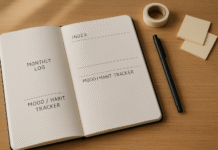
No. Any paper or notes app works. A quiet(ish) setting helps but isn’t required—many prompts are designed for real life (on the train, between meetings). If you like structure, keep a single page per prompt type so you can see patterns across days.
5) Is there scientific support for mindfulness practices like these?
Systematic reviews and reputable health organizations report that mindfulness-based programs can produce small to moderate reductions in stress, anxiety, and depressive symptoms and can enhance well-being for many people. Results depend on regular practice and context.
6) What’s the difference between mindfulness and meditation?
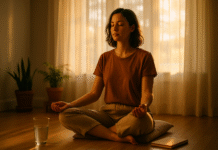
Meditation is a formal practice (e.g., sitting quietly with attention on the breath); mindfulness is the quality of aware, non-judging attention you can bring to anything—eating, walking, emailing. The prompts here cultivate mindfulness in daily life and can complement formal meditation if you choose to add it. Mayo Clinic
7) How long should each entry be?
Short is fine. Many prompts are effective in 3–5 minutes if you’re truly present. For deeper dives (like RAIN or body scan logs), 10–15 minutes may feel better. Close with one action or appreciation line so you don’t drift into overthinking.
8) Can these prompts replace therapy or medication?
No. They’re self-care practices, not clinical treatment. If you’re dealing with persistent anxiety, depression, trauma, or medical symptoms, use these as supportive tools alongside guidance from licensed professionals. Seek immediate help if you’re in crisis.
9) What if my mind won’t stop racing?
Pick a highly structured prompt—5-4-3-2-1 or the 5-Senses Snapshot—and keep language concrete. Add a timed breath practice (even 60 seconds) before writing. Structure reduces the “blank page” feeling and gives your attention something simple to do.
10) Are digital or paper journals better for mindfulness?
Use what you’ll actually use. Paper can feel tactile and distraction-free; digital is searchable and portable. If you use your phone, enable do-not-disturb while writing so notifications don’t yank you out of the present.
11) How do I measure progress without getting perfectionistic?
Track two simple metrics: “presence rating” 0–10 before/after entries and one weekly pattern you notice (e.g., shoulders tighten at 3 p.m.). Progress looks like quicker returns to the present, kinder self-talk, and more deliberate choices—not perfect calm.
12) What if I only have 60 seconds?
Run the quick start: exhale, name one body sensation, one thing you can see or hear, and one tiny intention. Then write two honest lines. Even a minute counts; the nervous system learns from repetitions, not marathon sessions.
Conclusion
Mindfulness isn’t about emptying your mind; it’s about noticing what’s here with enough steadiness to choose your next step. These twelve prompts give you practical handles for that choice—through senses, breath, body, emotions, movement, meals, tasks, kindness, and closure at day’s end. Treat them like a set of small, reliable tools you can carry anywhere. Start with one prompt and keep it tiny: two minutes, three lines, done. You’ll likely find that presence shows up not in dramatic breakthroughs but in dozens of ordinary moments—a kinder email, a slower first sip of tea, a breath before replying. Over days and weeks, those moments add up to a steadier baseline and a clearer sense of what matters to you. Pick one prompt for tomorrow morning and lay your notebook out tonight. Begin again, right here.
CTA: Pick one prompt now, set a two-minute timer, and write your first three lines.
References
- “8 Things to Know About Meditation and Mindfulness,” National Center for Complementary and Integrative Health (NCCIH), updated June 3, 2022. NCCIH
- “Mindfulness meditation: A research-proven way to reduce stress,” American Psychological Association, October 30, 2019. American Psychological Association
- Goyal, M. et al., “Meditation Programs for Psychological Stress and Well-being,” JAMA Internal Medicine, 2014. PMC
- Creswell, J.D., “Mindfulness Interventions,” Annual Review of Psychology, 2017. Annual Reviews
- “Body Scan Meditation,” Greater Good in Action, UC Berkeley, accessed 2025. Greater Good in Action
- “How Box Breathing Can Help You Destress,” Cleveland Clinic Health Essentials, August 17, 2021. Cleveland Clinic
- “Feeling Anxious? Try the 5-4-3-2-1 Grounding Technique,” Verywell Mind, 2024. Verywell Mind
- Brach, T., “RAIN: Recognize, Allow, Investigate, Nurture,” 2021–2023. Tara Brach
- “Reinvent your walking regimen,” Harvard Health Publishing, October 1, 2020. Harvard Health
- “Mindful Eating • The Nutrition Source,” Harvard T.H. Chan School of Public Health, accessed 2025. The Nutrition Source
- Neff, K.D., “What is Self-Compassion?” and “Self-Compassion Journal (Exercise 6),” Self-Compassion.org, 2023–2025. and https://self-compassion.org/exercises/exercise-6-self-compassion-journal/ Self-Compassion
- “The S.T.O.P. Practice: Creating Space Around Automatic Reactions,” Mindful magazine, March 23, 2020. Mindful