






















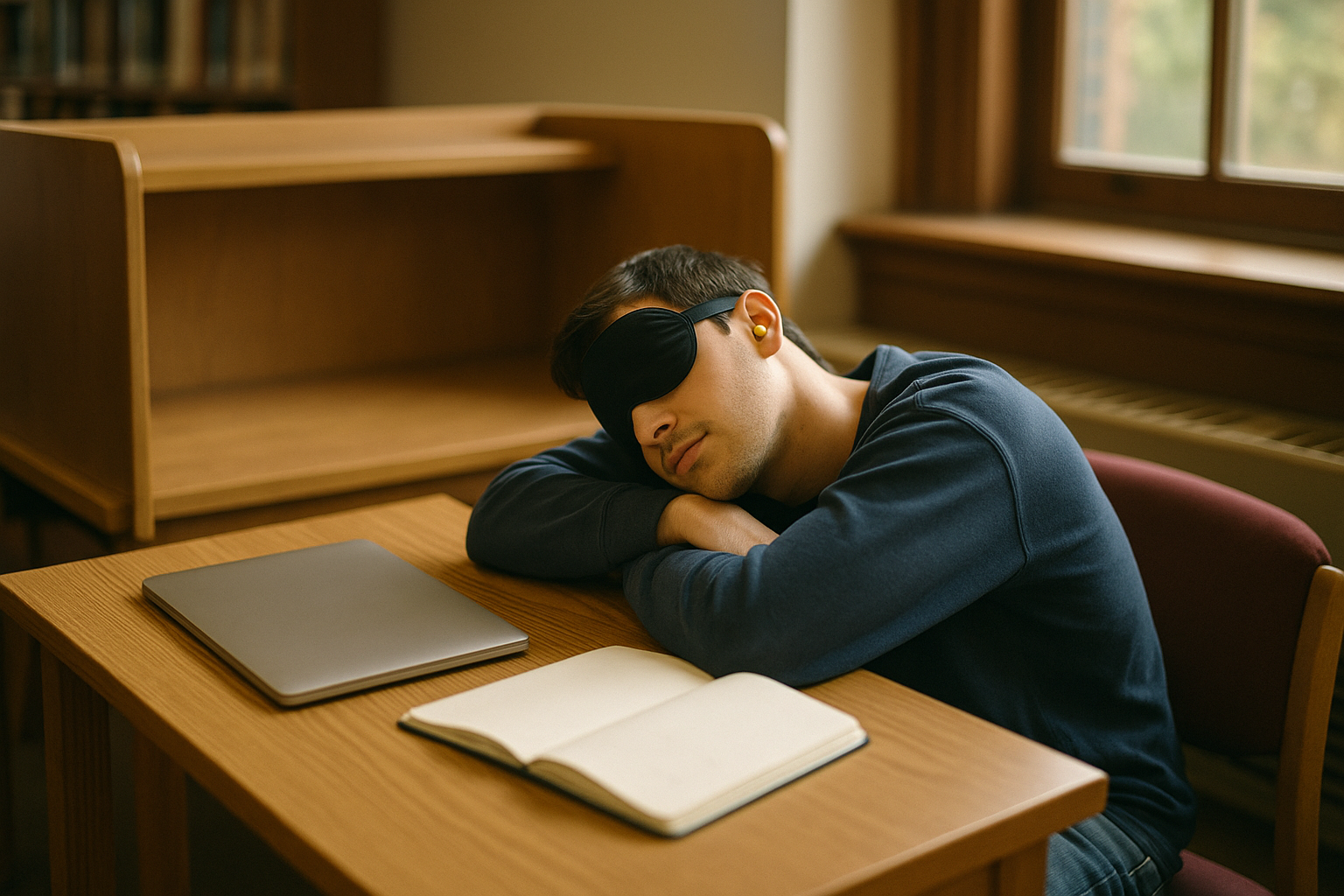
Well-timed naps can be a study superpower: they restore alertness, protect learning capacity, and help lock new material into long-term memory. This guide turns “sleep on it” into an exact, student-friendly playbook you can use during semesters, exam weeks, and lab-heavy days. You’ll learn how long to nap, when to nap, what to do before and after, and how to avoid the dreaded post-nap grogginess—plus ways to fit naps into busy campus life.
Quick answer (for skimmers): The most reliable nap for students is 10–20 minutes between 1–3 p.m. to boost alertness without grogginess; use 60–90 minutes sparingly when you want deeper memory consolidation from full sleep cycles. Pairing a short nap with well-timed caffeine (“coffee nap”) can further reduce sleep inertia for time-critical tasks.
1. Pick the right nap length for your goal
The best nap length depends on what you need next: fast alertness for a lab, or deeper consolidation for material you’ve just studied. For quick energy and focus, naps of 10–20 minutes consistently improve vigilance and processing speed and carry minimal sleep inertia when you wake. For longer-term retention, a 60–90 minute nap lets you progress through NREM and into REM, the stages most associated with memory consolidation—especially when you need to integrate complex material. Very short “micro-naps” under five minutes tend to do little, while 30–60 minute naps often land you in slow-wave sleep and can provoke grogginess.
1.1 Numbers & guardrails
- 10–20 min: Best for alertness and reaction time; minimal inertia.
- 60–90 min: Full cycle; better for consolidation and creativity; use earlier in the day.
- Avoid 30–60 min unless you can buffer 30–45 minutes after waking to shake off inertia.
- If you only have 10 minutes, it’s still worth it: benefits can last 1–3 hours.
1.2 Mini-checklist
- Set two alarms: one to wake, one 5 minutes later as a backstop.
- Recline, eye mask on, white noise in; phone on Do Not Disturb.
- After waking, hydrate and get bright light to finish the transition.
Bottom line: Match nap length to your task. Keep it short for alertness; go full-cycle earlier in the day for memory work.
2. Nap at the right time (ride your circadian dip)
Students naturally feel a post-lunch dip in alertness, typically 1–3 p.m., when a short nap fits neatly into your biology. Napping here boosts energy without delaying bedtime. Naps late afternoon or evening are more likely to delay sleep onset, especially if you’re sensitive to nighttime insomnia. If your schedule pushes you early (e.g., clinicals, long commutes), you may benefit from late-morning micro-naps—but keep them brief. Align timing with your chronotype: night owls skew later; early birds skew earlier.
2.1 How to do it
- Target: 1:00–3:00 p.m. window for most students; earlier for early types.
- Buffer bedtime: Avoid naps after ~5 p.m. unless you’re recovering from acute sleep loss.
- Schedule around classes: 20-minute buffer before labs or seminars to shake off any inertia.
2.2 Common mistakes
- Too late, too long: A 90-minute nap at 6 p.m. can sabotage your sleep.
- Stacking caffeine: Late-day coffee plus a nap can push bedtime later.
Bottom line: Put naps where your brain expects a lull, not where they’ll collide with nighttime sleep.
3. Use naps to protect learning before study and consolidate after
Naps can help both sides of learning: before a heavy study block, a nap restores encoding capacity in the hippocampus; after studying, a nap helps consolidate that new material. In controlled work using fMRI and polysomnography, a 90-minute afternoon nap boosted subsequent word-pair learning by ~21% versus staying awake, indicating restored hippocampal function. Separately, a 1-hour nap after learning educationally realistic material preserved memory as effectively as staying awake for that hour (and sometimes better by next day). Sleep spindles during Stage 2 sleep appear to play a mechanistic role in declarative memory consolidation.
3.1 Two practical sequences
- Encoding-first day (learn later): 20–90 min nap → light snack → 2–3 hr study block.
- Consolidation-first day (learn now): 60–90 min nap after dense memorization; brief quiz later.
3.2 Numbers & guardrails
- Use 20 minutes to sharpen attention before problem sets.
- Use 60–90 minutes if you’ve just crammed vocab, diagrams, or case details.
- Track sleep spindle-friendly naps (quiet, cool, uninterrupted) to maximize benefit.
Bottom line: Place naps strategically—before to prime the brain, after to lock learning in place.
4. Try a “coffee nap” when you need to be instantly sharp
A coffee nap means drinking ~100–200 mg of caffeine and then immediately taking a 10–20 minute nap. Caffeine takes roughly 20–30 minutes to peak; napping as it absorbs can reduce sleep inertia and amplify alertness right as you wake. For students driving to campus, running lab equipment, or taking timed tests, this combo can be safer and sharper than coffee alone. Evidence shows caffeine before a short nap helps mitigate post-nap grogginess; simulated driving studies also show fewer performance lapses versus placebo. Keep these strictly early afternoon to avoid bedtime disruption.
4.1 Coffee nap steps
- Drink coffee or tea ~100–200 mg caffeine.
- Lie down immediately for 10–20 minutes; set a firm alarm.
- Stand into bright light, hydrate, and move for 2–3 minutes after.
4.2 Guardrails
- Avoid for those with anxiety sensitivity to caffeine or reflux.
- Don’t use within 8 hours of bedtime if caffeine disrupts your sleep.
Bottom line: Time caffeine so it peaks as you wake; the nap clears adenosine while caffeine blocks it—two levers, one boost.
5. Beat sleep inertia (post-nap grogginess) with proactive tactics
Sleep inertia—the foggy, slowed state after waking—peaks right as you get up and usually resolves within ~30 minutes (longer if you’re sleep-deprived or wake from deep sleep). The best way to reduce it is proactive: pick a short nap that avoids deep slow-wave sleep and, when appropriate, take caffeine before the nap. Reactive fixes (light, cooling, exercise) show mixed results but are worth trying. Plan a brief “ramp time” after longer naps before you drive, handle chemicals, or start high-stakes work.
5.1 Mini-checklist (post-nap)
- Bright light or outdoor sunlight for 5–10 minutes.
- Hydrate and do a quick mobility burst (e.g., 10 air squats + 10 arm circles).
- Task triage: start with a low-stakes task for ~10 minutes, then switch to deep work.
- If inertia is persistent, shorten nap length next time or shift it earlier.
5.2 What to expect
- Minimal inertia after ~10-minute naps; more after 30–60 minutes. EASA
- Caffeine before a short nap works best; after is less reliable.
Bottom line: Avoid the problem (short naps), and script the first 10 minutes after waking to clear the cobwebs.
6. Make your campus environment nap-friendly (even in noisy dorms)
You don’t need a perfect bedroom to nap well on campus. A cool, dark, quiet setup is enough: use an eye mask, earplugs or noise-canceling headphones, and a white-noise app. Many universities now provide nap pods or designated rest areas with timers and gentle wake features—check your library, student center, or wellness spaces. Pods or “nap rooms” often limit sessions to 20–30 minutes, which aligns with best-practice power naps. If your campus doesn’t have pods, some schools publish nap maps that list quiet, safe spaces with power outlets and minimal foot traffic.
6.1 Setup checklist (2 minutes)
- Mask + earplugs ready in your backpack.
- Recline (chair back or couch), feet slightly elevated if possible.
- Timer for 15–20 minutes; second alarm as backup.
6.2 Campus options to explore
- Library or engineering building nap pods (first-come or reservable).
- Wellness center relaxation rooms with strict 20–30 minute limits.
- Nap maps curated by students with vetted quiet spots.
Bottom line: A small nap kit + a known spot beats waiting for “perfect.” Prepare once; benefit all semester.
7. Tailor naps to age, culture, and chronotype
Adolescents (middle/high school) experience a biological phase delay—it’s hard to fall asleep before ~11 p.m.—and they need 8–10 hours nightly. If early school start times cut that short, a brief early-afternoon nap can help with alertness and mood without disrupting bedtime, especially in cultures where midday naps are common. In large adolescent cohorts, habitual midday napping associates with better neurocognitive function; still, prioritize adequate night sleep first. University students vary: night owls may push naps later but should keep them short; early types do better with earlier naps.
7.1 Regional notes
- Where midday napping is part of campus culture (e.g., designated nap times/rooms), leverage it—but keep 10–20 minutes the default on class days. PMC
7.2 Guardrails
- If naps consistently delay your bedtime or worsen insomnia, scale back or stop.
- Use naps as a supplement, not a substitute, for meeting nightly sleep needs.
Bottom line: Respect your biology and your context; a great nap complements, not replaces, healthy night sleep.
8. Use naps to manage stress and mood—without masking insomnia
Naps can improve mood and may help process emotional material, with studies showing that even an afternoon nap selectively preserves memory for emotional scene elements. That’s useful after debriefing clinical cases, reviewing sensitive content, or processing stressful days. However, if you struggle with chronic insomnia, standard therapy (CBT-I) often discourages daytime naps during treatment to repair sleep drive and strengthen bed–sleep associations; check with a clinician if you’re in therapy. Once insomnia improves, carefully reintroduce short early naps only if they don’t relapse your symptoms.
8.1 Mini-checklist
- For stress-heavy days, plan a 10–20 minute early afternoon nap.
- If you’re in CBT-I, follow your provider’s rules (often no naps initially).
- Track mood and sleep for two weeks; keep naps only if nighttime sleep stays stable.
Bottom line: Naps can help mood and resilience—but they shouldn’t become a crutch that hides an untreated sleep disorder.
9. Script exam-week naps like you script study blocks
Treat exam weeks like a performance season: rehearse your nap routine 1–2 weeks ahead so your body knows what to do. On exam day, a 10–20 minute nap 60–90 minutes before you need peak focus can sharpen vigilance; for multi-hour labs or practicals, a coffee nap may be worth it. NASA’s operational data with pilots—different context, same biology—suggests short, planned naps restore alertness and performance substantially; translate that to your own high-stakes blocks with the right buffers.
9.1 Week-before plan (example)
- T-7 to T-4 days: Practice 15–20 minute naps at the same mid-afternoon time.
- T-3 to T-1 days: Keep naps short; shift longer study earlier in the day.
- Exam day: Eat light, hydrate, 10–20 minute nap 60–90 minutes before start; stand in bright light after waking.
9.2 Common pitfalls
- First-ever coffee nap on exam day (test it in advance).
- Napping too close to start time; always leave a 20–30 minute ramp.
Bottom line: Make naps a practiced part of your performance routine, not a last-minute gamble.
10. Track your results and personalize
Students vary in how much naps help—and which kind help most. A large meta-analysis finds overall cognitive benefits of napping, but the effect sizes differ across tasks and people. Treat this like a mini-experiment: track nap length, start time, pre/post task type, and a quick alertness score (e.g., 1–7). After two weeks, keep what clearly helps, adjust what doesn’t, and drop what harms your night sleep. Wearables can help, but a simple spreadsheet or notes app works fine.
10.1 Mini-metrics to log
- Nap start/end, length, location (pod, library, dorm).
- Pre/post alertness (1–7), task performance (e.g., quiz %, code errors).
- Bedtime shift that night (did the nap push sleep later?).
10.2 Tools & examples
- Phone alarm + timer, white noise app, eye mask, earplugs.
- Optional: coffee nap (only in early afternoon), tracked against outcomes.
Bottom line: Personalize. If your 15-minute nap at 2:00 p.m. clearly improves lab performance without wrecking bedtime, that’s your template.
FAQs
1) Are naps actually good for memory, or just for feeling less tired?
Both. Short naps (10–20 minutes) reliably improve alertness and attention—useful for problem sets and labs. Longer naps (60–90 minutes) that include Stage 2 and REM support memory consolidation, particularly for declarative material you’ve just studied. Research connects sleep spindles with consolidation mechanisms.
2) What’s the single best nap for most students?
If you could do only one, choose a 10–20 minute nap between 1–3 p.m. It aligns with the circadian lull and minimizes sleep inertia while boosting vigilance. Save long naps for days when you can afford a buffer after waking.
3) Do coffee naps really work, or is that hype?
They work for many people—especially for tasks demanding sharp reaction times. Drink caffeine, lie down immediately for 10–20 minutes, and wake as caffeine peaks. Several lines of evidence, including simulated driving, support fewer performance lapses versus placebo. Avoid late-day use if caffeine disrupts your sleep. PubMed
4) How do I avoid feeling worse after a nap?
Keep naps short, wake to a gentle alarm, and step into bright light with a bit of movement. Build a 10–15 minute ramp before high-stakes tasks. Caffeine taken before short naps tends to be the most reliable proactive countermeasure.
5) Will napping hurt my nighttime sleep?
It can, if you nap too late or too long. For most students, early-afternoon, short naps don’t harm nighttime sleep; avoid late-evening naps and track your bedtime. Teenagers still need 8–10 hours at night—naps help, but they don’t replace that.
6) Is napping different for high schoolers vs. university students?
High schoolers experience a natural circadian delay and often lack sufficient sleep due to early start times. Brief early-afternoon naps can help, but advocacy for later school start times remains important. University students have more schedule control and can often place naps better. PMC
7) Can naps help with stress or tough emotional content?
Yes. Sleep (including naps) can selectively preserve emotional aspects of memories, which may aid processing after difficult labs, simulations, or clinicals. But if you’re in CBT-I for chronic insomnia, you’ll likely be told to avoid naps at first. PMC
8) What if I only have 8–10 minutes?
Still worth it. Even ~10-minute naps can yield measurable alertness benefits with minimal inertia. Set a firm alarm, close your eyes, and treat it like a micro-reset.
9) Are nap pods legit or just a campus trend?
Legit, when used well. Many universities provide 20–30 minute pod sessions with gentle wake features. They’re designed to facilitate short, quiet naps that fit the science. Check your library or student center for policies and booking.
10) I always wake up groggy—should I stop napping?
Not necessarily. First, shorten your nap, shift earlier, and script your post-nap ramp (light + movement). If grogginess persists or you feel sleepy most days, screen for insufficient sleep or a sleep disorder with your clinician.
Conclusion
Napping isn’t laziness—it’s strategic recovery and learning. For most students, the sweet spot is 10–20 minutes in early afternoon to sharpen attention without wrecking bedtime. When you’re consolidating dense material, a 60–90 minute nap earlier in the day can amplify memory, especially when you protect Stage 2 spindles and REM with a quiet, cool setup. If you need razor-sharp performance fast, consider a coffee nap—but rehearse it before exam day and keep it early. Across age groups and cultures, naps work best as a complement to proper nightly sleep, not a substitute. Track your own responses for two weeks, keep what helps, and cut what hurts. With a tiny kit (eye mask, earplugs, timer) and a known spot (pod, library nook, dorm couch), you can turn downtime into an academic edge—today, this week, and every finals season.
Try this today: schedule a 15-minute nap at 2:00 p.m., set two alarms, and spend 5 minutes in bright light after. Notice your focus in the next class—then iterate.
References
- Influence of mid-afternoon nap duration and sleep parameters on memory encoding, Sleep (Oxford Academic), 2023. Oxford Academic
- Influence of mid-afternoon nap duration and sleep parameters on memory encoding, PMC (open version), 2023. PMC
- A daytime nap restores hippocampal function and improves encoding capacity, Communications Biology (Nature), 2020. PMC
- The long-term memory benefits of a daytime nap compared with cramming, Sleep, 2019. and open version Oxford AcademicPMC
- Sleep spindles as facilitators of memory formation and learning, Frontiers in Human Neuroscience, 2016. PMC
- Sleep Inertia: current insights (review), Nature and Science of Sleep, 2019. PMC
- Time to wake up: reactive countermeasures to sleep inertia (review), Industrial Health, 2016. PMC
- Coffee nap (what it is and timing), Sleep Foundation, updated July 22, 2025. Sleep Foundation
- Napping (general guidance, timing), Sleep Foundation, updated March 11, 2024. Sleep Foundation
- Sleep inertia module (duration and caffeine timing), CDC NIOSH, 2024. CDC
- Pediatric sleep duration consensus (AASM), Journal of Clinical Sleep Medicine, 2016; AASM position on school start times, 2024. and PMCAASM
- Midday napping and neurocognitive function in early adolescents (China Jintan Cohort), Behavioral Sleep Medicine, 2019. PMC
- Naps can boost memory (ANS activity), UC Riverside news on PNAS study, June 13, 2016. University of California
- NASA operational brief: the science of naps, NASA NTRS, 2019; “NASA nap” summary, Sleep Foundation (Oct 27, 2023). and NASA Technical Reports ServerSleep Foundation
- University nap pods examples/policies (campus implementations): University of Colorado Libraries (May 1, 2023), Montclair State University (Feb 26, 2024), CSU Dominguez Hills policy (2019), UC Davis Nap Map (June 4, 2025). ; ; ; University LibrariesMontclair State Universitylsucsudh.orgSHCS
- Behavioral and psychological treatments for chronic insomnia (guideline), Journal of Clinical Sleep Medicine, 2021; Sleep Foundation CBT-I explainer (2025). ; Journal of Clinical Sleep MedicineSleep Foundation
- Systematic review and meta-analyses on cognitive effects of napping, Sleep Medicine Reviews, 2022. ScienceDirect
Medical disclaimer: This article is for educational purposes only and is not a substitute for personalized medical advice. If you suspect a sleep disorder or have persistent daytime sleepiness, consult a qualified clinician.