

























Radiant skin starts in your kitchen as much as in your bathroom. “Nutrition for radiant skin” means an eating pattern that supports your barrier, collagen, hydration, and antioxidant defenses while calming inflammation and protecting against environmental stress. In brief: prioritize colorful plants, smart fats, adequate protein, steady blood sugar, and hydration—then layer in a few targeted habits. This guide gives you exactly that, distilled into 12 practical, science-backed moves you can start today. Quick note: this article is educational and not a substitute for personal medical advice; check with your clinician if you have conditions like acne, eczema, PCOS, or are pregnant.
Snapshot plan (for skimmers):
- Eat vitamin-C produce daily; 2) Fatty fish 2×/week (or algae oil); 3) Pick low-glycemic carbs; 4) Load up on carotenoid-rich colors; 5) Hydrate on a schedule; 6) Hit protein targets; 7) Add probiotics + prebiotics; 8) Sip polyphenols (green tea/cocoa); 9) Mind zinc/selenium; 10) Get vitamin D safely; 11) Test dairy tolerance; 12) Build a weekly skin-smart menu.
1. Load Vitamin C–Rich Produce to Power Collagen and Antioxidant Defense
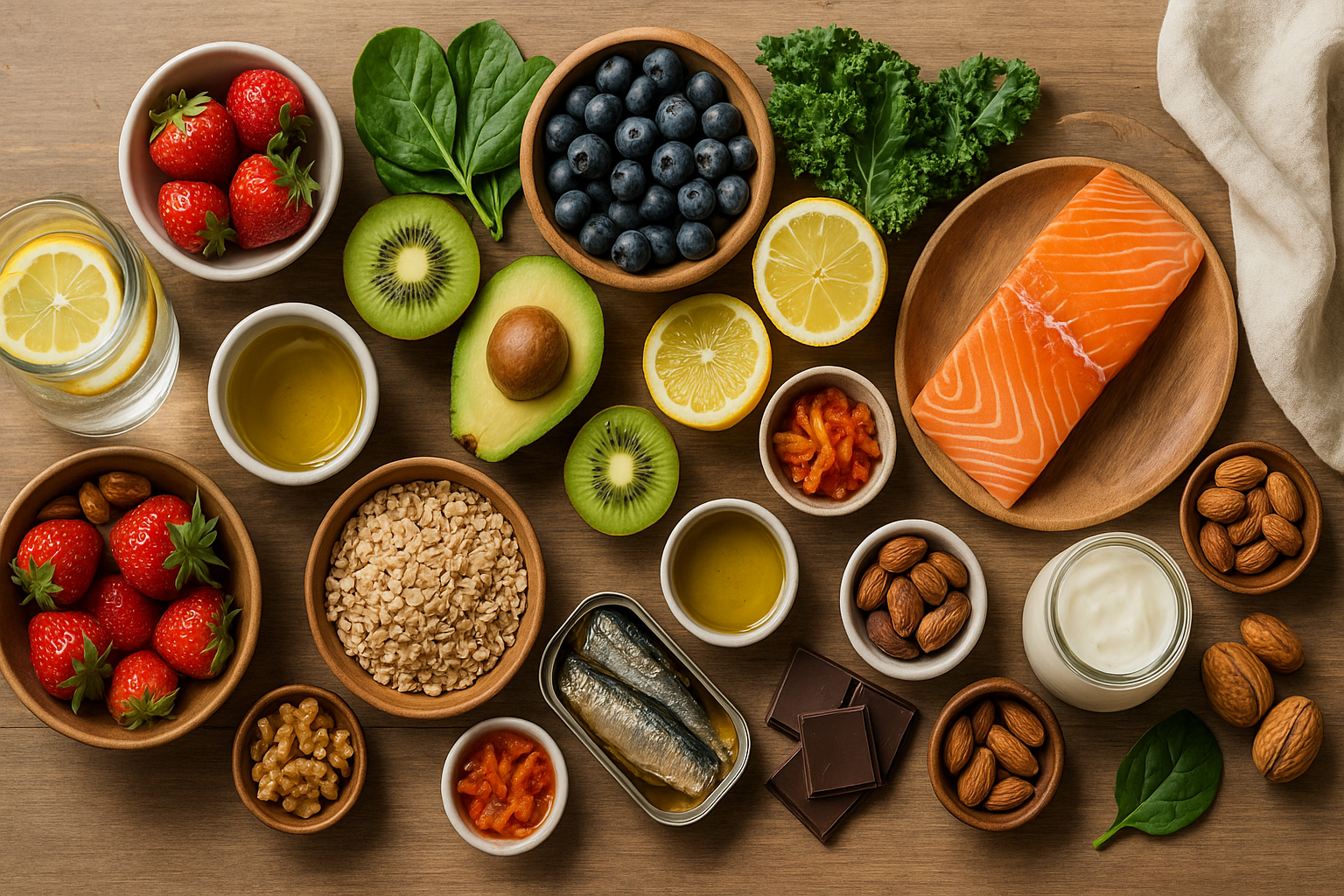
Start by ensuring you meet (and usually exceed) your vitamin C needs because this water-soluble vitamin is essential for collagen formation and neutralizing free radicals that age skin. Aim to eat berries, citrus, kiwi, bell peppers, broccoli, or guava daily; most people do best with multiple servings across the day to keep levels steady. Vitamin C donates electrons to enzymes that cross-link collagen, which helps keep skin firm and resilient. Since your body doesn’t store much vitamin C, consistency beats mega-doses; food first, supplements only if intake is low or needs are higher (e.g., smokers). Within 2–4 weeks of levelling up vitamin C intake alongside protein, many people notice plumper, better-hydrated skin—largely because you’re supporting both collagen synthesis and barrier lipids indirectly via overall diet quality.
1.1 How to do it
- Build a daily C anchor: add 1 cup berries to breakfast and raw bell pepper or orange at lunch.
- Pair with iron-rich plants (beans, spinach) to boost non-heme iron absorption.
- If supplementing, stay near 200–500 mg/day with meals; high doses can upset the gut.
1.2 Numbers & guardrails
- General RDAs: ~75–90 mg/day (adults); UL = 2,000 mg/day. Smokers need +35 mg/day.
- Food wins: 1 kiwi ≈ 64 mg; 1 cup strawberries ≈ 85 mg; ½ red pepper ≈ 95 mg.
Bottom line: Hitting vitamin C targets daily gives your collagen machinery what it needs and adds antioxidant coverage you can feel over time.
2. Eat Omega-3s (EPA/DHA) to Calm Inflammation and Support the Barrier
Prioritize fatty fish or algae-based omega-3s because EPA/DHA modulate inflammatory pathways that drive breakouts, redness, and barrier dysfunction. Two fish meals per week (e.g., salmon, sardines, mackerel) or a daily algae oil supplement (for non-fish eaters) is a practical baseline. Small trials suggest omega-3s can reduce acne lesion counts and improve dryness and itch; they also appear to enrich skin lipids and may improve transepidermal water loss in some contexts. The effect size varies and evidence is still growing, but the safety and broader cardiometabolic benefits make omega-3s a high-value habit. In South Asia, if marine fish are costly, canned sardines/mackerel are excellent and shelf-stable; vegetarians can combine ALA sources (flax, chia, walnuts) with algae-derived EPA/DHA. ScienceDirect
2.1 How to do it
- Twice-weekly fish (85–115 g cooked): salmon, sardines, mackerel, trout.
- No-fish option: algae oil providing 250–500 mg EPA+DHA/day.
- Snack swaps: walnuts for chips; ground flax in yogurt or daal.
2.2 Common mistakes
- Relying on ALA alone (plant omega-3) for anti-inflammatory effects.
- Forgetting to store oils away from heat/light to prevent oxidation.
Bottom line: EPA/DHA are reliable, food-first tools to cool skin inflammation and reinforce barrier lipids; they pair well with low-glycemic eating for acne-prone skin.
3. Choose Low-Glycemic-Load Carbs to Tame Flares and Glycation
Controlling blood-sugar spikes reduces inflammatory signaling and sebum surges that can worsen acne, while also limiting advanced glycation end-products (AGEs) that stiffen collagen over time. Practically, this means swapping refined starches and sugary drinks for intact grains, legumes, and fiber-rich vegetables—and pairing carbs with protein or fat to blunt spikes. Randomized trials and reviews report fewer acne lesions on low-glycemic-load diets compared with high-GL patterns, and dermatology groups increasingly discuss GL and dairy as modifiable levers. Expect improvements over 8–12 weeks when combined with standard care.
3.1 Mini-checklist
- Build meals around beans/lentils, brown rice, quinoa, oats.
- Add 20–35 g fiber/day; start slow to avoid bloating.
- Guardrails: WHO/DGA suggest <10% of calories from added sugars (some experts argue for ~6%). CDC
3.2 Numbers & guardrails
- Noticeable skin changes often appear by week 8–12 with GL control.
- Keep fruit whole; reserve juices for small portions with meals.
Bottom line: Low-GL eating steadies sebum and inflammation and protects collagen from sugar-related damage—foundational for clear, resilient skin.
4. Go Big on Color: Carotenoids for Tone and Photoprotection (Food ≠ Sunscreen)
Deep orange, red, and dark-green produce (tomatoes, carrots, pumpkin, spinach, kale, mango) pack carotenoids like beta-carotene, lutein, and lycopene that accumulate in skin, subtly enhancing tone and offering modest UV defense. Diets rich in these pigments have been linked to lower markers of oxidative stress after sun exposure; polyphenol-rich foods like tomato and cocoa show similar adjunct effects. But food-based photoprotection is supplemental—not a replacement for SPF. If you spend time outdoors, sunscreen and shade remain non-negotiable.
4.1 How to do it
- Eat at least 5 colors/day: e.g., tomato + spinach omelet, carrot snack, mango, kale.
- Pair with fat (olive oil, avocado, nuts) to improve carotenoid absorption.
- For convenience, use tomato paste/sauce (concentrated lycopene).
4.2 Common mistakes
- Assuming food replaces sunscreen; reapply every ~2 hours outdoors.
- Overcooking greens; quick sauté or steam to preserve nutrients.
Bottom line: Color wins twice—visible radiance and modest UV resilience—while SPF is still your first line of defense.
5. Hydrate on Purpose: Fluids, Water-Rich Foods, and Electrolyte Savvy
Hydration supports circulation, nutrient delivery, and stratum corneum function—fundamentals for a supple look. A practical target for many adults is ~2–3 L/day from beverages, more in heat or with exercise; total water intake (all drinks + foods) averages ~3.7 L/day for men and 2.7 L/day for women as Adequate Intakes. Use urine color as your daily gauge (pale straw = good). Water-rich foods (cucumber, citrus, melon, soups) meaningfully contribute, and a pinch of electrolytes during heavy sweating helps retention. Expect skin hydration shifts gradually across weeks, not hours. CDC
5.1 Mini-checklist
- Start with 500 mL on waking; keep a bottle at your desk.
- Add water-rich produce to each meal; sip herbal/green tea.
- In hot climates or workouts, consider electrolytes to curb over-dilution.
5.2 Region note (South Asia)
- Hot, humid summers raise sweat losses; pre-hydrate and include salty foods (chaas, lightly salted lemon water) when appropriate.
Bottom line: Consistent, sensible hydration shows on your face—aim for steady intake, not “chug and hope.”
6. Hit Protein Targets and Time Them for Repair (Collagen Included)
Protein provides amino acids to build keratin and collagen and maintain barrier enzymes. Most adults aiming for visible skin benefits do well with ~1.0–1.2 g/kg/day, distributed over 3 meals (e.g., 25–35 g each), alongside vitamin C to support collagen cross-linking. Collagen peptides (2.5–10 g/day) show modest improvements in hydration and elasticity over 8–12 weeks in several RCTs—useful but not magical. Choose lean meats, fish, eggs, dairy or soy, plus legumes; vegetarians can combine pulses and grains to cover essentials. Pair protein with colorful plants to deliver antioxidants that protect the proteins you just built.
6.1 How to do it
- Plate rule: ¼ protein, ½ vegetables, ¼ whole grains or starchy veg.
- Add 200 mg+ vitamin C with collagen peptides (e.g., berries).
- Rotate plant proteins (dal + rice; tofu + quinoa).
6.2 Common mistakes
- Over-relying on ultra-processed protein snacks (often high sugar/sodium).
- Skipping protein at breakfast—missed chance for even distribution.
Bottom line: Protein sets the stage for structural repair; smart timing plus vitamin C helps you see the payoff in skin firmness.
7. Feed the Gut–Skin Axis: Probiotics and Prebiotics
Your microbiome influences systemic inflammation and barrier function; nourishing it can calm reactive skin and support resilience. A fermented foods habit (yogurt/kefir, kimchi, sauerkraut, miso) increases microbial diversity and dampens inflammatory markers in as little as 10 weeks in controlled research. Pair this with prebiotic fibers (onion, garlic, leeks, oats, legumes, bananas) to feed beneficial species. Evidence in acne/eczema is promising but mixed; still, the upside for GI comfort and immune tone is strong—and these foods are delicious and affordable. Stanford Medicine
7.1 Mini-checklist
- Aim for 1–2 fermented servings/day (e.g., 1 cup kefir or a few forkfuls kimchi).
- Include prebiotics at two meals/day.
- Introduce gradually if you’re FODMAP-sensitive.
7.2 Tools/Examples
- Breakfast: oats + kefir + berries + chia.
- Lunch: dal + brown rice + cucumber raita.
- Dinner: veggie stir-fry with tempeh and a side of kimchi.
Bottom line: A fiber-and-fermented pattern makes skin-friendly changes at the immune level—worth cultivating for the glow that starts in your gut. PubMed
8. Sip Polyphenols: Green Tea and Cocoa for Calm, Circulation, and UV Backup
Green tea catechins and cocoa flavanols deliver antioxidant and vasodilatory effects that can enhance microcirculation, reduce UV-induced inflammation, and nudge skin hydration and elasticity. Trials have shown that high-flavanol cocoa can increase dermal blood flow and, in some studies, improve elasticity and reduce UV erythema after several weeks; green tea catechins show similar adjunct photoprotective effects. Practical approach: swap one sugary drink for unsweetened green tea and enjoy dark chocolate (≥70%) or natural cocoa in yogurt or smoothies. Remember: these are supportive—not substitutes for sunscreen. MDPI
8.1 How to do it
- 2–3 cups/day green tea or matcha; steep ≥3 minutes.
- Flavanol hit: 1–2 squares (10–20 g) dark chocolate or 1 Tbsp natural cocoa.
8.2 Common mistakes
- Buying “dutched” cocoa (lower flavanols).
- Over-sweetening tea or cocoa—undoes benefits.
Bottom line: Polyphenol-rich sips are tiny daily acts that add up to calmer, better-circulated skin—just keep sunscreen in the mix.
9. Don’t Forget Zinc and Selenium (But Respect the Upper Limits)
Trace minerals matter: zinc supports wound healing, oil regulation, and immunity; selenium powers antioxidant enzymes (e.g., glutathione peroxidases). Get them from food first—oysters, beef, pumpkin seeds, lentils (zinc); Brazil nuts, seafood, eggs (selenium). If supplementing, mind the ULs: zinc 40 mg/day for adults; selenium 400 mcg/day—excess can cause issues (e.g., copper deficiency with high-dose zinc; selenosis with too many Brazil nuts). Most people can hit needs via diet without pills.
9.1 Mini-checklist
- 1–2 Brazil nuts occasionally = selenium top-up (don’t overdo).
- Pumpkin seeds (30 g) or oysters as zinc boosters.
- Use fortified cereals strategically if intake is low.
9.2 Numbers & guardrails
- RDA: zinc 8–11 mg/day; selenium 55 mcg/day (adults).
- Avoid long-term high-dose zinc unless medically indicated.
Bottom line: These small but mighty minerals help keep inflammation and oxidative stress in check—hit targets from food and avoid megadoses.
10. Get Vitamin D Safely: Food, Sensible Sun, or Supplement
Vitamin D affects immune tone and barrier function; deficiency can show up as dullness or delayed healing (among other systemic effects). If you get little midday sun, cover up for cultural or skin-cancer reasons, or live at higher latitude, consider testing and correcting with your clinician’s guidance. Current guidance suggests most healthy adults under 75 don’t benefit from routine high-dose supplements beyond the RDA, while select groups may need more. Food sources are limited (fatty fish, fortified milk/alternatives, eggs), so many rely on supplements to meet 600–800 IU/day, respecting the UL of 4,000 IU/day. Endocrine Society
10.1 How to do it
- Combine fortified foods + fish with modest sun (when safe) or a daily D3.
- Re-check levels after 8–12 weeks if you were deficient.
10.2 Safety note
- Don’t megadose; vitamin D toxicity is real at very high intakes.
Bottom line: Keep vitamin D in the healthy middle—enough to support barrier and immunity, not so much that you flirt with toxicity.
11. Be Dairy-Savvy if You’re Acne-Prone
Dairy is nutritious, but multiple meta-analyses associate milk intake (particularly skim) with higher odds of acne; yogurt/cheese show mixed or weaker links. Mechanisms may involve IGF-1 and hormonal signaling. This doesn’t mean everyone needs to quit dairy; it means n=1 testing is reasonable if you breakout. Try a 6–8 week trial swapping milk for unsweetened soy/oat or lactose-free options while keeping the rest of your diet steady, then reintroduce and observe. Keep protein and calcium adequate regardless of your choice. PMC
11.1 How to do it
- Swap skim/low-fat milk first; many report that’s the key trigger.
- Keep yogurt/kefir if tolerated (fermentation may be friendlier).
- Log changes: lesions, oiliness, cycle timing, stress.
11.2 Region note
- In South Asia, lassi can be made with less sugar; consider soy dahi or fortified alternatives during trials.
Bottom line: Dairy isn’t universally “bad,” but an evidence-informed, time-boxed experiment can clarify whether milk aggravates your skin.
12. Build a Weekly Skin-Smart Pattern (Mediterranean-Lean, AGE-Aware)
Tie it together with a Mediterranean-leaning plan rich in vegetables, legumes, whole grains, nuts, olive oil, fish, and fermented foods—and cook wet and low when you can. High-heat, dry methods (grilling, broiling, deep-frying) generate more dietary AGEs that can cross-link collagen and stiffen elastin; moist methods (steaming, stewing, pressure cooking) minimize AGE load. Marinating meats with acid (lemon/yogurt) also helps. Over weeks, this pattern nourishes skin structure and reduces oxidative stress, supporting a lasting glow.
12.1 Mini meal map (example)
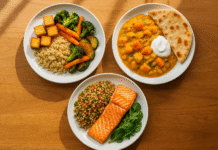
- Breakfast: oats + kefir + berries + chia; green tea.
- Lunch: chickpea-spinach curry, brown rice, cucumber salad; water.
- Snack: orange + a few almonds; 1–2 squares dark chocolate.
- Dinner: tomato-olive oil sardines with quinoa, steamed broccoli; herbal tea.
12.2 Cooking guardrails
- Favor steaming/stewing/poaching; limit frequent charring.
- Tomato paste + olive oil = convenient lycopene hit.
- Re-apply sunscreen outdoors; food is support, not shield.
Bottom line: The pattern—not a single superfood—creates durable radiance; think colorful plants, smart fats, steady carbs, and moist-heat cooking most days.
FAQs
1) What does “nutrition for radiant skin” actually mean?
It’s an eating pattern that supports the skin barrier (fats, ceramides), collagen production (protein + vitamin C), antioxidant defense (colorful plants, polyphenols), steady blood sugar (low-GL carbs), and hydration (fluids + water-rich foods). Together, these reduce inflammation and oxidative stress—the two big forces that dull tone and age skin.
2) How fast will I see changes?
Hydration and reduced salt/sugar bloat can improve luminosity within days. Collagen, barrier, and pigment changes take longer—8–12 weeks of consistency is a fair window, especially for low-GL, omega-3, and carotenoid habits.
3) Do I need collagen supplements for skin?
Not necessarily. Hitting 1.0–1.2 g/kg/day total protein and getting vitamin C from food can cover you. Collagen peptides offer modest benefits for elasticity/hydration in several trials; use them as an add-on, not a substitute for diet quality. PMC
4) Can green tea or cocoa replace sunscreen?
No. Polyphenols can reduce UV-induced inflammation and support microcirculation, but you still need SPF and reapplication outdoors every ~2 hours. Think of these foods as helpful backup, not frontline defense.
5) How much water is “enough” for glow?
Adequate Intake for total water is ~3.7 L/day for men, 2.7 L/day for women (all beverages + foods). Let your urine color guide day-to-day adjustments; add electrolytes for heavy sweating or extreme heat.
6) What if I’m acne-prone—should I quit dairy entirely?
Not automatically. Evidence links milk (especially skim) with higher acne odds, but responses vary. Try a 6–8 week milk swap, keep yogurt/cheese if they don’t bother you, and track your skin. Maintain calcium/protein with fortified alternatives. PubMed
7) Are omega-3 supplements better than fish?
Fish gives you protein, selenium, vitamin D (in some species), and EPA/DHA together. Supplements are great if you don’t eat fish; aim for 250–500 mg EPA+DHA/day. Choose third-party tested products if supplementing. Medical Journals
8) Do Brazil nuts really cover selenium?
Yes—just 1–2 nuts can meet the RDA, but more isn’t better. Keep total selenium ≤400 mcg/day to avoid toxicity; rotate seafood, eggs, and whole grains as primary sources.
9) Can low-glycemic eating help beyond acne?
Likely. It steadies insulin and may reduce glycation, protecting collagen’s springiness. It also lowers swings that drive cravings, making your whole pattern easier to sustain.
10) I cover up for cultural reasons—how do I manage vitamin D?
Use food (fortified milk/alternatives, eggs, fatty fish) and discuss daily D3 with your clinician. Testing can personalize dosing, and most adults should respect the 4,000 IU/day UL.
Conclusion
Your glow isn’t the result of one serum or single superfood; it’s the visible reflection of stable blood sugar, smart fats, vibrant plants, adequate protein, and daily hydration—plus a few extras like fermented foods, polyphenol-rich sips, and mineral awareness. Build meals that are colorful and steadying, choose moist-heat cooking most of the time, and use sunscreen as your non-negotiable. Expect quick wins in hydration and de-puffing, then deeper improvements in tone, texture, and calm over 8–12 weeks as your pattern compounds. Start with two or three changes you can repeat daily (vitamin-C produce, low-GL swaps, and fish or algae oil are strong picks), then expand as they stick. Your next step: pick one breakfast, one lunch, and one dinner from Section 12’s map and run them for the next seven days—your glow will follow your routine.
Call to action: Save this plan, pick three habits to start today, and schedule your grocery list now.
References
- Vitamin C – Health Professional Fact Sheet, NIH Office of Dietary Supplements, updated 2024–2025. https://ods.od.nih.gov/factsheets/VitaminC-HealthProfessional/
- Bioactive Compounds for Skin Health: A Review, Nutrients (MDPI), 2021. https://www.mdpi.com/2072-6643/13/1/203
- Effect of dietary supplementation with omega-3 fatty acid and γ-linolenic acid on acne vulgaris: a randomized, controlled trial, Acta Dermato-Venereologica, 2014. https://medicaljournalssweden.se/actadv/article/view/6412
- Diet and Skin Barrier: The Role of Dietary Interventions on Dermatological Diseases, Nutrients (PMC), 2021. https://pmc.ncbi.nlm.nih.gov/articles/PMC7875671/
- Individuals with acne on low glycemic load diets have reduced lesions vs high GL diets, Dermatology and Therapy (PMC review), 2020. https://pmc.ncbi.nlm.nih.gov/articles/PMC7847434/
- A low-glycemic-load diet improves acne symptoms, American Journal of Clinical Nutrition, 2007. https://www.sciencedirect.com/science/article/pii/S0002916523274572
- How to apply sunscreen, American Academy of Dermatology, accessed Aug 2025. https://www.aad.org/public/everyday-care/sun-protection/shade-clothing-sunscreen/how-to-apply-sunscreen
- Sunscreen — FDA Consumer Guidance, Aug 16, 2024. https://www.fda.gov/drugs/understanding-over-counter-medicines/sunscreen-how-help-protect-your-skin-sun
- Dietary Guidelines for Americans 2020–2025, USDA/HHS, 2020. https://www.dietaryguidelines.gov/sites/default/files/2020-12/Dietary_Guidelines_for_Americans_2020-2025.pdf
- Dietary Reference Intakes for Water (Adequate Intake 3.7 L men, 2.7 L women), National Academies, 2004. https://nap.nationalacademies.org/read/10925/chapter/6
- Fermented-food diet increases microbiome diversity, Cell 2021 (Wastyk et al.). https://www.cell.com/cell/pdf/S0092-8674%2821%2900754-6.pdf
- Chocolate flavanols and skin photoprotection, Nutrition Journal, 2014. https://nutritionj.biomedcentral.com/articles/10.1186/1475-2891-13-66
- Flavanol-rich cocoa increases dermal blood flow, European Journal of Nutrition, 2007. https://www.grupo.us.es/gcucera/images/pdf/fellows/karin/1.pdf
- Dietary polyphenols as photoprotective agents against UV-induced skin damage, Seminars in Cancer Biology, 2017. https://www.sciencedirect.com/science/article/abs/pii/S1756464617300099
- Dairy intake and acne development: meta-analysis, Clinical Nutrition, 2019. https://www.sciencedirect.com/science/article/abs/pii/S0261561418301663
- Association Between Adult Acne and Dietary Behaviors, JAMA Dermatology, 2020. https://jamanetwork.com/journals/jamadermatology/fullarticle/2767075
- Advanced Glycation End Products in the Skin, Oxidative Medicine and Cellular Longevity (PMC), 2022. https://pmc.ncbi.nlm.nih.gov/articles/PMC9131003/
- Advanced Glycation End Products in Foods and a Practical Guide to Their Reduction, Journal of the American Dietetic Association (PMC), 2010. https://pmc.ncbi.nlm.nih.gov/articles/PMC3704564/
- Vitamin D – Health Professional Fact Sheet (UL 4,000 IU), NIH ODS, updated Jun 27, 2025. https://ods.od.nih.gov/factsheets/VitaminD-HealthProfessional/
- Endocrine Society: Vitamin D for the Prevention of Disease (Guideline), June 2024. https://www.endocrine.org/clinical-practice-guidelines/vitamin-d-for-prevention-of-disease
- Zinc – Health Professional Fact Sheet (UL 40 mg), NIH ODS, 2022. https://ods.od.nih.gov/factsheets/Zinc-HealthProfessional/
- Selenium – Health Professional Fact Sheet (UL 400 mcg), NIH ODS, 2024. https://ods.od.nih.gov/factsheets/Selenium-HealthProfessional/