


























Rest-day guilt is the nagging belief that time off equals backsliding. In reality, rest is when your body and brain adapt to prior training stress—turning effort into progress. This guide shows exactly why recovery is productive, not “slacking,” and gives you 12 concrete principles to plan, communicate, and enjoy rest days without second-guessing. Quick answer: one well-planned rest day won’t erase fitness; it improves readiness, reduces injury risk, and supports long-term gains.
Brief note: If you have a medical condition or concerns about injury, sleep, or mental health, use these ideas as general education and speak with a qualified professional for personal advice.
1. Treat Rest as a Training Stimulus—Because It Is
Rest days aren’t neutral; they’re a deliberate input that converts stress into adaptation. Coaches prove this every season with tapering—planned reductions in training volume before events—which reliably boost performance. Meta-analyses show that cutting volume by roughly 41–60% for 1–3 weeks (while maintaining intensity) yields measurable gains; in other words, less can make you do more. That same logic scales down to your week: a single rest day lets your nervous system, muscles, and connective tissues rebound so your next sessions hit higher quality instead of compounding fatigue.
Why it matters
- Recovery capacity limits progress as much as training capacity; overshoot recovery and you stall.
- Tapering data illustrates the principle: strategic reduction improves outcomes—proof that “doing less” can be high-leverage.
How to do it
- Maintain intensity on key days, but insert at least 1 true rest day weekly in most programs; add a lighter “deload” week every 4–8 weeks.
- If you feel “flat,” try a micro-taper: 2–4 days at 50–70% of normal volume, then resume.
Bottom line: Rest is not an absence of training—it’s the phase where training pays out.
2. Sleep Is the Foundation of Recovery (and Skill Gains)
If you rest but shortchange sleep, you’re leaving adaptation on the table. Adults need at least 7 hours nightly; athletes and heavy exercisers often benefit from more. During slow-wave sleep, your body shifts toward parasympathetic dominance and releases pulses of growth hormone—conditions that support tissue repair and protein synthesis. Sleep also stabilizes memories and movement patterns, aiding motor learning so yesterday’s practice is more available tomorrow. PMCFrontiers
Numbers & guardrails
- Aim for 7–9 hours/night; keep a consistent sleep window.
- Prioritize room darkness, cool temperature, and a wind-down that pulls you off screens 60 minutes before bedtime.
Mini-checklist
- Before bed: gentle stretch, shower, journal.
- Environment: blackout curtains, white noise, phone charging outside the bedroom.
- On rest days: try a 20–30 minute nap early afternoon if you’re sleep-deprived (set an alarm).
Bottom line: No tool beats sleep for turning training stress into resilience.
3. Periodize Downtime: Plan Deloads and Tapers, Not Just Workouts
Random rest invites guilt; planned rest earns confidence. Build recovery into your calendar before you need it. Evidence across sports shows that structured tapers—reducing volume ~41–60% while holding intensity—for about 7–21 days can sharpen performance. Similarly, deload weeks (20–50% volume reduction) reset cumulative fatigue, keep technique crisp, and prevent you from drifting into non-functional overreaching.
3-step template
- Macro: circle races, exams, or busy seasons; place a taper beforehand.
- Meso: every 4–8 weeks, schedule 1 lighter week (20–50% less volume).
- Micro: one full rest day weekly; two when stress outside training is high.
Common mistakes
- Reducing intensity instead of volume during taper.
- “Sneaking” in hard cross-training on rest days.
- Panicking mid-taper and adding extra sessions (“reverse taper”).
Bottom line: When recovery is on the calendar, you’ll feel less guilty—and perform better.
4. Choose the Right Kind of Rest: Active vs. Passive
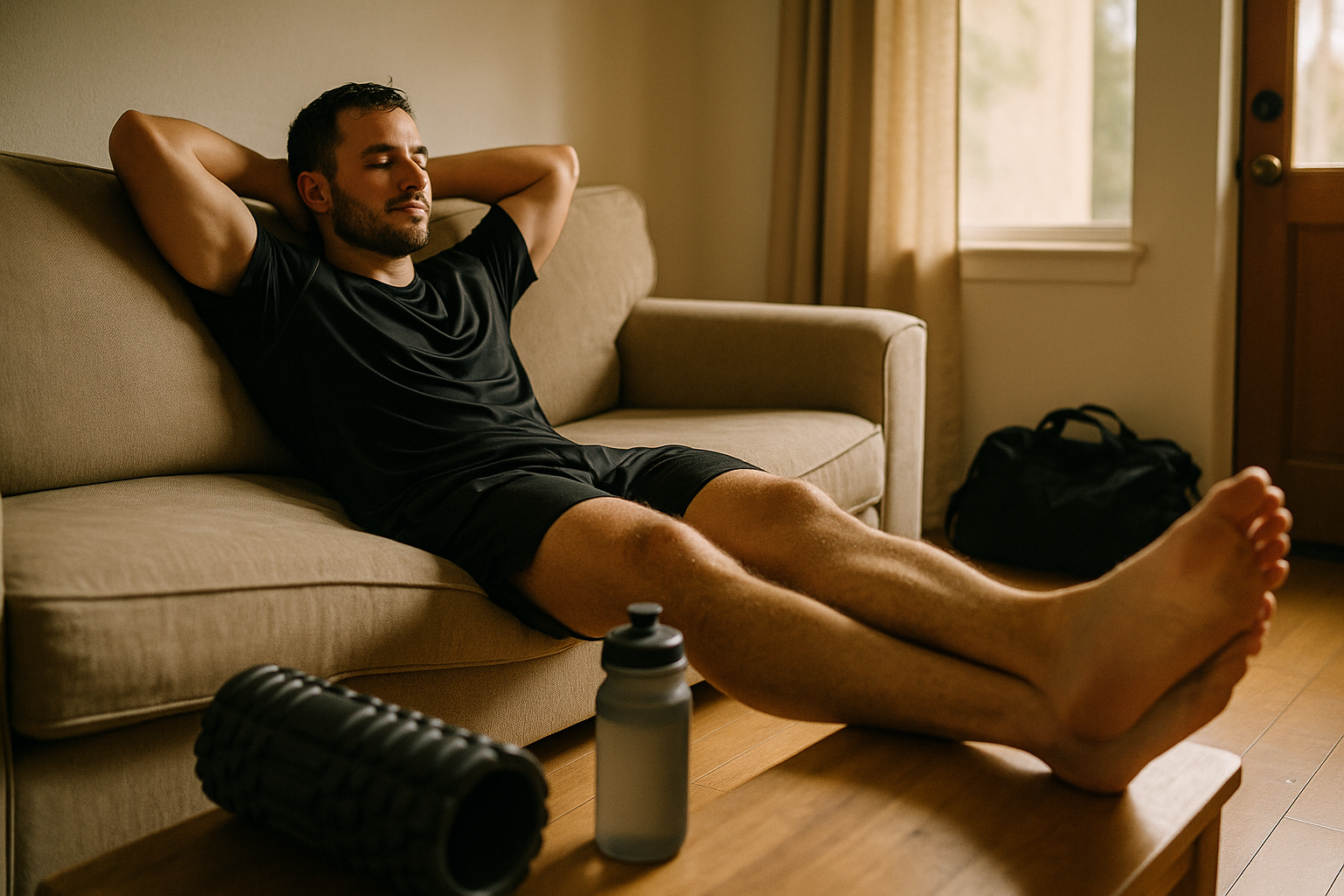
“Rest” isn’t one thing. For many, light movement (walking, easy cycling, mobility) feels better than total stillness, and studies show active recovery can clear lactate faster between hard efforts. That doesn’t automatically mean you must move on every rest day; for some goals and on very tired weeks, passive rest (doing less, sleeping more) is superior. Use both tools: a gentle 20–40 minutes at low intensity or honest couch time, depending on fatigue level.
How to do it
- Active rest menu (easy, conversational): 20–40 min walk, 30 min spin at 40–60% of max effort, mobility flow, light chores.
- Passive rest menu: sleep in, read, stretch lightly, socialize, nature time.
Numbers & guardrails
- Keep heart rate in Zone 1; you should feel better at the end.
- If soreness, mood, or sleep are poor, choose passive rest; performance 24h later often doesn’t differ even when lactate clears faster today. ijrep.org
Bottom line: Both active and passive rest are valid—pick the type that restores you this week.
5. Stop Fearing “Lost Fitness”: What Science Says About Detraining
One day off won’t erase your gains. Even two weeks of complete detraining is where aerobic changes begin to show up in research, and those changes are reversible with retraining. Short breaks can even help you return stronger if they prevent illness or injury. Strength, in particular, decays more slowly than cardio. The takeaway: a rest day is on the safe side of the curve—and often on the smart side of it. PLOS Journals
Mini case
- Runner A skips rest, accumulates fatigue, and underperforms.
- Runner B takes one rest day weekly and a 7-day taper: PR achieved.
Guardrails
- If you must pause longer (travel, exams), keep micro-doses: 1–2 short, moderate sessions per week to retain feel and technique.
Bottom line: Fitness is resilient; guilt is not a training plan.
6. Use Simple Readiness Signals (HRV, Resting HR, Mood) to Guide Rest
When guilt argues with your plan, objective signals help. Heart rate variability (HRV) trends, resting heart rate (RHR), sleep duration, and mood provide a practical dashboard. Reviews show HRV-guided training can titrate load and reduce overreaching in endurance athletes, and decreases in vagal HRV often accompany negative adaptation. Don’t chase absolute HRV numbers; track your baseline trend and combine it with how you feel.
Mini-checklist
- Daily: log sleep, RHR, mood (good/ok/flat), soreness (0–10).
- Weekly: glance at HRV trend; if HRV is down, RHR up, and mood poor for 3+ days, prioritize a rest day.
Tools/Examples
- Any watch/app that shows morning HRV and RHR; or use a simple notebook.
- Add a subjective Total Quality Recovery (TQR) score to keep it human. PMC
Bottom line: Let data support your intuition—not replace it.
7. Practice Self-Compassion to Disarm Guilt (It’s Evidence-Based)
Beating yourself up on rest days doesn’t produce better adaptations; it produces stress. Self-compassion training—treating yourself as you would a friend—reduces shame and guilt and improves well-being in randomized trials. It’s not indulgence; it’s an effective cognitive strategy to interrupt negative loops so your body can recover. A simple 5-minute writing or guided-audio practice can shift your inner dialogue from “I’m slacking” to “I’m recovering on purpose.” Annual ReviewsPMC
Try this (5 minutes)
- Acknowledge: “This guilt is uncomfortable.”
- Normalize: “Everyone needs recovery; this is part of progress.”
- Kindness: Write or record what a supportive coach would say to you today.
Why it matters
- Self-compassion is linked with lower cortisol and higher HRV—physiology that supports recovery.
Bottom line: Train your mind to treat rest as care, not a character flaw.
8. Protect Mental Rest: Set Boundaries with Tech and Work
Many rest days are sabotaged by endless notifications, email checks, and “just one quick task.” Experiments show fewer notification-driven interruptions improve attention and reduce strain; batching alerts a few times per day can lower stress without triggering FOMO. On a rest day, that boundary is a recovery tool—freeing your nervous system from a drip of micro-stressors so you actually recharge.
How to do it
- Default: turn on Do Not Disturb, allow calls from favorites only.
- Batch: check messages at set windows (e.g., noon and 6 pm).
- Email footer: “I check email twice daily. For urgent matters, please call.”
Mini-checklist
- Delete social apps from the home screen.
- Keep the phone out of the bedroom (use an alarm clock).
- If total silence spikes anxiety, use batching instead of full blackout. ScienceDirect
Bottom line: Recovery also means psychological detachment—stepping away from work thoughts is linked with better well-being and performance.
9. Make a Rest-Day Routine You Can Look Forward To
Guilt often fills a vacuum. Replace the void with a routine that signals “this is productive recovery time.” Think nourishing food, easy movement, social connection, sunlight, and a low-stakes hobby. Sports medicine groups emphasize sleep, hydration, and nutrition as core recovery pillars—your rest-day checklist should make those effortless.
Template you can copy
- Morning: slow breakfast + 20-minute walk.
- Midday: meal with protein (~20–40 g), colorful vegetables, water/electrolytes.
- Afternoon: nap or reading; light mobility (10 minutes).
- Evening: social time or nature time; wind-down 60 minutes before bed. Lippincott Journals
Common mistakes
- Calling chores a “rest day” if they leave you wiped.
- “Earning” rest with extra calories burned.
Bottom line: A planned, pleasant routine turns rest into a habit you’ll defend.
10. Calibrate Training Load to Reduce Future Guilt (and Injury Risk)
Guilt spikes when training is chaotic—too much on good weeks, none on hard weeks. Use simple load management so training and recovery line up with your real life. The IOC’s consensus on training load notes that mismanaged load increases illness and injury risk; consistent, progressive programming with built-in recovery is safer and more effective.
Numbers & guardrails
- Progress weekly volume gradually; avoid sudden spikes.
- Use a 1–10 session RPE × duration to estimate load; if the 7-day total jumps >10–20% above your recent average, plan extra recovery.
Tools/Examples
- Calendar your hard days and rest days together; move them as a pair when life throws a curveball.
- If stress outside training is high (work, caregiving, travel), reduce load proactively rather than “earning” rest through burnout.
Bottom line: Intelligent load beats after-the-fact guilt.
11. Communicate Your Rest Plan with Your Coach, Family, or Team
Guilt often has social roots: “What will my coach or manager think?” Name your rest days out loud and frame them as part of the plan. Share your rationale (“sleep has been short; HRV trend is down; I’m taking a reset day and pushing Friday’s session to Saturday”). In the workplace, research shows that leaders who model disengagement help teams detach and recover; set and explain your boundaries. ResearchGate
Mini-checklist
- Put rest days on shared calendars.
- Pre-write a polite script for declining optional commitments on those days.
- If you manage others, publicly normalize downtime.
Bottom line: When stakeholders understand why you rest, guilt loses its audience.
12. Know When Guilt Signals a Bigger Issue (and Get Help)
Sometimes rest-day guilt is masking anxiety, burnout, or overtraining. If you’re dragging for weeks, irritable, sleeping poorly, and your metrics (HRV/RHR) trend the wrong way, step back. Overtraining syndrome involves maladaptation from excessive load without adequate recovery; the fix is not pushing harder but restoring balance. If the pattern includes persistent low mood or panic around rest, consider talking to a clinician—earlier is easier.
Red flags
- Rest doesn’t restore; you wake up exhausted for 2+ weeks.
- Repeated illnesses or nagging injuries.
- All-or-nothing thinking (“If I rest, I’ll lose everything”).
Bottom line: Strong athletes know when to ask for expert help.
FAQs
1) Will I lose progress if I take a rest day every week?
No. Fitness declines are observed after longer gaps (often around two weeks of full detraining for aerobic metrics), and they reverse with retraining. Weekly rest supports adaptation and quality sessions. Think of rest as an insurance policy against illness and injury, not a tax on progress. PMC
2) How many rest days should I take?
Most active adults thrive on at least one full rest day weekly; many benefit from two during busy or high-stress periods. The right number reflects training intensity, life stress, age, and sleep. If HRV trends down, resting HR rises, and mood drops, take more recovery now to protect future training.
3) Is “active recovery” better than complete rest?
It depends. Active recovery can feel good and may clear lactate faster, but that doesn’t always translate into better performance the next day. If you’re deeply fatigued, passive rest might be smarter. Choose based on how you feel and your upcoming training demands. PMCLippincott Journals
4) Can I sleep less on rest days since I’m not training?
Sleep is when much of the repair happens. Adults still need 7+ hours—even on rest days—and many athletes benefit from more. Protect the sleep window and bedroom environment; it’s the most potent recovery “supplement” available.
5) What’s a simple way to monitor recovery without expensive tools?
Track three things daily: sleep duration, resting heart rate, and mood. Add a 0–10 soreness score. If RHR rises, sleep falls, and mood sours for 3+ days, schedule rest. HRV is helpful if your device already tracks it, but trends matter more than single numbers.
6) How do I deal with the anxiety of not “burning calories” on a rest day?
Reframe the day as fueling adaptation. Consider a self-compassion exercise: write a short note to yourself explaining why recovery today serves tomorrow’s goals. Randomized trials show self-compassion reduces shame/guilt and improves well-being, which can quiet the urge to overdo it.
7) Should I move my rest day if I slept terribly?
Yes—be flexible. If sleep tanks, slide the hard workout and make today a recovery day; you’ll likely get more total quality work across the week by not forcing a bad session. This aligns with the broader principle that adaptation—not checklists—drives progress.
8) What does a good rest-day meal plan look like?
Aim for balanced meals with 20–40 g of protein, colorful produce, whole-grain carbs to replenish glycogen, and steady hydration. You don’t need to “earn” food with movement; you’re feeding recovery. Sports-medicine guidance consistently highlights sleep, nutrition, and hydration as recovery pillars.
9) My coach/team culture glorifies “no days off.” How do I push back?
Share your plan and the evidence: strategic reductions in load (tapers/deloads) improve performance and reduce risk. Ask to experiment for 4–6 weeks and track your outcomes together. Culture follows results.
10) Does disconnecting from work really matter for recovery?
Yes. Studies on psychological detachment show stepping away from work thoughts during nonwork time is associated with better well-being and performance. On rest days, that means boundary-setting with email and messages. Annual Reviews
11) Are naps helpful or harmful?
Helpful when used wisely. Short naps (20–30 minutes) can reduce sleep pressure and improve mood without grogginess. Avoid long, late-day naps that disrupt nighttime sleep, your primary recovery tool.
12) What if I like moving every day? Can I still honor rest?
Absolutely. Make one day “active rest” at truly easy intensity (Zone 1) and keep total time short. Pair it with extra sleep and low-stress hobbies. If performance stalls or niggles crop up, shift that day to full rest for a few weeks and reassess. Taylor & Francis Online
Conclusion
Rest-day guilt fades when you see recovery as a proactive choice, not an absence of effort. The physiology is clear: sleep drives tissue repair and skill consolidation; structured reductions in load sharpen performance; and mental detachment reduces stress, allowing your nervous system to reset. Layer in simple monitoring (HRV/RHR trends and mood), self-compassion to tame inner criticism, and a repeatable routine you actually enjoy, and rest days transform from “missed workouts” into the engine of consistent progress. Start with one protected day this week. Put it on the calendar, set your phone to Do Not Disturb, and follow a nourishing checklist. Then notice how much better your next hard session feels. Recover like it’s part of training—because it is.
Call to action: Pick a day in the next 7 days, schedule a rest day now, and copy one routine from Principle 9 into your calendar.
References
- About Sleep — Centers for Disease Control and Prevention (CDC), May 15, 2024. CDC
- Effects of Tapering on Performance: A Meta-Analysis — Bosquet L. et al., Med. Sci. Sports Exerc., 2007. PubMed
- Effects of Tapering on Performance in Endurance Athletes: Systematic Review and Meta-analysis — Wang Z. et al., Frontiers in Physiology, 2023. PMC
- International Olympic Committee Consensus: Load in Sport and Risk of Illness — Soligard T. et al., Br. J. Sports Med., 2016. Olympics
- Diagnosis and Prevention of Overtraining Syndrome — Kreher J.B., Sports Health, 2016. PMC
- The Sleep and Recovery Practices of Athletes — Doherty R. et al., Sports Medicine – Open, 2021. PMC
- Training Adaptation and Heart Rate Variability in Elite Endurance Athletes — Plews D.J. et al., Sports Med., 2013. PubMed
- Practices and Applications of HRV Monitoring in Endurance Athletes — Lundstrom C.J. et al., Int J Sports Med, 2023. Thieme
- HRV Applications in Strength and Conditioning — Addleman J.S. et al., Strength & Conditioning Journal, 2024. PMC
- The Recovery Paradox — Sonnentag S., Organizational Dynamics/Scand J Work Environ Health review, 2018. ScienceDirect
- Mindful Self-Compassion: Pilot and RCT — Neff K.D., Germer C.K., J. Clin. Psychol., 2013. Self-Compassion
- Task Interruptions from Mobile Notifications: Effects on Strain and Performance — Ohly S. et al., Computers in Human Behavior, 2023. PMC
- Active vs. Passive Recovery on Power Output and Lactate — Connolly D.A.J. et al., J. Sports Sci. Med., 2003. PMC
- Two Weeks of Detraining Reduces Cardiopulmonary Function — Chen Y.T. et al., Eur. J. Sport Sci., 2022. PubMed
- Sleep-Dependent Memory Consolidation Review — Diekelmann S., Trends in Cognitive Sciences, 2009. PubMed
- ACSM — Ten Sports Nutrition Facts (Recovery Emphasis) — American College of Sports Medicine, 2024. ACSM
- ACSM — Recovery That Keeps You in the Game — American College of Sports Medicine, 2025. ACSM