








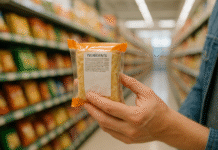
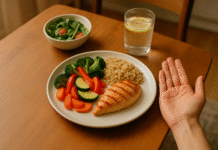
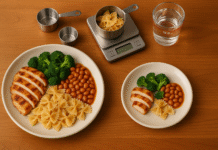












Eating out can quietly nudge portion sizes far beyond what nutrition standards consider “one serving.” That gap has a name—portion distortion—and it’s the difference between a restaurant’s default plate and the standard portions used in dietary guidance and on nutrition labels. In this guide, you’ll see exactly how common restaurant meals compare with labeled serving sizes, plus simple ways to right-size your plate without feeling deprived. Brief note: This article is educational and not medical advice; if you have a health condition, follow your clinician’s guidance.
Quick answer: Standard portions (like the FDA’s “reference amounts customarily consumed,” or RACCs) are often much smaller than what restaurants serve—e.g., soda is labeled per 12 fl oz, cooked pasta per ~140 g (about 1 cup), and ice cream per 2/3 cup—so a single restaurant order can hide multiple labeled servings.
1. Pasta Entrées: Bowls vs the 1-Cup Standard
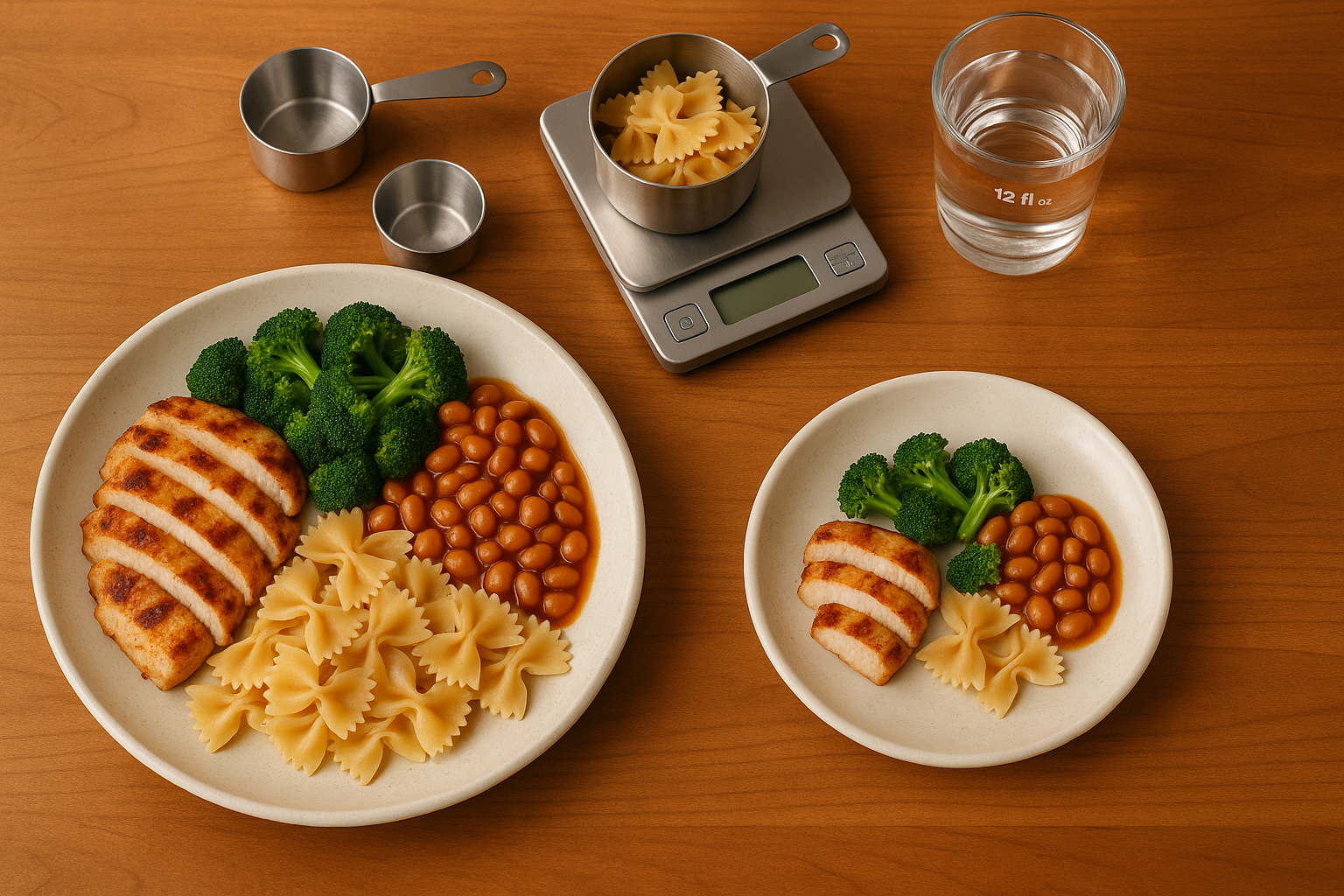
Bottom line: A typical restaurant pasta bowl often packs 2–4 standard servings of cooked pasta; a labeled “standard portion” is ~140 g (about 1 cup) cooked. That means the difference between “a bowl” and “a serving” can easily be two to fourfold before you even add sauce or protein.
Pasta is the classic example of portion distortion because it’s inexpensive, comforting, and easy for kitchens to plate generously. By labeling standards used on packages and in many dietetic calculations, plain cooked pasta counts as ~140 g per serving (roughly 1 cup). In MyPlate’s “ounce-equivalents,” ½ cup cooked pasta counts as 1 oz-eq grains, so 1 cup is 2 oz-eq. Many restaurant entrées arrive with 2–3 cups of pasta (sometimes more), which means 4–6 oz-eq grains—the equivalent of the entire grains allotment for some meals. If the dish is cream-based, add hundreds more calories from the sauce layer alone. The visual cue of a deep bowl and a wide rim also tricks satiety signals, making it easy to keep twirling.
1.1 Why it matters
- A 3-cup pasta bowl can deliver ~3 standard pasta servings, before sauce, cheese, or protein.
- Cream sauces can add 200–400+ kcal to a plate; oil-based sauces add less volume but plenty of energy.
- Adding bread sides stacks more grains against the same daily target.
1.2 Numbers & guardrails
- Standard label serving: 140 g cooked pasta (~1 cup).
- MyPlate equivalence: ½ cup cooked = 1 oz-eq grains; 1 cup = 2 oz-eq.
- Restaurant reality: 2–3 cups is common; target 1–1½ cups as a generous, balanced meal portion.
1.3 How to right-size
- Ask for half pasta + extra veg, or split with a friend.
- Request sauce on the side; add gradually until it’s flavorful, not flooded.
- Box a third right away; the rest will still look (and feel) abundant.
Synthesis: When you anchor on the 1-cup standard and build around it, pasta becomes satisfying—without hijacking your daily grain budget.
2. Steaks & Chicken: The 3-Ounce Benchmark vs the 10-Ounce Plate
Bottom line: The standard cooked portion for meat/fish is ~85 g (3 oz), while restaurant steaks/chicken breasts commonly weigh 8–12 oz, turning one plate into 2–4 standard portions of protein.
The protein part of the plate is where portion inflation is most visible. Labeling references for entrées without sauce (e.g., plain or fried fish) cluster around ~85 g cooked; with sauce, it’s often ~140 g cooked, reflecting “what people typically eat per occasion” when packages are labeled. In restaurants, though, a 10-oz sirloin or a double-breast chicken is routine. That’s not automatically “bad,” but it compresses multiple standard servings into one visual unit and boosts calories without obvious cues. Toss in rich sauces or butter basting and the energy density climbs further. The solution isn’t to shun protein; it’s to align the portion with your actual needs and fill the plate with fiber-rich sides that keep you full on fewer calories.
2.1 Practical trims that don’t feel like sacrifice
- Choose 6–8 oz cuts and share or save the rest.
- Favor grilled/roasted over pan-fried or butter-finished.
- Add two veg sides to shift volume from meat to fiber.
2.2 A numeric snapshot
- Standard cooked portion: ~85 g (3 oz)—about a deck of cards.
- Common restaurant plate: 8–12 oz cooked—~2.5–4x the standard.
- Impact: Even lean cuts can add 200–400+ kcal extra when doubled.
Synthesis: Treat the restaurant cut as multiple standard servings and your protein choice can fit seamlessly into a balanced day.
3. Burgers & Combos: One Sandwich, Multiple Servings
Bottom line: A single fast-casual burger meal can quietly bundle several standard servings—a quarter- to half-pound patty (2–4 servings of protein), a refined-grain bun (~2 oz-eq grains), sauce/cheese, and a fry side that often exceeds a labeled portion. Add a soft drink and you’ve layered yet another serving—sometimes two.
Burgers normalize scale. A 4-oz patty already equals more than a standard 3-oz cooked meat portion, and many “gourmet” patties start at 6–8 oz. Buns typically deliver the equivalent of ~2 ounce-equivalents of grains, fries can exceed a labeled fry portion by 50–100%, and sauces multiply energy density with minimal fullness. Swaps help: a single patty, extra veg, skipping “special sauce,” and a water or unsweetened tea can reclaim balance. If you love fries, split the large or order the smallest size and savor them mindfully. (Large fast-food fries commonly land ~480–520 kcal—roughly 1–2 labeled portions of fries in one carton.) University Hospitals
3.1 Mini-checklist
- Single patty, not double.
- Small fries or shared large.
- Water/unsweetened drink; skip refills.
- Add lettuce/tomato/onion for volume and crunch.
3.2 Real-world example
- Burger (6 oz cooked) + large fries + 20-oz soda = multiple servings across categories; swapping small fries and a 12-oz drink cuts hundreds of calories while preserving the “burger night” joy.
Synthesis: Keep the burger, but right-size the entourage; the combo is where portion distortion really accelerates.
4. “Healthy” Salads: Dressings, Toppers, and the Two-Tablespoon Truth
Bottom line: Salad dressing has a standard labeled serving of ~30 g (≈2 Tbsp), yet restaurants often use 4–6 Tbsp, doubling or tripling the energy load. Nuts, cheese, croutons, and dried fruit can each add another labeled serving—or two.
Salads feel virtuous, but heavy dressings and toppers can transform them into stealth calorie bombs. The FDA’s RACC for dressings for salads is 30 g, which aligns with the “two-tablespoon” spoon-measure many dietitians teach. Yet in practice, kitchens frequently toss greens with ¼–½ cup dressing for sheen and cling. Cheese shavings add up fast (a standard 30 g portion of many cheeses), and croutons function like mini bread slices. None of this makes salad “bad,” but it does mean you should actively manage the add-ons to keep the vegetables in the starring role.
4.1 How to do it without losing flavor
- Dressing on the side; dip the fork, not the salad.
- Select one rich topper (cheese or nuts), not three.
- Use vinegar/lemon to brighten without bulk oil.
- Add lean protein (grilled chicken, beans) for staying power.
4.2 Numbers & guardrails
- Dressing: 2 Tbsp (30 g) standard; restaurants often pour 2–3x.
- Cheese: ~30 g per standard portion; ask for light.
- Croutons: Think “half a slice of bread” per small handful.
Synthesis: Keep the salad, cap the dressings and toppers, and you’ll retain the benefits you ordered it for.
5. Sugary Drinks: 12 fl oz Standard vs 16–32 fl oz Cups
Bottom line: Labeling now uses 12 fl oz as the standard serving for sodas and many soft drinks (up from 8 oz in the ’90s), yet restaurant cups commonly start at 16 oz and climb to 32 oz with refills—effectively 1.5–3 servings per cup.
Drinks are easy to over-consume because they don’t trigger fullness the way solid food does. The FDA updated serving sizes “to reflect what people actually drink,” setting 12 fl oz as the RACC for sodas and most nonalcoholic beverages. But quick-serve and sit-down restaurants rarely sell a 12-oz cup; a “regular” is often 16–20 oz, and “large” can be 30+ oz. That means a single drink can deliver two labeled servings of sugar and calories. If you like fizz, a 12-oz can or sparkling water keeps the portion in check. If you want sweetness, consider half-and-half (unsweetened tea + lemonade) in a small cup—portion control by design.
5.1 Three easy wins
- Default to 12 oz (a can/glass) for sweetened beverages.
- No automatic refills—say so up front.
- Use zero-calorie mixers (soda water, unsweetened tea).
5.2 Region notes
- In many countries, bottle sizes vary (e.g., 330 mL, 355 mL, 500 mL). The principle is the same: treat anything above ~355 mL as >1 labeled serving.
Synthesis: Sugary drinks scale quickly; keep them at 12 oz to align with the standard—and your goals.
6. Pizza: Slices vs the 140-Gram Label Standard
Bottom line: For labeling, pizza uses a reference amount of ~140 g per serving; a large restaurant slice (especially from wider New York–style pies) can outweigh that—and two slices can easily exceed 2–3 labeled servings, depending on thickness and toppings.
Pizza complicates portion sense because “a slice” varies wildly by style and diameter. The FDA’s serving-size guidance pegs the RACC at 140 g and provides examples for converting a whole pizza into per-slice label servings. In the real world, a big, foldable slice can meet or exceed that weight alone—and the cheese-to-crust ratio drives energy density. Add meat toppings and extra cheese, and a two-slice lunch can equal 3+ standard servings. None of this argues against pizza; it argues for calibration: go by slice size and thickness, order thin-crust, pile on vegetables, and partner with a side salad to make one substantial slice feel like a complete meal.
6.1 Smart ordering moves
- Thin-crust, light cheese, veggie-heavy toppings.
- Personal pizza? Treat it as 2–3 servings unless very small.
- Split a large pie and add a big salad to round out the meal.
6.2 Mini example
- A 16-inch pie cut into 8 slices: if each slice weighs ~150–180 g, one slice ≈ one labeled serving; two slices = 2–3.
Synthesis: Think in grams (or slice weight), not just “number of slices,” and pizza fits neatly into a balanced week.
7. Desserts: 2/3-Cup Ice Cream & Cake Portions vs Restaurant Slices
Bottom line: The standard labeled serving for ice cream is 2/3 cup (up from ½ cup), and cakes have serving references of ~80–125 g depending on type—yet restaurant slices and sundaes often deliver 2–3x these amounts in one plate.
Desserts are where portion distortion goes from subtle to spectacular. The FDA updated serving sizes to mirror actual consumption, moving ice cream from ½ cup to 2/3 cup and clarifying how to label multi-serve packages. Still, a restaurant sundae can look modest in a tall glass while hiding 3–4 scoops (2–3 labeled servings) under sauces and toppings. Cheesecake’s RACC lands in the heavy cake category (~125 g), but a bakery-style wedge can be 200–300 g. Choose what you truly want, split it, and pre-portion: ask for extra spoons or request a “two-fork slice.”
7.1 Tools & examples
- Ice cream: 2/3 cup per serving—about one rounded scoop.
- Cheesecake: Standard ~125 g; many restaurant slices exceed 200 g.
- Dual-column labels: Packages showing per serving and per container help you budget when sharing.
7.2 Enjoy without overdoing it
- Split desserts or order one for the table.
- Choose fruit-forward options when you want volume.
- Savor slowly; the first 3–4 bites deliver most of the pleasure.
Synthesis: Dessert can absolutely fit—use standard serving anchors and sharing to keep it sweet, not oversized.
8. Breakfast Plates: Pancakes, Omelets, and Syrup
Bottom line: For labeling, pancakes cluster around ~110 g prepared per serving; egg mixtures (like omelets) around ~110 g as well—but diner stacks and three-egg omelets commonly exceed 2–3 standard servings before sides.
Breakfast can front-load your day with multiple servings disguised as “a plate.” A pancake stack of 3 large rounds can approach ~330 g batter cooked (≈ 3 labeled servings), especially when butter and syrup are layered between each cake. Omelets with 3 eggs + cheese + meat outsize the ~110 g egg-mixture reference and can easily double your protein target for the meal. Hash browns and toast add more servings of refined grains and fats. Better patterns: two small pancakes + eggs, veggie omelet with one slice toast, or a yogurt-fruit-granola mix using measured portions. Your brain will register a full breakfast if volume comes from fruit and vegetables rather than from batter alone.
8.1 Breakfast swaps that work
- Two pancakes + fruit instead of a triple stack.
- Two-egg omelet with veg, light cheese.
- Measure syrup (2 Tbsp ≈ one serving); ask for warm fruit compote.
8.2 Region notes
- In many cafés, “short stack” still means 2–3 pancakes; verify sizes.
- South Asian breakfasts (paratha, halwa puri) are energy-dense; aim for one paratha + a protein side + raw veg to balance.
Synthesis: Start the day with portion-aware anchors so you don’t burn through your daily budget by 10 a.m.
9. Family-Style Plates, Buffets, and Calorie Labels: What the Signs Do—and Don’t—Tell You
Bottom line: Calorie labeling is required for chains with 20+ locations in several countries (including the U.S.), which helps—but it doesn’t apply to many independent restaurants, and even where labels exist, research shows meals still trend large. Family-style plates can bundle 2–4 servings per person if you’re not dividing intentionally.
Buffets and shared entrées blur endpoints—there’s no natural “done” signal from an empty plate. U.S. regulations require large chains to post calories on menus, and updates since 2018 have clarified how and where to show that data. Still, field studies measuring actual restaurant meals across countries find that most full-service meals contain ≥600 kcal, with many averaging ~1,100 kcal—and that’s before drinks or dessert. Labels help some diners, but they can’t fix portion distortion baked into recipes and plating norms. Your best defense is pre-commitment (decide how much you’ll eat before serving) and visual boundaries (use a bread plate for your share, not the communal platter).
9.1 How to navigate shared meals
- Serve once onto your own plate; avoid grazing from platters.
- Start with vegetables and lean proteins to set your baseline.
- Use menu labels as a floor, not a full picture (sodium, fat, and sugars vary).
9.2 When labels aren’t available
- Ask about portion weight or number served (“Is this for two?”).
- Default to half now, half boxed when in doubt.
- Compare to standard anchors: 1 cup cooked grains, 3 oz cooked meat, 12 oz sweet drink, 2 Tbsp dressing.
Synthesis: Use posted calories when they exist, but rely on portion anchors and pre-commitment to steer shared or unlabeled meals.
FAQs
1) What exactly is “portion distortion”?
It’s the gap between what we’re served or pour by default and the standard portions used in dietary guidance and on labels. Because restaurant plates and drink cups have grown over time—and our eyes adapt—one order can hide multiple labeled servings. Seeing the meal through those labeled portions (e.g., 12 oz for soda, 1 cup cooked pasta, 3 oz cooked meat, 2/3 cup ice cream) restores clarity.
2) What’s the difference between a “portion” and a “serving size”?
A portion is what you choose to eat; a serving size is the standardized amount used on labels or in guidelines so foods can be compared. The FDA’s RACCs set the baseline for many label servings; your portion may be smaller or larger. Knowing both helps you budget realistically when eating out.
3) Are calories on menus reliable?
They’re required for large chains in the U.S. and are generally a helpful estimate. They’re not perfect proxies for health since sodium, fat quality, fiber, and sugars also matter—and the rule doesn’t cover every restaurant. Use them to compare items and to spot outliers, then fine-tune portions.
4) Do fast-food meals always have more calories than full-service meals?
Not always. A major multi-country analysis found full-service meals averaged more energy than fast food in many cases, and most restaurant meals exceeded 600 kcal. Portions and recipes matter more than the service style.
5) How can I estimate a standard portion without a scale?
Use hand cues: a palm ≈ 3 oz cooked meat, a cupped fist ≈ 1 cup cooked grains or veg, a thumb ≈ 1 Tbsp of oils or dressings. Then adjust for your body size and activity. Pair visual cues with menu labels when available to triangulate.
6) What’s a realistic pasta portion at a restaurant?
Aim for 1–1½ cups cooked as your pasta base, then add lean protein and vegetables. That keeps you around 1–1½ labeled servings of pasta while building a high-volume, satisfying plate.
7) Is splitting dessert the best strategy?
It’s a good one. With ice cream at 2/3 cup per serving and cheesecake ~125 g, restaurant desserts often represent 2–3 servings. Sharing or ordering a mini portion delivers the experience with far fewer calories.
8) Do diet drinks fix the portion issue?
They remove or reduce calories, but large cups can still encourage mindless sipping and displace water or unsweetened options. If you prefer sweetness, stick to ~12 oz and enjoy it deliberately.
9) How much difference does dressing make on a salad?
A lot. The standard is 2 Tbsp (30 g), while many tossed salads carry 4–6 Tbsp. Asking for dressing on the side and measuring with your fork can cut a salad’s calories in half without losing flavor. Legal Information Institute
10) What if I’m eating family-style or at a buffet?
Serve yourself once onto a plate; lead with vegetables and protein; treat desserts and fried sides as add-ons, not defaults. Decide your portion before passing the platters to avoid repeated “tastes” that add up fast.
11) Are standard portions the same outside the U.S.?
The principle is universal—use standardized serving anchors—but the numbers can differ by country. If local labels are unfamiliar, adopt the practical anchors here: 1 cup cooked grains, 3 oz cooked meat, 12 oz sweet drink, 2 Tbsp dressing, 2/3 cup ice cream. They’ll keep you oriented.
12) Can menu labeling change how much people eat?
Evidence suggests modest effects at the population level—helpful for some diners, neutral for others—because portion sizes and recipes still dominate. Pair labeling with portion strategies (splitting, boxing half, small drinks) for tangible results.
Conclusion
Portion distortion thrives on defaults—the plate size, the pour size, and the “normal” your eyes expect. Restaurants lean generous for good reasons: value perception, presentation, and culinary style. But once you translate a big plate into standard portions—1 cup cooked pasta, 3 oz cooked meat, 12 oz sweet beverages, 2 Tbsp dressing, 2/3 cup ice cream—the fog lifts. You can keep your favorite foods, simply right-size them. In practice, that means picking one indulgent element per meal, sharing or boxing the rest, and anchoring volume with vegetables, fruit, and lean proteins. Over time, these micro-decisions compound into effortless control—no rigid rules, just better defaults that match your goals.
Try this tonight: choose one portion anchor (e.g., a 12-oz drink or 1 cup pasta), tell your server how you’d like it served, and enjoy every bite—minus the unintended extras.
References
- 21 CFR §101.12—Reference amounts customarily consumed per eating occasion, U.S. eCFR (updated Aug 2025): . eCFR
- What counts as an ounce-equivalent (Grains Group), USDA MyPlate, accessed 2025: . MyPlate
- Changes to the Nutrition Facts Label (serving size updates—ice cream 2/3 cup; soda 12 oz), U.S. FDA, Mar 28, 2024: . U.S. Food and Drug Administration
- Guidance for Industry: Serving Sizes of Foods—RACC Examples (Pizza 140 g), U.S. FDA, 2018: . U.S. Food and Drug Administration
- Menu Labeling Requirements (chains ≥20 locations; compliance May 7, 2018), U.S. FDA, Dec 13, 2023: . U.S. Food and Drug Administration
- Measured energy content of frequently purchased restaurant meals: multi-country cross-sectional study, BMJ, Dec 12, 2018: . PubMed
- MyPlate Plan example (portion ounce-equivalents across food groups), USDA, 2021: . MyPlate
- RACC reference table (PDF overview), U.S. FDA, 2016: . U.S. Food and Drug Administration
- Nutrition facts for large fries (illustrative caloric range), Nutritionix (database), accessed 2025: . Nutritionix
- NHLBI “Portion Distortion” education page, National Institutes of Health, Apr 1, 2015: . NHLBI, NIH