






















When your calendar fills up, health is often what slips first—yet it’s the foundation that keeps everything else moving. To make self-care stick, treat it as a non-negotiable deliverable: schedule sleep, workouts, and meals before you add meetings and errands. In practice, prioritizing self-care in to-do lists means time-blocking the basics, minimizing friction, and using small safeguards that keep your day from running over your boundaries. This guide is for busy professionals, students, caregivers, and anyone who wants health to happen even on high-pressure days. Quick start: (1) Block sleep, workouts, and meals first; (2) set minimum viable versions for each; (3) add cues and reminders; (4) review weekly and adjust.
Medical disclaimer: This guide offers general information, not medical advice. If you have a health condition, are pregnant, or are starting a new exercise or nutrition plan, consult a qualified clinician.
1. Time-Block Sleep, Workouts, and Meals Before Everything Else
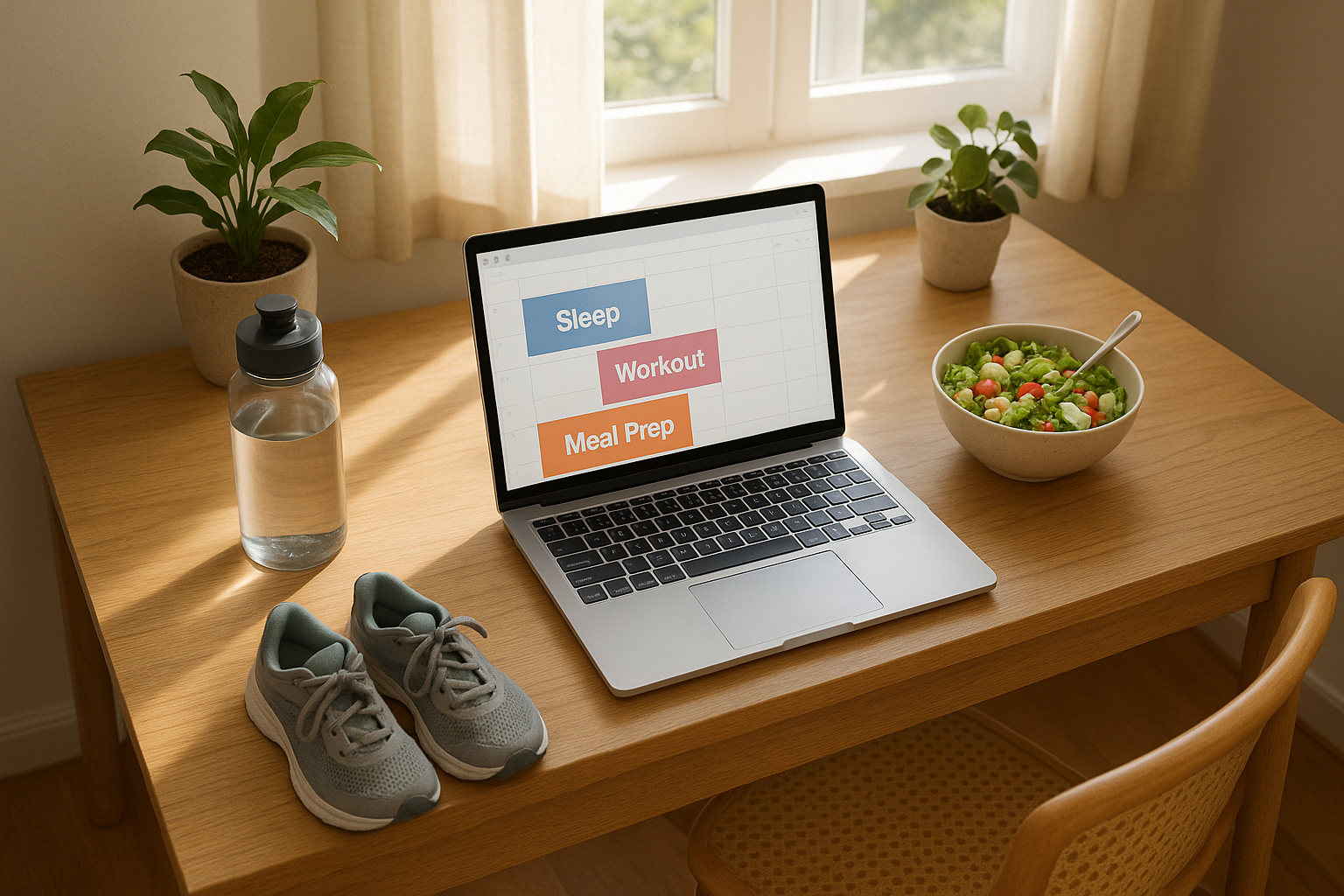
The fastest path to better follow-through is to plan health first and let other tasks flow around it. Put your sleep window, workouts, and meals in the calendar as recurring appointments and protect them like meetings with your most important client. This reduces decision fatigue, ensures you don’t “run out of time,” and turns health behaviors into defaults rather than options. If you’re new to time-blocking, start with your anchor points—bedtime/wake time—because sleep quality influences energy, appetite regulation, and training readiness. Then add workouts (length and type), and finally slots for breakfast/lunch/dinner or prep time. Color-code these blocks so they stand out and are easier to defend when new requests pop up.
- Setup steps (5 minutes):
- Pick a consistent 7–9 hour sleep window most nights.
- Add 2–4 workout blocks/week (e.g., 30–45 minutes each).
- Insert 15–30 minute meal slots or a weekly 60–120 minute meal-prep block.
- Color-code (e.g., green for health) and mark “busy.”
- Invite relevant people (partner/roommates) to prep or childcare blocks when helpful.
1.1 Why it works
Health blocks reduce context switching and keep “Important but not urgent” tasks from being squeezed out by urgent ones. You’re less likely to overbook if your calendar shows real capacity after health essentials are placed.
1.2 Tools/Examples
Google Calendar or Outlook for recurring blocks; mobile “Focus” modes for protecting them; smartwatch alarms for nudges.
Synthesis: By locking health anchors first, you shrink the chance of conflict and make the rest of your schedule more realistic.
2. Set Minimum-Viable Doses (MVDs) So Self-Care Survives Busy Days
A perfect plan fails the first time life collides with it. Minimum-Viable Doses keep you consistent by defining “good enough” versions you can always do. For exercise, that might be a 20-minute brisk walk or a 15-minute bodyweight circuit; for meals, a pre-prepped protein + veg + starch bowl; for sleep, a hard stop that guarantees at least 7 hours on most nights. MVDs are not settling—they’re strategic thresholds that preserve momentum, protect recovery, and prevent the “all-or-nothing” spiral that leads to skipped weeks. Put your MVDs in writing, attach them to your calendar blocks, and accept them as successes when used.
- Draft your MVDs:
- Workout: “If slammed, I’ll do 15 minutes of squats/push-ups/rows/holds.”
- Meals: “If unplanned, I’ll build a 3-part plate (protein, produce, carb).”
- Sleep: “If late, I still power down to secure ≥7 hours.”
2.1 Numbers & Guardrails
Aim for the weekly activity targets (e.g., 150 minutes moderate or 75 minutes vigorous) by combining full sessions and MVDs. For nutrition, prioritize a protein source (~20–40 g for most meals depending on body size) plus produce and a smart carb.
2.2 Mini Case
A manager with back-to-back calls replaces a 45-minute gym session with a 20-minute home circuit, hits steps at lunch, and keeps momentum. Over a quarter, consistency wins.
Synthesis: MVDs convert unpredictable days into “still on track” days, preserving your streak—and your confidence.
3. Match Health Tasks to Your Energy Rhythms (Chronotype-Aware Scheduling)
You get more return when you do the right task at the right time. If you’re more alert in the morning, anchor workouts or complex meal prep early; if evenings feel better, shift training later and keep mornings for light movement and breakfast. Aligning health behaviors to your chronotype and daily energy curve improves adherence and perceived effort. Track one to two weeks of energy ratings (1–5 scale) across the day to locate your peaks and dips; then schedule sleep, movement, and food choices accordingly. This also helps you plan caffeine timing, wind-down windows, and snack strategies around meetings and commutes.
- Chronotype-aware tweaks:
- Morning-type: Strength or intervals before work; heavier lunch; early wind-down.
- Evening-type: Lunchtime strength or after-work sessions; lighter late dinners; blue-light limits.
- Shift/irregular: Use anchor routines at fixed times (post-shift meals, pre-sleep ritual).
3.1 How to do it
Use a simple log or wearable data (sleep/wake, HRV, movement). Identify your two strongest energy zones and place workouts there. Put meal prep where mental effort is reliable (often weekend mornings).
3.2 Common mistakes
Copying someone else’s schedule; stacking deep work and hard training in the same energy block; ignoring recovery needs after late meetings.
Synthesis: When self-care fits your biology, it feels easier—so you do it more often.
4. Build a Decision-Light Meal System That Runs on Autopilot
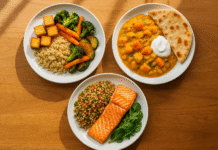
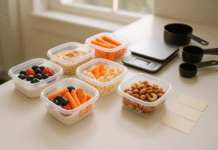
What derails healthy eating isn’t knowledge—it’s decision fatigue. Replace ad-hoc choices with a repeatable system: a short roster of breakfasts and lunches you genuinely like; a weekly shop list; and a Sunday (or any day) batch prep. Templates reduce friction: “protein + produce + smart carb + flavor” can become yogurt-berries-oats, eggs-greens-toast, or chicken-veg-rice with a sauce you love. Use pre-cut veg, frozen produce, canned beans/fish, rotisserie chicken, and rice cookers to keep prep under 60 minutes. For busy weeks, assemble “emergency meals” (e.g., tuna + whole-grain crackers + salad kit) and stash them at home or work.
- Menu rotation idea (2–3 weeks):
- Breakfasts: yogurt bowl; veggie omelet; overnight oats.
- Lunches: grain bowl; bean-tuna salad; leftovers.
- Dinners: sheet-pan chicken; stir-fry; slow-cooker chili.
4.1 Numbers & Guardrails
Center meals on lean proteins, fruits/vegetables, whole grains, and healthy fats per national guidelines. Keep water handy; limit ultra-processed “snack meals” that don’t satiate.
4.2 Tools/Examples
Template cards on your fridge; shared note with household; grocery delivery; batch-cook once, re-plate three ways.
Synthesis: A meal system shrinks choices into tasty defaults, so eating well stays effortless even when work isn’t.
5. Use Habit Stacking and Cues to Make Health Behaviors Automatic
Reliance on motivation is fragile; reliance on context is strong. Habit stacking ties a new behavior to an existing one: “After I make coffee, I fill a 750 ml water bottle,” or “After I end my 3 pm meeting, I walk for 10 minutes.” Use visible cues—shoes by the door, foam roller under the coffee table, lunch packed the night before—to prompt action without thinking. Expect habit formation to take weeks to months; track streaks, not perfection, and keep the behavior small enough that you can do it even on low-energy days.
- Stack ideas:
- After brushing teeth → 5 minutes of mobility.
- After school pickup → 20-minute neighborhood walk.
- After shutting laptop → prep tomorrow’s breakfast.
5.1 How to do it
Pick one anchor that already happens daily. Add a micro-behavior you can finish in 2–5 minutes. Celebrate completion (checkmark, quick “done!” text to yourself) to reinforce the loop.
5.2 Numbers & guardrails
Habit formation timelines vary; focus on consistency, not the calendar. If a stack keeps breaking, make it smaller or pick a more reliable anchor.
Synthesis: Stacks and cues turn self-care from something you remember to something your surroundings remind you to do.
6. Protect a Consistent Sleep Window With a Shutdown Ritual
Sleep is the master recovery switch, yet it’s the first to get squeezed. Make your sleep window a nightly “meeting” with alarms: one to start winding down (e.g., 60 minutes before bed), one to go to bed, and—if needed—one to wake up. Design a shutdown ritual that pulls you out of work mode: close out your task list, dim lights, put the phone on “Do Not Disturb,” and transition with a low-stimulation activity (shower, light stretching, paperback reading). Limit late caffeine and large meals; if you must use screens, enable warm-tone/night modes and keep the device away from your face.
- Mini-checklist:
- Same bedtime/wake time most days.
- 30–60 minute wind-down; lights dim.
- Bedroom: cool, dark, quiet.
- Devices parked outside reach.
6.1 Why it matters
Adequate sleep supports cognition, appetite regulation, immunity, and training adaptations. Protecting the window ensures you don’t trade tomorrow’s energy for one more email tonight.
6.2 Tools/Examples
Phone focus modes; smart plugs for lamps; paper book on the nightstand; sunrise alarm.
Synthesis: A reliable shutdown ritual is the guardrail that keeps “just five more minutes” from stealing your next day.
7. Add Buffer Time and Transitions to Defeat the Planning Fallacy
We consistently underestimate how long tasks will take, then self-care gets crowded out. Solve this by padding high-variance tasks with 15–25% buffer and adding transition time between meetings. Put 10-minute “white space” holds ahead of workouts and meals so overflows don’t cannibalize them. If you finish early, use the buffer for a short walk, mobility, or meal prep. During weekly reviews, note which tasks ran over and increase buffers accordingly. This small structural tweak keeps your day humane—and keeps health on the calendar when real life happens.
- Where to add buffers:
- Meeting blocks and commutes.
- Creative/deep-work sessions.
- Errands with unpredictable queues.
7.1 How to do it
Rename buffers (e.g., “Hold—protect lunch”), so you recognize their purpose and are less tempted to book over them. For remote meetings, schedule end-at-:50 or :25 to force breaks.
7.2 Mini case
A teacher adds a 15-minute buffer after last class; this consistently protects a 30-minute afternoon walk before grading. Missed sessions drop by 70% in a month.
Synthesis: Buffers absorb reality’s bumps so self-care doesn’t pay the price.
8. Use a Health-Forward Prioritization Framework (Not Just Productivity)
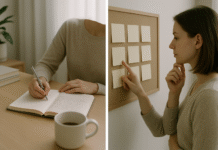
Classic tools like the Eisenhower Matrix help you triage tasks, but health items often sit in “Important–Not Urgent” and get ignored. Fix this by adding a Health column to your prioritization, or by treating sleep/workouts/meals as “Top 3” rocks for the day. Start daily planning by asking, “What’s my one health win today?” Then list work items. This reframes self-care from a “nice to have” to a prerequisite for high performance. It also forces trade-off clarity: if health isn’t first on paper, it won’t be first in reality.
- Daily health-first prompts:
- What’s my one health win today?
- Where are the energy peaks, and what health task fits there?
- Which meeting or errand can be declined or delegated to protect a health block?
8.1 How to do it
Draw the matrix with five columns: Urgent/Not Urgent × Important, plus “Health.” Fill Health first (sleep/workouts/meals), then sort everything else. Use a sticky note or digital planner.
8.2 Common mistakes
Treating health as a reward for finishing work; planning more tasks than time; never pruning the backlog.
Synthesis: When health is explicitly in your prioritization model, it shows up in your day—consistently.
9. Set Boundaries and Pre-Commitments So You Can Say “No” Without Guilt
Boundaries protect your health blocks from other people’s urgencies. Write a standard, polite decline for requests that collide with sleep/workouts/meals (e.g., “I’m booked then—can we do 11:30?”). Share your training or family dinner times with teammates or clients so expectations are set in advance. Use pre-commitments—class bookings, walking meetings you schedule, a standing gym meet-up—to increase the friction of skipping. When possible, move social or work collaboration into health-supporting formats: coffee walks, active one-on-ones, potluck lunches with balanced plates.
- Boundary scripts:
- “I have a hard stop at 5:15; let’s pick up tomorrow.”
- “I’m offline after 10 pm to protect sleep.”
- “Happy to help—can we shift to after lunch?”
9.1 How to do it
Decide in advance what’s flexible (e.g., workout time) and what isn’t (sleep window). Put boundaries in your email signature or team charter when appropriate.
9.2 Tools/Examples
Calendly windows that exclude sleep and family meals; gym class credits; smartwatch reminders that end meetings at :50.
Synthesis: Boundaries aren’t barriers—they’re agreements that make your health and your commitments coexist.
10. Automate Reminders and Design Your Environment for the Behaviors You Want
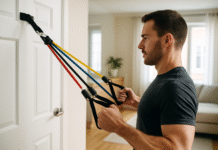
Make the right choice the easy choice. Use recurring reminders, geofenced prompts (“When I arrive at the office → 5-minute walk”), and checklists tied to times of day. Rearrange your space so healthy options are visible and convenient: keep a water bottle on your desk, resistance bands near your couch, fruit at eye level, pre-portioned nuts in a drawer. Reduce friction for workouts (clothes laid out, gym bag by the door) and increase friction for late-night scrolling (charger in another room, app limits in the evening).
- Environment design checklist:
- Add: visible gear, prepped foods, hydration cues.
- Remove: late-night screens from bedside.
- Swap: candy bowl → fruit bowl; TV remote spot → foam roller.
10.1 How to do it
Audit your day for “choice points” and modify the default. If reminders feel naggy, switch to physical cues (sticky notes, laid-out shoes) that silently nudge.
10.2 Mini case
A software lead moves the phone charger to the kitchen; late-night scrolling drops, bedtime advances by 25 minutes, mornings feel better—and workouts stick.
Synthesis: Automation and environment tweaks turn willpower problems into design solutions.
11. Track Simple Metrics and Do a Weekly Review to Stay Honest
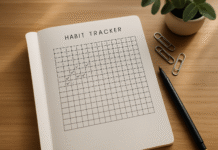
What you measure, you tend to improve—especially when the measures are simple and visible. Track three to five health metrics that map to your priorities: sleep duration, workouts completed, daily steps, servings of produce, and a mood/energy rating. Then do a 10-minute weekly review: scan your calendar, check adherence to sleep/workout/meal blocks, adjust buffers and MVDs, and plan the next week’s health anchors first. Avoid tracking everything; the goal is clarity, not surveillance. Use trendlines to celebrate progress—especially consistency streaks.
- Five metrics to consider:
- Nights with 7–9 hours sleep.
- Workouts/week (full + MVD).
- Steps/day (e.g., 6–10k).
- Produce servings/day (e.g., 4–6).
- Mood/energy (1–5 scale).
11.1 How to do it
A tiny spreadsheet, habit app, or notebook works. Color-code wins, circle misses, and write one sentence about what to tweak next week.
11.2 Common mistakes
Tracking too many things; changing ten variables at once; never looking at the data you collect.
Synthesis: Light-touch tracking plus a brief weekly review gives you feedback loops that keep health front-and-center.
12. Schedule Recovery, Deloads, and “Plan B” Weeks to Prevent Burnout
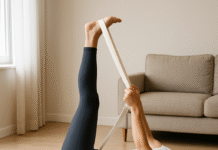
Consistency requires ebb and flow. Build recovery into your plan with lighter weeks (“deloads”), days off after especially hard sessions, and stress-management slots (walks, breathwork, hobbies). For travel or crunch weeks, activate a Plan B: shorter MVD workouts, extra prep of portable meals, stricter bedtime alarms, and more buffers. Treat recovery tasks—mobility, stretching, quiet time—as first-class calendar citizens. This approach reduces injury risk, preserves motivation, and keeps you from swinging between overcommitment and disengagement.
- Plan B menu:
- 15–20 minute hotel-room circuits.
- Protein-forward convenience foods (Greek yogurt, jerky, salads, oats).
- Strict screens-off 60 minutes before bed to improve sleep quality.
- Extra 10-minute walks after meals for blood-sugar support.
12.1 How to do it
Pre-write a travel-week schedule and save it as a template. Pack resistance bands and a collapsible water bottle. Choose hotels near parks or gyms when possible.
12.2 Numbers & guardrails
Keep total weekly activity aligned with guidelines, but let intensity undulate. On truly slammed weeks, hit MVDs and protect sleep; resume heavier training the following week.
Synthesis: Recovery and contingency planning make your health routine durable in the real world.
FAQs
1) What does “prioritizing self-care in to-do lists” actually mean?
It means you schedule health essentials—sleep, workouts, and meals—before other commitments, protect those blocks with buffers and boundaries, and create small fallback versions (MVDs) so something always happens. This shifts self-care from optional to operational. In practice, your calendar shows health first, and tasks fit around it.
2) How much exercise should I aim for each week?
General guidelines suggest 150 minutes of moderate activity (e.g., brisk walking) or 75 minutes of vigorous activity, plus strength work on 2+ days. You can reach this with longer sessions or short MVDs added together. If you’re new or returning, progress gradually and listen to your recovery signals to avoid overuse issues.
3) I’m a night owl—should I still work out in the morning?
Not necessarily. Match workouts to your higher-energy windows. Many evening-types feel better training later in the day and focusing mornings on lighter movement and a solid breakfast. Track two weeks of energy ratings and place your hardest sessions where you naturally feel strongest.
4) What if meetings always overrun and kill my lunch or workout?
Add buffers and transition holds around problem blocks, rename them (“Hold—Protect Lunch”), and end meetings at :25 or :50 when possible. Share boundaries with colleagues and pre-commit to active alternatives like walking one-on-ones. Over time, your buffers will absorb the variation without cannibalizing meals or movement.
5) How long does it take to form a habit like a daily walk?
It varies widely. Some people automate simple habits in a few weeks; others take months. Focus on stacking the new behavior onto an existing anchor and making it tiny enough to do even on low-energy days. Track streaks and celebrate consistency rather than chasing a specific timeline.
6) How do I keep nutrition on track when I don’t like cooking?
Use a decision-light system: a small rotation of breakfasts and lunches you like, plus a weekly list of convenient, minimally processed options (frozen vegetables, canned fish/beans, rotisserie chicken, salad kits). Batch-prep once, then re-plate with different flavors during the week to avoid boredom.
7) Is sleep really more important than squeezing in a late workout?
Often, yes. Chronic short sleep undermines appetite regulation, mood, immunity, and training gains. If you’re repeatedly trading sleep for late workouts, consider earlier sessions, lunchtime MVDs, or shorter evening sessions that end far enough before bedtime to allow a proper wind-down.
8) How can I say “no” without damaging relationships at work?
Use polite, consistent scripts and offer alternatives: “I’m booked then; can we do 11:30?” or “I’m offline after 10 pm to protect sleep—happy to respond in the morning.” When people know your boundaries ahead of time, they’re more likely to respect them, and your reliability improves.
9) What should I track each week to make sure I’m on course?
Keep it simple: nights with 7–9 hours sleep, workouts completed (including MVDs), average steps/day, produce servings/day, and a 1–5 mood/energy rating. Review weekly, celebrate wins, and make one adjustment for the next week. Simplicity beats complexity for long-term consistency.
10) Do short workouts actually “count”?
Yes. Short sessions contribute to weekly activity totals and can maintain strength and cardio when schedules are tight. Done consistently, they protect momentum and make it easier to return to longer sessions later. Pair them with walking breaks and active commutes to accumulate meaningful movement.
Conclusion
Health doesn’t happen by accident—it happens by design. When you time-block sleep, workouts, and meals first; define Minimum-Viable Doses; and align choices to your energy rhythms, you remove the biggest friction points. Buffers and boundaries protect those plans from the real-world chaos that would otherwise erase them, while habit stacking, automation, and environment design make good choices the default. Finally, a light-touch tracking system and weekly review provide the honest feedback loop a busy life requires. Start with one step—blocking your sleep window and one workout this week—then layer in MVDs and a weekly review. Over the next month, you’ll feel the compounding benefits: steadier energy, fewer skipped meals, and workouts that actually happen.
CTA: Open your calendar now and block this week’s sleep window, two workouts, and one meal-prep session—then protect them like your most important meeting.
References
- How Much Physical Activity Do Adults Need? Centers for Disease Control and Prevention (CDC). Updated 2024. https://www.cdc.gov/physicalactivity/basics/adults/index.htm
- How Much Sleep Do I Need? Centers for Disease Control and Prevention (CDC). Updated 2024. https://www.cdc.gov/sleep/about_sleep/how_much_sleep.html
- Lally, P., van Jaarsveld, C. H. M., Potts, H. W. W., & Wardle, J. How are habits formed: Modelling habit formation in the real world. European Journal of Social Psychology. 2009. https://onlinelibrary.wiley.com/doi/abs/10.1002/ejsp.674
- Burn-out an “occupational phenomenon”: International Classification of Diseases. World Health Organization (WHO). 2019. https://www.who.int/news/item/28-05-2019-burn-out-an-occupational-phenomenon-international-classification-of-diseases
- The Planning Fallacy. American Psychological Association (APA). 2018. https://www.apa.org/pubs/highlights/spotlight/issue-110
- Dietary Guidelines for Americans, 2020–2025. U.S. Departments of Agriculture and Health and Human Services. 2020. https://www.dietaryguidelines.gov/
- Blue light has a dark side. Harvard Health Publishing, Harvard Medical School. Updated 2020. https://www.health.harvard.edu/staying-healthy/blue-light-has-a-dark-side
- What Is a Chronotype? Sleep Foundation. 2023. https://www.sleepfoundation.org/circadian-rhythm/chronotypes
- Burke, L. E., Wang, J., & Sevick, M. A. Self-monitoring in weight loss: A systematic review of the literature. Journal of the American Dietetic Association. 2011. https://pubmed.ncbi.nlm.nih.gov/21443901/
- Physical Activity Guidelines for Americans, 2nd edition. U.S. Department of Health and Human Services. 2018. https://health.gov/sites/default/files/2019-09/Physical_Activity_Guidelines_2nd_edition.pdf