























Stretching should make your body feel freer, not fragile. The quickest route to results is simple: warm up dynamically, then use targeted static holds after training. In practice, proper stretching techniques mean matching the stretch type to the moment (dynamic before, static after), using safe hold times (typically 10–30 seconds, repeated 2–4 times), and avoiding painful ranges or bouncing. Within the first week or two, most people notice easier movement and fewer “tight spots,” and over several weeks, measurable range-of-motion gains follow. This guide is for active people, beginners returning to movement, and anyone who wants to stretch smarter—not longer. Brief disclaimer: this article is educational and not a substitute for personalized medical advice; if you have pain, injury, or health conditions, consult a qualified clinician first.
Quick-start steps (for skimmers): Warm up 5–10 minutes → do movement-specific dynamic motions → after your workout (or after a warm shower), hold gentle static stretches 10–30 seconds, 2–4 times per muscle → breathe steadily, no bouncing → stop at tension, not pain.
1. Warm Up First: Move for 5–10 Minutes Before Any Deep Stretching
A good stretch starts before the stretch: get your muscles warm and joints moving. A 5–10 minute warm-up raises tissue temperature, improves blood flow, and primes your nervous system so muscles lengthen with less resistance and risk. Think easy cardio plus movement patterns that mirror what’s next (e.g., brisk walking then leg swings before a run; light rowing and shoulder circles before lifting). Warming up is not wasted time—it’s what makes the rest work better. As of August 2025, mainstream guidance still favors a short general warm-up plus a dynamic segment before high-intensity activity. If you only ever stretched “cold,” start here—you’ll instantly feel the difference in range and comfort.
1.1 How to do it
- 3–5 minutes of easy cardio (walk, bike, jog, jump rope).
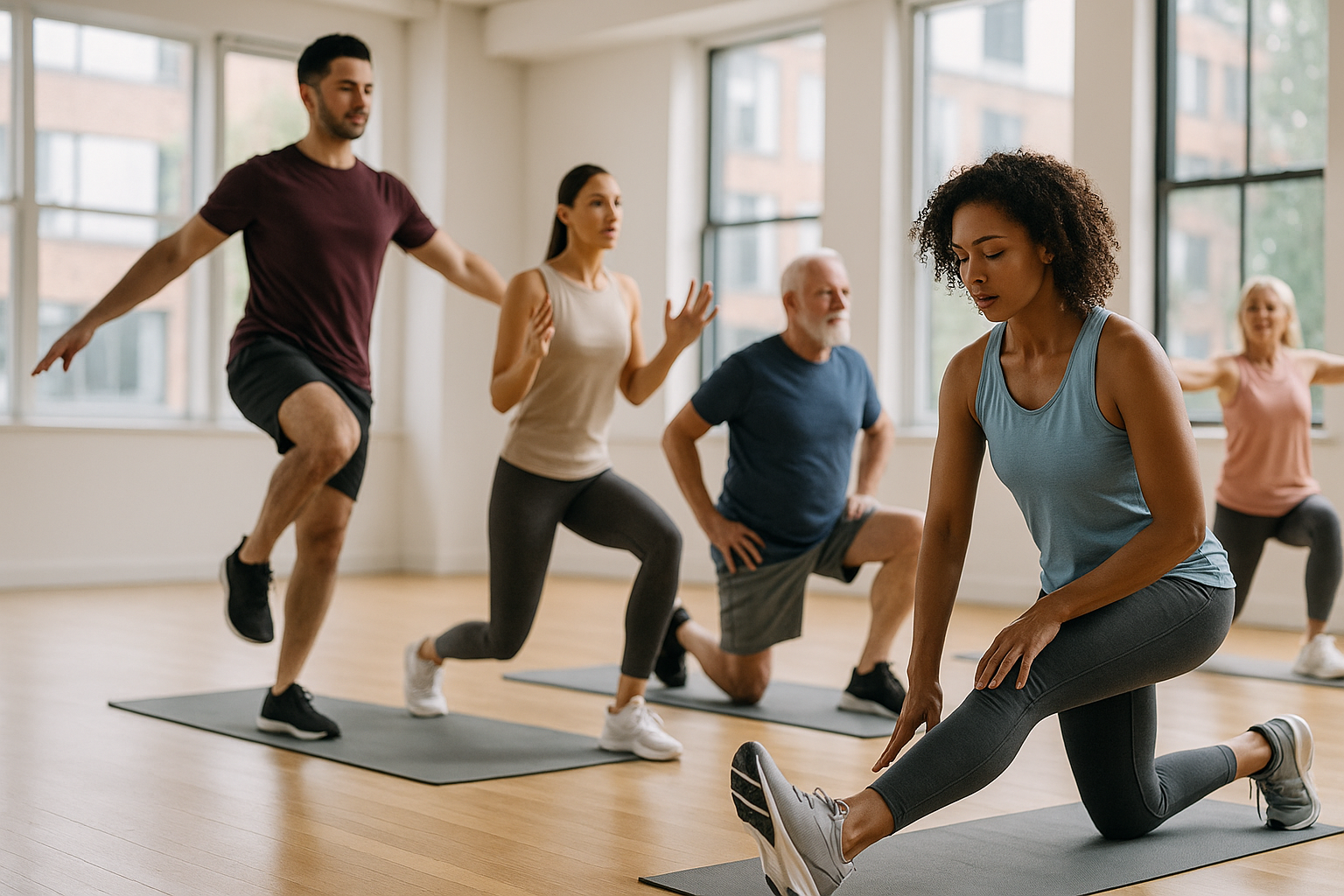
- 2–5 minutes of dynamic moves that match the session: leg swings, walking lunges, arm circles, hip openers.
- Escalate gradually: small ranges → fuller ranges; slow → moderate speed.
1.2 Numbers & guardrails
- Time: 5–10 minutes total.
- Effort: light to moderate (you can talk in full sentences).
- Red flags: sharp pain, lightheadedness, or joint catching—stop and reassess.
Bottom line: Warm tissues stretch better. A short, progressive warm-up is the fastest way to safer, more effective flexibility work.
2. Match the Stretch to the Moment: Dynamic Before, Static After
Use dynamic stretching (controlled, moving through range) to prep for activity; save static stretching (holding a position) for after training or in separate flexibility sessions. Dynamic work boosts temperature and neuromuscular readiness without the short-term strength/power drop sometimes seen after long static holds. After exercise, static stretches help restore resting length, calm the nervous system, and gradually expand range of motion. This “right tool, right time” principle fits most goals—from daily mobility to sports. If you prefer a brief static hold in your warm-up, keep it short (≤30–60 seconds total per muscle) and follow with a few explosive or sport-specific drills to re-prime performance.
2.1 Why it matters
- Dynamic preps tissues and coordination for movement.
- Static post-workout encourages lasting flexibility gains.
- Keeps power and sprint ability intact for training or competition.
2.2 Mini-checklist
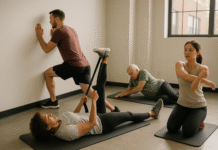
- Before: marching, skips, hip openers, inchworms, world’s greatest stretch (moving).
- After: calf, hamstring, quad, hip flexor, glute, chest, lats (held).
Bottom line: Move dynamically to get ready; hold statically to bank flexibility. PubMed
3. Use Safe Hold Times and Volume: 10–30 Seconds, 2–4 Reps (≈60 Seconds Total)
For most adults, the simplest dose is 10–30 seconds per stretch, repeated 2–4 times (about 60 seconds total per muscle group). Older adults may benefit from 30–60 seconds holds. This “time under stretch” model balances effectiveness and comfort, letting tissues adapt without provoking protective muscle guarding. Apply it to major areas (calves, hamstrings, quads, hip flexors, glutes, chest, lats, neck). Spread work across the week rather than cramming it into one marathon session: 2–3 days/week consistently beats sporadic long holds.
3.1 Numbers & guardrails (as of Aug 2025)
- Volume: ~60 seconds per muscle group (e.g., 3×20 s or 2×30 s).
- Frequency: 2–3 days/week minimum; daily for stiff areas is fine.
- Older adults: up to 30–60 s per repetition may yield better gains.
3.2 Common mistakes
- Holding your breath (increases tension).
- Pulling past pain.
- Doing one long hold and calling it a day.
Bottom line: Dose stretching like a prescription: short, repeatable holds totaling ~60 seconds per muscle group.
4. Aim for “Tension, Not Pain,” and Keep Breathing
The right sensation is a gentle, steady tension—never sharp, shooting, or joint pain. When you “fight” a stretch, your nervous system tightens the very muscles you’re trying to lengthen. Slow, regular breathing lowers muscle tone and eases you deeper over successive reps. Don’t lock joints; keep a micro-bend in knees and elbows to protect ligaments. If a stretch causes tingling, joint pressure, or pain that lingers afterward, modify the angle or stop. This body-awareness focus is especially helpful if you sit long hours or are returning from time off.
4.1 Mini-checklist
- Inhale through the nose, exhale slowly (e.g., 3–6 pattern).
- Relax the face/shoulders; soften the ribs.
- Ease deeper only as tension subsides—not by forcing range.
4.2 Why breathing works
Slow exhalations nudge your autonomic nervous system toward calm, reducing protective muscle guarding and making static work more comfortable.
Bottom line: Comfortable tension plus calm breathing builds flexibility faster—and safer—than forcing range.
5. Skip the Bounce: No Ballistic Stretching for Most People
Ballistic stretching (bouncing at end range) can spike muscle tension and stress tendons, increasing the chance of strain when done without specific need or coaching. Athletes in certain sports may use carefully programmed ballistic work later in a warm-up, but most exercisers are better served by smooth, controlled dynamic or static techniques. If you’ve been bouncing to “get more range,” switch to pulses within a mid-range (dynamic) or steady holds (static); you’ll improve comfort and control without unnecessary risk.
5.1 Safer alternatives
- Dynamic pulses short of end range (e.g., gentle leg swings).
- Contract-relax (PNF) with light effort instead of jerky motion.
- Use props (strap, block) to find sustainable angles.
5.2 Common mistakes
- Locking joints while bouncing.
- Forcing end-range positions because they “look right.”
Bottom line: Unless you’re under sport-specific coaching, avoid bouncing—go smooth and your tissues will thank you.
6. Line Up Your Joints: Posture and Position Make or Break a Stretch
Form matters. Small alignment tweaks—neutral spine, square hips, stacked ribs, knee tracking over toes—determine whether you’re stretching the target tissue or just hanging on your joints. For example, in a standing quad stretch, avoid arching the low back; tuck slightly and keep knees close. In a hamstring stretch, hinge at the hips rather than rounding your back. Prioritize symmetry: stretch both sides, noting differences you can address over time. Proper setup also prevents nerve tension mimicking “good stretch” but actually signaling a problem.
6.1 Alignment cues (quick hits)
- Neck/shoulders: lengthen through the back of the neck, drop the ribs.
- Hips: square pelvis; don’t twist to “cheat” range.
- Knees: slight bend; track over second toe.
6.2 Mini-checklist
- If you feel joint pressure, adjust angle or unload with a strap.
- Stretch on a stable base (mat, wall, bench) before adding complexity.
Bottom line: Clean alignment targets muscles, not joints—more benefit, less risk in every hold. nhs.ukHarvard Health
7. Progress Gradually and Be Consistent (Expect Noticeable Gains in ≥2 Weeks)
Flexibility adapts to regular gentle stress. Research shows ROM improves with stretching programs performed over two or more weeks, with larger changes accruing across months. That means short, frequent sessions beat once-in-a-while marathons. Track one or two key measures (e.g., knee-to-wall ankle test distance; fingertip-to-floor) weekly to see progress. If you plateau, adjust variables: frequency (add a day), volume (toward 90–120 seconds total), or technique (swap in PNF). Consistency is also safer—you’ll learn your limits and stop “surprising” tissues with big jumps in range.
7.1 Weekly planner (example)
- Mon/Wed/Fri: full-body 10–15 minutes after workouts.
- Tue/Thu: 5-minute micro-mobility breaks (hips, thoracic).
- Weekend: optional 20-minute session for tight zones.
7.2 Mini case
A desk worker added 3×20-second hip-flexor and hamstring holds, three days a week. After four weeks, stair climbing felt easier and fingertip-to-floor improved by 6 cm—without any pain spikes.
Bottom line: Think weeks and months, not minutes. Small, steady doses produce durable flexibility.
8. Protect Performance: Avoid Long Static Holds (>60 s per Muscle) Before Power or Strength Sessions
Long static holds (about ≥60 seconds per muscle group) can cause short-term dips in explosive performance and maximal strength immediately afterward. If your next task is sprinting, jumping, or heavy lifting, either keep static work brief or move it to the end of the session or a separate time. When static holds are short and followed by dynamic drills, any performance impact is typically negligible. Program intelligently and you’ll get the best of both worlds: readiness now, flexibility later.
8.1 Numbers & guardrails
- Pre-performance static holds: keep total per muscle <60 s.
- Re-prime with dynamic drills (skips, bounds, light jumps).
- Post-session: return to standard 10–30 s holds, 2–4 reps.
8.2 Common mistakes
- “Parking” at end range before heavy sets.
- Omitting re-activation drills after static holds.
Bottom line: Time static work wisely; keep long holds away from strength/power work to preserve output. ResearchGate
9. Use PNF (Contract–Relax) Strategically for Stubborn Tight Spots
PNF stretching pairs gentle contractions with a stretch to unlock extra range—useful for stubborn calves, hamstrings, and hip rotators. Typical flow: move to mild tension → isometric contract the target muscle 5–10 seconds at ~30–60% effort → exhale and deepen the stretch 10–20 seconds. Repeat 2–4 times. PNF often yields larger short-term ROM changes than simple static holds, but it demands attention to form and effort; over-squeezing defeats the purpose. If you’re new to PNF, begin with low intensity or work with a coach.
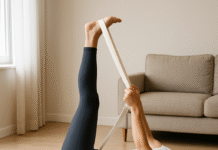
9.1 How to do it (solo hamstring example)
- Strap around mid-foot; raise the straight leg to tension.
- Gently press heel into the strap (5–10 s), exhale, then ease slightly higher (10–20 s).
- Repeat 2–4 times; stop at tension, not pain.
9.2 Guardrails
- Keep contractions submaximal (30–60%).
- Avoid if it aggravates pain; consider clinician guidance post-injury.
Bottom line: PNF can unlock extra range fast—use moderate effort and good setup for best results. PMCHuman Kinetics Journals
10. Pair Flexibility with Strength Through Full Range
Flexibility sticks when you strengthen the newly available range. Training muscles through a full, controlled ROM (e.g., deep split squats for hip flexors, Romanian deadlifts for hamstrings) reinforces mobility, improves joint stability, and may match stretching for ROM gains in some areas. If you only lengthen but never load, your brain may “reel in” range to protect joints. Use light-to-moderate loads, slow tempos, and impeccable form, especially near end range.
10.1 Practical pairings
- Hip flexor: half-kneeling static hold → split squats with slight forward torso.
- Hamstring: supine strap stretch → slow RDLs within tolerance.
- Ankle: knee-to-wall mobilizations → controlled calf raises over a step.
10.2 Programming notes
- 2–3 sets of 8–12 reps in the newly gained range.
- Move deliberately; stop well before pain.
Bottom line: Strength plus stretch is stickier than stretching alone—own your new range under load. BioMed Central
11. Use Breath to Soften Tension and Extend Range
Your breath is free mobility gear. Slow nasal inhales and longer exhales (for example, 3 seconds in, 6 seconds out) reduce sympathetic arousal and muscle guarding, letting you settle deeper without force. Pair exhalation with the moment you ease into a new position; if tension spikes, hold, breathe, and let it melt. For desk-stiffness days, two minutes of quiet breathing before stretching can reset tone so everything feels less “sticky.”
11.1 Try this
- 1 minute: sit tall, hands on lower ribs; 3-second inhale, 6-second exhale.
- 2–3 minutes: flow static holds, deepening each on the exhale.
- If dizziness occurs, stop and return to normal breathing.
11.2 Why it helps
Emerging evidence links daily breathing practice to lower blood pressure and stress; those calmer states often translate to easier stretching.
Bottom line: Lengthen your exhale to lengthen your muscles—breath and stretch are natural allies. PMC
12. Modify for Your Body: Special Populations, Pain, and Common Pitfalls
One size never fits all. Pregnant exercisers, people with hypermobility, and anyone recovering from injury or surgery need individualized ranges and progressions. Avoid end-range cranking on lax joints; prioritize control and mid-range strength. If a stretch creates nerve-like symptoms (tingling, numbness), stop and get evaluated. For general exercisers, the biggest pitfalls are forcing range, skipping warm-ups, bouncing, and ignoring pain signals. When in doubt, shorten the lever (bend knees, support limbs), reduce intensity, and build up gradually.
12.1 Safety mini-checklist
- Pain ≠ progress; tension is the target.
- Don’t stretch cold; don’t bounce at end range.
- Start smaller: props, supports, and micro-bends are smart, not “cheats.”
- If you’re unsure, consult a licensed professional (PT, sports physician).
12.2 Region tips (brief)
- Back-sensitive: favor hip mobility, thoracic rotation; avoid aggressive lumbar flexion/extension.
- Knees: avoid torquey positions; track over toes and keep a soft bend.
- Shoulders: keep ribs stacked to avoid compensations.
Bottom line: Personalize your plan and respect signals. Smart modifications keep gains coming without setbacks. Better Health Channel
FAQs
1) Should I stretch before or after my workout?
Do dynamic moves before (leg swings, lunges, arm circles) to raise temperature and prep coordination, and reserve static holds for after training or a separate session. If you include brief static holds early, keep them short and follow with dynamic drills to restore readiness. This approach preserves performance and still supports long-term mobility.
2) How long should I hold a stretch?
Most adults do well with 10–30 seconds, repeated 2–4 times per muscle (≈60 seconds total). Older adults may benefit from 30–60-second holds. This volume provides solid stimulus without provoking protective tension. Spread sessions across the week rather than relying on a single long bout.
3) Does stretching prevent soreness (DOMS)?
Not really. High-quality reviews show stretching before or after exercise has little to no effect on delayed-onset muscle soreness. Light activity, sleep, and time are more reliable tools. Stretching still has value for flexibility and comfort—it just isn’t a DOMS cure-all.
4) Is static stretching “bad” before workouts?
It depends on duration and context. Long static holds (≥60 s per muscle) can temporarily reduce strength and power. Shorter holds, especially when followed by dynamic drills, usually have trivial effects. If your session demands speed or heavy lifting, keep static work brief or move it to the end.
5) What is PNF stretching and should I use it?
PNF (e.g., contract–relax) combines gentle contractions with a follow-up stretch. It can unlock extra range quickly, particularly in stubborn muscle groups. Keep contractions moderate (30–60% effort), use 2–4 cycles, and stop at tension, not pain. If you have a history of injury or aren’t sure about form, get coaching first.
6) How often should I stretch each week?
Aim for 2–3 days/week as a baseline, increasing to most days for tight zones. Expect to see meaningful gains after two or more weeks of consistent work. Short daily mini-sessions (5–10 minutes) are often easier to stick with than occasional 30-minute blocks.
7) Can strengthening improve flexibility, too?
Yes. Training through a full, controlled range (e.g., deep split squats, controlled calf raises) can increase ROM similar to stretching in some regions. Pairing strength with stretching helps your body “own” the new range and protects joints.
8) What about bouncing (ballistic) stretches?
For most people, avoid them. Bouncing at end range can raise injury risk and provoke guarding. Athletes under expert coaching sometimes use ballistic work in a carefully progressed warm-up, but smooth dynamic or static techniques are safer and more reliable for general fitness.
9) I sit all day—what’s the best bang-for-buck routine?
Twice daily, do 3–5 minutes of movement snacks: hip flexor lunge hold (2×20–30 s/side), hamstring hinge (2×20–30 s/side), thoracic rotations (10 reps), and ankle rocks (10 reps). On training days, add a 5–10 minute dynamic warm-up and finish with static holds for the tightest areas. Consistency trumps perfect programming.
10) How do I know if I’m overstretching?
Warning signs include sharp or joint pain, pins-and-needles, lingering soreness, or feeling “unstable” afterward. Reduce range, add support (strap, block), shorten holds, and emphasize strength near your end ranges. When in doubt—especially with a history of injury—seek guidance from a licensed clinician.
Conclusion
Better stretching is less about touching your toes and more about matching tools to timing, dosing holds intelligently, and listening to your body’s signals. Start each session with 5–10 minutes of progressive movement to warm tissues and switch on coordination. Anchor your flexibility work with repeatable 10–30-second holds, 2–4 times per muscle—roughly 60 seconds total—and breathe steadily so tension eases instead of rising. Protect performance by saving long static holds for after training, and reinforce mobility with strength through the new range. If you need extra range for a specific area, use moderate-effort PNF. Above all, be consistent for at least a couple of weeks and personalize for your body. Put these 12 tips into practice and you’ll stretch with confidence, feel looser during daily life, and step into workouts ready to move well.
Ready to start? Commit to three short sessions this week—warm up, then stretch calves, hamstrings, hip flexors, and chest for 60 seconds each—and track how your movement feels.
References
- Warm Up, Cool Down — American Heart Association — Jan 16, 2024 — www.heart.org
- Flexibility Exercise (Stretching) — American Heart Association — Jan 22, 2024 — www.heart.org
- Faculty GETP 10→11 Crosswalk (Flexibility FITT) — American College of Sports Medicine — (accessed Aug 2025) — RebrandX
- FITT Recommendations (Hypertension) – Flexibility Section — American College of Sports Medicine — (accessed Aug 2025) — ACSM
- Behm DG, Chaouachi A. Acute effects of muscle stretching on physical performance, range of motion, and injury incidence — Applied Physiology, Nutrition, and Metabolism — 2016 — Canadian Science Publishing
- Behm DG et al. A review of the acute effects of static and dynamic stretching on performance — Scand J Med Sci Sports — 2011 — PubMed
- Konrad A, et al. Chronic effects of stretching on range of motion with considerations for sex differences — Sports Medicine – Open — 2023 — PMC
- Herbert RD, de Noronha M. Stretching to prevent or reduce muscle soreness after exercise — Cochrane Review (updated) — May 1, 2022 — Cochrane
- NSCA. Introduction to Dynamic Warm-Up — National Strength & Conditioning Association — (accessed Aug 2025) — NSCA
- Bryant J, et al. Effects of Static Stretching Intensity on ROM and Strength — Sports — 2023 — MDPI
- Afonso J, et al. Strength Training versus Stretching for Improving Range of Motion — Healthcare — 2021 — MDPI
- Page P. Current Concepts in Muscle Stretching for Exercise and Rehabilitation — Int J Sports Phys Ther — 2012 — PMC