





















Quality time with children is focused, device-free attention that strengthens bonds through shared activities and conversation. It’s less about the minutes and more about presence, warmth, and doing things together that matter to your family. This guide offers 12 practical, screen-free habits you can start today—no elaborate planning needed. You’ll learn how to use meals, movement, stories, nature, play, and routines to create connection in small daily pockets. Quick start: pick one idea below, agree on a time, put phones away, and give it 20–30 minutes. This article is educational and not a substitute for personal medical or developmental advice; check in with your pediatrician if you have specific concerns.
1. Create a Family Media Plan & Tech-Free Zones
Start by aligning expectations: a simple, written Family Media Plan clarifies where, when, and how screens fit (and don’t fit) into your home. This is the fastest way to “crowd back in” quality time without battles, because the rules are co-created and visible. Decide on tech-free zones (e.g., bedrooms, dining table, car rides under 30 minutes) and anchor device-free moments to rituals like dinner, bedtime reading, or a daily walk. When screens are allowed, emphasize co-viewing and talking about what you see together, which turns media into conversation starters rather than time-sinks. The goal isn’t perfection—it’s predictability and calm; you’re building a culture that favors connection over constant checking.
How to do it
- Draft a one-page plan: device locations, allowed times, privacy & safety rules, and consequences (collaboratively with older kids).
- Set 3 tech-free anchors: mealtimes, one daily “connection pocket,” and the last hour before bed.
- Use the “5 Cs” lens for media use: Child, Content, Calm, Crowding-out, Communication.
- Co-view when screens are on; ask open-ended questions about characters, ads, and choices.
- Post the plan where everyone sees it; revisit monthly.
Numbers & guardrails
- As of 2025, major pediatric guidance emphasizes balance over one-size-fits-all hourly limits; focus on sleep, school, movement, and relationships staying healthy.
- Make enforcement visual: a charging basket outside bedrooms and a kitchen-timer for online sessions.
- Mini-case: One family moved chargers to the hallway and added a “phones down” bowl at dinner; arguments dropped in a week, and 20-minute after-dinner walks became routine.
Close with consistency: a simple plan plus a few tech-free zones reliably opens space for real connection.
2. Make Story Time Non-Negotiable
Reading aloud (or storytelling) is a high-leverage, screen-free habit that boosts language, attention, and closeness in a single sitting. Even 15–20 minutes most evenings builds a rhythm kids crave, and it works from babyhood through the teen years (swap picture books for novels, articles, poetry, or short stories). Reading together also models focus in a world of pings; your voice sets the pace and the tone, and the book becomes a shared world to reference later. For children who “don’t like reading,” try audiobooks while you follow the text, graphic novels, or alternating pages; the key is sitting together—your presence is the point. Add oral storytelling (family histories, folk tales) to widen the lens beyond print.
How to do it
- Create a book nook: lamp, pillows, a small shelf, and a basket of current picks.
- Use ritual cues: dim lights, warm drink, same time daily; treat it like brushing teeth.
- Mix formats: picture books, comics, poetry, nonfiction “browse books,” and audiobooks.
- Invite kids to choose two titles; you pick one (keeps variety and buy-in).
- Pause for “wonder questions”: “What surprised you? What would you do next?”
Tools & examples
- Library holds & “lucky day” shelves keep the rotation fresh without cost.
- Reading log by season (not by page count) avoids performance pressure.
- Teen twist: read one essay or op-ed a week and discuss over dessert.
Finalize with warmth: when story time is a given, connection happens on autopilot.
3. Cook Together Once a Week
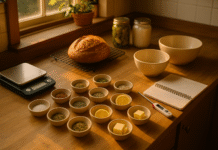
Cooking is a screen-free lab for math, science, culture, and life skills—plus it ends in dinner. Kids who help cook are more likely to taste new foods and feel proud of what they made. Keep it simple: one recipe night per week, same day if possible, with age-appropriate jobs (washing, tearing herbs, stirring, measuring). Talk about family traditions, where ingredients come from, and how flavors work; you’re teaching competence and curiosity. Safety is teachable: start with blunt tools and “hands on top” knife guidance, and always supervise at the stove. Expect spills and mess—it’s part of the learning and often the funniest memory.
Mini-checklist
- Choose fast, forgiving recipes (quesadillas, dal and rice, stir-fries, omelets, sheet-pan veggies).
- Assign roles: head chef (adult), junior chef (older child), prep captain (younger child), taste tester (rotates).
- Pre-measure spices into cups for young helpers; color-code measuring spoons.
- Build a spice passport: smell/taste one new spice per month and note it in a family notebook.
- End with a 5-minute “clean-as-you-go” game: timer + music.
How to do it (by age)
- Ages 2–4: wash produce, tear greens, sprinkle toppings.
- Ages 5–7: measure, crack eggs into a separate bowl, assemble wraps.
- Ages 8–10: read a recipe aloud, sauté with supervision, safe knife skills.
- 11+: plan a side dish, budget for ingredients, cook a full simple meal.
Wrap with payoff: shared meals taste better when little hands made them.
4. Share Device-Free Meals & Real Conversation
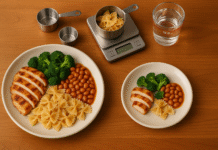
Regular family meals—even breakfasts or weekend lunches—are uniquely efficient at delivering connection, nutrition, and emotional check-ins. Phones off the table is a small rule with big returns: eye contact, humor, and the day’s stories surface naturally. You don’t need perfect food or long dinners; aim for relaxed, predictable times together. Conversation starters beat “How was your day?”—try prompts that spark detail or play (“Rose, Thorn, Bud”: one good thing, one hard thing, one thing you’re looking forward to). If schedules clash, try 20-minute “mini-meals” after sports or a picnic on the floor—consistency beats aesthetics.
How to do it
- Pick 3–5 shared meals a week that fit your calendar (breakfast counts).
- Make a no-phones rule visible: a basket or “parking lot” near the table.
- Keep conversation cards (or a shared note on your phone printed out).
- Rotate themes: DIY sandwich night, soup & story night, “around the world” month.
- End with a one-song clean-up—everyone clears one thing that’s not theirs.
Tools & examples
- Use a whiteboard meal plan to reduce decision fatigue.
- Conversation prompt ideas: “What surprised you today?” “Teach us a 30-second skill.”
- Teen variant: “Article appetizer”—someone shares a headline and a one-minute take.
Bottom line: device-free meals are the stealth MVP of family connection.
5. Choose Nature Walks & Outdoor Play
Time outdoors is a natural mood reset and a reliable catalyst for conversation. A 20–40 minute neighborhood walk, park visit, or “micro-hike” after dinner gives kids space to move and talk; sticks, stones, clouds, and birds do the rest. Nature lowers stress and invites curiosity—kids ask better questions outside than on a couch, and you get to answer (or wonder together). “Bad weather” days are an opportunity: boots and umbrellas turn puddles into play. If you have limited access to green spaces, try school yards after hours, courtyards, rooftops, or tree-lined streets; the point is outside air, not perfection.
Micro-adventures
- Sound safari: list five sounds you can hear, then try to identify them.
- Color hunt: find one object for each rainbow color; snap mental pictures.
- Sit spot: 5 minutes quiet sitting; everyone notices three things.
- Night walk: count porch lights or constellations; whisper-only rule.
- Nature swap: each person brings back one texture (leaf, rock, bark photo).
Numbers & guardrails
- As of 2024/2025 guidance, school-age children should get ≈60 minutes/day of moderate-to-vigorous physical activity; outdoor play helps meet it.
- Safety first: reflective bands at dusk, stay on well-lit routes, set a meeting point in busy parks.
Close with habit: a standing walk night (e.g., Tuesdays) makes “going out” normal.
6. Move Together: Family Play & Mini-Workouts
Movement is connection in motion: tag in the yard, dance parties in the living room, scooter races, or a parent-kid yoga flow all count. You’re not training athletes; you’re building a family identity that associates bodies with joy and togetherness. Keep sessions short and playful—10–20 minutes is enough to elevate heart rates and lower grumpiness. Mix silly with structured: “freeze dance,” “animal relays,” or a deck-of-cards workout (hearts = jumping jacks, etc.). Teens often prefer autonomy; invite them to DJ, time intervals, or teach you a move from PE or sports practice.
How to do it
- Create a move jar: slips with quick activities (bear crawl to the kitchen, 30-second wall sit).
- Use habit stacking: 5-minute stretch before story time, three songs of dancing after dinner.
- Mark a tape “balance line” down the hallway; time tightrope challenges.
- Weekend family challenge: stairs instead of elevator, park at the far end, take one long walk.
Mini circuit (15 minutes)
- Warm-up walk/trot (2 min)
- Partner squats passing a ball (2 min)
- Crab walk race (2 min)
- Plank high-fives (2 × 30 sec)
- Shadow boxing (2 min)
- Stretch & breathe (3 min)
Finish with fun: praise effort, not performance; celebrate tiny wins.
7. Game Night: Boards, Cards & Cooperative Play
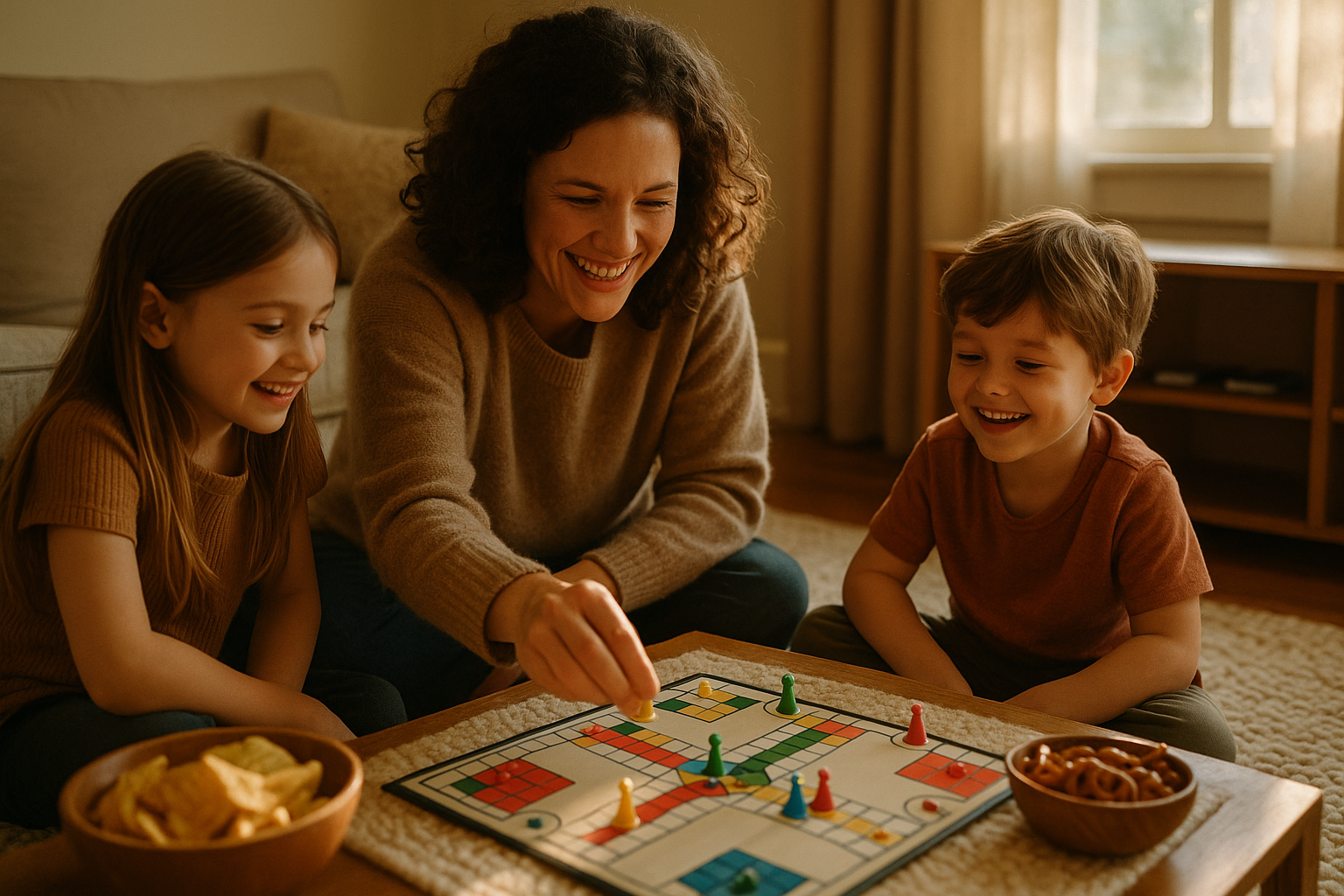
Games are structured connection: shared rules, shared laughter, and built-in turns that distribute attention fairly. A weekly or biweekly game night creates dependable fun that competes well with screens because it’s social and immediate. Rotate formats—cooperative board games, classic cards, pen-and-paper role-play, charades—to match ages and moods. Keep snacks simple, set a firm start and end time, and let kids help pick the game to ensure buy-in. Winning isn’t the metric; playful banter and light strategy are the glue.
How to do it
- Start with co-op games for mixed ages so you’re playing the game, not each other.
- Use a timer to keep turns brisk; add “table talk” limits if analysis paralysis creeps in.
- Declare house rules that keep frustration low (one redo per player, hint tokens).
- Rotate the Game Captain role to explain rules and set up pieces.
- Keep a victory journal of funny moments and “best plays.”
Mini-list: Easy starters
- Uno, Dobble/Spot It, Sushi Go, Outfoxed!, Charades/Pictionary, Yahtzee, memory match, simple trivia you write yourselves.
End with a reset: quick photo of the final board and a 60-second clean-up race.
8. Turn Chores Into Teamwork (and Chats)
Household tasks can be high-quality time when they’re re-framed as teamwork plus music. Folding laundry, washing the car, sweeping the patio, or watering plants free your hands and minds for casual conversation—kids often share more when side-by-side than face-to-face. Assign predictable roles and pair chores with a playlist, timer, or mini-game (“beat last week’s sock-fold count”). Add child-sized tools and clear bins so tasks feel achievable. Praise specifics (“You lined up the shoes by size—that helps everyone”) to reinforce belonging and competence.
How to do it
- Post a 10-minute chore menu for weekdays; save longer jobs for weekends.
- Pair young kids with an older “mentor” for one task per month.
- Make it visible: before/after photos or a whiteboard checkmark.
- Rotate house DJ to choose the soundtrack (clean edits).
- End with a treat ritual (fruit plate, tea time, quick game).
Mini case
- A family of four runs “Saturday Reset”: 25-minute timer, each person tackles a zone, then shares a “win” and a “what I noticed.” Less nagging, more pride—and tidier spaces to play.
Synthesis: chores become connection when they’re predictable, brief, and shared.
9. Create & Make: Art, Music, and Maker Time
Making things together—art, music, crafts, simple builds—invites kids to lead, experiment, and express. Set up a low-mess “maker station” with paper, markers, tape, cardboard, and recycled materials, and schedule a weekly Create Hour. The aim is process, not product; your job is to sit nearby, ask curious questions, and try a bit yourself. Music counts, too: a shared playlist jam, homemade shakers, or a “family song of the week” to learn. Teens may prefer photography, beat-making, or DIY home projects—follow their spark.
How to do it
- Keep grab-and-go kits: collage box, clay kit, origami pack, sewing starter.
- Use constraints to spark creativity: “only circles,” “build with cardboard,” “three colors max.”
- Display work at kid eye-level; rotate monthly.
- Start a family zine (8 pages, one per person) each season.
- Try “silent drawing”: take turns adding to one picture for 10 minutes.
Tools/Examples
- Cardboard city on a coffee table that evolves weekly.
- Kitchen-table open mic: each person shares a thing—song, joke, fact, drawing.
- Photo walk: pick a theme (doors, shadows); compare favorites afterward.
Wrap with respect: celebrate effort, new ideas, and “happy accidents.”
10. Use Micro-Moments & “Serve-and-Return”
Quality time doesn’t need a half-day; it lives in five-minute pockets where you respond to what your child “serves” (a question, a gesture, a look) with attuned attention. These back-and-forth exchanges—called serve-and-return—literally build brain architecture in younger kids and deepen trust at every age. The skill is simple: notice, name, and respond, then pause so your child can “return.” You can do this while waiting in line, commuting, or cooking. Put your phone face-down, make eye contact, and follow their lead; curiosity beats lecturing every time.
How to do it
- Notice the serve: “You’re wondering why the moon is out before sunset.”
- Return with warmth: “Let’s check the sky together—what do you notice?”
- Add a little: a fact, a question, or a tool (“Want to draw it?”).
- Pause for their return; resist rushing to answers.
- Close the loop: summarize or plan (“Let’s look it up after dinner”).
Mini-checklist
- Build three 5-minute pockets into your day (school pickup, snack, bedtime).
- Keep a tiny field notebook to capture kids’ questions for later.
- Protect eye-contact moments: greet and goodnight rituals, always.
Takeaway: small, responsive moments compound into a big sense of being seen.
11. Build a Calming Bedtime Wind-Down
A predictable bedtime routine is a daily, screen-free chance to connect while protecting sleep, which drives mood, learning, and health. Start the wind-down 60 minutes before lights-out with low light, quiet tasks, and no devices; then follow the same 3–4 steps (bath, PJs, teeth, book, cuddle or chat). Bedrooms should be cool, dark, and phone-free. Reading together here is powerful; it signals safety and slows everyone down. Teens need routines too—let them design their own (stretching, shower, journal) with the same “no phone in bed” rule.
How to do it
- Set a household dimming time (e.g., 8:00 pm); switch to lamps.
- Create a bedside basket: book, journal, small fidget, soft light.
- Use the same order nightly; aim for ≤30 minutes of routine for school-age kids.
- Cue with senses: lavender sachet, quiet music, or white noise as needed.
- Keep a one-question chat: “What’s one good thing from today?”
Numbers & guardrails
- Typical sleep needs:
- 6–12 years: about 9–12 hours nightly
- 13–18 years: about 8–10 hours nightly
- Protect sleep by ending screens at least 1 hour before bed and keeping devices out of bedrooms.
Final note: calm routines turn bedtime from battleground to bonding.
12. Try Screen-Free Challenges & Weekly Rituals
Sometimes you need a fresh frame to make change stick. A family screen-free challenge (a week, a weekend, or every Sunday afternoon) helps reset habits and makes offline fun visible again. Treat it as an experiment, not a punishment: plan activities ahead, announce start/stop times, and celebrate small wins. Pair it with a recurring ritual—Friday game night, Saturday morning walk, or a monthly “family field trip” to a park or museum. Rituals create identity; your kids will remember the rhythm more than any single outing.
How to do it
- Choose a clear window (e.g., first weekend of the month) and name it (“Analog Sunday”).
- Make an activity menu: crafts, hikes, baking, library visit, backyard picnic.
- Set ground rules: phones away except for safety/photos; post them.
- Capture highlights in a family journal or photo album.
- Debrief: what worked, what to repeat, what to tweak.
Mini-checklist
- Invite friends or cousins to one challenge day for social momentum.
- Tie in service (litter pickup, donation sorting) to add purpose.
- Reward with a simple treat: pancakes, movie together later (co-viewed and discussed).
Synthesize: rituals + periodic resets keep the focus on connection long after the novelty fades.
FAQs
1) What actually counts as “quality time”?
Any shared, device-free moment where you’re attuned to your child and doing something together—reading, cooking, walking, playing, talking—counts. The key ingredients are attention, warmth, and back-and-forth interaction. Ten minutes of focused play can be more valuable than an hour side-by-side on separate screens. Aim for small daily pockets plus a few longer anchors each week.
2) How much screen time is “okay”?
There’s no universal safe number. Pediatric guidance now emphasizes balance and impact: guard sleep, schoolwork, movement, and relationships first. Create a Family Media Plan, make tech-free zones, co-view when possible, and watch for “crowding-out” (when screens displace essentials). If behavior, mood, or sleep suffer, reduce screen exposure and add offline anchors like walks or story time.
3) My child insists screens are their only fun. What do I do?
Start with empathy (“Screens are exciting”), then make one small change (a nightly 20-minute device-free block) and pre-plan alternatives based on your child’s interests (e.g., a drawing challenge for artists, a bike loop for movers). Co-play to bridge the gap: turn their favorite game themes into offline activities or stories. Celebrate effort and keep the tone curious, not punitive.
4) How can I make this work with multiple ages?
Use cooperative games and parallel play setups (older child reads to younger; younger preps toppings while older cooks on the stove). Assign roles by skill, not age, so everyone contributes. For walks and meals, add simple challenges with adjustable difficulty. Build occasional “divide and connect” slots where each child gets a short 1:1 with an adult while others have independent tasks.
5) We’re too busy—where do we find the time?
Anchor connection to existing routines: eat together for 20 minutes, read at bedtime, and add a 10-minute movement break after school. Use weekends for one longer “family thing.” Trim low-value screen scrolling by moving chargers out of bedrooms and making a visible plan. Consistency beats duration—five reliable pockets across the week add up.
6) Are audiobooks or podcasts “cheating” for story time?
Not at all. Audiobooks and kid-friendly podcasts are great, especially if you sit together and pause to talk. When possible, pair audio with print to practice tracking text. The magic is in shared attention and conversation, so keep your presence in the mix and ask “wonder questions” along the way.
7) What about teens who crave privacy and independence?
Offer choice and collaboration. Invite teens to set parts of the Family Media Plan, pick meals and routes for walks, DJ movement sessions, or teach you a skill. Keep device-free anchors (meals, last hour before bed) but make them respectful. Short, routine touchpoints (tea and chat, a weekly drive) often work better than big “bonding talks.”
8) How do we handle different rules between households or caregivers?
Focus on your sphere of control and clear communication. Share your Family Media Plan and the “why,” keep your routines steady, and avoid criticizing the other home in front of kids. Teach meta-skills (noticing crowding-out, protecting sleep) so children can self-regulate across contexts. Kids are resilient when expectations are calm and consistent.
9) How do I know if our quality time is “working”?
Look for soft signals: easier transitions, more spontaneous sharing, fewer power struggles at recurring anchors (meals, bedtime), and improved mood. You might also notice better sleep and appetite. Keep a simple monthly reflection: what routine feels good, what needs tweaking. If worries persist about behavior, learning, or mood, consult your pediatrician.
10) Can we include some educational screen time without losing connection?
Yes—be intentional. Prefer co-viewed, age-appropriate content; watch shorter episodes; and discuss afterward (“What did you learn? What would you try?”). Bookend on-screen learning with off-screen doing (a science clip followed by a kitchen experiment). Keep tech-free anchors sacred so screens don’t spill into sleep or meals.
Conclusion
Quality time with children thrives on rhythm, not grand gestures. A few predictable anchors—meals, story time, short walks, playful movement, creative projects, calming bedtimes—turn ordinary minutes into connection. When you co-create a simple Family Media Plan, establish tech-free zones, and protect sleep and movement, screens stop crowding out the good stuff. Focus on presence over perfection, small pockets over marathon plans, and responsiveness over rigid rules. Start with one habit this week (perhaps the easiest in your family’s season), make it visible, and celebrate tiny wins. Connection compounds.
Try this today: pick tonight’s 20-minute screen-free pocket, put phones in a basket, and do one item from the list together.
References
- Media and Children: Family Media Plan overview, American Academy of Pediatrics (AAP), June 4, 2021. AAP
- Screen Time Guidelines (emphasis on balance, co-viewing, and communication), AAP Center of Excellence on Social Media & Youth Mental Health, May 22, 2025. AAP
- The 5 Cs of Media Use framework, American Academy of Pediatrics, May 27, 2025. AAP
- Watch Together: Co-Viewing Media With Your Child, HealthyChildren.org (AAP), January 3, 2024. HealthyChildren.org
- The U.S. Surgeon General’s Advisory: Social Media and Youth Mental Health, U.S. Department of Health & Human Services, 2023; webpage updated February 19, 2025. ; https://www.hhs.gov/surgeongeneral/reports-and-publications/youth-mental-health/social-media/index.html HHS.gov
- The Power of Play: A Pediatric Role in Enhancing Development in Young Children, Pediatrics (AAP Clinical Report), September 2018. AAP Publications
- Serve and Return: Back-and-forth Exchanges, Harvard Center on the Developing Child, accessed August 2025. Harvard Child Development Center
- Physical Activity Guidelines for Children and Adolescents, CDC, January 8, 2024. CDC
- WHO Guidelines on Physical Activity and Sedentary Behaviour (children & adolescents), World Health Organization, November 25, 2020. World Health Organization
- Healthy Sleep Habits: How Many Hours Does Your Child Need?, HealthyChildren.org (AAP), November 16, 2020. HealthyChildren.org
- Benefits of Family Dinners, The Family Dinner Project (MGH Psychiatry Academy initiative), accessed August 2025. The Family Dinner Project
- Teaching Kids to Cook, Academy of Nutrition and Dietetics (EatRight.org), March 21, 2022. Eat Right
- Screen-Free Week (overview and resources), ScreenFree.org / Fairplay for Kids, accessed August 2025. ; Screen-Free WeekFairplay
- Playing Outside: Why It’s Important for Kids, HealthyChildren.org (AAP), May 13, 2024. HealthyChildren.org
- Reading Aloud to Children: The Evidence, Reach Out and Read (evidence summary), accessed August 2025. reachoutandread.org