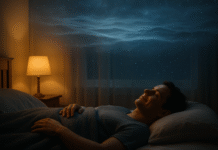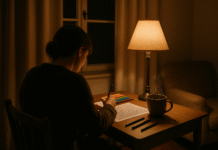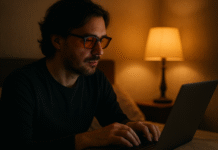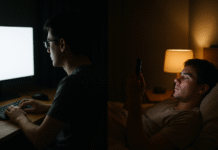









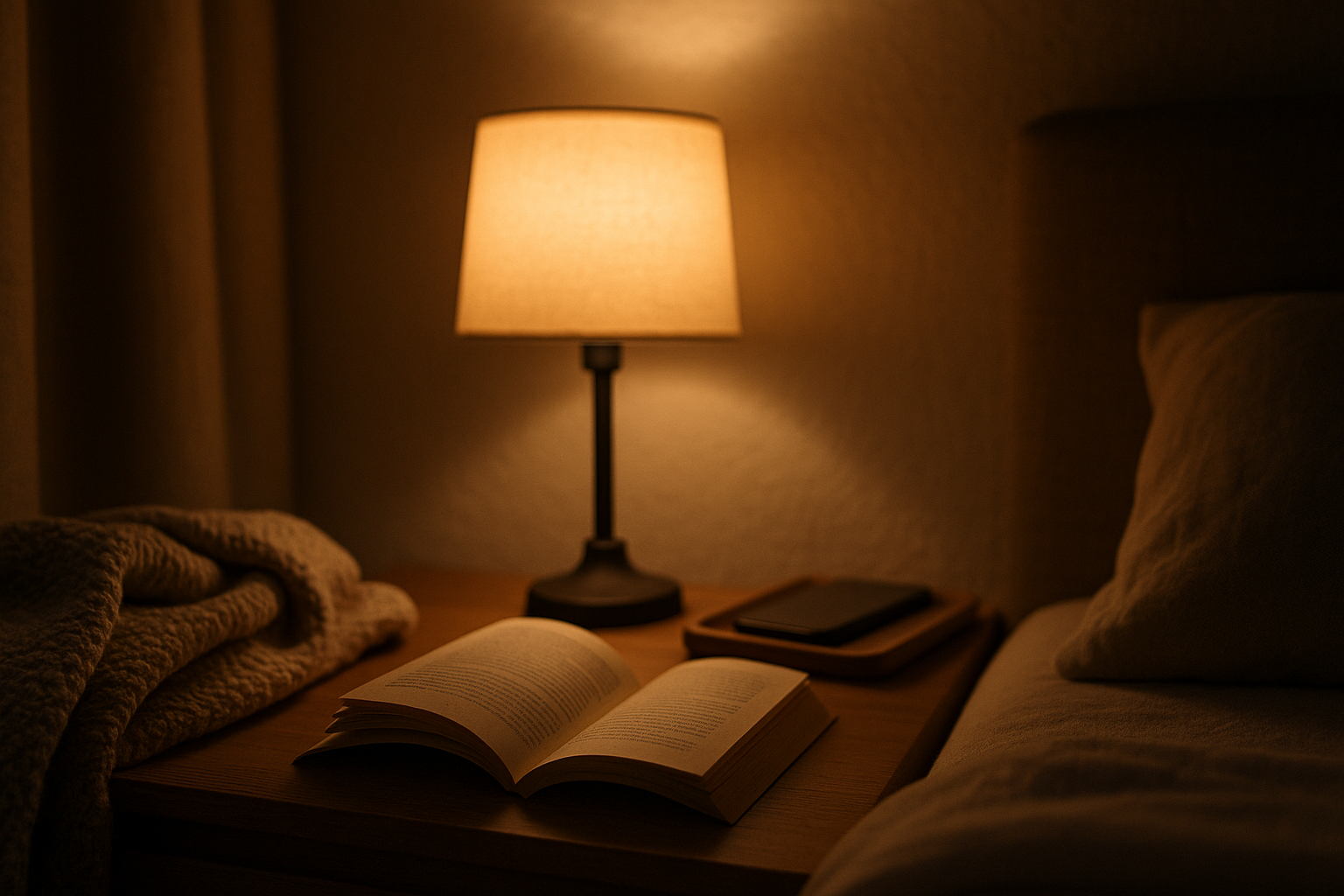
Putting it simply: at bedtime, reading—especially on paper or a non–self-lit e-ink device—generally supports winding down, while phones and tablets tend to delay sleep due to bright light and stimulating content. This article shows you how to make the healthier choice stick in the real world. You’ll learn the science behind light and melatonin, practical guardrails for lamps and devices, how to pick the right reading format, and family-friendly rules. Quick start: park your phone outside the bedroom, keep a print book by the bed, dim a warm bedside lamp, and give yourself a 30–60-minute wind-down window.
Brief note: The advice below is general sleep-hygiene guidance, not a medical diagnosis. If you suspect a sleep disorder (e.g., insomnia, sleep apnea), talk with a qualified clinician.
1. Know the Sleep Trade-Off: Print Calms, Bright Screens Delay
Reading printed pages (or passive e-ink) is typically sleep-neutral or calming, while light-emitting screens can suppress melatonin and push your body clock later. In controlled experiments, evening exposure to light-emitting e-readers delayed circadian timing, reduced evening sleepiness, and impaired next-morning alertness compared with print. That’s the physiological backdrop to the “just one more scroll” feeling at 11:30 p.m.—your brain is being told it’s earlier than it is. As of August 2025, consensus guidance still recommends limiting bright light and screen exposure close to bedtime, particularly the short-wavelength (blue-enriched) light common to phones, tablets, and laptops. Content matters, too: rapid-fire, interactive feeds spike arousal compared with steady, linear reading. The practical takeaway: if you want to fall asleep faster and wake more refreshed, prefer paper or e-ink over LCD/OLED within your wind-down window.
1.1 Why it matters
Melatonin acts like a “biochemical dusk,” rising in the evening and cueing sleep. Bright, blue-weighted light at night blunts that rise; even when people feel sleepy, their clock can be nudged later, lengthening time to fall asleep and shifting wake time.
1.2 Numbers & guardrails
- Aim for 30–60 minutes screen-free before lights-out (longer if sensitive to light).
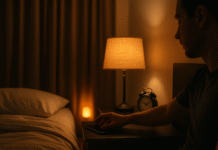
- Keep bedside light dim and warm (roughly “warm white” bulbs; avoid bright overheads).
- If you must glance at a device, lowest brightness and brief exposures are less disruptive than long, bright sessions.
Synthesis: Understanding that screens tug your clock later while paper reading doesn’t helps you choose the calmer path—and design your evening around it.
2. Pick the Right Reading Format: Print, E-Ink, or Backlit?
The medium matters. Print books and non–self-lit e-ink displays minimize light exposure; backlit tablets and phones emit light directly into your eyes. In a widely cited trial, people who read on a light-emitting e-reader before bed fell asleep later and had reduced melatonin compared to nights reading a print book. E-ink devices with front lights are better than bright tablets but still add light exposure if used at high brightness in a dark room, so keep them dim and warm-tinted. If you must use an LCD/OLED screen, switch to the warmest display setting and lowest comfortable brightness, and choose “boring” long-form text in a distraction-free app rather than interactive feeds. The hierarchy from most sleep-friendly to least: print → e-ink (dim front light) → tablet (very dim, warm) → smartphone (dim + focus modes).
2.1 Tools & examples
- E-ink readers: Use a warm front light and reduce brightness as your eyes adapt.
- Tablets/phones: Enable warm color temperature and lowest brightness; use reading apps with pagination and no notifications.
- Physical setup: Prop a small lamp behind your shoulder to avoid direct glare.
2.2 Mini-case
On nights switching from a phone to a paper novel, many readers notice drowsiness within 15–25 minutes versus “wired” alertness after the same time on a phone. That aligns with lab findings showing later melatonin onset with light-emitting devices.
Synthesis: Choose the least luminous tool you’ll reliably use; small tweaks (brightness, warmth, content) compound into easier sleep.
3. Shape the Light: Dim, Warm, and Indirect
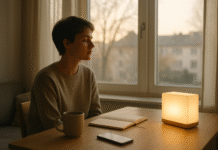
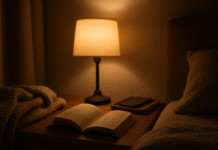
Light hygiene is sleep hygiene. Your brain expects darkness at night; bright, cool light near bedtime sends a daytime signal. Use warm, low-intensity, indirect light for reading—think a small shaded lamp or sconce near shoulder height, angled away from eyes and pages to reduce glare. Avoid bright overheads and task lamps with harsh, cool LEDs. If your bedroom lamp allows, set it to a warm tone and gradually lower light over your wind-down. As of August 2025, sleep organizations emphasize limiting evening light exposure to protect melatonin and maintain circadian alignment; warmer, dimmer lighting is consistently recommended. For kids who want a nightlight, choose the lowest brightness and a warm hue.
3.1 Mini-checklist
- Bulbs: “Warm” or “soft white.”
- Placement: Indirect, slightly behind/above your reading shoulder.
- Glare: Use shades/diffusers; avoid glossy pages under bright points.
- Step-down: Dim lights progressively in the last hour.
- Nightlights: Warm, very dim; avoid bright blue-white.
3.2 Common mistakes
- Turning on a bright ceiling lamp after you’re already drowsy.
- Using a cool, high-lumen desk lamp pointed at eyes.
- Reading on glossy paper under a naked LED—glare strains eyes and invites wakefulness.
Synthesis: Simple lighting upgrades make reading sleepy-calm instead of eye-straining and help your biology shift toward sleep.
4. Guard Your Wind-Down Window (30–60 Minutes)
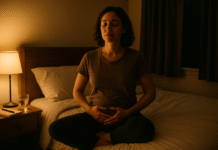
A consistent screen-free wind-down window teaches your body that bedtime is approaching. Clinical guidance recommends turning off electronics at least 30 minutes before bed; many people do best with 45–60 minutes—enough time for melatonin to rise and arousal to fall. Treat this window like a protected appointment: finish chores earlier, silence notifications, and keep your book within reach. Pair the routine with consistent bed/wake times across weekdays and weekends; stability reduces “social jet lag” and protects your sleep drive. If you occasionally need a device late, cap it at a brief, low-brightness check and return to print.
4.1 How to do it
- Set an “off-screens” alarm one hour before lights-out.
- Stage your book + lamp during dinner.
- One-tap Focus/Do Not Disturb modes at the off-screens alarm.
- Close the loop: End with lights out at a consistent time.
4.2 Numbers & guardrails
- 30–60 minutes: evidence-aligned screen-free window.
- 7–9 hours target sleep opportunity for most adults.
- Keep weekend drift ≤ 1 hour to avoid circadian misalignment.
Synthesis: The window is the container for your habit—protect it, and reading becomes the path of least resistance.
5. If You Must Use a Screen, Make It Boring, Dim, and Warm (But Don’t Overtrust “Night Mode”)
When screens are unavoidable, reduce harm: warm the display, minimize brightness, lock out notifications, and choose linear reading in a distraction-free app. But be realistic about Night Shift/Night Mode—color-shifting alone may not prevent melatonin suppression at typical brightness levels. In laboratory tests, Apple’s Night Shift did not meaningfully change melatonin suppression compared with standard settings when brightness remained high; duration and intensity of light still matter most. Practically, combine display warming with low brightness, short duration, and content that doesn’t spike arousal (e.g., an ebook chapter instead of social feeds).
5.1 Mini-checklist
- Warmest color temp + lowest brightness you can tolerate.
- Full-screen reading mode; no infinite scroll.
- Grayscale and Focus to reduce salience and pings.
- Timer: 10–15 minutes max, then switch to paper.
5.2 Common pitfalls
- Assuming Night Shift is a free pass for long sessions.
- “Just checking one thing” that turns into 45 minutes.
- Brightness creeping up because the room is bright—dim the room instead.
Synthesis: Night modes help only when paired with dim, brief, boring usage—and even then, print still wins.
6. Choose Calming Content and Pace Your Reading
Not all reading is equal at 10 p.m. Page-turning thrillers, complex technical manuals, or emotionally charged topics can raise arousal and keep you up; re-reads, gentle fiction, poetry, or low-stakes nonfiction are more sleep-compatible. Sleep health resources recommend picking pleasant or even slightly boring material at night for precisely this reason. Consider pairing a steady reading cadence with slow breathing (e.g., 4–6 breaths per minute) to nudge the nervous system toward rest. If a book repeatedly reactivates you, demote it to daytime and slot in something softer at night. The goal: associate your wind-down with predictable relaxation, not cognitive cliffhangers.
6.1 Content filter—good at night
- Re-reads of familiar novels
- Light essays or nature writing
- Gentle humor or low-stakes mystery
- Short story collections with clean stopping points
6.2 Mini-case
Readers who switch their bedtime slot from a high-stakes thriller to a familiar comfort novel often report drowsiness within 15–20 minutes and less “one more chapter” creep—exactly the behavior change you’re aiming for.
Synthesis: The what of reading matters as much as the how—choose calming content so the habit relaxes you on cue.
7. Make the Healthy Choice Frictionless: Design Your Environment
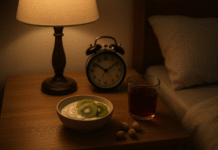
Behavior follows design. Make “read → sleep” the default and “scroll → alert” costly. Keep your book on the pillow or nightstand, your lamp within arm’s reach, and your phone charging outside the bedroom (or at least across the room and face down). Use a simple alarm clock so “I need my phone for an alarm” stops being an excuse. Establish a charging station in the living room with a multi-charger for family devices; plug in there at the off-screens alarm. Over a few weeks, these cues create a strong habit loop: enter the bedroom → lamp on → open book → drowsy → lights out. As your environment removes friction, you’ll stop negotiating with yourself every night.
7.1 Tools & examples
- Physical blockers: Phone box/drawer; outlet timer on living-room chargers.
- Cues: Bookmark at half-chapter; lamp remote.
- Failsafes: Paperback “fallback book” that’s always in reach.
7.2 Mini-checklist
- Book placed before the window starts.
- Phone dock outside the bedroom.
- Lamp set to warm/dim preset.
- Keep a backup book if your main read gets too exciting.
Synthesis: A few environmental tweaks tip the nightly choice in your favor without relying on willpower.
8. For Families: Bedrooms Are for Sleep, Not Screens
For kids and teens, the stakes are higher. Pediatric guidance recommends no screens in bedrooms and no screens at least one hour before bed. Evening screen use is linked with later bedtimes, shorter sleep duration, and daytime sleepiness; light exposure makes young eyes especially vulnerable to melatonin suppression. Create a Family Media Plan: define device curfews, central charging, and screen-free zones, and model the behavior yourself (kids copy adults). If reading together, prefer print books or audiobooks via a speaker with the screen off. For nightlights, pick very dim, warm lights to balance comfort and circadian protection.
8.1 Practical policies
- All devices out of bedrooms overnight (parents too).
- One-hour buffer before bed; replace with reading time.
- Central charging in the kitchen/living room.
- Pick a family book or audiobook for shared wind-down.
8.2 Region-specific note
School start times, exam periods, and Ramadan/holiday schedules can shift bedtime and wake time; keep device rules intact and shift reading time with the schedule to preserve the wind-down.
Synthesis: Clear, consistent family rules—modeled by adults—make reading the easy bedtime choice and protect kids’ sleep.
9. Measure What Matters and Adjust (and Know When to Get Help)
What gets measured gets improved. Track sleep latency (minutes from lights-out to sleep), night awakenings, and daytime alertness as you implement these rules. A simple sleep diary for 1–2 weeks can reveal patterns: maybe a 45-minute window beats 30, or an e-ink device at brightness 3 still runs too bright in a dark room. If you try paper reading nightly for two weeks and still need >30 minutes to fall asleep or wake unrefreshed, consider broader sleep-hygiene tweaks and screen timing earlier in the evening. If difficulties persist, CBT-I (cognitive behavioral therapy for insomnia) is first-line treatment and more effective long-term than sleep meds for chronic insomnia. And remember: in randomized trials, simply reading a book at bedtime improved sleep quality versus not reading—small, consistent habits compound.
9.1 Mini-checklist
- Keep a sleep diary for 14 days.
- Note: lights-out time, latency, awakenings, morning alertness.
- Adjust: window length, light level, content type.
- Seek help if insomnia persists 3+ nights/week for 3+ months.
Synthesis: Feedback turns advice into a personalized playbook—and flags when professional support can help.
FAQs
1) Is reading on my phone OK if I use Night Shift?
It’s better than full-blue brightness, but Night Shift alone often isn’t enough; studies show melatonin can still be suppressed at typical brightness and durations. If you must use a phone, combine warmest color, lowest brightness, short sessions, and non-stimulating content—and switch to print as soon as you can.
2) Are e-ink readers safe at night?
They’re more sleep-friendly than tablets because the screen isn’t self-emitting, but front lights still add light. Keep the front light dim and warm, and consider using an amber filter if available. Paper remains the most circadian-neutral option.
3) How long before bed should I stop screens?
Most adults do well with 30–60 minutes—longer if you’re light-sensitive or tend to get caught up in content. Use an off-screens alarm and a charging dock outside the bedroom to make it automatic.
4) Do blue-light blocking glasses help?
Evidence is mixed; high-quality reviews (as of August 2023) suggest little to no effect on sleep quality for most people. Glasses can be an adjunct, but don’t rely on them to offset late-night scrolling or bright lights. Prioritize dim, warm light and screen timing.
5) What about audiobooks—do they count as reading?
Yes, for wind-down purposes. If screens are off and the room is dim, audiobooks can be a great substitute. Prefer calm narration and set a sleep timer so it doesn’t run all night.
6) What kind of bedside light should I use?
Choose a warm (“soft white”) bulb, a shaded lamp, and indirect placement (slightly behind/above your reading shoulder). Avoid bright, cool overheads. Dim progressively during your wind-down.
7) I love thrillers—are they off-limits?
Not forever—just maybe not at 10 p.m. If your nighttime genre reliably spikes alertness, move it to daytime and pick a calmer book at night. Many readers keep a “comfort read” by the bed for this purpose. Sleep Foundation
8) My teen insists they “need” their phone in the bedroom. What now?
Follow pediatric guidance: no screens in bedrooms and no screens in the hour before bed. Provide a stand-alone alarm clock, set up central charging, and model the rule yourself. Offer print books or audiobooks as alternatives.
9) If e-readers delay sleep, why do some people feel sleepy while e-reading?
Sleepiness can still rise as your homeostatic sleep drive builds, but light exposure may delay your clock and reduce melatonin even if you feel drowsy. The difference shows up as longer sleep latency or later wake time over days.
10) I’ve tried all this and still can’t sleep. What next?
If it’s been 3+ months with trouble falling/staying asleep 3+ nights per week, consider CBT-I through a sleep specialist—it’s first-line treatment. Also screen for conditions like sleep apnea if you snore or feel unrefreshed despite adequate hours.
Conclusion
Choosing reading over screens at bedtime is a leverage point with outsized benefits. The biology is straightforward: bright, blue-weighted light and engaging, fast-paced content cue “daytime,” while dim, warm light and linear, calming reading cue “night.” The practice is behavioral: protect a 30–60-minute window, pick sleep-friendly formats and content, design your environment to remove friction, and measure what matters so you can adjust. For families, make bedrooms device-free and pair a simple reading ritual with consistent schedules. If you treat these nine rules as a system, not nine separate chores, you’ll likely fall asleep faster, reduce nighttime wakefulness, and feel sharper the next day. Tonight, set an off-screens alarm, stage your book and lamp, and give yourself a real wind-down—your future self will thank you.
CTA: Tonight, swap the scroll for 20 minutes of print under a warm lamp—then lights out.
References
- Evening use of light-emitting eReaders negatively affects sleep, circadian timing, and next-morning alertness — Proceedings of the National Academy of Sciences (PNAS), Jan 2015. https://www.pnas.org/doi/10.1073/pnas.1418490112
- Healthy Sleep Habits — Sleep Education (AASM), Apr 2, 2021. https://sleepeducation.org/healthy-sleep/healthy-sleep-habits/
- Over three-fourths of Americans lose sleep due to digital distractions — American Academy of Sleep Medicine (AASM), Dec 4, 2023. https://aasm.org/over-three-fourths-of-americans-lose-sleep-due-to-digital-distractions-sleep-experts-urge-a-change/
- Blue Light: What It Is and How It Affects Sleep — Sleep Foundation, updated July 11, 2025. https://www.sleepfoundation.org/bedroom-environment/blue-light
- Reading Before Bed — Sleep Foundation, updated July 24, 2025. https://www.sleepfoundation.org/sleep-hygiene/reading-before-bed
- Screen Time Affecting Sleep — American Academy of Pediatrics (HealthyChildren.org), Oct 18, 2023. https://www.aap.org/en/patient-care/media-and-children/center-of-excellence-on-social-media-and-youth-mental-health/qa-portal/qa-portal-library/qa-portal-library-questions/screen-time-affecting-sleep/
- Media and Young Minds — Pediatrics (AAP), Nov 2016. https://publications.aap.org/pediatrics/article/138/5/e20162591/60503/Media-and-Young-Minds
- Blue-light filtering spectacle lenses for visual performance, eye health, and sleep — Cochrane Review, Aug 18, 2023. https://www.cochranelibrary.com/cdsr/doi/10.1002/14651858.CD013244.pub2/full
- Good Light, Bad Light, and Better Sleep — National Sleep Foundation, Mar 21, 2025. https://www.thensf.org/good-light-bad-light-and-better-sleep/
- Sleep Diary (fillable PDF) — National Sleep Foundation, 2021. https://www.thensf.org/wp-content/uploads/2021/02/NSF-Sleep-Diary-Rev-2-2021.pdf
- Does the iPad Night Shift mode reduce melatonin suppression? — Lighting Research & Technology (PubMed abstract & PMC), 2019. https://pubmed.ncbi.nlm.nih.gov/31191118/ and https://pmc.ncbi.nlm.nih.gov/articles/PMC6561503/
- Does reading a book in bed make a difference to sleep? The People’s Trial — Trials (BMC), Dec 2021. https://trialsjournal.biomedcentral.com/articles/10.1186/s13063-021-05831-3