




















Hard intervals, repeats, sprints, heavy metcons—high-intensity sessions work because they stress your system. The flipside is that recovery isn’t optional; it’s the driver of fitness gains and injury resilience. This guide distills nine evidence-based recovery strategies for high-intensity training (HIIT, track repeats, WODs, small-sided games, etc.). In short: prioritize sleep, fuel to restore glycogen and repair tissue, hydrate with electrolytes, use light movement and tissue work, deploy hot/cold methods strategically, and monitor readiness to dose the next session. Quick take: Recovery strategies for high-intensity training are the methods that restore performance capacity between hard efforts—chiefly sleep, nutrition, hydration, low-intensity movement, and objective/subjective monitoring.
Quick start checklist (skim):
- Sleep 7–9 h most nights; add a 20–90 min nap after very hard sessions.
- Post-workout: 20–40 g protein + 1.0–1.2 g/kg/h carbs for 3–4 h if rapid refuel matters.
- Replace ~100% of fluid losses; include sodium (10–30 mmol/L ≈ 230–690 mg/L).
- 15–30 min easy aerobic “flush” + light mobility the day after HIIT.
- Use massage/foam rolling for soreness relief, not magic performance boosts.
- Reserve cold plunges for tournament congestion or heat stress, not after lifting for size.
- Track RPE + a brief wellness check and (optionally) morning HRV to guide training.
Friendly disclaimer: This playbook is educational, not medical advice. If you have a health condition or you’re returning from injury, consult a qualified professional.
1. Sleep: Your Primary Recovery Tool
Sleep is the highest-ROI, most reliable recovery strategy for any high-intensity program. Aim for 7–9 hours most nights, extend sleep during heavy training blocks, and use short naps to backfill after especially taxing sessions. Sleep drives muscle protein synthesis, endocrine balance, cognitive function (tactics/skill learning), and immune status—all of which affect how you absorb hard training. In athletes, even modest sleep extension (e.g., adding 30–60 minutes) can improve sprint times, reaction time, and mood while reducing perceived exertion. Naps (20–90 minutes) are valuable: shorter “power naps” restore alertness; longer cycles can include slow-wave sleep that supports recovery. Practically, anchor a consistent bedtime/wake window, dim the last hour of the evening, and protect the first hour of the morning from frantic inputs.
Why it matters
- Sleep restriction reliably harms performance metrics (time to exhaustion, sprint output), mood, and decision-making.
- Sleep extension and naps can acutely improve performance and recovery markers in trained populations.
Mini-checklist
- 7–9 h nightly; extend during heavy blocks.
- Nap 20–90 min on hard days (avoid late evening).
- Wind-down: screens dim, cool room (≈18–20 °C), same sleep/wake.
- Caffeine: cut ≥8 h pre-bed; alcohol post-training = poor sleep architecture.
- Morning light + brief walk to anchor circadian timing.
Bottom line: Treat sleep like a standing training appointment—because it is. Improving it amplifies every other strategy here.
2. Plan Training Spacing and Deloads
Effective recovery begins with program design. High-intensity stress needs deliberate spacing so the next stimulus lands on a system ready to adapt. As a rule, avoid stacking maximal HIIT or power sessions on consecutive days for the same system; alternate stressors (e.g., high-neuromuscular vs. aerobic), and include periodic deloads. Established guidelines for resistance training frequency (e.g., 2–5 sessions/week depending on level) point to the value of recovery windows; team-sport and endurance schedules can apply the same logic, using RPE, wellness, and performance to modulate spacing.
How to do it
- Alternate: Hard anaerobic day → skill/strength accessory → easy aerobic + mobility.
- Rotate systems: Lower-body power → upper-body strength; VO₂max → tempo/technique.
- Deload every 3–6 weeks: cut volume ~30–50% while touching intensity.
- Red flags: rising RPE at same load, irritability, sleep disruption—pull back.
Numbers & guardrails
- Novice lifters: 2–3 resistance days/week; intermediates: 3–4; advanced: 4–5, with muscle groups rotated to allow recovery.
- If strength is primary, avoid maximal cold exposure post-lift (see Strategy 8).
Bottom line: Recovery isn’t only what you do after training; it’s how you place training. Smart spacing converts stress into progress.
3. Refill Glycogen with Carbohydrates (and Use Protein Smartly)
For high-intensity work that relies on glycolysis—track repeats, HIIT circuits, small-sided games—glycogen is the limiting fuel. After glycogen-depleting sessions, prioritize carbohydrate timing and dose, especially when you’ll train again within 24 hours. Guideline: consume ~1.0–1.2 g/kg/hour of carbohydrate for the first 3–4 hours post-exercise to maximize glycogen resynthesis. Adding 20–40 g protein (≈0.3–0.4 g/kg) in that window supports muscle repair, and daily intake of ~1.6–2.2 g/kg/day can cover most athletes depending on goals and energy availability.
Practical steps
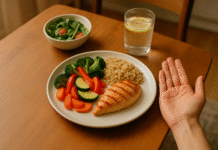
- Rapid turnaround? Start a carb-rich snack within 30 minutes: rice + eggs, yogurt + fruit, or a recovery shake.
- Four-hour window: snack each hour if back-to-back sessions loom.
- Protein anchor: 20–40 g per meal, 3–5 times/day.
- Collagen use-case: for tendon/ligament remodeling phases, 10–15 g gelatin/collagen + 50 mg vitamin C ~30–60 min before loading can augment collagen synthesis (niche, not general).
- Alcohol caution: post-exercise drinking blunts myofibrillar protein synthesis—even when protein is co-ingested.
Numeric example
A 70 kg runner finishing evening 5×1,000 m and racing tomorrow morning: target 70–84 g carbs/hour × 3–4 hours (e.g., rice bowl + fruit + juice), 20–40 g protein immediately, then a carb-dominant breakfast.
Bottom line: Hit carbs early and steadily after hard sessions; layer protein to repair. This combo restores oomph for the next day’s work.
4. Hydrate With Electrolytes, Not Just Water
Sweat loss from high-intensity training can be substantial, especially in hot/humid climates. Under-replacing both fluid and sodium impairs performance, recovery, and thermoregulation. A practical approach: weigh before/after sessions to estimate sweat rate (1 kg loss ≈ 1 L fluid). Replace ~100% of that loss over the next few hours, including sodium at 10–30 mmol/L (≈230–690 mg/L). During prolonged sessions (>90 min), many athletes benefit from ~300–600 mg sodium per hour alongside fluids and carbohydrate.
How to do it
- Sweat-rate test (2–4 sessions): (pre-weight – post-weight + fluid consumed – urine)/time = L/hr.
- During (if long/hot): sip 0.4–0.8 L/hr with electrolytes; add carbs 4–8% if fueling.
- After: aim for 1.25–1.5 L per kg of body mass lost if you need rapid rehydration.
- South Asia heat note (e.g., Karachi summers): expect higher sweat rates; prioritize cold fluids and sodium toward the upper end of the ranges.
Mini-checklist
- Clear/light-straw urine by bedtime after a hard, sweaty day.
- Salty sweaters: look for salty streaks on clothing—use higher-sodium mixes.
- Don’t overdrink plain water in long events—risk of hyponatremia rises.
Bottom line: Replacing what you sweat—fluid and sodium—accelerates recovery and protects tomorrow’s session.
5. Active Recovery: Low-Intensity Movement That Helps
Low-intensity aerobic work (zone 1–2), mobility, and light technical drills the day after a HI session can reduce perceived soreness and normalize movement without adding meaningful stress. Active recovery also accelerates lactate clearance, which can improve how you feel in the hours after a brutal effort (even if next-day performance isn’t always changed). The key is intensity: keep it easy enough to be restorative, not another workout in disguise.
How to do it
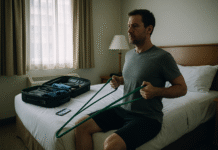
- 15–30 min easy bike/row/jog at conversational pace + 10–15 min mobility.
- Pool walk or deep-water running in hot climates to reduce impact/heat load.
- Before a double-day: insert a 10–20 min easy spin between sessions.
- Dial the dose: higher aerobic capacity → faster lactate clearance with less effort.
Numbers & guardrails
- Studies suggest 6–10 minutes of AR can benefit performance in some contexts; for lactate, intensities near ~80% of lactate threshold clear it fastest—still easy for most.
- If AR raises RPE and tanks tomorrow’s readiness, you went too hard or too long.
Bottom line: Keep moving—but lightly. Short, easy sessions plus mobility de-stiffen you without stealing resources from real training. PubMedEnlighten Publications
6. Mobility, Massage, and Foam Rolling for Soreness Relief
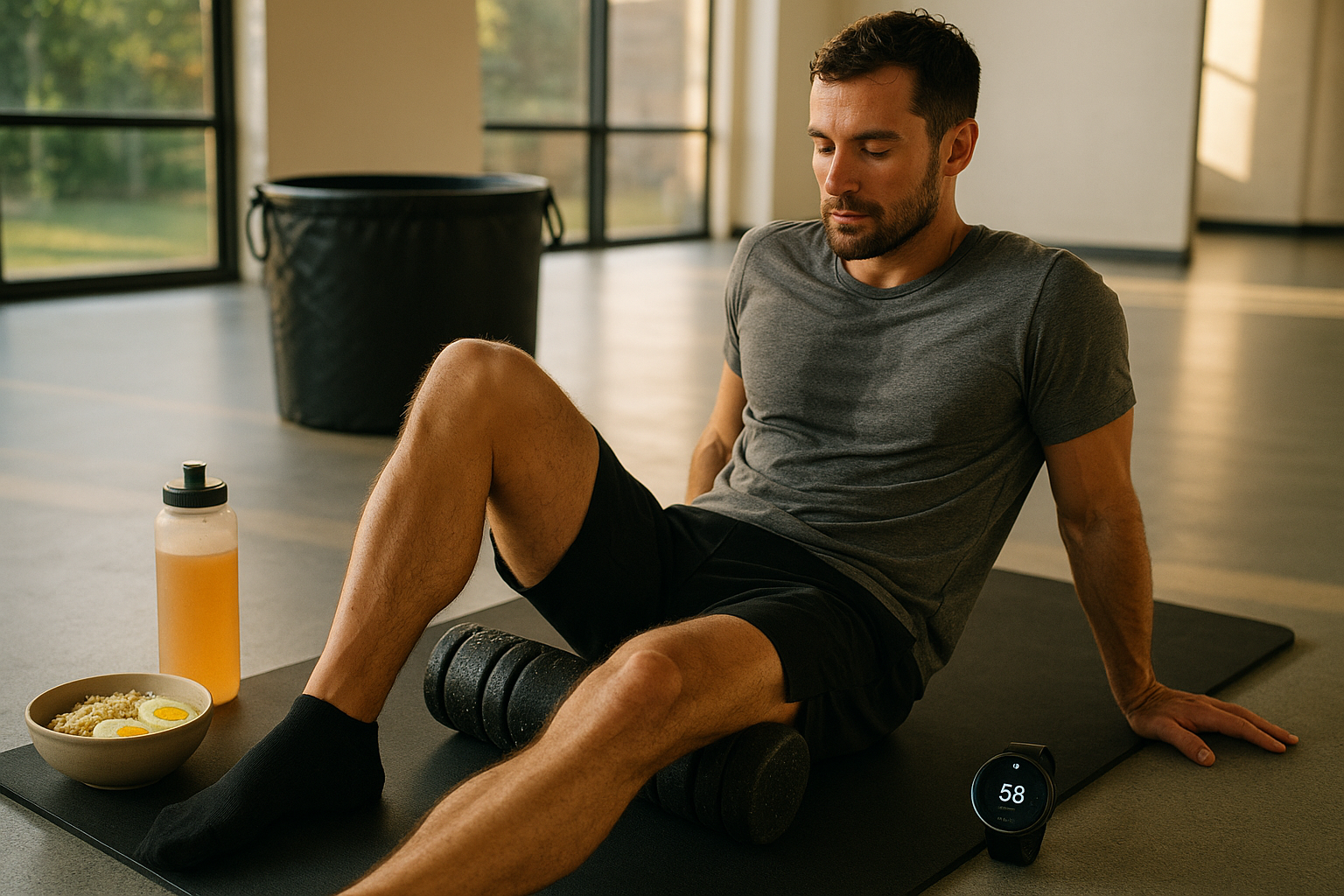
Tissue work won’t magically “flush toxins,” but it can reduce delayed-onset muscle soreness (DOMS), improve short-term range of motion, and help you feel ready to move. Systematic reviews show foam rolling modestly reduces soreness and can transiently improve flexibility without harming performance; massage often yields the largest reductions in perceived fatigue and DOMS, with small effects on performance. Use these as adjuncts—especially between matches or in travel blocks—while remembering that sleep, fuel, and training load matter more.
Tools/Examples
- Foam roll 30–90 s per area, 1–3 passes; add breathing.
- Massage 10–20 min targeted session post-game; longer if scheduling allows.
- Mobility: hips/thoracic spine/ankles—3–5 drills × 45–60 s.
- Compression: garments/boots can reduce swelling and perceived fatigue; effects on performance are small and variable.
Mini-checklist
- Don’t smash inflamed areas aggressively.
- Pair rolling with easy cyclical movement (bike/row) for better tolerance.
- If time-crunched: prioritize the regions trained yesterday.
Bottom line: Use tissue work to feel and move better now; leave the heavy lifting of recovery to sleep, nutrition, hydration, and load management.
7. Protein Timing and Daily Targets (With a Note on Collagen)
Muscle remodeling from high-intensity work depends on adequate amino acids throughout the day. Target ~0.3–0.4 g/kg protein in the meal/shake after training (≈20–40 g for most), then distribute the rest to reach ~1.6–2.2 g/kg/day. Leucine-rich sources (dairy, eggs, animal proteins, soy) maximally stimulate muscle protein synthesis. For athletes in connective-tissue rehab phases, pre-exercise gelatin/collagen + vitamin C may support collagen production around the loaded tissue—useful for tendons/ligaments, not essential for everyone. Finally, avoid alcohol in the post-workout window: it suppresses myofibrillar protein synthesis even with protein co-ingestion.
How to do it
- Post-workout: 25–35 g whey or a mixed meal (e.g., yogurt bowl with fruit + honey).
- Daily: 3–5 feedings hitting your per-meal target.
- Evening: a slow-digesting protein (e.g., casein) before bed may help if evening training runs late.
- Rehab niche: 10–15 g gelatin/collagen + 50 mg vitamin C, 30–60 min before tendon loading blocks.
Bottom line: Nail the post-workout and daily totals; consider collagen only for specific connective-tissue needs; keep booze out of the recovery window.
8. Hot/Cold: When to Use Cold Water, Heat, or Contrast
Thermal modalities have specific use-cases. Cold-water immersion (CWI) can reduce soreness and perceived fatigue and may help during tournament congestion or in extreme heat—but repeated use after resistance training can blunt hypertrophy over time. Heat (sauna, infrared, hot baths) can relax musculature, may improve sleep for some, and shows promise for endurance adaptations and perceived recovery, although evidence for performance recovery is mixed.
How to do it
- CWI: 10–15 °C for 5–12 min within 0–2 h when soreness relief is priority (e.g., back-to-backs).
- Avoid CWI immediately after heavy lifting if muscle growth is a goal—schedule it away from strength sessions.
- Sauna/heat: 10–20 min easy sessions post-training or on rest days; hydrate well.
- Contrast: alternate warm/cool for perceived recovery; evidence is variable.
Guardrails
- If you need repeated sprint power tomorrow under fatigue, CWI can be helpful; if you’re in a hypertrophy block, don’t plunge post-lift.
- Heat elevates heart rate—treat it like a mild additional stressor and skip if dehydrated.
Bottom line: Choose hot/cold for the right job. Cold helps you feel better fast; heat can aid relaxation—just don’t let either steal the adaptations you’re chasing. PMC
9. Monitor Readiness: Simple Scores Beat Guesswork
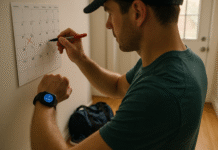
You don’t need a lab to guide recovery—simple tools work. A daily RPE for sessions, a 30-second wellness check (sleep quality, mood, soreness, fatigue), and optional morning HRV give a picture of your recovery status. Down-trending HRV plus worsening wellness and rising RPE? Nudge volume/intensity down or add recovery emphasis. Stable or improving metrics? You’re likely absorbing the work. The goal isn’t to chase numbers; it’s to inform decisions, reduce injury risk, and sustain progression.
How to do it
- RPE (0–10) logged with session duration → track sRPE (RPE × minutes).
- Wellness (1–5): sleep, mood, fatigue, soreness—trend over weeks.
- Morning HRV: consistent time/position; watch trends, not single days.
- Checkpoint: If two or more indicators drift negative for 3–5 days, adjust.
Tools/Examples
- Paper/Notes app, or wearables that export HRV/rMSSD.
- Weekly review: match spikes in load to dips in wellness → plan deloads.
Bottom line: A tiny monitoring routine sharpens your recovery choices and reduces guesswork. Let trends—not hunches—steer your next hard day.
FAQs
1) How long should I wait between high-intensity sessions?
Most athletes thrive with at least one lower-intensity day between very hard sessions for the same system. Rotate stressors (e.g., speed vs. strength) and watch your trends: if RPE climbs at the same load, sleep quality drops, and soreness lingers, extend recovery or deload. Resistance-training frequency guidelines (2–5 days/week depending on level) imply spacing that allows adaptation.
2) What’s the best post-workout meal after HIIT?
If you’ll train again within 24 h, prioritize carbs (≈1.0–1.2 g/kg/hour for 3–4 h) plus 20–40 g protein in the first meal. If turnaround is longer, a balanced mixed meal suffices—focus on total daily carbs and protein. Hydrate with sodium to replace losses.
3) Are cold plunges good or bad?
Both, depending on timing and goals. CWI can reduce soreness and help you feel fresher for closely spaced events, but used regularly after lifting it may blunt hypertrophy. If strength/size is the priority, avoid immediate post-lift plunges; if you’re juggling matches in heat, it’s a useful tool.
4) Do compression garments and massage actually work?
They can reduce perceived fatigue and soreness, with small or inconsistent effects on performance. Massage generally shows the strongest DOMS reductions; compression has mixed results. Use them for comfort and between-event turnarounds, not as primary recovery levers.
5) How much should I drink after I sweat a lot?
Estimate sweat loss (1 kg ≈ 1 L). Replace roughly 100% of the loss over the next few hours, including sodium (10–30 mmol/L ≈ 230–690 mg/L). If you need rapid rehydration, aim for about 1.25–1.5 L per kg lost with sodium-containing fluids.
6) Is foam rolling worth my time?
Yes—for soreness relief and short-term range-of-motion. Meta-analyses show small, positive effects on DOMS and flexibility, with no meaningful performance harm when dosed reasonably. Keep sessions brief (30–90 s per area) and pair with easy movement.
7) What protein target should I aim for daily?
Generally ~1.6–2.2 g/kg/day spread across 3–5 feedings covers most athletes, with 20–40 g post-workout. Focus on leucine-rich sources. If you’re rehabbing tendons, consider collagen as a niche tool around loading sessions. Avoid alcohol in the immediate recovery window—it suppresses MPS.
8) How do I know if I need a deload week?
Converging signals—stagnant or falling performance, persistent soreness, poor sleep, irritability, and rising RPE—for more than a few sessions suggest you’re accumulating fatigue faster than you’re dissipating it. Drop volume 30–50% for 5–7 days while keeping a touch of intensity, then re-build.
9) What’s a simple monitoring setup I can start tomorrow?
Track sRPE (RPE × minutes), a 30-second wellness score (sleep/mood/soreness/fatigue), and (optionally) morning HRV with a chest strap or validated app. Review weekly; if two or more trend worse for several days, adjust volume/intensity or insert recovery focus.
10) Does alcohol really hurt recovery that much?
Yes—especially in the critical post-workout window. Alcohol ingestion reduces myofibrillar protein synthesis even when combined with protein, and older work shows impaired glycogen resynthesis with substantial intakes. If you choose to drink, separate it from training and recovery periods. Bond University Research Portal
Conclusion
High-intensity training pays off when you respect the other half of the equation: recovery. Anchor your week with reliable sleep, plan intelligent spacing and deloads, refuel aggressively when turnaround is short, and replace both fluid and electrolytes—not just water. Use low-intensity movement and targeted tissue work to keep you supple, and deploy hot/cold modalities only when they serve your goals. Finally, let a tiny monitoring routine (RPE, wellness, optional HRV) steer daily adjustments so you’re training hard and adapting. Put these nine strategies into practice for four weeks, review your trends, and iterate—athletic progress is a long game, and great recovery is how you stay in it.
CTA: Build your 7-day recovery plan from these nine strategies—start tonight with a sleep window and a post-workout carb-plus-protein meal.
References
- Walsh NP et al. “Sleep and the athlete: narrative review and 2021 expert consensus recommendations.” British Journal of Sports Medicine, 2021. https://bjsm.bmj.com/content/55/7/356 Frontiers
- Alghannam AF & Gonzalez JT. “An update on carbohydrate intake during and after high-intensity exercise for recovery.” European Journal of Sport Science, 2018. https://www.tandfonline.com/doi/full/10.1080/17461391.2018.1477993 Thieme
- Morton RW et al. “Protein supplementation and resistance training in healthy adults: a systematic review and meta-analysis.” British Journal of Sports Medicine, 2018. https://pubmed.ncbi.nlm.nih.gov/28642253/ PubMed
- Sawka MN et al. “American College of Sports Medicine Position Stand: Exercise and Fluid Replacement.” Medicine & Science in Sports & Exercise, 2007. PubMed
- Vitale KC & Getzin AR. “Nutrition and Supplement Update for the Endurance Athlete.” Nutrients, 2019. PMC
- Wiewelhove T et al. “A Meta-Analysis of the Effects of Foam Rolling on Performance and Recovery.” Frontiers in Physiology, 2019. PMC
- Dupuy O et al. “An Evidence-Based Approach for Choosing Post-exercise Recovery Techniques.” Frontiers in Physiology, 2018. https://www.frontiersin.org/articles/10.3389/fphys.2018.00403/full Frontiers
- Roberts LA et al. “Post-exercise cold water immersion attenuates acute anabolic signaling.” The Journal of Physiology, 2015. PMC
- Fyfe JJ et al. “Cold water immersion attenuates anabolic signaling and skeletal muscle fiber hypertrophy.” Journal of Applied Physiology, 2019. Physiology Journals
- Plews DJ et al. “Training adaptation and heart rate variability in elite endurance athletes.” Sports Medicine, 2013. PubMed
- Saw AE, Main LC, Gastin PB. “Monitoring the athlete training response: subjective self-reported measures trump commonly used objective measures.” British Journal of Sports Medicine, 2016. PMC
- Ratamess N et al. “ACSM Position Stand: Progression Models in Resistance Training for Healthy Adults.” Medicine & Science in Sports & Exercise, 2009. PubMed