


















Rest isn’t the reward for finishing work; it’s a worker that helps you finish more—and better. If you plan it. This guide shows exactly how to schedule breaks and leisure so your energy, focus, and output stay high without burning out. You’ll get concrete timings, guardrails, and tools that fit knowledge work, manual roles, study days, and caregiving heavy weeks. Quick definition: Scheduling breaks and leisure means deliberately blocking short rests during the day and longer off-time across the week and quarter to maintain performance, mood, and health. Core steps: set 60–90-minute focus blocks, insert microbreaks each hour, protect lunch, use meeting buffers, design detachment rituals, and book weekly leisure plus periodic vacations—with metrics to tune what works for you. Brief disclaimer: this is general guidance, not medical advice.
1. Build your day around 60–90-minute focus cycles (then actually stop)
The fastest way to make rest work is to align it with how your brain and body already run. Most people naturally perform in ultradian cycles of roughly 90 minutes, after which alertness dips; pushing through often yields diminishing returns. Practically, that means scheduling 60–90 minutes of single-task focus followed by a break—short (5–10 minutes) if you’re continuing, longer (15–20 minutes) if you’re switching contexts. Widely cited tracking data of top performers also shows patterns like 52 minutes on, 17 off; while not a law, it’s a useful starting ratio to test. Add structure with a timer (or calendar holds) and give each block a specific outcome. Your goal isn’t rigid perfection; it’s a predictable cadence that lets you sprint—and then refuel before the next sprint. Treat cycles like train departures: if you miss one, catch the next rather than “making it up” by skipping the station.
Why it works
- Ultradian rhythms suggest natural peaks and valleys roughly every 90 minutes; aligning work with these phases reduces overuse and mental fatigue.
- The 52/17 pattern comes from real-world productivity logs of the highest-performing users of DeskTime; it’s descriptive, not prescriptive, but a strong heuristic to pilot.
How to do it
- Block 3–5 focus cycles on your calendar; label them with verbs (“Draft section 1,” “Analyze Q3 variance”).
- End each cycle on a known stopping point (checklist tick, commit pushed, paragraph finished) to avoid “just 5 more minutes.”
- Use timers (Workrave, Stretchly) or Calendar alerts; keep breaks device-light.
Synthesis: anchor your day to 60–90-minute sprints, then defend the stop—consistency beats intensity over time.
2. Add hourly microbreaks for eyes, joints, and mood
Short, planned microbreaks keep discomfort and fatigue from silently eroding your performance. Every hour, step away for 3–5 minutes: stand, stretch, roll shoulders, look out a window, sip water. Add the 20-20-20 eye rule: every 20 minutes, look at something ~20 feet (6 m) away for 20 seconds to reduce digital eyestrain. Microbreaks aren’t laziness; randomized and field studies show they reduce musculoskeletal discomfort and don’t hurt productivity when spaced strategically. Think of them as preventive maintenance—tiny resets that keep you from hitting a wall at 3 p.m.
Numbers & guardrails
- NIOSH found that supplementing conventional rest with hourly 5-minute breaks reduced eyestrain and musculoskeletal discomfort without lowering productivity. OSHA
- A systematic review/meta-analysis shows microbreaks improve well-being (vigor, fatigue) and can benefit performance depending on task and break type.
- For eyes, the CDC recommends the 20-20-20 rule.
Mini-checklist
- Hourly timer → stand, stretch, breathe.
- 20-20-20 for screens.
- Keep it brief: 2–5 minutes beats skipping altogether.
- Pair with water or a quick walk to a window.
Synthesis: microbreaks guard long-run capacity; the best one is the one you’ll actually take, hourly.
3. Protect buffers between meetings to cut switch costs
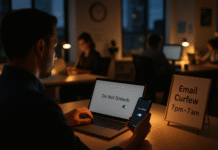
Back-to-back meetings force your brain to switch tasks at speed, which spikes stress and tanks attention. Five to ten-minute buffers act like exit ramps: you close loops, outline the next step, and reset your nervous system. Brainwave studies show that consecutive video meetings without breaks increase stress, while small breathers reset attention for the next session. Add “speedy meetings” (25/50 minutes by default) and batch related topics to reduce cognitive taxes from rapid context switching.
Why it matters
- Microsoft’s Human Factors Lab found stress rises across back-to-back video meetings; breaks reduce the buildup and improve focus.
- APA notes switching costs: frequent task switches reduce efficiency and raise error risk. American Psychological Association
How to do it
- Turn on “Speedy meetings” (Google/Outlook) to auto-insert buffers.
- Use a two-minute closeout: capture decisions and owner, update task list, set the next calendar block.
- Insert a 5-minute transition ritual: stand, breathe 10 slow exhales, look at something far away.
Synthesis: tiny buffers prevent a stress snowball; schedule the margins or they’ll get eaten.
4. Make lunch a genuine recovery break (not email with snacks)
A real lunch refuels your body and restores attention; a half-eaten sandwich at your keyboard rarely does. On days you can, leave your desk for 15–30 minutes and choose one of two proven options: a short walk outdoors (greenery helps) or guided relaxation (breathing, progressive muscle relaxation). Both reduce strain and improve afternoon concentration, with light movement often more enjoyable. Even if you can’t step outside, change posture, hydrate, and stop doom-scrolling. Consider local context: in hot climates (e.g., South Asia summers), aim for shade or an indoor corridor; late-Zohar Fridays or communal lunchtime norms may shape when and how you can step away—plan around them rather than giving up the break entirely.
Evidence snapshot
- Lunchtime park walks or relaxation improved end-of-day well-being and concentration in controlled studies; enjoyment mediated benefits. ScienceDirect
Mini plan
- 3×/week: 15-minute outside loop or indoor relaxation audio.
- Protect the slot with a calendar hold; turn off notifications.
- Pair with protein + complex carbs; skip heavy meals that induce post-lunch crashes.
Synthesis: treat lunch as a reset, not a meeting; you’ll buy back a steadier afternoon.
5. Use power naps safely (10–20 minutes, early afternoon)
A well-timed 10–20-minute nap can restore alertness and mood for hours; longer naps risk sleep inertia unless you have 90 minutes for a full cycle. Schedule it early afternoon (typically 1–3 p.m.) when circadian alertness dips. Keep the setting dark, quiet, and cool; use an eye mask and white noise if needed. If you’re nap-resistant or short on time, just lying quietly with eyes closed still helps. For an optional boost, try a “nappuccino”: drink coffee right before a 15-minute nap so caffeine kicks in as you wake.
Numbers & guardrails
- A NASA study found a 26-minute nap increased alertness by up to 54% and performance by 34% among pilots.
- NASA fatigue materials also note benefits even from 10-minute naps (duration and effect vary by person).
How to do it
- Set a 15–20-minute timer; lie down before you’re exhausted.
- Avoid naps after ~3 p.m. to protect nighttime sleep.
- Track how you feel post-nap for a week; adjust length.
Synthesis: short and early beats long and late—make naps a tool, not a crutch.
6. Create start/stop rituals to detach from work
Breaks work best when your brain knows when work is “on” and “off.” Psychological detachment—mentally switching off—protects well-being and reduces exhaustion. Build two rituals: a morning re-attachment (review top goals, visualize first focus block) and an evening shutdown (log what’s done, capture open loops, plan the next day, then a brief transition walk or stretch). If you work from home, a “fake commute”—a 10-minute loop outside—helps your nervous system mark the boundary.
Backed by research
- Recovery science highlights four experiences that aid unwinding: detachment, relaxation, mastery, and control; detachment in off-hours is linked to better mental health. PMC
Checklist
- Morning: shortlist 3 wins; set the first 90-minute block.
- Evening: write tomorrow’s first step; physically tidy desk; leave the room if possible.
Synthesis: decisive boundaries turn scattered breaks into a coherent recovery rhythm.
7. Block weekly “leisure mastery” time (hobbies that challenge you)
Rest isn’t only passive. Mastery experiences—hobbies that stretch skills just enough (learning guitar, baking, coding a small tool, community sport)—recharge in ways doom-scrolling can’t. Schedule one 60–120-minute block weekly for a hobby that requires focus but isn’t work. This taps the “relaxation + control + mastery” trio that recovery science links to higher well-being. Keep it protected like a meeting with your future self.
Why it matters
- The Recovery Experience Questionnaire defines mastery (and detachment, relaxation, control) as core drivers of effective recovery from work stress.
How to do it
- Pick one skillful leisure activity; set a clear mini-goal (one song, one recipe, one tutorial).
- Lay out materials the night before; remove work apps from the device you’ll use.
Synthesis: challenging play restores different fuels than passive rest—make room for both.
8. Schedule social leisure on purpose (it boosts mood and stamina)
Humans recover socially. Coffee with a friend, a family board game, a group stroll after dinner—these aren’t luxuries; they’re mood stabilizers. When weeks get heavy, block one social micro-event (20–60 minutes) that fits your energy. Evidence shows happiness often rises when activities are shared, and broader well-being research repeatedly ties social connection to long-term health and resilience. Keep it low-friction: nearby, short, and device-light.
Evidence snapshot
- Large-scale analyses show socializing correlates with higher happiness across many daily activities. SAGE Journals
- Global well-being reports highlight social relationships as a durable driver of health and happiness. World Happiness Report
Ideas
- Phone-free walk with a neighbor.
- Potluck or chai break with colleagues after a deadline.
- “Silent co-reading” hour with friends or family.
Synthesis: plan small together-moments; they compound into steadier energy.
9. Use active breaks to reduce aches—and keep quality high
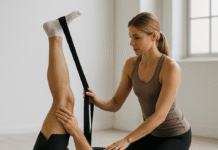
If your job or study means long sitting, active breaks (mobility, stretches, bodyweight moves) reduce neck and low back discomfort and can improve perceived energy. Schedule 5–10 minutes every 90–120 minutes or between tasks. For manual roles, invert the pattern: brief restorative breaks that reverse the most used muscles. It’s not about sweat; it’s about circulation and joint movement.
Numbers & guardrails
- Randomized and workplace studies show active microbreaks reduce musculoskeletal discomfort for office workers. Taylor & Francis OnlineSpringerLinkScienceDirect
- Strategic rest breaks reduce VDT (screen) discomfort without hurting productivity.
Mini routine (choose 3–5)
- Neck side bends, shoulder rolls, thoracic extension over chair back.
- Hip flexor stretch, ankle pumps, calf raises.
- 10–15 air squats or wall push-ups.
Synthesis: move a little, often; your 5-minute break today prevents your 5-day flare-up tomorrow.
10. Practice digital hygiene: batch notifications and build device-light breaks
Not all breaks help; scrolling can keep your brain “on.” Design breaks that reduce cognitive load: look far away, breathe slowly, stretch, step outside. Then batch notifications to windows (e.g., at :25 and :55) so you’re not pinged constantly. Keep at least two device-light breaks per morning and afternoon. For eyes, keep the 20-20-20 cue visible near your monitor. If you must check a phone, set a 1-minute timer to avoid a rabbit hole.
Backed by research
- Microbreaks and short detachment improve vigor; intentional, low-demand activities tend to help more than high-stimulation ones.
- CDC endorses 20-20-20 to reduce eye strain from near-work.
Tools & prompts
- Set Focus filters/Do Not Disturb with allowed contacts.
- Sticky note: “Eyes far, shoulders down, 6 breaths.”
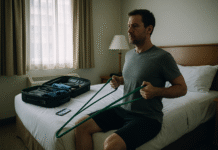
- Keep a “break basket” (band, ball, eye mask) at arm’s reach.
Synthesis: make low-stimulation breaks your default; your attention will thank you.
11. Plan vacations and mini-sabbaths—and don’t work during them
Downtime scales: daily breaks, weekly leisure, and periodic vacations. Evidence links time off with higher well-being and performance, but the gains fade if you work on vacation. Plan quarterly long weekends plus one longer trip if you can. Set coverage, turn on autoresponders with clear points of contact, and delete work apps temporarily if possible. Back home, ease the re-entry with a half-day buffer to sort admin rather than grinding late the night before.
Evidence snapshot
- Cross-sectional physician data: fewer vacation days and working while on vacation correlate with higher burnout; full inbox coverage helps.
- HBR reports adding vacation time correlated with year-end performance gains in an Ernst & Young analysis; broader advice: take and truly detach.
- APA notes vacations recharge workers, though some effects are short-lived—another reason to take breaks regularly. American Psychological Association
How to do it
- Book dates at quarter start; protect them in shared calendars.
- Pre-vacation: hand off responsibilities; set “no-work” boundaries in writing.
- Post-vacation: keep first morning meeting-free; triage, then re-attach.
Synthesis: the break only works if you actually break—plan coverage so you can fully unplug.
12. Measure, iterate, and personalize your break plan
There’s no single perfect ratio—tasks, bodies, and seasons differ. Treat your plan like a product: instrument it, review it, and adjust. Pick a few KPIs: break adherence rate, afternoon error rate, self-rated energy (1–10), discomfort score (neck/back/eyes), and output quality proxies (e.g., review edits, defect counts). Pilot one pattern per week (e.g., 52/17 vs. 75/10), then keep what measurably helps. If you lead a team, run experiments openly so norms shift together (e.g., a no-meeting 12:30–1:30 lunch window).
What to track (two-week sprints)
- Energy at 11 a.m., 3 p.m., 6 p.m.
- Break adherence (% of planned breaks taken).
- Discomfort (0–10 for eyes/neck/back).
- Quality (bugs/rewrites) & throughput.
Evidence-informed mindset
- Microbreak meta-analyses suggest benefits vary by task and break type—all the more reason to test systematically.
Synthesis: personalize, don’t mythologize—use data to make recovery your competitive edge.
FAQs
1) What’s the fastest way to start if my day is chaos?
Begin with one safeguard: schedule hourly 3–5-minute microbreaks and a protected 20-minute lunch away from your screen. Add a single 90-minute focus block early when interruptions are lower. After three days, insert meeting buffers (25/50-minute settings). Anchoring a few fixed points creates breathing room for everything else.
2) Are 52/17 breaks “scientific” or just anecdotal?
They’re observational, drawn from top users’ behavior in a large tracking dataset—not a randomized trial. Still, they align with ultradian principles (60–90 minutes of high focus followed by a dip) and are a practical prototype to test. Keep what improves your own energy and output. The AtlanticAsian Efficiency
3) Do microbreaks hurt productivity?
Not when used strategically. NIOSH found short, spaced breaks reduced discomfort without reducing productivity, and meta-analytic evidence shows well-being gains and potential performance benefits depending on task. The small time cost is often repaid in steadier attention.
4) How long should a power nap be?
Aim for 10–20 minutes to avoid sleep inertia; schedule it early afternoon. NASA data with pilots showed a 26-minute nap boosted alertness (≈54%) and performance (≈34%). Test shorter or slightly longer within that window to find your sweet spot.
5) I stare at screens all day—what helps my eyes?
Use 20-20-20 (every 20 minutes, look ~20 feet away for 20 seconds), pair with hourly 5-minute posture and blink breaks, and elevate your display to eye level. The CDC explicitly recommends 20-20-20 for near-work eye strain.
6) How do I avoid back-to-back meeting fatigue?
Turn on speedy meetings (auto-buffers), batch similar topics, and insert a 90-second reset (stand, breathe, look far). Microsoft EEG work shows breaks reduce the stress build-up across consecutive meetings and improve attention.
7) Is it better to relax passively or do a challenging hobby?
Both matter. Recovery science points to detachment, relaxation, mastery, and control; that means a mix of low-demand rest and skillful leisure. Schedule one short mastery block weekly (music, crafts, sport) alongside daily microbreaks.
8) Can lunchtime walks really change my afternoon?
Yes—controlled studies show lunchtime park walks (or guided relaxation) improve end-of-day concentration and well-being, with enjoyment mediating the effect. Even 15 minutes helps. High Performance Routines
9) Do breaks actually help creativity?
For idea generation, low-demand breaks that allow mind-wandering can improve creative problem-solving, and brain imaging links creativity with default network dynamics at rest. Interleave hard focus with simple, non-screen tasks.
10) What’s the right cadence for vacations?
Plan regular time off (e.g., a long weekend each quarter plus a longer break) and don’t work during it. Data links more time off and not working on vacation with lower burnout and improved performance.
11) My job is customer-facing—are microbreaks realistic?
Yes, but think rotations: 2–3 minutes between customers to stretch and look far; a 10-minute buffer each hour for documentation and posture resets; staggered coverage with teammates. Even small, predictable resets reduce strain without impacting service. Evidence favors short, spaced breaks for musculoskeletal comfort. PMC
12) How do I know if my plan is working?
Track simple signals for two weeks: energy at 3 p.m., break adherence, discomfort scores, and a quality proxy (edits/defects). Keep the pattern that improves two or more metrics. Meta-analytic findings suggest effects vary—so personalize.
Conclusion
High output is a rhythm, not a grind. When you schedule breaks and leisure, you’re designing that rhythm: 60–90-minute focus cycles with built-in microbreaks; a real lunch that restores; 5–10-minute buffers between meetings; short, early afternoon naps when needed; and weekly leisure that challenges you in good ways. The research throughlines are clear: short, strategic rests protect attention and comfort; psychological detachment preserves mental health; device-light breaks reset your system; and periodic vacations matter—especially when you don’t work during them. The details (52/17 vs. 75/10, walks vs. relaxation, hobby choice) are personal. So treat your plan as an experiment: instrument it, iterate weekly, and keep what measurably helps. Start today by adding hourly microbreaks, one lunchtime walk, and meeting buffers—then layer in the rest. Block your next break now; future-you will deliver better because of it.
References
- “Give me a break!” A systematic review and meta-analysis on the efficacy of micro-breaks for increasing well-being and performance, Frontiers in Psychology (Albulescu et al.), 2022. PMC
- Strategic Rest Breaks Reduce VDT Discomforts Without Impairing Productivity, NIOSH Update, May 22, 2000; plus NIOSH WFH ergonomics blog, Nov 20, 2020. ; CDC ArchiveCDC Blogs
- Preventing Vision Loss: Give your eyes a rest (20-20-20 rule), CDC, May 15, 2024. CDC
- NASA Nap: How to Power Nap Like an Astronaut (summary of 1995 NASA findings), Sleep Foundation, Oct 27, 2023. Sleep Foundation
- Fatigue Management materials (nap benefits overview), NASA Technical Reports Server, 2019. NASA Technical Reports Server
- Enhancing Daily Well-Being at Work Through Lunchtime Park Walks and Relaxation Exercises, Journal of Occupational Health Psychology (Sianoja et al.), 2018. PubMed
- Inspired by Distraction: Mind Wandering Facilitates Creative Incubation, Psychological Science (Baird et al.), 2012 (PDF). cmhp.ucsb.edu
- Creativity and the Default Network: A Functional Connectivity Analysis of the Creative Brain at Rest, Neuropsychologia (Beaty et al.), 2014. PMC
- The Recovery Experience Questionnaire: Development and Validation (Detachment, Relaxation, Mastery, Control), Journal of Occupational Health Psychology (Sonnentag & Fritz), 2007. ; PubMed record: kops.uni-konstanz.dePubMed
- Research Proves Your Brain Needs Breaks, Microsoft WorkLab (EEG/meeting-fatigue insights), 2021. Microsoft
- How to Take Better Breaks at Work, According to Research, Harvard Business Review, May 31, 2023. Harvard Business Review
- Vacation Days Taken, Work During Vacation, and Burnout Among U.S. Physicians, JAMA Network Open (Sinsky et al.), 2024. PMC
- How Taking a Vacation Improves Your Well-Being, Harvard Business Review, July 19, 2023. Harvard Business Review
- Does the 52-17 rule really hold up? DeskTime Blog, Oct 3, 2024. DeskTime