














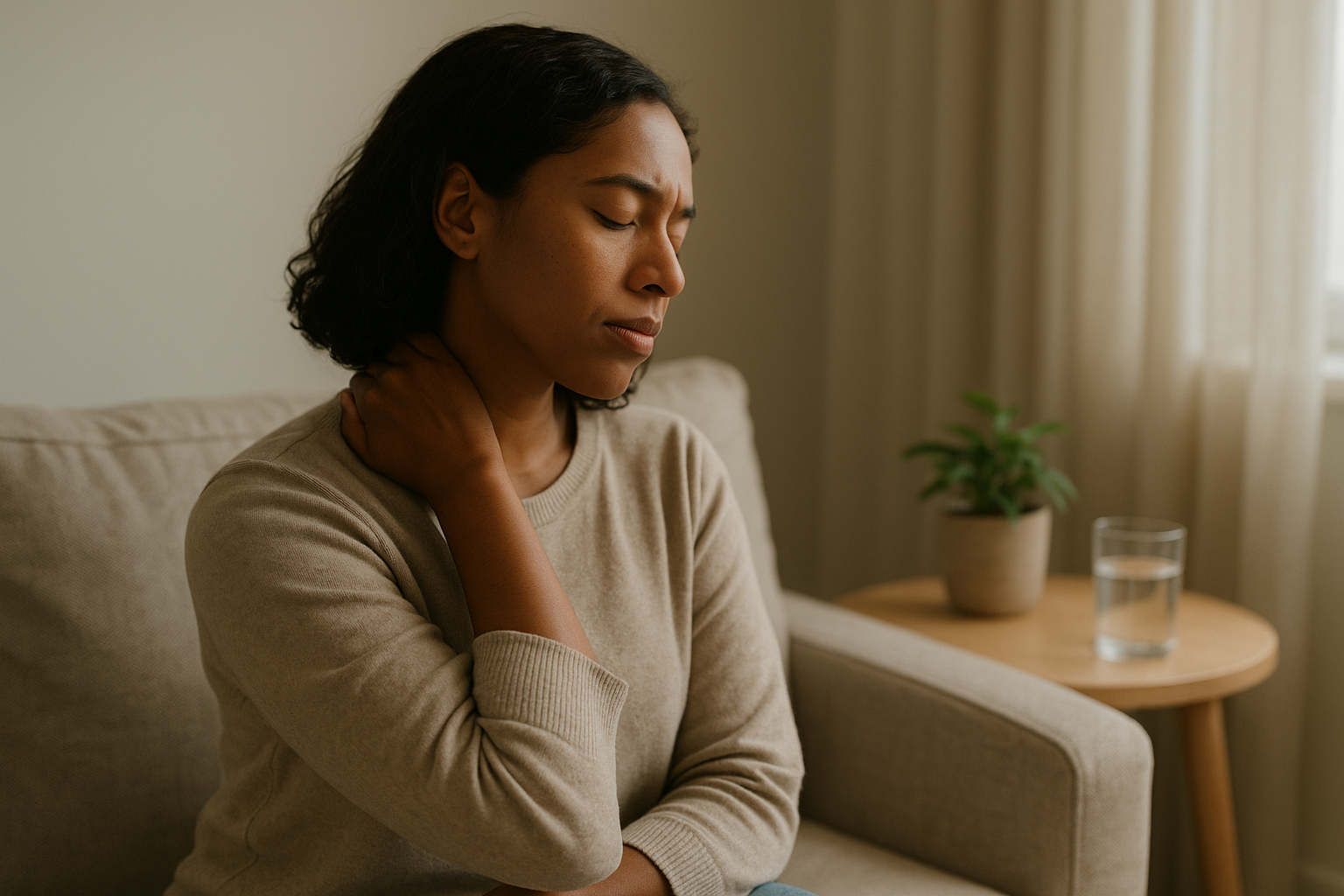
Stress shows up in your body—tight shoulders, clenched jaw, a buzzing mind. The fastest way to interrupt that loop is often through your own hands. This guide teaches 12 self-massage techniques for stress relief you can do at home, at work, or on the go, each in 5–10 minutes with no special skills. You’ll learn exactly where to press, how hard (a comfortable 3–6 out of 10), how long (30–60 seconds per spot), and how to pair touch with breathing to calm your nervous system. Brief note: this information is educational and not a substitute for medical care; if you have an injury, numbness, circulatory issues, uncontrolled blood pressure, or are pregnant, check with a clinician before trying new techniques.
Quick answer: Self-massage uses steady, moderate pressure and slow strokes to relax overworked muscles and signal your parasympathetic (“rest-and-digest”) system. For any area, find a tender point, hold gentle pressure (not sharp pain) for 30–60 seconds while breathing slowly, then sweep outward to finish.
Fast-start steps (2 minutes): Wash your hands; sit somewhere supported; set a timer for 5–10 minutes; apply a small amount of lotion or use dry hands; breathe in through your nose for ~4–6 seconds and out for ~6–8 seconds; keep pressure at a “good hurt” (never more than 6/10); stop if pain is sharp, radiates, or causes dizziness/tingling.
1. Upper Trapezius & Neck Release (Desk-Stress Reset)
The upper trapezius and levator scapulae are classic stress sponges—hunched shoulders, screen time, and clenching all collect here. To release them quickly, anchor the muscle between your fingers and the bony top of your shoulder, then apply slow, tolerable pressure while you breathe. Start each side by gently turning your head away to elongate the muscle; this simple setup makes the work more effective and safer. Within 1–2 minutes, you should feel warmth spreading across the shoulder and the heavy “helmet” feeling begin to lift. Keep the pressure moderate; nerves and blood vessels run in the front of the neck, so stay on the muscley ridge on top of your shoulder, not the throat. If you feel pins and needles down your arm, ease up or stop.
How to do it (2–4 minutes)
- Place the opposite hand on the top of your shoulder; pinch or press into the thick ridge of muscle (upper traps).
- Turn your head slightly away and tip the ear toward the opposite shoulder to lengthen the tissue.
- Hold 30–45 seconds on a tender spot while breathing slowly (4–6 breaths), then glide outward toward the shoulder tip.
- Move to the next spot (usually 2–3 per side). Repeat on the other side.
- Finish with broad “sweeps” from neck to shoulder 5–8 times.
Numbers & guardrails
- Intensity: 3–6/10 (“good ache,” not sharp).
- Dosage: 2–3 minutes per side, up to 2×/day on tense days.
- Avoid: front of neck/carotid, recent injury, severe headaches with neurological symptoms.
Synthesis: When you pair moderate pressure with slow nasal breaths, your neck muscles soften and your nervous system downshifts, making this a reliable micro-break between meetings.
2. Jaw & Temple De-Stress (TMJ Soother)
Jaw clenching is a common stress reflex—many people grind at night or brace during the day. Releasing the masseter (cheek), temporalis (temple), and suboccipitals (base of skull) eases facial tension, reduces temple pressure, and often softens headache intensity. The key is feather-light contact first (skin glide), then gradual pressure that never crosses 5–6/10; jaw muscles are small and can feel tender fast. Keep your teeth slightly apart and tongue on the roof of the mouth; this “resting” position reduces clench. Expect a sense of warmth, sometimes a yawn, and easier swallowing—signs you’ve tapped the parasympathetic response.
How to do it (3–5 minutes)
- Masseter: Place fingertips on the thick muscle in your cheek (between cheekbone and jawline). Press gently inward and upward; hold 20–30 seconds per point, 2–3 points per side.
- Temporalis: Use fingertips to make slow circles along the temple and hairline; hold at tender spots for 20–30 seconds.
- Suboccipitals: Interlace fingers behind your head; rest the ridge of your skull on your knuckles; nod slowly “yes” for 5–8 small movements.
Common mistakes
- Pressing too hard (creates rebound clench).
- Working on the front of the throat (avoid).
- Ignoring posture: drop shoulders and lengthen the back of your neck as you work.
Synthesis: Gentle work along the jaw-temple-skull base triangle can break the clench cycle and cue a whole-body exhale in under five minutes.
3. Scalp & Brow Sweep (Screen-Head Relief)
Scalp massage isn’t only for shampoo ads; it stimulates superficial nerves, boosts local blood flow, and helps downshift a busy mind. For stress relief, combine large, slow scalp sweeps with specific pressure at the brow ridge where eye muscles attach. This reduces “screen squint,” eases forehead tension, and promotes a pleasant, sleepy heaviness. Keep nails short or use the flats of your fingers; if you prefer, a blunt-ended comb works well for even pressure. Expect a spreading warmth and softer focus after 2–3 minutes.
How to do it (3–4 minutes)
- Place fingertips at your hairline; drag firmly but comfortably toward the crown in slow strokes (5–8 sweeps).
- Make small circles over the top and sides of your scalp; pause where it feels ropey or tender.
- For brows: press along the brow bone from inner to outer corner in 3–4 slow steps, holding 10–15 seconds per spot.
Mini-checklist
- Breathe out longer than you breathe in.
- Soften your jaw and unfurrow your brow as you press.
- Finish with a gentle ear tug (lobes downward) to signal “done.”
Synthesis: By easing eye and scalp tension, you reduce the body’s “on-alert” signals—perfect before bed or after long screen sessions.
4. Forearm & Hand Reset (Keyboard Recovery + LI4 Option)
Forearm flexors and extensors tighten with typing, scrolling, and lifting—tension that feeds neck and shoulder stress. A short sequence on your forearms and palms eases that upstream pull and gives immediate hand-lightness. You can optionally add LI4 (the fleshy web between thumb and index finger), a traditional point many people find calming; if you’re pregnant, skip LI4 out of caution. Expect relief to echo up into your elbows and shoulders.
How to do it (4–6 minutes)
- Forearm sweep: With opposite thumb, glide from wrist to elbow along the inner forearm 6–8 times, then the outer forearm 6–8 times.
- Thumb rolls: Press small circles into tender strips along the forearm; hold 20–30 seconds per spot (3–4 spots).
- Palm release: Use your thumb to press across your palm from heel to fingers, especially the base of the thumb (thenar) and little finger (hypothenar).
- Optional LI4: Press the web between thumb and index finger; hold 30–60 seconds while exhaling slowly.
Numbers & guardrails
- Intensity: 3–5/10.
- Dosage: once or twice daily on high-use days.
- Avoid: LI4 during pregnancy; stop if you feel tingling/numbness into the fingers.
Synthesis: Freeing the hands and forearms often lightens the whole shoulder girdle—ideal for desk workers or anyone gripping tools.
5. Foot & Plantar Fascia Roll (Grounding Calm)
Feet are rich with sensory receptors; relaxing them sends a surprisingly strong “all clear” upstream. A simple ball roll releases the plantar fascia and small muscles, easing calf tension and promoting whole-body calm. Choose a tennis ball for gentler pressure or a firm mobility ball for deeper work. You should feel mild achiness at first, then warmth and a relaxed, grounded stance. If you stand all day, expect quick wins here.
How to do it (3–5 minutes)
- Sit or stand with one foot on a ball.
- Roll slowly from heel to toes for 60–90 seconds.
- Pause on tender spots (not sharp pain) for 20–30 seconds, especially near the arch and heel.
- Finish with light sweeping strokes from toes to heel 8–10 times.
Common mistakes
- Going too hard on the heel (be gentle near the plantar fascia attachment).
- Rolling fast (nervous system prefers slow input).
- Skipping calves—follow up with 30 seconds of calf strokes.
Synthesis: Calming the “floor” of your posture takes stress off everything above; it’s a compact routine you can do while brushing your teeth.
6. Calf & Hamstring Release (Lower-Body Unwind)
Tight calves and hamstrings silently turn up the volume on back and neck tension by altering posture. A short self-massage—using your hands, a rolled towel, or a foam roller—reduces that pull and invites broader relaxation. This is less about crushing tissue and more about sustained, tolerable pressure with slow breathing. Expect legs to feel warmer and steps lighter.
How to do it (4–6 minutes)
- Calves: Sit with one ankle over the opposite knee. Use both thumbs to press along the outer and inner calf in 3–4 lanes; hold each tender spot 20–30 seconds.
- Hamstrings: Sit on the edge of a chair; place a rolled towel under one thigh; gently rock your leg over the towel for 1–2 minutes.
- Foam roller option: Slowly roll 10–15 cm at a time; pause and breathe at tender points (no rapid “sawing”).
Numbers & guardrails
- Intensity: 3–5/10.
- Dosage: 2–3 minutes per muscle group.
- Avoid: varicose veins, suspected DVT, or unexplained swelling; if present, skip massage and seek medical advice.
Synthesis: Loosening the back line of your legs pays dividends up the chain—your back and neck often exhale after this circuit.
7. Chest (Pec Minor) & Front-Shoulder Opener (Un-Huncher)
Stress rounds us forward—phones, laptops, worry. Short pec muscles pull the shoulders in and the head forward, amplifying neck strain. Releasing the small but powerful pec minor where it tethers to your ribs helps your shoulders drop back naturally. A lacrosse/tennis ball against a wall makes this technique easy and precise. Keep pressure below the collarbone and away from the center of your chest.
How to do it (3–5 minutes)
- Stand at a wall; place a ball just below your collarbone, a few centimeters from the shoulder.
- Lean in gently; make micro-circles or hold steady pressure 20–30 seconds on tender spots.
- Sweep outward toward the shoulder 6–8 times, then repeat 2–3 spots.
- Finish with 5 slow shoulder rolls backward.
Mini-checklist
- Breathe low and slow; keep ribs soft, not flared.
- Stay off the bony sternum and avoid deep pressure near the armpit.
- If you feel tingling down the arm, reduce pressure or shift the ball.
Synthesis: Freeing the front of the shoulder lets the back muscles work less; your posture opens and breathing gets easier.
8. Belly Circles + Diaphragm Soften (Nervous System Downshift)
Your diaphragm is both a breathing muscle and a stress barometer. Gentle abdominal massage—especially clockwise circles following digestion—and a soft contact under the ribcage can reduce guarding and invite slower breathing. This is subtle work: feather-light pressure, slow rhythm, and extra care if you have any abdominal conditions. Many people notice a calming sigh or belly warmth as the diaphragm lets go.
How to do it (4–6 minutes)
- Lie down with knees bent; place one hand over your navel.
- Make slow, clockwise circles (right → up → left → down) for 2–3 minutes, staying superficial.
- Slide fingers just under the lower right rib edge; exhale and let your fingers sink slightly; hold 5–10 seconds; repeat across to the left in 3–4 spots.
- Finish with 6–8 belly-wide sweeps from ribs to pelvis.
Numbers & guardrails
- Intensity: 2–4/10 (very gentle).
- Dosage: once daily in the evening or after meals (skip if uncomfortable).
- Avoid: pregnancy (seek prenatal guidance), recent surgery, hernia, or abdominal pain of unknown cause.
Synthesis: When the belly softens and the diaphragm glides, the vagal “rest” signal gets louder—translating to a calmer mind.
9. Inner-Wrist P6 (Neiguan) Acupressure (Calm Cue)
P6 lies about three finger-widths below your palm on the inner wrist, between two tendons. Pressing here is a simple, portable way many people use to ease queasiness and anxiety and to prompt slower breathing. You can use your thumb or a wristband-style button. Expect a soothing, centering sensation within a minute or two. This point is widely used for nausea; for stress, keep expectations modest and focus on the breathing cadence.
How to do it (2–3 minutes)
- Turn your palm up; measure three finger-widths below the wrist crease; locate the gap between the two central tendons.
- Press straight down with the opposite thumb until you feel a comfortable ache; hold 60–90 seconds while exhaling longer than you inhale.
- Switch wrists and repeat.
Numbers & guardrails
- Intensity: ~3–4/10.
- Dosage: up to 3×/day or as a quick calm cue before a meeting or bedtime.
- Avoid: open skin; if pregnant, ask your clinician before using acupressure points.
Synthesis: P6 is a pocket-sized tool—pair it with slow exhalations to nudge your system from “fight-or-flight” to “rest-and-digest.”
10. Ear (Auricular) Acupressure (Tiny Points, Big Quiet)
Your ears host dozens of reflex points tied via nerves to the brainstem—gentle stimulation can feel surprisingly calming. You can simply massage the ear by hand or place tiny “ear seeds” (small beads on tape) at specific calming points for several days, massaging them gently 2–3×/day. Evidence is evolving; many people report reduced anxiety and better sleep with regular use. Keep pressure very light—ears bruise easily.
How to do it (3–5 minutes)
- Warm-up: rub both ears between your fingers from top to lobes 10–15 seconds.
- Press and hold the triangular fossa (shallow area above the ear canal) and the ear “relaxation” point for 20–30 seconds each.
- Optional ear seeds: clean the area; place seeds over calming points; press gently for 5–10 seconds, 2–3×/day; remove after 3–5 days.
Mini-checklist
- Keep tape dry; stop if skin gets irritated.
- If you’re pregnant or have skin issues, consult a professional.
- Use gentle, mindful pressure—no digging.
Synthesis: Auricular work is minimalist but potent for many; it pairs beautifully with pre-sleep breathing.
11. Suboccipital & Occipital Base Melt (Head-to-Toe Exhale)
Where your skull meets your neck is a traffic circle for tension and nerves. Soft pressure here eases head heaviness, eye strain, and the sense of “always on.” You can use your fingertips, two tennis balls in a sock, or a small massage cradle. The goal is stillness with breath—not rolling. Expect a spreading warmth behind the eyes and easier neck rotation afterward.
How to do it (3–5 minutes)
- Lie on your back; place two tennis balls in a sock under the ridge at the base of your skull (not on the neck muscles).
- Keep your chin slightly tucked; let your head rest into the balls; breathe slowly for 60–90 seconds.
- Gently nod “yes” 5–8 micro-movements; rest again for 30–60 seconds.
Common mistakes
- Placing pressure too low (on neck muscles) or too hard (causes guarding).
- Holding breath—keep exhalations long and unhurried.
- Rushing; stillness is the technique.
Synthesis: A few quiet minutes under the skull base often flips the body’s internal dimmer switch toward calm.
12. Whole-Arm & Leg Effleurage (Two-Minute Full-Body Reset)
When you’re short on time, broad, rhythmic strokes down the limbs offer a quick full-body “reset.” Light-to-moderate pressure in long lines recruits skin and superficial fascia receptors that signal safety and help shift your autonomic balance. It’s simple: think painting the arm or leg from top to bottom with your palm. This is ideal before bed or between tasks.
How to do it (2–4 minutes)
- Arms: From shoulder to wrist, sweep with a flat palm 8–10 times per arm, overlapping slightly; finish with gentle wrist circles.
- Legs: From hip to ankle, sweep 8–10 times per leg; follow with light calf squeezes.
- Pair every stroke with a slow exhale (6–8 seconds).
Numbers & guardrails
- Intensity: 2–4/10.
- Dosage: as often as needed; especially useful after stressful calls or before sleep.
- Avoid: open wounds, skin infections, or areas of numbness.
Synthesis: Effleurage is your “anywhere” option—no tools, no setup, just rhythm, breath, and a noticeably quieter body.
FAQs
1) How hard should I press during self-massage?
Aim for a “good ache” of about 3–6 out of 10—never sharp, burning, or electric. If you grimace, hold your breath, or feel tingling, you’re too deep. Gentle, sustained pressure paired with slow exhalations is more effective for stress than aggressive digging. Your benchmark: you could comfortably maintain the pressure for 30–60 seconds while speaking in full sentences.
2) How long does a session need to be to feel calmer?
Most people notice a shift within 2–5 minutes on one area, especially when they extend exhalations (6–8 seconds). For a fuller reset, stack two techniques back-to-back for 8–10 minutes. If you’re using a ball or roller, spend 20–30 seconds per tender spot and finish with broad strokes to tell your system “all clear.”
3) Can self-massage make stress worse?
If you press too hard or chase pain, the body may guard and increase tension. Keep intensity moderate, breathe slowly, and avoid areas that feel nervy (zappy, tingling). Overworking one sore spot can backfire; move on after 60 seconds and return later. If relaxation eludes you, combine touch with guided breathing or a short walk.
4) Which tools are worth buying?
You can do everything here with your hands and a tennis ball. Useful extras include a firmer mobility ball, a foam roller, or a small massage cradle for the skull base. Wrist acupressure bands can hold P6 pressure during travel. Skip spiky gadgets unless you enjoy them—results come from consistency and breathing, not sharpness.
5) Is self-massage safe during pregnancy?
Gentle broad strokes to the neck, shoulders, feet, and legs are often fine, but certain pressure points (for example, LI4 on the hand and SP6 near the inner ankle) are traditionally avoided because they may stimulate uterine activity. Avoid deep leg work if you have varicose veins or swelling. When in doubt, consult a prenatal-trained professional.
6) How often should I do these techniques?
Daily brief sessions work best—think 5–10 minutes in the evening and 1–2 two-minute “resets” during the day. Muscles respond to regular, gentle input. If an area stays sore beyond 48–72 hours or pain spreads, reduce frequency and intensity and consider a professional assessment.
7) Will self-massage help my sleep?
Yes, especially when you target jaw/temples, P6 on the wrist, and the skull base, all while slowing your breath. Even one session of slow breathing can improve markers of parasympathetic activity and reduce state anxiety in some people. Treat these techniques as complements to sleep hygiene (dark room, cool temperature, consistent schedule).
8) What breathing pattern should I pair with massage?
Try 4–6 seconds in through the nose and 6–8 seconds out, relaxed belly. Longer, unforced exhalations tend to cue the “rest-and-digest” response. If counting feels busy, simply breathe quietly through your nose and imagine your ribs widening on inhale and softening on exhale.
9) When should I stop and seek care?
Stop if you feel sharp pain, numbness, dizziness, unusual swelling, fever, or if symptoms follow trauma. Ongoing or worsening pain, headaches with neurological signs, jaw locking, or neck pain with arm weakness deserve prompt medical evaluation. Self-massage should reduce tension, not provoke symptoms.
10) Do I need lotion or oil?
Not required. Dry techniques give more grip for precise pressure (upper traps, jaw). A tiny amount of lotion helps for sweeping strokes (arms, legs). Avoid heavy oils on the face and hands during the day; they can make tools slippery and reduce control.
11) Are there risks with foam rolling for stress relief?
Foam rolling can feel good and improve mobility, but faster, aggressive rolling may ramp you up. For stress, keep movements slow, pause on tender points, and limit sessions to a few minutes. Avoid rolling directly on bones, joints, or the low back without guidance.
12) Can I combine these with heat or cold?
Yes. Many people like 5–10 minutes of gentle heat on the neck or lower back before massaging to soften tissue. Cold may help acute soreness for short periods but can feel alerting; reserve it for discomfort rather than relaxation. Always protect your skin and avoid extremes.
Conclusion
Stress relief you can control is powerful. With 12 simple self-massage techniques, you have a practical, repeatable way to soften muscle tension and send your nervous system a clear “you’re safe” message. The formula is consistent: choose an area, keep pressure in the 3–6/10 zone, breathe out longer than you breathe in, and finish with broad strokes. Small, regular sessions are more effective than occasional, intense bouts. Layer these with good sleep habits, movement breaks, and hydration, and you’ll notice not just looser muscles but steadier mood and focus. If pain persists or spreads, partner with a licensed clinician—your body’s signals deserve attention. Ready to feel lighter? Pick one technique and practice it tonight.
CTA: Save this guide, set a 5-minute timer, and try items 1 (neck) and 2 (jaw) right now—your shoulders will thank you.
References
- Massage Therapy for Health (NCCIH Clinical Digest), National Center for Complementary and Integrative Health, December 2018. https://www.nccih.nih.gov/health/providers/digest/massage-therapy-for-health
- Relaxation techniques: Try these steps to lower stress, Mayo Clinic, January 24, 2024. https://www.mayoclinic.org/healthy-lifestyle/stress-management/in-depth/relaxation-technique/art-20045368
- What Is Acupressure? How It Works, Cleveland Clinic Health Essentials, January 30, 2025. https://health.clevelandclinic.org/acupressure-points
- Hanley J., et al. Randomised controlled trial of therapeutic massage in the management of stress. JR Soc Med, 2003. https://pmc.ncbi.nlm.nih.gov/articles/PMC1314487/
- Monson E., et al. Acupressure Impact on Self-Rated Pain and Anxiety Scores, J Altern Complement Med, 2019. https://www.liebertpub.com/doi/10.1089/acm.2018.0422
- Abbott R., et al. The Self-Acupressure for Stress (SAS) Trial, Complement Ther Med, 2023. https://pmc.ncbi.nlm.nih.gov/articles/PMC10732584/
- Therapeutic massage for pain relief, Harvard Health Publishing, 2016. https://www.health.harvard.edu/therapeutic-massage-for-pain-relief
- Baek J.Y., et al. Clinical effects of using a massage chair on stress biomarkers, Complement Ther Clin Pract, 2022. https://www.sciencedirect.com/science/article/pii/S0965229922000279
- Peng Z., et al. Acupressure: a possible therapeutic strategy for anxiety—systematic review of RCTs, Frontiers in Medicine, 2024. https://www.frontiersin.org/articles/10.3389/fmed.2024.1341072/full
- Carr D., et al. The safety of obstetric acupuncture: forbidden points revisited, Acupunct Med, 2015. https://pmc.ncbi.nlm.nih.gov/articles/PMC4680134/
- Fincham G.W., et al. Effect of breathwork on stress and mental health: a meta-analysis, Scientific Reports, 2023. https://www.nature.com/articles/s41598-022-27247-y
- Massage Therapy Can Relieve Stress (Position Statement), American Massage Therapy Association, 2022. https://www.amtamassage.org/about/position-statements/massage-therapy-can-relieve-stress/