

























Losing weight is easier to start than to sustain, and the difference usually comes down to the goals you set on day one. This guide shows you how to pick a safe pace, translate that target into daily actions, and build a simple tracking system that keeps you honest without stealing your joy. It’s written for anyone who wants results that last—whether you’re beginning your first cut or returning after a break. In one line: realistic weight loss goals aim for roughly 0.25–1% of body weight lost per week and focus on behaviors you can repeat for months. Below is a quick snapshot of the 9 steps you’ll use: pick a safe rate, confirm your baseline, choose a modest deficit, pair scale targets with habits, make goals SMARTER, plan for plateaus, track with intention, shape your environment, and schedule milestones and maintenance.
Medical note: This article is educational, not medical advice. If you have a condition (e.g., diabetes, thyroid disease, eating disorder history, pregnancy/postpartum) or take medications that affect weight, speak with a qualified clinician before making changes.
1. Choose a Safe, Specific Pace of Loss
Set the rate first: 0.25–1% of current body weight per week is a sustainable range for most healthy adults. That means a 90 kg person could target ~0.2–0.9 kg (0.5–2.0 lb) per week. Picking your pace early prevents extremes that backfire—overly aggressive timelines raise hunger, stress, and dropout risk; too slow and motivation fades. Anchor your pace to your real life: high travel, Ramadan, wedding season, exam periods, or sports seasons may push you to the lower end (0.25–0.5%). A shorter, focused timeframe (e.g., an 8–12 week cut) might support the middle (0.5–0.75%) if sleep and training are stable.
1.1 Why it matters
A defined rate sets expectations for the scale’s natural noise. It keeps you from panicking after a salty meal or a heavy leg day, when water retention can mask fat loss. It also clarifies the math: a 0.5 kg/week target implies ~500 kcal/day average deficit, but your day-to-day intake can flex as long as the weekly average holds.
1.2 Numbers & guardrails
- Lower end (gentle): 0.25–0.5%/week if you’re new, busy, or prioritizing performance.
- Middle (balanced): 0.5–0.75%/week for most.
- Upper end (short-term): up to ~1%/week if protein, sleep, and resistance training are dialed.
1.3 Mini-checklist
- Write your current weight and compute the weekly target range.
- Circle the pace you can maintain for 12–16 weeks.
- Note any high-stress dates that suggest a gentler pace.
Bottom line: pick a pace you can live with; consistency beats ambition.
2. Confirm Your Baseline: Maintenance Calories (TDEE)
Before cutting, find your maintenance—the intake that holds your weight steady. Calculators give a starting estimate, but your real-world average over 10–14 days—same scale, similar conditions—matters more. Track morning weight (3–7 times/week), log typical eating without “being good,” and note steps/training/sleep. If your weight holds within ~0.25–0.5% across two weeks, you’ve found maintenance. If it drifts, adjust your estimate by ~100–150 kcal and repeat until stable.
2.1 How to do it
- Use a TDEE calculator to get an estimate; record it.
- Eat normally for 10–14 days, logging intake with a simple app.
- Weigh in after using the bathroom, before food; average weekly.
- If average weight trends up, reduce assumed maintenance ~100–150 kcal; if down, increase similarly.
2.2 Tools/Examples
- Food logging apps, digital kitchen scale, smartwatch step count.
- Example: Sara (72 kg) estimates 2,100 kcal/day. Two weeks later her average weight is unchanged—maintenance confirmed.
2.3 Common mistakes
- “Dieting while testing”: eating less because you’re tracking.
- Ignoring steps or strength training changes that swing maintenance.
- Overreacting to one reading instead of weekly averages.
Bottom line: a solid maintenance anchor makes later adjustments precise instead of guesswork.
3. Create a Modest Deficit and Set Nutrition Anchors
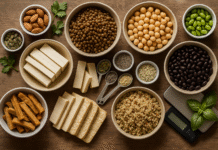
After establishing maintenance, choose a modest calorie deficit—for most, 300–500 kcal/day on average. This supports energy, training, and sanity. Rather than micromanaging every bite, set anchors: protein, fiber, and meal structure. Many do well with 1.2–1.6 g protein/kg body weight/day, 25–35 g fiber/day (or 14 g per 1,000 kcal), and 2–4 structured meals that include a lean protein, produce, and a slow-digesting carb or healthy fat.
3.1 How to do it
- Subtract 300–500 kcal from your validated maintenance.
- Plan protein first; distribute across meals (e.g., 25–40 g/meal).
- Fill the plate: half vegetables, a quarter protein, a quarter starch/whole grains, plus a thumb of oil/nuts.
- Hydrate: 30–35 ml/kg/day as a rough starting point.
- Limit ultra-processed “calorie leaks” to a conscious budget.
3.2 Numbers & guardrails
- If hunger, fatigue, or training quality tanks for >1 week, raise calories by ~100–150/day or add a rest day.
- Higher-body-weight beginners may see faster early losses from water/glycogen; evaluate trends over 2–4 weeks, not days.
3.3 Mini case
- Imran (95 kg) maintains at ~2,600 kcal. He sets a 500 kcal deficit and 140 g protein/day (≈1.5 g/kg). After 3 weeks, he’s losing ~0.7 kg/week, hunger is tolerable—keep going.
Bottom line: small, steady deficits paired with protein/fiber guardrails beat crash diets every time.
4. Pair Scale Targets with Behavior Goals
The scale is lagging feedback; behaviors are instant. To stay on track, set behavior goals that drive fat loss even when weight stalls: steps, strength training, sleep, and meal planning. Good behavior goals are binary (done/not done), within your control, and measurable today.
4.1 What to track
- Steps: a practical band is 7,000–12,000/day; choose a sustainable floor (e.g., 8,000+).
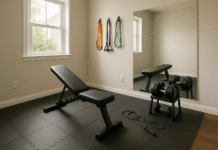
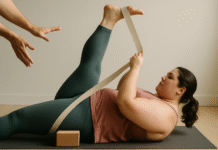
- Strength training: 2–3 sessions/week emphasizing compound lifts (squat, hinge, push, pull).
- Sleep: 7–9 hours/night; protect consistent bed/wake windows.
- Meal planning: pick 2–3 anchor meals you can repeat on busy days.
4.2 How to do it
- Convert your weight goal into weekly behavior targets (e.g., “3 lifts + 70,000 steps + 2 planned dinners”).
- Use a visible habit tracker—calendar ticks or a simple spreadsheet.
- Apply habit stacking: attach the new behavior to a cue (after morning tea → 10-minute walk).
4.3 Common mistakes
- Chasing cardio while neglecting strength (muscle is your metabolic ally).
- Setting vague goals like “eat better.”
- Letting weekend routines erase weekday progress.
Bottom line: make behaviors the scoreboard; fat loss follows.
5. Make Goals SMARTER (and Kind)
Use the SMARTER framework so goals are clear and adjustable: Specific, Measurable, Achievable, Relevant, Time-bound, Evaluated, Readjusted. Add one more R—Real-life. Your best plan fits your culture, family routine, budget, and taste. Goals without context become guilt traps; goals with context become autopilot.
5.1 Example conversion
- Vague: “Lose weight soon.”
- SMARTER: “Lose 6 kg in 12 weeks (≈0.5 kg/week) by averaging 2,000 kcal/day, 140 g protein, 8,500 steps/day, and lifting M-W-F. Review progress every second Sunday; adjust targets by ±10% if the 2-week average weight trend misses range.”
5.2 Mini-checklist
- Specific: numbers for weight, calories, steps, sessions, and dates.
- Achievable: matches your busiest week, not your best week.
- Evaluated/Readjusted: scheduled reviews; no improvising when tired.
- Real-life fit: foods you actually eat (e.g., chapati, dal, grilled chicken), social plans accounted for.
5.3 Guardrails
- Cap total weekly change goals (diet + activity) to what you can still sleep through and recover from.
- Use floor/ceiling rules: never below 1,600–1,800 kcal/day for most average-sized adults unless supervised; never above a step goal that breaks your schedule.
Bottom line: SMARTER goals give you clarity on good days and a script on hard days.
6. Plan for Plateaus and Normal Fluctuations
Plateaus are data, not destiny. Water, hormones, soreness, and sodium can bury your progress for 1–3 weeks. Decide today how you’ll respond so tomorrow is calm. Use weekly averages (weight, steps, calories) and evaluate trends across 2–4 weeks. If scale and measurements stall outside your target range, make a small, planned tweak.
6.1 A simple decision tree
- Week 1–2 stall, training/sleep inconsistent? Fix behaviors first.
- Week 2–3 stall, behaviors on target? Trim ~100–150 kcal/day or add ~1,500–2,500 steps/day.
- Week 3–4 stall, hunger high or fatigue rising? Hold calories steady; prioritize sleep and a deload week.
- After illness/travel? Re-establish maintenance for 3–7 days, then relaunch the deficit.
6.2 Measurement tips
- Weigh 3–7x/week, morning conditions; use the weekly average only.
- Track waist/hip circumferences every 2 weeks; take front/side photos monthly.
- Note cycle phase, high-sodium meals, and heavy training days.
6.3 Common mistakes
- Panic-cutting calories repeatedly (leads to burnout).
- Chasing daily lows rather than weekly averages.
- Ignoring non-scale wins (better sleep, clothes fit, gym PRs).
Bottom line: plateaus are part of the math; respond with small, scheduled adjustments.
7. Build an Accountability & Tracking System You’ll Actually Use
What gets measured gets managed—if the measurement is simple. Your system should take <10 minutes/day and survive busy weeks. Use an app or a paper tracker, but keep the same 4 pillars: intake, steps, training, and sleep. Add one weekly review where you look at averages, not perfection.
7.1 Practical setup
- Daily: log meals (roughly is fine), capture steps automatically, check off training/sleep goals.
- Weekly: record weight average, waist/hip, one progress photo.
- Monthly: reflect on energy/mood, confirm clothes fit, adjust the plan for the next block.
7.2 Mini case
- Farah uses a notes app with four checkboxes per day. She doesn’t log weekends perfectly but nails her steps and protein. Her weekly review shows the averages are on target, and her 4-week trend is −0.6 kg/week—success without “perfect” days.
7.3 Tools & tips
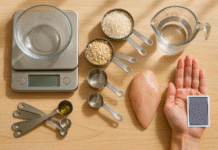
- Food scale for the first 2–4 weeks builds portion awareness; later, eyeballing works better.
- Pre-log your most common meals; save them as favorites.
- Use habit chains: “Walk after lunch → prep veggies → lay out gym clothes.”
Bottom line: a low-friction system beats a beautiful spreadsheet you won’t open.
8. Design an Environment That Makes the Right Choice Easy
Discipline is overrated; design beats willpower. Align your kitchen, calendar, and social life with your goals so the default choice becomes the helpful choice. Think of this as friction management—decrease friction for good options, increase it for tempting ones.
8.1 Kitchen & food environment
- Keep ready-to-eat protein (eggs, Greek yogurt, grilled chicken, tuna, paneer) at eye level.
- Pre-wash/portion produce; store snacks out of sight or in opaque bins.
- Keep single-serve treats instead of bulk bags; delay seconds by 10 minutes.
8.2 Calendar & social design
- Block workouts as meetings—even 30-minute sessions.
- Scan the week for high-calorie events; plan lighter meals around them.
- Choose social triggers that help: group walks, potlucks with protein-forward dishes, caffeine meetups instead of dessert-centric stops.
8.3 Region-specific notes
- If dining out in South Asian cuisines, anchor plates with dal, grilled kebabs, tandoori items, mixed veg, and one starch (chapati or rice), rather than all at once.
- For Ramadan, plan pre-suhoor hydration, protein at iftar, and shorter, higher-quality training sessions.
Bottom line: when your environment changes, your behavior follows—often without more effort.
9. Schedule Milestones, Celebrations, and Maintenance Phases
Goals feel distant unless you celebrate near wins. Break the journey into milestones every 2–4 weeks and pick non-food rewards that reinforce identity: new gym gear, a massage, a hike with friends. Also pre-plan maintenance phases—1–3 weeks at maintenance calories every 8–12 weeks of dieting—to protect muscle, hormones, and adherence.
9.1 How to do it
- Set milestones (every 2–4 weeks) based on your chosen pace; write a small reward next to each.
- Book maintenance on the calendar after 8–12 weeks of deficit; treat it like training deload.
- During maintenance, keep steps/training, raise calories to maintenance, and focus on sleep and social life.
9.2 Numbers & guardrails
- Increase to maintenance by adding 100–150 kcal/day each 2–3 days until weight stabilizes.
- Keep protein high; loosen tracking slightly, but maintain meal structure.
9.3 Common mistakes
- “Reverse dieting” myths that promise metabolic magic—maintenance is sufficient for most.
- Treating maintenance as “off” and dropping all habits.
- Skipping celebrations and losing momentum.
Bottom line: small celebrations and planned maintenance keep the long game enjoyable—and doable.
FAQs
1) What’s a healthy amount of weight to lose per week?
For most healthy adults, a realistic, sustainable range is 0.25–1% of body weight per week. This band balances visible progress with manageable hunger and preserves training quality. Early losses can be faster due to water/glycogen shifts; judge by 2–4-week trends, not single days. If fatigue, mood, or sleep suffer, slow down and prioritize recovery.
2) Do I have to count calories to set realistic goals?
No, but you do need a consistent method. Calorie counting is one option; plate templates, portion guides (e.g., palm of protein, fist of veg), or pre-planned meals work too. The critical part is monitoring weekly averages (weight/measurements) and adjusting behaviors if trends miss your target range.
3) Is faster always worse?
Not always, but the trade-offs grow as speed increases. Higher deficits spike hunger and can reduce training performance and non-exercise movement, eroding the actual deficit. Short, aggressive phases can work for experienced lifters with tight systems, but most people do better with moderate, repeatable changes.
4) How important is protein?
Very. Higher protein intake helps maintain muscle, supports satiety, and stabilizes blood sugar. A practical target for many is 1.2–1.6 g/kg body weight/day, spread across 2–4 meals. Pair with fiber-rich carbs and healthy fats for satisfaction and adherence.
5) What if the scale won’t budge?
First, check behaviors for 1–2 weeks: steps, sleep, protein, training, and sodium. Use weekly averages to remove noise. If you’re genuinely on target and still flat after 2–3 weeks, adjust by ~100–150 kcal/day or add 1,500–2,500 steps/day, then reassess after another 2 weeks.
6) Can I lose fat while gaining muscle?
It’s possible, especially for beginners, detrained lifters, or those returning after a break. Keep a modest deficit, emphasize progressive resistance training 2–3x/week, and prioritize protein and sleep. Expect the scale to move slowly; rely on measurements, photos, and strength progress.
7) How do I handle travel or holidays?
Shift to maintenance for the trip: keep steps high, train when convenient, and use one-plate or one-dessert rules. Resume your deficit on return. A short, higher-calorie period won’t erase months of work if behaviors remain anchored.
8) Do I need supplements?
Supplements are optional. Focus on food first. Commonly helpful: a basic multivitamin if intake is inconsistent, vitamin D if deficient, creatine monohydrate for strength/performance, and whey or dairy/yogurt for convenient protein. Always check with a clinician if you have conditions or take medications.
9) What’s the best cardio for fat loss?
The “best” is what you’ll do consistently. Walking is underrated for adherence and recovery. Mix in intervals if you enjoy them, but avoid volumes that crush leg recovery from lifting. Track steps to ensure you don’t subconsciously move less as you add cardio.
10) How long should a cut last?
Common ranges are 8–16 weeks, followed by 1–3 weeks of maintenance. Longer cuts can work with periodic maintenance breaks. End a phase when you reach your milestone or adherence drops below 80%—then maintain and reassess.
11) Do I need to avoid certain foods?
No single food blocks fat loss. Prioritize protein, produce, and minimally processed staples, then fit favorites into the calorie budget. Use single-serve portions for high-calorie snacks and plan them, rather than “finding” them.
12) How do I know my goal is realistic?
Run your plan through this litmus test: Could I maintain this on a busy week? If yes, it’s probably realistic. If not, reduce the deficit, lower step floors, or simplify meals until the answer is yes. Realistic goals fit your life; they don’t ask for a new one.
Conclusion
Realistic weight loss goals are less about the number you wish for and more about the systems you can live with. Start by choosing a pace that respects your calendar and energy. Confirm maintenance with real-world data, then create a modest deficit supported by protein and fiber. Pair the scale with behavior goals so progress continues even when the number stalls. Expect plateaus and decide in advance how you’ll respond. Track the few things that matter and design your environment so the helpful choice is the easy one. Finally, protect your momentum with small celebrations and scheduled maintenance. Follow these nine steps, and you won’t just lose weight—you’ll learn how to keep it off.
Ready to start? Pick your pace, set three behavior goals for this week, and schedule your first 2-week review today.
References
- Healthy Weight, Nutrition, and Physical Activity — “Losing Weight.” Centers for Disease Control and Prevention (CDC). Updated 2024. https://www.cdc.gov/healthyweight/losing_weight/index.html
- Physical Activity Guidelines for Adults. World Health Organization (WHO). 2022. https://www.who.int/news-room/fact-sheets/detail/physical-activity
- Obesity: Identification, Assessment and Management (CG189). National Institute for Health and Care Excellence (NICE). Updated 2022. https://www.nice.org.uk/guidance/cg189
- 2020–2025 Dietary Guidelines for Americans. U.S. Departments of Agriculture and Health and Human Services. 2020. https://www.dietaryguidelines.gov
- Position Stand: Quantity and Quality of Exercise for Developing and Maintaining Cardiorespiratory, Musculoskeletal, and Neuromotor Fitness in Apparently Healthy Adults. American College of Sports Medicine (ACSM). 2011; reaffirmed updates via ACSM guidelines. https://www.acsm.org/education-resources/trending-topics-resources/position-stands
- Protein Intake for Optimizing Muscle Maintenance During Energy Restriction: Review of Evidence. International Society of Sports Nutrition (ISSN). 2017. https://jissn.biomedcentral.com/articles
- The Science of Energy Balance and Body Weight. National Institutes of Health (NIH): NIDDK. Updated 2023. https://www.niddk.nih.gov/health-information/weight-management/health-risks-overweight
- Behavioral Weight Loss Interventions to Prevent Obesity-Related Morbidity and Mortality in Adults: USPSTF Recommendation Statement. JAMA. 2018 (current guideline basis). https://jamanetwork.com/journals/jama/fullarticle/2689711
- Hydration, Electrolytes, and Health. European Food Safety Authority (EFSA) Scientific Opinion. 2010 (foundational ranges). https://efsa.onlinelibrary.wiley.com/doi/10.2903/j.efsa.2010.1459
- 24-Hour Movement Guidelines: Sleep Recommendations for Adults. Sleep Foundation (summary of consensus). Updated 2024. https://www.sleepfoundation.org/how-sleep-works/how-much-sleep-do-we-really-need