



























Weight loss that lasts isn’t about perfection; it’s about clear targets, steady pacing, and consistent habits you can live with. This guide turns fuzzy intentions into a plan you can follow day after day using SMART criteria—Specific, Measurable, Achievable, Relevant, and Time-bound. You’ll learn how to set a safe pace, translate goals into daily actions, and troubleshoot plateaus without yo-yo dieting. Quick note: this article is informational and not a substitute for personalized medical care—check with your clinician before changing diet, exercise, or medications, especially if you have chronic conditions.
Fast definition: SMART Goal Setting for Sustainable Weight Loss means defining a precise outcome (e.g., “lose 7% of body weight in 16 weeks”), choosing evidence-based guardrails (safe weekly rate, activity minimums), and building tracking and environment habits that make the goal stick. A simple sequence is: baseline → target → pace → daily actions → tracking → adjust.
1. Define the Exact Outcome and Baseline You’ll Measure
Start by deciding what you’ll track, how, and when. A SMART weight-loss outcome answers: “How much, by when, measured how?” Example: “Lose 7% of body weight in 16 weeks, measured by Friday morning weigh-ins and monthly waist circumference.” Choose one to three core metrics so progress feels real without becoming a numbers obsession. Weight is common, but pairing it with waist circumference and an optional BMI category gives a fuller health picture, especially because fat distribution around the abdomen carries added cardiometabolic risk. Finally, document your starting point: current weight (same scale, same conditions), waist at the navel line, and (if relevant) health markers you’re watching with your clinician (A1C, blood pressure, lipids).
Why these measures? BMI is widely used for population categories (healthy weight 18.5–<25; overweight 25–<30; obesity ≥30), but it’s imperfect. Waist circumference adds helpful risk context; long-standing clinical cut-points are ≥102 cm (40 in) for men and ≥88 cm (35 in) for women, which correlate with higher cardiometabolic risk across studies. Record these alongside your scale weight to see fat-loss patterns even when the scale is stubborn. If you have a condition such as diabetes or hypertension, set your primary success measure with your care team (for example, “reduce A1C by 0.5 percentage points while losing 5–7% of body weight”).
1.1 How to do it
- Take three baseline readings: scale weight (same time of day), waist circumference, and optional BMI category.
- Log them in a notebook or app and set calendar reminders for weekly or biweekly re-checks.
- If you’re monitoring health markers, add lab dates and targets you’ve agreed on with your clinician.
- Keep methods consistent (same tape, same posture, same scale placement).
Mini-example: A 90-kg (198-lb) person sets “lose 6.3 kg (7%) in 16 weeks, Friday weigh-ins, waist every 4 weeks,” targeting movement from BMI 30.1 toward 28.0 and a 4-cm waist reduction.
2. Choose a Safe Pace: 0.5–1 kg (1–2 lb) per Week with a Realistic Timeline
A sustainable weekly loss for most adults is 0.5–1 kg (1–2 lb). That speed protects lean mass, keeps energy up, and reduces the odds of weight cycling. It also makes math simple: a 5–10% total body-weight reduction typically takes 12–24 weeks, depending on your starting point and adherence. These ranges are widely used in clinical and public-health programs and are associated with meaningful improvements in blood pressure, blood sugar, and lipids—even before you hit a “goal weight.” If you live with prediabetes, note that structured lifestyle programs achieving a 5–7% loss plus regular activity cut type 2 diabetes risk by ~58% (71% if ≥60 years)—that’s a compelling reason to aim for a steady, doable pace.
2.1 Numbers & guardrails
- Weekly rate: 0.5–1 kg (1–2 lb).
- 12–24 weeks for 5–10% loss in many cases.
- Watch for rapid loss (>4 kg/month) in those with diabetes; check for malnutrition risks with your clinician.
- If medications affect appetite or fluid balance, agree on modified rate checks with your care team.
Synthesis: Locking a realistic pace protects your energy and makes the process feel winnable, which is the whole point of SMART goals.
3. Translate Your Target into a Daily Calorie Deficit You Can Live With
For many adults, a ~500–750 kcal/day deficit produces the safe weekly loss above. You do not have to count every calorie forever, but you do need a method to consistently create the deficit: portion planning, the Plate Method, food logging, or food-environment tweaks like pre-portioning snacks and limiting liquid calories. Classic guidance suggests that cutting ~500 kcal/day often yields ~0.45 kg (1 lb) per week, though individual responses vary with body size, activity, and adaptation. If strict counting triggers stress, consider “calorie awareness”—log for two weeks to learn your personal patterns, then shift to plate-based and habit-based rules that maintain the deficit with less friction.
3.1 Tools & examples
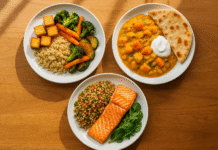
- Plate Method: ½ plate vegetables, ¼ protein, ¼ whole grains or starchy veg; keep oils and sauces measured.
- Water preloading: 500 mL water 30 minutes before meals can modestly reduce meal energy intake and support weight loss in some adults.
- Swap liquid calories: replacing caloric beverages with water or non-caloric options supports modest weight loss in trials.
- Fiber target: aim for ~14 g per 1000 kcal (e.g., 28–34 g/day for many adults) to boost fullness and digestive health.
3.2 Mini case
A 90-kg person maintaining on ~2,400 kcal/day uses a 600-kcal deficit (target ~1,800 kcal). They add a 500 mL water preload before lunch and dinner, shift from soda to water, and anchor dinners with the Plate Method. Over 4 weeks, average loss ~1.6–2.0 kg aligns with expectations, with energy and workouts intact.
Synthesis: Choose the least-annoying way to consistently run the deficit; the best approach is the one you’ll still do in 12 weeks.
4. Lock In Activity Minimums: 150–300 Minutes Weekly + 2+ Strength Sessions
A SMART weight-loss plan bakes in movement targets: 150–300 minutes/week of moderate-intensity aerobic activity (or 75–150 minutes vigorous) plus muscle-strengthening on 2+ days/week. Aerobic activity raises weekly energy expenditure; resistance training protects lean mass so your resting metabolism doesn’t fall as much during a deficit. Spread sessions across the week and choose modes you can repeat—brisk walks, cycles, swims, or short high-intensity intervals when appropriate. If you sit a lot for work, layer in “movement snacks” (3–5 minute walks, stairs, five pushups every hour) to chip away at sedentary time. These are evidence-based minimums; feel free to exceed them if recovery and life allow.
4.1 How to do it
- Plan the week: three 40-minute brisk walks + two 30-minute bike rides; M/Th 30-minute strength (push, pull, hinge, squat, carry).
- Make it measurable: minutes, sessions, or steps (e.g., baseline + 2,000 steps/day).
- Scale intensity: use talk test—moderate means you can talk, not sing; vigorous means a few words at a time.
- Recovery: at least one full rest day; gentle mobility most days.
4.2 Why it matters
- Sustained activity improves blood pressure, lipids, insulin sensitivity—even with modest weight change.
- Strength days preserve function, reduce injury risk, and help maintain loss later.
Synthesis: Treat activity like a meeting with yourself—on the calendar, non-negotiable, yet flexible in how you get it done.
5. Anchor Meals with Protein and Fiber to Control Hunger
Hunger management is the secret engine of sustainable weight loss. Build each meal around protein (fish, poultry, eggs, tofu/tempeh, legumes, yogurt) and fiber-rich plants (vegetables, fruit, whole grains, pulses). Protein enhances satiety and helps protect lean mass in a deficit; fiber adds volume and slows digestion so meals hold you longer. Favor minimally processed foods when you can, and include healthy fats (olive oil, nuts, seeds) in measured amounts for satisfaction without blowing the deficit. If red or processed meat is common for you, try shifting some servings toward beans, soy, fish, or poultry to support cardiometabolic health while hitting protein targets.
5.1 Numbers & guardrails
- Aim for a source of protein at each meal and snack; pair it with high-fiber sides.
- Use the 14 g/1000 kcal fiber guideline from U.S. dietary guidance as a practical daily benchmark.
- Increase fiber gradually and hydrate to avoid GI discomfort.
- Keep added sugars and alcohol in check; liquid calories don’t fill you up proportionally.
5.2 Quick meal ideas
- Greek yogurt + berries + nuts
- Lentil-veggie stew with whole-grain bread
- Grilled fish, big salad, olive-oil vinaigrette, quinoa
Synthesis: When every meal has protein and fiber, sticking to your calorie budget becomes easier without white-knuckle willpower.
6. Track What Matters: Simple Self-Monitoring Beats Guesswork
What you measure improves—when the measurements are easy. Two evidence-backed behaviors consistently predict better weight-loss outcomes: self-weighing (daily or weekly) and food/activity logging. Self-weighing provides quick feedback and helps prevent small regain from snowballing; multiple trials show daily or near-daily weighing leads to greater loss without harming mood in most participants. Food logging (from full tracking to taking photos of meals) builds awareness of portions and patterns; even brief bursts of logging can reset drift. Choose the lightest-lift method you’ll actually do—paper journal, phone notes, or an app with barcode scanning. Pair data with reflection: “What helped yesterday? What got in the way? What’s the small fix today?”
6.1 Mini-checklist
- Weigh at a consistent time (e.g., mornings after bathroom) and view the trend, not the daily noise.
- Log meals for 7–14 days to learn your patterns; repeat for “tune-ups.”
- Review weekly: highlight one win and one small improvement.
- Alert rule: if weight rises >1% for 2 weeks, re-tighten meals or add an activity block. SpringerLink
Synthesis: Self-monitoring is the GPS of your plan—quiet guidance that nudges you back to the route without drama. JMIR
7. Design “If-Then” Habits and an Environment That Makes the Right Choice Easy
SMART goals turn into results when the default choice is also the helpful choice. Use “if-then” plans and environment design to remove friction. Examples: “If I pour coffee, then I drink 500 mL of water,” “If it’s 3 p.m., then I take a 5-minute walk,” “If it’s Sunday, then I prep three protein+veg dinners.” Put fruit at eye level, keep protein-rich snacks visible, and store tempting foods out of sight. Keep a grocery list template on your phone so staples never run out. Remember, you don’t have to ban favorite foods; portion-controlled servings can fit your plan. This approach beats all-or-nothing rules and aligns with public-health messaging: create small, repeatable shifts that accrue over time while honoring cultural foods and preferences.
7.1 Practical tips
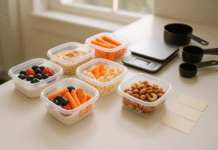
- Pre-portion snacks into small containers.
- Keep a water bottle on your desk; consider pre-meal water before the two largest meals.
- Schedule workouts like appointments; lay out shoes/clothes the night before.
- Use reminders: calendar alerts, sticky notes, or habit-tracking apps.
Synthesis: The right environment makes willpower optional; the plan becomes your autopilot. NIDDK
8. Set Sleep, Stress, and Alcohol Boundaries to Protect Your Deficit
Sleep, stress, and alcohol can quietly sabotage a great plan. Short sleep (<7 h) and very long sleep (>9 h) are both linked to higher odds of overweight/obesity; poor sleep also disrupts appetite hormones and makes calorie-dense foods harder to resist. High stress can trigger emotional eating and nudge you toward convenience calories; simple stress-management practices (walking breaks, breathing drills, social support) help keep your plan on the rails. Alcohol packs hidden calories and erodes food-choice inhibition—consider weekly caps or alcohol-free blocks while actively losing. A SMART boundary might be: “Sleep 7–8 hours, phone off at 10:30 p.m.; limit alcohol to two servings/week, never on back-to-back nights.” Jomes
8.1 How to do it
- Sleep hygiene: consistent bedtime, cool dark room, caffeine curfew, wind-down routine.
- Stress buffer: 10-minute walk after tough meetings; 4-7-8 breathing; 5-minute journal.
- Alcohol rule: budget calories; alternate with water; choose smaller pours.
Synthesis: Guardrails for sleep, stress, and alcohol protect the calorie deficit you worked hard to set—silently, every day. PMC
9. Plan for Plateaus and Safety Checks Without Panic
Plateaus are normal. As you lose weight, your body requires fewer calories and adapts hormonally; the original deficit may shrink. Decide ahead of time how you’ll respond: confirm logging accuracy for a week, add or swap an activity block, or reduce ~100–200 kcal/day with minimal pain (e.g., one sauce swap and one starch swap). Evaluate non-scale wins—waist, stamina, sleep, labs—with your clinician. Remember that even 5–10% weight loss carries measurable health benefits, so a “pause” can still be a win while your lifestyle cements. If you live with diabetes and experience rapid (>4 kg/month) or unintentional loss, check in promptly to rule out malnutrition or other issues. CDCDiabetes Journals
9.1 Plateau playbook
- Verify the data: weigh food for 7 days; confirm weekend logging.
- Nudge activity: +20–30 minutes of moderate movement 3 days/week.
- Tweak meals: add a high-fiber veg at lunch/dinner; swap one caloric beverage for water.
- Re-set expectations: shifts of 0.1–0.2 kg/week still add up.
Synthesis: Treat plateaus like dashboards, not dead ends—make small, planned adjustments and keep moving. AHA Journals
10. Build a Maintenance Plan from Day One
The best SMART goal is one you can keep living after you hit it. Maintenance isn’t a mystery; large registries of successful maintainers show common threads: regular activity, consistent eating patterns, frequent self-weighing, and quick course corrections after small regains. Expect your calorie budget to rise slightly from your weight-loss phase, but keep your structure (meal rhythm, protein+fiber anchors, two strength days, one weekly check-in). Decide on a regain-alert rule—e.g., “If I regain >2 kg, I’ll resume full logging for 14 days and add two 30-minute walks.” Celebrate non-scale wins you want to protect: hiking without knee pain, steady energy, better sleep. Then set a new SMART goal—performance, strength, or endurance—to stay forward-looking.
10.1 Maintenance mini-checklist
- Keep 2+ strength sessions/week and 150–300 minutes of movement.
- Weigh weekly; act quickly on >1–2% upticks.
- Keep protein + fiber structure; relax precision, not principles.
- Schedule a quarterly “systems review” to tidy habits and reset goals.
Synthesis: Maintenance is weight loss lived in the real world—same playbook, steadier pace, lifelong benefits.
FAQs
1) What’s an example of a SMART weight-loss goal?
“Lose 7% of body weight (from 90 kg to 83.7 kg) in 16 weeks by averaging 1,800 kcal/day, 200 minutes of walking weekly, and two strength sessions, measured by Friday weigh-ins and monthly waist checks.” It’s specific (7%), measurable (scale/waist), achievable (safe weekly rate), relevant (health), and time-bound (16 weeks).
2) Is 1–2 pounds per week really necessary?
It’s a widely recommended safe rate. Faster losses can be appropriate in some medically supervised situations, but for most adults a 0.5–1 kg (1–2 lb) weekly pace balances results with hunger, recovery, and muscle preservation. If you have diabetes or other conditions, confirm targets with your clinician. CDC
3) Do I have to count calories?
Not forever. Short-term logging helps you learn your intake; then you can maintain a deficit with plate-based and environment habits. Classic guidance ties about ~500 kcal/day reduction to ~0.45 kg (1 lb) weekly loss, but individual responses vary. Swapping caloric beverages for water and using water preloads are evidence-based ways to reduce intake without meticulous counting. American Journal of Clinical Nutrition
4) What activity minimums should I hit?
Aim for 150–300 minutes of moderate aerobic activity weekly (or 75–150 vigorous) plus 2+ strength days. Spread across the week and pick modes you enjoy; more is beneficial if you recover well.
5) Which is better: low-carb, low-fat, or Mediterranean?
Several dietary patterns can work when they reduce calories and emphasize high-quality foods. Focus on protein and fiber at each meal and foods you enjoy and can afford—adherence beats perfection. U.S. dietary guidance supports patterns rich in vegetables, fruits, whole grains, legumes, and healthy fats. Dietary Guidelines
6) How does sleep affect my results?
Both short (<7 h) and very long (>9 h) sleep are associated with higher odds of overweight/obesity, and poor sleep disrupts appetite regulation. Aim for a consistent 7–9 hours and practice simple sleep hygiene to protect your deficit. BioMed Central
7) Is BMI a good goal?
BMI is useful for population categories but doesn’t capture body composition. Pair it with waist circumference (≥102 cm men, ≥88 cm women indicates higher risk) and functional measures (fitness tests, strength) for a fuller picture.
8) How do I measure progress if the scale stalls?
Use waist, progress photos, clothes fit, energy, and performance (e.g., walking pace, strength). Health improvements often show up before big scale changes (e.g., blood pressure, A1C). Re-check your deficit and consistency if stalls persist.
9) Are “cheat meals” okay?
Framing days as “on/off” can backfire. Instead, plan flex meals inside your weekly calories (e.g., save 300–500 kcal for a Saturday dinner) and keep protein+fiber anchors so satisfaction stays high. If alcohol is included, set limits—calories and inhibition add up. Mayo Clinic
10) Any programs to keep me accountable?
Lifestyle programs modeled on the Diabetes Prevention Program (DPP) combine group support, activity goals, and modest weight loss (5–7%) and show strong long-term outcomes, including up to 58% reduction in type 2 diabetes risk. Ask your clinician or local public-health department about options.
Conclusion
SMART Goal Setting for Sustainable Weight Loss is less about hacks and more about clarity + consistency. You start with a precise outcome and a safe pace; translate that into a daily calorie deficit you can keep; anchor meals with protein and fiber; and lock in activity minimums that protect your metabolism and mood. Then you measure the right things (trend weight, waist, habits), adjust when plateaus come, and protect the plan with sleep, stress, and alcohol guardrails. The data are reassuring: even 5–10% weight loss can improve blood pressure, blood sugar, and lipids, and structured lifestyle programs help many people get there and stay there. The next step is simple: pick your outcome, write it down, and set up this week’s actions—one grocery list, two strength sessions, and a few small environment tweaks.
Your move: Write your SMART goal and schedule your first check-in. Then take the first 10-minute walk.
References
- Steps for Losing Weight — Centers for Disease Control and Prevention (CDC), January 17, 2025. CDC
- Physical Activity Guidelines for Americans, 2nd Edition — U.S. Department of Health and Human Services (HHS), 2018. Health.gov
- Recommendations for Physical Activity in Adults — American Heart Association, January 19, 2024. www.heart.org
- Adult BMI Categories — CDC, March 19, 2024. CDC
- Waist circumference as a vital sign in clinical practice — Obesity (Review), 2020. https://www.ncbi.nlm.nih.gov/pmc/articles/PMC7027970/ PMC
- Key Recommendations (Aim for a 500–1000 kcal/day deficit) — NHLBI/NIH. NHLBI, NIH
- Counting calories: Get back to weight-loss basics — Mayo Clinic. Mayo Clinic
- Dietary Guidelines for Americans, 2020–2025 — U.S. Departments of Agriculture & Health and Human Services. Dietary Guidelines
- Protein — The Nutrition Source — Harvard T.H. Chan School of Public Health. The Nutrition Source
- Water preloading and energy intake/weight loss — Parretti et al., Obesity (2015); Davy et al., J Acad Nutr Diet (2008); Hakam et al., Nutrients (2024). ; https://www.ncbi.nlm.nih.gov/pmc/articles/PMC11589796/ Wiley Online LibraryPMC
- Self-monitoring and daily weighing trials — Steinberg et al., Ann Behav Med (2015); Steinberg et al., J Acad Nutr Diet (2013); Burke et al., J Am Diet Assoc (2011). ; https://www.ncbi.nlm.nih.gov/pmc/articles/PMC3788086/ ; https://www.ncbi.nlm.nih.gov/pmc/articles/PMC3268700/ ScienceDirectPMC
- Benefits of 5–10% weight loss — Wing et al., Diabetes Care (2011) and Ryan et al., Ochsner J (2017). https://www.ncbi.nlm.nih.gov/pmc/articles/PMC3120182/ ; https://www.ncbi.nlm.nih.gov/pmc/articles/PMC5497590/ PMC
- Diabetes Prevention Program (DPP) evidence and outcomes — CDC National DPP Overview (2024) and HCP page (2024). ; https://www.cdc.gov/diabetes/hcp/lifestyle-change-program/index.html CDC
- National Weight Control Registry (long-term maintenance) — Thomas et al., Am J Prev Med (2014). PubMed