


























Strength training isn’t just for building muscle—it’s one of the most reliable levers for losing fat and keeping it off. If you’ve ever cut calories, watched the scale dip, and then rebound a few months later, the missing piece was likely lean-mass protection. In this guide, you’ll learn exactly how lifting supports fat loss, how to program it, and how to eat and recover so the weight you lose is mostly fat—while your energy, strength, and metabolism stay high. Quick note: this guide is educational and not a substitute for personalized medical advice.
Bottom line: Strength training helps you lose fat by preserving (and sometimes adding) lean mass, supporting daily energy expenditure, improving insulin sensitivity, and reducing harmful abdominal fat—making weight loss more effective and more sustainable.
1. Protect Your Metabolism by Preserving Lean Mass
Strength training’s first job in a fat-loss phase is to protect the tissue that burns most of your calories at rest—lean mass. In a calorie deficit, your body happily sheds both fat and muscle unless you give it a reason not to. Lose enough muscle and resting metabolic rate (RMR) drops, making the same calorie target feel painfully low and priming your body to regain fat later. Randomized trials show that, compared with diet alone or diet plus cardio, adding resistance training preserves fat-free mass and helps maintain RMR during weight loss in women—an effect that directly supports continued fat loss. That’s why “just diet” often backfires: you hit a plateau sooner and feel worse doing it. The fix is simple: lift 2–4 days per week with progressive overload to tell your physiology, “keep this tissue.”
1.1 How to do it
- Train major muscle groups 2–3+ times weekly (full body or upper/lower splits).
- Choose 5–8 big moves per session (e.g., squat/hinge/push/pull/carry).
- Work mostly in the 5–12 rep range with 2–4 sets per exercise; add load or reps weekly.
- Keep 1–3 reps in reserve (RIR) on most sets to manage fatigue but still progress.
- Re-test loads every 4–6 weeks; when you exceed the top of your rep range by 2+ reps, increase weight 2–10%.
1.2 Numbers & guardrails
- Expect modest changes in RMR (~up or protected vs. down) over months; the big win is avoiding the typical RMR decline seen with diet only.
- Adhere to established frequency guidance: 2–3 days/week of resistance exercise for all major muscle groups.
Synthesis: Keep what you want to keep—lift while you diet, or your deficit will erode the very capacity that maintains your loss.
2. Make a Sustainable Calorie Deficit—Strength as the Anchor
Calories drive weight change, but strength training makes a calorie deficit more tolerable: higher satiety from adequate protein, better mood and energy, and fewer cravings due to stable blood sugar. Public-health guidance suggests losing ~0.5–1 kg (1–2 lb) per week, which usually means a 500–750 kcal/day deficit for many adults. Use strength days to structure meals around protein and fiber, then fit carbs and fats to preference. In practice, people stick with a plan longer when they see their lifts improve while the tape measure shrinks—even if the scale moves slowly. Think of lifting as the “habit backbone” that keeps the diet on track.
2.1 Mini-checklist
- Start with ~500 kcal/day deficit; adjust every 2–3 weeks based on waist and performance.
- Target protein 1.6–2.2 g/kg/day; go higher if very lean or training hard.
- Eat fiber-rich carbs (grains, legumes, fruit) around training for energy.
- Keep dietary fat moderate (0.6–1.0 g/kg/day) for hormones and satiety.
- Prioritize whole foods; keep ultra-processed snacks occasional.
2.2 Region notes (South Asia & beyond)
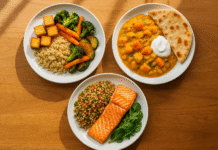
- High-protein staples: dahi (yogurt), paneer, eggs, lentils (dal), chickpeas (chana), fish, chicken; combine dals with rice/roti for complete amino acid profiles.
- Spice for adherence: build rotating masala blends to keep meals satisfying without extra calories.
Synthesis: The right deficit plus lifting builds a virtuous loop—better workouts, better appetite control, better adherence.
3. Boost Session Burn and “Afterburn” (EPOC) With Smart Strength Programming
While steady-state cardio typically burns more calories per minute, strength sessions contribute meaningfully to total daily energy expenditure—both during the workout and via excess post-exercise oxygen consumption (EPOC). Programming that uses large ranges of motion, compound lifts, moderate-to-heavy loads, and short rests elevates heart rate and oxygen use after training. Research indicates interval-style work tends to create a greater EPOC than equal-calorie continuous work; in resistance training, traditional tempos can yield EPOC on the order of a few dozen kilocalories over baseline—modest per session but meaningful across weeks. Use this strategically: sprinkle in metabolic circuits 1–2 days/week while keeping foundational strength work.
3.1 Tools/Examples
- Complexes: RDL → row → hang clean → front squat → push press (4–6 reps each, 3–5 rounds, 60–90 s rest).
- EMOMs (every minute on the minute): 5 pull-ups + 10 push-ups + 15 air squats for 10–12 min.
- Density sets: 10-min clock to accumulate quality reps at 70–75% 1RM.
3.2 Common mistakes
- Turning every day into HIIT. Keep at least 2 pure strength days to preserve load progression.
- Chasing sweat over stimulus. Prioritize mechanical tension first; finish with conditioning.
Synthesis: “Afterburn” won’t replace nutrition, but smart lifting structures add a steady, cumulative burn without sacrificing strength.
4. Improve Insulin Sensitivity and Carb Handling
Strength training increases muscle’s capacity to take up and store glucose, which helps control blood sugar, reduces hyperinsulinemia, and makes a calorie deficit easier to maintain. Meta-analyses in people with type 2 diabetes show structured exercise—including resistance training—reduces HbA1c, with higher weekly durations linked to greater improvements. Even outside diabetes, better insulin sensitivity tends to reduce energy swings and appetite spikes, easing adherence. Practically, the more active muscle you have (and use), the more room you have for carbohydrates within your calorie budget—especially around training. PMCdrc.bmj.com
4.1 How to do it
- Lift 3–4 days/week; add 1–2 low-impact cardio sessions for extra glucose disposal.
- Place most carbs pre/post-workout to fuel and refill muscle glycogen.
- On rest days, bias protein/veg and moderate carbs while staying within your weekly calorie target.
4.2 Numbers & guardrails
- Aim for >150 min/week structured exercise total for glycemic benefits; resistance training counts.
- If you manage a medical condition or take glucose-lowering meds, speak to your clinician before big changes.
Synthesis: Stronger, more insulin-sensitive muscle makes eating for fat loss simpler and more forgiving.
5. Reduce Harmful Abdominal Fat and Improve Your Waist-to-Height Ratio
Not all fat is equal. Visceral adipose tissue (VAT) around the organs is particularly tied to cardiometabolic risk, and losing it improves health even if body weight barely changes. Systematic reviews report that resistance training programs—alone or alongside nutrition—can reduce VAT and trunk fat while increasing lean mass. For a simple health metric at home, track waist-to-height ratio (WHtR); keeping your waist <0.5× height is a widely supported, easy-to-use threshold associated with lower risk. In practice, combine full-body strength with a moderate deficit and brisk walking; you’ll often see belt-notch changes before the scale moves.
5.1 Mini-checklist
- Measure waist at the navel, exhale naturally, stand relaxed.
- Track WHtR monthly: waist (cm) ÷ height (cm); target <0.5.
- Favor compound lifts (front squats, deadlifts, rows, carries) 2–4 days/week.
5.2 Numbers & guardrails
- Expect VAT/waist reductions even with small scale changes when lifting—body recomposition is common.
Synthesis: A tape measure often shows progress before the scale—lifting helps shrink the right inches.
6. Guard Against Weight Regain by Blunting Metabolic Slowdown
After weight loss, biology pushes back. Adaptive thermogenesis lowers energy expenditure beyond what your smaller body would predict, and hunger hormones tilt against you—key reasons regain is common. Long-term studies show persistent metabolic adaptation years after major losses, which is why post-diet habits matter. Resistance training protects fat-free mass during weight loss and helps maintain resting energy expenditure, giving you a sturdier base for maintenance. Build your “after” plan before you diet ends: keep lifting, raise calories gradually, and monitor waist plus performance. Wiley Online Library
6.1 How to do it
- Transition to maintenance by adding ~100–150 kcal/day each week for 3–6 weeks while keeping training steady.
- Keep protein high (≥1.6 g/kg/day) and training frequent to defend lean mass.
- Use performance anchors (e.g., keep 5RM squat within 5% of best) to ensure you’re fueling enough.
6.2 Common mistakes
- Stopping lifting after dieting (“I’ll just maintain”). That’s when biology nudges regain.
- Huge “refeeds” without structure. Instead, plan deliberate maintenance calories and steps.
Synthesis: The same lifting that helps you lose fat is your best shield against the rebound.
7. Program the Right Kind of Strength for a Fat-Loss Phase
You don’t need a bodybuilding split or powerlifting peak to lose fat. You need a repeatable plan that trains the whole body, progresses loads, and fits your life. Evidence-based guidelines recommend 2–3+ days/week for all major muscle groups; use a simple A/B full-body split or upper/lower template. Keep reps mostly 5–12, sprinkle in some heavy sets (3–5 reps) to retain strength, and finish with 8–15-rep accessories. Avoid “junk volume”—fatigue that doesn’t move the needle. If you enjoy cardio, combine it: trials comparing aerobic vs. resistance vs. concurrent training show that pairing modes often matches or beats either alone for body-comp and waist outcomes—especially if time allows.
7.1 Template to start (12 weeks)
- Days: 3×/week full body (e.g., Mon/Wed/Fri).
- Core lifts (rotate): back or front squat; hip hinge (deadlift/RDL); horizontal push (bench/push-up); horizontal pull (row); vertical push (press); vertical pull (pull-up/lat-pull).
- Sets/Reps: 3–4×5–8 for compounds; 2–3×8–15 for accessories.
- Progression: Add 2–5 kg when you hit top reps with good form; otherwise add 1 rep per set.
7.2 Numbers & guardrails
- Session length 45–70 minutes; rest 60–150 s on primary lifts.
- Add 1–2 cardio days (20–40 min brisk walk/cycle/row) away from heavy lower-body days.
Synthesis: Simple, progressive, full-body strength—plus optional cardio—is the fat-loss workhorse.
8. Eat to Lift While Losing (Protein, Timing, and Helpful Supplements)
Diet doesn’t have to be complicated—but protein must be deliberate. Meta-analysis suggests ~1.6 g/kg/day optimizes muscle gain/retention during training, with potential benefits up to ~2.2 g/kg/day; during aggressive deficits or in lean/athletic individuals, reviews recommend as high as 2.3–3.1 g/kg fat-free mass. Spread protein across 3–5 meals (~0.25–0.4 g/kg per meal) and place carbs around workouts. Creatine monohydrate (3–5 g/day) is one of the most researched ergogenic aids; it’s safe for healthy adults and can help you train harder and maintain lean mass while dieting.
8.1 Mini-checklist
- Daily targets: protein 1.6–2.2 g/kg; carbs 2–4 g/kg (higher on heavy days); fats 0.6–1.0 g/kg.
- Per-meal: 20–40 g high-quality protein; include leucine-rich sources (eggs, dairy, whey). PubMed
- Creatine: 3–5 g/day (no loading required) with a carb/protein meal; hydrate well.
- Ramadan or early-morning training: move a protein-rich meal close to lifting; favor easily digested proteins (whey, dahi, eggs) and salty fluids.
8.2 Common mistakes
- Slashing calories so low that training quality craters.
- Under-salting in hot climates; low sodium plus hard training kills performance.
Synthesis: Eat enough to lift well; lift well to keep losing mostly fat.
9. Recover Hard: Sleep & Stress Decide What Weight You Lose
Sleep isn’t “optional recovery”—it’s part of your fat-loss plan. In a controlled trial with equal calories, short sleep cut fat loss in half and increased muscle loss compared with adequate sleep. Short sleep also shifts appetite hormones (leptin down, ghrelin up), driving cravings and snacking—catnip for weight-loss plateaus. Practically, 7–9 hours with a consistent schedule and a cool, dark room will do more for your diet than an extra hour of cardio when you’re already stretched. Manage stress with brief walking, breath work, or journaling; chronically high stress undermines sleep and adherence. PubMed
9.1 Mini-checklist
- Treat bedtime like an appointment; aim for a 60-minute wind-down.
- Caffeine: cut off 8+ hours before bed.
- If you can’t extend sleep, add a 20–30 min early-afternoon nap.
9.2 Numbers & guardrails
- Prioritize 7–9 hours most nights; watch for cravings and training dips as early flags of poor sleep.
Synthesis: Recovery quality determines whether your calorie deficit trims fat—or raids muscle.
FAQs
1) Is cardio better than lifting for weight loss?
Cardio generally burns more calories per minute, so it can move the weekly energy balance faster. But resistance training preserves muscle and resting metabolism and helps shape where the loss comes from—mostly fat. The best outcomes often mix both, with strength as the anchor and cardio as a modular add-on.
2) How many days a week should I lift when cutting?
Most people do well with 3 days/week full body or 4 days/week upper/lower. What matters is total weekly sets for big patterns (squat, hinge, push, pull) and progressive overload you can sustain while in a deficit.
3) What’s a safe weekly rate of loss?
About 0.5–1 kg (1–2 lb) per week works for most adults. That usually requires a 500–750 kcal/day deficit, though smaller or larger adjustments may fit your context. Faster losses increase muscle-loss risk and rebound risk.
4) Do I need protein shakes?
No—food first works. Shakes are just convenient protein that can help you hit daily targets (1.6–2.2 g/kg). If appetite is low after training, liquids can be easier. Distribute protein over 3–5 meals for best results.
5) Will lifting make me “gain weight” on the scale?
Early on, glycogen and water increases may mask fat loss for a couple weeks. Track waist, photos, and strength alongside body weight. Shrinking waist with steady or rising strength is the classic recomposition pattern. PMC
6) What about creatine while cutting?
Creatine (3–5 g/day) is well-supported and safe for healthy adults. It can improve training quality and help maintain lean mass; any small water weight is intracellular (in muscle), not fat.
7) Can I do only strength and skip cardio?
Yes—if steps are high and calories are in check, you can lose fat with strength alone. Adding cardio is a flexible way to increase expenditure or support cardiovascular fitness. Concurrent training can perform as well as cardio alone for body-comp when programmed sensibly. MDPI
8) How should I adjust calories when fat loss stalls?
First, verify adherence (7-day average). If waist hasn’t changed for 2–3 weeks, reduce intake by ~150–200 kcal/day or add ~2,000–3,000 steps/day, keep protein high, and maintain training intensity. Re-assess in 2 weeks. NHLBI, NIH
9) Is “afterburn” from lifting a big deal?
EPOC from resistance or interval training is modest per session (dozens of kcal) but compounds across a training week. Treat it as a bonus—not the main event. PMC
10) How do I know the fat coming off is the right fat?
Track waist, hips, and WHtR; a shrinking waist (especially with steady weight) suggests VAT reduction—a powerful health win. Strength training plus walking is a proven combo for better central fat outcomes.
Conclusion
If your past diets felt like a grind—and the results didn’t stick—it’s because you fought biology without protecting your metabolism. Strength training changes that. By preserving lean mass, supporting daily energy expenditure, improving insulin sensitivity, and targeting harmful abdominal fat, lifting turns weight loss from a crash into a transformation. The playbook is straightforward: lift 3–4 days per week with progressive overload, eat enough protein (1.6–2.2 g/kg/day), keep a measured calorie deficit, sleep 7–9 hours, and track what matters (waist, strength, adherence). Layer in walking or cardio as needed, but treat strength as your non-negotiable anchor.
Start small if you must—two 45-minute full-body sessions and a 500-kcal daily deficit—and build from there. In six weeks you’ll lift more, crave less, and see your waistline respond. In six months, you’ll have a body that holds the line. Ready to begin? Pick your first full-body A/B plan and schedule this week’s three sessions now.
References
- Garber CE et al. Quantity and Quality of Exercise for Developing and Maintaining Cardiorespiratory, Musculoskeletal, and Neuromotor Fitness in Apparently Healthy Adults. Medicine & Science in Sports & Exercise (ACSM Position Stand), 2011. PubMed
- CDC. Steps for Losing Weight. Centers for Disease Control and Prevention, 2025. CDC
- Kim JY et al. Optimal Diet Strategies for Weight Loss and Weight Loss Maintenance. Journal of Obesity & Metabolic Syndrome, 2020. PMC
- Hunter GR et al. Resistance Training Conserves Fat-Free Mass and Resting Energy Expenditure Following Weight Loss. Obesity (Silver Spring), 2008. PubMed
- Morton RW et al. A Systematic Review, Meta-analysis and Meta-regression of Protein Supplementation’s Effects on Resistance Training–Induced Gains in Muscle Mass and Strength. British Journal of Sports Medicine, 2018. and British Journal of Sports MedicinePubMed
- Umpierre D et al. Physical Activity Advice Only or Structured Exercise Training and Association With HbA1c Levels in Type 2 Diabetes: A Systematic Review and Meta-analysis. JAMA, 2011. PubMed
- López P et al. Resistance Training Effectiveness on Body Composition and Visceral/Subcutaneous Fat in Overweight/Obese Adults. Obesity Reviews, 2022. and PMCWiley Online Library
- Ashwell M et al. Waist-to-Height Ratio as an Indicator of Early Health Risk. BMJ Open, 2016. and BMJ OpenPubMed
- Fothergill E et al. Persistent Metabolic Adaptation 6 Years After “The Biggest Loser” Competition. Obesity, 2016. PMC
- Jiang L et al. Acute Interval Running Induces Greater EPOC Than Energy-Matched Moderate Intensity Continuous Training. Scientific Reports, 2024. Nature
- LaForgia J et al.; & Heden T et al. (see) Influence of Resistance Training Variables on EPOC. Journal of Sports Medicine, 2013. Wiley Online Library
- Helms ER et al. Dietary Protein During Caloric Restriction in Resistance-Trained Athletes: A Case for Higher Intakes. Sports Medicine, 2014. PubMed
- Jäger R et al. International Society of Sports Nutrition Position Stand: Protein and Exercise. J Int Soc Sports Nutr, 2017. BioMed Central
- Kreider RB et al. ISSN Position Stand: Safety and Efficacy of Creatine Supplementation. J Int Soc Sports Nutr, 2017. PubMed
- Nedeltcheva AV et al. Insufficient Sleep Undermines Dietary Efforts to Reduce Adiposity. Annals of Internal Medicine, 2010. PMC
- Spiegel K et al. Sleep Curtailment Is Associated With Decreased Leptin, Elevated Ghrelin, and Increased Hunger. Annals of Internal Medicine, 2004. PubMed
- Willis LH et al. Effects of Aerobic and/or Resistance Training on Body Mass and Fat Mass in Overweight or Obese Adults. Journal of Applied Physiology, 2012. (summary) ScienceDaily
- Khalafi M et al. Effect of Resistance Training With and Without Caloric Restriction on Visceral Fat: Systematic Review & Meta-analysis. Obesity Reviews, 2021. PubMed
- CDC National DPP. Participant Guide: Burn More Calories Than You Take In (on 500-kcal rule of thumb). Centers for Disease Control and Prevention, 2016. CDC
- Recchia F et al. Dose–Response Effects of Exercise vs. Hypocaloric Diet on Visceral Adipose Tissue. British Journal of Sports Medicine, 2023. British Journal of Sports Medicine
- Washburn RA et al. A Randomized Trial Evaluating Exercise for the Prevention of Weight Regain. Obesity, 2021. PMC
- Aristizabal JC et al. Effect of Resistance Training on Resting Metabolic Rate. European Journal of Clinical Nutrition, 2015. Nature
- Chen X et al. Effects of Various Exercise Types on Visceral Adipose Tissue. Obesity Reviews, 2024. Wiley Online Library
- Nunes EA et al. Systematic Review: Protein Intake to Preserve Fat-Free Mass. Nutrients, 2022. PMC
- Garber CE et al. ACSM Physical Activity Guidelines Resource. ACSM, accessed 2025. ACSM