




























Daily sunscreen isn’t just for beach days—it’s a year-round habit that lowers skin cancer risk and slows visible aging. In practice, “sun protection habits” means a simple, repeatable system: broad-spectrum SPF 30+ every morning, generous application, smart reapplication, protective clothing and sunglasses, and planning your time around the UV Index. Below is a precise playbook of 12 habits to build durable protection without fuss. Quick definition: sun protection habits are daily behaviors that minimize UV exposure (UVA/UVB), including sunscreen, shade, clothing, and timing, practiced consistently for cumulative skin health benefits. Medical disclaimer: This guide is educational and not a substitute for personalized advice; consult your clinician for individual concerns.
Fast-start routine (skim list): cleanse → moisturizer (optional) → broad-spectrum SPF 30+ to all exposed skin (15 minutes before sun) → sunglasses (UV400) → hat/UPF layers → reapply every 2 hours (sooner if swimming/sweating).
1. Make Broad-Spectrum SPF 30+ Your Non-Negotiable Morning Step
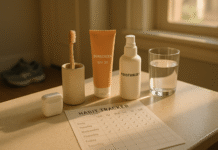
Daily sunscreen is the anchor habit because consistent use reduces sunburns now and skin cancer risk over time while preserving skin texture and tone. “Broad-spectrum” means coverage for UVB (burning) and UVA (aging, deeper damage). SPF quantifies UVB filtration; SPF 30 filters ~97% of UVB and SPF 50 ~98% under test conditions—neither blocks 100%, so technique and reapplication matter. Choose SPF 30+, broad-spectrum, and water-resistant when you’ll sweat or swim. For faces, pick a texture you’ll actually enjoy daily: gel for oily skin, cream for dry, stick for on-the-go, or a tinted mineral formula if you’re dealing with hyperpigmentation. Build the habit by putting your SPF next to your toothbrush; tie it to an existing morning cue so you never skip it.
1.1 How to do it
- Apply to all exposed skin: face, ears, neck (front/back), chest/V, shoulders, hands, and any scalp or part lines.
- Prefer broad-spectrum; in the U.S. that label indicates UVA performance meets a critical-wavelength threshold.
- Choose SPF 30+ for daily urban life; SPF 50+ for prolonged or intense UV (beach, mountains, sports).
- Sensitive or post-procedure? Try mineral (zinc oxide/titanium dioxide).
- For melasma or deeper skin tones managing pigment, consider tinted mineral (iron oxides help with visible light).
1.2 Numbers & guardrails
- “Broad-spectrum” and SPF 30+ are baseline as of August 2025; pick water-resistant for activity (40 or 80 minutes on label).
- Don’t rely on makeup SPF alone; it rarely reaches tested amounts.
- Sunscreen is a seat belt: works best with shade, clothing, hat, and sunglasses.
Bottom line: Anchor your morning with SPF 30+ broad-spectrum—everything else builds on this.
2. Nail the Amount and Reapplication (This Is Where Most People Fail)
Protection drops sharply when you under-apply. All lab SPF ratings assume ~2 mg/cm², which roughly equals 1 ounce/30 mL (a shot glass) for an adult body in swimwear. For the face and neck, use about 1 teaspoon (a “two-finger” length squeeze is a handy visual). Reapply every 2 hours during sun exposure, and after swimming, sweating, or towel-drying—even if your product is water-resistant. Water-resistant claims are standardized: 40 minutes or 80 minutes in water or sweat; there’s no such thing as “waterproof” or “sweatproof.”
2.1 How to do it
- Face/neck: two long fingers of sunscreen or ~1 teaspoon.
- Body: aim for 1 ounce per full-body application.
- Timing: first coat 15 minutes before UV exposure; reapply every 2 hours in the sun.
- Sprays: apply until skin glistens, rub in, and spray into hands for the face to avoid inhalation.
- Sticks: make multiple passes (an even, glossy layer), then blend.
2.2 Mini checklist
- Check water-resistance (40/80 min) before beach or sport days.
- Set a phone reminder for 2-hour top-ups.
- Keep a travel SPF in bag, car console, or desk.
Bottom line: Quantity + reapplication are the difference between “on paper” SPF and real-world protection.
3. Plan Your Day by the UV Index (Protect at 3+, Extra Care at 8+)
The UV Index (UVI) translates the day’s UV strength on a 1–11+ scale. A reading of 3+ calls for protection; 8–11+ is “very high to extreme,” demanding extra caution. UVI rises with altitude and reflects off water, sand, and snow, amplifying exposure. In many regions, midday 10 a.m.–4 p.m. brings peak UV. Clouds can reduce UVB but leave substantial UVA—so don’t skip protection on overcast days.
3.1 Numbers & guardrails
- Protect at UVI ≥3.
- Expect 10–12% more UV per 1,000 m altitude gain.
- Reflections: water/sand/snow meaningfully increase dose; double down on hat, sunglasses, and reapplication.
3.2 Tools/Examples
- Check the UVI in your weather app each morning.
- On UVI 8+ days, move workouts earlier, favor shade, or shift errands to late afternoon.
- Beach/snow days: pack SPF 50, lip SPF, and a wide-brim hat.
Bottom line: Let UVI guide your timing and gear—fewer burns, better skin.
4. Build a Smart AM Order: Moisturizer → Sunscreen → (Optional) Makeup
Sunscreen belongs as the last skincare step and before makeup. Apply to bare or moisturized skin; wait a minute to set. Makeup with added SPF can enhance protection but doesn’t replace a proper coat of sunscreen. If you wear actives (retinoids, AHAs), daily SPF is non-negotiable. For pigment-prone skin, tinted mineral with iron oxides helps reduce visible-light–triggered discoloration; pair with antioxidants (e.g., vitamin C) under SPF to bolster defense against UV-induced free radicals.
4.1 How to do it
- Order: cleanse → serum (optional) → moisturizer → sunscreen → makeup.
- Use a nickel-sized dollop for the face, then neck and ears.
- If you must layer multiple SPFs, use one good broad-spectrum generously; layers aren’t required for efficacy.
- For oily skin, try gel or fluid SPF; for dry skin, cream textures.
4.2 Common mistakes
- Relying on makeup SPF alone.
- Skipping ears, eyelids (use stick or mineral), neck, and hands.
- Not waiting 60–90 seconds before makeup, which can disturb your layer.
Bottom line: A simple, consistent order ensures your SPF performs—and plays nicely with the rest of your routine.
5. Choose the Right Formula (Mineral, Chemical, Spray, Stick) for Your Life
The “best” sunscreen is one you’ll use enough of, every day. Mineral (zinc oxide, titanium dioxide) begins working immediately and is often favored for sensitive skin or around the eyes; chemical/organic filters (like avobenzone, octisalate, etc.) can be elegant and invisible, great under makeup and for deeper skin tones. Sprays are convenient for reapplication on large areas but require careful technique; sticks are excellent for hands, ears, noses, and eyelids. Check water-resistance for sports and fragrance-free for reactive skin.
5.1 How to do it
- Pick textures you enjoy: gels/fluids (shine-averse), creams (dry), sticks (kids, scalp/parts), sprays (limbs—rub in).
- For sweating/swimming, choose water-resistant 80 min when possible.
- For melasma or visible light triggers, use tinted mineral with iron oxides.
5.2 Numbers & guardrails
- As of August 2025, U.S. “water-resistant” means 40 or 80 minutes; no product is “waterproof.”
- Sprays: apply in well-ventilated areas; spray into hands for face to avoid inhalation.
Bottom line: Match formula to situation and preference to keep compliance high.
6. Dress Your Defense: UPF Clothing, Hats, and Sunglasses
Clothing is a first-line, zero-reapplication shield. Look for UPF 50+ garments (block ~98% of UV), long sleeves, and densely woven, dark or bright fabrics. Pair with a wide-brim hat (≥7.5 cm/3 in) that shades the face, ears, and neck. For eyes, pick UV400 or “99–100% UVA/UVB” sunglasses; wraparound styles limit side scatter and help prevent cataracts and other UV-related eye conditions.
6.1 How to do it
- Build a small UPF capsule: long-sleeve rash guard, lightweight pants, neck-flap cap for hikes, and UPF gloves for driving.
- Hats: choose brims ≥7.5 cm; baseball caps leave ears/neck exposed.
- Sunglasses: look for UV400/100% UV on the label; bigger lenses = more coverage.
6.2 Mini checklist
- Keep a hat + shades by the door.
- For water sports, pick long-sleeve UPF 50 rash guards.
- Add lip SPF 30—lips sunburn easily and are often forgotten.
Bottom line: Wear your shade—clothes, hat, and sunglasses reduce the real-world SPF you need to rely on.
7. Don’t Forget Indoor & In-Car Exposure (Windows Let In UVA)
Standard windows block most UVB but allow significant UVA to pass; that’s why habitual drivers often have more sun damage on the window side of the face. Consider UV-filtering window film for cars and workspaces, keep hands and forearms protected on long drives, and maintain your daily SPF if you sit near windows. Sunglasses matter in the car, too—glare increases eye strain and UV dose.
7.1 How to do it
- Apply morning SPF even for indoor days near windows.
- Install UV film (many block >99% UVA/UVB) on car side windows/sunroofs where allowed.
- Keep a hand stick SPF in the door pocket for commute top-ups.
7.2 Common mistakes
- Assuming tinted glass blocks UVA.
- Ignoring left/right asymmetry from driving exposure.
- Skipping SPF on cloudy indoor days—UVA is still present.
Bottom line: UVA sneaks through glass; keep the daily habit and consider window film for frequent drivers.
8. Cover the “Hot Spots”: Lips, Ears, Scalp, Neck, Hands, and Feet
Many burns and skin cancers occur on small, frequently missed areas. Lips need SPF 30 balm and frequent top-ups (food and drinks wear it off). Use sticks or mineral cream for ears, eyelids, and around the eyes to avoid stinging. Protect scalp/part lines with stick or powder SPF—or wear a hat. The neck (front/back), hands, and tops of feet often burn and show early aging; treat them like the face.
8.1 How to do it
- Keep a lip SPF 30 in every bag and reapply often.
- Use a stick around eyes/ears; powders help on scalp or hairlines.
- For hands and feet, reapply after washing or removing shoes at the beach.
8.2 Mini checklist
- Before leaving: tap ears, eyelids, lips, neck, hands, feet—did you coat them?
- Outdoor sandals day? Coat tops of feet generously.
Bottom line: Small surfaces, big payoff—protect the areas most people forget.
9. Set Kid-Safe Routines (and Infant Rules Are Different)
Children need the same protection—plus routines that make it easy. For babies under 6 months, priority is shade and clothing; if absolutely necessary, a small amount of mineral SPF can be used on tiny exposed areas (like the face). From 6 months up, apply SPF 30+ to all exposed skin, choose fragrance-free minerals if sensitive, and favor sticks and lotions over sprays for faces (or spray into hands, then apply). Pack UPF swimwear, hats, and sunglasses, and set a reapply alarm every 2 hours or after water play.
9.1 How to do it
- Under 6 months: avoid direct sun; use shade, clothing, stroller canopies.
- 6 months+: SPF 30+ (broad-spectrum), water-resistant for pool/beach days.
- Teach “shade game”: at midday, find your shadow (short = seek shade).
- Put a sunscreen stick in the school bag and a hat on the checklist.
9.2 Common mistakes
- Spraying faces (risk of inhalation) instead of spray-to-hand.
- Forgetting reapplication at recess, sports, and camps.
- Baseball caps instead of wide-brims for full coverage.
Bottom line: Make sun safety normal early—kids copy what they see you do daily.
10. Know Your High-Risk Scenarios: Medications, Procedures, and Environments
Some medications (e.g., certain antibiotics like doxycycline; diuretics; retinoids; anti-inflammatories) and procedures (peels, lasers) increase photosensitivity, making burns and rashes more likely. Altitude, snow, water, and sand amplify exposure. If you’re on a photosensitizing medicine or recently had a cosmetic treatment, double down on protection: SPF 50, UPF clothing, wide-brim hat, and strict reapplication.
10.1 How to do it
- Ask your clinician or pharmacist if your meds increase sun sensitivity.
- Post-procedure: follow your team’s instructions; avoid peak sun and use gentle mineral SPF.
- Mountain/snow/water days: upgrade to SPF 50, lip SPF, and wraparound sunglasses.
10.2 Mini checklist
- Pack neck gaiter/UPF buffs for high-altitude treks.
- Bring backup SPF (stick + lotion) for reapplication redundancy.
- If you develop a rash/burn while on meds, seek medical advice.
Bottom line: Adjust your shield when conditions or treatments raise your risk.
11. Get Vitamin D Safely—Without Sacrificing Your Skin
Worrying that sunscreen “blocks vitamin D” is common—but in real life, routine SPF use does not reliably cause deficiency, and dermatology groups recommend diet/supplements as safer sources. You can meet needs through fortified foods or supplements while maintaining year-round UV protection, especially because UVA (not useful for vitamin D) is present all year and contributes to aging and skin cancer risk.
11.1 How to do it
- Prioritize diet/supplement vitamin D per clinician guidance.
- If your doctor monitors levels, follow their personalized plan.
- Keep daily sunscreen—don’t “earn” vitamin D with burns.
11.2 Numbers & guardrails
- Many experts recommend maintaining protection while meeting vitamin D via nutrition/supplements; real-world SPF still lets some UVB through, but relying on sun invites cancer risk.
- In winter at high latitudes, supplementation is typically more reliable than chasing scarce UVB.
Bottom line: Protect your skin and get vitamin D the safe way—through diet and guided supplementation.
12. Systematize the Habit: Stock, Store, Set Reminders, and Replace
Habits stick when they’re easy and obvious. Keep SPF where you use it: by the toothbrush, at the door, in your gym bag, and in the car (but avoid baking in heat). Replace sunscreens that are expired or have changed smell/texture; if no printed date, consider three years from purchase a practical limit. Build a small sun kit: SPF lotion + stick + lip balm + hat + sunglasses. Finally, tie reapplication to natural cues (walking outside, lunch break, finishing a workout).
12.1 Mini sun-kit checklist
- Face/body SPF, stick, lip SPF, hat, UV400 sunglasses, UPF layer, travel mirror, hand sanitizer.
- Place backups at work, in your bag, and with your sports gear.
- Set 2-hour reapply alarms on bright days; add a UVI widget to your home screen.
12.2 Storage & shelf life
- Don’t store SPF in hot cars or direct sun for long periods.
- Replace products past expiration or if separated/clumpy/odd-smelling.
- Buy sizes you’ll finish in a season to avoid waste.
Bottom line: Make sun safety friction-free—prepare, place, and replace so the habit runs on autopilot.
FAQs
1) What SPF number should I use every day?
Use broad-spectrum SPF 30+ for daily life; SPF 50+ for prolonged outdoor time, high UVI, altitude, or reflective environments (water/snow). Remember that SPF numbers assume generous application and 2-hour reapplication; under-applying slashes real protection.
2) Do I need sunscreen indoors?
If you’re near windows, yes—standard glass blocks most UVB but allows UVA to pass, contributing to aging and skin damage. Daily SPF simplifies things and maintains the habit. Window film can add another layer of protection, and UV400 sunglasses help your eyes during daytime drives.
3) Mineral vs chemical sunscreen: which is better?
Both protect well when used correctly. Minerals (zinc/titanium) are often favored for sensitive skin and can be slightly more forgiving near eyes; chemical filters often feel lighter and invisible, great under makeup and for deeper skin tones. The best is the one you’ll apply generously and reapply.
4) Does makeup with SPF replace sunscreen?
No. Makeup SPF helps on top of sunscreen, but typical amounts of foundation/powder don’t reach tested SPF. Apply a full layer of sunscreen first, then makeup.
5) How much should I put on my face?
Aim for about 1 teaspoon for face and neck, or the two-finger method (two long strips along index and middle fingers). Don’t forget ears, eyelids (use a stick/mineral), and lips (SPF 30 balm).
6) When should I reapply?
Every 2 hours while exposed, and after swimming, sweating, or towel-drying. Water-resistant labels (40 or 80 minutes) guide expectations for active days—but you still need to reapply when you’re out of the water.
7) Will sunscreen cause vitamin D deficiency?
Real-world evidence shows routine sunscreen use does not reliably cause deficiency. Safer, more predictable sources are diet and supplements under clinician guidance. You don’t need to burn or tan for vitamin D.
8) I have darker skin—do I still need sunscreen?
Yes. While higher melanin offers some natural UVB filtering, deeper tones can still develop skin cancers and experience hyperpigmentation. Daily broad-spectrum SPF protects against cumulative damage and helps even skin tone.
9) Are sprays safe and effective?
Yes if used correctly: apply in a well-ventilated area, avoid inhalation, spray until skin glistens, then rub in. For faces and kids, spray into hands and apply. Always reapply on the 2-hour schedule.
10) Can I use last year’s sunscreen?
Check the expiration date. If none is printed and you bought it within the last three years, it’s generally acceptable if stored properly and unchanged in look/smell/texture. When in doubt, replace—fresh products ensure labeled protection.
Conclusion
Long-term skin health is the result of small, consistent choices—not heroic weekend applications. By anchoring daily SPF 30+, applying a generous amount, and reapplying on a schedule, you get most of the benefit. Add UPF clothing, a wide-brim hat, and UV400 sunglasses to lower your reliance on constant sunscreen top-ups. Plan around the UV Index, be extra cautious with photosensitizing meds or post-procedure skin, and guard commonly missed spots like lips, ears, and hands. Finally, systematize it: stash sunscreen where you live your life, keep a sun kit ready, and replace products on time. Do these 12 things on autopilot and you’ll measurably reduce burn risk, support even tone, protect eye health, and preserve your skin for the long run.
Copy-ready CTA: Start tomorrow—put SPF by your toothbrush, add a hat to your bag, and set a 2-hour reapply reminder.
References
- How to apply sunscreen — American Academy of Dermatology Association (AAD), updated Aug 15, 2025. https://www.aad.org/public/everyday-care/sun-protection/sunscreen-patient-education/apply
- Sunscreen: How to Help Protect Your Skin from the Sun — U.S. Food & Drug Administration (FDA), Aug 16, 2024. https://www.fda.gov/drugs/understanding-over-counter-medicines/sunscreen-how-help-protect-your-skin-sun
- Labeling and Effectiveness Testing; Sunscreen Drug Products for OTC Human Use — Federal Register / 21 CFR 201.327 (Broad Spectrum & Water Resistance), Jun 17, 2011. https://www.federalregister.gov/documents/2011/06/17/2011-14766/labeling-and-effectiveness-testing-sunscreen-drug-products-for-over-the-counter-human-use
- Benefits of Sunscreen — The Skin Cancer Foundation, accessed Aug 2025. https://www.skincancer.org/skin-cancer-prevention/sun-protection/benefits-of-sunscreen/
- A Guide to the UV Index — U.S. EPA (with WHO/WMO/UNEP), PDF, 2004. https://www.epa.gov/sites/default/files/documents/uviguide.pdf
- Sun Safety Tips — U.S. EPA, Feb 4, 2025. https://www.epa.gov/sunsafety/sun-safety-tips
- Global Solar UV Index: A Practical Guide — World Health Organization (WHO), 2002. https://iris.who.int/bitstream/handle/10665/42459/9241590076.pdf
- Recommendation on the efficacy of sunscreen products and claims — European Commission / SCCNFP 2006/647/EC, 2006. https://ec.europa.eu/health/ph_risk/committees/04_sccp/docs/sccp_o_03j.pdf
- UV Window Film & Tint — The Skin Cancer Foundation, accessed Aug 2025. https://www.skincancer.org/skin-cancer-prevention/sun-protection/uv-window-film/
- Protecting your eyes from the sun’s UV light — National Eye Institute (NEI), Jul 5, 2022. https://www.nei.nih.gov/about/news-and-events/news/protecting-your-eyes-suns-uv-light
- Sun Safety: Information for Parents — American Academy of Pediatrics / HealthyChildren.org, Aug 9, 2024. https://www.healthychildren.org/English/safety-prevention/at-play/Pages/Sun-Safety.aspx
- Drug-Induced Photosensitivity — DermNet NZ, reviewed 2023. https://dermnetnz.org/topics/drug-induced-photosensitivity
- Sunscreen photoprotection and vitamin D status (Review) — British Journal of Dermatology, 2019. https://academic.oup.com/bjd/article/181/5/916/6602220
- Tips to Stay Safe in the Sun: From Sunscreen to Sunglasses — U.S. FDA (UV400 guidance), May 9, 2024. https://www.fda.gov/consumers/consumer-updates/tips-stay-safe-sun-sunscreen-sunglasses
- UPF Guide — Cancer Council Australia, accessed Aug 2025. https://www.cancer.org.au/cancer-information/causes-and-prevention/sun-safety/preventing-skin-cancer/sun-protective-clothing-and-upf
- Questions and Answers: Sunscreen Deemed Final Order & Proposed Order — FDA, Dec 16, 2022. https://www.fda.gov/drugs/understanding-over-counter-medicines/questions-and-answers-fda-posts-deemed-final-order-and-proposed-order-over-counter-sunscreen