










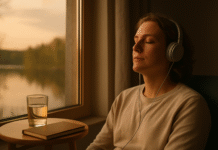

















Taoist meditation is a family of practices that quiet the heart-mind (xin), settle the breath in the lower dantian, and cultivate easeful, unforced action (wu wei). In plain terms, Taoist meditation helps you feel centered and relaxed while staying responsive to life. This guide walks you through nine cornerstone methods—from classical “sitting and forgetting” to standing, breathwork, and sound practices—so you can build a stillness routine that fits modern schedules and bodies. Brief note: meditation supports well-being but is not a medical treatment; if you have health conditions (especially respiratory or cardiovascular), adapt gently and consult a healthcare professional as needed.
Quick start (3–5 minutes): Sit or stand tall → exhale slowly through the nose → rest attention two finger-widths below the navel → let the belly soften on the inhale and condense on the exhale → notice sounds and sensations without chasing them → end by smiling into the belly.
1. Zuowang (“Sitting and Forgetting”): Emptying Into Quiet
Zuowang—literally “sitting and forgetting”—is a classical Taoist meditation described in the Zhuangzi. It means releasing grasping and letting mental fabrications ebb until only simple presence remains. Start by recognizing that quietness (jing) is not forced blankness; it’s allowing thoughts, sensations, and moods to pass without adding commentary. In practice, you sit comfortably, relax the jaw and abdomen, rest attention in the lower dantian, and stop feeding inner dialogue. The early texts pair zuowang with xinzhai (“fasting of the mind”), emphasizing a shift from conceptual thinking to an embodied listening with qi—vital breath or energy.
1.1 Why it matters
Zuowang trains non-grasping awareness, which reduces cognitive overdrive and stress reactivity. In Taoist terms, it re-aligns with the Dao by “emptying” the heart-mind so responsiveness arises from the whole body, not just discursive thought. The practice influenced later religious Taoism and internal alchemy, forming a base for more structured techniques.
1.2 How to do it (10–20 minutes)
- Seat: chair or cushion; spine tall, shoulders heavy.
- Gaze: soft, eyes half-open or closed.
- Breath: natural through the nose; feel the belly expand/settle.
- Attention: rest in the lower dantian; when thoughts arise, “forget” them—let them pass without push or pull.
- Finish: one deeper exhale; open eyes; notice the room.
Common mistakes: chasing special states; locking the breath; collapsing posture; “trying to be empty” (which is more doing). End by noting one practical way the session softened your day. Over time, the felt sense of space becomes familiar and portable.
2. Xinzhai (“Fasting the Heart-Mind”): Clearing Cognitive Noise
Xinzhai is the companion to zuowang. Rather than dietary fasting, it’s mental fasting: dropping agendas and opinions to listen with qi. The Zhuangzi has Confucius advise his disciple Yan Hui to stop “listening with the ears or the mind” and instead “listen with qi,” because the Dao “gathers in emptiness.” Practically, xinzhai is a brief reset you can use before a difficult conversation, a decision, or meditation itself. You empty out anticipations and “clean the palate” of attention, so perception becomes less filtered by bias and rumination. Stanford Encyclopedia of Philosophy
2.1 Micro-protocol (3–7 minutes)
- Name the noise: silently list the top 2–3 worries or expectations.
- Exhale them out: long, unforced exhale; imagine placing each concern outside the body.
- Listen with qi: move attention from head to torso—chest, belly, back—allowing sensations to register without judging.
- Ask one clear question: “What’s truly needed now?” Wait in quiet for a simple inclination.
- Re-enter: choose the smallest next step that feels unforced.
2.2 Guardrails & examples
If your mind races, give it somewhere simple to rest (lower dantian or the feel of the breath at the nostrils). Before a presentation, two cycles of xinzhai can reduce reactivity and enhance presence. For conflict, fast the mind first, then speak from the body’s steadiness rather than the head’s arguments. Over weeks, xinzhai cultivates the condition in which wu wei becomes possible. Stanford Encyclopedia of Philosophy
3. Shouyi (“Guarding the One”): Centering on Unity
Shouyi—often translated “guarding the One”—is a concentrative Taoist meditation. In classical sources (e.g., Ge Hong’s Baopuzi), it can include visualizing the “One” (Unity) as an inner deity residing in shifting locations (the cinnabar fields) or simply keeping awareness gathered at one point (often the lower dantian). For modern practice, think of it as gentle centering: hold a single, living focal point so the mind stops scattering.
3.1 How to do it (12–18 minutes)
- Choose “the One”: the lower dantian; or a pearl of light about the size of a small plum behind the navel.
- Rest, don’t force: breathe naturally; let attention sit on/within that point.
- If thoughts pull you away: notice, smile inwardly, and return—no penalty.
- Optional classical layer: imagine the “One” subtly luminous in the three fields (lower belly, heart center, between the brows), returning to the lower belly.
3.2 Common mistakes & fixes
Over-concentrating (tension in the brow/jaw) or shrinking awareness to a pin-point. Instead, hold the point within a relaxed, panoramic field—like a candle in a quiet room. With steady practice, shouyi improves emotional regulation and builds the felt center that supports daily wu wei. Historically it also bridges toward internal alchemy; here we treat it as a safe, accessible concentrative base. eastasian.ucsb.edu
4. Dantian Breathing (Embryonic Breathing Basics): Softening From the Core
Classical texts describe taixi—“embryonic breathing”—an advanced image of breathing so subtly that the body seems to breathe itself. Modern, safe training starts much simpler: gentle, low abdominal breathing with attention in the lower dantian. The aim is to calm the nervous system and stabilize attention, not to hold the breath or seek exotic sensations. Over time, the breath becomes quiet and elastic—exhales lengthen naturally, and the belly and back soften. Wikipedia
4.1 How to do it (8–15 minutes)
- Sit or stand tall; place one hand below the navel.
- Inhale through the nose; allow the belly to expand in all directions (front/back/sides).
- Exhale as the belly gently recedes—imagine warm air diffusing through the lower abdomen.
- Keep shoulders and chest quiet; jaw slack.
- Finish with three slightly longer, softer exhales; rest in stillness for 30–60 seconds.
4.2 Numbers & guardrails
Start with 4–6 breaths per minute; avoid breath-holding unless guided by a qualified teacher. If you feel dizzy, lighten the depth and return to normal breathing. Classical “embryonic breathing” is a metaphor and long-term ideal in internal alchemy; use its spirit—effortless, whole-body breathing—without straining.
Synthesis: Dantian breathing is the most transferable skill in this guide. It steadies mood on the spot and deepens every other practice by making the body feel safe and quiet.
5. Microcosmic Orbit (Xiao Zhou Tian): Circulating With Ease
The “Microcosmic Orbit” is a well-known Taoist method that guides attention (and, traditionally, qi) along a loop: up the spine on the Governing Vessel and down the front on the Conception Vessel. It’s historically mentioned in Daoist sources and widely taught today. Approach it as a relaxed attentional circuit, not a forceful energy push. The aim is to unify upper and lower body awareness, synchronize breath and posture, and cultivate an even, warm calm.
5.1 How to do it (beginners’ version, 10–15 minutes)
- Settle: 2–3 minutes of dantian breathing.
- Back line: on an easy inhale, feel awareness rise from tailbone → sacrum → mid-back → between the shoulder blades → base of skull.
- Front line: on the exhale, awareness flows from throat → center of chest → solar plexus → navel → lower dantian → pelvic floor.
- Loop: continue gently for 8–12 cycles.
- Close: rest attention in the lower dantian; three soft exhales.
5.2 Common mistakes & safety
Don’t strain, hold the breath, or chase heat/tingling. If you have spinal/pelvic issues or a history of anxiety, keep the loop small and the breath natural. Treat this as body-mapping plus breath coordination; as skill grows, a diffuse warmth or evenness may appear on its own. Historically associated with internal alchemy and qigong, the orbit should feel nourishing, never forced. The Golden ElixirInternal Arts International
Synthesis: A light Microcosmic Orbit balances head and belly, encouraging the “evenness” that Taoists call harmony.
6. Zhan Zhuang (“Standing Like a Tree”): Stillness With Strength
Zhan zhuang is a standing meditation from internal arts like taiji, yiquan, and baguazhang. You hold simple postures—often “hug the tree”—to connect posture, breath, and awareness. As the legs and fascia settle, micro-tensions release, the breath drops lower, and the mind quiets. For many modern practitioners (desk-heavy lives), standing is the fastest way to feel grounded: strong but unforced, alert but calm.
6.1 How to do it (6–12 minutes to start)
- Feet hip-width; knees soft; weight centered in the arches.
- Pelvis neutral (imagine a tail gently heavy).
- Spine long; crown light; chin slightly tucked.
- Arms round as if embracing a big ball; armpits “hollow” (a small orange under each).
- Tongue on the palate; breathe quietly; eyes soft forward or closed.
6.2 Tools & mini-checklist
- Timer or soft chime; optional mirror for alignment.
- Start with 2 minutes; add 30–60 seconds each session up to 10–20 minutes.
- If knees ache, rise slightly; if low back tightens, tuck less.
- End by lowering the arms slowly; rub hands over belly to “store” attention in the dantian.
- On busy days, 60–90 seconds of standing between meetings resets posture and mood.
Synthesis: Standing reveals “movement inside stillness”—subtle fascial lengthening and breath waves—while your mind learns to rest in uncomplicated presence.
7. Inner Smile: Softening the Body From the Inside Out
The Inner Smile is a modern Taoist practice (popularized by Mantak Chia) that cultivates warmth and friendliness toward the body’s organs. Instead of pushing the mind to be quiet, you invite it to rest through an affective cue—gently smiling into the belly, heart, and other tissues. This blends well with dantian breathing and zuowang when over-effort creeps in. The promise is simple: kindness softens holding patterns, and a soft body is a quiet place to sit.
7.1 How to do it (7–12 minutes)
- Sit or stand; take three easy breaths.
- Imagine a warm, relaxed smile at the corners of the eyes.
- Let that smile “melt” down through the face, throat, chest, and into the belly.
- Pause at the heart: recall a moment of uncomplicated appreciation.
- Guide the smile into the lower dantian; rest there; end by smiling outward into the room.
7.2 Common mistakes & refinements
Don’t perform a grin; feel warmth from the inside. If imagery is hard, pair with words like “soften,” “safe,” or “welcome.” If you feel nothing, that’s fine—just keep breathing low and easy. Over time, the Inner Smile conditions a baseline of friendliness that reduces micro-reactivity and helps meditation unfold. It’s widely taught in the Universal Healing Tao framework; treat it as an optional, gentle adjunct. mantakchia.com
8. Six Healing Sounds (Liu Zi Jue): Clearing With Breath and Vibration
Liu Zi Jue coordinates breath, mouth shapes, and gentle movement to produce six specific sounds: xu, he, hu, si, chui, xi. In traditional frameworks, each sound relates to an organ system; in modern studies, the practice is framed as a breathing technique that may support relaxation, respiratory function, and mood. For our purposes, it’s a practical way to lengthen exhales and clear agitation before stillness practice.
8.1 How to do it (one round, ~5 minutes)
- Sit or stand tall; inhale quietly.
- Exhale with xu (long hiss-like), then he, hu, si, chui, xi—each for one easy breath.
- Let the face and chest stay soft; keep the exhale longer than the inhale without strain.
- Repeat the six sounds 2–3 times; finish with 3 quiet nose breaths, attention in the belly.
8.2 Notes, options, and evidence
Instructional materials (and research) commonly present the sequence and organ associations in the context of health qigong; exact mappings vary by lineage. Randomized and observational studies suggest benefits for respiratory symptoms and mental health in specific groups and for eliciting the relaxation response (always as complementary care, not a cure). Keep volume moderate; never push the voice. taichi.ca
Synthesis: The Six Healing Sounds function as a “breath bridge” into stillness: clearer exhalations, calmer nerves, quieter mind.
9. Walking & Nature Contemplation (Ziran and Everyday Wu Wei)
Taoism prizes ziran (naturalness) and wu wei (effortless action). A direct way to taste both is unhurried walking in nature—“meditation in motion.” The point isn’t steps per minute; it’s aligning posture, breath, and attention with the environment: wind in bamboo, light on water, feet meeting earth. This resets the nervous system, loosens the chest, and brings the unforced rhythm you can then carry into sitting or daily tasks.
9.1 How to do it (10–25 minutes)
- Choose a quiet path (park, garden, or even a calm street).
- Walk at a relaxed pace; feel the foot roll from heel to ball; knees soft.
- Breathe low and easy; let the exhale be a shade longer.
- Sense sounds, temperature, and textures without labeling.
- Every 20–30 steps, relax the jaw and smile lightly into the belly.
9.2 Common mistakes & integration
Don’t turn it into a fitness drill or a scrolling session. If thoughts loop, widen the field: feel ground + breath + sky at once. Close by standing still for three breaths, attention in the dantian. Later, apply the same wu wei feel to email, parenting, or a hard conversation: less pushing, more attunement. Philosophically, this echoes the Taoist ideal—acting without forcing, guided by a quiet center. Wikipedia
FAQs
1) What is the simplest Taoist meditation for beginners?
Start with dantian breathing while sitting or standing: inhale softly through the nose and feel the belly expand; exhale and let it settle. Rest attention two finger-widths below the navel. Do 5–10 minutes daily. It’s low risk, pairs well with any schedule, and provides the foundation for zuowang, shouyi, and the Microcosmic Orbit. If you’re tense, add one round of the Six Healing Sounds first. (See items 4 and 8.)
2) How is Taoist meditation different from mindfulness?
Mindfulness often emphasizes nonjudgmental awareness of the present moment. Taoist methods share that spirit but add centering in the dantian, body-based attentional anchors, and practices oriented toward harmony with the Dao (e.g., xinzhai and shouyi). Many lineages also include breath and qi frameworks and emphasize wu wei—effortless, appropriate action—as a practical outcome.
3) Is the Microcosmic Orbit safe to learn without a teacher?
A gentle attentional loop paired with easy breathing is generally fine. Problems arise from forcing the breath, chasing intense sensations, or practicing while anxious or unwell. Keep it subtle, time-limited (10–15 minutes), and always close by resting in the lower dantian. For advanced energy work, seek qualified instruction and medical clearance if needed.
4) What does “listen with qi” actually mean?
It’s a classical metaphor from the Zhuangzi: stop listening only with the ears/mind (concepts), and let the whole body “listen,” especially through the breath and torso. Practically, it means widen attention to somatic cues—pressure, temperature, posture—so you’re less trapped in abstractions and more responsive.
5) How long until I feel calmer?
Many people notice a shift in 3–5 minutes of low belly breathing or standing. Lasting change comes from consistency: aim for 10–20 minutes most days and brief on-ramps (one round of healing sounds, 60 seconds of standing) during transitions. In Taoist terms, you’re cultivating de (virtue/potency) through repeated, small returns to stillness.
6) Do I need to believe in qi or visualize deities for shouyi?
No. You can treat shouyi as attentional centering on a single point (the lower dantian). Some lineages use deity visualization; others don’t. The shared aim is gathered, unscattered awareness. Choose the framing that helps you relax and remain present.
7) Is there evidence for Six Healing Sounds or qigong helping health?
Modern studies suggest potential benefits for relaxation, respiratory symptoms, and mood in certain populations; Liu Zi Jue has been investigated for breathing efficiency and, in small trials, symptom relief as complementary care. It’s not a cure-all, but it’s a low-risk way to lengthen exhalations and reduce stress when practiced gently. PMC
8) I get sleepy or restless when sitting—what should I try?
Alternate modes: 2–3 minutes of standing (zhan zhuang), a slow 10-minute walk, or one round of the Six Sounds, then sit. Sleepiness often signals down-regulation without enough alertness; standing balances that. Restlessness often eases after lengthening exhalations and softening the jaw/eyes.
9) How does Taoist meditation relate to internal alchemy (neidan)?
Internal alchemy is a complex set of doctrines and practices aimed at transformation, historically building on methods like dantian breathing, shouyi, and circulation techniques. For everyday practice, you can borrow its gentler components—breath, centering, even a very soft orbit—without engaging esoteric stages. Wikipedia
10) Can I combine Taoist meditation with yoga or mindfulness apps?
Yes. Think of dantian breathing as your universal adapter. Use a favorite app for structure, but center awareness in the lower abdomen and keep the feel of wu wei: unforced, patient, and body-led. Over weeks, you’ll notice that calm becomes easier to carry into work, parenting, and movement.
Conclusion
Finding inner stillness the Taoist way is less about mastering techniques than learning to stop forcing. Each practice here—zuowang, xinzhai, shouyi, dantian breathing, the gentle Orbit, standing, the Inner Smile, Six Healing Sounds, and walking—offers a different doorway into the same room: quiet, grounded presence centered in the lower belly and expressed as ease in daily action. Build your routine with small, repeatable pieces: a 3-minute breath reset before meetings; 8 minutes of sitting on waking; 60 seconds of standing between tasks; one slow walk after lunch; a smiling exhale before sleep. Keep it gentle and consistent. In time, you’ll notice that calm no longer depends on perfect conditions; it lives in your posture, breath, and choices.
Take the next step: Pick one practice above and do it today for 5–10 minutes—then note one thing it made easier.
References
- Religious Daoism. Stanford Encyclopedia of Philosophy, Fabrizio Pregadio, 2016. https://plato.stanford.edu/entries/daoism-religion/
- Daoism. Stanford Encyclopedia of Philosophy, Chad Hansen, 2025. https://plato.stanford.edu/entries/daoism/
- Zhuangzi – The Inner Chapters (translation & study). Indiana University ScholarWorks PDF (translation excerpts), 2010. https://scholarworks.iu.edu/dspace/bitstreams/5dc89a23-c6bf-4190-a1e4-6762dc5359cc/download
- Mind (Heart-Mind) in Chinese Philosophy. Stanford Encyclopedia of Philosophy, David Wong, 2023. https://plato.stanford.edu/entries/chinese-mind/
- Early Daoist Meditation and the Origins of Inner Alchemy. Fabrizio Pregadio (PDF), 2012. https://www.fabriziopregadio.com/files/PREGADIO_Early_Daoist_Meditation.pdf
- Cinnabar Fields (Dantian). Golden Elixir (Pregadio), n.d. https://www.goldenelixir.com/jindan/dantian.html
- The Way of the Golden Elixir (anthology excerpt). Golden Elixir Press (PDF), n.d. https://www.goldenelixir.com/files/The_Way_of_the_Golden_Elixir.pdf
- Cosmic Orbit (Xiao Zhou Tian). FYSK: Daoist Culture Centre – Database, n.d. https://en.daoinfo.org/wiki/Cosmic_Orbit
- Zhan zhuang. Wikipedia overview with internal references, last updated 2025. https://en.wikipedia.org/wiki/Zhan_zhuang
- Practice of the Inner Smile. Mantak Chia – Universal Healing Tao, 2022. https://www.mantakchia.com/practice-of-the-inner-smile-master-chia/
- Liu-Zi-Jue (Six Healing Sounds) – EEG and description. Frontiers in Psychology, Henz & Schöllhorn, 2018. https://www.frontiersin.org/journals/psychology/articles/10.3389/fpsyg.2017.02291/full
- Mind–Body Health Technique Liu Zi Jue: Its Creation, Transition, and Formalization. SAGE Open, Shi et al., 2020. https://journals.sagepub.com/doi/10.1177/2158244020927024
- Effectiveness of Liu-zi-jue exercise on COVID-19 symptoms (RCT). Trials, Zhu et al., 2022. https://trialsjournal.biomedcentral.com/articles/10.1186/s13063-020-04693-5
- Zhuangzi – Stanford Encyclopedia of Philosophy. Chris Fraser (rev. by others), 2014–2022. https://plato.stanford.edu/entries/zhuangzi/