

















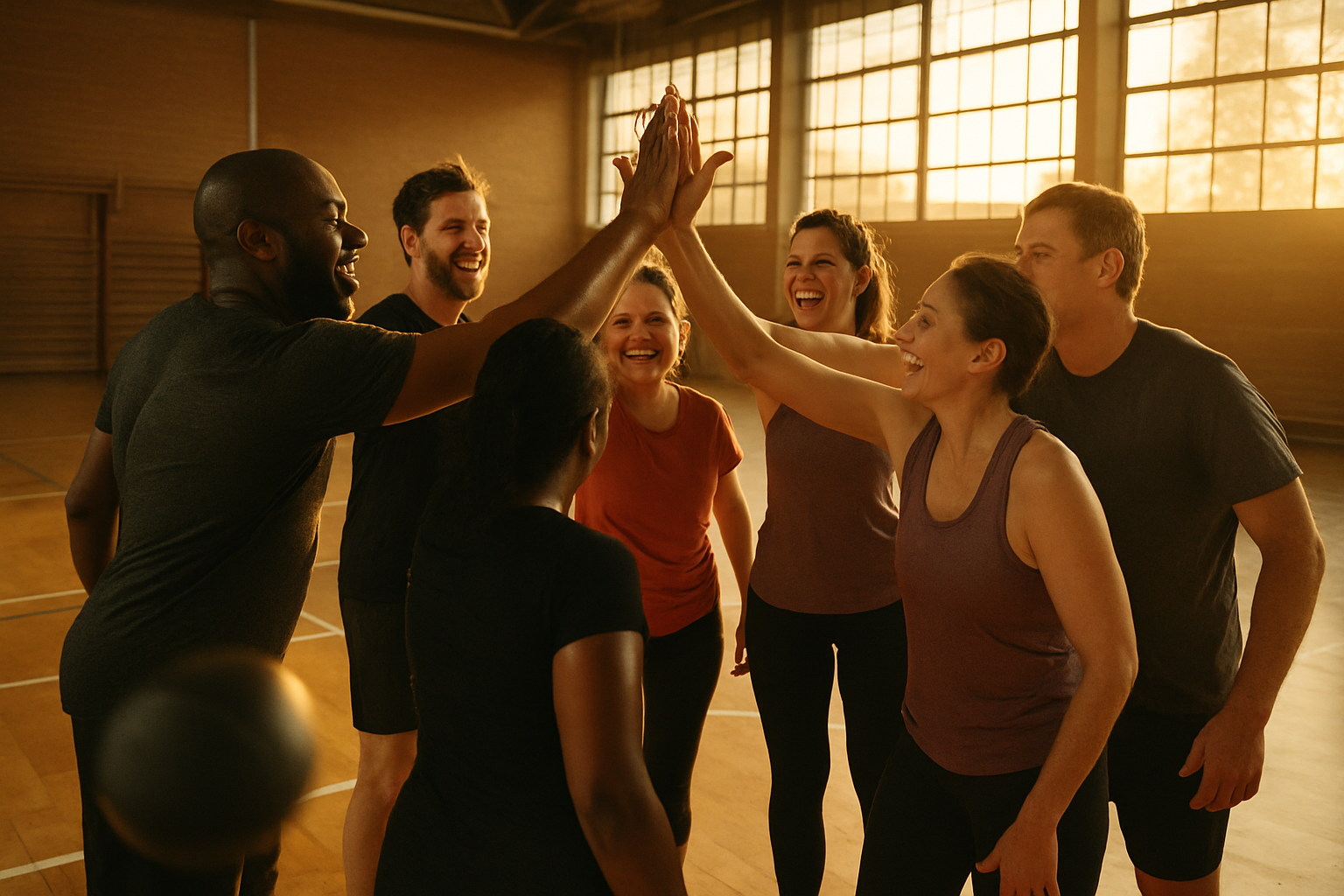
Team sports and group classes aren’t just workouts—they’re structured communities where shared goals, regular contact, and visible progress make belonging and confidence almost inevitable. In simple terms, these settings build community by giving people common missions, rituals, and language; they build confidence by offering frequent feedback, achievable milestones, and social support that turns effort into habit. Within weeks, most people report better mood, more motivation, and a stronger sense of self-efficacy (the belief that “I can do this”)—a key driver of long-term adherence and personal growth. As of August 2025, public-health guidance still recommends at least 150 minutes of moderate activity weekly; group formats remain one of the most reliable ways to meet that target with less friction. This guide breaks down 12 practical mechanisms—each one a lever you can pull—to make team sports and group classes work for you.
Quick start (at a glance): pick a format you enjoy, lock two recurring sessions, recruit a buddy, set a baseline (e.g., beep test level, 1 km time, or 10-rep load), choose a beginner track, ask for feedback weekly, and commit to four weeks before you evaluate.
1. Shared Goals Turn Strangers Into Allies
Shared, clearly defined goals are the social glue of teams and classes; they transform casual attendance into collective momentum. The first confidence lift comes from alignment: everyone’s here to complete the workout, win points, or master a skill progression, so your effort feels purposeful and visible. A second lift comes from role clarity—keeper, setter, spotter, lane leader—which reduces uncertainty and lowers social anxiety. When goals are time-bound (a six-week “intro to futsal,” a month-long hypertrophy block), you also get a built-in season arc that culminates in a test, scrimmage, or showcase. Even newer participants benefit because group goals distribute attention: you’re never “on stage” alone. Over time, this goal-matching produces reciprocity; you celebrate others’ wins, they celebrate yours, and confidence rises because achievement is recognized, not hidden.
- How to implement shared goals fast:
- Define a 4–8 week “season” with a clear finish line (friendly match, belt test, mock game).
- Assign roles each session (starter/bench rotations, team captain, warm-up lead).
- Track one team metric (goals conceded, successful serves, “on-time start” streak).
- Mini-checklist: Is the goal visible, time-bound, and measured? Does every member know their role this week?
Synthesis: shared goals create a reason to show up and a standard to celebrate, making community and confidence rise in tandem.
2. Repetition + Progressions Build Self-Efficacy
Confidence isn’t magic; it’s earned through repeated success at graduated difficulty. Group formats excel here because instructors and captains standardize progressions—scalable drills, modified loads, and rep schemes—so you collect wins early and often. The first 2–4 weeks are crucial: completing sets, nailing a basic passing pattern, or finishing a choreographed sequence teaches your brain “effort → result,” which is the core of self-efficacy. When the whole class repeats patterns (e.g., layup lines, serve-receive ladders, EMOM blocks), you get more high-quality repetitions per minute than you would alone, and you see others improving alongside you, which normalizes growth. As the difficulty ramps—longer rallies, heavier loads, more complex formations—the same structure that helped you start now helps you stretch.
2.1 Why it matters
Self-efficacy predicts whether you start, persist, and rebound after lapses. Group progressions compress the time to your first “win,” so you believe you can do the next hard thing.
2.2 Numbers & guardrails
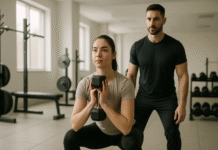
- Plan 10–20 quality reps per skill per session (e.g., 15 controlled passes each side; 12 goblet squats).
- Use RPE 6–8 (perceived effort) on main sets; progress 5–10% weekly if technique holds.
- Deload every 4th week to consolidate gains.
Synthesis: thoughtful repetition underpins confidence; progressions make it inevitable rather than accidental.
3. Real-Time Feedback Accelerates Skill and Confidence
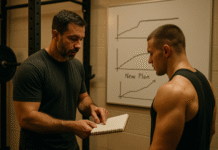
Immediate, specific feedback from coaches and peers shortens learning loops. In a team drill or class circuit, you’ll get corrections inside the same minute—“angle your run,” “drop your hips,” “keep the elbow in”—so the next rep is better. That quick loop matters psychologically: you attribute success to controllable actions (technique, pacing) rather than luck. Group settings multiply feedback sources: coaches cue form, peers model desired movement, and the scoreboard or whiteboard provides objective outcomes. Even micro-praise (“great recovery step”) boosts perceived competence, a key pillar of motivation. Over time, consistent, actionable feedback builds a personal highlight reel you can recall when self-doubt spikes.
3.1 Tools/Examples
- Cue cards / whiteboards: key coaching cues visible for the block.
- Partner reviews: 20-second “what went well / one thing to try”.
- Video snippets: one clip per athlete each week for form checks.
3.2 Common mistakes
- Vague praise (“nice job”) without a behavior to repeat.
- Over-coaching mid-rep (wait for the pause).
- Feedback only for advanced players, leaving beginners invisible.
Synthesis: precise, timely feedback turns effort into skill—and skill into durable confidence.
4. Social Accountability Increases Adherence
Community isn’t just warm feelings; it’s a practical adherence engine. When others expect you, showing up becomes the default. Research consistently links social support and group formats with higher attendance and longer retention versus solo plans. In a league or class, your RSVP, team chat, and shared schedule create light pressure that nudges action on low-motivation days. Accountability also reduces cognitive load—no decision about “if” you’ll train, just “how you’ll get there.” Over months, that consistency compounds into measurable fitness and competence, which further boosts confidence. The loop is self-reinforcing: show up → small win → social reinforcement → show up again.
- Accountability tactics that work:
- Micro-commitments: declare two sessions/week in the group chat.
- Attendance streaks: celebrate 4, 8, 12 consecutive sessions.
- Buddy system: assign rotating partners for warm-ups and cooldowns.
- Visible calendars: shared Google Calendar or wall schedule.
Synthesis: accountability is the bridge between intention and habit; groups make that bridge sturdy and well-lit.
5. Psychological Safety Reduces Anxiety and Unlocks Effort
People perform—and stick around—when they feel safe to try, fail, and learn. Inclusive team norms and beginner-friendly class design reduce evaluation anxiety, especially for adults returning to sport after years away. Psychological safety starts with tone (coaches model curiosity, not criticism) and structure (clear rules, scaled options). It also includes explicit permission to opt out of certain drills without stigma and to raise a hand for form help. Over time, this climate invites productive risk-taking—attempting the tougher serve, calling for the ball, or taking a leadership role—behaviors that rapidly grow confidence. For many, a safe team becomes a weekly refuge that buffers stress and loneliness.
5.1 How to do it
- State session norms: ask questions any time, fail fast, cheer efforts.
- Offer two scalable options per drill (e.g., step-down plyos vs. full jumps).
- Use names and rotate attention so all feel seen.
- Establish a no body-shaming / no skill-shaming policy.
5.2 Region note (South Asia example)
In Pakistan and across South Asia, mixed-ability cricket, badminton, and futsal clubs thrive when beginners get protected roles (e.g., fielding zones, rotational doubles). Posting norms in Urdu/English can widen access.
Synthesis: psychological safety converts nervous energy into learning energy; confidence follows.
6. Progressive Challenge and “Gamefulness” Create Flow
Flow—the feeling of deep absorption and time-loss—emerges when challenge meets skill. Teams and classes control this balance well: coaches scale drills, add scoring systems, or set time caps to keep you at the edge of competence. Game elements (teams, rounds, small rewards) add meaning and fun, increasing voluntary effort. As you collect “micro-wins” (rally streaks, split times, phase completions), you experience mastery without boredom or overwhelm. Flow states are intrinsically rewarding; that positive association makes you crave the next session, building both adherence and self-belief.
6.1 Numbers & guardrails
- Target work:rest ratios of 1:1 to 1:2 in mixed conditioning blocks.
- Keep drill complexity rising one variable at a time (speed → direction → decision).
- Use small-sided games (3v3, 4v4) for more touches and decisions per minute.
6.2 Mini case
A beginner futsal group switched to 4v4 on a reduced court with a 5-pass rule. Touches per player doubled, defensive reads improved, and shy members called for the ball more often. Attendance jumped 20% over six weeks.
Synthesis: well-calibrated challenge generates flow; flow turns practice into something you can’t wait to repeat.
7. Identity, Rituals, and Language Strengthen Belonging
Communities cohere around identity markers and shared rituals: a team name, end-of-session huddle, “player of the day,” or class-specific slang. These tiny signals tell your brain “I’m part of this.” Belonging then shapes behavior: you adopt group norms (hydration, warm-ups), defend standards (on-time starts), and recruit friends—behavioral evidence that confidence and commitment have taken root. Rituals also punctuate progress; pinning a first race bib, earning a class band, or getting a photo on the “PR wall” validates identity growth (“I am an athlete”). For many adults, especially those who left sport after school, these micro-rituals reactivate a dormant, positive identity.
7.1 Practical rituals to add
- One-minute kudos circle at the end.
- Shared emoji in the chat for milestones.
- Welcome protocol for first-timers (buddy + post-class check-in).
- Season kickoff & capstone (friendly match, showcase, or hike).
Synthesis: rituals make culture tangible; tangible culture makes belonging sticky.
8. Diverse Networks Expand Support and Opportunity
Group formats mix ages, backgrounds, and professions, broadening your social capital. That diversity increases the odds of finding a mentor, carpool partner, or job lead—real benefits that strengthen your attachment to the group. For confidence, exposure to different learning styles and body types normalizes varied progress paths; you stop comparing up and start learning across. Diverse teams also challenge biases, whether about gender and sport, age and strength, or culture and communication. The result is a wider comfort zone and a more resilient self-concept.
8.1 How to cultivate diversity
- Sliding-scale fees and loaner gear.
- Mixed-ability drills where roles rotate (setter/libero, playmaker/finisher).
- Outreach beyond the usual channels (community centers, universities, workplaces).
8.2 Mini-checklist
Is your team photo visibly diverse? Do schedules and locations accommodate varying work and prayer times? Are there beginner-only on-ramps?
Synthesis: diverse teams create resilient communities and broader selves—confidence that travels outside the gym.
9. Measurable Milestones Make Progress Obvious
Confidence grows fastest when progress is seen, not guessed. Teams and classes that log objective metrics—attendance streaks, load, pace, serve accuracy, rally length—make improvement visible to you and your peers. That visibility combats imposter feelings and anchors motivation on facts. Milestones should be small, frequent, and tied to skills that matter for your game or class. Post them on a shared board or app so teammates can cheer them; the social proof compounds the effect. Over seasons, these data become a personal narrative of competence.
9.1 Tools & examples
- Simple apps: Google Sheets, Heja, TeamSnap, TrainHeroic.
- Skill metrics: first serve %; successful first touch; 1 km time; 10RM squat.
- Milestone cadence: weekly micro-PRs; monthly benchmark day; seasonal showcase.
9.2 Guardrails
Measure what you can influence; avoid over-indexing on outcomes (win/loss) for beginners. Celebrate consistency as much as peak performance.
Synthesis: milestones replace vibes with evidence—confidence you can point to.
10. Leadership Opportunities Grow Voice and Agency
Nothing builds confidence like responsibility. Team sports and classes offer many bite-size leadership roles: warm-up lead, equipment captain, attendance tracker, or friendly scrimmage referee. Rotating these roles helps shy members practice voice in low-risk contexts; over time, they may coach a drill, brief a strategy, or lead a cool-down. This skill transfer is huge for life outside sport—presenting at work feels easier after calling a defensive switch under pressure. Leadership also strengthens community: when members contribute, ownership rises and culture stabilizes.
10.1 Role menu (start small)
- Logistics lead: sets up cones, confirms court booking.
- Hype lead: crafts a 30-second pre-game message.
- Data lead: records attendance and weekly PRs.
- Safety lead: checks warm-up quality and cool-down completion.
Synthesis: rotate the mic; every voice you amplify becomes another pillar of team confidence.
11. Access Pathways Remove Friction and Widen the Tent
Community withers when the door is hard to open. Successful programs remove cost, time, and intimidation barriers: beginner-only classes, loaner equipment, pay-what-you-can slots, and family-friendly scheduling. Clear “what to expect” pages with photos and first-session checklists reduce ambiguity, while trial classes let people test without commitment. In many cities, adult recreation leagues and community centers run low-cost seasons in cricket, futsal, badminton, basketball, and volleyball—sports with minimal gear and simple rules. Making entry easy is not just altruism; it grows your talent pool and enriches culture.
11.1 First-timer checklist
- Wear breathable layers and supportive shoes.
- Arrive 10 minutes early for names, rules, and a tour.
- Share injuries/concerns privately with the coach.
- Set a 2-session trial before deciding.
11.2 Region note
Where outdoor space is limited, look for school courts off-hours, mosque/community-center halls, or university gyms with guest passes; many clubs in South Asia coordinate via WhatsApp or Facebook groups.
Synthesis: when access is obvious and respectful, communities grow—and new members’ confidence grows with them.
12. Hybrid Habits Keep Confidence Growing Between Sessions
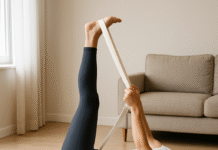
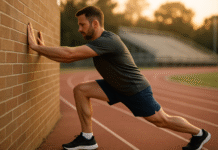
Confidence built on Tuesday can fade by Friday unless you keep the flywheel spinning. Hybrid habits pair group sessions with short solo touchpoints: wall passes, mobility flows, or interval walks. The point isn’t to replace community but to extend it; between-class drills keep technique fresh and make the next group session feel easier, which then rewards you socially and emotionally. Simple cue cards, shared playlists, or micro-videos keep everyone aligned. Over months, this “group + solo” rhythm stabilizes identity (“I’m the kind of person who moves”) and keeps confidence compounding.
12.1 20-minute hybrid menu
- Movement snack: 8 rounds of 30s brisk walk + 30s easy.
- Technique refresher: 3 × 10 wall passes/serves each side.
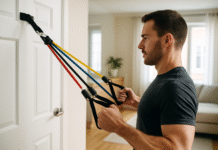
- Strength micro-set: 3 × 8 goblet squats + 3 × 10 band rows.
12.2 Numbers & guardrails
Aim for 2 group sessions + 1–2 micro-sessions weekly. Keep solo work at RPE ≤7 and stop before technique breaks; save max efforts for supervised sessions.
Synthesis: hybrid habits turn weekly peaks into a steady current of confidence and community.
FAQs
1) What’s the fastest way to pick the right sport or class?
Match your curiosity to logistics. Shortlist formats you’d actually enjoy (e.g., futsal, volleyball, bootcamp), then check three fit factors: schedule (can you attend 2x/week?), location (≤30 minutes), and vibe (beginner-friendly?). Try two trial sessions and pick the one where time flew and you felt noticed by the coach. Early enjoyment predicts adherence better than “shoulds,” which matters for confidence growth.
2) I’m nervous about being the least skilled person. How do I start?
Choose beginner-only sessions, message the coach ahead, and arrive early for a tour. Ask for a scaled role (e.g., libero-style defense, doubles pairing, modified loads) for the first two weeks. Confidence builds fastest when you get frequent, successful reps; safe roles ensure that without overwhelming you. Remember: most teammates were beginners recently and are primed to help.
3) Can team sports really improve my mental health?
Regular physical activity is consistently associated with better mood, sleep, and reduced stress; structured team or group contexts add social support and belonging, which are protective factors for mental well-being. As of mid-2024, large reviews and public-health guidance continue to recommend 150+ minutes weekly for substantial health benefits, and groups often improve adherence—key to realizing those benefits.
4) I don’t like competition. Are group classes still for me?
Yes. Many group formats are cooperative rather than competitive (circuit training, yoga, dance, mobility). Even in sports, choose small-sided, beginner-friendly scrimmages with process goals (number of completed passes, rally length) instead of win-loss focus. You’ll still get community and confidence via progress and support, not scoreboards.
5) How do I balance a busy schedule with a team commitment?
Lock two recurring sessions on low-conflict days and treat them like appointments. Commute time kills consistency, so aim for venues within 30 minutes. If your week explodes, do a 20-minute hybrid “movement snack” to bridge to the next team session. Communicate absences; accountability is most powerful when paired with transparent expectations.
6) What if I’m older or returning after an injury?
Look for masters-level leagues or scaled classes and confirm that coaches offer alternatives for impact and range of motion. Start with conservative intensity, emphasize warm-ups and cooldowns, and progress loads by 5–10% weekly only if technique is solid. Community can help here: teammates remind you to respect guardrails while keeping you engaged socially.
7) Do I need fancy gear?
No. For most court or field sports: supportive shoes, breathable clothes, and water. Many clubs provide loaner balls, bats, or bands. Borrow before you buy; when you do purchase, prioritize comfort and safety over brand. A simple backpack with tape, a spare shirt, and a reusable bottle covers most needs.
8) How soon will I feel more confident?
Many beginners report small confidence boosts in 2–4 weeks as they learn names, master basic patterns, and hit first milestones. Larger shifts follow after a “season” (6–8 weeks) when progress is more visible. Confidence compounds with attendance; pair group sessions with small solo refreshers to accelerate the effect.
9) Are team sports better than solo workouts for sticking with exercise?
It depends on preference, but group formats often show higher adherence thanks to social support and scheduled structure. If you thrive on autonomy, keep one solo day; if you thrive on connection, make groups your foundation. The best plan is the one you can keep for months.
10) How do coaches influence confidence?
Great coaches give specific, timely feedback; set clear, achievable progressions; and model inclusive norms. Ask potential coaches how they handle beginners, feedback, and safety. If they can explain scaling options and post-session reviews, you’ve likely found a confidence-friendly environment.
11) I’m introverted—will group classes drain me?
Many introverts enjoy small-sided drills, predictable routines, and clear roles. Pick classes with capped sizes and consistent rosters, and arrive a bit early to settle in. Signal your preference for quiet focus during work sets; you can still belong without constant chatter. Confidence for introverts often grows through competence and reliable structure.
12) What’s the minimum I should aim for each week?
Anchor two group sessions (totaling at least 150 minutes of moderate activity across the week when combined with your own walks or mobility), add one 15–20 minute hybrid at home, and build from there. If time-pressed, keep intensity moderate and technique crisp; consistency beats heroic, sporadic efforts.
Conclusion
Community and confidence aren’t abstract ideals—they’re the predictable byproducts of well-designed team sports and group classes. Shared goals align effort, progressions and feedback turn practice into skill, and accountability keeps you showing up long enough to feel the benefits in your body and mood. Psychological safety opens the door for beginners and returners; measurable milestones and leadership opportunities keep everyone invested. Diverse rosters widen support, while hybrid habits extend gains between sessions. If you’ve struggled to stick with exercise alone, a team or class can remove decision fatigue and replace it with a weekly rhythm of belonging and achievement. Start small: pick a beginner-friendly format, schedule two sessions, and track one simple metric. In four weeks, you’ll likely feel more capable, more connected, and more excited for what’s next.
CTA: Choose one team or class today, book two sessions, and text a friend to join you—community and confidence will meet you there.
References
- World Health Organization 2020 guidelines on physical activity and sedentary behaviour, WHO/Br J Sports Med, 2020. https://pubmed.ncbi.nlm.nih.gov/33239350/
- Physical activity – Fact sheet, World Health Organization, June 26, 2024. https://www.who.int/news-room/fact-sheets/detail/physical-activity
- The impact of sports participation on mental health and social outcomes in adults: a systematic review and the ‘Mental Health through Sport’ conceptual model, Systematic Reviews (Eather et al.), June 2023. https://systematicreviewsjournal.biomedcentral.com/articles/10.1186/s13643-023-02264-8
- Physical activity and mental health: a systematic review and meta-analysis of mediators and moderators, International Journal of Behavioral Nutrition and Physical Activity (White et al.), 2024. https://ijbnpa.biomedcentral.com/articles/10.1186/s12966-024-01676-6
- Group exercise membership is associated with forms of social support for exercise, Journal of Sport and Exercise Psychology (Golaszewski et al.), 2021. https://pmc.ncbi.nlm.nih.gov/articles/PMC9053316/
- Understanding for whom, under what conditions, and how group-based physical activity interventions are successful: a realist review, BMC Public Health (Harden et al.), 2015. https://bmcpublichealth.biomedcentral.com/articles/10.1186/s12889-015-2270-8
- Adherence to community-based group exercise programmes, Preventive Medicine (Farrance et al.), 2016. https://www.sciencedirect.com/science/article/pii/S0091743516300147
- Role of Physical Activity on Mental Health and Well-Being, Cureus (Mahindru et al.), 2023. https://pmc.ncbi.nlm.nih.gov/articles/PMC9902068/
- Sporting Mind: The Interplay of Physical Activity and Mental Health, Healthcare (Martín-Rodríguez et al.), 2024. https://pmc.ncbi.nlm.nih.gov/articles/PMC10819297/
- The benefits of chronic sport participation and acute exercise on mental health and executive functioning in adolescents, Scientific Reports (Pasquerella et al.), 2025. https://www.nature.com/articles/s41598-025-88427-0
- A meta-analysis of the relationship between social support and physical activity in adolescents: the mediating role of self-efficacy, Frontiers in Psychology (Lin et al.), 2024. https://www.frontiersin.org/journals/psychology/articles/10.3389/fpsyg.2023.1305425/full
- Social support and physical activity in older adults: does general or specific support matter?, BMC Public Health (Lieber et al.), 2024. https://pmc.ncbi.nlm.nih.gov/articles/PMC11188280/