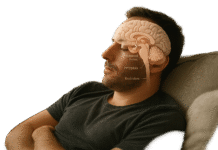















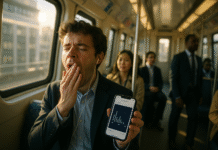

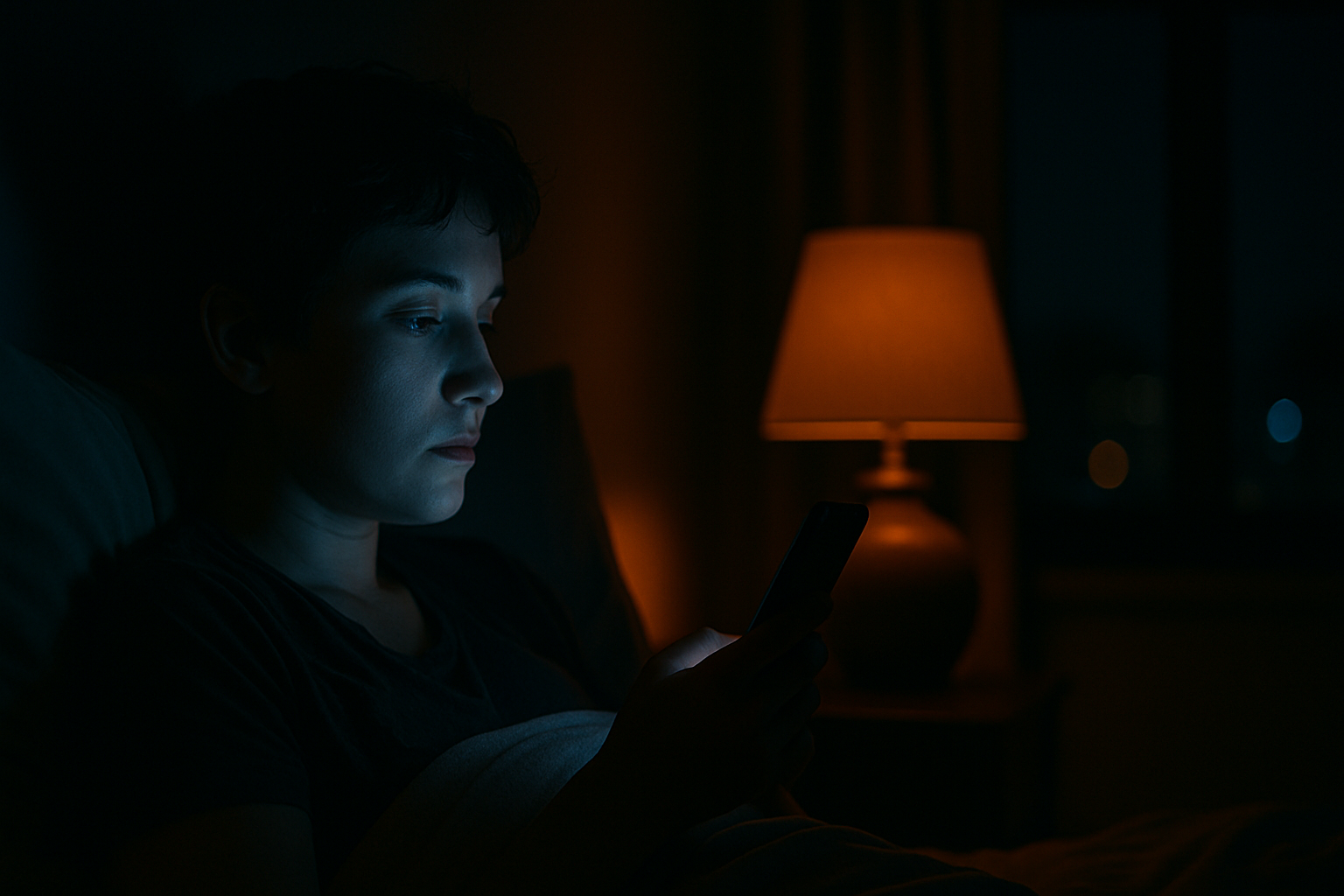
Blue light affects sleep quality because your eyes contain melanopsin-sensitive cells that tell the brain when it’s “daytime.” Short-wavelength (blue-rich) light in the evening suppresses melatonin and delays the body clock; bright, blue-enriched light by day strengthens alertness and nighttime sleep. A practical rule of thumb, as of 2025: aim for at least ~250 melanopic EDI lux in the daytime and keep it to ≤10 melanopic EDI lux for at least 3 hours before bed to protect sleep timing.
Quick note: This article is educational and not medical advice; if you have persistent insomnia or a sleep disorder, consult a qualified clinician.
1. Blue light suppresses melatonin and delays your body clock
Blue light lowers melatonin—the hormone that signals biological night—thereby delaying when you feel sleepy and when your internal clock expects sleep. The effect comes from intrinsically photosensitive retinal ganglion cells (ipRGCs) that are most responsive to short wavelengths near ~480 nm. When these cells detect evening light, the brain interprets it as daytime, pushing your circadian phase later and lengthening sleep latency. The relationship is dose-dependent: more light at the eye (and for longer) yields more suppression and a larger delay, especially near habitual bedtime. This is why an hour of bright, blue-rich light at 10:30 p.m. is more disruptive than the same light at 7 p.m. In contrast, blue-enriched daytime light bolsters your circadian amplitude and makes it easier to fall asleep at night—an important “yin–yang” principle of light hygiene. PubMed
1.1 Why it matters
- Melatonin suppression and circadian phase delay are the primary pathways by which night light degrades sleep quality.
- Short wavelengths are potent for these non-visual effects; the melanopic system is central.
1.2 Numbers & guardrails
- Mechanistic papers and standards highlight peak sensitivity around the blue range; use spectra and metrics that reflect melanopic weighting (see CIE S 026).
Bottom line: If you reduce blue-rich light in the 3 hours before bed, you’ll curb melatonin suppression and clock delays; if you increase blue-enriched light by day, you support night sleep.
2. Timing, intensity, spectrum, and melanopic EDI drive the effect (with usable targets)
Light’s impact on sleep depends on when you see it, how bright it is, and its spectrum. Modern guidance expresses this in melanopic equivalent daylight illuminance (melanopic EDI)—a metric defined in the CIE S 026 system that better captures non-visual effects than plain lux. An expert consensus recommends, for healthy adults: daytime at the eye ≥250 melanopic EDI lux; evening (starting ≥3 hours pre-bed) ≤10 melanopic EDI lux; and keep light during sleep as close to dark as practical. These numbers translate into concrete actions: seek bright outdoor light or blue-enriched indoor light after waking; then progressively dim and warm lighting as bedtime approaches. Using melanopic EDI makes comparing bulbs and scenes more meaningful than CCT alone. PubMed
2.1 How to use it
- Daytime: Sit near windows, open blinds, or add bright, high-melanopic task lights to hit ≥250 melanopic EDI lux at eye level.
- Evening: Target ≤10 melanopic EDI lux; dim overheads, switch to warm/amber lamps, and reduce screen luminance.
- Tools: Many lighting apps and tunable bulbs now report melanopic EDI or provide presets that approximate it. (CIE S 026 underpins these conversions.)
2.2 Mini-checklist
- Keep bright, blue-rich light to morning/midday; use dim, blue-depleted light after dusk.
- Measure at the eye if possible; wall readings understate true exposure.
Bottom line: Use melanopic EDI to manage light like a macro nutrient—“high” by day, “low” by evening—mapped to your bedtime.
3. Evening screens measurably delay sleep and reduce next-morning alertness
Randomized lab studies show that reading on a light-emitting e-reader at night, versus a printed book in dim light, delays the circadian clock, suppresses melatonin, increases time to fall asleep, and reduces next-morning alertness. This isn’t just a vibe; physiological markers shift. Importantly, the combination of spectrum plus brightness and timing accounts for the effect—tablets and phones place bright, blue-weighted light close to the eyes when your clock is most sensitive. Observational studies in adolescents and adults echo the lab findings: more screen use near bedtime associates with shorter sleep and more daytime sleepiness, even after accounting for age and other behaviors. The practical implication is simple: if you must use a screen late, manage brightness and exposure time aggressively.
3.1 Why it matters
- Physiology: Evening self-luminous displays acutely suppress melatonin and shift circadian timing.
- Behavior: More “in-bed” or pre-bed device time predicts poorer sleep outcomes across age groups.
3.2 Practical steps
- Reduce luminance (auto-brightness off; manual slider down).
- Increase distance (prop the device farther; larger screens at lower brightness can be less melanopically intense at the eye).
- Time-box late use (e.g., 15–20 minutes, then lights out).
Bottom line: Screens are potent because they’re bright and close to your eyes at the most sensitive time; limiting brightness and duration is non-negotiable. PubMed
4. Household LEDs can disrupt melatonin as much as screens if they’re bright and overhead
It isn’t only phones. Evening home lighting can be bright enough to suppress melatonin substantially, especially overhead, blue-rich fixtures in kitchens, living rooms, and bathrooms. Field research measuring real homes found nearly half had evening light levels capable of ~50% melatonin suppression, with wide person-to-person variability. Overhead lighting geometries deliver higher retinal illuminance than low, shaded lamps at the same fixture output; cool-white (higher CCT) lamps generally carry more melanopic weight than warm-white alternatives. This means you can “feel” cozy while your eyes are still getting a strong biological daytime signal—if the fixture is too bright or poorly placed.
4.1 How to fix your rooms (fast)
- Layered lighting: Use shaded table lamps and wall sconces in the evening; avoid bright ceiling cans.
- Warm the spectrum: Swap to 2200–2700 K bulbs for night; reserve 4000–6500 K for daytime.
- Dim and localize: Put dimmers on key circuits; light only the area you’re using.
4.2 Mini example
- A living room with five 800-lumen cool-white downlights can push melanopic EDI far above evening targets; replacing with two shaded warm lamps often brings you under ≤10 melanopic EDI at the eye (exact values vary by room geometry).
Bottom line: Treat fixtures like screens: spectrum, brightness, position, and timing matter—especially after dinner.
5. “Night Shift”/warm tint modes help only a little unless you also dim and limit time
Changing display color temperature to warmer tones without dimming doesn’t reliably protect melatonin or sleep. A controlled study found iPad Night Shift settings didn’t significantly reduce melatonin suppression compared with normal mode at the same brightness. A randomized trial in emerging adults similarly found no sleep outcome advantage from iPhone Night Shift; avoiding the phone altogether in the last hour helped only among those who were already sleeping adequately. Translation: spectrum shifts help on paper, but brightness and duration dominate in practice—so dim first, reduce time second, and change spectrum third.
5.1 What actually helps
- Hard dimming: Reduce display luminance to the lowest readable level.
- Time limits: Cap late-evening use; batch essential tasks earlier.
- Add distance: Hold devices farther from the eyes; larger text helps.
5.2 Common mistakes
- Assuming a warm filter means “safe at any brightness.”
- Relying on color-shift alone while binge-scrolling in a bright room.
Bottom line: Use warm modes, but don’t expect miracles—dimming and time-boxing are the real levers.
6. Blue-light–filtering glasses show little to no benefit for sleep quality
Despite heavy marketing, high-quality evidence finds that blue-light-filtering spectacles probably make no meaningful difference to sleep quality or eye strain compared with standard lenses, at least in the short term. A 2023 Cochrane Review pooling 17 randomized trials concluded that these lenses don’t reliably improve sleep or relieve digital eye strain. If you perceive a subjective benefit, that’s fine—but for sleep outcomes, lighting behavior (timing, brightness, spectrum) reliably beats accessory eyewear. Focus on environmental changes and screen habits first. Cochrane
6.1 What to do instead
- Optimize evening lighting (≤10 melanopic EDI lux).
- Dim screens + reduce exposure time (Section 5).
6.2 When glasses may make sense
- If they remind you to wind down earlier or reduce glare during daytime computer work (a comfort effect, not a sleep guarantee).
Bottom line: Save your budget—change your light, not your lenses.
7. Sensitivity varies widely; children and teens are often more light-sensitive at night
Not everyone responds to evening light the same way. Studies suggest more than a 50-fold range in individual sensitivity to melatonin suppression at night, meaning a given room can be harmless for one person and disruptive for another. Children and adolescents often show greater melatonin suppression than adults at the same evening light levels and with blue-enriched spectra, likely due to anatomical and developmental factors (e.g., larger pupils, clearer lenses, earlier circadian timing). In one experiment, school-aged children exhibited nearly double the suppression of their parents during evening bright-light exposure. Practically, that means family light rules should be set to the most sensitive member, not the least.
7.1 Family-friendly guardrails
- Earlier dimming: Start wind-down lighting 3–4 hours before kids’ bedtimes.
- Screen curfew: Keep devices out of bedrooms; if used, enforce low brightness and short sessions.
- Warm, low lamps: Nightlights should be dim and amber/red-shifted.
7.2 Mini case
- A 9-year-old and a parent share the same living room; swapping overhead cool-white LEDs for two warm lamps and pulling device use forward by 45 minutes can normalize the child’s melatonin profile without changing the adult’s schedule.
Bottom line: Plan your home’s evening light for the most light-sensitive person—often the youngest.
8. Light during sleep (not just before it) can impair cardiometabolic regulation and fragment rest
Even moderate room light during sleep can alter physiology: lab studies show a single night at ~100 lux increases nocturnal heart rate and impairs next-morning glucose regulation compared with dim conditions. Observational work links night-light exposure in older adults with higher odds of obesity, diabetes, and hypertension. While causality outside the lab is complex, the in-bed message is clear: keep your sleep environment as dark as practical, especially near the eyes. Block streetlight spill, cover bright LEDs, and avoid falling asleep with the TV on.
8.1 Practical mitigation
- Blackout + mask: Use blackout curtains and/or a comfortable eye mask.
- Aim lights low: If a nightlight is necessary, keep it dim, warm, and below eye level.
- Screens off: Don’t let autoplay or notifications light the room.
8.2 Numbers & nuance
- The disruptive threshold varies by person, but “moderate” (e.g., ~100 lux) is enough to show measurable effects in controlled studies.
Bottom line: Darkness while sleeping is not an aesthetic—it’s cardiometabolic hygiene.
9. Morning/daytime blue-enriched light is a sleep enhancer when used strategically
Blue-enriched light isn’t “bad”—it’s timing-dependent. Robust morning/ daytime light exposure strengthens your circadian rhythm, advances your body clock (helpful for night owls), and improves subjective alertness, which supports earlier, deeper sleep at night. Consensus guidance recommends at least ~250 melanopic EDI lux across the daytime, ideally with daylight or blue-enriched electric light, and much higher is fine if comfortable. Treat this like exercise for your clock: consistent morning light plus low evening light yields the best sleep outcomes. Shift workers can invert the plan around their target sleep window, using bright blue-enriched light before/ during night shifts and strict darkness and warm, dim light to sleep in the day.
9.1 How to do it
- Get outside early: 20–30 minutes of morning daylight (even on cloudy days).
- Brighten the workspace: Use high-melanopic task lights or sit near windows.
- Anchor timing: Pair light with consistent wake times to reinforce rhythms.
9.2 Mini checklist
- Morning: maximize blue-enriched light.
- Evening: minimize melanopic EDI.
- Sleep: keep it as dark as feasible.
Bottom line: The best “anti-blue-light” strategy at night starts with more blue-enriched light in the morning.
FAQs
1) Is blue light uniquely harmful, or is any bright light at night a problem?
Any sufficiently bright light at a sensitive time can delay your clock and suppress melatonin, but blue-rich spectra are more potent per unit of light because melanopic sensitivity peaks in the short wavelengths. That’s why warm, dim lighting is favored for evenings, and why dimming matters as much as spectrum. Use bright, blue-enriched light by day; use dim, blue-depleted light before bed. PMC
2) Do blue-light glasses improve sleep?
High-quality evidence says probably not. A 2023 Cochrane Review found little to no benefit for sleep quality or digital eye strain versus standard lenses. Change your light exposure patterns first; glasses are optional and should not replace evening dimming and shorter screen sessions.
3) Does “Night Shift” (or similar) fix the problem?
Not by itself. Studies show color-shifting displays without dimming don’t reliably reduce melatonin suppression or improve sleep outcomes. If you must use a device, dim it aggressively, hold it farther away, and limit time; then add the warm tint as a bonus.
4) Are children and teens more affected by evening light?
Often yes. Experiments report larger melatonin suppression in school-aged children and adolescents than in adults at the same evening light levels, likely due to developmental and anatomical factors. Families should set evening light rules to protect the most sensitive person in the home.
5) What about light while I’m asleep?
Even moderate indoor light (~100 lux) during sleep elevates heart rate and impairs next-morning glucose regulation under lab conditions. Darken the room, cover LEDs, and use dim, low, warm nightlights only if essential.
6) Which metric should I pay attention to: lux, CCT, or melanopic EDI?
For non-visual effects, melanopic EDI (defined in CIE S 026) tracks your circadian response better than plain lux or color temperature. Use ≥250 melanopic EDI lux by day and ≤10 in the evening for at least 3 hours pre-bed, as a practical starting point. files.cie.co.at
7) If I can’t avoid a late-night laptop session, what’s the least-bad setup?
Dim the display to the minimum usable brightness, enable a warm filter, increase text size so you can sit farther back, and work under a single, low, warm lamp rather than a bright overhead. Cap the session length and add a short wind-down away from screens before lights-out.
8) Does content matter, or just light?
Both. Light is the biological signal, but stimulating content can prolong wakefulness and counteract sleepiness. Even with warm filters, an anxiety-provoking doom-scroll can keep you up; combine light management with calmer pre-sleep activities.
9) Is there a “safe” night-time CCT/Kelvin?
Lower CCT (e.g., 2200–2700 K) usually reduces melanopic content, but brightness and viewing geometry still matter. A bright, warm ceiling light can be more disruptive than a dim, cool task light placed low. Aim first for ≤10 melanopic EDI lux at the eye in the evening.
10) I’m a shift worker—do these rules still apply?
Yes, but inverted. Use bright, blue-enriched light to stay alert during the shift and strict darkness (plus dim, warm pre-sleep light) when you get home. Blackout curtains and eye masks become essential. The same metrics—high melanopic EDI when you need to be awake, low when you need to sleep—still apply. PMC
Conclusion
Light is the master “when” signal for human sleep. Short-wavelength, bright light in the evening suppresses melatonin and delays the circadian clock, lengthening sleep latency and degrading next-day alertness; the same spectrum by day strengthens rhythms that make nighttime sleep easier. The most actionable move you can make is to manage timing and intensity using melanopic EDI targets: get ≥250 by day and ≤10 for at least three hours before bed, then keep your sleep environment as dark as feasible. Screens are impactful because they put bright light close to your eyes at the worst time; color-shift modes help only modestly without dimming and time limits. Household LEDs can rival screens if they’re bright and overhead, and children are often more sensitive than adults, so set family rules accordingly. Finally, remember that darkness during sleep protects more than sleep itself; it also supports healthier cardiometabolic function. Start simple tonight: dim earlier, warm the spectrum, keep devices brief and further from your eyes, and greet the morning with generous daylight. Sleep better by managing when your eyes see “day.”
Call to action: Tonight, set a 3-hour “dim & warm” window before bed and a 20-minute morning daylight walk—then feel the difference within a week.
References
- Evening use of light-emitting eReaders negatively affects sleep, circadian timing, and next-morning alertness. Proceedings of the National Academy of Sciences (PNAS), 2015. PNAS
- Measuring and using light in the melanopsin age. Progress in Brain Research / Reviews (open-access summary). University of Manchester / PubMed, 2013–2014. PubMed
- Recommendations for daytime, evening, and nighttime indoor light exposure to best support physiology, sleep, and wakefulness in healthy adults. PLOS Biology, 2022. PLOS
- CIE S 026:2018 α-opic Toolbox/User Guide (CIE System for Metrology of Optical Radiation for ipRGC-Influenced Responses to Light). Commission Internationale de l’Éclairage, 2019. files.cie.co.at
- Does the iPad Night Shift mode reduce melatonin suppression? Lighting Research & Technology, 2019. PubMed summary: PubMed
- Does iPhone Night Shift mitigate negative effects of smartphone use on sleep outcomes in emerging adults? Sleep Health, 2021. PubMed: PubMed
- Blue-light filtering spectacle lenses for visual performance, macular protection, and sleep outcomes. Cochrane Database of Systematic Reviews, 2023. Cochrane Library
- Evening home lighting adversely impacts the circadian system and sleep. PNAS / related field study summary (open-access), 2020. PMC
- High sensitivity of melatonin suppression response to evening light in children. Journal of Pineal Research, 2022. PMC
- Melatonin suppression and sleepiness in children exposed to blue-enriched white LED lighting at night. Physiological Reports, 2018. PMC
- Light exposure during sleep impairs cardiometabolic function. PNAS, 2022. PNAS
- Turn off lights at night: Your heart will thank you (news release summarizing SLEEP and PNAS findings). NHLBI/NIH, 2022. NHLBI, NIH
- The lighting environment, its metrology, and non-visual effects: CIE S 026:2018 overview. Current Sleep Medicine Reports / Open-access review, 2021. PMC
- Spectral responses of the human circadian system depend on irradiance and duration of exposure to light. Journal of Physiology, 2010. PMC
- Daily links between objective smartphone use and sleep in adolescents. Journal of Child Psychology and Psychiatry, 2024. PMC
- Factors associated with variability in melatonin suppression by evening light. Chronobiology International, 2023. Taylor & Francis Online