
















Sleep isn’t “time off”—it’s the nightly operating system that repairs your brain and body, stores memories, balances hormones, and resets mood. When you understand the role of sleep, you stop chasing hacks and start building a rhythm that consistently delivers deep, refreshing rest. This guide is for anyone who wants nights that truly restore—without turning bedtime into a part-time job. Brief note: this article is educational and not a substitute for medical care. If sleep problems persist or safety issues (like drowsy driving) arise, speak to a qualified clinician.
Quick definition: Restorative sleep is consolidated, sufficient, and aligned with your circadian rhythm so you wake up alert, stable in mood, and physically recovered. For most healthy adults, that means around 7–9 hours with minimal awakenings and daytime sleepiness.
1. Fix Your Wake Time (and Let Bedtime Follow)
A consistent wake time is the single most powerful anchor for restorative sleep because it trains your circadian rhythm and homeostatic sleep drive. Start with the time you must wake for work or family and keep it within a ±30-minute window every day, weekends included. Do this first—even before you perfect your bedtime routine—because morning timing sets the clock for the rest of the day, including your evening melatonin rise. When wake time is stable, sleep pressure accumulates predictably, making it easier to fall asleep and less likely you’ll wake during the night. If you’re currently irregular, tighten your wake-time window for two weeks and evaluate how quickly your sleep consolidates and daytime energy stabilizes.
Why it matters
- Regular timing syncs your internal clock (suprachiasmatic nucleus) to the 24-hour day, making sleep more automatic.
- Consistency boosts the chance of getting 7+ hours across the week rather than “catch-up” crashes.
How to do it
- Choose a realistic wake time you can maintain 7 days a week.
- Get outdoor light within 30–60 minutes of waking (even cloudy light helps).
- Avoid “social jet lag”: keep weekend wake times within 30 minutes of weekdays.
Bottom line: Protect the wake time like a meeting you can’t miss; bedtime will start arriving on its own as sleep pressure builds.
2. Dim Evenings & Tame Screens to Protect Melatonin
Evening light—especially blue-enriched light from phones and LEDs—suppresses melatonin and delays your body clock, making it harder to fall asleep and reducing deep sleep. Dimming lights 60–90 minutes before bed and using screen hygiene (night modes, blue-light reduction, or better yet, screen-free time) helps your brain switch gears. If screen use is unavoidable, keep devices at arm’s length, lower brightness, and prefer audio-only content. Combine this with warm, low-lux lamps around the house to make darkness the default signal.
Numbers & guardrails
- Aim for screen-free or low-light time ~60 minutes before bed.
- If you must use screens, enable Night Shift/Night Mode and reduce brightness.
- Position lamps below eye level and use warm color temperatures.
Evidence snapshot
- Blue light in the evening suppresses melatonin and shifts circadian timing; reducing exposure improves sleep onset.
Bottom line: Dark, quiet, and calm evenings teach your brain when night begins—your melatonin will do the rest.
3. Master Caffeine, Alcohol, and Nicotine Timing
Stimulants and sedatives distort sleep architecture. Caffeine lengthens sleep latency, fragments sleep, and reduces deep sleep if taken too late. Alcohol may help you nod off but disrupts REM and causes awakenings as it’s metabolized. Nicotine is a stimulant that can delay sleep and trigger night wakings.
Numbers & guardrails
- Caffeine: Many people do best cutting off 8–10 hours before bed due to variable half-life (~2–12 hours). Keep daily intake ≤ 400 mg (about 2–3 strong 12-oz coffees) unless your clinician advises otherwise.
- Alcohol: Avoid within 3–4 hours of bedtime; even 1–2 drinks can fragment sleep, especially with repeated use.
- Nicotine: Avoid in the evening; consider nicotine replacement strategies timed earlier if you’re quitting.
Mini-checklist
- Swap afternoon coffee for herbal tea or decaf.
- Pair social events with a firm “alcohol curfew.”
- If you vape/smoke, move last use earlier and plan a wind-down buffer.
Bottom line: Treat timing like a lever: earlier use preserves deep, consolidated sleep.
4. Make Your Bedroom a Sleep Cave: Cool, Dark, and Quiet
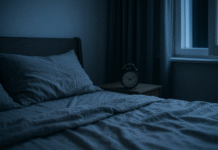
Your core temperature must drop slightly to fall and stay asleep; a cool room helps. Darkness reduces arousals and maintains melatonin. Quiet (or predictable sound like white noise) minimizes micro-awakenings. Think of your room as a sensory-lean environment: cool air, blackout level darkness, and consistent sound.
Numbers & guardrails
- Target ~60–68°F (15.6–20°C); many adults find ~65–68°F (18–20°C) ideal.
- Use blackout curtains or an eye mask; seal LED glows with tape.
- White noise or a fan can mask variable street/house noise.
Tools/Examples
- Programmable thermostat to lower temps at night.
- Breathable bedding (cotton/linen), lighter duvet, or cooling mattress pad.
Bottom line: A cooler, darker, quieter room reduces “sleep friction” so your brain stays in deeper stages longer.
5. Eat and Hydrate on a Sleep-Friendly Schedule
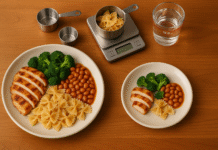
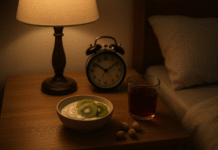
Heavy meals close to bedtime increase reflux risk and body temperature; large volumes of fluid invite bathroom trips. Finishing dinner 2–3 hours before bed and tapering fluids after dinner protects sleep continuity. A light, balanced snack is fine if you’re hungry—think yogurt, a banana with nut butter, or a small bowl of oats.
Why it matters
- Digestion and thermogenesis compete with sleep onset; both are more active after heavy, late meals.
- Alcohol + late meals combine to fragment sleep further. Sleep Foundation
Mini-checklist
- Last meal: 2–3 hours pre-bed; keep it moderate.
- If hungry, choose a small carb-forward snack.
- Front-load fluids; taper after dinner.
Bottom line: Smart timing and portion sizes reduce awakenings and improve how restorative your sleep feels in the morning.
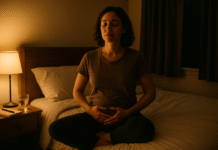
6. Build a Wind-Down That Actually Works (Borrow from CBT-I)
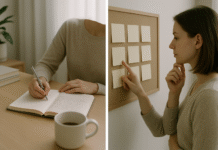
Your brain can’t go from sprint to stillness. A repeatable 20–45-minute wind-down lowers arousal and conditions your mind to associate bed with sleep. Borrow from CBT-I (the first-line treatment for chronic insomnia): use stimulus control (bed = sleep/sex only), keep a worry buffer (write tomorrow’s to-dos earlier), and practice relaxation (slow breathing, progressive muscle relaxation).
Evidence snapshot
- CBT-I is recommended as initial treatment for chronic insomnia in adults. PubMed
- When medication is used, AASM provides individualized guidance on drug choices and cautions.
How to do it
- Pick 2–3 calming activities (stretching, reading paper pages, warm shower).
- If you can’t sleep after ~20–30 minutes, get out of bed and do something low-stim until drowsy (stimulus control).
- Log a “shutdown complete” ritual 60–90 minutes pre-bed to off-load worries.
Bottom line: A consistent, low-stim wind-down paired with stimulus control trains your brain that bed = sleep.
7. Time Your Light and Exercise for Better Sleep at Night
Morning daylight exposure advances your circadian phase and promotes earlier melatonin release at night. Moderate exercise during the day reduces sleep latency and improves sleep quality for many people, provided it’s not too close to bedtime. If evening workouts are your only option, keep them moderate and finish at least 2–3 hours before bed.
Why it matters
- Light is your clock’s strongest signal; timing determines whether your internal night shifts earlier or later. NIGMS
Practical plan
- Get 10–30 minutes of outdoor light within an hour of waking.
- Exercise most days; aim earlier if intense.
- Dim the house 60–90 minutes pre-bed (pair with Section 2).
Bottom line: Align light and movement with your clock and your nights become deeper and more predictable.
8. Nap Strategically (or Not at All)
Done right, naps can repay a small sleep debt and sharpen performance; done wrong, they steal from nighttime sleep. Keep naps short and early—think 10–30 minutes in early afternoon. Longer naps risk sleep inertia (grogginess) and make it harder to fall asleep at night.
Numbers & guardrails
- Ideal length: ~20–30 minutes. Mayo Clinic Press
- Timing: Early afternoon (around the post-lunch dip), not after 3–4 p.m.
Mini-checklist
- Darken the room, set a gentle alarm, and consider white noise.
- If you wake groggy, step into bright light or take a short walk.
Bottom line: Short, early naps can help; long, late naps often hurt.
9. Work With Your Chronotype & Circadian Cues (Plus Jet-Lag Tactics)
Some of us naturally run earlier (“larks”) or later (“owls”). You can’t change your chronotype overnight, but you can nudge it by timing light, meals, exercise, and social cues. For travel across time zones, use timed light exposure, melatonin, and incremental schedule shifts to adapt faster.
Tools/Examples
- Shift earlier: morning light + earlier meals/exercise; dim evenings (Sections 2 & 7).
- Shift later: late-afternoon light; avoid bright mornings.
- Jet lag: combine timed light and melatonin per clinical guidance for circadian disorders (dosing/timing matters; consult a clinician if you have medical conditions or take medications).
Bottom line: Respect your biological clock and use timing cues to align life’s demands with your physiology.
10. Spot Sleep Disorders Early (Apnea, Insomnia, and More)
If sleep is persistently unrefreshing despite good habits, screen for common disorders—especially obstructive sleep apnea (OSA) and chronic insomnia. Red flags for OSA include loud habitual snoring, witnessed pauses/gasps, and excessive daytime sleepiness—especially if combined with elevated blood pressure. Chronic insomnia involves trouble falling or staying asleep at least 3 nights/week for ≥3 months with daytime impact. Screening tools like STOP-Bang can estimate OSA risk, but diagnosis requires a sleep study.
What to watch for
- OSA risk: excessive sleepiness plus 2 of—habitual loud snoring, witnessed apneas/gasping, or diagnosed hypertension. Diagnosis requires polysomnography or properly administered home testing via an accredited sleep center.
- STOP-Bang is a quick risk screen used in clinical contexts (not a diagnosis). Sleep Foundation
- If you suspect OSA or severe insomnia, see your clinician or a sleep specialist.
Bottom line: Don’t “push through” persistent problems—get assessed and treat the root cause to make nights truly restorative.
11. Curate a Bedtime Toolkit (Keep It Simple and Sensory)
You don’t need a suitcase of gadgets. Choose a few high-leverage tools that support your routine and environment: an analog alarm clock (so the phone leaves the bedroom), blackout curtains or a quality eye mask, a white-noise machine or fan, a dim amber lamp, and breathable bedding. Sleep trackers can be useful if they reduce guesswork, but don’t obsess over nightly scores—focus on consistent behaviors week over week.
Mini-checklist
- Replace phone alarm with an analog clock; charge your phone outside the bedroom.
- Keep a low-lux, warm bedside lamp for wind-down.
- Use earplugs or white noise to mask inconsistent sounds (see Section 4).
Bottom line: The best “sleep tech” makes healthy behaviors automatic and your room reliably sleepy.
12. Run a Weekly Sleep Review and Tiny Experiments
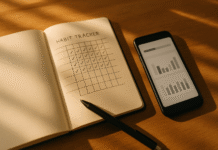
Sleep improves when you iterate. Once a week, review your wake times, evening light, caffeine window, and bedroom conditions. Pick one experiment (e.g., moving your caffeine cutoff 2 hours earlier, lowering bedroom temp by 1–2°F, or trying a 20-minute nap instead of 45) and test it for 7–10 days. Track one metric: How refreshed do you feel by 10 a.m.? Keep what works; drop what doesn’t.
How to do it
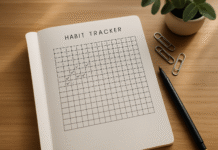
- Use a one-line sleep log: bedtime / wake time / estimated sleep / 10 a.m. energy (1–10).
- Change one variable at a time; adjust based on your data.
- Re-run experiments seasonally (light and temperatures change).
Bottom line: Small, steady tweaks compound into consistently restorative nights.
FAQs
1) How many hours do adults really need for health?
Most healthy adults do best with at least 7 hours per night, with many thriving between 7–9 hours. Needs vary by age, genetics, health conditions, and recent sleep debt. If you routinely need an alarm to wake, feel sleepy mid-morning, or rely on caffeine to function, you likely need more. Prioritize regular schedules and check your average over a full week before changing targets.
2) What’s the best bedroom temperature for sleep?
A cool room helps your body drop core temperature for sleep onset and maintenance. Many adults find ~65–68°F (18–20°C) comfortable; expert ranges typically cite 60–68°F (15.6–20°C). Adjust bedding and pajamas first, then nudge the thermostat in 1°F (0.5°C) increments to find your sweet spot across seasons.
3) Does alcohol help or hurt sleep?
Alcohol can make you drowsy initially, but it reduces REM, increases awakenings, and can worsen snoring or apnea. Over several nights, “nightcaps” often degrade sleep quality. If you drink, finish several hours before bed and hydrate. People with insomnia or OSA often do best minimizing alcohol. PMC
4) When should I cut off caffeine?
Because caffeine’s half-life varies widely (~2–12 hours), conservative cutoffs are 8–10 hours before bed. Keep daily intake under 400 mg unless told otherwise by your clinician, and consider moving your last dose earlier if you feel wired at night.
5) Are blue-light glasses or phone filters worth it?
Reducing evening light (especially blue) helps melatonin rise. Night modes and glasses can help, but dimming overall light and screen-free wind-downs are more reliable. Try a 60-minute low-light buffer most nights and notice whether sleep onset improves.
6) What’s the ideal nap length?
Aim for 10–30 minutes in the early afternoon to boost alertness without grogginess or harming nighttime sleep. If you wake groggy, step into bright light or take a short walk to clear inertia.
7) I keep waking at 3 a.m.—what helps?
Common culprits include late alcohol, stress, overheating, or bathroom trips. Re-check your evening light, lower room temp slightly, taper fluids after dinner, and add a worry buffer (write tomorrow’s tasks earlier). If awakenings persist or are paired with loud snoring or gasps, discuss OSA screening with a clinician.
8) Is melatonin safe and effective?
Melatonin is a hormone that signals darkness. It may help with jet lag or some circadian rhythm disorders when timed properly; timing matters more than dose. For chronic insomnia, behavioral approaches (e.g., CBT-I) are first-line. Talk to your clinician if you’re on other medications or have health conditions. AASM
9) How do I know if I might have sleep apnea?
Clues include loud habitual snoring, witnessed pauses/gasps, excessive daytime sleepiness, morning headaches, and treatment-resistant hypertension. Tools like STOP-Bang estimate risk, but diagnosis requires a sleep study. If you suspect OSA, see your clinician or a sleep specialist. stopbang.ca
10) Do I need a sleep tracker?
Trackers can reveal timing patterns and nudge habits, but they estimate (not diagnose) sleep stages and can increase anxiety in some users. If your tracker stresses you out, switch to a simple weekly review of wake times, caffeine window, and evening light (Section 12). Focus on behaviors more than nightly numbers.
Conclusion
When you zoom out, the role of sleep is to quietly run your body’s essential maintenance—memory consolidation, metabolic regulation, tissue repair, immune tuning, and emotional processing—so you can show up stable and strong the next day. The way to make nights reliably restorative isn’t a magic pillow; it’s a stack of simple, repeatable cues that align your biology with the clock: a fixed wake time, calmer/darker evenings, earlier caffeine and meals, a cooler room, and a wind-down anchored by stimulus control. Add morning light, daytime movement, and short, early naps as needed, and you’ve covered the foundations. If problems persist, don’t tough it out—screen for OSA and consider CBT-I with a professional. Start with one or two changes this week (wake time + evening light are high-leverage), log your 10 a.m. energy, and iterate. Your reward is a body and brain that feel reset every morning.
CTA: Pick your wake time, schedule 60 screen-dim minutes tonight, and set your thermostat 1–2°F lower—start your restorative nights now.
References
- About Sleep. Centers for Disease Control and Prevention (CDC). May 15, 2024. https://www.cdc.gov/sleep/about/index.html
- FastStats: Sleep in Adults. CDC. May 15, 2024. https://www.cdc.gov/sleep/data-research/facts-stats/adults-sleep-facts-and-stats.html
- How Much Sleep Do You Need? CDC NIOSH—Work Hours, Sleep, and Fatigue Module. Accessed Aug 2025. https://www.cdc.gov/niosh/work-hour-training-for-nurses/longhours/mod2/08.html
- Blue light has a dark side. Harvard Health Publishing. July 24, 2024. https://www.health.harvard.edu/staying-healthy/blue-light-has-a-dark-side
- Effects of smartphone use with and without blue light at night on sleep and melatonin. Psychiatry Investigation. 2017. https://pubmed.ncbi.nlm.nih.gov/28017916/
- The Best Temperature for Sleep. Sleep Foundation. July 11, 2025. https://www.sleepfoundation.org/bedroom-environment/best-temperature-for-sleep
- Sleep Tips. National Sleep Foundation. Accessed Aug 2025. https://www.thensf.org/sleep-tips/
- Spilling the Beans: How Much Caffeine is Too Much? U.S. FDA. Aug 28, 2024. https://www.fda.gov/consumers/consumer-updates/spilling-beans-how-much-caffeine-too-much
- How Long Does It Take for Caffeine to Wear Off? Sleep Foundation. July 16, 2025. https://www.sleepfoundation.org/nutrition/how-long-does-it-take-caffeine-to-wear-off
- Napping: Do’s and don’ts for healthy adults. Mayo Clinic. Nov 6, 2024. https://www.mayoclinic.org/healthy-lifestyle/adult-health/in-depth/napping/art-20048319
- Management of Chronic Insomnia Disorder in Adults. American College of Physicians (Annals of Internal Medicine). May 3, 2016. https://www.acpjournals.org/doi/10.7326/M15-2175
- Clinical Practice Guideline for the Pharmacologic Treatment of Chronic Insomnia in Adults. American Academy of Sleep Medicine (Journal of Clinical Sleep Medicine). 2017. https://jcsm.aasm.org/doi/10.5664/jcsm.6470
- Circadian Rhythms—Fact Sheet. National Institute of General Medical Sciences (NIH). May 29, 2025. https://www.nigms.nih.gov/education/fact-sheets/Pages/circadian-rhythms
- Jet Lag Disorder—Yellow Book. CDC. Apr 23, 2025. https://www.cdc.gov/yellow-book/hcp/travel-air-sea/jet-lag-disorder.html
- Clinical Practice Guideline: Diagnostic Testing for Adult OSA. AASM. 2017. https://aasm.org/resources/clinicalguidelines/diagnostic-testing-osa.pdf
- Obstructive sleep apnea—Diagnosis & treatment. Mayo Clinic. Jul 14, 2023. https://www.mayoclinic.org/diseases-conditions/obstructive-sleep-apnea/diagnosis-treatment/drc-20352095
- Programmable Thermostats. U.S. Department of Energy—Energy Saver. Accessed Aug 2025. https://www.energy.gov/energysaver/programmable-thermostats