





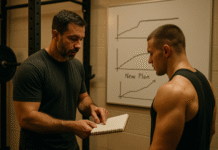




















When your calendar is wall-to-wall with work, family, and life logistics, exercise can feel optional—but it’s not. The quickest way to fit fitness into a packed day is to plan it with the same rigor you give meetings: put it on the calendar, anchor it to routines you already do, and use short, efficient workouts that add up. In practical terms, adults can meet health guidelines with 150 minutes of moderate-intensity activity (or 75 minutes vigorous) each week, plus muscle-strengthening on 2 days—and you can break that into small chunks across the day.
Fast start (skim this):
- Block workouts on your calendar (treat them as meetings).
- Accumulate “exercise snacks” of 5–15 minutes.
- Anchor sessions to fixed routines (wake-up, commute, lunch).
- Use HIIT or hybrid circuits when time is tight.
- Build movement into work (walking meetings, stand-move breaks).
- Keep a fallback “minimum viable workout” for chaotic days.
Note: This article offers general information, not medical advice. If you have health conditions, consult a clinician before starting a new program.
1. Time-Block Your Workouts Like Meetings
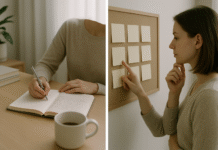
The most reliable way to make workouts happen is to time-box them on your calendar with the same priority you give client calls or parent-teacher meetings. Timeboxing replaces vague intentions (“I’ll run later”) with a concrete block (“07:30–08:00 Run + mobility”), which reduces decision fatigue and rescheduling friction. Start by looking at your weekly rhythm: commute windows, meeting peaks, kids’ activities, and energy patterns. Then create 2–4 “protected” workout blocks that align with natural low-conflict times. Add a location, a brief agenda (“warm-up 5, intervals 15, stretch 5”), and a reminder. For team calendars, mark as “busy” and use a consistent title to reduce questioning. When life throws curveballs, you’ll have clear slots to defend or quickly move.
1.1 Why it works
- Timeboxing turns intentions into commitments, reducing procrastination and context switching. HBR highlights timeboxing as a core productivity practice because it forces prioritization and shields focus time.
1.2 How to do it
- Audit: Circle 2–4 low-conflict 20–40-minute windows in your typical week.
- Create repeating holds: E.g., Mon/Wed/Fri 7:30–8:00, Tue/Thu 12:30–12:55.
- Add details: Title, location, agenda, gear notes.
- Protect: Decline or propose new times for conflicts; share your policy with your team/family.
- Review weekly: Shift blocks for travel weeks or seasonal changes.
Synthesis: When exercise lives on the calendar, it stops competing with “everything else” and starts competing only with events important enough to displace it.
2. Use Micro-Workouts and “Exercise Snacks” to Accumulate Minutes
Short, frequent bouts of movement (5–15 minutes) can add up to meaningful weekly totals. The updated U.S. guidelines explicitly recognize that “any amount counts,” and minutes can be spread across the week—you no longer need 10-minute minimums for it to “count.” That means a 12-minute kettlebell circuit before breakfast, a 6-minute stair sprint after a meeting, and a 10-minute walk at pickup time can collectively close the gap. For busy parents and professionals, this approach turns “no time” into “three 10-minute windows,” which is far easier to protect. Consider stacking micro-sessions around natural breaks (coffee, calls ending early, kid drop-offs) and aim for a daily “floor” (e.g., 20 minutes) you can hit even on chaotic days.
2.1 Tools & examples
- 5×5×5: Five moves, five reps, five rounds (e.g., pushups, rows, squats, swings, dead bug).
- Stair sandwich: 2 minutes up/down stairs before and after lunch.
- Walk calls: Convert a 15-minute sync into a brisk walk.
- Doorframe pull: A pull-up or band-row rule when passing a doorway at home.
- Timer triggers: Set 2–3 alarms labeled “move for 6 minutes.”
2.2 Guardrails (as of August 2025)
- Total goals: 150 minutes moderate or 75 minutes vigorous weekly + 2 days strength; break it up freely.
Synthesis: Micro-sessions remove the “all-or-nothing” trap—consistency happens in small, frequent deposits.
3. Make an Early-Morning Anchor Session
Training before the day begins protects workouts from later emergencies and decision fatigue. Morning sessions leverage stable routines (wake-up, school runs) and reduce the cognitive load of choosing “if/when” to exercise. Even 20–30 minutes of moderate effort improves alertness, mood, and the likelihood you’ll make better food choices. To increase success, prepare the night before: lay out clothes, charge your watch, and script the first 10 minutes. If sleep is tight, cap the session and prioritize consistency over volume—morning training should energize, not deplete. On days you wake up groggy from a rough night, swap to a gentle mobility + walk block to maintain the habit while protecting recovery.
3.1 How to do it
- Prep ritual: Clothes, shoes, bottle, and playlist staged.
- Fixed start: Same time daily builds an automatic habit.
- Script: “Warm-up 5 mins → interval 15 → downshift 5.”
- Light exposure: Bright light on waking can boost alertness.
- Sleep first: Target ≥7 hours whenever possible to avoid chronic fatigue.
3.2 Mini case
- Busy parent, 2 kids: Mon–Fri 06:45–07:15 home circuit; Sat stroller jog; Sun off. Result: 150+ minutes/week without evening schedule conflicts.
Synthesis: An early anchor session flips exercise from “if there’s time” to “done before breakfast.”
4. Turn Your Commute and Errands into Active Minutes
Active commuting—walking part of the route, biking, or getting off transit a stop early—bakes movement into time you already spend. On driving days, park farther away, traverse stairs, and add a five-minute campus or block loop before you enter the building. For school runs and errands, “two bags only” rules encourage hand-carry trips or stroller walks. The U.S. Surgeon General’s call to action emphasizes walking as accessible, scalable, and linked to lower disease risk—a strong fit for busy schedules that resist formal training blocks.
4.1 Practical ideas
- Transit tweak: Get off one stop early; brisk 8–12 minutes on foot.
- Park & stride: Park 0.3–0.6 miles (0.5–1 km) away.
- Bike once weekly: Replace one commute with cycling if safe infrastructure exists.
- Errand loop: Walk the long perimeter when shopping; take stairs exclusively.
- Kid-powered: Scooters or bikes for short school runs; you walk next to them.
4.2 Numbers & guardrails
- Track step counts to verify that active commute swaps add ~1,500–3,000 steps/day (about 0.75–1.5 miles / 1.2–2.4 km). Add reflective gear and lights for safety when dark.
Synthesis: Active travel converts “dead time” into fitness without stealing minutes from family or deep-work blocks.
5. Make Meetings Move: Walking 1:1s and Stand-Move Breaks
Some meetings don’t require a screen. Turn 1:1s and check-ins into walking chats, or stand during longer calls. Between seated blocks, insert brief movement snacks; research from Columbia University suggests that 5 minutes of easy walking every 30 minutes can significantly reduce post-meal blood sugar spikes and lower blood pressure compared to sitting all day. Even shorter breaks (1 minute) provide modest benefits. You’ll return clearer and more alert, and these micro-bursts add up—six stand-move breaks in an 8-hour day returns 30 minutes of light activity.
5.1 Mini-checklist
- Agenda fit: Choose topics that don’t need slides.
- Route: Quiet paths, loops, or indoor hall circuits.
- Cueing: Timer or smart-watch to buzz every 30 minutes.
- Accessibility: Offer seated options and flexible pacing.
5.2 Script for teams
- “For our 1:1s, let’s walk unless we need a screen. I’ll send a summary after.”
Synthesis: When meetings move, you increase NEAT (non-exercise activity), improve metabolic markers, and protect your formal training time.
6. Use HIIT and Hybrid Circuits for Time-Efficient Fitness
When time is scarce, HIIT (high-intensity interval training) and hybrid strength-cardio circuits deliver robust benefits in short sessions. Meta-analyses and sports-medicine guidance show HIIT can improve insulin sensitivity, blood pressure, and body composition, often matching moderate continuous training in less time. A simple 20-minute HIIT (e.g., cycling or running) or an EMOM/AMRAP circuit (kettlebell swings, pushups, squats, rows) can satisfy vigorous-intensity minutes quickly. Start conservatively, warm up thoroughly, and keep 1–2 sessions per week unless you’re experienced; use RPE (effort perception) and heart rate to avoid overreaching. For beginners, “HIIT-lite” (brisk uphill walks, short bike surges) captures benefits with lower joint stress.
6.1 Formats (15–25 minutes)
- 10×(40s hard / 80s easy) after a 5-minute warm-up; cool down 5 minutes.
- EMOM 20: Alternate swings and pushups; 10 reps at the top of each minute.
- 3×5-minute “tempo” with 2 minutes easy between.
6.2 Numbers & guardrails
- Weekly targets: 75 minutes vigorous or mix with moderate minutes.
- Respect recovery: Space HIIT days 48 hours apart; stop if pain or dizziness.
Synthesis: HIIT and hybrids compress fitness into short blocks, freeing the rest of your day.
7. Make Strength Non-Negotiable—Twice Weekly
Strength training is the often-skipped pillar in crowded schedules, yet it’s vital for metabolic health, injury resistance, and aging well. The guideline: work all major muscle groups on 2 or more days per week. You can achieve this with two 30–40-minute sessions, or four 15–20-minute micro-sessions. Prioritize compound moves (squats or goblet squats, hinges/deadlifts or swings, pushes, pulls, and carries). Use progressive overload: when you can easily exceed your rep range, add a little weight or time under tension. On travel or kid-duty days, bands and bodyweight keep consistency alive. If you’re new, master form before loading; if something hurts sharply, regress and consult a coach.
7.1 Two templates
- A/B split (2×/week):
- A: Goblet squats, pushups, rows, farmer carries.
- B: Hip hinges/swings, overhead press, split-squats, dead bug/plank.
- Daily micro (4×/week): 3 moves × 3 sets × 8–12 reps (15–20 minutes).
7.2 Mini case
- Consultant on the road: Hotel gym Mon/Thu (full-body); resistance bands Tue/Fri in room.
Synthesis: Two strength sessions per week deliver big returns with minimal calendar footprint.
8. Plan Lunch-Break Templates You Can Execute Anywhere
Lunch breaks are often the most “movable” 20–35 minutes of a workday. Build two or three plug-and-play templates you can perform in a conference room, park, or hotel room—no decisions, no friction. Templates should include a brief warm-up, a main block (cardio or circuit), and a downshift. Keep shoes at the office and a spare band in your bag. If your break fluctuates, design 10-, 20-, and 30-minute versions so you can scale on the fly. Always block 5 minutes afterward for a quick rinse, change, or snack so you actually use the time again tomorrow.
8.1 Templates
- 10 minutes: Brisk walk stair-loop + mobility reset.
- 20 minutes: EMOM circuit (squats, rows, lunges, pushups).
- 30 minutes: 5-minute warm-up → 6×(2 minutes brisk / 1 minute easy) walk-jog → 5-minute cool-down.
8.2 Checklist
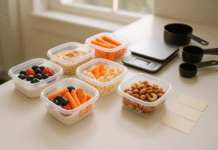
- Spare socks/shoes, mini towel, band, water, simple carb + protein snack.
- Use a 30-minute hard stop so you’re never late to the next meeting.
Synthesis: Lunch-templates turn a slippery window into an automatic training slot.
9. Stack Habits and Pre-Decide with “If-Then” Plans
Habit stacking uses an existing routine (brew coffee, end of work, kids’ bedtime) as the trigger for a short, specific action (“after I brew coffee, I’ll do 10 minutes of mobility”). Implementation intentions—the “if situation X, then I will do Y” format—consistently boost follow-through because they pre-decide both the cue and the behavior. This is powerful for busy schedules because it skips negotiation at peak stress times. Write 2–3 if-then plans and post them where you’ll see them; pair with tiny, ridiculously easy first steps to lower friction (put on shoes, start the timer). If your day derails, use an if-then recovery (“if it’s 8:30 p.m. and I missed my workout, then I’ll do a 12-minute walk and 2 sets of pushups”). PMC
9.1 Example scripts
- Morning: If I start the kettle, then I’ll do cat-cows and hip openers for 6 minutes.
- Workday: If my 2 p.m. meeting ends early, then I’ll walk the building loop.
- Evening: If the kids’ lights go off, then I’ll do a 15-minute band circuit.
9.2 Tips
- Keep triggers tied to stable routines.
- Start so small it’s hard to fail; expand only after 1–2 weeks of success.
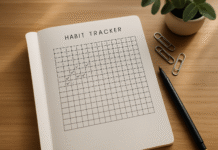
- Track with a simple habit grid (✓ each day) to reinforce consistency.
Synthesis: If-then plans remove willpower from the equation and slot movement into your real life.
10. Use Wearables and Simple Tools to Nudge Action (Not Obsess)
Fitness trackers, smartwatches, and step counters can nudge you to move more, especially when you set realistic prompts and celebrate streaks—not just rings. A 2022 systematic review in The Lancet Digital Health found wearable activity trackers help increase physical activity and improve related health markers across varied populations. Use the tech as a prompt and a mirror, not a judge. Pair it with simple analog tools: a visual wall calendar for workout streaks, a timer for movement breaks, and a cheap resistance band that lives near your desk. Audit notifications; turn off noise, keep only movement and calendar nudges. The Lancet
10.1 Setup that sticks
- Daily floor: 6,000–8,000 steps on heavy desk days; 8,000–10,000 on lighter days (adjust to context).
- Move alerts: Every 30 minutes; stand and walk 1–5 minutes.
- Weekly scorecard: Minutes of moderate/vigorous + 2 strength sessions.
- Context tags: “Travel,” “Sick,” or “Big project” to keep expectations humane.
10.2 Caution
- Don’t chase numbers blindly; use RPE and recovery to avoid burnout.
Synthesis: Tools that prompt and reflect behavior make it easier to keep promises to your future self.
11. Treat Sleep and Recovery as Core Time-Management Skills
Sleep powers willpower, training quality, and mood—so protecting it is a time-management move, not a luxury. Most adults need 7 or more hours per night; when sleep is chronically short, adherence drops and risk of illness rises. Protect a consistent wind-down, set a caffeine cutoff (6–8 hours before bed), and align intense training with nights you can recover. On poor-sleep days, choose lighter sessions to maintain habit strength without stressing your system. Use light exposure and short walks to reset energy mid-day instead of extra caffeine when possible. If your schedule rotates or you have newborns, declare a temporary “maintenance mode” with lighter goals until life stabilizes.
11.1 Mini-checklist
- Wind-down: Screens down 60 minutes before bed when possible.
- Room: Cool, dark, quiet; consistent schedule across the week.
- Training: Hard days follow good-sleep nights; easier work after rough nights.
- Naps: 10–20 minutes, early afternoon, to avoid impairing bedtime.
11.2 Numbers & guardrails (as of August 2025)
- Aim ≥7 hours for most adults; chronic <7 hours correlates with health risks and reduced performance. CDC
Synthesis: Better sleep = better adherence. Manage energy first, time second.
12. Build a “Minimum Viable Workout” and a Weekly Contingency Plan
Life happens—travel, sick kids, late-running meetings. A “minimum viable workout” (MVW) keeps your streak alive and preserves identity (“I’m someone who moves daily”). Define a 10–15-minute circuit you can do anywhere with no equipment and no decision-making. Next, write a Plan B playbook: which sessions can swap days, which can be shortened, and what to do if you miss more than one day. If you’re in a heavy season (product launch, caregiving stretch), shrink goals and change the scoreboard: maintain two strength sessions and a daily 15-minute walk; let high-intensity work hibernate until the load eases. Finally, reflect weekly—what derailed you, what helped—and adjust the next week’s schedule accordingly.
12.1 MVW ideas
- 15-minute total-body: 3 rounds of 40s squats, 40s pushups, 40s hip hinge (good mornings), 40s rows (band or backpack), 40s plank; 20s rests.
- Travel ladder: 5–10–15–10–5 reps of air squats and incline pushups; 60s brisk hallway walk between.
12.2 Plan-B rules
- Missed morning? Use your lunch template.
- Travel day? MVW at hotel + airport walking.
- Two days missed? Reset with an easy 20–30-minute zone-2 session before resuming intensity.
Synthesis: A resilient plan that bends without breaking is the secret to long-term consistency.
FAQs
1) What’s the absolute minimum I can do and still make progress?
If you’re starting from zero, three 20-minute moderate sessions per week plus two brief strength sessions can improve health and energy. You can also combine micro-workouts throughout the day to reach 150 minutes weekly. For fitness beyond basic health (faster, stronger), add progression: a fourth day or a bit more intensity. Remember that strength twice weekly is non-negotiable for most adults.
2) Do short “exercise snacks” really count?
Yes. The current U.S. guidelines say you can break activity into smaller chunks and accumulate minutes across the week—there’s no longer a 10-minute minimum. For many, three 10–15-minute bouts fit better than one long session and can be anchored to daily routines (commute, lunch, pickup).
3) How do I know if my effort is “moderate” or “vigorous”?
Moderate intensity lets you talk but not sing; vigorous intensity makes talking in full sentences hard. Wearables can estimate intensity from heart rate, but RPE (rating of perceived exertion) works anywhere. Aim for moderate most days and sprinkle vigorous work if you’re healthy and recovered.
4) Is HIIT safe for beginners with little time?
Start with “HIIT-lite”: brisk uphill walking, short bike surges, or low-impact intervals. Keep total work time short (6–10 minutes of hard effort within a 20-minute session), warm up thoroughly, and stop if you feel dizzy or sharp pain. Evidence shows HIIT can match many benefits of longer steady work, but ease in and space sessions 48 hours apart.
5) Can a fitness tracker really help me move more?
Often, yes. A 2022 systematic review of 164,000 participants concluded wearable activity trackers increase physical activity and improve health markers. Use prompts to nudge movement and keep goals realistic; don’t let the device drive you into fatigue. PubMed
6) I sit all day—what’s the simplest change with the biggest payoff?
Set a repeating 30-minute timer and walk for 1–5 minutes when it buzzes. A Columbia-led study found 5 minutes every 30 minutes notably reduced post-meal glucose and lowered blood pressure compared with uninterrupted sitting. Walking meetings for 1:1s are a bonus.
7) How do I keep workouts from being bumped by urgent work?
Book them as recurring calendar events with clear agendas. Share your policy (“I shift these only for blockers”). If a conflict appears, reschedule within the same day, not “sometime later.” HBR frames timeboxing as central to protecting priorities and improving execution.
8) What should a week look like if I’m truly slammed?
Try: two 25–35-minute strength sessions; two 15–20-minute brisk walks or cycles; daily 5-minute mobility; movement breaks each hour. That typically meets strength guidance and closes much of the 150-minute aerobic target, with micro-sessions filling the rest.
9) How important is sleep for sticking to workouts?
Very. Most adults need 7 or more hours. Short sleep undermines decision-making, appetite regulation, and recovery, making missed workouts more likely. If sleep is limited, lower intensity and aim for consistency until your schedule eases.
10) Is walking enough if I hate the gym?
Walking is a powerful base and strongly supported in public-health guidance. Combine brisk walks (or hikes) with two short strength sessions at home (bands or bodyweight) and you can meet guidelines and feel great—no gym required.
Conclusion
Fitting fitness into a packed life isn’t about heroic willpower—it’s about design. You block what matters, anchor it to routines you already do, and choose formats that deliver results in the time you actually have. Timeboxing protects your sessions. Micro-workouts and movement breaks pile up minutes without drama. HIIT and hybrid circuits accelerate progress when time is short. Family-inclusive plans, active commutes, and lunch templates turn daily logistics into movement. Wearables and simple tools nudge you at the right moments, while sleep and recovery keep the whole system sustainable. Most importantly, a minimum viable workout and a weekly Plan B make your routine resilient when life gets spicy.
Start now: open your calendar, block two strength sessions and two cardio slots this week, write one if-then plan, and set a 30-minute move reminder. Keep it light, keep it consistent, and let the wins compound. Ready to lock in your first block? Put it on your calendar—today.
References
- Adult Activity: An Overview, Centers for Disease Control and Prevention (CDC), December 20, 2023. https://www.cdc.gov/physical-activity-basics/guidelines/adults.html
- What Counts as Physical Activity for Adults, CDC, December 6, 2023. https://www.cdc.gov/physical-activity-basics/adding-adults/what-counts.html
- WHO Guidelines on Physical Activity and Sedentary Behaviour, World Health Organization, November 25, 2020. https://www.who.int/publications/i/item/9789240015128
- Rx for Prolonged Sitting: A Five-Minute Stroll Every Half Hour, Columbia University Irving Medical Center, January 12, 2023. https://www.cuimc.columbia.edu/news/rx-prolonged-sitting-five-minute-stroll-every-half-hour
- Dose-Response Analysis of a Randomized Crossover Trial of Interrupting Sitting, Medicine & Science in Sports & Exercise (PubMed abstract), 2023. https://pubmed.ncbi.nlm.nih.gov/36728338/
- Effectiveness of Wearable Activity Trackers to Increase Physical Activity and Improve Health: A Systematic Review of Systematic Reviews and Meta-Analyses, The Lancet Digital Health, August 2022. https://www.thelancet.com/journals/landig/article/PIIS2589-7500(22)00111-X/fulltext
- Project Managers, Unlock the Power of Timeboxing, Harvard Business Review, October 23, 2023. https://hbr.org/2023/10/project-managers-unlock-the-power-of-timeboxing
- High-Intensity Interval Training: For Fitness, for Health or Both?, American College of Sports Medicine (ACSM), August 16, 2019. https://acsm.org/high-intensity-interval-training-fitness/
- HIIT for Cardiometabolic Health: A Systematic Review and Meta-Analysis of Intervention Studies, British Journal of Sports Medicine, 2017. https://bjsm.bmj.com/content/51/6/494
- About Sleep: How Much Sleep Do You Need?, CDC, May 15, 2024. https://www.cdc.gov/sleep/about/index.html
- Step It Up! The Surgeon General’s Call to Action to Promote Walking and Walkable Communities (PDF), U.S. Department of Health and Human Services, March 13, 2015. https://www.hhs.gov/sites/default/files/call-to-action-walking-and-walkable-communites.pdf
- Adding Physical Activity as an Adult, CDC, January 8, 2024. https://www.cdc.gov/physical-activity-basics/adding-adults/index.html