



















Feeling scattered by a thousand tabs—on your browser and in your brain? Visualization can steady your attention, soften stress, and make your mindfulness practice easier to stick with. In this guide, you’ll learn five practical, science-informed visualization techniques that enhance mindfulness by turning intangible intentions (“be present”) into tangible images your mind can hold. It’s written for beginners and busy practitioners who want clear steps, gentle progressions, and a realistic roadmap for building consistency.
You’ll get simple scripts, how-to instructions, common pitfalls, and ways to measure your progress. You’ll also find a four-week starter plan you can follow right away. By the end, you’ll know exactly how to pick a technique, fit it into your schedule, and track whether it’s helping.
Key takeaways
- Visualization anchors attention. Images like a mountain, a lake, or leaves on a stream give your mind something concrete to rest on, helping you stay with the present moment.
- Small sessions work. Even 5–10 minutes can build steadiness and reduce reactivity when practiced regularly.
- Match the method to your goal. Need focus? Try breath-light. Need gentleness? Try compassion imagery. Need detachment from thoughts? Leaves-on-a-stream is ideal.
- Make it multisensory. Visualization gets stronger when you add touch, sound, and breath cues—not just images.
- Track what matters. Measure your streaks, minutes practiced, mood shifts, and how quickly you can notice and return after a distraction.
Note: This guide is educational and not a substitute for medical or mental health care. If you live with trauma, severe anxiety, depression, or dissociation, or if visualization brings up distress, consult a qualified professional before proceeding. If any technique feels overwhelming, stop, ground yourself (feet on the floor, eyes open), and seek support.
Breath-as-Light (Color Breathing)
What it is & why it helps
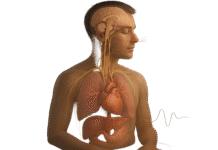
Breath-as-Light is a simple visualization that pairs your inhale and exhale with light imagery. On the inhale, you “draw in” a calming color. On the exhale, you “release” tension as a darker shade floats away. Because breath and image move together, attention naturally stabilizes. Many people find that visual breathing reduces mental noise and fosters moment-to-moment awareness—the core of mindfulness practice. Research suggests mindfulness-based approaches can reduce anxiety, stress, and depressive symptoms, which aligns with the calming, attentional benefits practitioners report from breath-focused visualizations.
What you need
- Equipment: A chair or cushion. Optional timer or app.
- Cost: Free.
- Skills: Comfort breathing through the nose and noticing breath sensations.
- Low-cost alternatives: A sticky note dot marking your “breathing spot” on the wall to keep your gaze soft.
Step-by-step for beginners
- Set your posture. Sit upright, shoulders soft, feet grounded.
- Choose your colors. Pick a soothing color for inhaling (e.g., soft blue) and a releasing color for exhaling (e.g., gray).
- Anchor the inhale. As you inhale, imagine the soft color flowing through nose, throat, chest, and belly, brightening gently.
- Anchor the exhale. As you exhale, picture dull colors leaving—like mist dispersing.
- Name the moment. Silently label “in” and “out,” or “brighten” and “soften.”
- Return kindly. When distracted, notice it, label “thinking,” and return to color and breath.
Beginner modifications & progressions
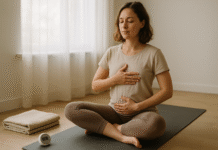
- If visualization feels faint: Add touch—place a hand on your belly and synchronize with the rise/fall.
- Short attention span: Use a 3-3-3 rhythm (inhale 3, pause 3, exhale 3) for three minutes.
- Progression: Expand color from your chest through your whole body, then radiate outward to the room and back.
Frequency, duration & metrics
- Frequency: 4–7 days/week.
- Duration: 5–10 minutes to start; build up to 15.
- Metrics: Minutes practiced; number of returns to the breath; mood rating before/after (0–10 calm scale).
Safety, caveats & common mistakes
- Over-efforting. Forcing a vivid image can create tension. Keep images “felt” rather than “perfect.”
- Breath-holding. Stay easy and natural; comfort beats control.
- Color triggers. If certain colors are associated with difficult memories, pick neutral tones.
Mini-plan example
- Today: 6 minutes after brushing your teeth; blue on inhale, gray on exhale.
- Tomorrow: Add the hand-to-belly touch to amplify bodily cues.
Body Scan Imagery
What it is & why it helps
The body scan is a classic mindfulness method: you move attention progressively from head to toe, noticing sensations without judgment. In body scan imagery, you add a visual layer—imagine a warm flashlight or “attention beam” gliding across regions of your body. This makes abstract noticing more concrete and helps reduce mind-wandering. Evidence on body-scan-only practice indicates small but significant gains in mindfulness, especially compared with passive control, which supports using it as one component of a routine. PubMed
What you need
- Equipment: Mat, couch, or chair. Optional eye mask.
- Cost: Free; recordings are optional.
- Skills: Basic interoception—simply noticing tingles, warmth, coolness, pressure.
Step-by-step for beginners
- Set position. Lie down or sit comfortably.
- Start at the crown. Imagine a gentle beam of warm light at the top of your head.
- Sweep slowly. Move the beam down: forehead, eyes, jaw, neck, shoulders, arms, hands, chest, belly, hips, legs, feet.
- Name sensations. Quiet labels: “tingling,” “pressure,” “warmth,” “neutral.”
- Allow & include. If discomfort appears, include it in the beam without bracing; adjust posture if needed.
- Integrate. End by sensing your whole body as one field.
Beginner modifications & progressions
- If lying makes you sleepy: Sit upright with a backrest and keep eyes slightly open.
- If there’s pain: Hover attention around the area; broaden to include contact with the floor.
- Progression: Use micro-regions (individual fingers, toes) and slower sweeps; then try reverse scans (feet to head) or random “spotlight pops.”
Frequency, duration & metrics
- Frequency: 3–5 days/week.
- Duration: 10–20 minutes.
- Metrics: Number of “skips” (areas you rush past), perceived body awareness (0–10), ease returning after distractions.
Safety, caveats & common mistakes
- Numbing out. If you dissociate or feel floaty, open your eyes, name five objects in the room, and shorten sessions.
- Judging sensations. The aim is curiosity, not “fixing.”
- Racing the scan. Slowness is the point; set a timer to remove pressure.
Mini-plan example
- Today: 12-minute seated scan; imagine warm sunrise light moving down.
- Tomorrow: Same scan but pause 10 seconds at shoulders, jaw, and belly.
Leaves on a Stream (Cognitive Defusion Visualization)
What it is & why it helps
Leaves on a Stream is a visualization often used in acceptance- and mindfulness-based approaches to help you see thoughts as events that come and go. You sit by a mental stream and imagine placing each thought onto a leaf. The leaf drifts past without you pushing it away or clinging to it. This trains non-reactivity and perspective, loosening thought-fusion and rumination. Scripts used clinically emphasize neutrality—pleasant and unpleasant thoughts alike float by—supporting a balanced, mindful stance. mindfulnessmuse.com
What you need
- Equipment: A quiet spot.
- Cost: Free; optional audio script.
- Skills: Willingness to notice thoughts; patience with repetition.
Step-by-step for beginners
- Set the scene. Picture a gentle stream in natural light. Hear water, feel air on your skin.
- Place thoughts. Each time a thought appears, imagine it resting on a leaf.
- Let it pass. Watch the leaf drift away at its own pace. No chasing, no forcing.
- Return gently. When you notice you’re “in” a thought, add that thought to a new leaf.
- Include sensations. Feel the contact of your seat and the rhythm of your breath as the steady background.
Beginner modifications & progressions
- If you can’t visualize clearly: Focus on sound (the stream) and touch (your breathing) while labeling “thinking.”
- If thoughts speed up: Imagine a wider stream with more leaves; slow your breathing.
- Progression: Alternate between 1 minute of leaves-on-a-stream and 1 minute of open awareness.
Frequency, duration & metrics
- Frequency: 4–6 days/week.
- Duration: 8–12 minutes.
- Metrics: How quickly you notice being “hooked” (seconds), number of returns, rumination intensity rating.
Safety, caveats & common mistakes
- Trying to stop thoughts. The goal is relationship change, not thought elimination.
- Getting frustrated with repetition. Repetition is the training.
- Using it to suppress emotions. Allow feelings to be present on their leaves; pair with grounding if emotions spike.
Mini-plan example
- Today: 10 minutes before bed; leaves drift at a steady pace.
- Tomorrow: Same practice, but add the sound of running water from a white-noise app.
Mountain/Lake Visualization (Stability & Stillness)
What it is & why it helps
Two classic images—the mountain and the lake—cultivate stability and stillness. In mountain practice, you embody a mountain’s steadiness in all weather. In lake practice, you rest as the lake’s still depths while surface ripples come and go. Both translate mindfulness into a vivid felt image: unshakable presence amid changing conditions. Well-known scripts used in mindfulness-based courses guide you to sense support, posture, and imagery in detail, helping beginners sustain attention as they internalize qualities like dignity, patience, and acceptance.
What you need
- Equipment: Chair or meditation cushion.
- Cost: Free; guided audio optional.
- Skills: Comfortable stillness for 5–15 minutes.
Step-by-step for beginners (Mountain)
- Take your seat. Sit upright with a grounded base.
- Sense support. Feel the chair/floor beneath you as your “bedrock.”
- Embody the image. Picture your torso as a mountain—broad base, strong center, open summit.
- Weather comes and goes. Sounds, thoughts, and moods are changing weather across the mountain’s face.
- Rest as the whole. Be the mountain, not the weather.
Step-by-step for beginners (Lake)
- Rest your gaze. Softly downward or eyes closed.
- Form the lake. Imagine your torso as a clear, deep lake in still air.
- Attend to the surface. Breathing makes subtle ripples; sounds make raindrops.
- Sense the depths. Below the surface is calm and clear, regardless of ripples.
- Include the room. The lake reflects light and shapes around you—let them appear and pass.
Beginner modifications & progressions
- If posture is hard: Use a supportive chair; place a pillow behind your low back.
- If imagery fades: Touch your thighs or heart center briefly to refresh embodiment.
- Progression: Alternate mountain and lake across days; add a 1-minute standing “mountain” between meetings.
Frequency, duration & metrics
- Frequency: 3–5 days/week.
- Duration: 10–15 minutes.
- Metrics: Posture comfort (0–10), steadiness during distractions, reactivity after practice.
Safety, caveats & common mistakes
- Rigid posture. Stability isn’t stiffness; soften shoulders and jaw.
- Chasing stillness. Allow ripples and weather; the practice is to let them be.
- Comparing sessions. Every mountain has seasons; every lake has wind—show up anyway.
Mini-plan example
- Today: 12-minute mountain at lunch.
- Tomorrow: 12-minute lake after work; note one word for the “weather” you noticed.
Compassion and Loving-Kindness Imagery
What it is & why it helps
Compassion- and kindness-based visualizations invite warm, prosocial feelings that soften self-criticism and expand attention. You might picture a caring figure (real or imagined), a beloved person or animal, or a gentle light extending from your chest. As you pair these images with phrases like “May I be kind,” you cultivate tender awareness that includes difficult moments rather than fighting them. This emotional tone can make mindfulness more accessible on tough days and helps reduce stress reactivity.
Although findings vary by method and population, mindfulness and imagery practices together show promising reductions in stress, negative affect, and physiological arousal. Some studies indicate guided imagery can enhance attentional control and ease stress—effects that complement compassion imagery’s focus on emotional regulation.
What you need
- Equipment: Quiet space; optional headphone audio.
- Cost: Free.
- Skills: Willingness to evoke warmth and repeat short phrases.
Step-by-step for beginners
- Settle and soften. Two slow breaths with a hand on the heart.
- Choose an image. A kind mentor, a wise animal, or a warm light—whatever reliably evokes care.
- Pair with phrases. Silently repeat: “May I be safe. May I be kind. May I be present.”
- Widen the circle. Extend the image and phrases to a friend, a neutral person, and all beings.
- Return gently. If the image gets fuzzy, reconnect with the feeling tone first, then the picture.
Beginner modifications & progressions
- If people-images are hard: Use light, warmth, or color radiating from the chest.
- If self-kindness feels awkward: Start with a pet or a person you naturally care for; include yourself later.
- Progression: Alternate compassion day and neutral mindfulness day; lengthen to 15 minutes.
Frequency, duration & metrics
- Frequency: 3–6 days/week.
- Duration: 8–15 minutes.
- Metrics: Warmth rating before/after (0–10), self-criticism frequency, ease of reconnecting during stress.
Safety, caveats & common mistakes
- Forced positivity. Authentic compassion includes pain; allow waves of emotion.
- Attachment to a perfect scene. It’s okay if the image shifts—stay with the felt sense of care.
- Overextending. If widening the circle triggers overwhelm, return to one safe image.
Mini-plan example
- Today: 10-minute self-compassion with warm light.
- Tomorrow: 12 minutes, adding phrases for a close friend.
Guided Imagery with Multisensory Anchors (VR Optional)
What it is & why it helps
Guided imagery uses vivid, multisensory scenes—sight, sound, touch, smell—to cue relaxation and present-moment awareness. You might walk through a forest, sit on a beach at dusk, or sip tea in a quiet room. The guide’s words invite you to notice rather than escape, making the scene a context for mindful attention. A growing body of work suggests guided imagery can reduce stress and support attentional control; newer comparisons show both imagery-based and virtual reality–assisted meditation reduce arousal, with VR sometimes helping novices concentrate. PMC
What you need
- Equipment: Audio track or simple script; optional eye mask.
- Cost: Free to low-cost; many recordings available.
- Skills: Willingness to imagine sensory details.
Step-by-step for beginners
- Pick a simple scene. A quiet garden or seaside.
- Add senses. What do you see, hear, feel on skin, smell, maybe taste?
- Layer breath cues. Sync waves or wind with inhale/exhale.
- Plant mindfulness markers. Every time a bird calls or a wave laps, silently label “here.”
- Close gently. Open eyes slowly and name three physical sensations in the real room.
Beginner modifications & progressions
- If images won’t form: Use an object (shell, leaf, cup of tea) as a tactile anchor while listening.
- If you get drowsy: Sit upright and shorten to 6–8 minutes.
- Progression: Add short, eyes-open “micro-visualizations” during your day; try a 10-minute VR session if available.
Frequency, duration & metrics
- Frequency: 3–5 days/week.
- Duration: 8–12 minutes to start; up to 20.
- Metrics: Calmness rating after practice, heart rate change if you have a wearable, perceived concentration.
Safety, caveats & common mistakes
- Escapism. The goal is aware presence, not numbing out. Keep one anchor in real-time sensations.
- Overcomplication. Pick one simple scene and repeat it; consistency beats novelty.
- Motion sensitivity (VR). If dizzy or nauseous, stop VR and return to audio only.
Mini-plan example
- Today: 8-minute beach visualization with breath synced to waves.
- Tomorrow: Same scene; add “here” on each wave crest.
Quick-Start Checklist
- Pick one technique from the five that matches today’s need: focus (Breath-as-Light), body awareness (Body Scan Imagery), thought distance (Leaves), stability (Mountain/Lake), or warmth (Compassion).
- Set a tiny goal: 8 minutes, 5 days this week.
- Choose a cue: after brushing teeth or just before lunch.
- Use a timer with a soft chime.
- Decide a metric: before/after calm rating and number of “returns.”
- Journal one line: “What I noticed” or “What helped me return.”
Troubleshooting & Common Pitfalls
“I can’t see images clearly.”
You might have low imagery vividness or aphantasia. That’s okay. Use sensory anchors like sound, breath, and touch; keep the “image” as a concept. You can still practice effectively by labeling sensations and thoughts, then returning to a simple cue.
“I keep chasing perfect stillness.”
Mindfulness isn’t about freezing your mind; it’s about relating to whatever is here with less struggle. Let the “weather” come and go across the mountain; keep being the mountain.
“I get sleepy every time.”
Sit upright, reduce session length, and try morning or mid-day. Keep eyes slightly open with a soft downward gaze.
“Strong emotions pop up.”
Open your eyes, feel your feet, and locate three real objects. Switch to a grounding practice—5-4-3-2-1 senses check. Consider compassion imagery rather than intense scenes, and seek support if distress persists.
“My mind wanders constantly.”
That’s normal. Count “one” for each return; celebrate 20 returns as 20 reps. Decrease complexity: stick to Breath-as-Light for a week.
“VR makes me queasy.”
Skip VR and stay with audio. Visualize with eyes open, focusing softly on a fixed point.
How to Measure Progress (Without Killing the Joy)
- Consistency metrics: Days practiced/week; total minutes/week; streak length.
- Attentional metrics: Average time to notice a distraction; number of returns per session (fewer isn’t always better—more returns can mean more noticing).
- State metrics: Before/after ratings (calm, focus, warmth) on a 0–10 scale.
- Reactivity check-ins: After a stressful event, note how long it takes to notice tension and return to breath or image.
- Journaling: One-line entries: “Today’s image,” “What pulled me away,” “What brought me back.”
A Simple 4-Week Starter Plan
Goal: Build a sustainable, flexible habit—10–15 minutes most days—while sampling each technique and then personalizing.
Week 1 — Foundations (8–10 minutes/day)
- Mon–Tue: Breath-as-Light, 8 minutes.
- Wed: Body Scan Imagery, 10 minutes.
- Thu: Breath-as-Light, 10 minutes.
- Fri: Compassion imagery, 8 minutes.
- Weekend optional: 6-minute “micro” of any technique.
- Metrics: Minutes; before/after calm rating; number of returns.
Week 2 — Thought Space & Stability (10–12 minutes/day)
- Mon–Tue: Leaves on a Stream, 10 minutes.
- Wed: Mountain, 12 minutes.
- Thu: Leaves, 10 minutes.
- Fri: Lake, 12 minutes.
- Weekend optional: 6-minute body scan.
- Metrics: Time to notice being “hooked”; posture comfort (0–10).
Week 3 — Multisensory Depth (10–15 minutes/day)
- Mon–Tue: Guided Imagery, 12 minutes.
- Wed: Compassion imagery, 10–12 minutes.
- Thu: Guided Imagery + “here” marker, 12 minutes.
- Fri: Breath-as-Light, 12–15 minutes.
- Weekend optional: Try VR-assisted meditation if available and comfortable.
- Metrics: Concentration ease; calm rating; optional wearable HR change.
Week 4 — Personalize & Progress (10–15 minutes/day)
- Pick two “core” techniques that worked best.
- Alternate them across the week.
- Add a daily 30-second micro-practice between tasks: one mountain breath, one leaf release, or one compassion phrase.
- Metrics: Mood stability across the day; ease returning to the present after interruptions.
After Week 4: Keep what works, drop what doesn’t. Increase one variable at a time (duration, frequency, or depth). If motivation dips, return to 6–8 minutes and rebuild momentum.
FAQs
1) Do I need vivid mental pictures for visualization to work?
No. Vividness varies widely. What matters is a consistent cue for returning to the present. Use sound, breath, and touch as anchors if images feel faint.
2) Can visualization replace regular mindfulness meditation?
Think of visualization as a doorway into mindfulness. It’s not a replacement but a complement—an accessible way to practice non-judgmental presence.
3) How long until I notice benefits?
Some people feel calmer after a single session; for most, two to four weeks of regular practice creates noticeable shifts in steadiness and reactivity. Keep sessions short and consistent.
4) Is there evidence that mindfulness and imagery help with stress and mood?
There’s a growing body of research linking mindfulness programs to reduced stress, anxiety, and depressive symptoms, and guided imagery to improved attentional control and reduced stress. Effects vary by method and person. PMC
5) I have trauma history—are these practices safe?
They can be, but proceed carefully. Keep eyes open, shorten sessions, use grounding, and consult a qualified clinician for personalized guidance.
6) What if my mind won’t stop thinking during Leaves on a Stream?
That’s the exercise. Each return is a “rep.” Imagine a wider stream or slower current, and keep placing thoughts on leaves without judging content.
7) Is VR worth trying for meditation?
VR isn’t necessary, but some novices find it helps concentration and positive emotion in the short term. If it causes dizziness or strain, skip it.
8) Which technique should I pick on stressful days?
Start with Breath-as-Light or Compassion imagery—both are gentle and regulate arousal well. If thoughts feel sticky, Leaves on a Stream can add space.
9) How do I fit this into a busy schedule?
Tie practice to a daily cue (teeth brushing, coffee, lunch). Six minutes counts. Add one 30-second micro-practice between tasks.
10) Can I combine techniques in one session?
Yes. For example, two minutes of Breath-as-Light to settle, then eight minutes of Mountain, finishing with one compassion phrase.
11) How do I know if I’m improving, not just daydreaming?
Track consistency, number of returns, and reactivity during real-life stressors. If you can notice a trigger and return 10% faster than last week, you’re improving.
12) What if I get emotional during Compassion imagery?
That’s common. Pause, place a hand on your heart, name what’s here (“sadness,” “tenderness”), and shorten the session. Seek support if needed.
Conclusion
Mindfulness thrives when your attention has something kind and clear to rest on. These five visualization techniques—Breath-as-Light, Body Scan Imagery, Leaves on a Stream, Mountain/Lake, and Compassion Imagery—give you that resting place. Start tiny, practice most days, and measure what matters. Over time, you’ll spend less energy wrestling with thoughts and more time living the moments you actually care about.
Ready to begin? Pick one technique, set a 10-minute timer, and meet yourself—right here, right now.
References
- 8 Things to Know About Meditation and Mindfulness, National Center for Complementary and Integrative Health, 2024 update (page continually updated). https://www.nccih.nih.gov/health/tips/8-things-to-know-about-meditation-and-mindfulness
- Meditation and Mindfulness: Effectiveness and Safety, National Center for Complementary and Integrative Health, June 3, 2022. https://www.nccih.nih.gov/health/meditation-and-mindfulness-effectiveness-and-safety
- The Effectiveness of Mindfulness-Based Stress Reduction on Mental Health of Healthcare Professionals: A Systematic Review, International Journal of Environmental Research and Public Health (PubMed Central), 2020. https://pmc.ncbi.nlm.nih.gov/articles/PMC7511255/
- The effects of body scan meditation: A systematic review, PubMed (abstract page), 2022. https://pubmed.ncbi.nlm.nih.gov/35538557/
- Investigating the Impact of Guided Imagery on Stress, Brain Wave Activity, and Attentional Control, Behavioral Sciences (PubMed Central), 2023. https://pmc.ncbi.nlm.nih.gov/articles/PMC10346678/
- Virtual reality vs. imagery: comparing approaches in guided meditation, Frontiers in Psychology, 2024. https://www.frontiersin.org/journals/psychology/articles/10.3389/fpsyg.2024.1472780/full
- A11. Leaves on the Stream Exercise (script PDF), actforpsychosis.com (Acceptance and Commitment Therapy resource), undated. https://actforpsychosis.com/pdfs/A11_Leaves_on_the_stream.pdf
- Leaves on a Stream Worksheet, Therapist Aid, August 2021. https://www.therapistaid.com/therapy-worksheet/leaves-on-a-stream-worksheet
- Mountain Meditation Script (PDF), Palouse Mindfulness, undated. https://palousemindfulness.com/docs/mountain-meditation.pdf