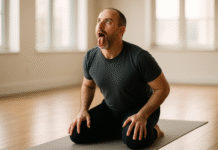


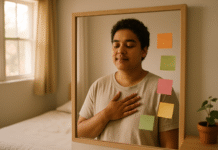








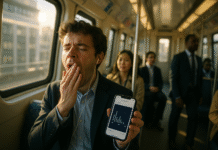
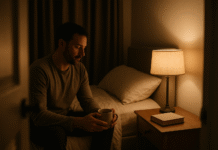

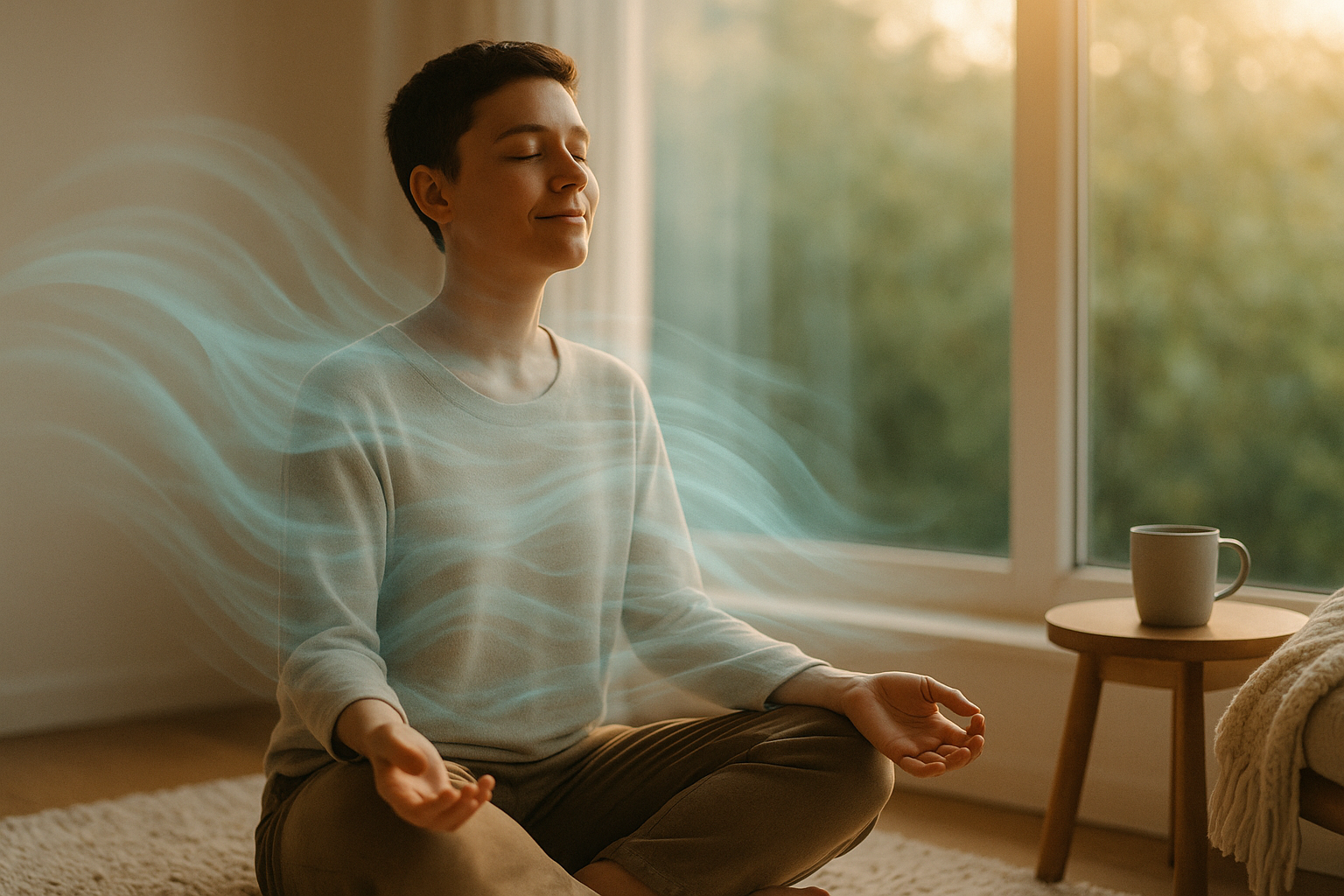
If stress keeps hijacking your day or your sleep, visualization gives your mind something better to run: a calm, vivid scene that shifts your body into the relaxation response. In simple terms, visualization (often called guided imagery) means using your senses to imagine a place, process, or outcome that feels safe and steady. Done well, it slows breathing, eases muscle tension, and quiets worry loops so you can reset in minutes. Below you’ll learn 12 research-informed visualization exercises with exact cues, ideal timing, and tips to avoid common pitfalls. This guide is for anyone who wants a practical, science-aware way to unwind—at home, at work, or before bed. (Educational only; not medical advice. If you have a medical or mental health condition, work with a qualified clinician.) The U.S. National Institutes of Health and NCCIH describe relaxation techniques (including guided imagery) as practices that help elicit a calmer state and may improve well-being. NCCIH
Quick-start (30–90 seconds):
- Sit or lie down; soften your jaw and shoulders.
- Breathe in through the nose, out through pursed lips—slow, gentle, and quiet.
- Picture a safe, specific scene (e.g., “sunlight warming my back on a quiet beach”).
- Engage 3+ senses (sight, sound, touch).
- On each exhale, imagine tension leaving like mist.
1. Calm Place Guided Imagery
Use this when you feel wired or scattered: it quickly lowers mental noise by anchoring attention in a safe, richly detailed scene. Start by choosing a place that feels uncomplicated and comforting—somewhere you’ve been (a balcony at sunrise) or a composite (a quiet cove with pine scent). The key is sensory precision: the color of the light, the temperature on your skin, and a single repeating sound (waves, a fan, leaves). As you breathe, let the scene “breathe back,” growing steadier on each exhale. Even a few minutes can shift your baseline from “fight-or-flight” toward “rest-and-digest.” Hospitals and integrative clinics often teach guided imagery for symptom relief and pre-procedure calm because it’s simple, portable, and patient-directed.
1.1 How to do it (5–7 minutes)
- Sit or lie down; place one hand on your belly to feel it rise and fall.
- Pick one scene. Give it a name (“Harbor Light”).
- Name 3 sights, 2 sounds, 1 touch sensation; repeat them in a loop.
- On inhales, “arrive” (notice colors/textures). On exhales, “release” (let the jaw and shoulders sink).
- If thoughts intrude, label them “passing” and gently return to your scene.
1.2 Numbers & guardrails
- Duration: 3–10 minutes; longer isn’t always better—consistency wins.
- Choose scenes without loaded memories; aim for neutral-pleasant.
- If you become drowsy when you need focus, visualize cooler light (morning), not sunset.
Synthesis: A simple, repeatable place script is your fastest path to reliable calm anywhere—from a parked car to a noisy office corridor.
2. Body Scan with “Warm Light” Visualization
This practice moves attention through the body while imagining a gentle glow loosening tension. It reduces mental chatter by pairing two anchors—sensation and imagery—so your mind has less room to ruminate. Begin at the toes and travel upward, letting the “light” pause at tight spots (calves, jaw). Body scans are a core element of mindfulness programs and have promising evidence for easing stress and improving somatic awareness; a 2022 systematic review suggests body scan–based practices can reduce perceived stress across varied groups.
2.1 Mini-checklist
- Posture: Lie down if possible; otherwise, recline at 120°.
- Pace: 5–7 seconds per region; 10–12 seconds for tension spots.
- Imagery: Pick a color you associate with ease (e.g., warm gold).
- Breath: Inhale “illuminate,” exhale “soften and drain.”
2.2 How to do it (region map)
- Feet → calves → knees → thighs → hips → belly → chest → hands → forearms → shoulders → neck → jaw → eyes → scalp.
- At each region: note one raw sensation (pressure, warmth, tingling), then “bathe” it in light on the exhale.
Synthesis: Pairing scan + light turns abstract relaxation into something you can feel, one region at a time, making it ideal before sleep.
3. Ocean-Wave Breathing with Visual Rhythm (Resonance)
Breathing slower—about 6–10 breaths per minute—can stimulate the vagal brake and raise heart-rate variability (HRV), a marker of resilience. Visualizing waves rolling in and out helps you keep the rhythm without overthinking counts. Picture the inhale as a swell rising, a brief crest, then a long, smooth exhale like water drawing back across sand. Many people find 4–6 seconds in, 5–7 seconds out (slightly longer exhale) both calming and sustainable; research and clinical writing note that slow breathing around 5–6 breaths per minute can support autonomic balance and, in some contexts, lower blood pressure. Avoid forceful breaths or breath-holding; the goal is quiet, easy airflow.
3.1 Steps (3–8 minutes)
- Sit upright; imagine a shoreline in front of you.
- Inhale as the swell rises (count 1-2-3-4-5).
- Soft “pause” (half-beat).
- Exhale as the wave ebbs (count 1-2-3-4-5-6).
- Sync the image (wave height) with your breath (ribcage movement).
3.2 Numbers & guardrails
- Start at ~8 breaths/min, then ease toward 6 if comfortable.
- If you feel lightheaded, shorten inhales and lengthen exhales slightly; keep breaths nasal and gentle.
- People with respiratory conditions should consult a clinician for modifications.
Synthesis: The ocean image turns abstract tempo cues into something your body intuitively follows, helping you downshift quickly without fussing over math.
4. Five-Senses Grounding Scene
When worry spirals, constructing a vivid five-senses scene redirects attention from ruminations to immediate sensory detail. Choose a setting with abundant benign stimuli—an herb garden, a library, a lakeside dock. Then populate it: what 5 things do you see, 4 you hear, 3 you feel, 2 you smell, 1 you taste? Cycling this pattern occupies working memory and dampens anxious loops. Add movement—e.g., watching a dragonfly skim the water—to keep the scene alive. It’s excellent for on-the-spot regulation during commutes, before presentations, or while waiting on hold.
4.1 How to do it (2–5 minutes)
- See (5): Colors, edges, shadows, reflections.
- Hear (4): Distant voices, wind in leaves, hum of an A/C.
- Feel (3): Clothing texture, chair pressure, air on skin.
- Smell (2): Pine, rain, paper, coffee.
- Taste (1): Mint, clean water, residual toothpaste.
4.2 Common mistakes
- Vagueness: “A garden” is too broad; specify “rosemary stems brushing my wrist.”
- Multitasking: Don’t check phones mid-scene; single-task for 2–3 minutes.
- Judging: If a sound annoys you, move your scene slightly away from it rather than battling it.
Synthesis: Five-senses grounding is cognitive “busywork” with a purpose—crowding out worry by saturating the senses with harmless detail.
5. Progressive Muscle Relaxation with “Melt” Imagery
Progressive Muscle Relaxation (PMR) teaches you to tense and release muscle groups systematically; layering a “melt like warm wax” image deepens the release. PMR has considerable research behind it for reducing stress and anxiety in adults, and combining it with other techniques can amplify benefits. Use this when your shoulders ride high or your jaw clicks from clenching. Brief tensing (5 seconds) followed by longer releasing (10 seconds) teaches the nervous system what “loose” feels like again.
5.1 How to do it (8–12 minutes)
- Feet: curl toes, melt.
- Calves: flex, melt.
- Thighs: squeeze, melt.
- Glutes & hips: contract, melt.
- Belly & back: brace gently, melt.
- Hands & forearms: fist, melt.
- Shoulders: shrug to ears, melt.
- Face: scrunch, jaw clench lightly, melt.
5.2 Numbers & guardrails
- Tense ~30–50% of max effort; pain = too hard.
- Keep breath smooth—exhale during release.
- TMJ or injury? Skip that region and imagine softening instead.
Synthesis: PMR plus imagery retrains your “default tension,” replacing clenched readiness with an embodied memory of softness.
6. Cloud-Drift Thought Distance
Use this when thoughts are sticky or self-critical. Imagine a sky above you and place each intrusive thought on a small, labeled cloud. Watch it drift left to right across your field of view at walking speed, shrinking as it goes. The point is distance, not suppression: thoughts can pass without you gripping them. Add subtle breath cues—inhale “notice,” exhale “release.” Over time, this practice builds a reflex to observe rather than fuse with stressful narratives, reducing reactivity.
6.1 How to do it (3–6 minutes)
- Sit; eyes closed or half-open.
- Notice a thought; label it in 1–3 words (“deadline worry”).
- Place it on a cloud; watch it drift beyond the right frame.
- Repeat with the next thought; if the sky clogs, widen the horizon.
6.2 Tools/Examples
- Use a 5-minute timer with soft wind or white-noise.
- If the same thought returns, give it a lighter, thinner cloud each round.
- For visual learners, sketch a horizon line before you begin.
Synthesis: You’re rehearsing non-attachment visually—practicing how to let go without a fight when stress-stories try to stick.
7. Forest Bathing Walk (Imagined or Real)
If you can’t get outdoors, you can “borrow” the regulation benefits through imagery. Picture entering a shaded trail: the cool, dappled light, resin scent, and soft ground. Coordinate steps with breath—two steps in, three steps out—while visually sweeping the path 10–15 meters ahead. This steady visual flow (optic flow) quiets the alarm system by signaling “safe forward motion.” When you can go outside, layer the same imagery onto a real walk to deepen calm.
7.1 Mini-checklist
- Tempo: Easy strolling pace, shoulders relaxed.
- Anchor: Pick one recurring cue (birdsong, leaf shimmer).
- Vision: Keep your gaze softly wide (peripheral awareness).
- Breath: Gentle nasal breathing; light, quiet, regular.
7.2 Region-specific note
- Hot climates: visualize shaded canyons or monsoon rain; swap “cool” cues for comfort.
- Urban settings: use a tree-lined street or riverside path; headphones with nature audio can help.
Synthesis: Whether imagined or lived, a gentle “forest” walk lets your nervous system practice moving through the world without bracing.
8. Future-Calm Self Rehearsal
Stress often spikes before predictable challenges (presentations, tough conversations). Rehearsing a calm version of the event—step by step—can reduce anticipatory anxiety and improve performance. Build a short “movie” of the situation from first-person view: entering, greeting, first slide, first question, closing. Pair your actions with coping cues (e.g., “I feel my feet, scan the room, inhale slowly”). This isn’t toxic positivity; include realistic hiccups and visualize yourself regulating in the moment.
8.1 How to do it (6–10 minutes)
- Write a 5-scene storyboard: arrival, opening, middle, challenge, closing.
- For each scene, script one visual cue and one bodily cue (e.g., “loosen jaw”).
- Run the movie at normal speed once; then again at 75% speed for control.
- End with a single anchor image (e.g., the room after applause).
8.2 Common mistakes
- Vagueness: “I’ll do great” isn’t a scene. Make it concrete.
- Perfect-only: Include a realistic curveball and your calm response.
- Over-repetition: 2–3 run-throughs are enough; stop before fatigue.
Synthesis: You’re encoding a procedural memory of steadiness, so when stress hits, your body already knows the steps.
9. Healing Ball of Light (Comfort for Discomfort)
When pain or unease flares, picture a small, warm sphere of light resting at the center of the sensation. On inhales it gathers scattered tension; on exhales it softens the area and slowly expands, radiating warmth. Many clinics teach imagery for coping with pain and anxiety alongside standard care; studies in perioperative and inpatient settings suggest guided imagery can reduce anxiety and, at times, pain intensity and stress biomarkers like cortisol. Use this as a comfort aid—not a replacement for medical treatment—and adjust pressure or posture as needed. SciELO
9.1 Steps (3–7 minutes)
- Locate the center of discomfort; place a warm, glowing sphere there.
- Inhale: imagine it drawing sharpness inward.
- Exhale: watch it soften edges and spread warmth 1–2 cm outward.
- Expand until the area feels held rather than clenched.
9.2 Guardrails
- Pain that worsens or is new → seek clinical advice.
- If imagery increases distress, switch to neutral anchors (hands, breath).
Synthesis: Comfort imagery gives your nervous system a soothing “story” to follow while you pursue appropriate care.
10. 60-Second Micro-Vacation
In packed days, you need a reset you’ll actually use. A micro-vacation is a one-minute scene change that interrupts stress inertia. Pick a short scene with movement—gliding over a lake at golden hour, rain tracing a windowpane, or standing beside a campfire. Use a simple breath rhythm (4 in, 6 out) and a single repeating visual loop. Because it’s short, consistency matters: set three alarms (mid-morning, mid-afternoon, pre-commute) and treat them like sips of calm.
10.1 How to do it (1 minute)
- 0–10s: Inhale slowly; bring up your scene’s first frame.
- 10–40s: Loop the visual (boat glides, rain beads, fire flickers).
- 40–60s: Lengthen exhale; let the scene fade; open your eyes softly.
10.2 Tools & tips
- Use your phone’s voice memo to record a 60-second script in your own voice.
- Tag locations (desk, kitchen) to anchor the habit.
- Pair with posture: unclench jaw, drop shoulders, widen chest.
Synthesis: Small, reliable hits of imagery puncture the stress build-up and make larger practices easier to enter.
11. Sleep “Landing Strip” Visualization
Bedtime worry loops thrive on unstructured darkness. A landing-strip routine gives your brain a sequence to follow down. Picture a runway of ten soft lights stretching into the night; with each full breath, a light turns off as you glide toward quiet. Combine with a warm-light body scan or ocean-wave breathing. Mindfulness-based approaches (which include body scan and guided attention) show benefits for sleep and anxiety in clinical studies; the point here is consistency and gentleness, not forcing sleep.
11.1 How to do it (10–15 minutes)
- Lights 10→7: Slow your day—picture closed tabs, dimming lamps.
- Lights 6→4: Warm-light scan from toes to hips, hips to chest.
- Lights 3→1: Ocean-wave breathing; lengthen the exhale slightly.
- Final light: Visualize settling into a quiet harbor; let images blur.
11.2 Guardrails
- If wakeful after 20 minutes, do a seated micro-vacation or read paper pages; return when sleepy.
- Avoid clock-checking; it re-arouses system alertness.
Synthesis: A predictable visual “descent” gives your nervous system a gentle flight plan into sleep.
12. Protective Boundary Bubble
Social stress or crowded spaces can spike vigilance. The boundary bubble is a quick visualization that defines your space without confrontation. Imagine a translucent sphere around you—arm’s length in radius—set to your preferred color/texture (smoky quartz, soft linen). On inhales the bubble firms slightly; on exhales it becomes more permeable to positive cues and less to noise. You stay connected, not cut off, with clear energetic boundaries that help you remain calm.
12.1 How to do it (1–3 minutes)
- Stand or sit; feet planted.
- Visualize the bubble expanding from your sternum with the inhale.
- Name its qualities: color, density, temperature.
- With each exhale, imagine unwanted stimuli softening and passing around you.
12.2 Common mistakes
- Walls, not membranes: Too rigid can feel isolating; aim for permeable.
- Vagueness: Give texture and temperature for realism.
- Overuse: Use situationally, not as avoidance of necessary interactions.
Synthesis: This is a social-nervous-system tool—calm within connection—so you can stay present without being overwhelmed.
FAQs
1) Do visualization exercises really change the body, or just how I feel?
Both. When you engage imagery with steady breathing, you’re feeding the nervous system cues of safety. Studies report slower breathing, lower perceived stress, and changes in markers like HRV with slow-breathing practices; guided imagery has reduced anxiety and, in some settings, cortisol. Effects vary by person, but the pathway is physiological and psychological.
2) How long should I practice to see results?
Most people feel a shift within 3–10 minutes. For cumulative benefit, aim for 10–15 minutes, 3–5 days per week, for 4–8 weeks. Keep micro-vacations for maintenance on busy days. Consistency matters more than marathon sessions.
3) Is guided imagery safe if I have trauma or panic attacks?
Often yes, but choose neutral scenes and keep eyes slightly open. Avoid content that resembles trauma cues. Work with a trauma-informed clinician if you notice flashbacks, dissociation, or spiraling panic. Grounding and five-senses scenes are safer starting points.
4) Which breathing rate is “best” for relaxation?
There’s no single perfect number, but many adults settle near 6–10 breaths per minute with a slightly longer exhale. Research on resonance-style breathing around 5–6 bpm reports HRV benefits; stay gentle and avoid breath-holding or dizziness.
5) Can these practices help with sleep?
Yes. Body scan, slow breathing, and gentle imagery are widely used in pre-sleep routines and in mindfulness programs that have shown improvements in sleep quality for many participants. Use the “landing strip” sequence 15–30 minutes before lights out. NCCIH
6) What if I’m “bad at visualizing” images?
You don’t need HD pictures. Use words, feelings, or sounds. For example, repeat “cool shade, pine scent, footfall” while breathing slowly. Sensory fragments work as well as cinematic scenes.
7) Should I use an app or my own voice?
Either works. Many people relax faster to familiar voices. Try recording a 3–5 minute script on your phone. Apps and clinical audio tracks are helpful if you want structure.
8) Are there risks or side effects?
The main risk is overbreathing (lightheadedness, tingling) from forcing big breaths. Keep it gentle and nasal. If you have health conditions (e.g., respiratory issues), ask a clinician about modifications. Stop if distress rises.
9) How does PMR compare to body scan for stress?
They complement each other. PMR uses brief tensing to “teach” release and has solid evidence for easing stress and anxiety; body scan builds nonjudgmental awareness and can ease perceived stress and sleep problems. Rotate them based on what your body needs.
10) Is mindfulness as effective as medication for anxiety?
For some people with diagnosed anxiety disorders, an 8-week mindfulness-based stress reduction (MBSR) program performed as well as escitalopram in a randomized trial; decisions about treatment should be made with your clinician. Visualization and breathing can be supportive alongside professional care.
Conclusion
Visualization works because it gives your brain a better signal to follow than stress. Pairing imagery with gentle, steady breathing and concrete sensory details tells your nervous system, “We’re safe—you can downshift now.” Use the exercises above as a menu: a 60-second micro-vacation between meetings, ocean-wave breathing when your heart is thudding, a warm-light body scan before bed, or a future-calm rehearsal ahead of a high-stakes moment. Keep sessions short and consistent at first; pick one or two favorites and practice them on a schedule for two weeks. Layer in PMR when your muscles feel braced, and keep a simple place script on standby for travel or tough days. Most importantly, be gentle and specific—vivid detail is your fastest route to release.
Take your first step now: set a 3-minute timer, choose your calm place, and breathe the scene into focus.
References
- Relaxation Techniques: What You Need to Know, National Center for Complementary and Integrative Health (NCCIH), June 8, 2021. https://www.nccih.nih.gov/health/relaxation-techniques-what-you-need-to-know
- Meditation and Relaxation for Your Mind and Body, National Cancer Institute (NCI), April 11, 2024. https://www.cancer.gov/about-cancer/coping/feelings/relaxation
- How Guided Imagery Helps You Relax, Cleveland Clinic Health Essentials, February 28, 2022. https://health.clevelandclinic.org/guided-imagery
- Breathing exercises to lower your blood pressure, Harvard Health Publishing, September 1, 2023. https://www.health.harvard.edu/heart-health/breathing-exercises-to-lower-your-blood-pressure
- Fincham, G. W., et al. Effect of breathwork on stress and mental health: A meta-analysis, Scientific Reports, 2023. https://www.nature.com/articles/s41598-022-27247-y
- Khir, S. M., et al. Efficacy of Progressive Muscle Relaxation in Adults for Emotional Symptoms, Healthcare, 2024. https://pmc.ncbi.nlm.nih.gov/articles/PMC10844009/
- Anamagh, M. A., et al. The effect of Guided Imagery on Perioperative Anxiety in Hospitalized Adults: A Systematic Review, PLOS ONE, 2024. https://pmc.ncbi.nlm.nih.gov/articles/PMC11749993/
- Weigensberg, M. J., et al. Group stress-reduction guided imagery reduces salivary cortisol, Children (Basel), 2022. https://pmc.ncbi.nlm.nih.gov/articles/PMC8874194/
- Gan, R., et al. The effects of body scan meditation: A systematic review and meta-analysis, Mindfulness, 2022. https://pubmed.ncbi.nlm.nih.gov/35538557/
- Hoge, E. A., et al. Mindfulness-Based Stress Reduction vs Escitalopram for Anxiety Disorders, JAMA Psychiatry, 2023. https://jamanetwork.com/journals/jamapsychiatry/fullarticle/2798510