






















If you want to keep lifting for years—stronger, safer, and without annoying setbacks—injury prevention has to be part of your training, not an afterthought. This guide distills the most important, field-tested strategies for staying healthy under the bar. You’ll learn how to warm up with purpose, master bracing and technique, progress loads intelligently, use equipment wisely, balance your program, and recover like it matters. Whether you’re brand-new to barbells or an intermediate lifter upgrading your habits, these 7 essential tips for injury prevention during weightlifting will help you lift confidently and consistently.
Disclaimer: This article provides general education about training and safety. It’s not a substitute for medical advice. If you have an injury, health condition, or concerns about specific exercises, consult a qualified healthcare professional or certified coach.
Key takeaways
- Technique + tension first. Bracing, joint alignment, and consistent setup patterns reduce strain and improve force transfer.
- Warm up with intent. Use dynamic movement prep and gradual ramp-up sets instead of long pre-lift static holds.
- Progress small and steady. Track loads, reps, and effort; use tools like RIR/RPE; build in deloads.
- Support the weak links. Accessory work for joints and tissues that commonly get irritated keeps you training.
- Set up your environment. Racks, safeties, collars, footwear, and belts—use them right to minimize avoidable risks.
- Recover on purpose. Sleep, hydration, and sensible training frequency lower injury risk and improve outcomes.
- Listen early. Address pain and “niggles” with timely regressions and professional input when needed.
1) Nail Your Setup, Bracing, and Technique
What it is & why it matters
Technique isn’t just about neat-looking lifts—it’s load distribution. Proper setup and bracing let you create stiffness where you want it (torso, hips, shoulders) so the target muscles do the work while vulnerable tissues are protected. Consistent positions make force more repeatable, which means fewer surprises rep to rep.
Requirements & low-cost alternatives
- Barbell/dumbbells or a dowel/PVC pipe to practice.
- A phone camera for side/front video (tripod optional).
- Shoes with a firm, flat, or slightly elevated heel depending on the lift and your mobility.
Step-by-step for universal bracing (applies to squat, hinge, press):
- Stance and grip: Find a stance that lets you create a stable foot “tripod” (big toe, little toe, heel). Set your hands symmetrically on the bar.
- Stack: Align rib cage over pelvis. Think “tall chest, heavy ribs.”
- 360° breath + brace: Inhale through the nose into your abdomen and sides. Expand circumferentially (not just belly-forward). Gently brace as if preparing to be poked in the side—enough to create tension while still able to move.
- Organize the spine: Neutral from head to pelvis with a slight chin tuck. Avoid cranking your head up or tucking under the tail.
- Move with intent: Control the eccentric (lowering), push evenly through the whole foot, and keep the bar close to your center of mass.
Beginner modifications & progressions
- Start light and slow. Use a dowel or empty bar, add a 3–4 second eccentric, and pause briefly in the hardest position (e.g., bottom of squat).
- Regress range, not intent. Box squats, block pulls, or high-incline presses teach positions without overloading end ranges.
- Progress by shortening pauses, increasing load slowly, or extending range (e.g., lower box).
Frequency, duration, and metrics
- Daily micro-practice: 5–10 minutes of technique work in your warm-up.
- Metrics: Video one work set per lift weekly and review bar path, depth, and spinal alignment. Track “reps in reserve” (RIR) to ensure you are not grinding every set.
Safety, caveats, and common mistakes
- Don’t “hold your breath and hope” on every rep—know when you’re bracing appropriately versus straining excessively (more in Tip 5).
- Avoid early lockouts of knees or elbows that shift stress to joints instead of muscles.
- Eliminate ego-lifting: if your last rep changes your technique, the weight is too heavy for that day.
Mini-plan example
- Before squats: 2 sets of 10 hip hinges with dowel (head–back–sacrum contact), then 2 sets of 5 goblet squats with a 2-second pause.
- Before pressing: 2 sets of 8 scapular push-ups + 2 sets of 8 band pull-aparts focusing on rib-pelvis stack.
2) Warm Up With Purpose (Dynamic Prep + Ramp-Up Sets)
What it is & why it matters
A smart warm-up elevates body temperature, wakes up the nervous system, rehearses joint positions, and reduces the likelihood of niggles. Dynamic warm-ups and specific ramp-up sets prepare the exact tissues and patterns you’ll use, while prolonged static holds before heavy lifting can blunt immediate strength output.
Requirements & low-cost alternatives
- 5–10 minutes of space. A light cardio machine is optional; a jump rope or brisk walk works.
- Mini-bands or a simple resistance band for activation (optional).
Step-by-step dynamic warm-up framework (10–15 minutes)
- General raise (3–5 min): Brisk walk, bike, or jump rope to elevate temperature and heart rate.
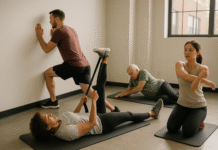
- Dynamic mobility (5 min): Leg swings, walking lunges with rotation, inchworms, T-spine openers, arm circles. Keep reps controlled through full, comfortable ranges.
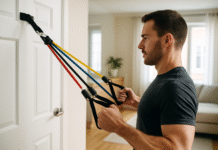
- Activation & patterning (2–5 min): Glute bridges, scaption raises, band pull-aparts, face pulls, bodyweight squats or push-ups.
- Ramp-up sets (specific): Build to your work weight with 2–4 progressively heavier sets of the day’s first big lift (e.g., 40%, 60%, 75% of the top set), practicing the exact tempo and bracing you’ll use.
Beginner modifications & progressions
- New lifters can do a condensed 6–8 minute version (2 min general raise, 3 min mobility, 1–3 min activation) and add more as needed.
- As you advance, customize with lift-specific primers (e.g., hip airplanes before squats/deads, scap push-ups before presses).
Frequency, duration, and metrics
- Every session. You’ll lift better and reduce the risk of strains.
- Metric: Rate your first work set smoothness and readiness (0–10). If it’s <7 after a full warm-up, add one more ramp-up set or slightly reduce the work weight for the day.
Safety, caveats, and common mistakes
- Avoid fatiguing yourself with high-rep “activation” work. The goal is priming, not pre-exhaustion.
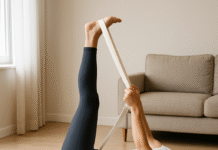
- Skip long pre-lift static stretches of a single muscle group; save long holds for post-training or separate sessions.
Mini-plan example
- Lower day: 3 min bike → 10 walking lunges + rotation → 10 leg swings each → 15 glute bridges → 15 band pull-aparts → Squat ramp-ups: bar × 10, 40% × 5, 60% × 3, 75% × 2.
- Upper day: 3 min brisk walk → 10 arm circles each, 8 scap push-ups, 12 face pulls → Bench ramp-ups: bar × 10, 50% × 5, 70% × 3, 80% × 1–2.
3) Progress Loads Intelligently (Small Jumps, RIR/RPE, and Deloads)
What it is & why it matters
Most barbell injuries don’t come from one mythical “bad rep.” They come from accumulated stress plus a too-fast jump in load or volume. Intelligent progression keeps stress in a zone your tissues can recover from and adapt to.
Requirements & low-cost alternatives
- Training log (app, spreadsheet, or notebook).
- Microplates (0.5–1.25 kg) or fractional plates—DIY washers can substitute.
- A basic understanding of RIR/RPE (reps left in the tank).
Step-by-step load management
- Set a target rep range and effort. For example, 3 sets of 5 at 2 RIR (you could do 7 reps if you had to).
- Earn the increase. If you hit all sets with the planned RIR (and technique stays consistent), increase the load next session.
- Use small jumps. Typical increases are the smallest plate increments available; on big lifts that might be 1–2.5 kg per side; on smaller lifts 0.25–0.5 kg per side.
- Apply simple rules. When you exceed your rep target by 1–2 reps across sets with solid form, it’s a sign to nudge load up.
- Deload proactively. Every 4–8 weeks (or earlier if joint irritation, sleep decline, or persistent soreness appears), reduce volume and/or intensity for 1 week to resensitize and consolidate gains.
Beginner modifications & progressions
- Novices: Add weight only when you complete all sets and reps with the same bar speed and technique.
- Intermediates: Autoregulate with RIR/RPE and rotate rep ranges across weeks (e.g., 5s, 3s, 8s) to distribute stress.
Frequency, duration, and metrics
- Progress 1–2 times per week per main lift depending on your split.
- Metrics: Weekly changes in load, reps completed at a given RIR, and average bar speed (optional with a phone app or rep-time estimate).
Safety, caveats, and common mistakes
- Avoid big jumps between sessions. Small, consistent increases beat boom-and-bust PR chasing.
- Don’t “win the week” and lose the month—if life stress or sleep tanked, hold loads steady or reduce slightly.
Mini-plan example
- Week 1–2 Squat: 3×5 @ 2 RIR. If you complete 3×5 @ 2 RIR twice, add +2.5 kg next week.
- Week 4 Deload: 2×5 at ~80% of Week 3’s load, emphasize tempo and clean depth.
4) Strengthen the “Weak Links”: Accessory Work That Keeps You Lifting
What it is & why it matters
Main lifts drive progress; accessories keep you in the game. Strategically training common hot spots—shoulders, hips, core, elbows, and the posterior chain—reduces overuse irritation and improves joint tolerance to training.
Requirements & low-cost alternatives
- Bands, light dumbbells, a cable, or a suspension trainer.
- Optional: small loop bands for hip and shoulder work.
Accessory targets and how to implement
- Posterior chain (hamstrings, glutes, spinal erectors): Hip hinges with a dowel, RDLs, hip thrusts, back extensions.
- Shoulder health: Face pulls, band external rotations, prone Y/T/W raises, incline trap-3 raises.
- Core stiffness: Anti-movements like dead bugs, farmer’s carries, side planks, Pallof presses.
- Single-leg stability: Split squats, step-ups, single-leg RDLs (light to moderate).
Beginner modifications & progressions
- Start with 2–3 exercises for 2–3 sets of 8–12 after your main lift.
- Progress slowly: add reps until the top of the range with perfect control, then add a small weight.
Frequency, duration, and metrics
- 2–3x/week, 15–20 minutes at the end of sessions.
- Metrics: Pain-free range, symmetrical reps side to side, and session RPE (keep accessories at 6–7/10—challenging, not grinding).
Safety, caveats, and common mistakes
- Don’t turn accessories into max-effort tests. Quality of contraction and position beats load here.
- Rotate exercises every 4–6 weeks to avoid overuse and keep engagement high.
Mini-plan example
- Upper day: 3×12 face pulls, 3×10 incline trap-3 raises, 3×30–40 m farmer’s carries.
- Lower day: 3×8 RDL (light), 2×12 back extensions, 2×12 side planks each side (30–45 s).
5) Use Equipment and the Training Environment Wisely
What it is & why it matters
Simple equipment habits prevent a lot of avoidable issues. Racks, safeties, collars, shoes, chalk, and belts are tools—use them correctly and they reduce risk while letting you train harder and more confidently.
Requirements & low-cost alternatives
- Power rack with safeties or spotter arms/straps.
- Collars to secure plates (basic spring collars work).
- Shoes with a firm sole (flat shoes for deadlift/press, heeled lifters can help squat depth).
- Belt (optional) for heavy sets.
- Chalk or liquid chalk to improve grip (if your gym allows it).
Step-by-step equipment setup
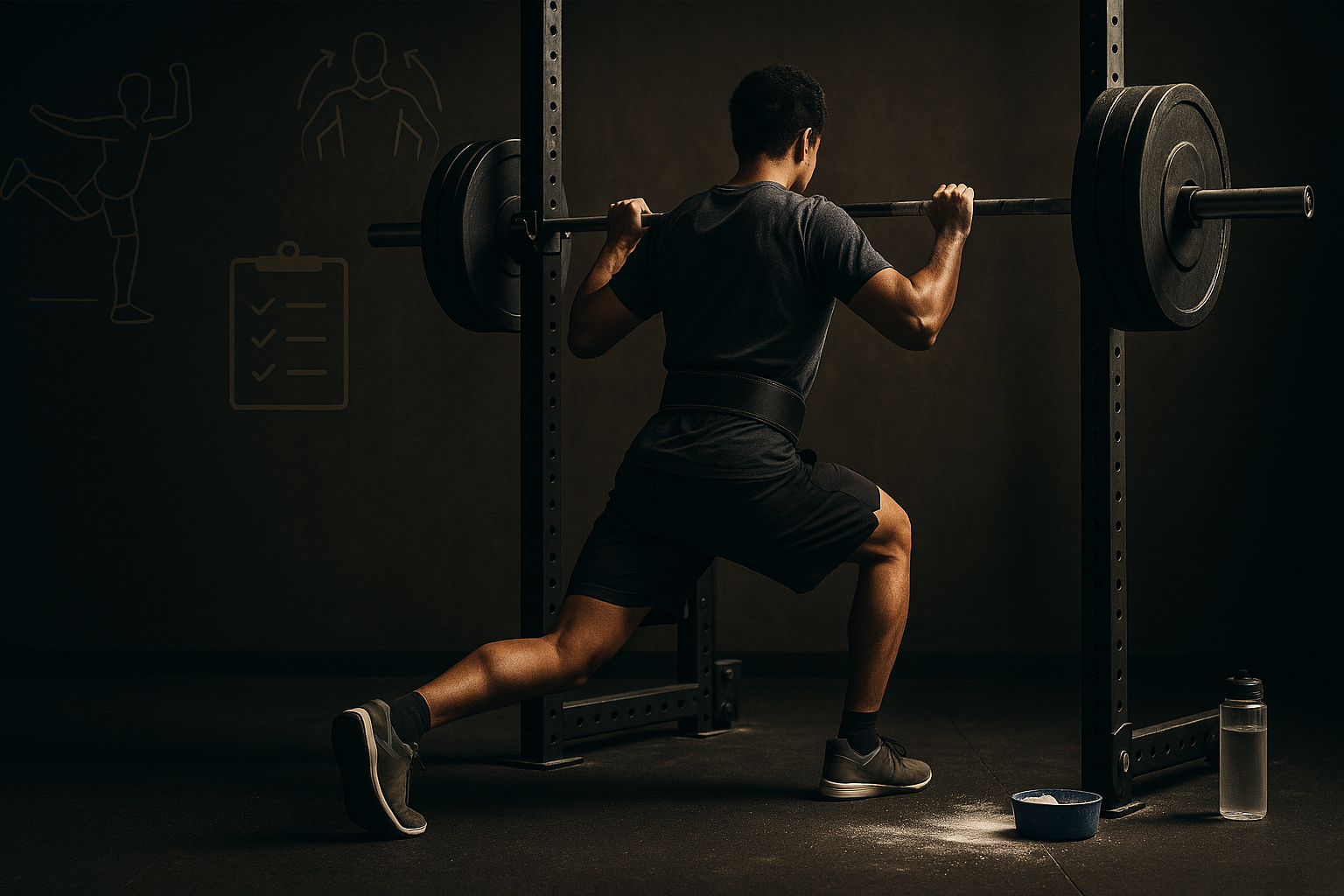
- Racks and safeties: For squats, set safeties just below your lowest squat depth so you can “sit” the bar if needed. For bench press, set safeties so the bar clears your chest at the bottom without touching, but can catch the bar if you fail.
- Collars: Always collar the bar to prevent plate migration mid-set.
- Footwear: Choose stable shoes. Minimize spongy soles that wobble or roll under load.
- Belts: Use a properly sized belt (fits snug between ribs and pelvis) for heavy compound sets. Position mid-torso, brace into the belt 360°, then lift. Don’t rely on a belt to fix sloppy bracing.
- Breathing & bracing: For submaximal sets, controlled exhale through the sticking point works well. For very heavy sets, a brief breath-hold with a strong brace can add stiffness—avoid prolonged straining, especially if you have blood pressure concerns.
- Spotting: Prefer safeties for solo training. If using a human spotter, agree on commands and help protocols before the set.
Beginner modifications & progressions
- Practice belt use at light loads to learn how to brace against it before using it on hard sets.
- If you don’t have a rack, swap to dumbbell or machine variations that can be safely bailed or set down.
Frequency, duration, and metrics
- Every session: Equipment setup is non-negotiable.
- Metrics: Zero near-misses. If a bar gets pinned or plates slide, fix the setup immediately and log what went wrong.
Safety, caveats, and common mistakes
- Don’t set safeties too low to “look tough”; they can’t help you if they’re decorative.
- A belt is not a cure-all. It’s a force multiplier for good bracing, not a substitute.
- Keep the lifting area clear—no plates or bottles underfoot.
Mini-plan example
- Before first work set: Check collars, set safeties, chalk hands if allowed, confirm unrack–walkout steps, and do one rehearsal rep with an empty bar using full bracing.
6) Recover Like It Matters (Sleep, Hydration, and Weekly Structure)
What it is & why it matters
Strength gains happen between sessions. Undersleeping, under-hydrating, and stacking hard days back to back without reason crank up injury risk and blunts progress.
Requirements & low-cost alternatives
- A sleep routine (consistent schedule, cool/dark room).
- A water bottle and a simple hydration plan.
- A weekly template that alternates stress and recovery.
Step-by-step recovery essentials
- Sleep: Aim for a consistent sleep window each night and create a wind-down routine (lights down, screens out, cooler room). Chronic short sleep is associated with higher rates of musculoskeletal pain and sports injury.
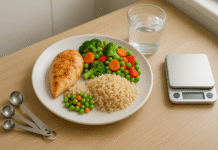
- Hydration: Start sessions hydrated. For most lifters, water is sufficient for typical strength sessions. Replace fluids after training by drinking enough to cover sweat losses (a simple check: weigh yourself pre/post on heavier sessions).
- Weekly structure: Alternate harder and easier days. Avoid stacking two maximal lower-body days in a row.
- Post-session nutrition: A balanced meal with protein and carbs within a couple hours supports recovery.
Beginner modifications & progressions
- If sleep is irregular, schedule one less weekly session and extend your training cycle by a week. Better recovered, fewer setbacks.
- If you sweat heavily or train in heat, consider adding electrolytes or a sports drink for longer or more intense sessions.
Frequency, duration, and metrics
- Daily: Consistent bedtime/wake time.
- Metrics: Morning readiness (subjective), session RPE, and body weight change across a session as a rough hydration check.
Safety, caveats, and common mistakes
- Don’t overcomplicate recovery with supplements while ignoring sleep and stress management.
- If headaches, dizziness, or cramping accompany sessions, review hydration and fueling—then consult a clinician if symptoms persist.
Mini-plan example
- Sleep habit stack: Same sleep window on training days, 10-minute screen-free wind-down, cool/dark room, wake at the same time daily.
- Hydration habit: 250–500 ml water within an hour before training; sip during; replace fluids after (use scale or urine color as a simple guide).
7) Respect Pain Signals and Adjust Early
What it is & why it matters
Delayed-onset muscle soreness (DOMS) is normal; sharp, localized, or joint-line pain is not. Addressing discomfort early with intelligent regressions keeps a small issue from becoming a layoff.
Requirements & low-cost alternatives
- An options list of regressions for each main lift.
- Willingness to adjust the day’s plan without ego.
Step-by-step: the “Stop–Swap–Solve” approach
- Stop the aggravator. End the set if pain appears, especially if it changes your movement.
- Swap the variant. Change grip width, stance, range, or tempo; or pick a close variation that doesn’t provoke pain (e.g., high box squat instead of full squat; neutral-grip press instead of barbell bench).
- Solve for root cause. Add joint-friendly accessories, check technique on video, reduce weekly volume for the affected pattern, and—if pain persists—consult a clinician.
Beginner modifications & progressions
- Keep a “Plan B” list in your program (one alternative per main lift) so you don’t skip training if something flares.
- Progress by phasing back toward the original lift once pain-free for 2–3 sessions.
Frequency, duration, and metrics
- Use as needed—don’t push through sharp pain.
- Metrics: Pain scores (0–10), number of pain-free sets, and tolerance to load/ROM.
Safety, caveats, and common mistakes
- Don’t confuse technique breakdown with “toughness.” Pain that alters movement is a red flag.
- If you experience night pain, unexplained swelling, neurological symptoms, or pain that persists despite a week of regressions, seek professional evaluation.
Mini-plan example
- Shoulder irritation on bench: Switch to neutral-grip DB press with elbows 30–45° from the torso, reduce ROM 2–3 cm; add 2 sets of 15 banded external rotations and 2 sets of 12 face pulls. Reassess in a week.
Quick-Start Checklist (Pin This Before You Train)
- Film one set per lift weekly—check bar path, depth, and spinal alignment.
- Do a 10–15 min dynamic warm-up and 2–4 ramp-up sets.
- Progress with small jumps only when you hit the day’s reps at the planned RIR with solid form.
- Set safeties correctly and collar the bar every time.
- Do 15–20 min of accessory work for shoulders, hips, core, and posterior chain.
- Prioritize sleep and basic hydration habits.
- Adjust early for pain; have a Plan B variation ready.
Troubleshooting & Common Pitfalls
Lower back tightness after deadlifts
- Try a slightly higher hip start, pull the slack out of the bar, and keep the bar close to your shins. Add light RDLs and back extensions for 2–3 sets of 10–12 post-lift. Reduce loads by 5–10% for a week while you groove the pattern.
Knee discomfort in squats
- Check depth, knee travel, and foot pressure (tripod). Play with stance width and toe angle. Add terminal knee extensions and split squats. Consider a heeled shoe if ankle mobility is limiting depth.
Shoulder ache on bench
- Tuck elbows 30–45° from the torso, set shoulder blades down/back, and maintain a stable ribcage. Replace straight bar with a neutral-grip DB press temporarily. Add face pulls and external rotations.
Elbow pain with presses or curls
- Rotate grips between sessions (supinated, neutral). Add wrist curls/extensions and reduce total elbow flexion volume for 1–2 weeks.
Persistent fatigue
- Reduce weekly sets by 20–30% for a week (deload), prioritize sleep, and pause heavy singles. Resume gradual progression once readiness improves.
How to Measure Progress (and Safety) Beyond the Numbers
- Consistency: Fewer missed reps and fewer “technique fails” over time.
- Quality: Bar path straighter, fewer balance checks, better depth/range.
- Effort accuracy: Your planned RIR and actual “feel” converge (being within ~1 rep is a good sign).
- Recovery markers: DOMS resolves within 24–48 hours, joints feel “quiet,” appetite and sleep are steady.
- Load trends: Loads or reps increase gradually without spikes; deloads leave you feeling fresher, not flattened.
A Simple 4-Week Starter Plan (3 Days/Week)
Goal: Build habits that prevent injuries while getting stronger.
Weekly layout:
- Day A: Squat focus + upper accessories
- Day B: Press focus + lower accessories
- Day C: Hinge focus + upper accessories
Warm-up for every session (10–15 min):
General raise (3–4 min) → Dynamic mobility (hips/shoulders) → Activation (glute bridges, face pulls) → Ramp-up sets for the first lift.
Week 1
- Day A: Back Squat 3×5 @ ~2 RIR; DB Row 3×8; Trap-3 Raise 3×10; Farmer’s Carry 3×30 m
- Day B: Bench Press 3×5 @ ~2 RIR; Split Squat 3×8/side; Pallof Press 3×10/side
- Day C: Deadlift 3×5 @ ~2 RIR; Incline DB Press 3×10; Back Extension 2×12
Week 2
- Repeat Week 1. If all sets/reps felt like ~2 RIR, add the smallest load increase to each main lift. Keep accessories at similar loads or add a rep.
Week 3
- Same structure; progress main lifts again only if technique stayed crisp. Keep accessories varied (swap DB row for chest-supported row; swap split squat for step-up; swap incline DB press for neutral-grip machine press if available).
Week 4 — Deload & reinforce
- Main lifts: -15–20% load, same reps with controlled tempo; pause 1–2 s in the hardest position.
- Accessories: Reduce to 2 sets each, focus on quality.
- Review videos, adjust foot stance, and finalize equipment settings (safety heights, belt placement).
Optional conditioning: 1–2 sessions of 10–20 minutes low-impact cardio post-lift or on off days.
Recovery anchors:
- Sleep: consistent schedule; simple wind-down routine.
- Hydration: arrive hydrated; sip during; replace fluids after (use a bodyweight check if needed).
FAQs
1) Should I wear a lifting belt as a beginner?
You don’t need a belt to start. Learn 360° bracing first. A belt can be helpful on heavier sets once your technique is consistent; it amplifies a good brace but doesn’t replace it.
2) Is static stretching before lifting bad?
Long static holds right before heavy sets can temporarily reduce strength. Use short dynamic warm-ups and ramp-up sets pre-lift; save longer static stretching for after training or a separate session.
3) How fast should I add weight?
Make small increases only when you hit the day’s reps with the planned RIR and stable technique. If your form changes or bar speed tanks, hold the load or even reduce it for that day.
4) What if I train alone—do I need a spotter?
You can lift safely solo by using a rack with safeties or spotter arms. Set them correctly for squats and bench. If you do use a spotter, agree on commands and help before the set.
5) How many warm-up sets do I need?
After a 10–15 minute dynamic warm-up, do 2–4 ramp-up sets on your first main lift, building to your working weight. Later lifts usually need fewer.
6) Can I lift every day?
Most people progress best on 3–5 days/week with varied intensities. Daily heavy lifting is unnecessary and can increase fatigue without better results.
7) My shoulder hurts when I bench—stop or modify?
Modify first: adjust grip width, tuck elbows 30–45°, switch to neutral-grip DB presses, and add shoulder accessories. If pain persists or worsens, stop and consult a professional.
8) What’s RIR and why use it?
Reps in Reserve estimates how many reps you had left at the end of a set. It helps you train hard enough to progress while avoiding unnecessary form breakdowns.
9) Do I need special shoes?
Stable, firm-soled shoes are a big help. Many prefer flat shoes for deadlifts and a slight heel for squats to assist depth. Avoid soft, squishy soles.
10) How do I know if I need a deload?
Signs include persistent soreness, worsening sleep, irritability, and declining bar speed despite effort. Plan a deload every 4–8 weeks or sooner if your joints feel cranky.
11) Should I collar the bar on every lift?
Yes. Collars prevent plates from drifting mid-set. Combined with proper safety setup, they reduce avoidable accidents.
12) How much should I drink during lifting sessions?
For most lifters and typical sessions, water is sufficient. Arrive hydrated and sip as needed; longer/hot sessions may require electrolytes. Replace fluids after training to cover sweat losses.
Conclusion
Strong bodies are built on repeatable habits: sound technique, purposeful warm-ups, gradual progression, supportive accessories, smart equipment use, and recovery that keeps you ready to train. Treat these as essential training skills, not extras, and you’ll stack years of healthy, productive lifting with far fewer setbacks.
Copy-ready CTA:
Ready to train smarter? Pick one tip above to implement this week, film your main set, and build from there—your stronger, pain-free future self will thank you.
References
- Progression Models in Resistance Training for Healthy Adults, American College of Sports Medicine Position Stand, March 2009. https://pubmed.ncbi.nlm.nih.gov/19204579/
- Injuries among Weightlifters and Powerlifters: A Systematic Review, Journal of Strength and Conditioning Research (abstract via PubMed), 2017. https://pubmed.ncbi.nlm.nih.gov/27707741/
- Injuries in Weightlifting and Powerlifting: An Updated Systematic Review, BMJ Open Sport & Exercise Medicine, 2024. https://bmjopensem.bmj.com/content/10/4/e001884
- Potential Effects of Dynamic Stretching on Injury Incidence in Sports: A Narrative Review, Sports, 2023. https://pmc.ncbi.nlm.nih.gov/articles/PMC10289929/
- Effectiveness of Warm-Up Intervention Programs to Prevent Sports Injuries, Frontiers in Physiology (via PubMed Central), 2022. https://pmc.ncbi.nlm.nih.gov/articles/PMC9140806/
- Does Pre-exercise Static Stretching Inhibit Maximal Muscular Performance? A Meta-analytical Review, Scandinavian Journal of Medicine & Science in Sports, 2013. https://onlinelibrary.wiley.com/doi/abs/10.1111/j.1600-0838.2012.01444.x
- Acute Effects of Static Stretching on Muscle Strength and Power: An Updated Review, Frontiers in Physiology, 2019. https://pmc.ncbi.nlm.nih.gov/articles/PMC6895680/
- American College of Sports Medicine Position Stand: Exercise and Fluid Replacement, Medicine & Science in Sports & Exercise, 2007. https://pubmed.ncbi.nlm.nih.gov/17277604/
- Hydration and Performance (coaching resource summarizing fluid replacement guidance), National Strength and Conditioning Association, accessed 2025. https://www.nsca.com/education/articles/kinetic-select/hydration-and-performance/
- Sleep and Injury Risk in Athletes, Current Sports Medicine Reports (abstract via PubMed), 2021. https://pubmed.ncbi.nlm.nih.gov/34099605/
- Sleep and Athletic Performance: Impacts on Physical Performance, Recovery, and Injury, Sports Medicine, 2020. https://pmc.ncbi.nlm.nih.gov/articles/PMC9960533/
- Application of the Repetitions in Reserve-Based Rating of Perceived Exertion Scale for Resistance Training, Strength and Conditioning Journal (via PubMed Central), 2016. https://pmc.ncbi.nlm.nih.gov/articles/PMC4961270/