

























Mindful eating is a simple, science-backed way to feel more satisfied from food while easing stress around eating. It asks you to pay full attention to the look, smell, taste, and feel of your meal—and to your body’s signals—without judgment. In one line: mindful eating means noticing your experience of food in the present moment and letting those observations (not old rules) guide what, when, and how much you eat. This guide translates that idea into 10 beginner-friendly steps so you can slow down, honor hunger and fullness, savor more, and build a healthier relationship with food. It’s written for anyone who’s ever finished a plate without remembering the meal, battled all-or-nothing rules, or wants eating to feel calmer and more joyful. Quick note: this article is for education only and isn’t medical advice; if you’re living with an eating disorder, diabetes, GI conditions, or take medications that affect appetite, work with a qualified clinician.
Fast-start steps (skim and try today):
- Pause and rate your hunger (0–10) before you eat.
- Park distractions: sit, plate your food, and put your phone away.
- Take 3 breaths, then your first 3 bites slowly.
- Aim for 20 minutes per meal; check fullness halfway.
- Stop at “comfortably satisfied,” not “stuffed,” and reflect for 30 seconds.
1. Start With a Clear Intention (What You’re Practicing—and Why)
Mindful eating starts by stating what you want from food experiences—calm, satisfaction, energy—so your attention has a target. In practice, this means recognizing you’re not trying to be perfect or “good,” you’re training awareness. That awareness helps you notice real hunger vs. habit, taste your food more fully, and stop at comfortable fullness. When intentions are explicit (e.g., “I want lunch to refuel me and feel peaceful”), they steer your default choices: you’re more likely to sit down to eat, portion thoughtfully, and pause midway to check in. Without intention, eating defaults to autopilot—fast bites, screens, and finishing by force of habit. Begin each meal with a one-sentence purpose; you’ll be surprised how much it shapes the next few minutes.
1.1 Why it matters
- Focus shapes behavior. Clear intentions make you more likely to follow through on slow, deliberate eating behaviors shown to support better satiety and food satisfaction.
- Reduces “rule fatigue.” An intention reframes meals from “shoulds” to choices, reducing the rebound eating common after rigid rules. UW Family Medicine & Community HealthEating Disorders Victoria
1.2 How to do it (mini-checklist)
- Before eating, finish the sentence: “This meal is for…” (energy, pleasure, connection, focus).
- Set a tiny process goal: “Phone away; 20 minutes; halfway check-in.”
- After eating, ask: “Did my behavior match my intention?” One note, not a judgment.
Mini example: A 2 p.m. desk lunch easily becomes frantic grazing. Reframing to “This meal is for steady afternoon energy” nudges you to sit, plate food, sip water first, and keep the pace to ~20 minutes—behaviors associated with improved satiety.
2. Check In With the Hunger–Fullness Scale (Use Numbers to Notice, Not to Police)
Mindful eating doesn’t ignore hunger; it makes hunger your compass. A simple 0–10 scale gives language to your body’s cues: 0–1 ravenous, 3–4 comfortably hungry (best time to start), 5 neutral, 6–7 satisfied, 8–10 uncomfortably full. The numbers aren’t “good” or “bad”; they’re feedback. Start eating around 3–4 when food tastes best and you can still choose; pause halfway and ask where you are now; finish near 6–7. If you overshoot, log what happened (distracted? too fast?) without shame, and adjust next time. Over several meals, you’ll learn your patterns and which foods and paces bring steady energy.
2.1 Numbers & guardrails
- Typical “start” zone: 3–4; “stop” zone: 6–7 for most adults, per several university wellness tools (adapted from Tribole & Resch). McKinley Health CenterDenver HealthUtah State University Extension
- Keep your scale card visible (fridge/wallet) for two weeks; it builds the habit of checking in.
2.2 Pitfalls to avoid
- Treating numbers like rules. If you’re at a 2 (very hungry) or 8 (stuffed), note the context (long gap between meals, eating while multitasking) rather than scolding yourself.
- Skipping snacks and arriving at meals at 0–1 often leads to rapid eating and overshooting fullness. A planned snack can prevent this.
Mini example: You rate hunger as 4 at 12:30 p.m.; halfway through a grain bowl you’re at 6. You save the last third for later and feel steady until 4 p.m. The scale turned an automatic clean-the-plate habit into a responsive choice.
3. Create a Distraction-Free Eating Environment (Your Phone Is Louder Than Your Stomach)
Attention is finite; if a screen has it, your senses don’t. Mindful eating asks for single-task meals when possible: sit, plate food, and minimize interruptions. That doesn’t mean a silent retreat; it means designing 10–20 minutes where the food and your body are the main event. External cues (notifications, work tabs, TV) can drown out internal cues (subtle fullness, flavor fatigue). By simply putting devices away and eating at a table rather than on the go, you cut mindless bites and increase satisfaction. If you must work through lunch occasionally, at least begin with three uninterrupted minutes focused solely on the first bites.
3.1 How to do it
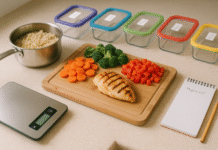
- Plate it: Transfer snacks/meals to a plate or bowl; seeing the portion helps your brain register enough.
- Phone away: Airplane mode or place it out of reach; give the meal your eyes and ears.
- Seat + surface: Sit down; a flat surface slows eating and allows sensory cues to register.
3.2 Common mistakes
- Eating “on the move.” Walking or driving short-circuits sensory awareness and leads to speed eating.
- Desk grazing. A bag left open invites continuous, uncounted bites; pre-portioning prevents this (see Section 6).
Why it works: Focusing on taste, textures, and internal cues aligns with core definitions of mindful eating and is endorsed by major health organizations promoting mindfulness for health.
4. Slow Your Pace (Give Satiety Time to Show Up)
Your stomach and brain communicate with a slight delay; eating more slowly gives fullness signals a chance to register so you can stop comfortably. Observational and longitudinal research links slower eating with lower odds of obesity and smaller waistlines in large cohorts, while faster eating correlates with metabolic risks. Slowing down doesn’t mean counting chews forever; it means adopting a few friction-adding rituals: breaths before bites, putting utensils down, and extending meals toward 20 minutes. If you’ve always been a fast eater, start by adding just five minutes to your usual meal time and notice what changes.
4.1 Numbers & evidence (as of August 2025)
- A BMJ Open analysis of ~60,000 adults with type 2 diabetes found slower eating was associated with reduced obesity markers over time. PubMed
- Multiple studies associate fast eating with components of metabolic syndrome; slowing may help mitigate risk. PubMed
4.2 Practical pacing tips
- Start each meal with 3 deep breaths; take the first 3 bites slowly to set the tone.
- Utensil rest: Put your fork down between bites; sip water after every few bites.
- Time anchor: Aim for ~20 minutes per meal; set a gentle timer if helpful.
Mini example: Your usual lunch disappears in 8 minutes. Stretching to 18–20 minutes by adding utensil rests and sips of water often moves fullness recognition from “after the plate is empty” to “with a few bites left,” making stopping at comfortable satisfaction far easier.
5. Engage All Five Senses (Pleasure Isn’t the Enemy—It’s the Signal)
Savoring is central to mindful eating: you visually scan color and texture, smell aromas, feel temperatures and crunch, and really taste the first bites. Ironically, when you allow pleasure, you often need less to feel satisfied; the first few bites deliver the most sensory novelty. Sensory attention also helps you detect “taste fatigue”—that moment when the flavor pop fades—another cue that you may be approaching enough. Use the senses to decide whether the next bite is adding enjoyment or just finishing by inertia.
5.1 How to do it (savoring sequence)
- See: Note colors, steam, portion size.
- Smell: Bring the plate to your nose; identify two aromas.
- Touch: Feel temperature/texture; adjust bite size.
- Taste: Name two flavors and one texture on the first bites.
- Listen: Crunch or sizzle can signal pace—crunchy foods often slow you down naturally.
5.2 Tools/Examples
- Try a “raisin meditation” with the first bite of any food—slows tempo and amps flavor.
- For beverages, sip-and-hold for three seconds to notice subtle notes (bitter, sour, sweet).
Synthesis: Pleasure is data; when you notice diminishing returns in taste, it often aligns with approaching fullness, making it easier to stop satisfied rather than stuffed.
6. Portion With Awareness (Pre-Plate, Right-Size, Prevent Mindless Top-Ups)
Mindful eating isn’t a diet, but portions still matter because the environment nudges how much we eat. Decades of research show that larger served portions drive higher intake regardless of hunger. The mindful approach is simple: serve a reasonable portion, eat attentively, check in halfway, and decide if you want more. For snacks, always plate or pre-bag a portion; eating from a package blinds you to volume. For mixed meals, the “plate method” (½ vegetables, ¼ protein, ¼ grains/starches) offers an easy visual anchor you can flex to your needs.
6.1 Numbers & guardrails
- Increasing portion size increases intake; reducing portions by ~25% can reduce daily energy intake meaningfully in controlled settings. American Journal of Clinical Nutrition
- Practical rule: Plate once; pause before seconds. If still hungry at a 4–5 post-meal, add a small second serving.
6.2 Mini-checklist
- Plate it (even snacks).
- Add volume with produce and protein for staying power.
- Halfway pause and rate fullness; adjust intentionally.
- Pack leftovers before you start if portions are large (restaurants/events).
Mini example: Ordering a large entrée? Ask for a second plate and portion half immediately. This simple pre-commitment aligns with evidence that portion downsizing reduces intake without feeling deprived because you still eat to satisfaction.
7. Meet Emotions With Kindness (Instead of Letting Them Drive the Fork)
Eating isn’t only physical; stress, boredom, or sadness can prompt snacking even when hunger is low. Mindful eating treats emotions as signals to respond to, not problems to silence with food. When you notice an urge, name the feeling, breathe, and decide: food now, food later, or a non-food action (call a friend, take a walk, stretch). If you do choose food for comfort, eat it consciously—plate it, sit down, and savor. Over time, this breaks the shame–restrict–rebound loop and builds trust that you can handle feelings without either white-knuckling or zoning out.
7.1 Tools/Examples
- RAIN practice (Recognize, Allow, Investigate, Nurture) for urges.
- Two-bucket plan: Food fixes physical hunger; non-food fixes feelings.
- MB-EAT exercises specifically target emotional/binge patterns with mindfulness skills. Taylor & Francis OnlinePMC
7.2 Mini-checklist
- Rate hunger (0–10). If ≤2, try a non-food soothe first for 5 minutes.
- If eating, plate + pause, and savor the first bites.
- Journal one line: What did I feel, and what helped?
Synthesis: Bringing gentle attention to emotions and urges—rather than fighting or following them automatically—is a teachable skill shown to support more regulated eating, especially in MB-EAT programs.
8. Plan With Flexibility (Grocery, Prep, and “Default Meals” That Support Awareness)
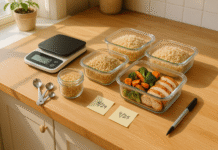
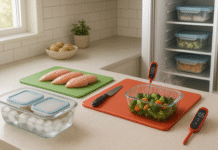
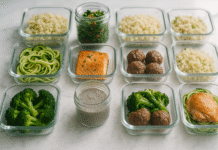
Planning isn’t the opposite of mindfulness; it enables it. When you have food that you enjoy and that keeps you full, it’s easier to arrive at meals in the 3–4 hunger zone and eat at an unhurried pace. Stock a few default breakfasts and lunches, pre-portion snacks, and keep “bridge” foods (fruit, yogurt, nuts) handy to prevent ravenous episodes that lead to fast, mindless eating. Use your past week’s notes—times you were too hungry or too rushed—to adjust portions, timing, or what you keep on hand. Flexible planning also reduces decision fatigue, leaving more attention for the sensory experience when you eat.
8.1 How to do it
- Default meals: 2–3 options you can assemble in 5–10 minutes.
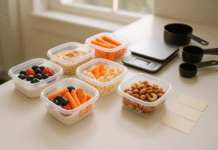
- Bridge snacks: Items that curb hunger to a 3–4 without dulling appetite for the next meal (e.g., apple + peanut butter).
- Portion-friendly packaging: Small containers or snack-size bags to avoid “package grazing.”
8.2 Regional/real-life notes
- Workday culture: If lunch breaks are short, pre-portion and set a 15–20 minute calendar block so you can single-task your meal.
- Family meals: Share the intention aloud (“Let’s slow down and enjoy this together”) and try a collective halfway pause.
Evidence link: Slower, more deliberate eating and portion awareness are easier when you aren’t arriving over-hungry—a practical bridge between planning and mindful practice endorsed by major public health guidance.
9. Practice Mindful Snacking (Small Moments, Big Impact)
Snacks are where many of us eat most mindlessly—standing, scrolling, and nibbling straight from a bag. Turn snacks into mini mindful meals: rate hunger, plate a portion, sit, and savor 5–10 deliberate bites. Choose combinations that satisfy (carb + protein or fat) so you’re not back in the kitchen 15 minutes later. Consider how the snack fits your next meal timing; a bridge snack should lift you to a hunger 3–4 without overshooting into a 6–7 that blunts dinner enjoyment. If boredom or stress is the driver, try a non-food soothe first, then decide consciously.
9.1 Mini-checklist
- Hunger first: Eat if ≤3–4; if ≥5, try water, movement, or a 5-minute pause.
- Plate + sit: No bag-in-hand snacking.
- Pair it: Fruit + nuts, yogurt + granola, crackers + hummus for staying power.
- Savor: First 3 bites slowly; notice flavor fade.
9.2 Common pitfalls
- “Snack-cidents.” Mindless handfuls while cooking or working; solve with portioning and boundaries.
- Using snacks to escape feelings. Name the feeling; choose food or another soothe on purpose (see Section 7).
Synthesis: Treating snacks as small, intentional eating occasions brings the same benefits as mindful meals: better satiety, less autopilot, more enjoyment.
10. Reflect Without Judgment (Tiny Reviews Build Lasting Habits)
Mindfulness is practice, not a pass/fail test. A 30–60 second “after-action” note—What was my hunger at start and finish? How did the food taste? What helped or hindered?—turns each meal into feedback for the next. Patterns quickly emerge: certain meetings push lunch late; certain foods satisfy longer; certain environments speed you up. Use this data to tweak portions, timing, and environments. If you overeat, compassion is your best coach; judgment keeps you stuck. The goal isn’t perfection but consistency—more meals than not where you’re present, paced, and satisfied.
10.1 How to reflect
- Jot three lines: Hunger start/finish; Wins; Next tweak (e.g., portion, pace, distraction).
- Weekly, scan notes for trends and pick one experiment for the coming week (e.g., “no-phone dinners”).
- If you struggle with urges or cycles of binge–restrict, consider structured support like MB-EAT or counseling.
10.2 Keep it gentle
- Replace “I blew it” with “What did I learn?”
- Celebrate tiny wins: noticing a flavor, pausing mid-meal, stopping one bite earlier.
Synthesis: Reflection strengthens the attention–behavior loop and makes mindful eating more automatic over time—without harsh rules or shame.
FAQs
1) What is mindful eating in one sentence?
Mindful eating is paying full, nonjudgmental attention to the experience of eating—your senses, thoughts, and body cues—so those observations guide your choices in real time, not old rules or distractions. It’s simple attention training applied to food, and it tends to increase satisfaction while easing overeating.
2) Is mindful eating the same as intuitive eating?
They overlap but aren’t identical. Mindful eating is an awareness practice—how you pay attention while eating. Intuitive eating is a broader framework with principles (e.g., ditch the diet mentality, honor hunger, challenge the food police). Many people practice mindful eating within intuitive eating, but you can use mindful strategies even if you’re not following the full intuitive approach. SAGE Journals
3) Will mindful eating help with weight loss?
Mindful eating isn’t a weight-loss program; its aim is a calmer, more attuned relationship with food. That said, slower pace and portion awareness—common outcomes of mindful eating—are associated with lower energy intake and reduced obesity risk in some studies. Think of any weight change as a possible side effect, not the goal.
4) How long should a mindful meal take?
There’s no magic number, but many public health guides suggest taking about 20 minutes to allow fullness signals to emerge. If your meals are 8–10 minutes now, add five minutes at a time with utensil rests, sips of water, and device-free eating to stretch the meal window naturally.
5) What if I have very little time to eat at work?
Even three mindful minutes at the start help: breathe, notice aroma and texture, and take a few slow bites. Pre-portion your food and set a 15–20 minute block on your calendar when possible. If your schedule is unpredictable, keep “bridge snacks” (fruit + nuts, yogurt) to avoid hitting meals at ravenous hunger that triggers rush eating.
6) Are there formal programs to learn mindful eating?
Yes. Mindfulness-Based Eating Awareness Training (MB-EAT) is a structured, evidence-informed program for issues like binge eating and emotional eating. It includes mindfulness meditation and guided practices specific to food and urges. Look for trained practitioners if you want more guidance.
7) How do I stop eating when food tastes so good?
Use a halfway pause to check flavor and fullness: often, the first bites are the most pleasurable, and taste satisfaction fades as you continue. Ask, “Is this next bite adding enjoyment?” If yes, proceed slowly; if not, you might be ready to stop at comfortable fullness and save the rest. Plating and pacing make that decision easier.
8) Does mindful eating work during social meals or celebrations?
Absolutely. Keep it light: set an intention (“connect and enjoy”), take a breath before the first bite, savor the first few bites, and check in once during the meal. You can enjoy all foods and still notice when fullness arrives. Portion with awareness—serve a reasonable plate, and go back for what you loved most if you’re still hungry.
9) What about people with diabetes or medical conditions?
Mindful eating can complement medical care by improving awareness of hunger/fullness cues and pacing, but it doesn’t replace individualized nutrition advice, glucose monitoring, or medication. If blood sugar management is a priority, coordinate mindful strategies with your healthcare team to fit timing, carbs, and medications safely.
10) Is chewing a certain number of times “mindful”?
Counting chews can slow you down initially, but mindful eating is broader: attend to flavor, texture, temperature, and body signals. Use brief techniques (breaths, utensil rests, first 3 bites slowly) to establish pace, then rely on sensory attention rather than rigid counts.
Conclusion
Mindful eating isn’t another set of food rules—it’s a way to return your attention to the only place decisions actually happen: the present moment. By clarifying intentions, checking hunger and fullness with a simple scale, creating a distraction-free environment, slowing your pace, savoring with all five senses, portioning with awareness, meeting emotions with kindness, planning flexibly, and reflecting without judgment, you transform eating from autopilot to agency. Over time, these tiny practices build trust with your body, reduce “all-or-nothing” cycles, and make meals more satisfying. You’ll likely notice steadier energy, fewer extremes of hunger and fullness, and a calmer mindset around food. Start small: choose one step—perhaps a hunger check-in or a halfway pause—and practice it for a week. Then add another. Your next bite is a chance to practice.
Ready to begin? Pick one meal today, put your phone away, and savor your first three bites.
References
- Mindful Eating • The Nutrition Source. Harvard T.H. Chan School of Public Health, n.d. The Nutrition Source
- How to Practice Mindful Eating. Harvard T.H. Chan School of Public Health News, September 14, 2023. hsph.harvard.edu
- Mindfulness for Your Health. NIH News in Health, June 2021. NIH News in Health
- The Practice of Mindful Eating. The Center for Mindful Eating, April 4, 2022. blog.thecenterformindfuleating.org
- Effects of Changes in Eating Speed on Obesity in Patients with Diabetes: A Longitudinal Study. BMJ Open, 2018. BMJ Open
- Portion Size of Food Affects Energy Intake in Normal-Weight and Overweight Men and Women. American Journal of Clinical Nutrition, 2002. PubMed
- Reductions in Portion Size and Energy Density of Foods Are Additive in Decreasing Energy Intake. American Journal of Clinical Nutrition, 2006. PubMed
- Association Between Eating Speed and Classical Cardiovascular Risk Factors. Nutrients (via PMC), 2019. PMC
- Hunger–Satiety Scale (PDF). University Health Services, UC Berkeley, n.d. University Health Services
- Mindfulness-Based Eating Awareness Training for Treating Binge Eating Disorder: The Conceptual Foundation. Eating Disorders, 2011. mb-eat.com